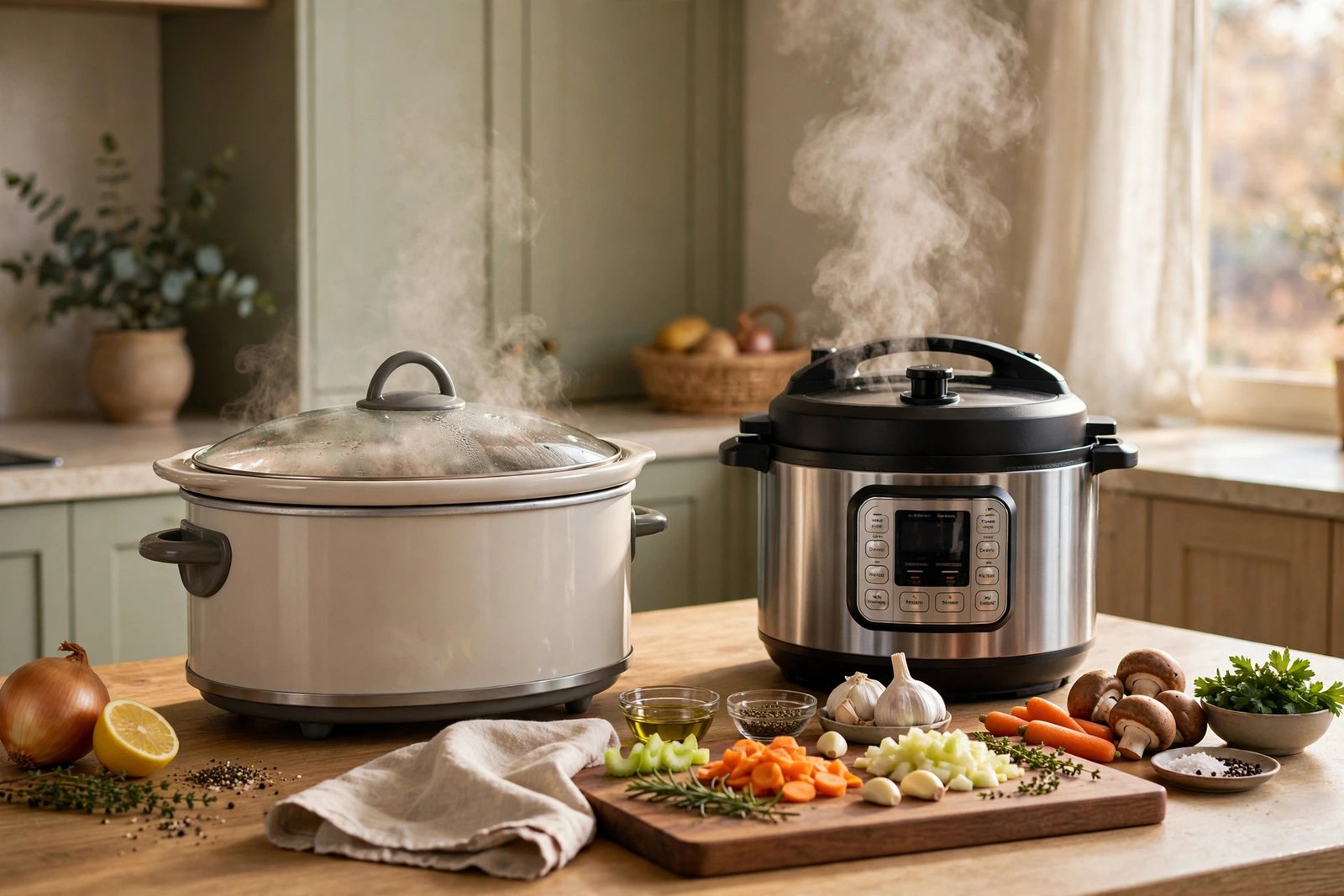

If you cook at home more than a couple of times a week, you have probably stood in a kitchen shop, or scrolled an online listing, and wondered which of these two boxes is actually worth the counter space. They both promise the same dream: dinner that mostly cooks itself. But they get there in opposite ways, and that difference shows up in the texture of a stew, the timing of a weeknight meal, and the number of dishes you wash afterwards. In this slow cooker vs instant pot comparison, we will look at how each one works, what each one does best, and how to choose — including the honest case for owning both.
The short answer is that neither appliance is simply better. A slow cooker is a patient, low-heat braiser that rewards planning. An Instant Pot is a fast, pressurised multi-cooker that rewards improvisation. The right choice depends on when you get home, what you like to eat, and how much you enjoy tinkering with a recipe. By the end of this guide, you should be able to pick with confidence, convert recipes between the two, and avoid the one mistake that ruins otherwise good food in a pressure cooker.
Slow Cooker vs Instant Pot: How Each One Works
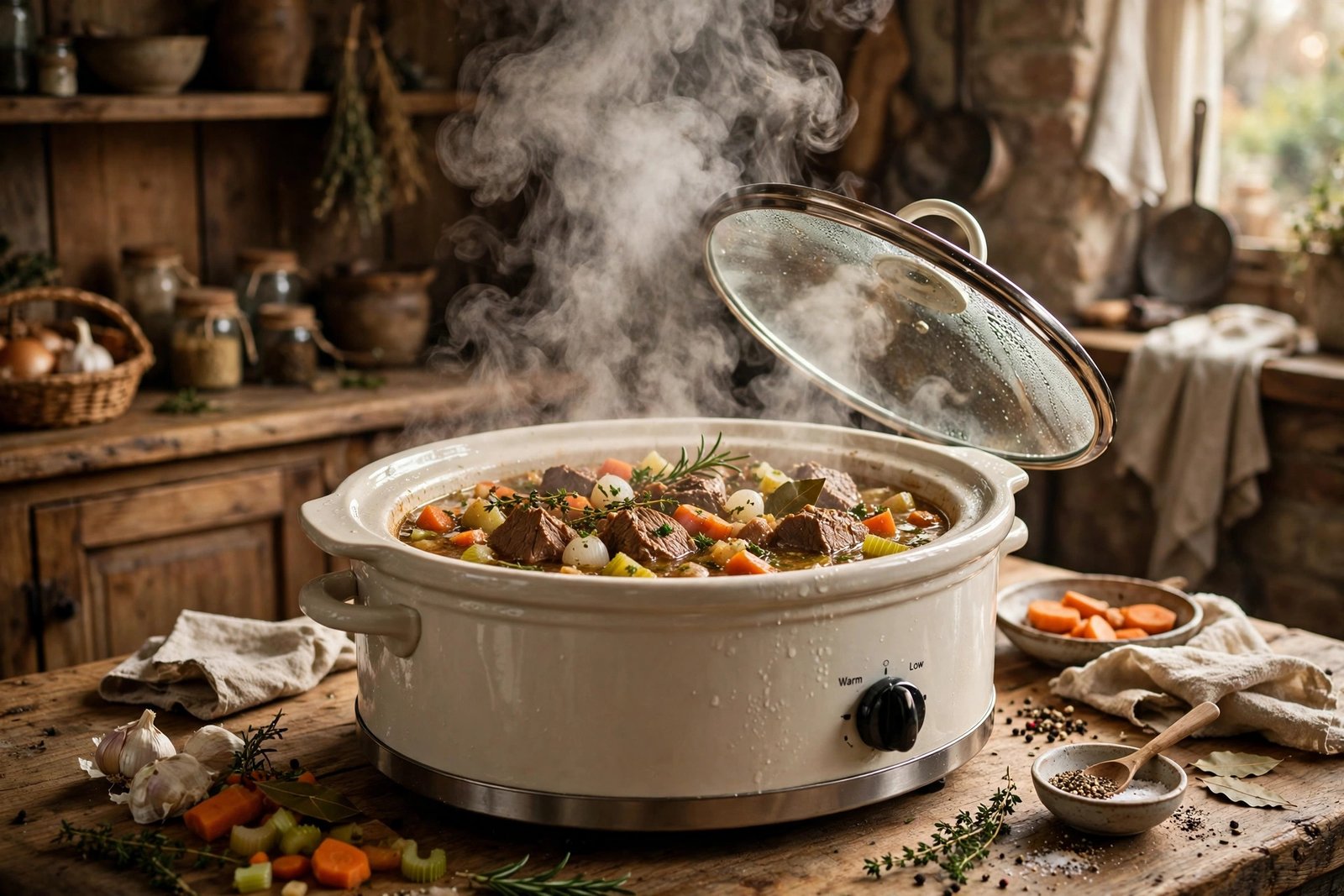
A slow cooker is beautifully simple. A ceramic crock sits inside a metal housing with a heating element around the base and sides. You set it to low or high, put the lid on, and leave it. On low, food simmers gently for six to ten hours; on high, it takes three to five. Because the temperature stays low and steady, tough connective tissue in meat breaks down slowly into gelatine, vegetables soften without falling apart, and flavours meld over hours. There is no pressure, no steam valve, and very little to go wrong — which is why slow cookers have survived decades of kitchen fads.
An Instant Pot works differently. It is, at heart, an electric pressure cooker with extra programs for sautéing, steaming, making yoghurt, and — on many models — slow cooking. Sealed under pressure, water boils at a higher temperature, so food cooks much faster: dried beans that need hours become tender in under an hour, and a beef stew that needs all afternoon can be ready in about an hour, including the time to build and release pressure. The sauté function is a real advantage, because you can brown meat and soften onions in the same pot before sealing the lid, saving a pan and building flavour.
That difference in mechanism explains almost every other difference. Slow, gentle heat is forgiving: leave a stew an extra hour and it is usually still fine. Pressure cooking is fast but less forgiving: overcook vegetables by ten minutes and they turn to mush, and undercook beans and they stay chalky. A slow cooker needs you to plan ahead; a pressure cooker needs you to pay attention to timing and liquid. Neither is hard, but they reward different habits.
Time, Texture, and Flavour: Where Each One Wins
Time is the most obvious difference. A slow cooker asks you to start in the morning and eat in the evening. That suits people who work from home, who can load the crock before leaving, or who like coming home to a house that smells like dinner. An Instant Pot suits the opposite day: you get home at six, realise you forgot to plan dinner, and still eat a proper stew by seven-thirty. For weeknight improvisation, the pressure cooker wins by a wide margin.
Texture is where the slow cooker fights back. Long, gentle braising gives meat a falling-apart tenderness that pressure cooking can approximate but rarely matches exactly, especially in dense stews with large pieces of meat and root vegetables. Pressure-cooked meat can be tender, but it can also taste slightly boiled if the liquid is not reduced afterwards, and vegetables cooked under pressure for the same time as meat often overcook. Slow cookers keep vegetables in distinct, soft-but-intact pieces, which matters in a dish where you want to see and taste each ingredient.
Flavour follows a similar pattern. Slow cooking builds depth gradually: aromatics mellow, spices bloom, and the sauce thickens slowly as a little moisture escapes around the lid. Pressure cooking builds flavour fast, but it traps all the moisture inside, so sauces often come out thinner and need reducing on the sauté setting at the end. That extra step is easy — five to ten minutes with the lid off, stirring — but it is the step beginners forget, and it is why some first attempts at pressure-cooker stew taste watery. Season at the end, reduce the sauce, and the gap narrows a lot.
The Comparison at a Glance
Here is the side-by-side summary most shoppers actually want before they read the detail:
| Feature | Slow Cooker | Instant Pot (pressure mode) |
|---|---|---|
| Typical cooking time | 4–10 hours, low and slow | 20–90 minutes under pressure, plus pressurising and release |
| Texture | Very tender, vegetables stay distinct | Tender, but vegetables can overcook if timed with meat |
| Flavour | Deep, mellow, sauce thickens gradually | Fast and bright, sauce often needs reducing at the end |
| Hands-on effort | Minimal: load, set, leave | Moderate: sauté, seal, time, release, reduce |
| Best dishes | Braises, pot roast, pulled pork, dense stews, overnight oats | Beans, grains, weeknight stews, soups, risotto, hard-boiled eggs |
| Typical cost | Usually lower; simple models are inexpensive | Higher, but replaces several appliances |
Cost deserves a note, because prices vary widely and change often. A basic slow cooker is one of the cheapest useful appliances you can buy, while a good multi-cooker costs more but can replace a rice cooker, a steamer, and a yoghurt maker. Do not buy on price alone: a cheap slow cooker with a hot spot that scorches one side, or a pressure cooker with a confusing valve, will cost you more in ruined dinners than the saving was worth. Read reviews for your specific model, not just the category.
Which Dishes Suit Each Appliance?
Tough cuts are the classic test, and both appliances handle them well in different ways. For a large pot roast, a pork shoulder for pulled pork, or a dense beef stew with carrots and potatoes, a slow cooker is hard to beat: the long braise turns collagen into gelatine, the meat shreds cleanly, and the vegetables stay recognisable. A detailed look at tough cuts in a slow cooker reaches a similar conclusion — time is the slow cooker’s secret ingredient for these dishes.
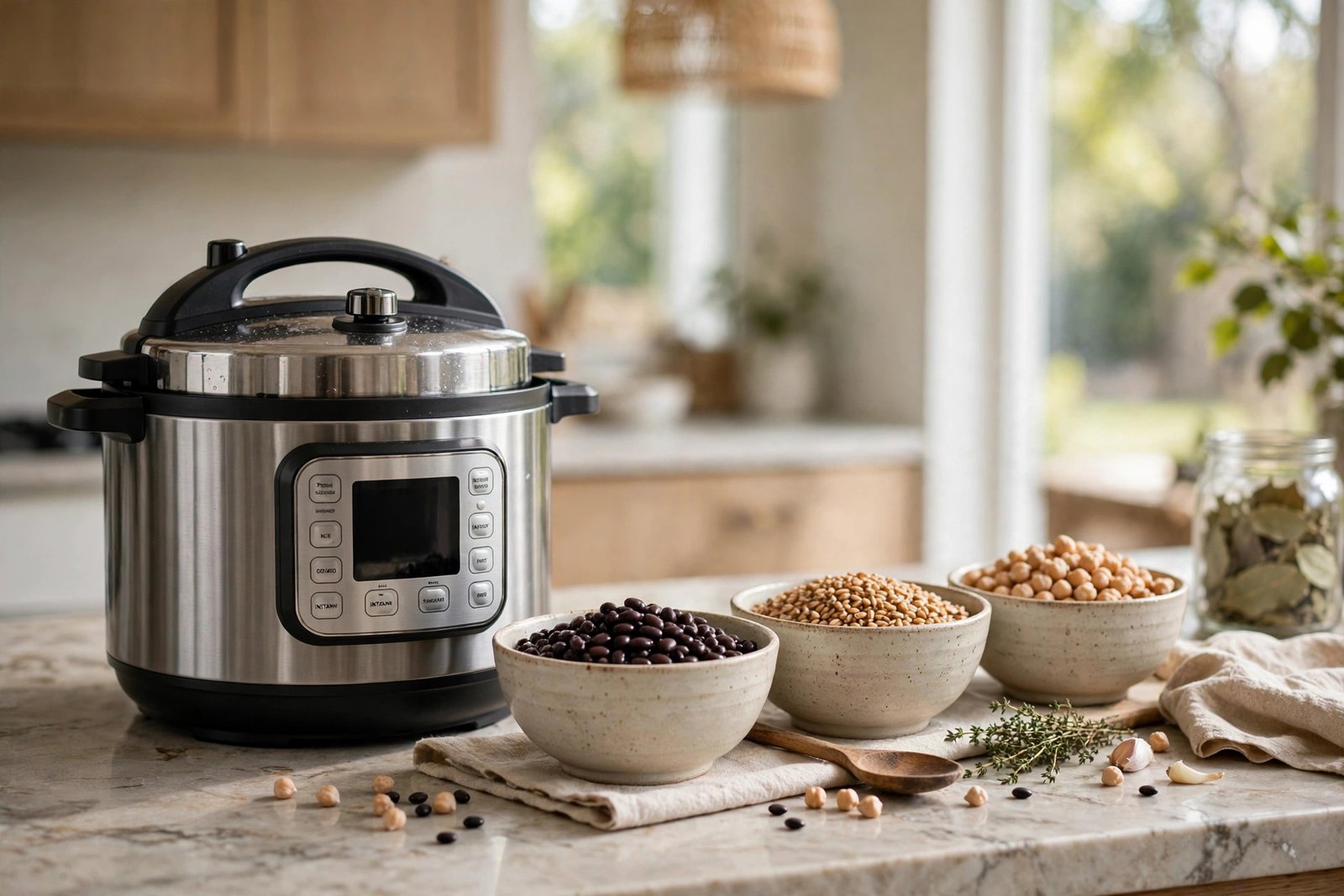
Beans and grains are the pressure cooker’s home ground. Dried chickpeas, black beans, and lentils go from pantry to tender without overnight soaking, and rice and risotto cook evenly with far less stirring than on the hob. A slow cooker can cook beans, but it is slow and, for kidney beans in particular, you must boil them first to destroy a natural toxin — a step that is easy to forget and not worth skipping. For a weeknight bean soup or a grain bowl, the pressure cooker is the safer, faster choice.
Braises sit in the middle, and this is where personal taste matters most. A slow braise of short ribs or lamb shanks, started in the morning, will be superb. The same braise in a pressure cooker, started at five, will be very good and ready for dinner. If you love the ritual of a slow Sunday braise, keep the slow cooker. If you want braised flavour on a Tuesday, the pressure cooker is the tool that makes it possible. Soups, chilli, and curry work well in both, with the pressure cooker winning on speed and the slow cooker winning on the depth you get from an all-day simmer.
Converting Recipes Between Them
Converting a recipe in the slow cooker vs instant pot world is not guesswork; it follows a few reliable rules. To go from slow cooker to pressure cooker, first cut the liquid by about a third to a half, because almost no moisture escapes under pressure, whereas a slow cooker loses some around the lid. Then cut the time drastically: a dish that takes eight hours on low typically needs 25 to 40 minutes under pressure, depending on the size of the meat pieces; a four-hour high dish often needs 20 to 30 minutes. Always include the time to pressurise and release — ten to twenty minutes each way — when you plan dinner.
To go the other way, from pressure cooker to slow cooker, increase the liquid by about a third, because the slow cooker will lose moisture and the dish will cook for hours. Multiply the pressure time roughly: a 30-minute pressure stew usually needs six to eight hours on low or three to four on high. Add delicate vegetables, dairy, and pasta near the end in both directions — dairy can split under long heat, and pasta turns to mush if it cooks for the whole time. Brown meat first in both cases if you can; it is the single biggest flavour upgrade for either appliance.
One rule never changes: never fill a pressure cooker more than two-thirds full, and no more than half full for foods that foam or expand, such as beans and grains. Overfilling blocks the steam valve and is the most common safety mistake with pressure cookers. Follow your manual for the release method — natural release for meats and beans, quick release for vegetables — because the release time is still cooking time.
The Verdict: Own Both, or Pick a Multicooker With Your Eyes Open
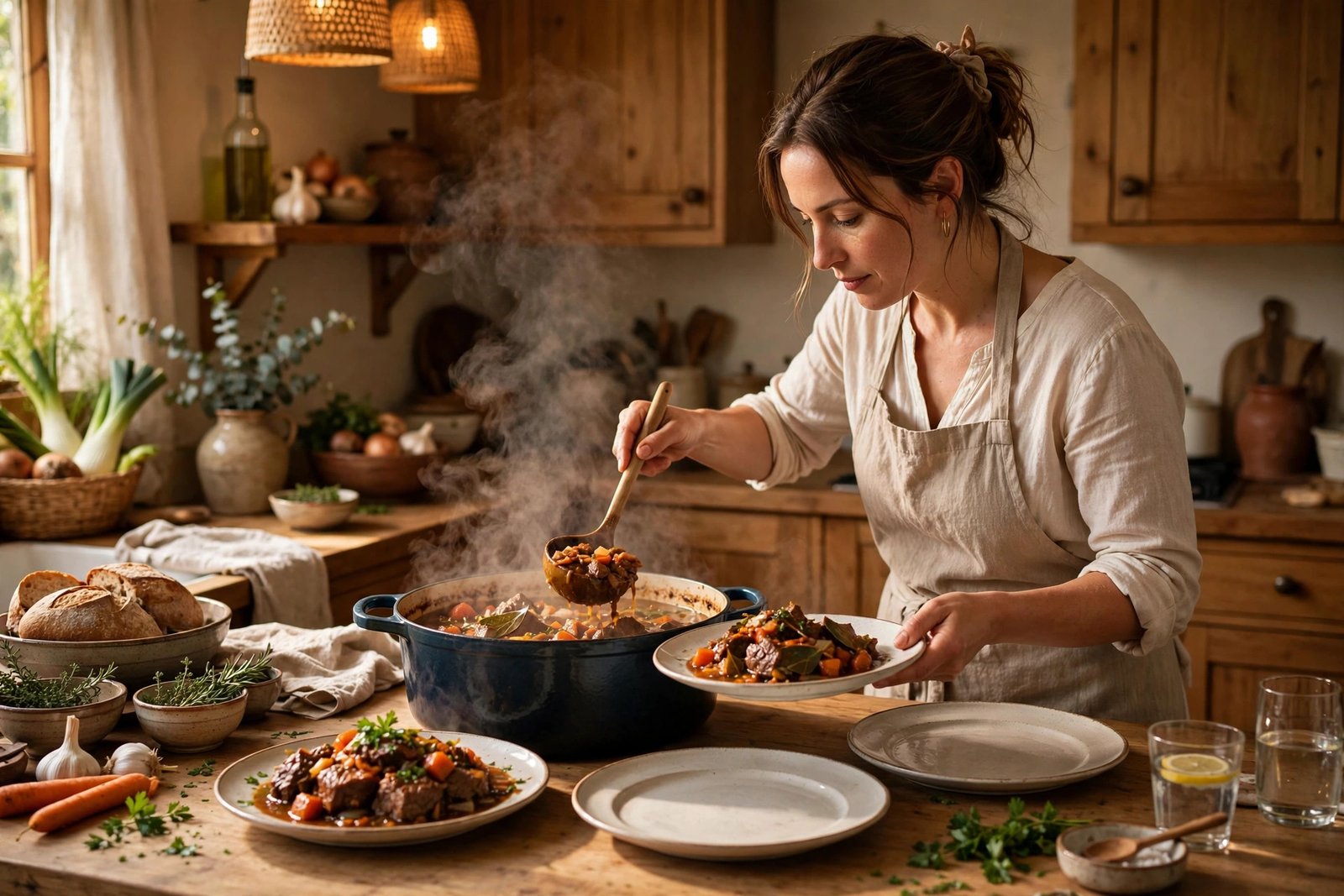
For most home cooks, the honest slow cooker vs instant pot verdict is to own both if you have the space and the budget — a simple slow cooker for planned braises, and a pressure multi-cooker for weeknight speed. They are not duplicates; they are complementary tools, like a chef’s knife and a paring knife. If you must choose one, choose by your schedule: if you regularly plan dinner in the morning, pick the slow cooker; if you regularly decide dinner at six o’clock, pick the pressure cooker.
There is a tempting middle option: use the slow-cook mode on a multi-cooker and skip the second appliance. Be careful here. America’s Test Kitchen tested this directly and found that an Instant Pot’s slow-cook mode underperforms a dedicated slow cooker on dense stews, because it heats mainly from below rather than all around the crock, and its temperature control is less even. For a full account, see America’s Test Kitchen on slow cookers. That does not make the multi-cooker useless for slow cooking — lighter soups and chilli do fine — but for a dense, all-day stew, a dedicated slow cooker still wins.
Whichever you choose, the same habits make both work better: brown where you can, season at the end, reduce thin sauces, and write down the time that worked for your model, because every appliance runs a little hot or cool. And if you are stocking a kitchen from scratch, the choice of pans matters as much as the choice of cookers — our comparison of cast iron vs stainless steel pans and our guide to blender vs food processor cover the other two decisions most cooks face. For keeping leftovers, how to freeze fresh herbs is a useful companion to batch cooking in either appliance.
Frequently Asked Questions
Can I leave a slow cooker on while I am out?
Yes, that is what it is designed for, provided it is on a stable, heat-resistant surface, away from curtains and clutter, and the crock is not cracked. Most manufacturers approve unattended use. Never leave a pressure cooker unattended while it is under pressure.
Is an Instant Pot the same as a slow cooker?
No. An Instant Pot is primarily a pressure cooker with extra functions, including a slow-cook mode. It can do many slow-cooker jobs, but as the America’s Test Kitchen test shows, it does not match a dedicated slow cooker on dense stews.
Do I need to soak beans before pressure cooking?
No, soaking is optional for most beans in a pressure cooker, though it can reduce cooking time slightly and improve digestibility. Rinse dried beans, pick out any stones, and cook them fully — undercooked beans, especially kidney beans, must be boiled properly before eating.
Why is my pressure-cooker stew watery?
Pressure cooking traps almost all moisture, so sauces come out thinner than in a slow cooker. Reduce the sauce on the sauté setting for five to ten minutes with the lid off, and use less liquid next time — about a third less than a slow-cooker recipe.
Which one is better for meal prep?
Both are excellent. A slow cooker suits a big weekend batch you portion for the week; a pressure cooker suits a fast batch on a Sunday evening. Choose by whether you prefer to plan ahead or cook in a short window.
Conclusion
In the slow cooker vs instant pot debate, there is no single winner, and that is good news: it means you can choose by your life, not by a marketing claim. If your days start with a plan, a slow cooker will reward you with deep, tender, forgiving braises. If your days end with a scramble for dinner, a pressure cooker will save weeknights that would otherwise end in takeaway. If you can, own both and use each for what it does best — and if you buy a multi-cooker expecting it to replace a slow cooker entirely, test it on a dense stew first, so you know its limits before you give the old crock away. Either way, dinner that cooks itself is a small daily luxury, and it is worth choosing the tool that fits how you actually live.