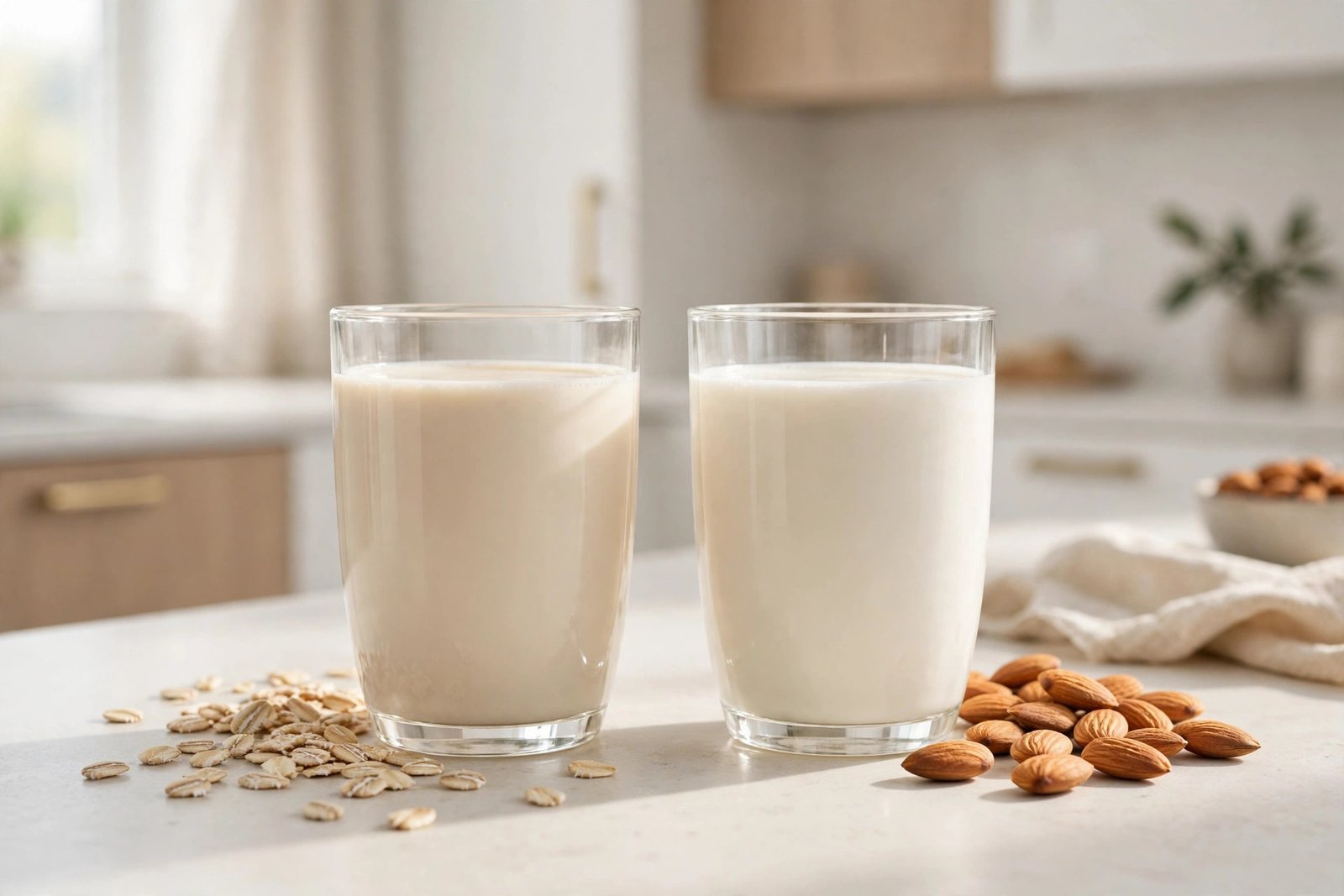

Walk down any supermarket’s plant-milk aisle and you’ll face a quiet standoff: the creamy oat carton on one side, the slim almond carton on the other. The oat milk vs almond milk debate has exploded over the last few years, and it’s no wonder — both pour beautifully into coffee, both claim a health halo, and both cost more than dairy. But nutritionally, these two drinks are almost opposites. One is light and low in calories; the other is richer, heartier, and far higher in carbohydrates. Choosing wrong won’t ruin your health, but choosing right can quietly support your goals — whether that’s losing weight, cutting carbs, or finally getting a latte that doesn’t taste like dishwater.
In this guide, we’ll compare the two side by side: nutrition, taste, coffee performance, fortification, sugar traps, allergies, and environmental impact. By the end, you’ll know exactly which carton belongs in your fridge — and when the answer is “both, for different jobs.”
Oat Milk vs Almond Milk at a Glance
The single biggest difference between the two is what they’re made from, and that shows up immediately in the nutrition label. Almond milk is mostly water with a small amount of almonds blended in; oat milk is made by soaking and blending whole oats, so it carries more of the grain’s natural starch and fiber. Here is how typical unsweetened versions compare, per cup, based on reference values from the USDA FoodData Central database:
| Nutrient (per cup, unsweetened) | Almond Milk | Oat Milk |
|---|---|---|
| Calories | ~30–40 kcal | ~90–130 kcal |
| Carbohydrates | 1–2 g | 16–19 g |
| Protein | ~1 g | 3–4 g |
| Fat | 2.5–3 g | 5 g |
| Fiber | ~1 g | ~2 g |
| Sugar (unsweetened) | 0 g | 0 g |
| Beta-glucans | None | Present (soluble fiber from oats) |
Two things jump out. First, oat milk has roughly three times the calories of almond milk — a real consideration if you drink it by the glass or pour generously into smoothies. Second, oat milk’s carbohydrate load (16–19 grams per cup) is in a different league from almond milk’s 1–2 grams. For anyone watching carbs, that gap matters far more than the calorie difference. On the flip side, oat milk brings something almond milk doesn’t: beta-glucans, the soluble fiber in oats linked to better cholesterol levels and steadier digestion. If you’re working on your digestive health, our guide on how to improve gut health naturally pairs well with this — fiber-rich foods like oats are one of the simplest levers you can pull.

Taste and Texture: Creamy vs Light
Taste is subjective, but the pattern is consistent. Oat milk is naturally sweet and full-bodied, with a mild, almost cereal-like flavor that disappears into smoothies, oatmeal, and baked goods. It feels closer to whole dairy milk in the mouth — thick enough to feel indulgent without any added thickeners in many brands.
Almond milk is thinner and lighter, with a gentle nutty note. Some people love that clean, refreshing quality, especially in cold drinks and cereal. Others find it watery, particularly the cheaper brands that use very few almonds. If you’ve ever thought almond milk tasted “thin,” you weren’t imagining it — the almond content in many commercial cartons is only around 2%, so most of what you’re drinking is water.
For cooking, oat milk wins in sauces, soups, and creamy pasta dishes because it thickens slightly when heated and doesn’t separate as easily. Almond milk works fine in lighter applications — pancake batter, overnight oats, and fruit smoothies — where its nutty note adds something rather than disappearing. A detailed almond milk vs oat milk comparison from an almond industry source reaches a similar conclusion: the two drinks shine in different kitchens.
Coffee Performance: The Barista Test
This is where oat milk built its reputation. Oat milk steams into a smooth, stable microfoam that holds latte art and blends into espresso without splitting — which is why “oat milk latte” became a café default. Its natural sweetness also means you rarely need added sugar in coffee. If you make flat whites or cappuccinos at home, oat milk is the closest plant-based match to dairy’s behavior in the steamer.
Almond milk is trickier in hot coffee. Its thin body and lower fat content mean it can curdle or separate when it hits hot, acidic espresso, especially unsweetened versions. Barista-blend almond milks — formulated with a little extra fat and stabilizers — perform much better, so if almond milk is your preference, look for a carton that says “barista” on it. Cold brew and iced lattes are more forgiving: almond milk’s lightness works well over ice, and it won’t overpower delicate coffee flavors.
Verdict for coffee lovers: oat milk for hot drinks, either for iced. And whichever you choose, remember that the milk is only part of the drink — a sweetened carton can quietly add as much sugar as a flavored syrup.

Fortification: What Gets Added Back
Neither oat nor almond milk is naturally rich in calcium or vitamin D, so nearly every commercial brand fortifies. A typical fortified carton provides around 25–45% of the daily value for calcium and vitamin D per cup, plus vitamin B12 in many brands — genuinely useful for people who eat little or no dairy. The catch is that fortification varies by brand, so two cartons that look identical can differ significantly. Learning how to read nutrition labels properly is the fastest way to spot the difference: check the calcium and vitamin D lines, not just the front-of-pack claims.
One nutrient where oat milk has a real edge is iron. Oats contain some iron naturally, and some oat milks are fortified further. Almond milk, meanwhile, often contains a little vitamin E from the almonds themselves. Neither drink is a protein source worth planning around — at 1–4 grams per cup, both fall far short of dairy milk’s 8 grams or soy milk’s 7–8 grams. If protein is your priority, neither of these is the right carton; soy or pea milk would serve you better.
Also worth noting: the calcium added to plant milks is usually calcium carbonate or tricalcium phosphate, which settles at the bottom of the carton. Shake the carton well before every pour, or you’ll leave much of the calcium behind in the last inch.
The Sweetened vs Unsweetened Trap
Here’s where the health halo cracks. The nutrition table above describes unsweetened versions, but many popular cartons are sweetened — and sweetened oat milk can contain 10–19 grams of added sugar per cup, roughly the sugar of a small cookie in every glass. Sweetened almond milk is usually lighter, around 7–10 grams, but that’s still added sugar you’d never choose to spoon into your coffee.
The trap is that both drinks taste good sweetened, and the packaging rarely shouts about it. Words like “original” often mean sweetened, while “unsweetened” is stated plainly when it applies. Barista editions are almost always sweetened, even when they taste only mildly sweet. If you’re buying for health, the single most important word on the carton is “unsweetened” — it matters more than the oat-versus-almond choice itself. A nutritionist’s oat milk vs almond milk nutrition comparison makes the same point: the sweetened versions of either drink can undo the health case entirely.
As a rule of thumb: unsweetened almond milk is one of the lowest-calorie milks you can buy, and unsweetened oat milk is a genuinely wholesome whole-grain drink. Sweetened versions of either are dessert in a carton.
Allergies and Dietary Fit
Almond milk is off the table for anyone with a tree-nut allergy — an obvious but important point, since almond milk sometimes appears in restaurant dishes and coffee orders without being flagged. It’s also worth noting that almond milk is generally gluten-free, while oat milk is only gluten-free if the oats are certified gluten-free; oats are frequently processed alongside wheat, so people with celiac disease should look for the certified label specifically.
For vegan and dairy-free diets, both work. For keto or very low-carb eating, almond milk (unsweetened) is the clear choice at 1–2 grams of carbs per cup. For people avoiding nuts in school or work settings, oat milk is the safer, nut-free option. If you batch-cook and freeze ingredients, you might also enjoy our guide on how to freeze fresh herbs — the same “stock your kitchen once, benefit all week” logic applies to keeping a spare carton in the freezer.
Environmental Impact: Water, Land, and Emissions
The environmental story is more nuanced than the headlines suggest. Almonds have a well-known water footprint: growing almonds is thirsty work, and most of the world’s almonds come from California, a state with recurring drought pressure. That said, a carton of almond milk contains very few almonds, so its water footprint per carton is far lower than eating almonds by the handful — and still far below dairy milk’s footprint.
Oats, by contrast, are a relatively low-input crop. They need less water than almonds, grow in cooler climates across North America and Europe, and improve soil health in crop rotations. On greenhouse gas emissions, both plant milks sit well below dairy, and oat milk generally edges ahead of almond milk on water use. A thorough oat milk vs almond milk comprehensive comparison covering nutrition and sustainability reaches the same broad conclusion: oats win on water, both beat dairy on emissions.

None of this makes almond milk an environmental villain — context matters, and any plant milk is a step down in impact from dairy. But if sustainability is your tiebreaker, oat milk takes it.
Price and Availability: What You’ll Actually Pay
Price rarely decides the oat milk vs almond milk question, but it’s worth a quick note. Almond milk is usually the cheaper carton, partly because it’s an older, more established product with more store-brand options. Oat milk, especially barista editions, tends to cost a little more per carton — though the gap has narrowed as oat milk has gone mainstream. Both now appear in most supermarkets, coffee shops, and even convenience stores, so availability is rarely a problem. If budget matters, store-brand unsweetened almond milk is typically the best value in the entire plant-milk aisle; if you’re buying oat milk mainly for coffee, the barista version is worth the small premium, since regular oat milk can thin out under steam.
The Verdict: Which One Wins for Your Goal
There is no single winner in the oat milk vs almond milk contest — there’s a right answer for each goal:
- Weight loss: Almond milk (unsweetened). At 30–40 calories a cup, it barely registers, and it lets you enjoy creamy coffee and cereal without spending your calorie budget.
- Low-carb or keto: Almond milk (unsweetened). At 1–2 grams of carbs, it’s one of the few milks that fits.
- Coffee and lattes: Oat milk. It steams, foams, and sweetens naturally in a way almond milk can’t match.
- Gut health and cholesterol: Oat milk. Its beta-glucans and fiber are a genuine functional benefit.
- Cooking and baking: Oat milk for creamy dishes; almond milk for lighter ones.
- Nut allergies or nut-free settings: Oat milk (certified gluten-free if celiac disease is a factor).
- Environmental impact: Oat milk, mainly on water use.
Many households end up keeping both: almond milk for everyday cereal and smoothies, oat milk for coffee and cooking. That’s not indecision — it’s using each drink where it’s strongest. The real mistakes to avoid are the same either way: buying sweetened when you meant unsweetened, and expecting a plant milk to replace dairy’s protein. Avoid those two, and whichever carton you choose will serve you well.
Frequently Asked Questions
Is oat milk or almond milk healthier overall?
It depends on your goal. Unsweetened almond milk is lower in calories and carbs, making it better for weight loss and low-carb diets. Unsweetened oat milk offers more fiber, beta-glucans, and a creamier texture, making it better for gut health and cooking. Neither is a significant protein source.
Does oat milk spike blood sugar?
Unsweetened oat milk has 16–19 grams of carbohydrates per cup, so it raises blood sugar more than almond milk’s 1–2 grams. People with diabetes or insulin resistance should generally prefer unsweetened almond milk, or use oat milk in smaller amounts alongside protein or fat to blunt the glucose response.
Which milk is better for coffee?
Oat milk is better for hot coffee — it steams into stable foam and rarely curdles. Almond milk can separate in hot espresso unless you buy a barista blend. For iced coffee, both work well.
Is almond milk bad for the environment?
Almond milk’s water footprint is higher than oat milk’s because almonds are a thirsty crop, but it is still far lower than dairy milk’s overall footprint. If water use is your main concern, oat milk is the better choice.
Can I drink oat milk if I have celiac disease?
Only if it is certified gluten-free. Oats are naturally gluten-free but are often processed alongside wheat, so look for the certified gluten-free label on the carton.
Why does my almond milk curdle in coffee?
Almond milk’s low fat and protein content make it sensitive to heat and acidity. Use a barista blend, warm the milk before adding it, or pour the coffee into the milk rather than the other way around — all three tricks reduce curdling.
Conclusion
The oat milk vs almond milk question has no universal answer, but it does have a personal one. If you want the lightest possible milk for weight loss or low-carb eating, unsweetened almond milk is hard to beat. If you want creamy coffee, better cooking, and gut-friendly fiber, oat milk earns its place. Check that the carton says “unsweetened,” shake it well so you actually get the added calcium, and don’t be afraid to keep both in the fridge — the best milk is the one that fits the job in front of you.



