
Your gut does far more than digest lunch. The trillions of microbes living in your intestines help break down food, support your immune system, and even communicate with your brain — which is why an unhappy gut can show up as bloating, low energy, or just a vague feeling of being off. If you’ve been wondering how to improve gut health naturally, the good news is that the most effective steps are refreshingly ordinary: what you eat, how you move, how you sleep, and how you handle stress. No expensive cleanse required.
This guide walks through ten habits that genuinely help, in plain English, with no miracle claims. Some of them you’ll already be doing. Others take a little intention. Together, they give your gut the conditions it needs to look after itself.
1. Eat More Fibre — But Build Up Slowly
Fibre is the single most useful thing you can give your gut microbes. They ferment it into compounds that nourish the gut lining and keep digestion moving. Good sources are everywhere: oats, beans, lentils, whole grains, fruit, vegetables, nuts and seeds. The trick is the pace. If you jump from very little fibre to a lot overnight, you’ll likely get gas and bloating — the exact symptoms you’re trying to fix.
Instead, add one high-fibre food at a time. Swap white bread for wholemeal, add a handful of beans to a soup, or start the day with oats instead of a refined cereal. Piedmont Healthcare’s dietitians suggest aiming for around 25 grams of fibre a day, and Hackensack Meridian Health makes the same point about gradual increases: upping fibre in large jumps can temporarily cause bloating and gas, so slow and steady genuinely wins here. Reading labels helps you spot the fibre content of what you already buy — our guide on how to read nutrition labels shows you exactly where to look.
2. Add Fermented Foods a Few Times a Week
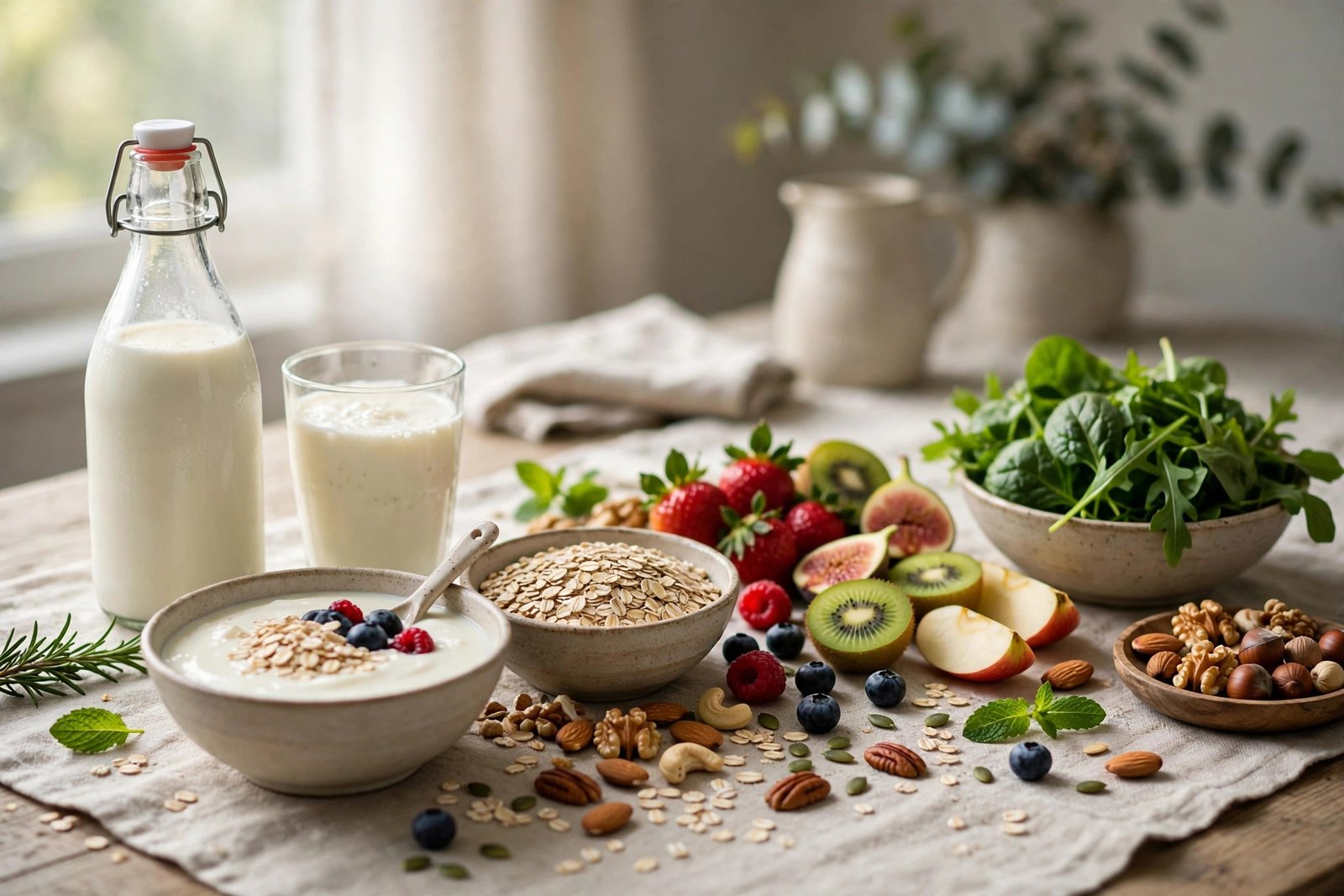
Fermented foods — plain yoghurt with live cultures, kefir, sauerkraut, kimchi, miso and kombucha — carry live bacteria into your gut. They won’t single-handedly rebuild your microbiome, but as part of a varied diet they add diversity, which is what a resilient gut is made of.
Start small: a pot of plain yoghurt with breakfast, or a forkful of sauerkraut alongside lunch. Check the label for “live active cultures” — not all yoghurts contain them, and the sweetened dessert-style pots are a different product entirely. If fermented foods are new to you, introduce one at a time so you can tell how each one suits you. And if you have a condition that affects your immune system, it’s worth asking your doctor before adding unpasteurised fermented foods, since the same live microbes that help most people need a second thought in that situation.
3. Eat a Wider Variety of Plants
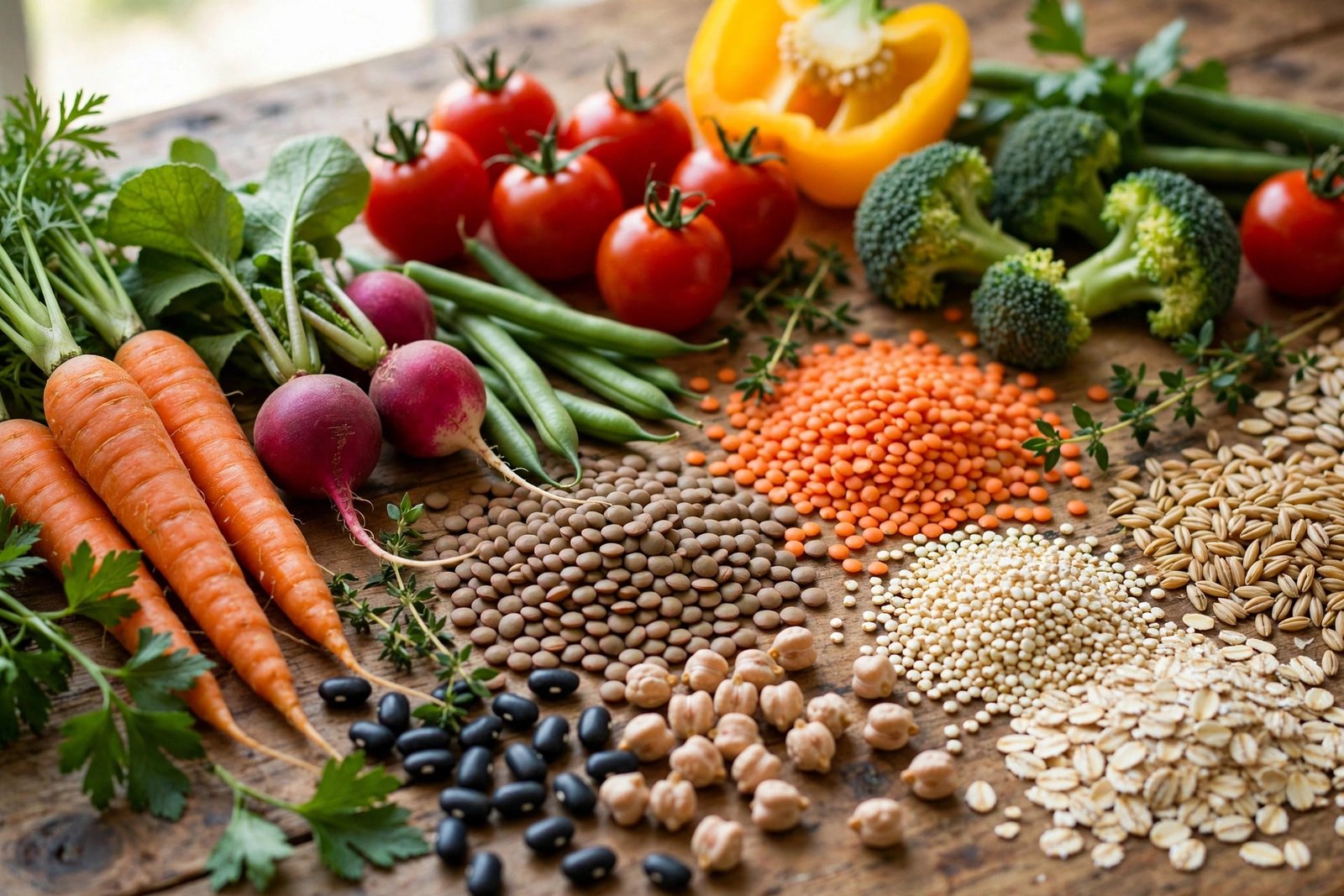
Different gut bacteria thrive on different plant fibres, so variety matters as much as quantity. Eating the same three vegetables on rotation feeds a narrow set of microbes; rotating through different colours, grains and legumes feeds a broader community. Try one new vegetable a week, swap rice for barley or quinoa sometimes, or throw a different bean into your usual stew.
There’s a practical shortcut for this too. When you sit down to a meal, count the plants on your plate — vegetables, fruits, grains, legumes, nuts, seeds and herbs all count. Most people are surprised at how low their usual number is, and just paying attention tends to push it up without any strict rules. Aiming for a colourful, varied plate most days is a simpler and more sustainable target than any complicated diet plan.
4. Choose Whole Foods Over Ultra-Processed Ones Most of the Time
Ultra-processed foods — the packaged snacks, ready meals and sugary drinks that dominate supermarket middle aisles — tend to be low in fibre and high in sugar, salt and additives. Diets heavy in them are consistently linked with less diverse gut bacteria. You don’t need to ban them entirely; the goal is a shift in proportion, so that most of what you eat is recognisable as actual food.
The simplest version of this habit is cooking one more meal from scratch each week than you do now. It doesn’t need to be elaborate. A pot of lentil soup, a tray of roasted vegetables with grains, or a stir-fry takes less time than most people expect, and it puts you back in control of the fibre and salt content. If meal planning feels like the hard part, our guide on how to meal prep for beginners breaks it into a manageable weekly routine.
5. Move Your Body Every Day
Exercise gets your colon moving, which means more regular bowel movements — and regular movement through the gut is one of the clearest signs of a healthy digestive system. Piedmont lists exercise among its top tips for gut health for exactly this reason, and Hackensack Meridian’s doctors say the same: regular activity can help you maintain regular bowel movements, which supports overall gut health.
You don’t need a gym membership or an intense routine. A brisk thirty-minute walk most days does a great deal, and it’s the consistency that counts rather than the intensity. If you sit at a desk all day, even short walking breaks help, because prolonged sitting slows everything down, digestion included.
6. Prioritise Sleep
Sleep is an underrated part of how to improve gut health naturally, because your gut runs on the same daily clock as the rest of you. Poor or irregular sleep disrupts that rhythm, and many people notice their digestion is worse after a run of bad nights. The gut-brain connection runs both ways: stress and tiredness upset digestion, and digestive discomfort wrecks sleep, so breaking the cycle from the sleep side is often the easiest entry point.
The basics work: a regular bedtime, a wind-down hour without screens, a cool dark room, and no heavy meal right before bed. If sleep is a persistent problem for you, it’s worth treating it as its own project rather than a footnote — our guide on how to sleep better naturally covers the habits that actually move the needle. Your gut will notice the difference before you do.
7. Manage Stress Before It Manages Your Gut
Anyone who has felt butterflies before a big moment already knows the gut and brain are connected. Under ongoing stress, that connection shows up as heartburn, bloating, cramping or changes in bowel habits. Stress doesn’t just feel bad in your stomach — it measurably changes how your digestive tract behaves.
The fix doesn’t need to be dramatic. The stress-management techniques that doctors recommend for gut health are the unglamorous ones: slow breathing exercises, a short daily walk, yoga, meditation, or journaling. Hackensack Meridian’s gut health advice specifically lists deep breathing and meditation among the habits that help digestion run efficiently. Pick one that you’ll actually do, and do it daily — ten minutes of a practice you enjoy beats an hour of one you dread and abandon.

8. Drink Enough Water
Fibre only works properly with water. Without enough fluid, a high-fibre diet can actually make constipation worse, because fibre absorbs water as it moves through the gut. Drinking steadily through the day keeps things moving and helps your body absorb nutrients properly.
How much is enough? It varies with your size, activity and climate, but a useful rule is to drink when you’re thirsty and to check that your urine is pale yellow. Carrying a water bottle and sipping through the day beats trying to gulp a litre at once. And if plain water bores you, infusing it with fruit or cucumber is a fine alternative — just skip the sugary vitamin drinks, which add sugar your gut doesn’t need.
9. Limit Alcohol and Ultra-Processed Snacks
Cutting back on alcohol is one of the simplest parts of how to improve gut health naturally. Alcohol irritates the gut lining and disturbs the balance of gut bacteria, and heavy drinking in particular is linked with changes to both the microbes and the gut wall. You don’t need to be teetotal for your gut to benefit — cutting back, having alcohol-free days each week, and avoiding drinking on an empty stomach all help.
The same moderation principle applies to the snack drawer. Artificial sweeteners, which show up in many “diet” products, are linked with bloating and shifts in gut bacteria, according to Hackensack Meridian’s gut health guidance. None of this means never enjoying these things; it means making them the exception rather than the daily default, so your gut spends most of its time dealing with food it handles well.
10. Chew Your Food and Slow Down at Meals
This sounds almost too simple to count, but it matters. Digestion starts in your mouth: chewing breaks food down and mixes it with enzymes, which means your gut has less work to do. Eating quickly, barely chewing, and swallowing large pieces forces your stomach and intestines to pick up the slack, and the result is often bloating and discomfort.
Try putting your fork down between bites, or noticing the first few mouthfuls instead of eating on autopilot. Smaller, more frequent meals can also help if large meals leave you uncomfortable — Piedmont’s dietitians suggest this for people who feel overwhelmed by big portions. Slowing down costs nothing, and for some people it’s the change that makes the biggest immediate difference.
How to Improve Gut Health Naturally: Putting It All Together
If you’re wondering how to improve gut health naturally without overhauling your life in a weekend, the answer is to start with two or three of these habits, not all ten at once. The combination that works best for most people is: more fibre (built up slowly), one fermented food a day, and a daily walk. Once those feel normal — usually after a few weeks — add the next ones, like more plant variety or a regular sleep routine.
Keep a simple note of what changes and how you feel. Gut changes are gradual, and it’s easy to miss slow improvement if you’re not paying attention. A short daily note — what you ate, how you slept, how your digestion felt — will show you patterns within a couple of weeks, and it gives you something concrete to discuss with a clinician if you ever need to.
When to See a Clinician
General lifestyle habits help a healthy gut stay healthy, but they are not a substitute for medical care. See a clinician promptly if you notice any of the following:
- Blood in your stool, or black, tarry stools
- Unexplained weight loss
- Persistent or severe abdominal pain
- Ongoing diarrhoea or constipation that doesn’t improve within a few weeks
- Difficulty swallowing, or vomiting that keeps coming back
- A family history of bowel disease or bowel cancer combined with new symptoms
These can be signs of conditions that need proper investigation, and early assessment makes a real difference. Piedmont’s gut health guidance makes the same point: if you experience frequent diarrhoea or constipation, talk to your physician rather than trying to manage it alone. Don’t be embarrassed — gut symptoms are among the most common reasons people visit their doctor, and clinicians hear about them every day. This article is general information only, not medical advice, and it doesn’t diagnose or treat any condition.
Frequently Asked Questions
How long does it take to improve gut health naturally?
Most people notice small changes within two to four weeks of consistent habits — more regular digestion, less bloating — but meaningful shifts in the gut microbiome take longer, typically a few months of sustained change. Consistency matters more than speed: a moderate fibre increase you maintain beats a dramatic diet overhaul you abandon after a week.
Do I need probiotic supplements?
Not necessarily. For most healthy people, fermented foods with live cultures provide probiotics through food, and a fibre-rich diet feeds the bacteria you already have. Supplements can have a role in specific situations, but the evidence for general daily use in healthy people is mixed, and quality varies widely between products. If you’re considering one, it’s worth discussing with your doctor or a dietitian rather than picking one off the shelf.
Are fermented foods safe for everyone?
Most people tolerate them well, but start with small amounts and build up. People with weakened immune systems, certain gut conditions, or histamine sensitivity may need to be cautious, particularly with unpasteurised products. If fermented foods consistently make you feel worse, stop and talk to a clinician — a reaction is useful information, not a failure.
Can stress really affect my gut?
Yes. The gut and brain communicate constantly through nerves, hormones and immune signals, and stress changes gut movement, sensitivity and even the composition of gut bacteria. That’s why stress management is a standard part of gut health advice from major health systems, not just a wellness add-on. If stress is a major factor for you, addressing it directly may help your digestion more than any dietary change.
What foods are worst for gut health?
The usual suspects are the ones that dominate ultra-processed diets: sugary drinks, deep-fried foods, heavily processed meats, and large amounts of alcohol. None of them needs to be banned forever, but when they make up a large share of your daily diet, they crowd out the fibre and variety your gut bacteria need. Shifting the balance, rather than chasing perfection, is what works.

Conclusion
Learning how to improve gut health naturally comes down to a set of habits that are individually unremarkable and collectively powerful: eat more fibre slowly, add fermented foods, vary your plants, move daily, sleep well, manage stress, drink water, and keep the ultra-processed stuff occasional. Start with two or three, give them a few weeks, and build from there. And remember the boundary: persistent symptoms, blood, or unexplained weight loss mean it’s time to talk to a clinician, not to try another diet tweak. Your gut responds to steady, boring consistency far more than to dramatic gestures — which is good news, because steady and boring is something anyone can do.
For more on the everyday habits that support this kind of steady health, Piedmont’s gut health tips and Hackensack Meridian’s guide to better gut health cover much of the same ground from a clinical perspective, and their signs of poor gut health article is a useful companion to the “when to see a clinician” section above. If stress is your main trigger, Hackensack Meridian’s eight tips for gut health include practical stress-management ideas worth borrowing.