

How to Save Money on Heating in Winter: 15 Ways That Actually Work

Table of Contents
The first cold snap of the year always brings the same shock: the heating goes on, and the bills climb with it. If you are wondering how to save money on heating in winter without sitting in a cold house all season, the answer is not one big fix — it is a stack of small ones that can add up to hundreds of dollars over the season.
The US Energy Information Administration’s Winter Fuels Outlook, published on October 6, 2026, forecasts that the average home heating with natural gas will spend about $640 from November through March — down 9% from last winter — while homes heating with oil face about $2,115, up 21%. Whatever fuel you use, the fifteen tips below will cut what you pay, and most of them cost nothing at all.
What Heating Will Cost This Winter
The EIA’s October 2026 outlook puts average household heating spending for November through March at $640 for natural gas (down 9%), $1,246 for propane (down 3%), $1,196 for electricity (up 4%), and $2,115 for heating oil (up 21%). The oil figure is the sharp one: prices are forecast to average $5.26 a gallon, up 34% from last winter, partly offset by lower expected use.
Those are national averages, not your bill — your actual cost depends on your climate, your home’s insulation, and how warm you keep it. But the spread is useful: saving 10% is worth about $210 on oil and about $64 on gas. The tips below are ordered from the biggest savings to the smallest.
1. Turn the Thermostat Down — and Mean It
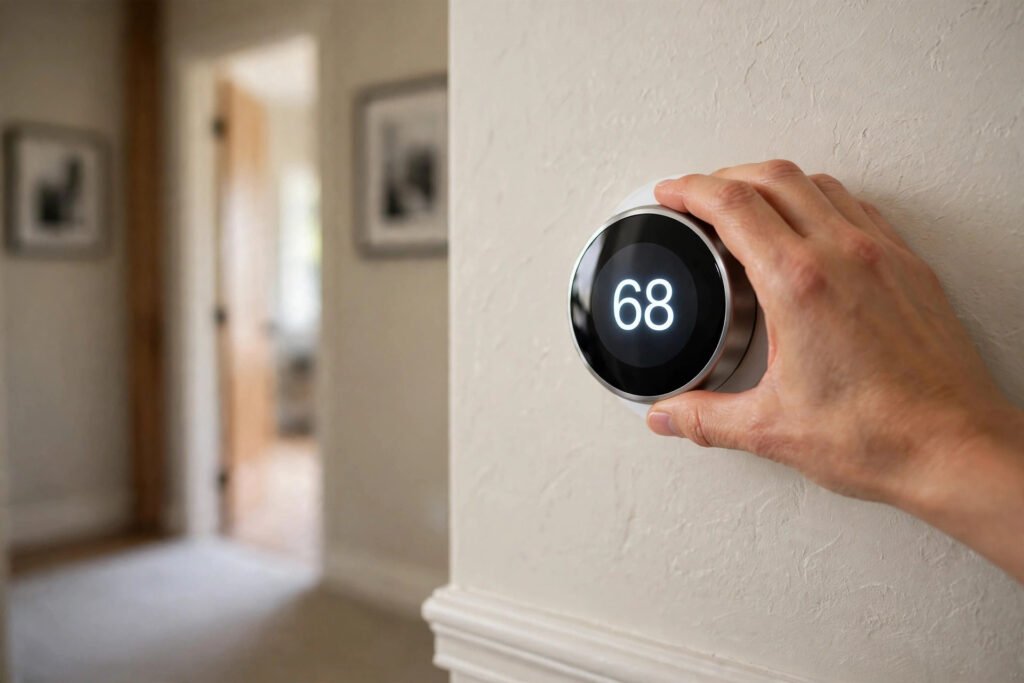
The single most effective way to learn how to save money on heating in winter is also the simplest: lower the thermostat. The US Department of Energy says you can save as much as 10% a year on heating and cooling by turning your thermostat back 7 to 10 degrees Fahrenheit for 8 hours a day — for example, while you are asleep or out at work. Its thermostat guidance explains that the savings come from the smaller gap between indoor and outdoor temperatures, which slows heat loss.
Most people are comfortable at 68°F (20°C) during the day with a jumper on, and 60–65°F overnight with a proper duvet. If 68 feels cold at first, drop one degree a week and let your body adjust. A programmable or smart thermostat makes this automatic: set it to dip overnight and warm the house up half an hour before you get up.
2. Only Heat the Rooms You Use
Heating every room to the same temperature is one of the most expensive habits in a home. Close the doors to spare bedrooms and turn their radiators down — but not completely off in a cold snap, or pipes can freeze. In rooms you use, keep the doors shut so the warm air stays where you are.
If your system allows it, zone heating is even better: a smart thermostat with room sensors, or thermostatic radiator valves set per room, lets the living room stay warm in the evening while the bedrooms stay cool until bedtime.
3. Seal the Draughts
Draughts are the silent leak in most heating budgets. A gap around a front door or a sash window can let in as much cold air as a small open window. The fix is cheap: self-adhesive foam draught strips for doors and windows, a brush strip for the bottom of the front door, and a keyhole cover.
Check the places people forget: the letterbox, the loft hatch, the gap where pipes enter the house, and the edges of a cat flap. A candle or a strip of tissue held near a suspected gap will flutter if air is moving through it. Spend an afternoon sealing the worst offenders and you will feel the difference the same evening.
4. Use Curtains Like Insulation
Curtains are free insulation if you use them properly. Open them on sunny days to let the sun warm the rooms, and close them as soon as the light fades, so they trap a layer of still air between the glass and the room. Heavy, lined curtains work best, and they should reach the floor and close fully across the window.
If your curtains hang above a radiator, tuck them behind it: a curtain draped over a radiator sends warm air straight up behind the fabric instead of into the room. The same goes for furniture — a sofa pushed hard against a radiator blocks the heat from reaching the room.
5. Bleed Your Radiators
If the top of a radiator is cold while the bottom is hot, it is full of trapped air and working at a fraction of its capacity. Bleeding it takes five minutes: turn the heating off, put a cloth under the bleed valve, open it with a radiator key until water comes out, then close it.
While you are at it, check the boiler pressure — most systems want 1 to 1.5 bar when cold — and top it up if it has dropped. A bled, correctly pressurised system heats rooms faster and uses less fuel. If you find yourself bleeding the same radiator every few weeks, call a heating engineer.
6. Service the Boiler Before Winter
An unserviced boiler can lose efficiency year after year without any obvious symptom. A yearly service — ideally in early autumn — keeps the burner clean, checks the flue, and catches small faults before they become a breakdown in January. A boiler running even 5% below its best efficiency costs you 5% more on every bill, all winter.
If your boiler is more than 15 years old, start planning for a replacement rather than nursing it through another winter. Modern condensing boilers are far more efficient — get three quotes, and check whether any rebates or tax credits apply in your area.
7. Reflect Heat Back Into the Room
Radiators on exterior walls lose a surprising amount of heat straight through the wall behind them. Radiator reflector panels — thin sheets of foil-faced material that sit behind the radiator — bounce that heat back into the room. They cost a few dollars per radiator and take minutes to fit.
The same logic applies to the floor: a rug on a bare wooden or tiled floor makes a room feel noticeably warmer underfoot, and in a room above an unheated space it also cuts heat loss downward. Both let you feel comfortable at a lower thermostat setting, which is where the money is saved.
8. Insulate the Loft and the Hot Water Tank
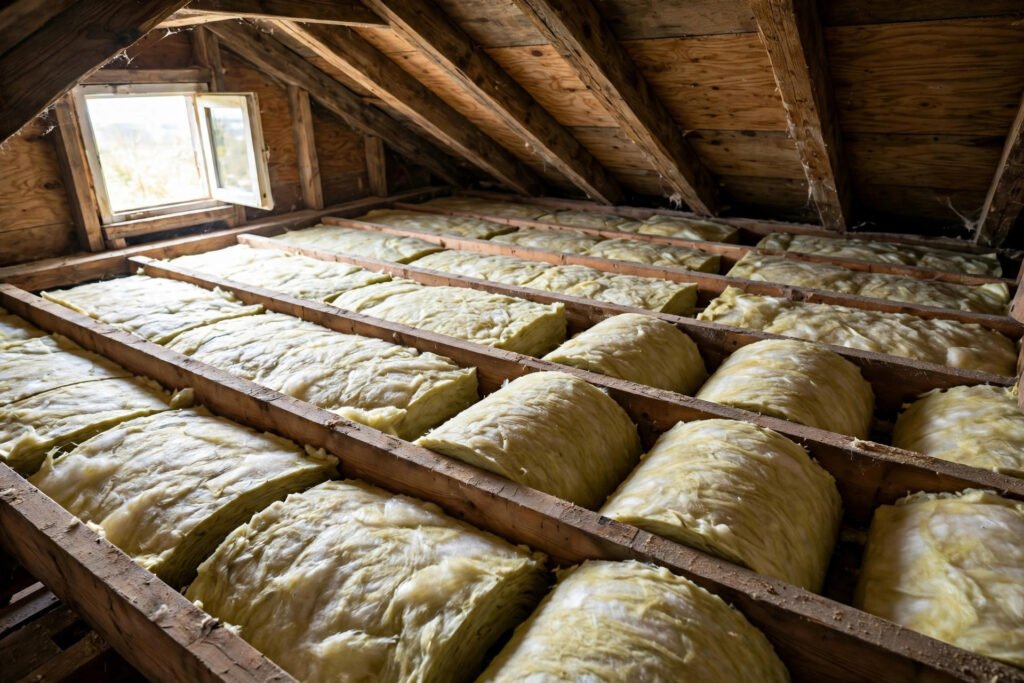
Heat rises, and in an uninsulated house a quarter of it can escape through the roof. Loft insulation is one of the best-value improvements you can make: a thick layer of mineral wool or blown insulation pays for itself in a few winters, and in many places grants or rebates cut the cost. If you already have insulation, check it has not been compressed — flattened insulation insulates far less well.
The hot water tank deserves the same treatment. A lagging jacket costs very little and keeps stored water hot for hours longer, so the boiler fires less often. Turn the water heater down to 120°F (49°C) too: hotter than that wastes energy and risks scalding. Our guide to how much it costs to replace a water heater covers what to do when the tank itself is past its best.
9. Layer Up Indoors
The cheapest heating you will ever buy is a jumper. Wearing an extra layer, thick socks, and slippers indoors lets you drop the thermostat by two or three degrees without feeling cold — and every degree is worth roughly 3% on your heating bill. A heated blanket or a hot water bottle costs pennies per use.
A house at 68°F with a fleece on feels the same as a house at 71°F in a T-shirt — and one of those costs noticeably less. Keep a basket of warm layers by the sofa so reaching for one is easier than reaching for the thermostat.
10. Use Timers and Smart Controls
Heating a house that nobody is in is pure waste. If your household is out from 8 a.m. to 6 p.m., the heating should be off — or set back to a frost-protection temperature — for most of that time. A programmable timer costs little and pays for itself in weeks, and a smart thermostat goes further: it learns your routine and lets you control the heating from your phone.
Smart radiator valves are the next step, letting you set a different schedule for each room: the bedroom only needs heat for an hour before bed and an hour in the morning; the home office only during working hours. Energy Star’s heating and cooling guidance has a useful checklist for choosing controls.
11. Block the Chimney When It Is Not in Use
An open chimney is a hole in the roof that pulls warm air out of the house all day and all night. If you have a fireplace you do not use, a chimney balloon or a draught excluder fitted in the flue stops the constant upward draught. It costs little and fits in minutes.
Put a bright tag on it so nobody lights a fire with the balloon in place, and take it out in summer. If you do use the fire, burn it properly: a closed stove door and dry, seasoned wood produce far more heat per log than an open fire with damp wood.
12. Shorten Showers and Fix Drips
Water heating is the second-biggest energy cost in most homes after space heating, and it is easy to trim. Cutting a daily shower from ten minutes to five roughly halves the hot water used, and a low-flow showerhead cuts it further without making the shower feel weaker. Fix dripping hot taps promptly: a drip is hot water, and therefore money, running down the drain.
A full bath uses roughly twice as much hot water as a five-minute shower, and the saving shows up on both the water bill and the heating bill.
13. Check What Help Is Available
Before winter bites, check whether you qualify for help with heating costs. In the US, the Low Income Home Energy Assistance Program (LIHEAP) helps eligible households with heating bills, crisis assistance, and weatherization, and it is administered state by state. Many energy suppliers also run hardship funds and payment plans.
Suppliers also offer tariffs that reward shifting use. If you have a smart meter, look at time-of-use tariffs that charge less off-peak. A ten-minute call to your supplier can uncover a cheaper tariff or a discount you are not claiming.
14. Winterize the Whole House
The tips above work best as part of a proper winter preparation. Walk around the house in October and deal with everything at once: clear the gutters, lag any exposed pipes in the loft and garage so they do not freeze and burst, and check the roof for slipped tiles. Our full checklist on how to winterize your home covers the whole job step by step.
Pipe lagging deserves a special mention because a burst pipe is the most expensive winter accident most households face. A few metres of foam pipe insulation costs less than a pizza and can save thousands in water damage.
15. Track Your Usage and Adjust
The final step in how to save money on heating in winter is to measure what you are doing. Read your meter once a week and write the numbers down. When you can see usage fall after you seal a draught or drop the thermostat a degree, the habit sticks. When it jumps, you can work out why: a cold snap, a guest, or a radiator that needs bleeding again.
Compare your bills with last winter, month by month — a single cold week can make one bill look terrible while the season as a whole is better. If your usage is still high after working through this list, look at the bigger investments: wall insulation, double glazing, or a heat pump. Our guide on how to lower your electric bill in winter covers the electricity side, with 21 more ideas.

Frequently Asked Questions
What temperature should I set my thermostat to in winter?
Most households are comfortable at 68°F (20°C) during the day and 60–65°F overnight. The Department of Energy suggests turning it back 7–10°F for 8 hours a day, which can save up to 10% a year on heating and cooling.
Is it cheaper to leave the heating on low all day or turn it off?
For most modern, well-insulated homes, turning the heating off or set back while you are out is cheaper — the energy used to reheat the house is less than the energy used to keep it warm all day. The exception is a very poorly insulated home in a deep freeze, where a low background temperature protects pipes.
How much can I really save on heating in winter?
A household that drops the thermostat a few degrees, seals draughts, and uses timers can realistically cut heating costs by 10–20%. On the EIA’s average heating oil bill of $2,115, 15% is more than $300; on a $640 gas bill, it is about $96.
Do smart thermostats actually save money?
Yes, for most households — but the savings come from the behaviour they make easy, not the device itself. A smart thermostat that automatically sets back the temperature when you are out saves money; one that is never programmed does nothing a manual thermostat cannot do.
What is the cheapest way to heat a single room?
For a room you use for a few hours, an electric oil-filled radiator or a heated blanket is usually cheapest, because you are heating one person or one room rather than the whole house. Never leave a space heater unattended or use it overnight.
Can I get help paying my heating bill?
Yes. In the US, LIHEAP provides heating assistance to eligible low-income households, and many states have additional winter fuel funds. Contact your state’s LIHEAP office or your energy supplier’s hardship team before you fall behind.
Conclusion
Learning how to save money on heating in winter is less about one clever trick and more about stacking small wins: a thermostat set two degrees lower, draughts sealed, radiators bled, curtains used properly, and the heating off when nobody is home. Together they can cut a winter heating bill by 10–20% — anywhere from $64 on gas to more than $300 on heating oil, on the EIA’s average figures.
Start with the free ones tonight: turn the thermostat down one degree, close the curtains as the light fades, and put a jumper on instead of reaching for the dial. Then work through the list over the next two weekends, before the coldest weather arrives.



