
What Is Advent? The 2026 Guide to Dates, Candles, and Traditions
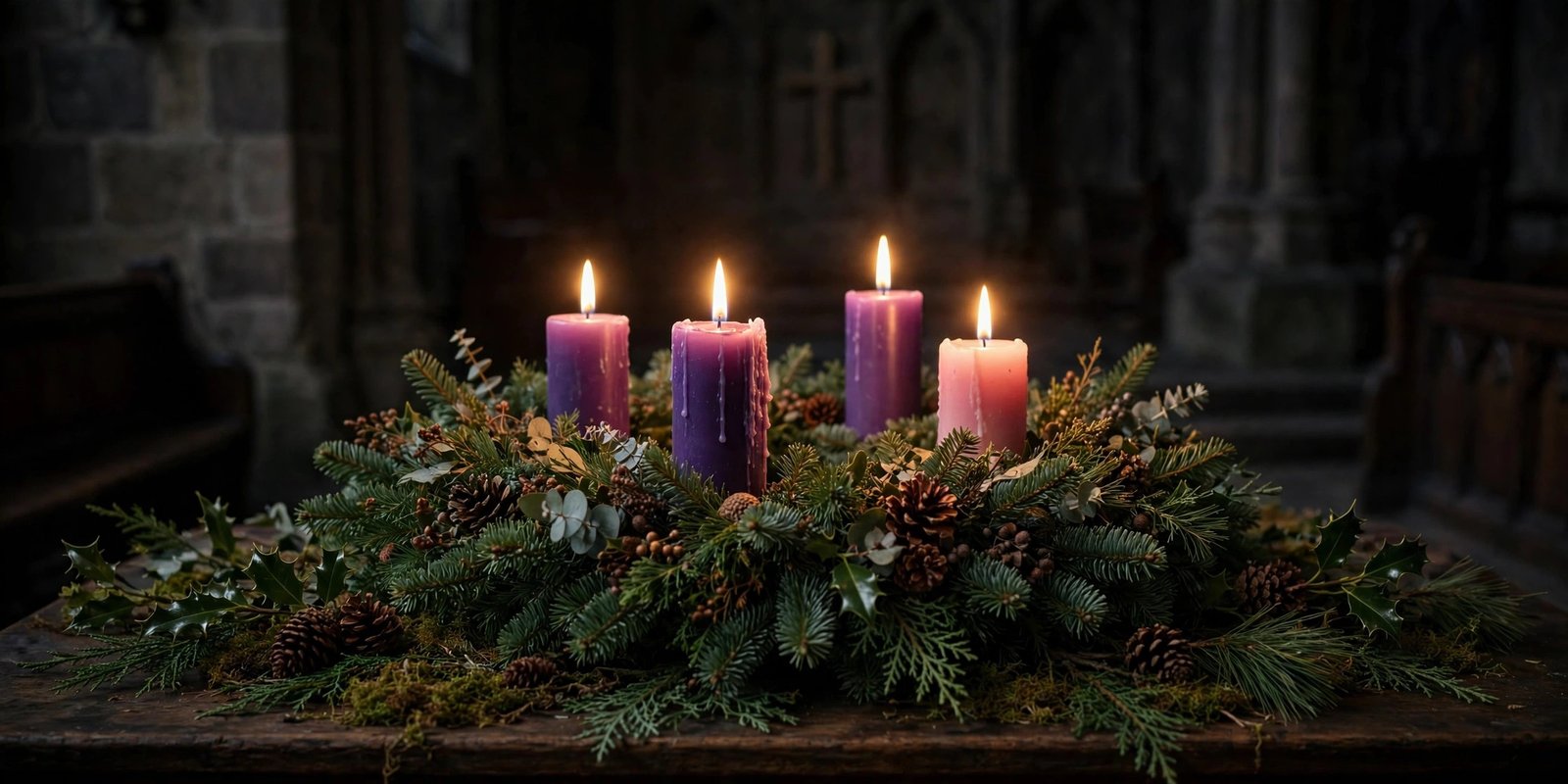
The lights go up, the shops fill with tinsel, and somewhere between the first mince pie and the school nativity play, someone mentions Advent — and you realise you are not entirely sure what it means.
If you have ever wondered what is Advent, you are not alone. Millions of people open an Advent calendar every December without knowing the season behind it is far older than chocolate doors and countdown windows. Advent is the four-week season that opens the Christian year: a period of waiting, preparation, and quiet anticipation before Christmas Day.
This guide explains it properly: the exact 2026 dates, what the four candles mean, how the Advent wreath works, and how Advent differs from the Advent calendar on your mantelpiece.
What Is Advent, Exactly?
Advent is the season of preparation before Christmas. It is the first season of the liturgical year — the church calendar — and it marks the start of a new year for Christians, long before January 1 arrives. The word itself comes from the Latin adventus, meaning “arrival” or “coming”, and it points to two arrivals at once: the birth of Jesus at Christmas, and the Christian belief in his return at the end of time.
At its simplest, what is Advent? It is a season of waiting. Where Christmas itself is a celebration, Advent is the preparation for it: four weeks of slowing down, reflecting, and getting ready. In many churches the mood is deliberately quieter than the festive season that follows — the music more restrained, the decorations simpler, the readings looking forward to hope and promise.
The season is one of the oldest in the Christian calendar. Practices recognisable as Advent date back to the fourth and fifth centuries, when Christians in parts of Europe began setting aside a period of fasting and prayer before Christmas. The shapes varied over the centuries — in some regions it lasted six weeks — but the core idea never changed: Christmas deserves preparation, and Advent is the time set aside for it.
When Is Advent in 2026?
Advent 2026 begins on Sunday, November 29, 2026, and ends on Thursday, December 24, 2026 — just five days from now. If you have been meaning to get a wreath or a calendar, this is the week to do it.
The start date moves every year: Advent always begins on the fourth Sunday before Christmas, the Sunday closest to November 30. Because Christmas falls on a different day of the week each year, the season lasts anywhere from 22 to 28 days. In 2026 it is on the shorter side — four Sundays and 26 days, from November 29 through Christmas Eve.
The key dates are the four Sundays. Each one has its own theme, and many families mark the passing of each week by lighting the next candle. The United States Conference of Catholic Bishops publishes the official liturgical calendar each year, and it confirms the 2026 dates: Advent begins on November 29 and runs through December 24.
The Four Sundays of Advent
The four Sundays of Advent each carry a theme, and together they tell the story of the season. The themes are hope, peace, joy, and love, and they build week by week as Christmas approaches. Each Sunday also has its own candle on the Advent wreath, lit in order as the weeks pass.
The first Sunday is about hope: the promise of Christmas, and light coming into a dark world. It is when the first purple candle is lit, and for many families it is the moment the season properly begins — the wreath comes out, the first candle is lit, and December suddenly feels real.
The second Sunday is about peace: preparing the way, clearing a path, making room, and finding calm in the busiest month of the year. The second purple candle joins the first, and the wreath is now half lit.
The third Sunday is about joy, and it is the one that looks different. Known as Gaudete Sunday, from the Latin word for “rejoice”, it marks the halfway point of the season. The mood lifts, the music brightens, and the candle is pink or rose rather than purple — a splash of colour that signals the waiting is nearly over.
The fourth Sunday is about love. It falls in the final days before Christmas, the most direct preparation of all: the story turns to the birth itself, and the last purple candle is lit. By now all four candles burn together, and the wreath is at its fullest just as Christmas arrives.
| Sunday | Date in 2026 | Theme | Candle colour |
|---|---|---|---|
| First Sunday of Advent | November 29 | Hope | Purple |
| Second Sunday of Advent | December 6 | Peace | Purple |
| Third Sunday of Advent (Gaudete Sunday) | December 13 | Joy | Pink / rose |
| Fourth Sunday of Advent | December 20 | Love | Purple |
The Advent Wreath and Its Candles
The Advent wreath is the most recognisable symbol of the season: a circle of evergreen branches with four candles set around it, and sometimes a fifth in the centre. Each Sunday of Advent, one more candle is lit, so the wreath grows brighter week by week as Christmas draws near.
Three of the four candles are purple. Purple is the colour of preparation and penance in the church calendar — the same colour used in Lent — and it signals that Advent is a serious season, not just a festive one. The purple candles are lit on the first, second, and fourth Sundays.
The third candle is pink, or rose, and belongs to Gaudete Sunday, the Sunday of joy at the halfway point: a deliberate break in the purple, a reminder that the waiting is nearly over and the celebration is close.
The fifth candle, when there is one, is white and sits in the centre of the wreath. It is called the Christ candle, and it is lit on Christmas Day itself — not during Advent. Some families light it at Christmas dinner or the Christmas Eve service, and it stays lit through the Christmas season. The white candle is the point of the whole arrangement: the light the other four candles have been building toward.
Lighting the candles is usually a small family ritual rather than a grand ceremony. Many families gather on Sunday evening, light the next candle, and read a short passage or say a prayer together. The Cru ministry has a helpful guide to the Advent wreath tradition, including the meaning of each candle and suggestions for family readings through the four weeks.

If you are making or buying a wreath this year, a few practical points help. Real evergreen wreaths look beautiful but dry out over four weeks indoors, so keep them away from radiators and fireplaces. Artificial wreaths last for years and are the better choice if you want to reuse the same wreath every December. And never leave lit candles unattended: place the wreath on a heatproof surface, keep it clear of curtains, and blow the candles out before you leave the room.
Advent vs Advent Calendar: What’s the Difference?
This is the question that causes the most confusion, so it is worth spelling out plainly. Advent and the Advent calendar are related, but they are not the same thing — and knowing the difference clears up the two most common mistakes people make about the season.
Advent is the season: the four-week period before Christmas, beginning on the fourth Sunday before Christmas Day. It is a church season with its own dates, themes, and traditions, existing in some form since the fourth and fifth centuries. It is about waiting and preparation, and it belongs to the whole Christian year.
The Advent calendar is a countdown: a calendar with 24 small doors or windows, one to open on each day of December up to Christmas Eve. It is a German tradition, much younger than the season itself, and it exists to make the waiting visible — especially for children. Behind each door is a picture, a chocolate, a small gift, or a Bible verse, depending on the calendar. The calendar marks the days; the season gives those days their meaning.
The two start on different days: Advent begins on a Sunday — November 29 in 2026 — while most calendars begin on December 1. Both end on December 24, but the calendar stops there while the season of Christmas begins. Our guide to what is an advent calendar covers the calendar itself in detail, from its German origins to the many kinds on sale today.
| Advent (the season) | Advent calendar | |
|---|---|---|
| What it is | A four-week church season of preparation before Christmas | A 24-day countdown calendar with doors to open each day |
| When it starts | Fourth Sunday before Christmas (Nov 29 in 2026) | December 1 |
| How long it lasts | 22–28 days, depending on the year | 24 days, December 1–24 |
| What you do | Light wreath candles, read, pray, reflect, prepare | Open one door a day for a picture, chocolate, or verse |
| How old it is | Dates to the 4th–5th century | German tradition, 19th–20th century |

How Families Observe Advent Today
For most families, Advent is a mix of the old and the new — and if you are still asking what is Advent in practice, this is where the answer lives: a few traditions kept from childhood, a few picked up along the way, and a lot of improvisation around real life. There is no single correct way to observe it. The point is the rhythm: a small, repeated act each day or each week that marks the waiting.
The wreath is the centrepiece for many households. Lighting a candle each Sunday takes five minutes, and it gives the week a shape: one candle, then two, then the pink one, then all four. Some families pair the lighting with a short reading or a verse, others with a simple moment of quiet together. Children usually love striking the match, and the ritual becomes a memory they carry into adulthood.
The Advent calendar is the daily version of the same idea. One door a day, opened in the morning, turns December into a countdown with a small reward at each step. Chocolate calendars are the most common, but the range now runs from toy and beauty calendars to calendars with a Bible verse or a good deed behind each door. The Bible Project offers Advent reading plans for families who want the daily moment to be a short passage rather than a sweet.
Daily readings are another common practice. Many churches and publishers produce short Advent devotionals — a verse, a paragraph of reflection, and a prayer — designed to take two or three minutes a day. Done at breakfast or before bed, they are the quietest part of the season, and for many people the most meaningful.

Advent in Other Christian Traditions
Advent is observed across most of the Christian world, but it does not look the same everywhere. The Roman Catholic and Anglican churches follow the four-Sunday pattern described above, with the purple and pink candles and the wreath. Many Protestant churches, including Lutheran and Methodist congregations, observe it in a similar way, with small local differences in candle colours or theme wording.
Orthodox churches observe the season differently. In the Eastern Orthodox tradition, the period before Christmas is known as the Nativity Fast, a forty-day fast that begins in mid-November rather than on the fourth Sunday before Christmas. The emphasis is on fasting and prayer rather than the wreath and candles, and the dates do not line up with the Western calendar in the same way. Visit an Orthodox church in December and you will find a season of preparation that feels related but distinct.
The season also sits alongside other December traditions. Hanukkah, the Jewish festival of lights, often falls in December, and Kwanzaa begins on December 26. Many households celebrate more than one tradition, and the season is richer for it. Our guides to what is Hanukkah and what is Kwanzaa explain those festivals in the same detail as this one.
Whatever the tradition, the answer to what is Advent stays the same at heart. Religion News Service covers how Advent is observed across denominations each year, and the picture is consistent: a season of waiting, marked by light, that ends in celebration. The details differ; the direction of travel does not.
Frequently Asked Questions
What is Advent in simple terms?
Advent is the four-week season before Christmas, a time of waiting and preparation. It begins on the fourth Sunday before Christmas — November 29 in 2026 — and ends on Christmas Eve. The name comes from the Latin word adventus, meaning “arrival” or “coming”.
How long does Advent last?
Advent lasts between 22 and 28 days, depending on the year. It always begins on the fourth Sunday before Christmas and always ends on December 24. In 2026 it runs from November 29 to December 24 — 26 days.
Why are three Advent candles purple and one pink?
Purple is the colour of preparation and penance, used for the first, second, and fourth Sundays. The pink, or rose, candle belongs to the third Sunday, Gaudete Sunday — the Sunday of joy at the halfway point. The pink candle is a splash of colour that signals the celebration is near.
Is Advent the same as an Advent calendar?
No. Advent is the season itself, beginning on the fourth Sunday before Christmas, while an Advent calendar is a 24-door countdown starting on December 1. The calendar marks the season day by day, but the season is older and longer than the calendar.
Do you have to be religious to celebrate Advent?
No. Many families who never attend church still keep Advent traditions: the wreath, the calendar, the daily readings, or simply the rhythm of counting down to Christmas. The season works as a way of slowing December down, whatever your beliefs.
Conclusion
So what is Advent, in the end? It is the season that gives December its shape: four weeks of waiting, marked by candles lit one by one, ending in the celebration of Christmas Day. It begins on the fourth Sunday before Christmas — November 29 in 2026 — and runs through Christmas Eve, each Sunday carrying its own theme of hope, peace, joy, and love.
If you take one thing from this guide, let it be the dates: Advent 2026 starts on Sunday, November 29. Get the wreath out on Saturday, light the first candle on Sunday evening, and let the season do what it has done for sixteen centuries — slow December down, one candle at a time. And if you are curious about the season’s lighter customs, our guide to what is Secret Santa covers one of the lighter customs that grew up around the same weeks.



