
Cast Iron vs Stainless Steel Skillet: Which Pan Deserves Your Money in 2026?
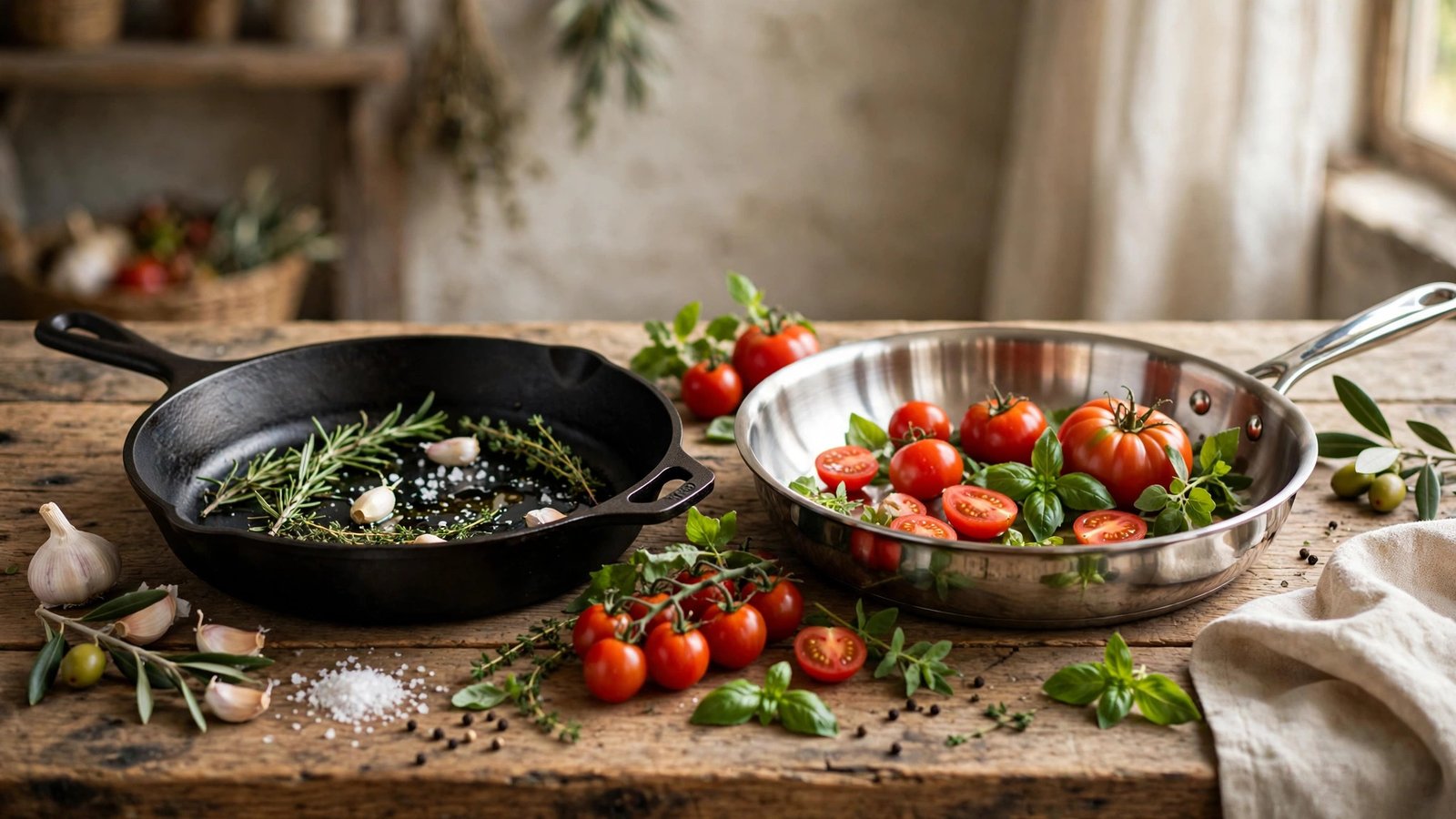
Every serious home cook eventually faces the same question: cast iron vs stainless steel skillet — which one should you buy? Walk into any kitchen store and you will find both, each claiming to be the last pan you will ever need, priced anywhere from $25 to $300. The truth is less dramatic than the marketing. Cast iron and stainless steel are genuinely different tools, built for different jobs, and the right choice depends on what you cook, how you cook it, and how much maintenance you are willing to do.
This guide compares the two pans honestly — heat, searing, weight, care, price, and lifespan — so you can decide which to buy first, and whether you eventually need both.
Cast Iron vs Stainless Steel Skillet: The Quick Verdict
Buy a clad stainless steel skillet first if you cook a wide variety of food and want one pan that does almost everything with minimal care. Buy cast iron first if you love searing steaks, baking cornbread, and cooking over high heat — and you do not mind seasoning and hand-washing. If you cook seriously more than a few times a week, you will eventually want both, because neither pan fully replaces the other.
The Comparison at a Glance
| Feature | Cast Iron Skillet | Stainless Steel Skillet |
|---|---|---|
| Heat retention | Excellent — huge thermal mass holds heat | Moderate — depends on the clad core |
| Heat-up speed | Slow — needs several minutes to preheat evenly | Fast — responds quickly to burner changes |
| Searing | Best in class — deep, even browning | Very good, especially with a hot preheat |
| Weight (12-inch) | Heavy — about 7–8 lb empty | Light — about 2–3 lb |
| Acidic foods | Reactive — avoid long simmers of tomato or wine | Non-reactive — tomato, wine, and vinegar are fine |
| Care | Seasoning, hand-wash, dry immediately | Dishwasher-safe, scrub freely |
| Typical price (12-inch) | Around $25 for a basic Lodge | $80–$200 for a good clad pan |
| Lifespan | A lifetime — and beyond, with care | 20–30 years for a quality pan |
| Oven-safe | Yes, any temperature your oven reaches | Yes, typically up to 600°F |
| Nonstick surface | Seasoned surface improves with use | None — food sticks unless you preheat and oil properly |
How Cast Iron Actually Works
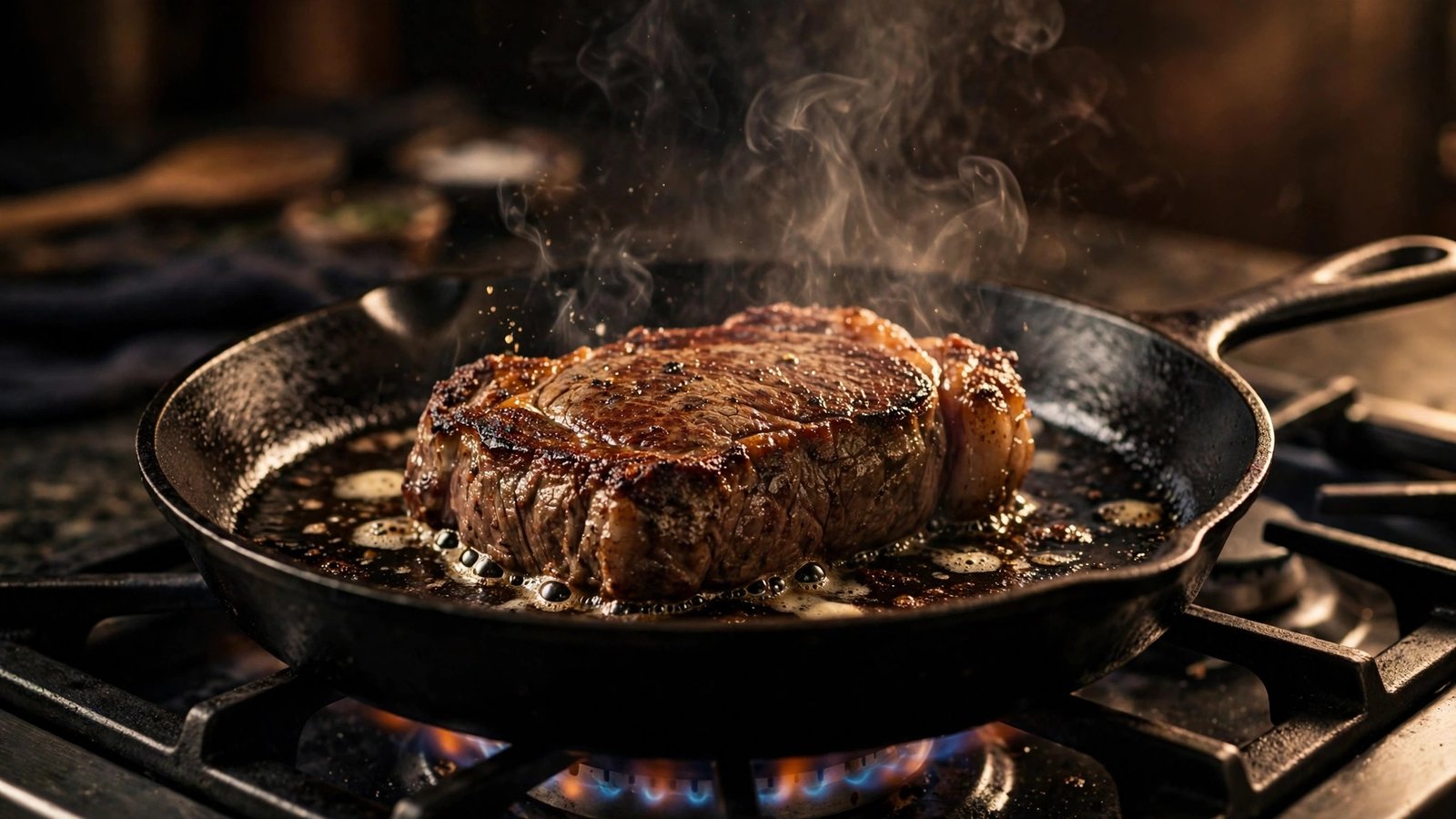
Cast iron is a single piece of iron, cast in a mould and finished with a rough or smooth cooking surface. Its defining quality is thermal mass: a 12-inch Lodge skillet weighs about 7.9 pounds empty, and all that iron stores an enormous amount of heat. That is why a cast iron pan sears so well. When you lay a cold steak on it, the pan barely notices — the surface stays hot, moisture evaporates fast, and you get the deep brown crust that chefs call the Maillard reaction.
Iron is a mediocre conductor, at roughly 50 W/m·K, so heat spreads slowly across the surface. A cast iron pan needs a few minutes to preheat evenly and develops hot spots if you rush it; on a small burner the centre runs far hotter than the edges. Given time, though, it becomes one of the most even, stable cooking surfaces in the kitchen.
The other defining feature is seasoning: a thin layer of polymerised oil baked onto the iron. A well-seasoned pan has a naturally slick surface that improves with use and protects the iron from rust. Seasoning is not hard — a thin coat of oil, wiped almost dry, heated until it smokes — but it is a commitment you repeat, lightly, for the life of the pan.
What Cast Iron Is Best At
Searing steaks and chops, frying chicken, baking cornbread and skillet cookies, roasting vegetables at high heat, and cooking over a campfire or grill — anything where sustained, even, high heat matters. It also goes straight from stove to hot oven — a frittata, a pan pizza, a roast chicken — with no handles or coatings to worry about.
Where Cast Iron Struggles
Acidic food is the big one. Iron reacts with acid, so simmering tomato sauce, wine, or vinegar can strip seasoning and give food a metallic taste. Lodge care guidance advises against leaving acidic food in the pan for more than about 45 minutes, and a freshly seasoned pan is more vulnerable than a well-used one. Delicate fish and eggs can also frustrate beginners, because new seasoning has not yet built up to a slick surface. And the weight is real: a loaded 12-inch skillet is heavy to lift with one hand, and a poor choice for anyone with wrist problems.
How Stainless Steel Actually Works
A good stainless pan is clad — layers of metal bonded together — because stainless steel on its own is a poor heat conductor, at roughly 16 W/m·K. A typical clad pan sandwiches an aluminium or copper core between two layers of stainless steel: the core spreads heat quickly and evenly, while the stainless surfaces are durable, non-reactive, and easy to clean. As All-Clad and other clad cookware makers explain, the quality of that core is what separates a $200 pan from a $40 one.
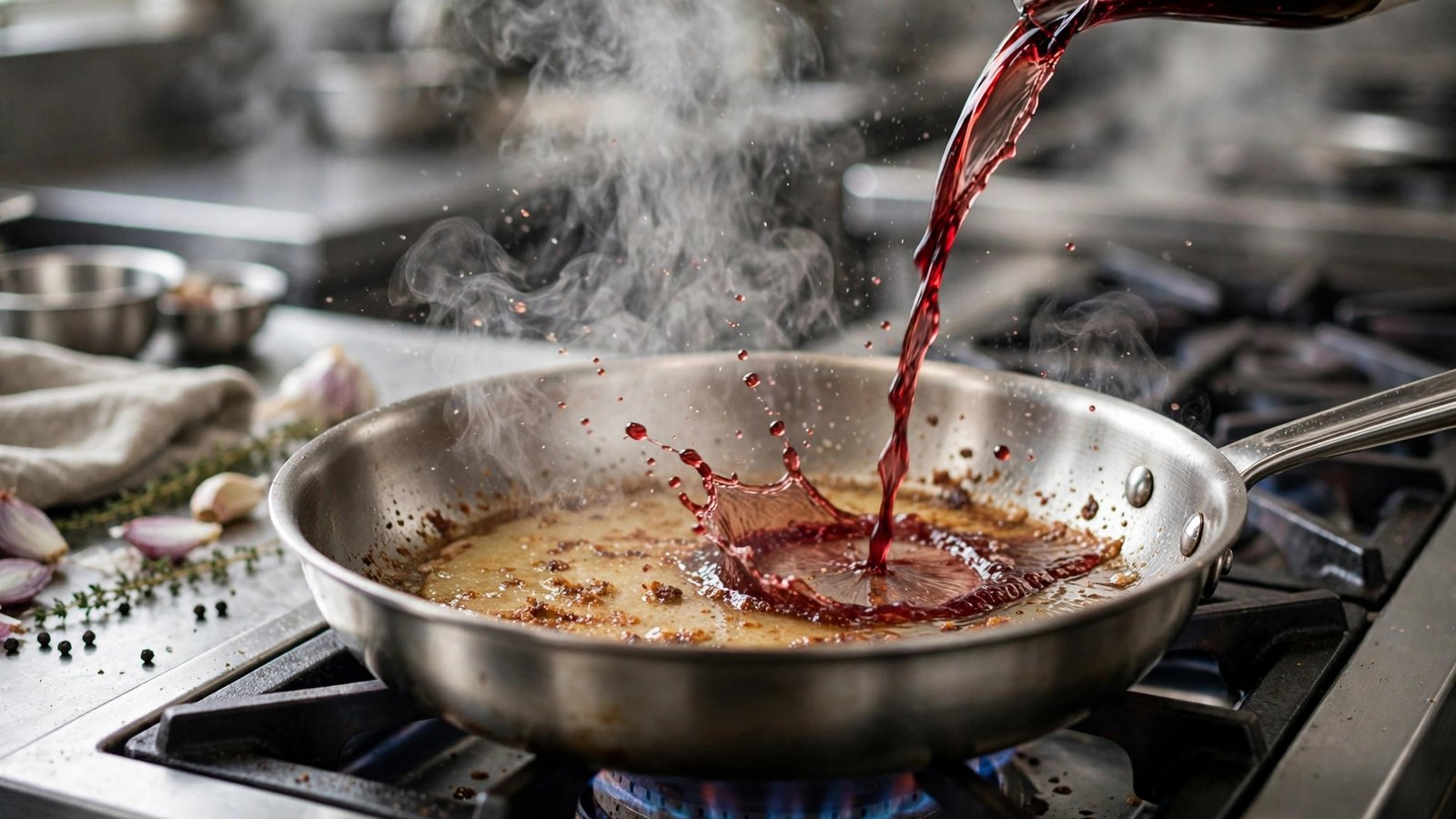
The cooking surface is bare metal — no coating to wear out, nothing to season. Food sticks at first, and that is actually useful: the browned bits that stick, called fond, are the foundation of a pan sauce. A splash of wine or stock lifts them off and turns them into flavour — the single best reason to own a stainless skillet.
What Stainless Steel Is Best At
Pan sauces, sautéing vegetables, anything acidic, searing followed by deglazing, and everyday cooking where you want to move fast. It heats quickly, responds to burner changes in seconds, and goes from stove to dishwasher without a second thought. For a cook who makes a different dinner every night, that flexibility is hard to beat.
Where Stainless Steel Struggles
It does not hold heat like cast iron, so a thick steak can cool the pan enough to steam rather than sear unless you preheat thoroughly. Eggs and fish stick unless you learn the technique — hot pan, cold oil, wait for the food to release. And a cheap stainless pan with a thin base or disc bottom instead of full cladding heats unevenly and scorches food in the centre. If you buy stainless, buy a fully clad pan from a reputable maker; a thin pan is a false economy.
Searing: The Head-to-Head Test
In the cast iron vs stainless steel skillet debate, searing is where most people expect cast iron to win outright, and it usually does — but the gap is smaller than the internet suggests. What matters is how much heat the pan holds when cold food hits it, and cast iron’s thermal mass gives it a clear edge: the surface temperature drops far less, so the crust forms faster and more evenly. For a thick ribeye or a pork chop, cast iron is the better tool.
Stainless steel can still sear very well if you preheat it properly — two to three minutes on medium-high, then a thin layer of high-smoke-point oil until it shimmers. The crust will be slightly lighter, but for chicken thighs, salmon, or a thin steak, the difference is small. If you sear meat several times a week, cast iron earns its place; once a week or less, a good clad stainless pan covers you.
Care and Maintenance: The Real Cost
In the cast iron vs stainless steel skillet comparison, care is where the two pans diverge most. Cast iron care is not difficult, but it is a routine: wash by hand with hot water and a stiff brush, dry it immediately (a minute on a warm burner does it), and wipe on a whisper of oil. Never soak it, never put it in the dishwasher, and never leave it wet. Done right, the pan lasts forever — there are skillets in daily use that are a century old. Done wrong, it rusts, and you are back to scrubbing and re-seasoning.
Stainless steel asks almost nothing. Scrub it with anything, put it in the dishwasher, leave it in the sink overnight — it will be fine. The only real maintenance is stuck-on food, and a paste of baking soda or a soak in hot water handles that. For a busy household this is a genuine advantage: the best pan is the one you actually use, and a pan that needs a ritual after every meal gets used less.
For a full walkthrough of the cast iron routine, see our guide on how to clean a cast iron skillet. If you are weighing other kitchen upgrades, our comparisons of the hand mixer vs stand mixer and the air fryer vs oven follow the same honest approach.
Weight, Safety, and Everyday Handling
A 12-inch cast iron skillet weighs around 7–8 pounds empty; add a pound of chicken and a cup of sauce and you are lifting ten pounds with one hand over a hot burner. That is fine for most adults, but it is a real consideration with wrist or shoulder issues, or if you cook with the pan every day. Stainless steel is dramatically lighter — a 12-inch clad skillet is typically 2–3 pounds — and far easier to toss, tilt, and pour from.
Iron does migrate from a cast iron pan into food, especially acidic food, but for most people that is harmless — a small amount of dietary iron. Oregon State University Extension research notes that leaching increases with acidic ingredients and longer cooking times, so the effect is real but modest. Stainless steel can leach trace amounts of nickel and chromium, but at levels well within normal dietary exposure. Neither pan is a health hazard in ordinary use.
Price: What You Actually Pay
Cast iron is one of the great bargains in the kitchen. A basic 12-inch Lodge skillet costs around $25, and it is the same pan a professional cook would buy. You can spend more on a smooth-finished boutique pan, but the $25 Lodge does the job. Enameled cast iron — a cast iron core with a glass coating, like Le Creuset or Staub — solves the acid problem and needs no seasoning, but costs ten times as much and can chip if dropped.
A quality fully clad 12-inch skillet from a reputable brand runs roughly $80–$200, and that is the range worth shopping in. Below that you are usually getting a thin disc-bottom pan that will scorch and warp; above it, you are paying for a brand name or a copper core most home cooks will never notice. Buy once, buy clad, and expect 20–30 years of service.
Prices are approximate ranges from the brands’ current listings — check current prices before you buy.
Which Pan Should You Buy First?
For most home cooks deciding between cast iron vs stainless steel skillet, the answer is a clad stainless steel skillet. It handles the widest range of food, including acidic sauces and delicate fish, needs no maintenance, and is light enough to use every day. It covers the most dinners with the least friction, and that matters more than winning any single category.
Buy cast iron first if your cooking leans heavily toward searing, frying, and baking — steak weekly, fried chicken, cornbread, or campfire cooking. It is also the right first pan if you enjoy the ritual of caring for a tool and want something that will outlive you. At around $25, it is the cheapest serious pan you can own, so there is very little risk in trying it.
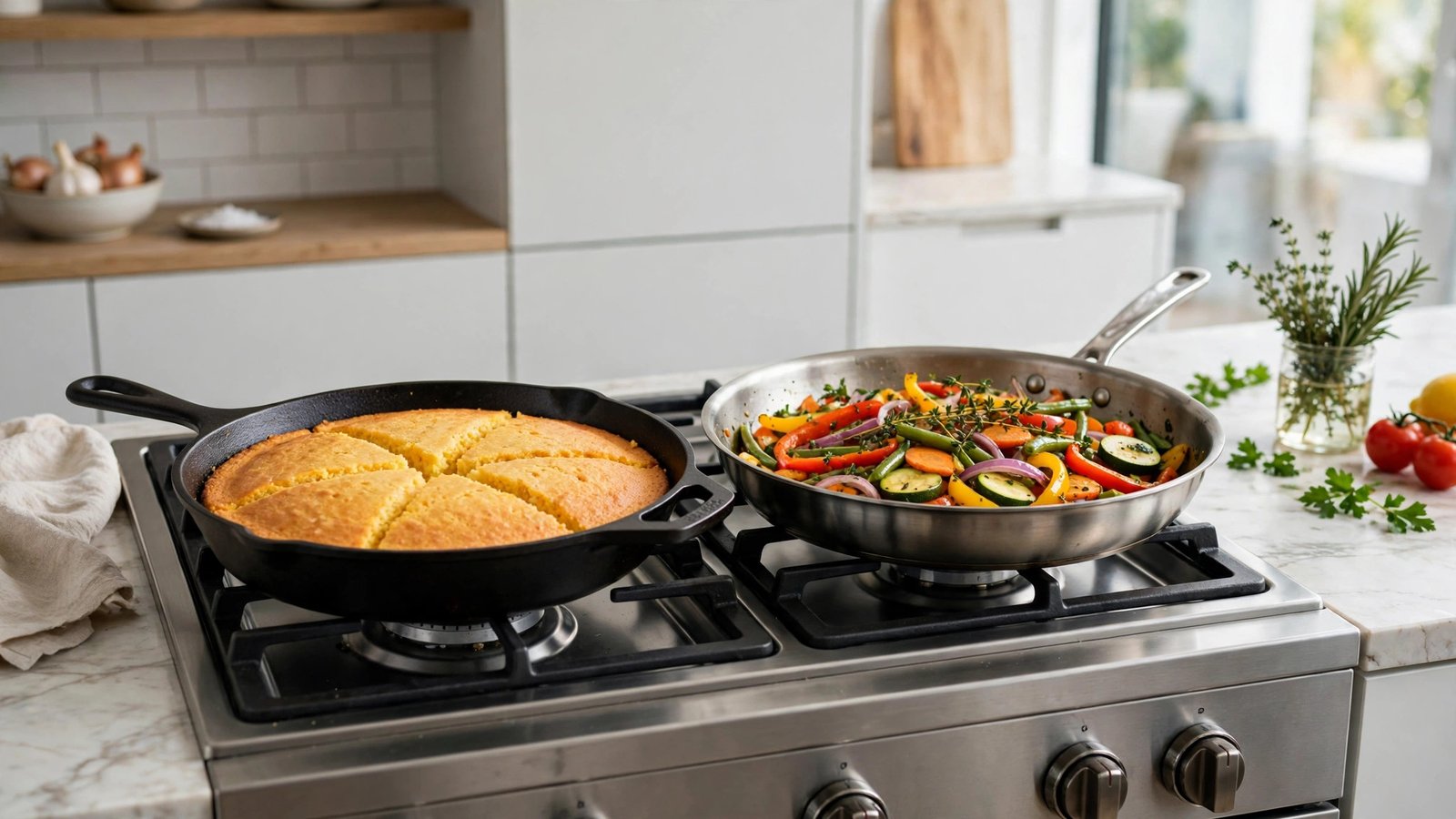
The honest answer for a serious cook is both. Use stainless for sauces, acidic dishes, and fast weeknight cooking; use cast iron for searing, frying, and baking. Together they cost less than a single premium nonstick set that will need replacing in five years, and they will both still be in your kitchen decades from now. For technique and testing behind this comparison, Serious Eats publishes some of the most thorough pan testing available, and it is worth reading before you spend serious money.
Frequently Asked Questions
Can I use a cast iron skillet on a glass-top stove?
Yes, but set it down gently — never slide it, or the rough bottom can scratch the glass. The same applies to induction cooktops, where cast iron works well because it is magnetic.
Is stainless steel or cast iron better for eggs?
A well-seasoned cast iron pan is better for eggs once the seasoning is built up, because the surface is naturally slick. Stainless steel can cook eggs well too, but it needs the right technique: preheat the pan, add oil, wait until it shimmers, then add the eggs and let them release. Beginners usually find cast iron more forgiving.
Do I need to season a stainless steel skillet?
No. Stainless steel has no coating to maintain and no seasoning to build. You can wash it, scrub it, and put it in the dishwasher. Some cooks do a light “seasoning” of stainless for eggs, but it is optional and temporary, not a requirement.
Can I cook tomato sauce in a cast iron skillet?
Briefly, yes — a quick tomato dish is fine in a well-seasoned pan. But do not simmer tomato sauce, wine, or vinegar in cast iron for a long time: Lodge advises against leaving acidic food in the pan for more than about 45 minutes, because the acid strips seasoning and can give food a metallic taste. Use stainless steel for long simmers.
Which pan lasts longer?
Cast iron, by a wide margin. A cast iron skillet can last a lifetime and be passed down for generations — there is almost nothing that can break it short of dropping it on concrete. A quality stainless steel pan lasts 20–30 years, which is still excellent, but it can warp or lose its cladding bond eventually.
Is enameled cast iron worth the extra cost?
It is worth it if you want cast iron’s heat retention without seasoning or acid worries. Enameled cast iron handles tomato sauce, braises, and bread baking beautifully, and it cleans easily. But it costs far more than raw cast iron, it can chip, and it is even heavier — a luxury upgrade, not a first pan.
Conclusion
Cast iron vs stainless steel skillet is not a contest with one winner. Cast iron wins on searing, heat retention, price, and lifespan; stainless steel wins on versatility, acidic foods, pan sauces, weight, and ease of care. For most cooks, a clad stainless skillet is the smarter first buy — it covers the most meals with the least fuss. But at around $25, cast iron is the best value in the kitchen, and the two pans together cover nearly everything a home cook will ever make. Buy the stainless first, add the cast iron second, and you will never need another skillet.



