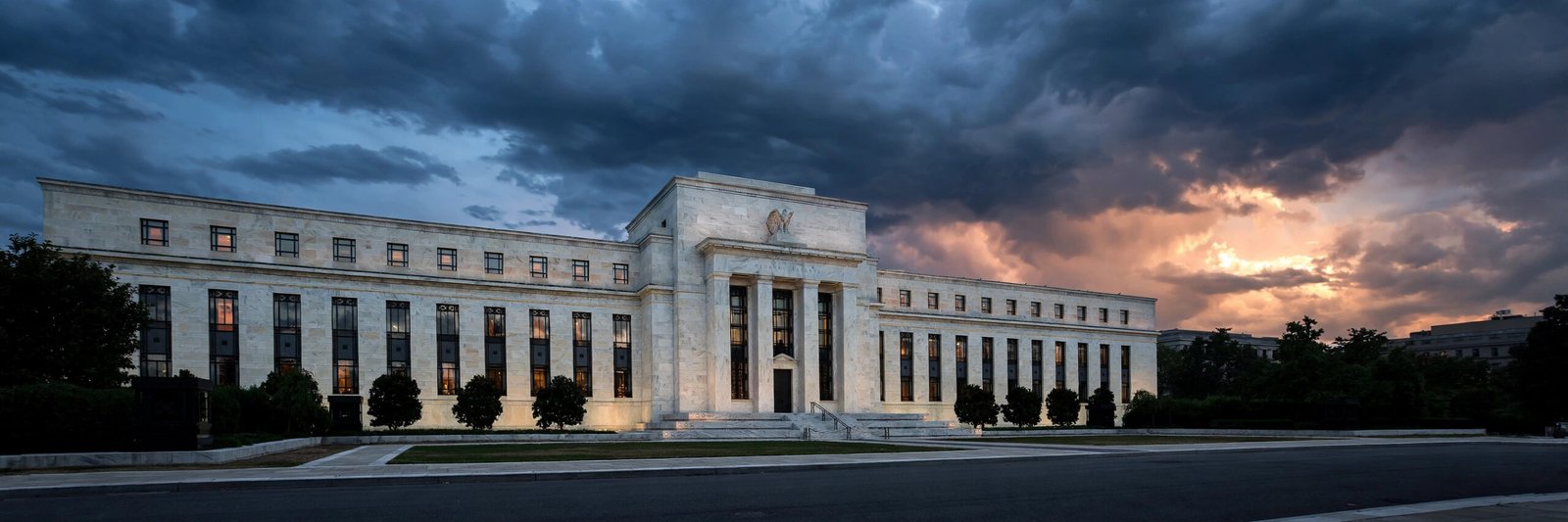

It is Monday, October 26, 2026, and Wall Street is walking into one of the busiest weeks of the year. The fomc meeting october 2026 reaches its decision on Wednesday, two of the world’s biggest technology companies report earnings the same day, and Thursday brings a triple hit of growth data, inflation data, and another giant earnings report. For anyone with a mortgage, savings, or investments, this is a week worth watching — not because one announcement will change your life overnight, but because the messages arriving together will shape borrowing costs and household budgets for months.
The backdrop is tense: stocks fell on Friday, oil is above $116 a barrel, and consumers are gloomy. The Fed has spent recent weeks in its quiet period, saying little in public, so Wednesday’s statement and press conference will be the first fresh signal in a while. Add in Microsoft, Alphabet, and Amazon earnings, and the week’s two biggest questions — how fast is the economy growing, and how much will money cost — get answered almost together.
This article is educational, not personal financial advice. It explains what is happening and what each release means in plain language, so you can make sense of the headlines as they land.
The FOMC Meeting October 2026 Week, Day by Day
Here is the week in one view. Times are Eastern Time, the timezone Wall Street uses for market announcements.
| Day | What happens | Why it matters |
|---|---|---|
| Monday, October 26 | No major scheduled data releases; positioning ahead of the Fed meeting | Traders set up their positions before the decision, so moves in bond yields can hint at what the market expects |
| Tuesday, October 27 | First day of the two-day Fed meeting; Conference Board Consumer Confidence for October | Consumer confidence shows how households feel about jobs and spending, which feeds into the Fed’s thinking |
| Wednesday, October 28 | Federal Reserve policy decision at 2:00 p.m. ET, followed by the Fed Chair’s press conference at 2:30 p.m. ET; Microsoft and Alphabet report earnings after the market closes | The decision and the press conference are the week’s main event; the two earnings reports test the artificial intelligence spending story |
| Thursday, October 29 | Advance estimate of third-quarter GDP, September PCE inflation data, and Amazon earnings after the close; weekly jobless claims | Growth, inflation, and a major retailer and cloud company all in one day — a full health check on the economy |
| Friday, October 30 | Chicago PMI for October and the Employment Cost Index for the third quarter | Wage-cost data is one of the Fed’s preferred gauges of underlying inflation pressure |

What the Fed Is Deciding — and What to Listen For
The Federal Open Market Committee, the Fed’s rate-setting body, meets eight times a year to set the target range for the federal funds rate, the benchmark overnight rate that ripples through the financial system. In September it raised that range by a quarter point to 3.75% to 4.00%, its first increase in three years, on a unanimous 12–0 vote. The question this week is whether it holds, raises again, or signals a December move.
Market pricing ahead of the meeting leaned heavily toward a hold. According to the CME FedWatch tool, as reported in a TradingKey preview of the October Fed meeting, traders put the chance of no change in October at about 90.6%, with only about a 9.4% chance of a quarter-point rise. Those odds move quickly as new data arrives, so treat them as a snapshot of sentiment, not a prediction carved in stone.
One detail matters for how much guidance to expect. This is a non-SEP meeting, meaning there is no new Summary of Economic Projections and no updated dot plot — the chart showing where individual policymakers expect rates to go. Without fresh projections, the written statement and the Chair’s words at the press conference carry extra weight. Watch for three things: any change in how the statement describes inflation, any language about the labour market, and whether the Chair keeps the door open to a December move or tries to close it.
It is also worth remembering why this meeting has drawn so much attention. The Fed’s own minutes from September, released on October 7, showed most participants expected another increase by year-end, and the committee had said it had not seen sufficient progress on lowering inflation. At the same time, the week-ahead preview from fomc meeting october 2026 noted that the case for tightening had become harder to make after mixed earnings and softer data. That tension — inflation still too high for comfort, growth showing cracks — is exactly what makes Wednesday’s communication so important.
Why the statement wording moves markets
Central bank statements are short, but traders compare each new one with the previous one almost word for word. A single changed adjective about inflation can shift bond yields, which feed into mortgage rates and business borrowing costs. The press conference matters more, because the Chair is asked directly what would make the Fed move in December and what data would change its mind. Expect sharp moves after 2:30 p.m. ET — and expect some to reverse by the next morning.

Why the Fed Decision Matters for Mortgages, Savings, and Borrowing
You do not need to own shares for the Fed’s decision to touch your finances. The federal funds rate anchors short-term rates across the economy: when it rises, banks typically charge more for variable-rate loans and credit cards, and yields on savings accounts and new bonds tend to rise. When it falls, borrowing gets cheaper but savers earn less. A hold still matters, because it confirms current rates for longer and shapes what lenders expect next.
Mortgages are the most visible example, but the link is indirect. Fixed mortgage rates in the United States track the 10-year Treasury yield more closely than they track the Fed’s overnight rate, and that yield was sitting at around 4.99% ahead of this week. That is why mortgage rates can rise even when the Fed does nothing: if traders decide inflation will stay higher for longer, they demand a higher yield to lend for ten years, and mortgage lenders pass that cost on. Whatever the fomc meeting october 2026 produces on Wednesday, the bond market’s reaction in the following hours will tell homeowners and buyers as much as the headline decision itself.
For savers, the logic runs in reverse: higher-for-longer rates generally mean better returns on savings accounts and short-term bonds, though bank rates vary widely and often lag market rates. For borrowers, a hold beats a hike, but it is not relief — high rates stay high until the Fed actually cuts, and no cut is on the table this week.
Small businesses feel it through loan and credit costs, and uncertainty about future rates can delay expansion plans. A clear signal — even a hawkish hold confirming rates stay high — can help planning, because a known cost is easier to budget for than an unknown one.
The practical takeaway for households
Do not rush a big financial decision because of one week’s headlines. If you are house-hunting, watch how the 10-year yield moves over the following days rather than the first hour of trading. If you are saving, compare what your bank actually pays rather than assuming a Fed decision flows straight into your account. Paying down high-interest debt remains the most reliable return available, whatever the Fed does. This is general education, not advice about your situation.

What Markets Did Last Week
Friday, October 23, 2026, was a down day across the board, and it capped a mixed week. The Dow Jones Industrial Average fell 1.23% on Friday to close at 52,215.16, but still finished the week up 0.4%. The S&P 500 dropped 0.52% on Friday to 7,623.68 and ended the week down 0.5%. The Nasdaq Composite slipped 0.21% on Friday to 25,955.34 and finished the week down 0.7%. In other words, Friday hurt, but it did not erase everything — and for the Dow, the week as a whole was still positive.
| Index | Friday close (Oct 23) | Friday change | Weekly change |
|---|---|---|---|
| Dow Jones Industrial Average | 52,215.16 | -1.23% | +0.4% |
| S&P 500 | 7,623.68 | -0.52% | -0.5% |
| Nasdaq Composite | 25,955.34 | -0.21% | -0.7% |
Two forces stood out behind Friday’s falls. First, Brent crude rose above $116 a barrel — $116.72 according to the FNArena Monday Report, its highest since April 29 — on Middle East tensions and attacks on energy infrastructure. Expensive oil pushes up transport and heating costs and feeds into inflation. Second, University of Michigan consumer sentiment sat near historic lows at 48, with one-year inflation expectations at 4.7%. Gloomy consumers who expect rising prices are less likely to spend freely, and spending drives most of the American economy.
Beneath the headline indexes, the equal-weighted S&P 500 — which gives every company the same weight rather than letting the giants dominate — actually rose 1.1% on the week, and small caps rose too. That pattern, repeated for a second week, suggests institutions were selling expensive growth stocks while rotating into value and defensive names ahead of the Fed meeting.
What to Watch in Earnings This Week
Earnings season is now at its second peak, and this week’s reports will test the story that has driven markets all year: that massive spending on artificial intelligence infrastructure will eventually pay off. Last week’s results gave that story a mixed reception, and the details are worth knowing before this week’s giants report.
Meta Platforms beat on revenue, reporting $64.6 billion against a $63.31 billion consensus, up 26% year over year. But earnings per share printed at $3.83 against a $6.67 consensus after a $9.89 billion legal charge, and the company posted negative free cash flow for the first time since its 2012 initial public offering, as third-quarter capital expenditure of $34.91 billion exceeded operating cash flow of $32.79 billion. Meta also raised the floor on its full-year capital expenditure guidance to $135–145 billion. The market’s verdict was blunt: the shares fell about 7% on the week. The lesson for this week is clear — investors are no longer cheering AI spending unconditionally. They want evidence that the spending turns into revenue, and they are punishing companies that burn more cash than they generate.
That sets up Wednesday’s double-header. For Microsoft, Azure cloud growth matters most, with consensus around $3.10 in earnings per share on $68.7 billion in revenue. If Azure holds up, it supports the case that businesses are actually buying AI services at scale. For Alphabet, watch Search and YouTube advertising revenue: after Meta’s mixed signal, advertiser confidence is an open question, and Alphabet is a good real-time gauge of it.
Thursday’s Amazon report completes the picture. Amazon Web Services growth and advertising revenue sit at the intersection of the week’s two themes: business technology investment and consumer spending power. Strong AWS would suggest companies are still investing; soft advertising would suggest brands are pulling back. With Thursday’s GDP and PCE data, it gives a clear single-day snapshot of the American economy.
One more thread: guidance. What companies say about the next quarter often matters more than what they just earned. If several giants sound cautious about hiring, spending, or consumer demand, it will shape how the market reads the Fed’s December options.
For context, see our coverage of last week’s market action, October’s US manufacturing data, and the recent Nasdaq AI sell-off, plus the TradingKey week update.
Frequently Asked Questions
When is the fomc meeting october 2026 decision?
The Federal Open Market Committee meets on Tuesday, October 27, and Wednesday, October 28, 2026. The policy decision is announced on Wednesday, October 28, at 2:00 p.m. Eastern Time, with the Fed Chair’s press conference following at 2:30 p.m. Eastern Time.
Is the Fed expected to raise rates in October 2026?
Market pricing ahead of the meeting leaned strongly toward no change, with traders putting the chance of a hold at about 90.6% according to the CME FedWatch tool as reported by TradingKey. That is a snapshot of market sentiment, not a guarantee — the committee decides on the day, and fresh data can change expectations fast.
Why does the Fed decision affect my mortgage?
Fixed mortgage rates track the 10-year Treasury yield more closely than the Fed’s overnight rate, but the two are connected. When the Fed signals higher-for-longer rates, bond yields tend to rise, and lenders pass higher borrowing costs on to mortgage borrowers. The bond market’s reaction to Wednesday’s decision therefore matters as much as the decision itself.
What are GDP and PCE, and why do they land on Thursday?
GDP, or gross domestic product, measures the total value of goods and services produced in the economy — Thursday’s release is the advance estimate for the third quarter. PCE, or personal consumption expenditures, is the Fed’s preferred inflation measure because it tracks what households actually spend. Getting both on the same day as Amazon’s earnings makes Thursday a full health check on growth, prices, and corporate America.
What should I watch in Microsoft, Alphabet, and Amazon earnings?
For Microsoft, Azure cloud growth is the key number. For Alphabet, watch Search and YouTube advertising revenue for signs of advertiser confidence. For Amazon, AWS cloud growth and advertising revenue matter most. In all three cases, what executives say about the next quarter — their guidance — can move shares more than the quarter just reported.
Conclusion
This is a week when the calendar does the talking. Wednesday’s Fed decision and press conference will set the tone for interest rates into December, Wednesday evening’s Microsoft and Alphabet results will test the artificial intelligence investment story, and Thursday’s growth and inflation data plus Amazon’s earnings will show whether the real economy is keeping pace with the market’s hopes. Friday’s data on wages and business activity will then add a final piece before the weekend.
Watch it patiently: note the hard numbers first, listen to the explanations second, and give the market’s first reaction time to settle. Energy above $116 a barrel, sentiment near historic lows, and a market rotating out of expensive growth stocks all counsel caution — but they also make this week’s signals more valuable, not less. By Friday, we will know much more about where the economy stands, where rates are heading, and whether the technology giants can justify their spending.