
How to Clean a Fireplace: Wood, Gas, and Electric (The Complete Guide)

There is nothing quite like the first fire of the season — until you open the firebox and find last winter still sitting in there: a thick layer of ash, soot-blackened brick, and a glass door you can barely see through.
Learning how to clean a fireplace properly pays for itself twice over. A clean fireplace burns better, smells better, and is far safer than a neglected one — soot and creosote build up quietly over a season, and an uninspected chimney can turn a cosy evening into a genuine hazard. The good news: most of the work is simple and takes under an hour once you know the routine.
This guide covers all three types — wood-burning, gas, and electric — plus the safety rules that matter most: the 24-hour ash rule, the creosote limit, and a paste recipe that brings filthy glass doors back to clear.
Before You Start: The Safety Rules That Come First
Cleaning a fireplace starts with patience: wait at least 12 to 24 hours after the last fire. HGTV recommends a full day, while Bob Vila puts the minimum at 12 hours. Either way, ash can stay hot enough to burn for far longer than you would expect.
Test before you touch: hold your hand near the ash — not in it — and feel for warmth. If there is any heat at all, wait longer. Never store ash in a plastic container or keep a bucket of ash indoors: ash goes into a metal bucket with a lid, kept outside for at least 24 hours before disposal, because even cold-feeling ash can hide a live ember.
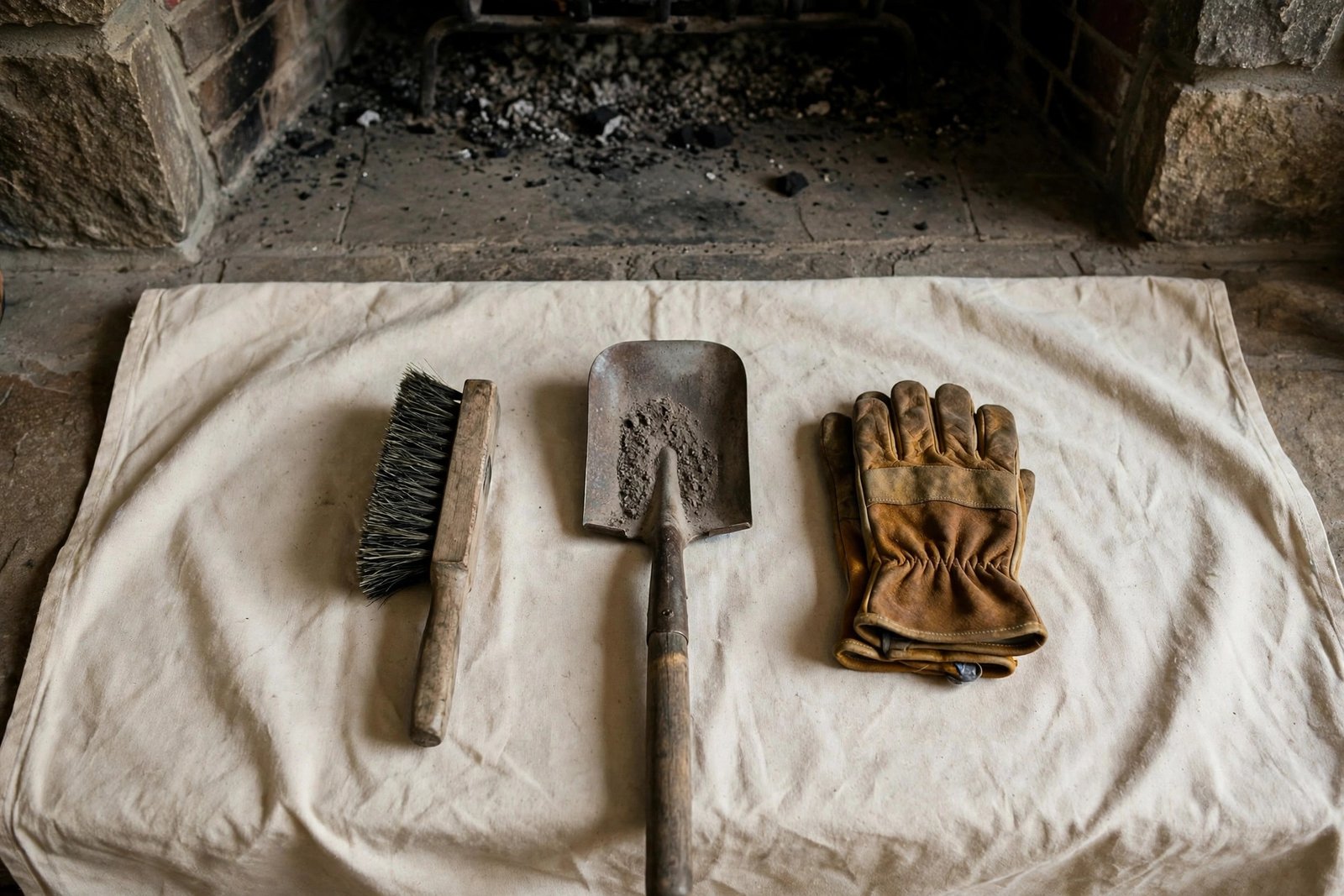
Dress for the job: gloves, old clothes, a dust mask, and eye protection — fireplace ash is fine, alkaline, and deeply unpleasant to breathe. Lay a drop cloth across the hearth and the floor in front of it, because soot stains fabric and carpet on contact.
If you have a gas fireplace, turn off the gas valve first — usually on the wall beside the fireplace or under the unit. Do not clean around a live gas supply, and do not relight the pilot until everything is dry and reassembled.
How to Clean a Fireplace: Wood-Burning, Step by Step
A wood-burning fireplace is the messiest of the three, and it is where knowing how to clean a fireplace properly matters most. You need only a metal ash bucket, a stiff brush, a shop vacuum with a bag, and basic cleaning supplies — never a household vacuum, which fine ash passes straight through. Ash, soot, and creosote all accumulate here, and each needs a slightly different approach.
Step 1: Remove the ash
Once the firebox has cooled for at least 12 to 24 hours, scoop the loose ash into your metal bucket, working from the back toward the front. Leave about an inch of ash on the floor if you plan to light another fire soon — a bed of ash insulates the coals and helps the next fire catch. If you are cleaning at the end of the season, take it all out, then vacuum the remaining fine ash, taking your time around the corners.
Step 2: Brush and wash the firebox
Use the stiff brush to scrub the firebox walls, floor, and the underside of the lintel, working from the top down, then vacuum up what falls. A wire brush is fine on brick, but use a softer nylon brush on stone or any painted or coated surface, where a wire brush would leave scratches.
For a deeper clean, scrub the firebox with hot water and dish soap. For stubborn soot stains on brick, Bob Vila recommends a stronger mix: 3 tablespoons of TSP (trisodium phosphate) and half a cup of bleach in a quart of hot water. Ventilate well, wear gloves, and never mix it with anything else. Scrub it on, let it sit a few minutes, scrub again, and rinse.
Step 3: Clean the damper, grate, and tools
Open the damper and check that it moves freely. Brush soot off the damper plate and frame, and vacuum out any debris. A damper that sticks or will not close fully is worth mentioning to your chimney sweep, since a damper that does not seal lets warm air escape up the chimney all winter. Take the andirons, grate, and fire tools outside and brush them down.

How to Clean a Gas Fireplace
A gas fireplace is a much cleaner machine than a wood-burner, but it still needs regular attention: dust, pet hair, and a thin film of soot collect on the glass, the logs, and the burner, and a neglected one can start to smell or burn unevenly. The approach to how to clean a fireplace changes here: there is no ash to scoop, but there are parts you must not disturb.
Start by turning off the gas valve and letting the unit cool completely — give it at least half an hour if the pilot light has been running. Then open or remove the glass front according to your model’s instructions; most lift off or swing open on hinges.
Vacuum the inside of the firebox gently with the brush attachment, paying attention to the burner ports, where dust can block the gas flow and cause an uneven flame. Do not poke anything into the burner ports; a soft brush and the vacuum are enough. Wipe the ceramic logs with a dry cloth — never wash or soak them, and never rearrange them, since the logs are positioned to shape the flame and moving them can cause sooting or an unsafe burn. If a log is cracked, replace it with the exact part for your model.
Clean the glass with a dedicated fireplace glass cleaner or a mix of water and white vinegar, and buff it dry with newspaper or a lint-free cloth. Do not use oven cleaner or abrasive pads — fireplace glass is usually ceramic and scratches more easily than ordinary window glass. If your gas fireplace has a fan, vacuum the fan blades and vent grille.
Relight the pilot only when everything is dry and reassembled, and watch the flame for a minute: a healthy gas flame is mostly blue with yellow tips. If the flame is mostly yellow, lazy, or sooty, turn the unit off and call a technician — that is a combustion problem, not a cleaning problem. If you are weighing gas against electric before you buy, our comparison of gas fireplace vs electric fireplace covers running costs and maintenance for both.
How to Clean an Electric Fireplace
With no combustion involved, how to clean a fireplace in its electric form is mostly a dusting job. Dust on the heating element or the fan causes that faint burning smell when you switch one on after months of disuse.
Unplug the unit before you start — do not just switch it off at the wall. Wipe the exterior with a damp cloth and a little dish soap, and dry it straight away. Vacuum the air intake and outlet vents, and if the flame effect sits behind glass, wipe that glass with a vinegar-and-water mix and buff it dry.
Some electric models have a removable filter or a fan housing you can open. If yours does, follow the manual: vacuum the filter gently or wash it if the manual says it is washable, and let it dry completely before you put it back. Never spray cleaner or water into the vents or onto the heating element, and never open the casing beyond what the manual describes.
One advantage of electric models is that the “flame” is just light, so there is no glass to degrease and no chimney to inspect. A quick monthly dust is usually all one needs, which is part of why they are popular in flats and smaller homes.
| Fireplace type | How often to clean | Main job | What NOT to do |
|---|---|---|---|
| Wood-burning | Ash every few fires; deep clean yearly | Ash, soot, brick wash, glass | Never store ash in plastic or indoors; never use a household vacuum |
| Gas | Monthly in season | Vacuum burner/logs, clean glass, dust fan | Never clean with the gas on; never wash or move ceramic logs |
| Electric | Monthly dust; yearly deep clean | Dust vents/fan, wipe glass | Never spray water into vents or on the heating element |
Cleaning the Glass Doors
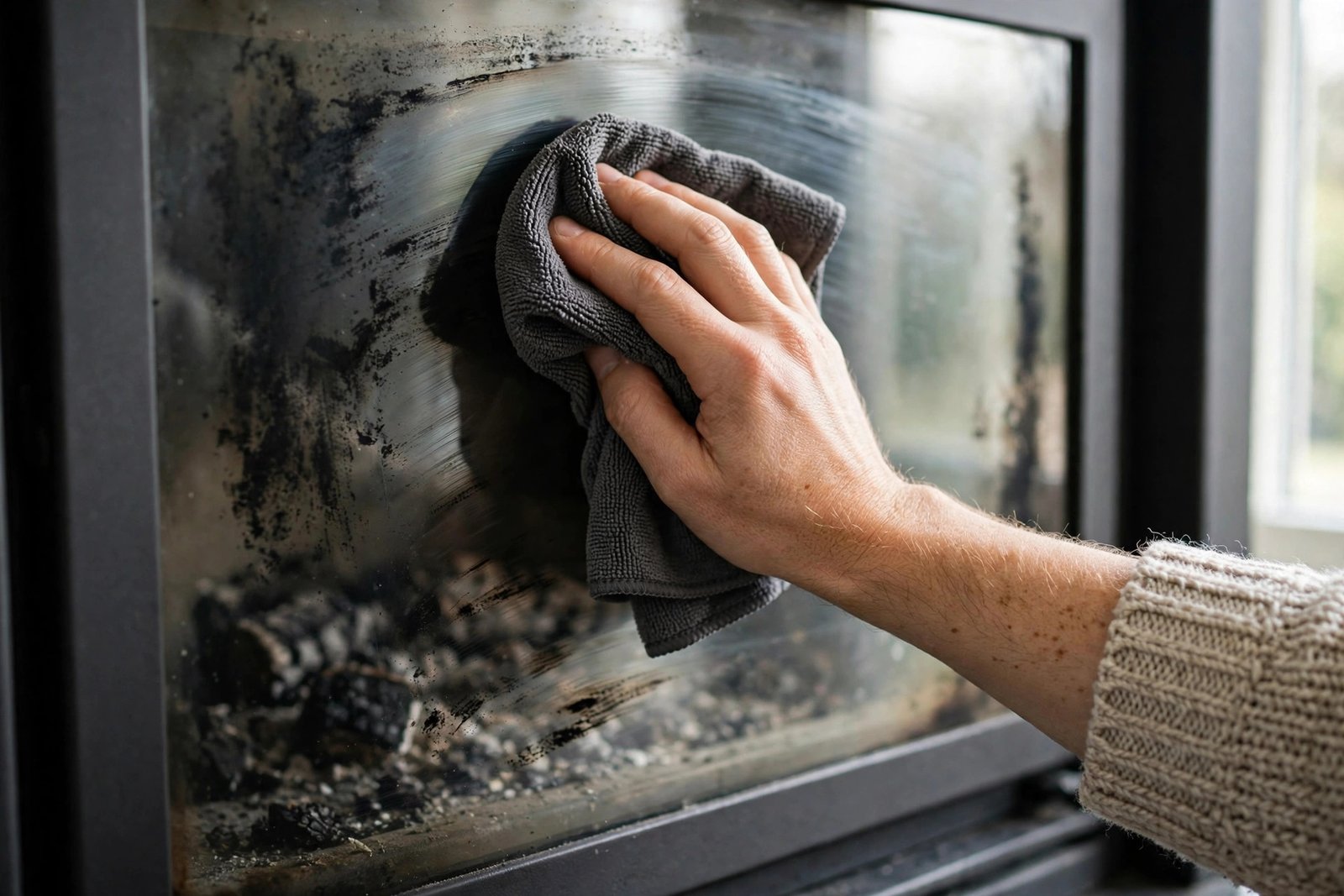
Glass doors show the dirt first, and they are the part most people clean wrong. The black film on fireplace glass is a mix of soot and creosote that bonds to the surface more stubbornly than ordinary grime — regular glass cleaner will barely touch it.
The simplest method is the wood-ash trick, recommended by Home Depot: dampen a paper towel, dip it in a little fine white ash, and rub it gently over the glass in small circles. The ash is a very mild abrasive that cuts through the soot film without scratching. Wipe clean with a damp cloth, then buff dry with newspaper.
For heavier build-up, try the paste recipe from HGTV: mix a quarter cup each of warm water, white vinegar, and cornstarch into a paste. Spread it over the glass, leave it for 30 minutes, then wipe it off and buff with newspaper. The paste softens the creosote film so it lifts away instead of smearing — repeat the process rather than scrubbing harder.
Do not use oven cleaner, scouring pads, or razor blades on fireplace glass: oven cleaner can damage the door seals, scouring pads leave fine scratches that make the next layer of soot grip harder, and a razor can chip ceramic glass. If the glass is etched or permanently clouded, no cleaner will fix it — order replacement glass made for your model.
The Creosote Rule and When to Call a Chimney Sweep
There is a line between cleaning you can do yourself and work that belongs to a professional, and creosote is that line: the tarry, flammable residue that condenses inside a chimney as wood smoke cools, building up in layers. It is the main cause of chimney fires.
The rule is simple: when the creosote layer inside the chimney reaches an eighth of an inch thick, it is time for a professional cleaning. You can check the lower flue yourself with a torch — look for a shiny, tar-like coating or a thick, crusty black layer — but the full chimney is a job for a certified sweep.
The Chimney Safety Institute of America (CSIA) recommends an annual chimney inspection and cleaning by a certified sweep, even if you only light a handful of fires a year. A sweep checks more than creosote: cracked flue liners, blocked caps, animal nests, and damaged dampers — problems you cannot see from the hearth. The CSIA website has a directory of certified sweeps.
Book the inspection before the heating season starts, in late summer or early autumn, when sweeps have availability. A standard sweep and inspection typically costs far less than the damage from a chimney fire — it is the single most important safety step for any wood-burning fireplace. Tom’s Guide makes the same point: a clean firebox is your job, but the chimney belongs to a professional.
Between inspections, burn only seasoned, dry hardwood. Wet or unseasoned wood burns cooler, produces more smoke, and lays down creosote far faster. Never burn treated timber, painted wood, plywood, or household rubbish: treated wood releases toxic chemicals, and rubbish burns unpredictably.
| Safety rule | The rule | Why it matters |
|---|---|---|
| Ash cooling | Wait 12–24 hours after the last fire | Buried embers stay hot for a day and can start a fire |
| Ash storage | Metal bucket with lid, kept outside 24 hours | Plastic melts and indoor ash is a fire risk |
| Creosote limit | Clean the chimney at 1/8 inch of build-up | Creosote is flammable and the main cause of chimney fires |
How Often Should You Clean Your Fireplace?
How often you clean depends on use. A wood-burning fireplace lit most evenings in winter needs the ash scooped out every few fires, a glass clean every week or two, and a full deep clean at the end of the season. Gas fireplaces need a monthly vacuum and glass clean in season, and electric ones a monthly dust of the vents and a yearly wipe-down. Whatever type you own, how to clean a fireplace is a routine worth putting on the calendar before the heating season starts.
The annual chimney inspection is the one schedule that does not depend on usage — even a fireplace lit only a few times a year should be inspected yearly. Our guide on how to keep pipes from freezing covers the other winter job worth doing before the first frost.
Frequently Asked Questions
How long should I wait before cleaning a fireplace after a fire?
Wait at least 12 to 24 hours after the last fire — HGTV recommends a full day, Bob Vila puts the minimum at 12 hours. Ash can hide live embers for a day or more, so test for warmth before scooping, and store ash in a metal bucket outside for 24 hours before disposal.
Can I use my regular vacuum to clean fireplace ash?
No — fine ash passes straight through a standard household vacuum filter, gets blown back into the room, and can damage the motor. Use a shop vacuum fitted with a bag or a filter, or a shovel and dustpan.
What is the best way to clean soot off fireplace glass doors?
For light soot, the wood-ash trick works well: a damp paper towel dipped in fine white ash, rubbed in small circles, then buffed with newspaper. For heavy build-up, use the HGTV paste — a quarter cup each of warm water, white vinegar, and cornstarch — left on the glass for 30 minutes, then wiped off and buffed.
How do I know when my chimney needs a professional cleaning?
When the creosote layer inside the flue reaches an eighth of an inch thick, it is time for a professional clean. The CSIA recommends an annual inspection and cleaning by a certified sweep, regardless of use.
Conclusion
Knowing how to clean a fireplace is mostly about routine and respect for the safety rules: wait a full day after the last fire, store ash in a metal bucket outside, and use a shop vacuum rather than a household one. Clean the glass with ash or the vinegar-and-cornstarch paste, wash the firebox at the end of the season, and never skip the annual chimney inspection.
Do that, and your fireplace will burn cleaner, smell better, and stay safe all winter. Once the firebox is clean and the glass is clear, the fire itself does the rest. For more seasonal home care, see our guide to how to clean a humidifier, and our ideas for how to decorate a fireplace for Christmas.



