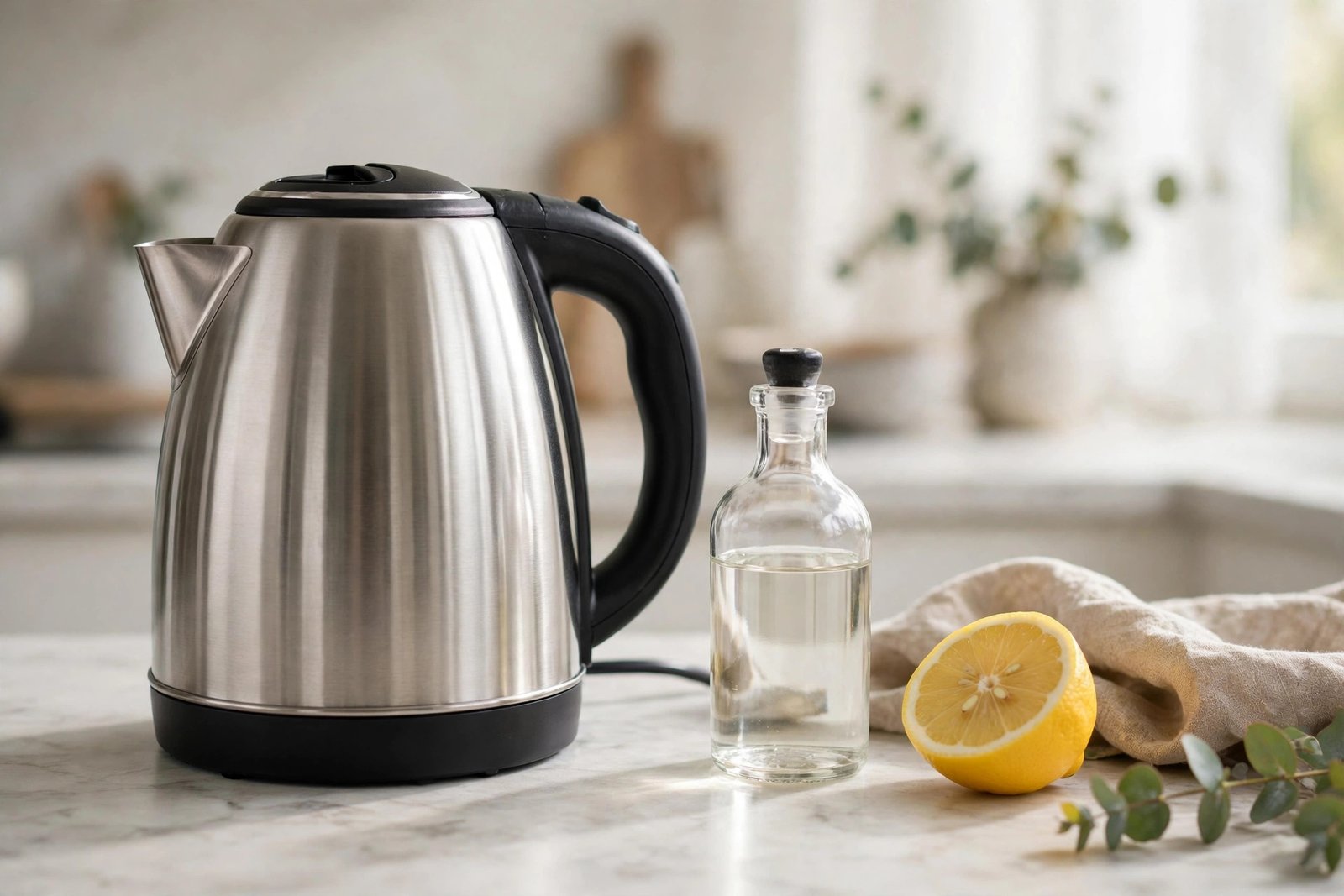

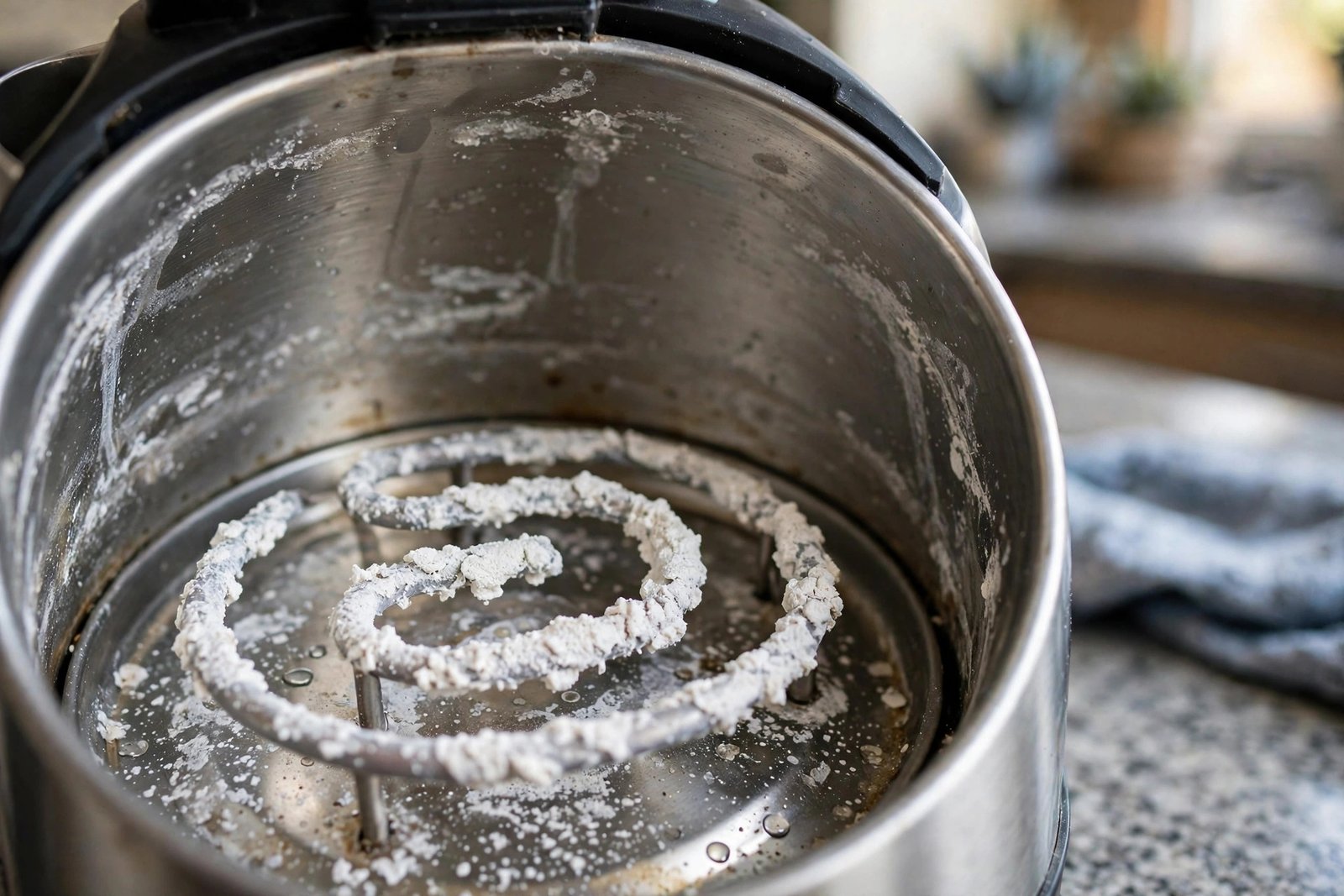
You boil the kettle, pour the water, and something tastes faintly off — a little flat, a little chalky, not quite the tea or coffee you meant to make. Then you look inside and see it: a white, crusty ring around the bottom, maybe a few flakes floating in the water. If you are learning how to clean an electric kettle, that crust is almost certainly limescale, the mineral residue left behind when hard water is heated again and again. It is not dangerous in the amounts found in a household kettle, but it does affect taste, it makes the kettle slower and noisier, and left alone it can shorten the appliance’s life. The good news is that cleaning it takes about twenty minutes of mostly waiting, using things you probably already have in the kitchen.
What Is Limescale, and Why Does It Build Up?
Limescale is mostly calcium carbonate, the same mineral that leaves white marks on shower heads and taps in hard-water areas. Tap water carries dissolved calcium and magnesium; when the water is heated, those minerals come out of solution and settle as a hard, chalky deposit on the heating element and the inside walls of the kettle. The harder your water and the more often you boil, the faster the layer grows. That is why a kettle used three times a day in a hard-water home can look crusty within weeks, while the same kettle in a soft-water home might stay clean for months.
The deposit matters for three practical reasons. First, taste: flakes of scale and the stale film that builds up inside an uncleaned kettle can give boiled water a flat or slightly bitter edge. Second, efficiency: a coated heating element has to work harder to heat the same water, so boiling takes longer and uses more energy. Third, longevity: manufacturers warn that failing to descale can damage the kettle over time, and some manuals say scale damage may not be covered under guarantee. Regular cleaning is not fussiness; it is basic maintenance, like changing a filter.
How Often Should You Clean an Electric Kettle?
How to clean an electric kettle properly starts with knowing when to do it, and the honest answer is that it depends on your water. As a rule of thumb, most homes should descale every one to three months. If you live in a hard-water area or boil the kettle many times a day, once a month is a sensible rhythm. In a soft-water area with light use, every two to three months is usually enough. Some makers give their own schedules — one brand recommends descaling about monthly with hard water and every two to three months with soft water — so your kettle’s manual is the final word if it gives one.
Between deep cleans, a quick weekly wipe keeps things pleasant: empty the kettle after use rather than leaving yesterday’s water sitting in it, rinse it out, and wipe the outside with a damp cloth. That small habit slows scale build-up and stops the stale smell that comes from water left standing. If you notice white flakes in your cup, a gritty ring at the bottom, or the kettle taking noticeably longer to boil, do not wait for the calendar — that is the kettle telling you it is time.
Before You Start: Safety First
Electric kettles and water do not mix casually, so a few safety rules come before any cleaning method. Always unplug the kettle and let it cool completely before you start. Never submerge an electric kettle or its base in water; the base contains the electrical contacts, and soaking it can damage the kettle beyond repair or create a shock risk. Never fill past the MAX line, and never use steel wool, scouring pads, or abrasive powders inside the kettle — scratches in stainless steel give scale new places to grip, so the problem comes back faster. Finally, check your manual before choosing a cleaning agent: some makers allow vinegar, some prefer a commercial descaler, and at least one major brand states that only water and descaling products should go in its kettles. When the manual and this guide disagree, the manual wins.
Method 1: How to Clean an Electric Kettle With Vinegar
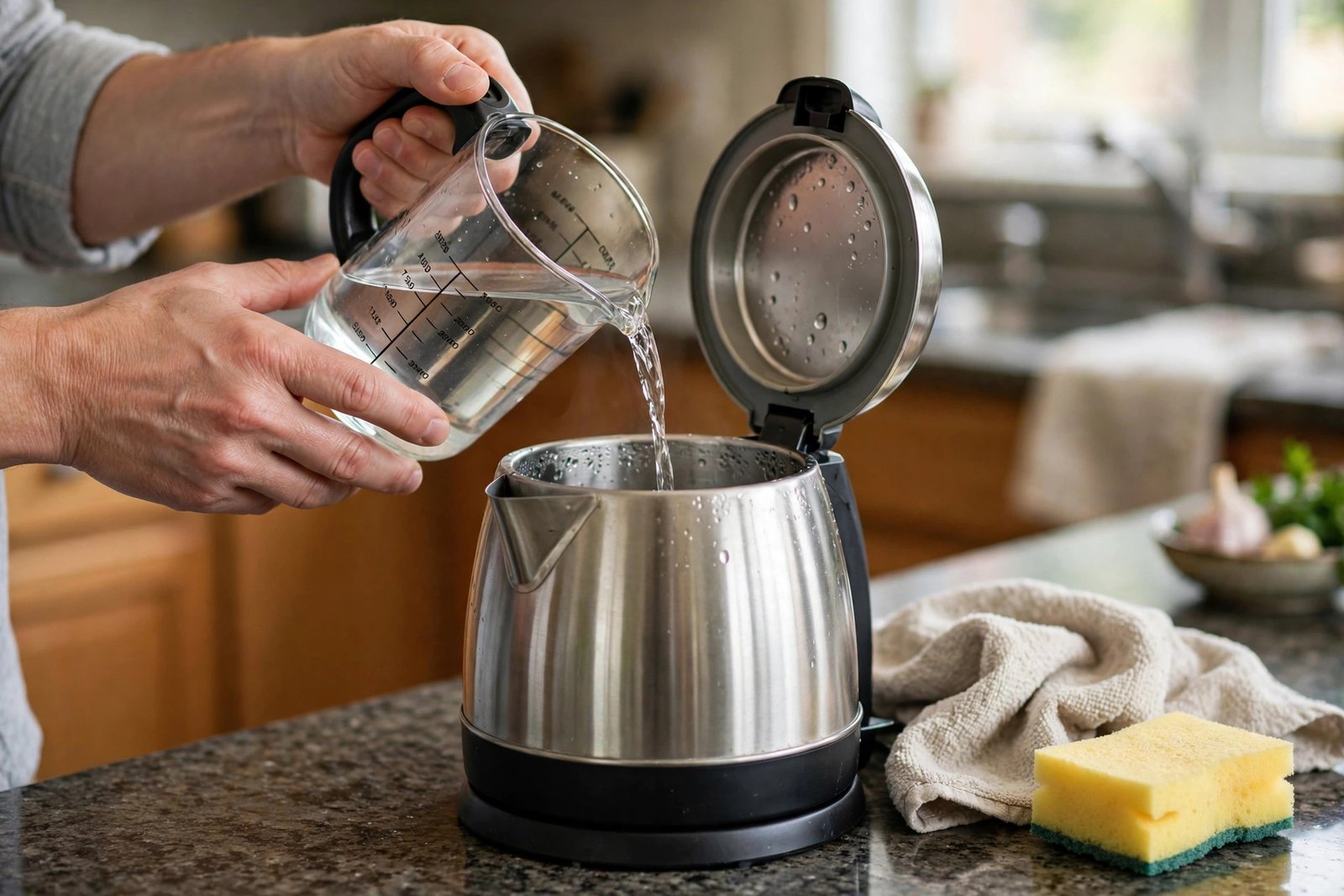
White vinegar is the classic descaler because it is cheap, widely available, and acidic enough to dissolve calcium carbonate. The standard method, described by several manufacturers and home guides alike, is simple. Fill the kettle with equal parts distilled white vinegar and water, up to the MAX line or at least far enough to cover the visible scale. Bring the mixture to a boil, then switch the kettle off and let it sit until it has cooled completely — usually twenty to thirty minutes for light scale, longer for heavy build-up. Pour the mixture away, and you should see the crust loosening or gone entirely.
For stubborn scale, let the mixture soak overnight rather than just cooling, then scrub gently with a soft sponge or bottle brush before rinsing. One drawback of vinegar is the smell: it lingers, so after descaling, fill the kettle with fresh water, boil it, and pour it away, repeating two or three times until the water tastes and smells clean. That rinse step is not optional — nobody wants vinegar-flavoured tea. If your kettle has a removable mesh filter at the spout, take it out and soak it in the same vinegar solution for a few minutes, then rinse it well before refitting it; a clogged filter is often the reason a kettle pours slowly even after descaling.
Method 2: Descaling With Citric Acid (No Vinegar Smell)
If you dislike the smell of vinegar, citric acid powder is the cleaner-smelling alternative, and many kettle makers and testers now prefer it. Dissolve one to two tablespoons of food-grade citric acid powder per litre of water in the kettle — roughly one tablespoon per 500 ml — bring it to a boil, switch off, and let it sit for fifteen to thirty minutes. Pour it away, rinse, and boil fresh water once or twice. Citric acid is odourless, rinses cleanly, and is the active ingredient in most commercial descaling sachets, so if you buy a branded descaler you are largely paying for pre-measured citric acid with instructions on the packet.
Citric acid is also the safer choice for kettles whose manuals restrict vinegar, and it works well on glass and plastic kettles as well as stainless steel. Lemon juice contains citric acid too, but at a much lower concentration, so it is weaker and less reliable for heavy scale; it can freshen a lightly scaled kettle, but for a real crust, powder or vinegar does the job properly. Whichever acid you use, do not mix cleaning agents together, and do not add baking soda to the vinegar boil expecting extra power — the two neutralise each other, and the fizz is mostly theatre.
How to Clean an Electric Kettle Without Vinegar
Some people want to avoid vinegar entirely, whether because of the smell, a manual that forbids it, or a plastic kettle they worry about. Citric acid, described above, is the best vinegar-free option. A commercial descaler made for kettles is the other reliable choice: follow the packet instructions exactly, since concentrations vary, and rinse thoroughly afterwards. Baking soda on its own is not a good descaler — it is alkaline, and limescale dissolves in acid, not alkali — though a baking soda paste on a soft cloth can help lift stains from the outside of the kettle. For a full clean without vinegar, citric acid or a branded descaler is the honest recommendation, and both are inexpensive.
Cleaning the Outside, Base, and Filter
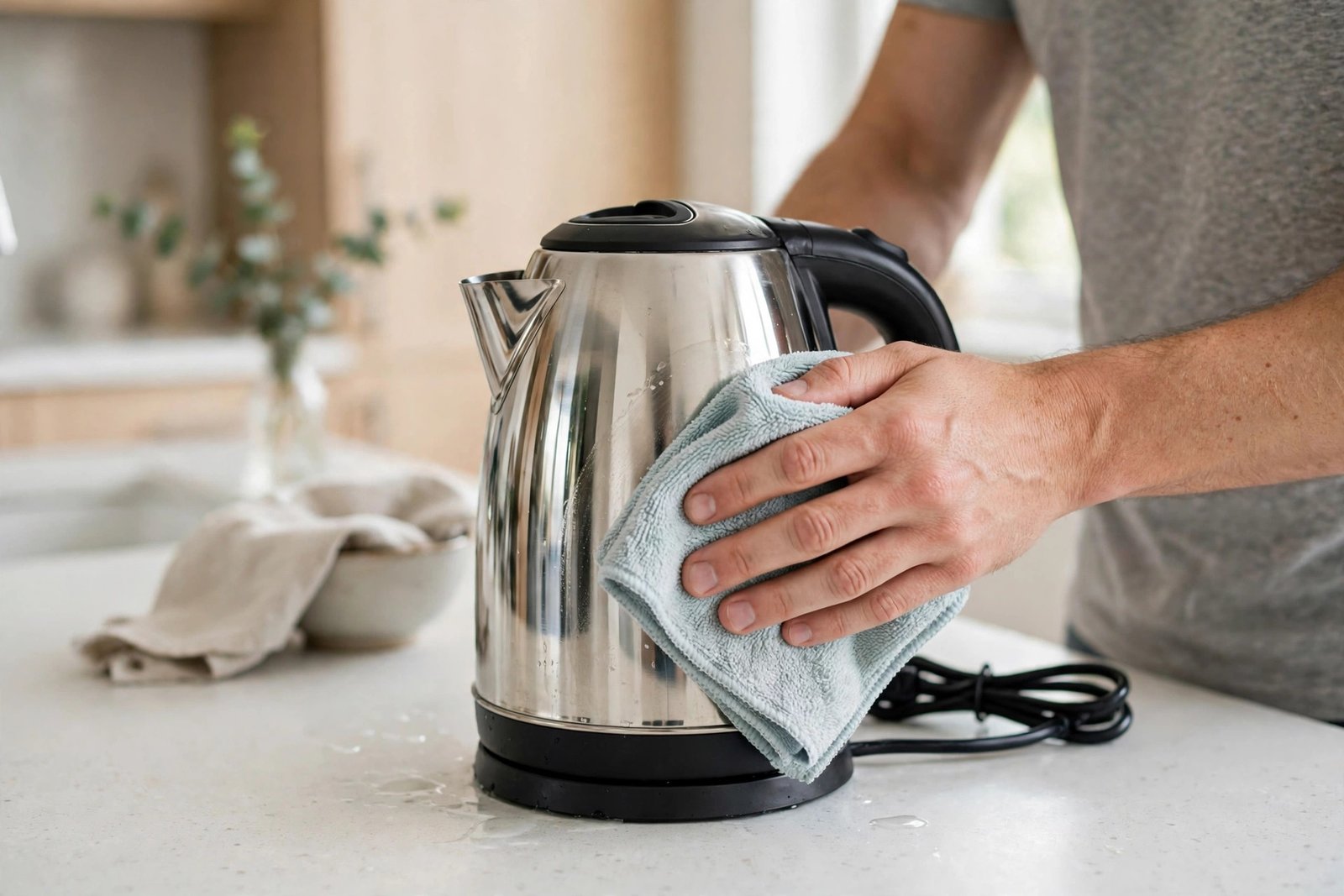
The inside gets the attention, but the outside deserves a wipe too. For a stainless steel kettle, wipe the exterior with a damp microfibre cloth and a drop of washing-up liquid, then dry it with a clean cloth to avoid water spots. For fingerprints and smudges, a tiny amount of oil on a cloth can restore shine, but keep any cleaner away from the lid hinge and the base contacts. Glass kettles show every mark, so wipe them the same way and never use an abrasive pad, which clouds the glass permanently.
The base itself needs only a dry or barely damp wipe, and only when unplugged — never run it under a tap. Wipe away drips and dust from the contact area, since build-up there can affect how well the kettle sits and heats. The spout filter, if removable, should be rinsed or soaked whenever you descale; if it is fixed in place, a gentle scrub with a soft bottle brush during the rinse stage usually clears it. A kettle that pours slowly after a descale almost always has a filter problem rather than a heating problem.
What Not to Do When Cleaning a Kettle
A few common mistakes undo good work. Do not use bleach or harsh bathroom descalers inside a kettle — they are not food-safe and can damage seals and finishes. Do not boil the kettle dry, and do not descale with the lid forced shut on a model that needs venting; follow the manual’s guidance on the lid position. Do not pour boiling descaling solution down a sink you have just cleaned with other chemicals, and do not skip the fresh-water rinse boils — residual acid tastes unpleasant and can irritate the stomach in quantity. And do not assume a kettle that looks clean inside is clean: the filter and the underside of the lid collect residue too, so check them each time.
One more mistake is over-cleaning with the wrong tool. Aggressive scrubbing with a wire brush may remove scale, but it scratches the interior, and scratched metal scales faster than smooth metal. A soft sponge, a bottle brush, and patience remove scale just as well without the damage. If a second descale is needed for heavy build-up, repeat the soak rather than reaching for something abrasive.
A Simple Maintenance Routine That Prevents Scale
Once the kettle is clean, keeping it that way is mostly about water habits. Empty the kettle after each use instead of reboiling yesterday’s water, which concentrates minerals further with every boil. If your tap water is very hard, using filtered water for the kettle slows scale noticeably, though it will not eliminate it entirely. Wipe the outside weekly, rinse the inside when you notice any film, and descale on your monthly or quarterly schedule before flakes appear. That routine takes minutes and keeps the kettle boiling fast and the water tasting clean.
The same hard water that scales a kettle also attacks other fixtures, so if your kettle scales quickly, your shower head probably does too — our guide to removing limescale from a shower head uses the same vinegar and citric acid chemistry on a different surface. And if you are working through the kitchen in general, our guides to cleaning a coffee maker and cleaning a microwave cover the other appliances that pick up daily build-up.
Frequently Asked Questions (FAQ)
Is limescale in a kettle harmful to drink?
In the amounts found in a household kettle, limescale is not considered harmful — it is calcium carbonate, a mineral also found in mineral water and in many people’s diets. The reason to remove it is taste, efficiency, and appliance life, not safety. If flakes are landing in your cup, though, it is well past time to descale.
Can I use vinegar in any electric kettle?
Most, but not all. Several major makers allow vinegar, but at least one brand’s manual states that only water and descaling products should be used, and using a forbidden agent can affect warranty cover. Check your manual first; if vinegar is not allowed, citric acid or a branded descaler is the safe alternative.
How do I get rid of the vinegar smell after descaling?
Boil fresh water in the kettle and pour it away, repeating two or three times. That is usually enough. If a faint smell remains, one more rinse boil with a squeeze of lemon usually clears it.
Why does my kettle still taste strange after cleaning?
Usually the rinse was too short, the filter was not cleaned, or the lid and spout still hold residue. Repeat the fresh-water rinse boils, soak the filter separately, and wipe under the lid. A brand-new kettle can also taste plasticky for the first few boils; that fades with use.
Can I descale a glass or plastic kettle the same way?
Yes, with the same vinegar or citric acid methods, but be gentler: no abrasive pads on glass, and check a plastic kettle’s manual for any agent restrictions. Citric acid is usually the kindest option for both materials.
How often should I descale if I use filtered water?
Filtered water slows scale but does not stop it, since filters remove some minerals, not all. Descale every two to three months and watch for the first white ring rather than relying on the calendar alone.
Conclusion
Learning how to clean an electric kettle properly comes down to one simple cycle: descale with vinegar or citric acid every month or two, rinse thoroughly with fresh-water boils, wipe the outside and filter, and empty the kettle between uses. It is twenty minutes of work, most of it waiting, and the payoff is water that tastes clean, a kettle that boils faster, and an appliance that lasts years longer. Pick the method your manual allows, put it on a regular schedule, and the white crust never gets a chance to come back.
For method detail from established home and food sources, see the Homes & Gardens guide to cleaning an electric kettle, the Abt maintenance guide for electric kettles, the Food Network guide to cleaning a tea kettle, and the Cupindy round-up of what kettle makers say about descaling.



