
How to Remove Limescale From a Shower Head: 5 Methods That Actually Work
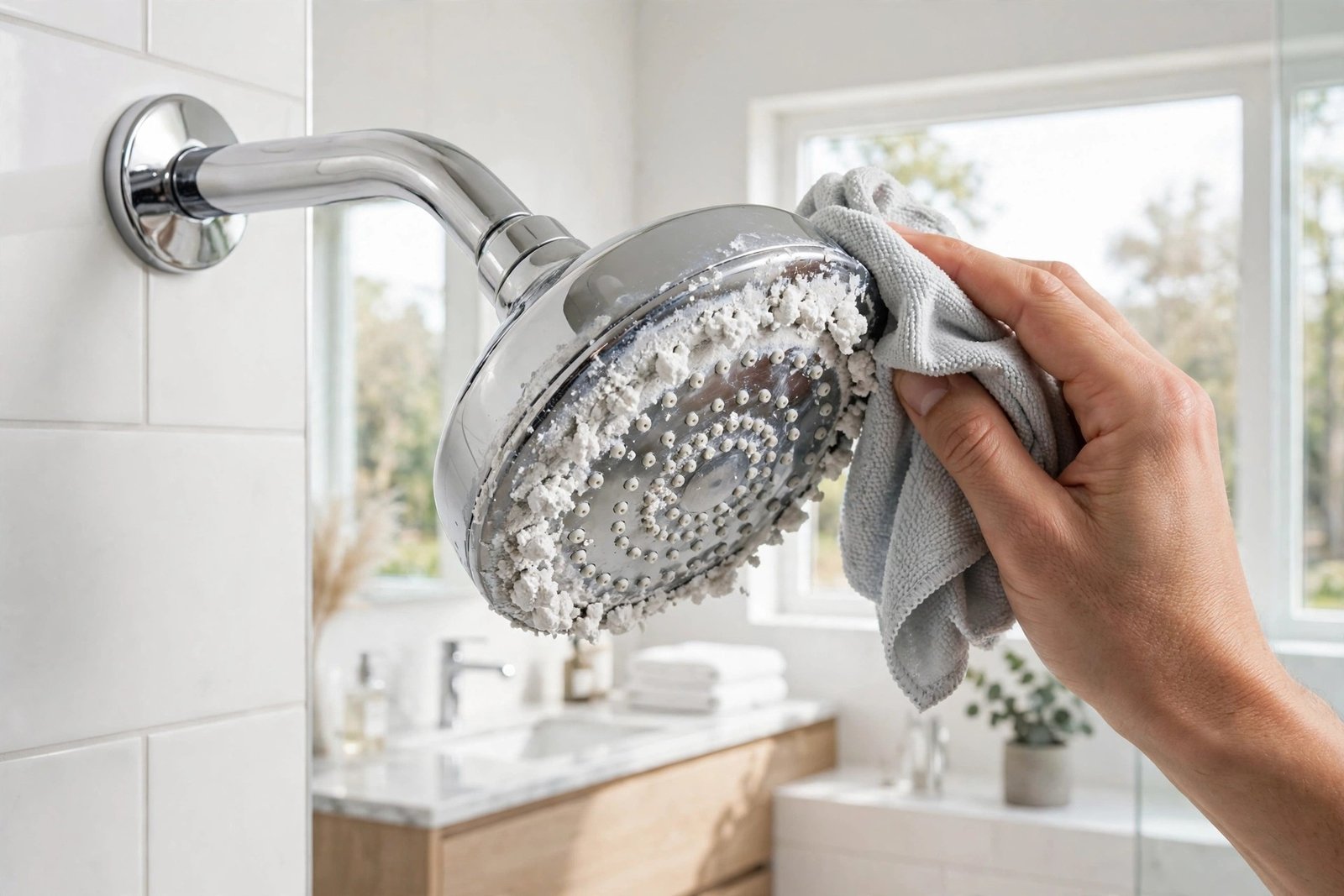
You step into the shower, turn the handle, and instead of a satisfying downpour you get a sad, uneven dribble. A few jets shoot sideways, half the nozzles are sealed shut with crusty white deposits, and the pressure you paid for has gone missing. If that sounds familiar, learning how to remove limescale from a shower head is one of the highest-value home maintenance jobs you can do — it takes an afternoon at most, costs almost nothing, and can make a tired shower feel brand new.
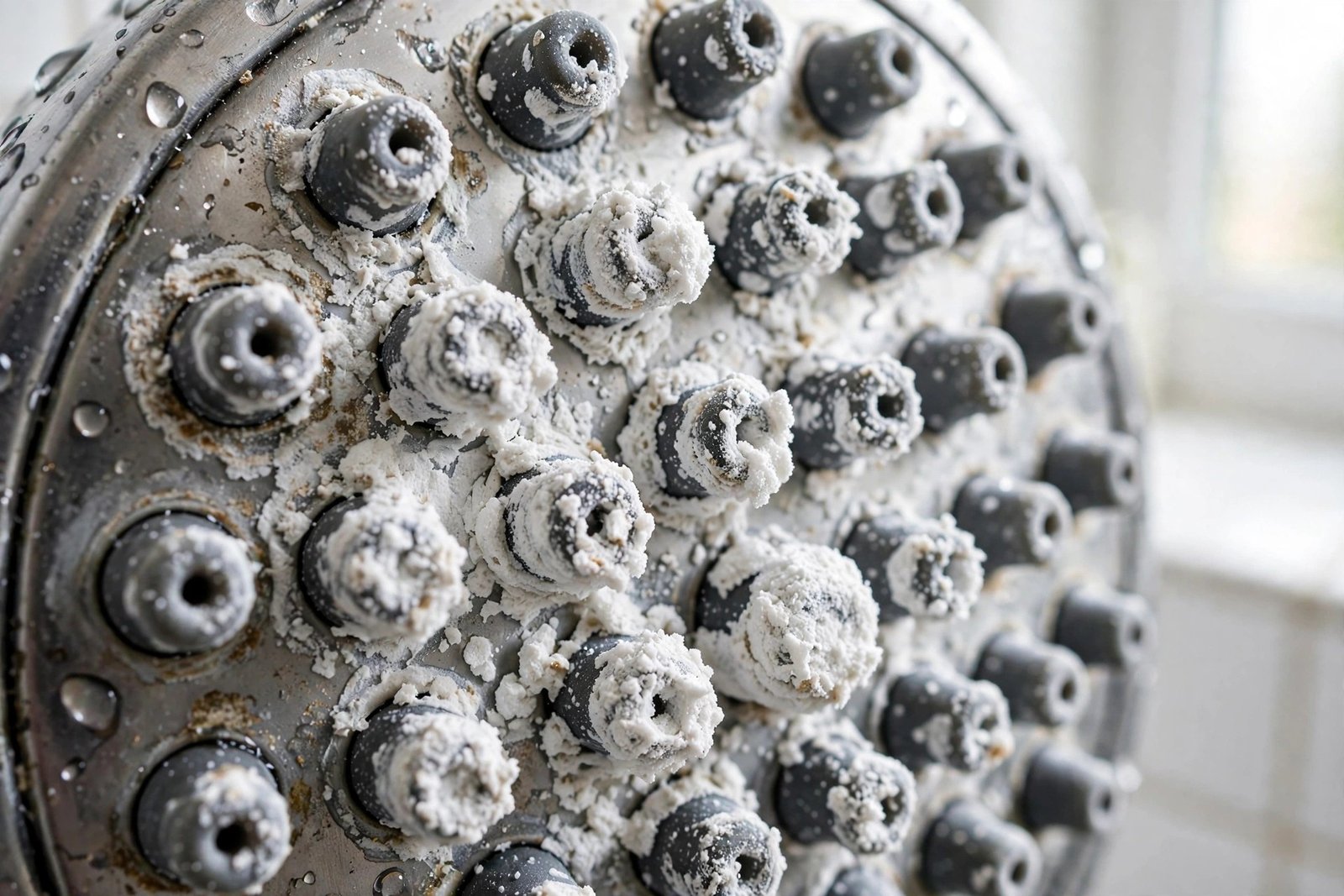
Limescale is just hardened mineral deposits — mostly calcium carbonate — left behind when hard water evaporates. It builds up inside the nozzles, choking off flow one tiny hole at a time. The good news is that acid dissolves it. Below are five methods, ordered from easiest to most decisive, with real soak times, real costs, and the mistakes that damage fixtures.
What Limescale Actually Is (and Why Your Shower Head Is a Magnet for It)
Water hardness is, in scientific terms, the amount of dissolved calcium and magnesium in your water, as the U.S. Geological Survey explains on its USGS water hardness map — and those minerals are exactly what limescale is made of. The USGS also notes there is no legal limit on hardness in the United States, because calcium and magnesium aren’t harmful to drink; their downside is purely practical, including the scaling they leave in equipment. Your shower head is a perfect trap for that scale: hot water accelerates mineral deposition, tiny nozzle openings clog easily, and the fixture rarely gets a proper rinse between uses.
The tell-tale signs are hard to miss: white or greenish crust around the nozzles, jets spraying in random directions, noticeably weaker pressure, and a chalky residue you can scrape off with a fingernail. If your water comes from a hard-water region — and the majority of the U.S. sits on hard or very-hard water — this is a maintenance chore you’ll repeat for life, so it pays to learn the efficient way to do it rather than just scrubbing harder each time.
How to Remove Limescale From a Shower Head: 5 Methods That Actually Work
Every method below dissolves limescale with acid — the question is only which acid and how long it stays in contact. Start with Method 1; most people never need to go further.
Method 1: The Vinegar Bag Soak (No Tools, No Disassembly)
This is the classic for a reason: it works, it’s cheap, and you don’t remove a single fitting. Standard white distilled vinegar is about 5% acetic acid — enough to dissolve calcium carbonate without attacking chrome or stainless steel finishes. A gallon jug costs around $4.59 at major retailers (Target, October 2026), and one soak uses only a couple of cups, so the cost per treatment is pennies.
Here’s the procedure:
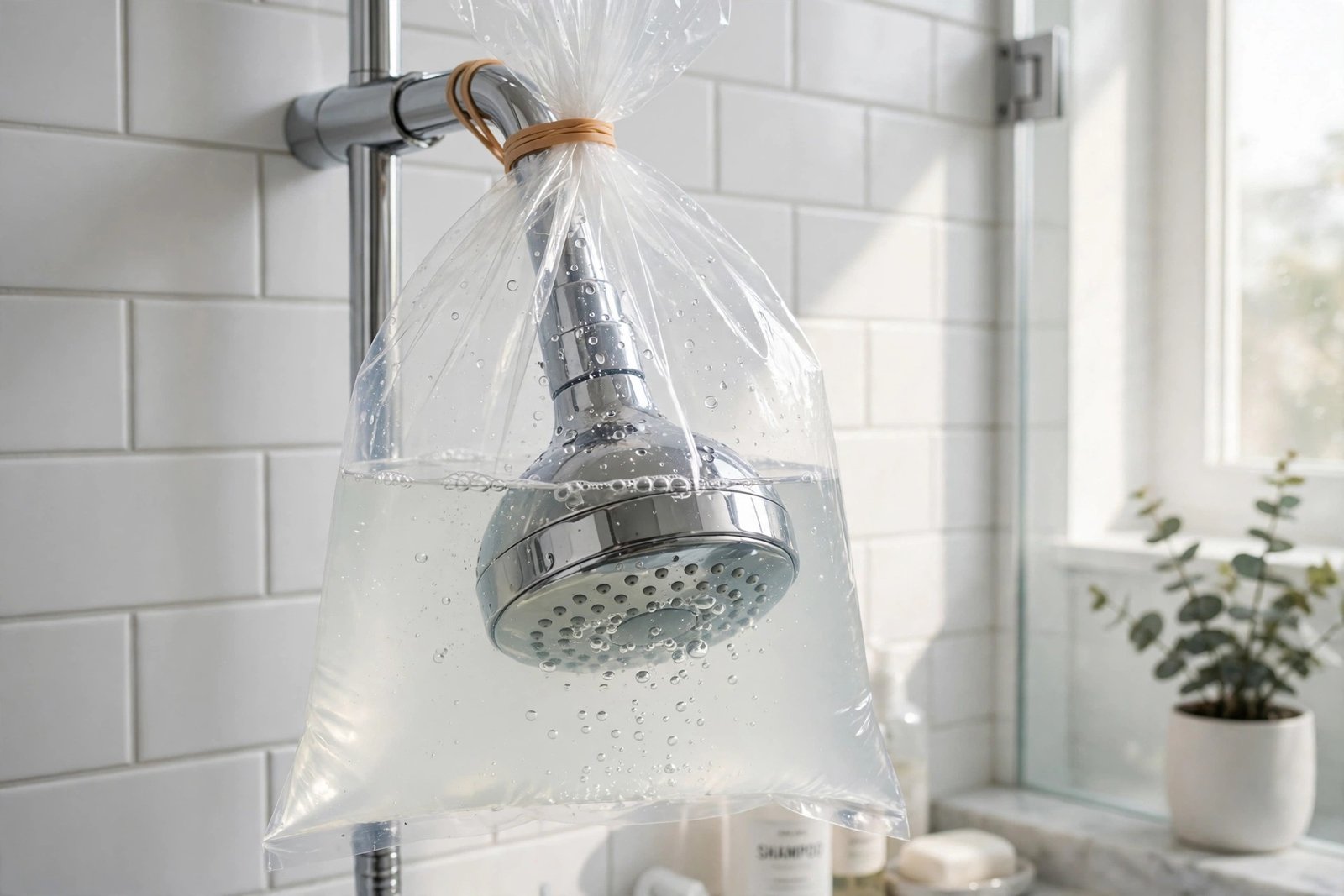
- Fill a sturdy gallon-size plastic bag about halfway with undiluted white vinegar (a 50/50 vinegar-and-water mix also works for light buildup, but full strength dissolves faster).
- Pull the bag up over the shower head so every nozzle is fully submerged in the liquid.
- Secure the bag tightly to the shower arm with a rubber band, zip tie, or twist tie. Double-band it if the bag is heavy — a slipping bag means vinegar on the tub and a half-treated head.
- Wait. For light buildup, 15 to 30 minutes is enough; moderate scale needs about an hour; heavy, flow-restricting crust needs an overnight soak of 6 to 8 hours or more. These ranges are consistent across plumbing and cleaning guides from Hunker, Homemade Simple, and EngineerFix.
- Remove the bag, scrub the nozzle face with an old toothbrush, and run the shower on hot for a minute or two to flush everything out.
One important exception: if your shower head has a delicate finish — brass, gold, oil-rubbed bronze, matte black, or painted plastic — keep the soak to 30 minutes or less. Prolonged acid exposure can etch or strip these finishes, and no amount of descaling is worth a ruined fixture.
Method 2: Remove the Head and Give It a Proper Overnight Bath
If the bag method didn’t finish the job — or if the head unscrews easily and you want a deep clean — take it off and soak it in a bowl or bucket of undiluted vinegar. This gets the solution into the internal channels, not just the nozzle face, and lets you scrub the hidden parts: the filter screen at the base, the threads, and the flow restrictor.
Unscrew the head by hand or with slip-joint pliers (wrap fittings in a cloth first), note the order of washers and screens, and submerge the whole head overnight. In the morning, scrub with a toothbrush, poke any still-clogged nozzles with a toothpick, rinse thoroughly, and reattach — a wrap of fresh PTFE thread tape on the arm threads keeps the seal watertight. This is the deepest clean short of professional help, and it costs nothing beyond the vinegar.
Method 3: The Citric Acid Soak (Faster, and No Vinegar Smell)
If the smell of hot vinegar makes your bathroom unbearable, citric acid is the upgrade. It’s a stronger descaler than household vinegar, leaves no odor, and rinses away cleanly. Multiple cleaning guides recommend dissolving two to three tablespoons of citric acid powder in a liter of warm (not boiling) water — House Digest suggests exactly that ratio, while Popular Science uses about one tablespoon per four and a half cups of water for lighter jobs.
Submerge the shower head (or bag-soak it the same way as vinegar) for 30 minutes to an hour — up to two hours for heavy buildup. That’s meaningfully faster than vinegar’s typical overnight commitment. Scrub the nozzle face with a toothbrush afterward, rinse well, and run water through the head before reattaching. One caution from Hunker’s citric acid descaling guide: don’t use citric acid on aluminum, copper, or brass fixtures, since it can corrode them — and mix the solution in a plastic, glass, or ceramic container rather than a metal bowl.
Method 4: A Commercial Descaler for Stubborn Cases
When natural acids stall — typically on years of neglected buildup — a purpose-built product like a commercial calcium-lime-rust remover is the heavy artillery. A 28-ounce bottle runs about $5.79 at Target (October 2026), and one bottle lasts for many cleanings.
These products are much stronger than vinegar, which means the contact time is much shorter. CLR’s own directions recommend a 50/50 mix with warm water and soaking the removed shower head for no longer than 2 minutes, followed by an immediate, thorough rinse with cold water — repeat at full strength if needed, rinsing each time. They also warn against using it on brass, copper, aluminum, galvanized metals, and coated or sealed surfaces, and to always spot-test first. Respect those limits: the same strength that melts scale in two minutes can damage a finish in five. Wear gloves, ventilate the bathroom, and never mix a descaler with bleach or other cleaners.
Method 5: When to Skip Cleaning and Just Replace the Head
Sometimes the honest answer is that the fixture is done. If you’ve soaked, scrubbed, and repeated — and pressure is still weak, internal parts are corroded, or the head is simply old — replacement beats a third round of cleaning. Shower heads typically last 5 to 10 years with regular maintenance, according to plumbing pros, and a worn-out unit isn’t worth hours of your weekend.
The average showerhead replacement cost in 2026 is about $260 if you hire a professional, per Angi’s October 2026 data — but a DIY swap of a basic head runs only about $75 total for the fixture, thread tape, and a wrench. Unscrewing the old head and threading on a new one takes most people under an hour, and many modern heads come with anti-clog silicone nozzles you can wipe clean with a finger, which makes this whole limescale problem dramatically easier next time.
Which Method Should You Pick?
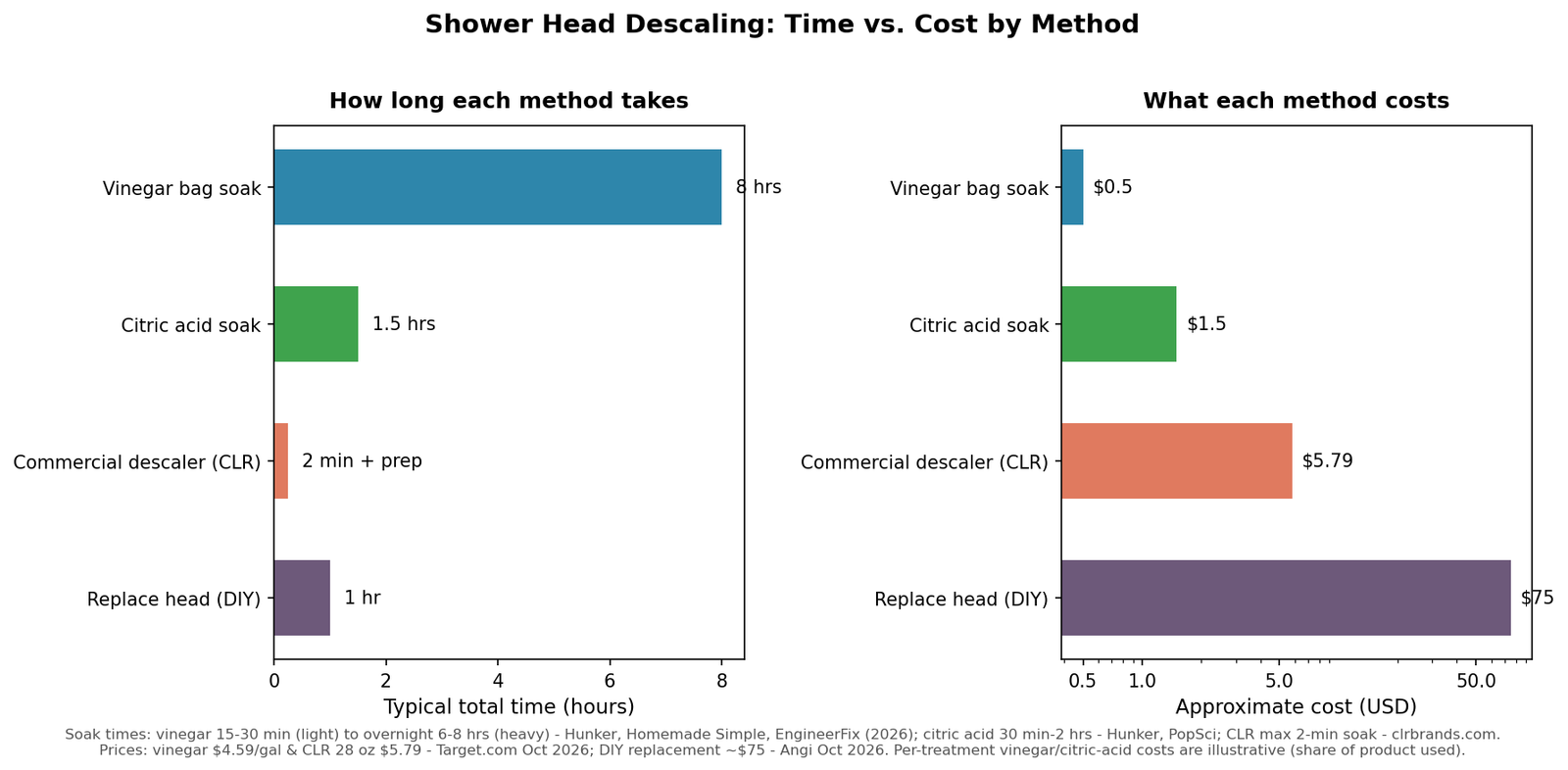
Here’s how the four approaches compare on the two things that matter most — your time and your money. Note that soak time is mostly passive: “8 hours” for vinegar really means fifteen minutes of effort spread across a day.
| Method | Best for | Typical time | Approx. cost |
|---|---|---|---|
| Vinegar bag soak | Light to moderate buildup; renters; zero tools | 30 min – overnight (mostly passive) | Under $1 per treatment |
| Removed overnight bath | Heavy buildup; clogged filter screen | Overnight + 20 min scrubbing | Under $1 per treatment |
| Citric acid soak | Moderate-heavy buildup; no vinegar smell wanted | 30 min – 2 hours | A few dollars per treatment |
| Commercial descaler | Stubborn, years-old scale | Under 30 min, hands-on | ~$5.79 per bottle (many uses) |
| Replacement | Worn-out head; recurring clogs despite cleaning | Under 1 hour DIY | ~$75 DIY / ~$260 pro |
The rule of thumb: light buildup caught early means vinegar wins on cost and simplicity. Want it done today without the vinegar smell? Citric acid is the sweet spot. Reserve commercial descalers for truly neglected fixtures, and replacement for heads that cleaning can’t save. Regardless of method, matching the treatment to your finish matters more than matching it to the buildup — a short soak that preserves your matte black finish beats an overnight bath that strips it.
5 Mistakes That Ruin Shower Heads (or Waste Your Afternoon)
- Soaking a delicate finish too long. Brass, gold, bronze, and matte-black coatings can etch or peel after prolonged acid exposure. Cap soaks at 30 minutes for these finishes and check progress early.
- Using the wrong descaler on the wrong metal. CLR and similar products explicitly warn against brass, copper, and aluminum. Read the product’s compatibility list before the head goes in the bucket, not after.
- Skipping the scrub and flush. Dissolved scale doesn’t always rinse itself away — loosened mineral sludge can re-settle in the nozzles. Always toothbrush the nozzle face and run hot water through for a full minute after soaking.
- Forgetting the filter screen. Most shower heads have a small mesh screen at the threaded end that traps sediment. If flow stays weak after descaling, that screen is often the real culprit — pull it out and rinse it.
- Reattaching without thread tape. Old PTFE tape rarely survives a removal. Wrap the shower arm threads with two or three turns of fresh tape before reinstalling, or you’ll trade a clog problem for a drip problem.
How to Stop Limescale Coming Back
Descaling is maintenance, not a cure — in hard-water areas, scale starts rebuilding the day you finish cleaning. Three habits keep the intervals long:
- Wipe the nozzles weekly. A quick rub with a damp cloth or a swipe across silicone anti-clog nozzles stops deposits before they harden. Thirty seconds after your shower is all it takes.
- Do a maintenance soak every 1–3 months. A short 30-minute vinegar bag soak on a schedule prevents buildup from ever reaching the “weak pressure” stage. In very hard water areas, monthly is the recommendation cleaning pros give.
- Consider a water softener or filtered shower head. If you’re descaling more than a few times a year, the real fix is upstream: a whole-house softener removes the minerals from everything, and a filtered shower head is a cheaper halfway step.
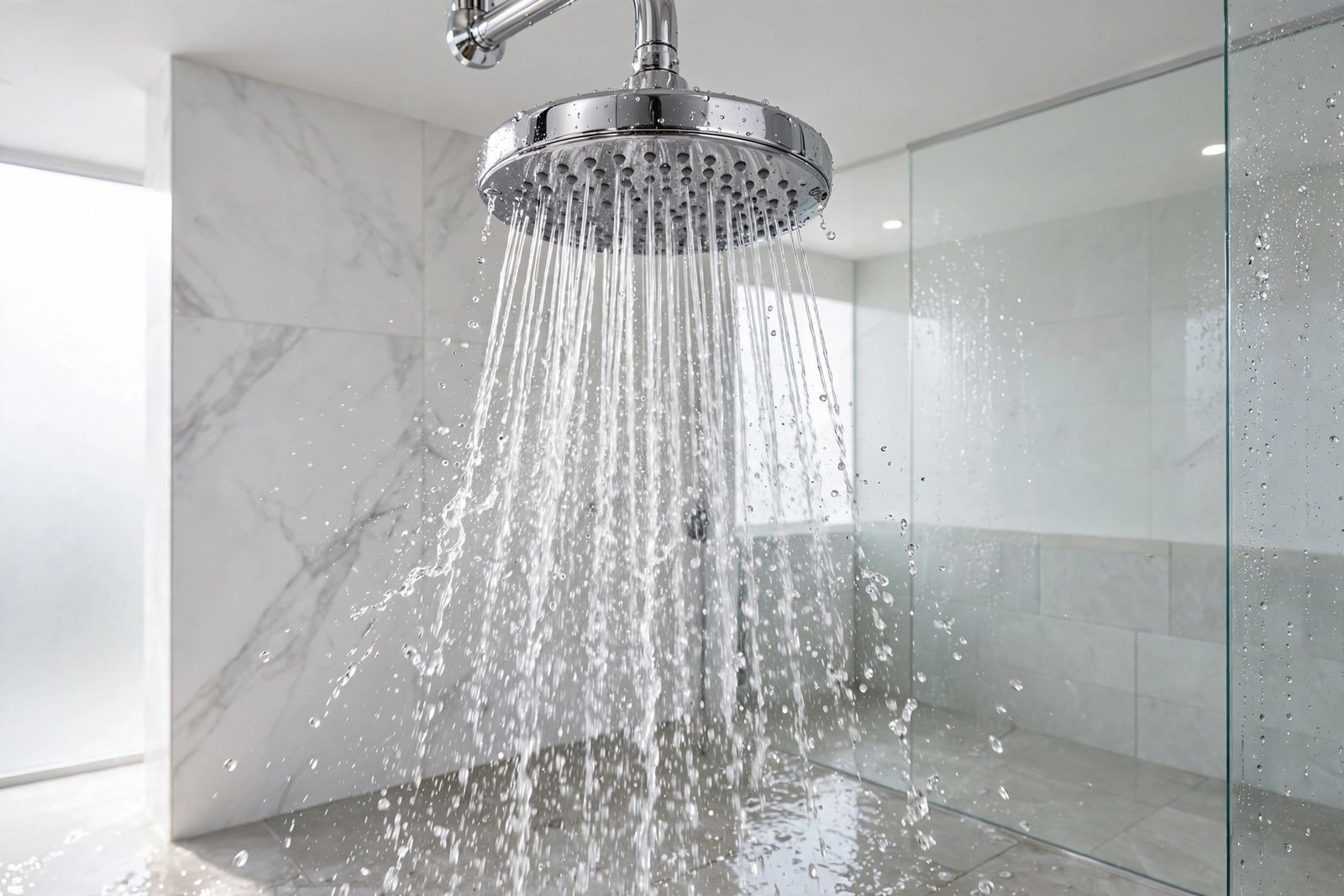
Make descaling part of your regular home maintenance routine rather than an emergency fix. The same way you’d work through a seasonal checklist when you winterize your home, or set aside a Saturday to unclog a garbage disposal before it becomes a real problem, a scheduled 30-minute soak keeps your shower performing like new year-round.
Frequently Asked Questions
Can I remove limescale from a shower head without removing it?
Yes — that’s exactly what the plastic-bag method is for. Fill a bag with vinegar or citric acid solution, pull it over the head so the nozzles are submerged, secure it with a rubber band, and wait. It’s the easiest of all the methods and works for light to heavy buildup, though removing the head for a bowl soak gives the acid better access to internal parts.
How long should I soak a shower head in vinegar?
It depends on the severity: 15 to 30 minutes for light deposits, about an hour for moderate scale, and overnight (6 to 8 hours or more) for heavy buildup that restricts flow. Keep soaks under 30 minutes on delicate finishes like brass, gold, or matte black. When in doubt, check at the short end first — you can always soak longer.
Is citric acid better than vinegar for descaling?
For speed and convenience, yes — citric acid dissolves scale faster (30 minutes to 2 hours versus vinegar’s typical overnight), has no strong smell, and rinses cleanly. Vinegar wins on cost and availability, since most households already have it. Avoid citric acid on aluminum, copper, and brass fixtures, where it can cause corrosion.
Will vinegar damage my shower head?
On standard chrome, stainless steel, and plastic heads, no — a few hours of 5% vinegar is safe, and overnight soaks are widely recommended for these materials. The risk is with specialty finishes (brass, gold, oil-rubbed bronze, matte black) and rubber gaskets, which can degrade with very long exposure. Stick to the 30-minute cap for delicate finishes.
How often should I descale my shower head?
In hard-water areas, a quick vinegar soak every 1 to 3 months prevents serious buildup; monthly is the safe cadence if your water is very hard. In soft-water areas, once or twice a year is plenty. If you notice pressure dropping or jets misfiring between scheduled cleanings, don’t wait — that’s the buildup telling you it needs attention.
Why is my water pressure still low after descaling?
Three likely causes: the filter screen at the head’s threaded end is clogged with sediment (pull it out and rinse it), mineral sludge re-settled in the nozzles because the head wasn’t scrubbed and flushed after soaking, or the head itself is worn out — internal corrosion and tired components won’t improve with cleaning. If a second soak plus a screen cleaning doesn’t fix it, replacement is the sensible next step.
Conclusion
Learning how to remove limescale from a shower head comes down to one simple idea: soak the deposits in acid, give it time, then scrub and flush. For most people, the vinegar bag method — an overnight soak, a toothbrush scrub, and a hot flush — restores full pressure for under a dollar. Citric acid gets you the same result in an hour or two without the smell, commercial descalers handle the worst cases in minutes, and when the fixture itself is past saving, a $75 DIY replacement is cheaper than another afternoon of cleaning.
Put it on a schedule — a 30-minute soak every couple of months — and your shower will keep the pressure it was designed for. Your water pressure was never broken; it was just buried under mineral scale.