
How to Clean an Oven Glass Door: Inside, Outside, and Between the Panes
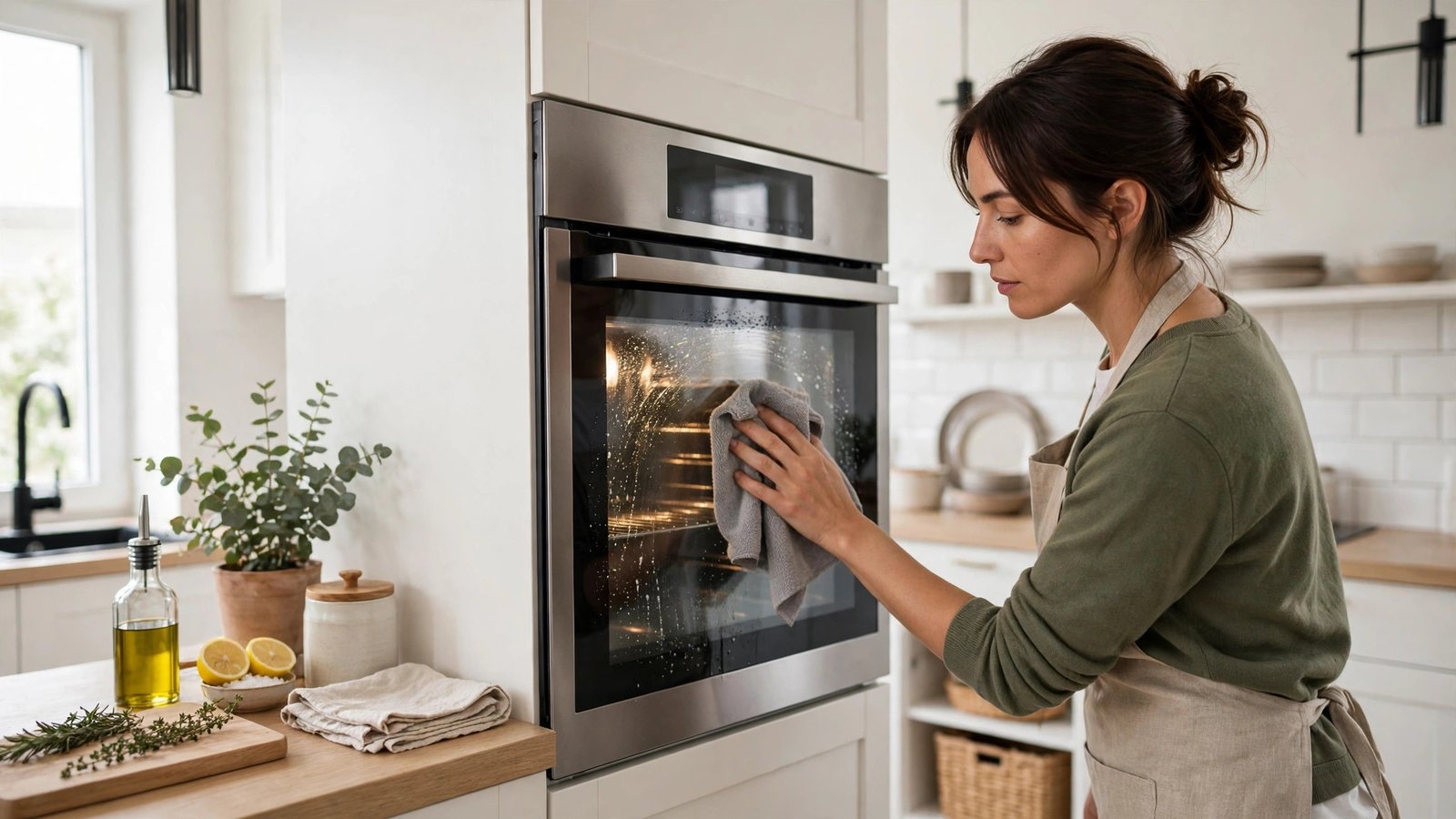
You can scrub the racks and wipe the cavity — but if the oven door glass is still brown and cloudy, the whole oven looks dirty. That film is baked-on grease and food splatter, and it will not come off with a quick spray of glass cleaner. Learning how to clean an oven glass door properly takes about twenty minutes of work, plus waiting time while a baking-soda paste does the heavy lifting. This guide covers all three: outside glass, inside glass, and the haze trapped between the panes.
Oven door glass is almost always tempered glass, built to survive high heat and the odd bump from a pan. It is tough, but not scratch-proof, and many doors carry a heat-reflective coating or printed border that harsh cleaners can damage permanently. The wrong tool leaves a scratch that catches the light forever; the right method — a baking-soda paste, a soft cloth, and patience — brings back a window you can see through.
Before You Start: What You Need and What to Check First
Start with a completely cool oven — never clean warm glass, or cold water and paste can cause thermal shock and you risk a burn. Wait at least an hour after cooking, or clean first thing in the morning. Open the door fully and lay an old towel on the floor to catch drips.
You need: baking soda, a small bowl, warm water, dish soap, a spray bottle, microfiber cloths, a non-scratch sponge, a plastic scraper, and — only if your manual allows it — a new single-edge razor scraper. Keep a flashlight handy to spot the haze between the panes later.
The most important step is one most people skip: check your oven’s manual. Door construction varies enormously between brands. Some doors have vent slots that let you reach between the panes, some lift off their hinges, and some are sealed units the manufacturer says never to open. Searching your model number plus “door glass cleaning” usually finds the manual online in minutes. If you have lost yours, the Maytag oven care guides show how manufacturers phrase their advice — always gentle, non-abrasive, and model-specific.
The Outside Glass: Fingerprints and Grease in Five Minutes
The outside of the oven door is the easiest surface — fingerprints and cooking grease are all it usually carries, so warm, soapy water is normally enough. Mix a few drops of dish soap into warm water, dampen a microfiber cloth, wring it out, and wipe in overlapping horizontal passes. Dry it at once with a second, dry microfiber cloth to prevent streaks.
For stubborn marks, spread a thin baking-soda paste over them and wipe it away after five minutes. Never spray cleaner directly onto the door: liquid runs into the vent slots along the top and bottom edges and dries into streaks between the panes that you cannot reach. Spray the cloth, not the glass — the same rule applies inside. On a printed logo or decorative border, use only a soft cloth and soapy water; printed areas scratch and fade easily.
How to Clean an Oven Glass Door Inside: The Baking-Soda Method
The inside pane is where the real work lives: months of roasting and broiling leave a brown film of grease and carbonised food that a sponge alone will not shift. The best method — the one most manufacturers recommend — is a baking-soda paste: mildly alkaline, so it cuts grease, and a very fine, soft abrasive, so it lifts baked-on residue without scratching tempered glass.
Mix three parts baking soda to one part water in a small bowl, adding a few drops of dish soap, and stir until you have a thick paste about the consistency of toothpaste. Open the door fully so the inside glass lies flat and spread the paste evenly over the whole glass with your fingers or a soft cloth. Make it thick on the brownest areas and keep it off the rubber gasket, which cleaning products can deteriorate.

Now wait. Leave the paste on for fifteen minutes for light grime, or thirty minutes for heavy grease. For a door uncleaned for a year or more, leave it overnight — dwell time does far more than scrubbing, softening the carbonised layer so it releases instead of needing to be forced off.
When the time is up, wipe the paste away with a damp microfiber cloth, rinsing often. Go over remaining spots with a non-scratch sponge using light, circular pressure, then wipe with clean water and buff dry. Hold a flashlight at an angle across the glass: any haze left is residue to wipe again or grease trapped between the panes. If a second round is needed, reapply fresh paste and extend the dwell time rather than scrubbing harder — that is how glass gets scratched. The paste is cheap and the waiting is free.
Baked-On Grease: When to Use a Razor Scraper
Sometimes the paste is not enough: a thick, black, crusty patch from a roast that boiled over can survive two rounds of baking soda. This is the one situation where a razor scraper earns its place, but only if your oven’s manual says it is safe for your model. Many manufacturers forbid blades outright, and on coated or printed glass a blade can leave a scratch or a weak point that can crack under heat. When in doubt, use a plastic scraper instead — slower, but it cannot scratch the glass.
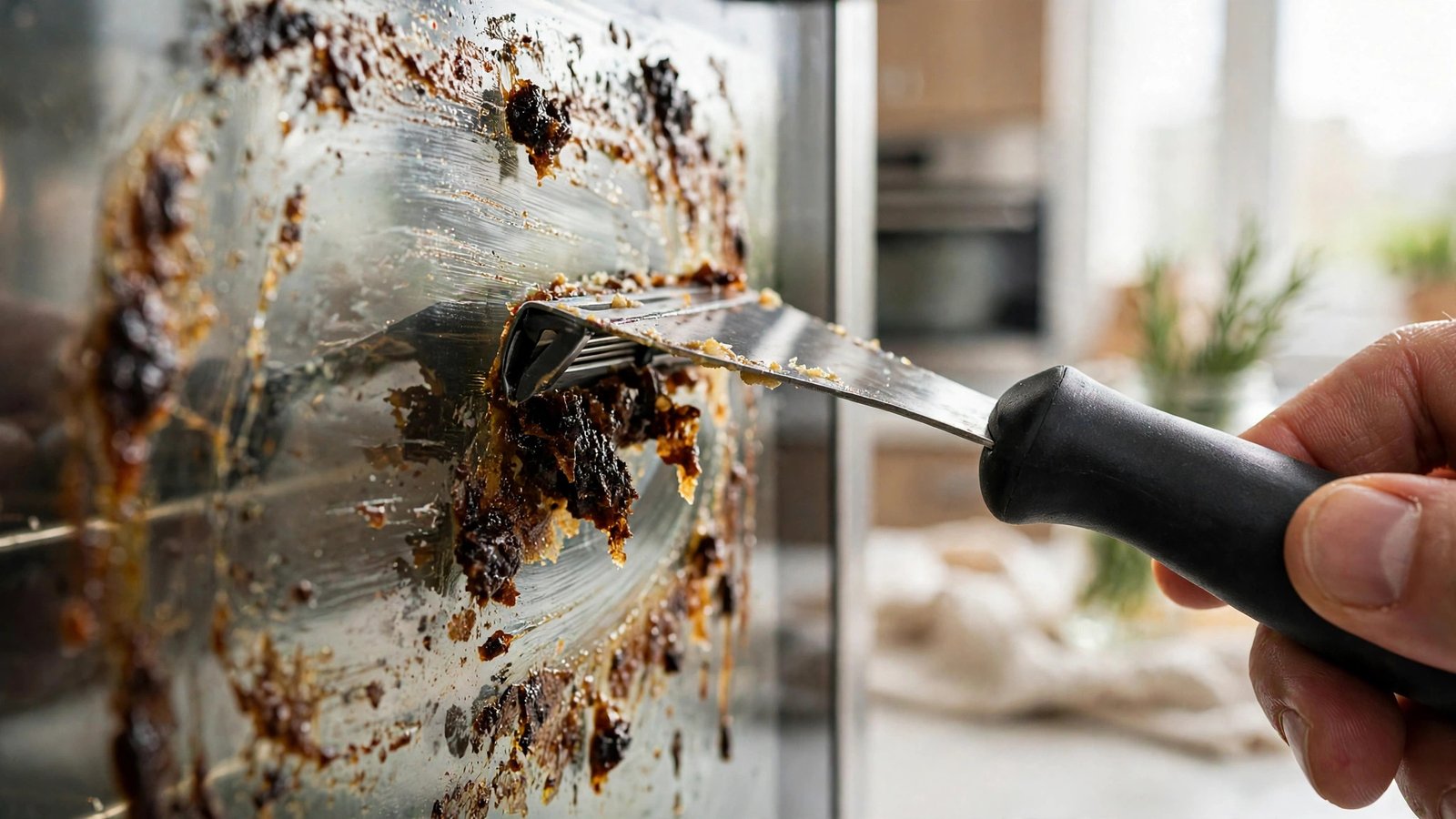
If your manual allows a blade, use a new single-edge razor in a proper handle, never a loose blade, and work on a cool, wet surface: spray the glass with warm soapy water first so the blade glides. Hold the scraper almost flat, at about 30 degrees, and push forward in short, even strokes. Let the edge do the cutting — pressing down hard causes scratches. Wipe loosened residue away as you go, and stop at once if the blade catches or skips.
Never use a razor on a dry surface, a printed border, or any coated or tinted area, and never use a used or rusty blade. For most people, a plastic scraper plus a second round of paste handles everything a razor would, with none of the risk — the approach the Family Handyman cleaning guides recommend for everyday oven care.
Between the Panes: Cleaning the Glass You Cannot Reach
The most frustrating oven-glass problem is the haze that will not wipe away. If the inside and outside are both spotless and the door still looks foggy, the dirt is between the two panes: grease-laden steam escapes through the door’s vent slots during cooking and condenses on the inner faces, where no cloth can reach it. Knowing how to clean an oven glass door between the panes starts with your manual, because the fix depends entirely on how your door is built.
Some ovens have vent slots along the top edge wide enough to slide a thin, damp cloth — wrapped around a yardstick or long flexible brush — down between the panes. If your model allows this, slide the cloth in, wipe in slow vertical passes, and pull it out to rinse and re-wet often. Never force anything into the slots or pour liquid into them; a damp cloth is enough, and excess water pools inside the door and dries into new streaks.
Other models let you remove the door entirely: open it partway, flip up the hinge locks, and lift it straight up and off. The inner glass panel is then often held by a few screws along the top edge, and removing it gives full access to both inner faces. This is straightforward on some models and a warranty-voiding mistake on others, so the manual is the authority — not a video of a different brand. If the manual does not describe door removal, do not attempt it.
Some doors are sealed units with no user access at all — if yours is one, the haze is a job for an appliance technician, who can disassemble the door safely and reseal it. The same applies if the glass is cracked or chipped, or the door no longer seals tightly. Forcing a sealed door apart risks broken glass, a damaged hinge, and a door that never closes properly again.

What Never to Use on Oven Glass
Many common cleaning products can permanently damage oven glass, usually invisibly until the oven heats up and the scratch catches the light. Steel wool and metal scouring pads are the worst offenders: they leave fine scratches that weaken tempered glass and collect grease. Abrasive powders and gritty cream cleansers do the same damage more slowly. Keep both far away from the door.
Commercial oven cleaner is another trap: strong alkalis designed for the enamel cavity, which many manufacturers warn against using on door glass, the gasket, or near the heating elements. They can damage coatings, eat into the gasket, and leave fumes inside a closed oven. If your manual explicitly allows a specific oven cleaner on the glass, follow its instructions exactly — otherwise, stick to baking soda and dish soap. The same caution applies to ammonia-based glass cleaners on some coated doors. And in any guide to how to clean an oven glass door safely, one more rule belongs: never clean the glass while it is hot, never use a knife or screwdriver as a scraper, and never flood the door edges with water. Liquid in the vents ends up between the panes, and steam from a hot door can crack already-scratched glass.
The gentlest method that works is always the right one — for oven glass, usually baking soda, water, and time. The same gentle-first rule applies to your other appliances: our guide to how to clean a microwave uses the same steam-and-wipe logic, and how to clean an air fryer explains why coated surfaces need the same care as oven glass.
Brand-Specific Warnings: Self-Cleaning Ovens and Coated Glass
Self-cleaning ovens deserve a section of their own. A pyrolytic cycle heats the cavity to roughly 800 to 1,000 degrees Fahrenheit — hot enough to reduce baked-on food to ash, according to Mental Floss — and the door locks automatically until the oven cools. That heat does clean the inside glass, but it is not a shortcut: heavy grease can smoke badly and the heat stresses the seals and hinges, so manufacturers recommend wiping out loose grease first and using the cycle sparingly.
Never use a chemical oven cleaner inside a self-cleaning oven unless the manual explicitly allows it: the chemicals can damage the enamel that makes the cycle work and produce fumes at high temperatures. The same goes for foil liners, which many manufacturers forbid because they block heat and can melt onto the enamel. If your oven has a steam-clean option, use that for light soil — it runs much cooler and is far gentler on the door and seals.
Coated glass is the other special case: some oven doors carry a heat-reflective coating on the inside pane, and a few have a catalytic coating on the cavity walls that absorbs grease at cooking temperatures. Abrasive pads, razor blades, and strong alkaline cleaners can strip or scratch these coatings, and the damage is permanent — you cannot recoat a door at home. If your manual mentions a coating, treat the glass as coated: baking-soda paste and a soft cloth only, no blades, no scouring pads, no oven cleaner. When unsure whether your door is coated, assume it is — the Better Homes & Gardens cleaning guides make the same point: when the manual is silent, gentleness is the safe default.
How Often Should You Clean the Oven Glass?
For most households, a weekly wipe outside and a proper inside clean every one to three months keeps the door clear. Heavy roasters should clean the inside glass monthly: fresh grease wipes off easily, while a month-old layer needs a paste and a wait. The between-the-panes job is not a regular chore — once a year is plenty if you keep liquids away from the vents.
The real secret is prevention: wipe up spills while they are still warm, cover dishes that splatter, and use a roasting pan with higher sides for fatty cuts. Five minutes of prevention saves an hour of paste-and-wait later. The same habit pays off across the kitchen: with a regular routine, how to clean a coffee maker becomes a five-minute job instead of a descaling project.
Frequently Asked Questions
Can I use a razor blade on oven glass?
Only if your oven’s manual specifically allows it. Use a new single-edge blade in a proper handle, on a cool, wet surface, held almost flat at about 30 degrees with light pressure. Never use a blade on coated, printed, or tinted glass, or on a dry surface. If your manual is silent, use a plastic scraper.
Can I use oven cleaner on the glass door?
Usually not. Most oven cleaners are strong alkalis meant for the enamel cavity, and many manufacturers warn against using them on door glass or the gasket. They can damage coatings and leave fumes in a closed oven. A baking-soda paste and dish soap clean the glass just as well.
How do I clean between the glass panes?
Check your manual first: some models allow a thin damp cloth through the vent slots at the top of the door; others let you remove the door and unscrew the inner panel. If your manual describes neither, the door is sealed and the haze is a job for an appliance technician — do not force it apart.
Why is my oven glass still brown after cleaning?
Either the residue needs a longer dwell time or the film is between the panes — try a fresh paste left on for thirty minutes or overnight, then wipe again. If the glass still looks brown with both sides clean, the dirt is trapped between the panes.
Will the self-clean cycle clean the oven door glass?
It cleans the inside glass: the cycle heats the cavity to roughly 800 to 1,000 degrees Fahrenheit, reducing grease to ash. But heavy grease can smoke, the heat stresses the door seals, and the outside glass is untouched. A baking-soda paste is gentler, cheaper, and cleans both sides.
Conclusion
A clear oven door makes the whole kitchen feel cleaner. The method is simple: soapy water outside, a baking-soda paste and patience inside, a scraper only when the manual allows it, and a careful look at the manual before touching anything between the panes. Skip the steel wool and oven cleaner on the glass, and never clean a hot door. Now that you know how to clean an oven glass door properly, put it on the calendar every month or two — the next clean takes half the time, because the grease never gets the chance to bake on.



