
How to Cook a Turkey in an Air Fryer: Juicy, Crispy, and Done in Under an Hour

If you’ve ever stared at a turkey and wondered whether an air fryer could really handle it, the answer is yes — with one important condition. Learning how to cook a turkey in an air fryer comes down to size: an air fryer is essentially a small, high-powered convection oven, and it produces a turkey breast with crackling golden skin and juicy meat in a fraction of the time a conventional oven needs. A whole bird can work too, but only if it’s small enough to fit comfortably in the basket or tray.
Most people who try this method never go back to the oven for smaller cuts. A 3–5 lb turkey breast is done in roughly 45–55 minutes at 360°F, and the skin comes out crisper than anything a conventional oven manages in twice the time. This guide covers both methods — breast and whole bird — with exact times, temperatures, and the mistakes that dry a turkey out.
Why the Air Fryer Works So Well for Turkey
An air fryer circulates very hot air at high speed around the food, which is exactly how a convection oven works — just in a much smaller cavity. That tight space is an advantage: the hot air stays close to the skin, so the surface browns and crisps fast while the interior stays moist. That’s the core of how to cook a turkey in an air fryer successfully — hot, fast air and a dry surface. You also skip the long preheat of a full oven, and you free up the main oven for everything else on a busy holiday cooking day.
The method suits a turkey breast best because a breast is a single, even piece of meat. A whole bird is a collection of shapes — thick breast, thinner legs, wings that stick out — which makes even cooking harder. That doesn’t mean a whole bird is off the table, but you need the right size and the right expectations, which we’ll cover below.
One thing the air fryer can’t fix is a turkey that started out wrong. A bird cooked from frozen will never crisp properly, and the outside will overcook long before the centre is safe. Thawing takes planning: the Centers for Disease Control and Prevention and the USDA both stress that a turkey should be thawed in the refrigerator or in cold water, never left out on the counter. If you need a refresher on thaw times, our guide on how to thaw a turkey safely walks through the fridge and cold-water methods in detail.
Which Turkey to Buy: Breast vs. Whole Bird
For most air fryer cooks, a bone-in turkey breast is the smart buy. A 3–5 lb breast feeds four to six people, fits in a standard 5–7 quart basket, and cooks evenly. Boneless breasts work too and cook a little faster, but the bone helps insulate the meat and keeps it juicier.
A whole bird is possible only in a large, oven-style air fryer with a flat rack or a very large basket — think 10 quarts or more — and the bird must be small, around 10–12 lb at most. Measure your basket before you buy. The bird needs at least an inch of clearance from the heating element above it, and the lid must close without pressing the bird. If you have to force the lid, the bird is too big.
When choosing between the two, think about your cooking day. If the air fryer is a side dish station for a holiday, the breast is the reliable pick. If you’re cooking a small Thanksgiving for four and the air fryer is your only oven, a small whole bird can be a genuine centrepiece. Our comparison of air fryer vs. oven covers how the two appliances differ on speed, crispness, and capacity if you’re still deciding which to use.

Prep: The Day Before Makes the Difference
The single biggest upgrade to any turkey is a dry brine, and it costs nothing but a day of patience. A day before cooking, pat the turkey dry and rub it all over with kosher salt — about 1/2 to 3/4 teaspoon per pound — then leave it uncovered in the fridge overnight. The salt draws moisture out, dissolves into it, and is pulled back in, seasoning the meat deeply and helping it hold onto juice during cooking. The uncovered rest also dries the skin, which is the secret to crispness.
On cooking day, take the turkey out of the fridge 30–45 minutes before it goes in the basket. A cold bird straight from the fridge cooks unevenly and the skin steams instead of crisping. Pat it very dry with paper towels — moisture is the enemy of crispy skin.
Brush the skin lightly with oil (olive oil or melted butter both work) and season. Keep the seasoning simple: salt, pepper, garlic powder, and a little paprika or dried herbs. Aromatics like a halved onion, lemon, or garlic cloves can go in the cavity of a whole bird, but skip stuffing — the stuffing insulates the cavity and slows the centre from reaching a safe temperature, and it rarely cooks through in an air fryer.
How to Cook a Turkey in an Air Fryer: The Breast Method
This is the method that delivers the most reliable results, and it’s the best place to start if you’re learning how to cook a turkey in an air fryer for the first time. Preheat the air fryer to 360°F for about 5 minutes. A preheated basket gives the skin an immediate blast of heat, which is what sets the crisp.
Place the breast skin-side down first. Cook for 20 minutes at 360°F. This starts the skin rendering and browning from underneath. Then flip it skin-side up and cook for another 25–35 minutes, depending on size. A 3 lb breast will usually need about 25 minutes after the flip; a 5 lb breast will need closer to 35.
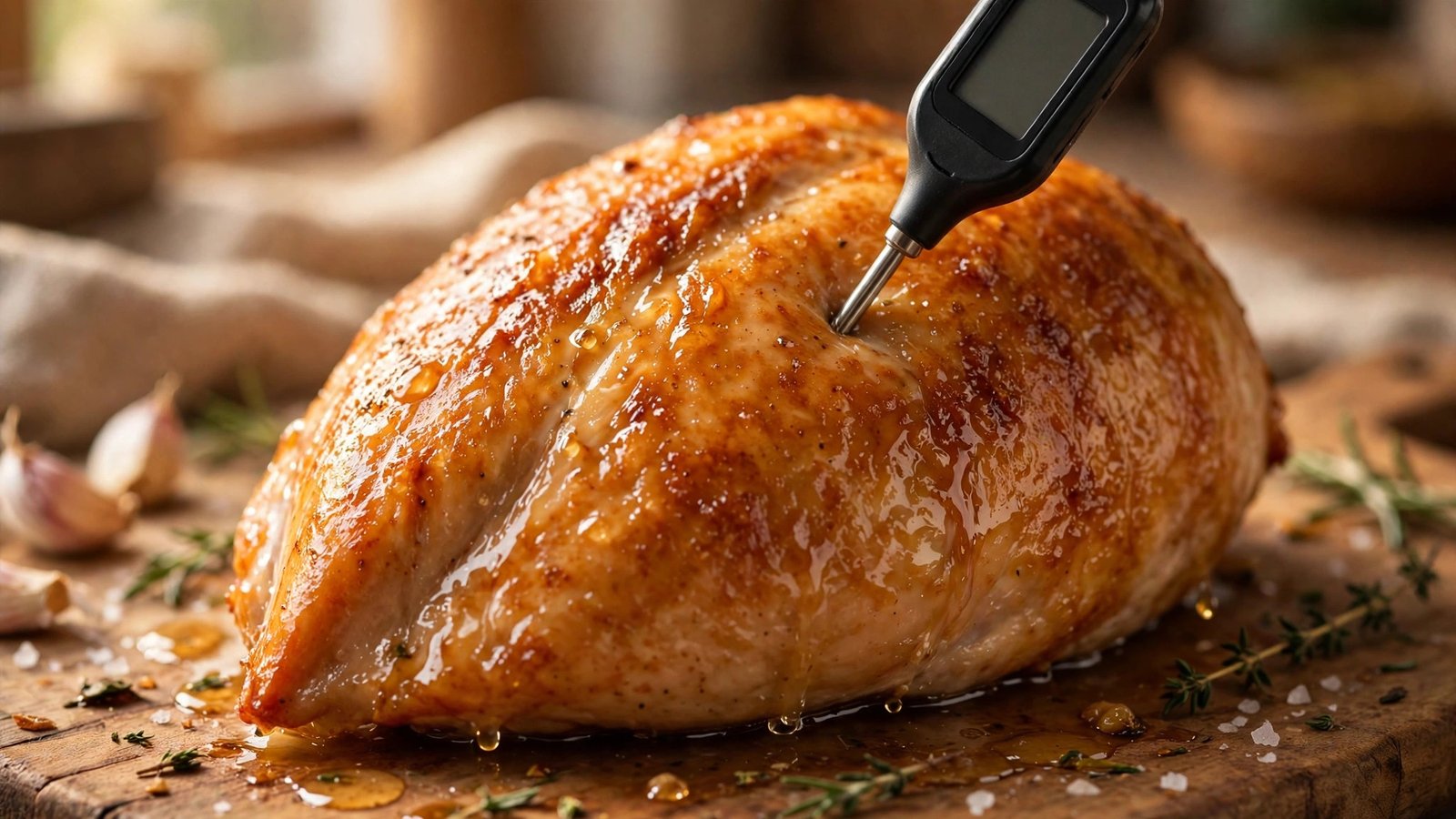
Check the temperature with a meat thermometer in the thickest part of the breast, away from the bone. The USDA safe cooking guidance sets 165°F as the minimum safe internal temperature for turkey. The smart move is to pull the breast at 160–162°F and let it rest — carryover cooking will bring it the rest of the way to 165°F while the juices redistribute. Rest it for 10–20 minutes, loosely tented with foil, before carving. Cutting into it immediately lets the juices run out onto the board instead of staying in the meat.
If the skin isn’t as dark as you’d like at the end, give it a final 3–5 minutes at 400°F. Watch it closely — the jump from golden to burnt happens fast at that temperature. Full details on safe temperatures are in the USDA safe cooking guidance, and the USDA turkey guidance covers thawing, storage, and handling too.
How to Cook a Whole Turkey in an Air Fryer
A whole bird takes a different approach: lower temperature, breast-side down first, and a longer cook. Preheat to 350°F. Place the bird breast-side down on the rack or in the basket and cook for about 20–25 minutes. Then flip it carefully — two large spatulas or a pair of tongs plus a sturdy fork help here — and continue breast-side up.
Plan on roughly 8–12 minutes per pound at 350°F. A 10 lb bird lands around 80–120 minutes; a 12 lb bird around 96–144 minutes. That’s a wide range because basket airflow, bird shape, and starting temperature all matter, so the thermometer is the only thing that decides when it’s done. Check the thickest part of the breast and the inner thigh, away from bone, and look for 165°F in both places. If the breast is done but the thigh lags, cover the breast loosely with foil and keep cooking until the thigh catches up.
Watch the wings and drumstick tips — in an air fryer they sit close to the heating element and can burn. A small piece of foil tucked over the wing tips after the first 30 minutes keeps them from scorching. Also check the drip tray: a turkey releases a lot of fat, and if the tray is full the fat can smoke. Empty it halfway through the cook if it’s filling up.
Rest the whole bird for at least 20 minutes before carving. A whole bird holds more heat and more juice than a breast, and cutting it too soon wastes both.
Cooking Times at a Glance
| Cut | Weight | Temperature | Approximate time |
|---|---|---|---|
| Bone-in turkey breast | 3–4 lb | 360°F | 45–50 minutes |
| Bone-in turkey breast | 4–5 lb | 360°F | 50–55 minutes |
| Boneless turkey breast | 2–3 lb | 360°F | 35–45 minutes |
| Whole turkey (small) | 10 lb | 350°F | 80–120 minutes |
| Whole turkey (small) | 12 lb | 350°F | 96–144 minutes |
These are guidelines, not guarantees. Every air fryer runs slightly differently, so treat the times as a starting point and the thermometer as the final word. Always finish at 165°F in the thickest parts, and always rest before carving.
The Mistakes That Dry a Turkey Out
Most dry turkey comes from one of five mistakes, and all of them are easy to avoid — which is good news if you’re learning how to cook a turkey in an air fryer and want to get it right the first time. First, cooking from frozen — the outside dries out while the inside slowly catches up. Second, skipping the rest. Third, cooking past 165°F by a wide margin; every degree past the safe point squeezes moisture out of the meat. Fourth, crowding the basket so air can’t circulate, which steams the bird instead of roasting it. Fifth, opening the basket every few minutes to check — each peek drops the temperature and adds time, which dries the meat.
Another common error is skipping the dry brine or seasoning too late. Salt needs time to work its way in; sprinkling it on five minutes before cooking seasons the skin and little else. And don’t truss a whole bird too tightly — a tightly trussed bird cooks unevenly in an air fryer because the legs shield the thighs from the hot air.
One more thing worth saying: don’t wash the turkey. Rinsing a raw bird splashes bacteria around the sink and does nothing for safety or flavour. The heat does the work — 165°F kills the bacteria, and a clean, dry bird going into a hot basket is exactly what you want. The USDA’s safe handling guidance explains this in detail if you’re curious about the reasoning.
Serving, Carving, and Leftovers
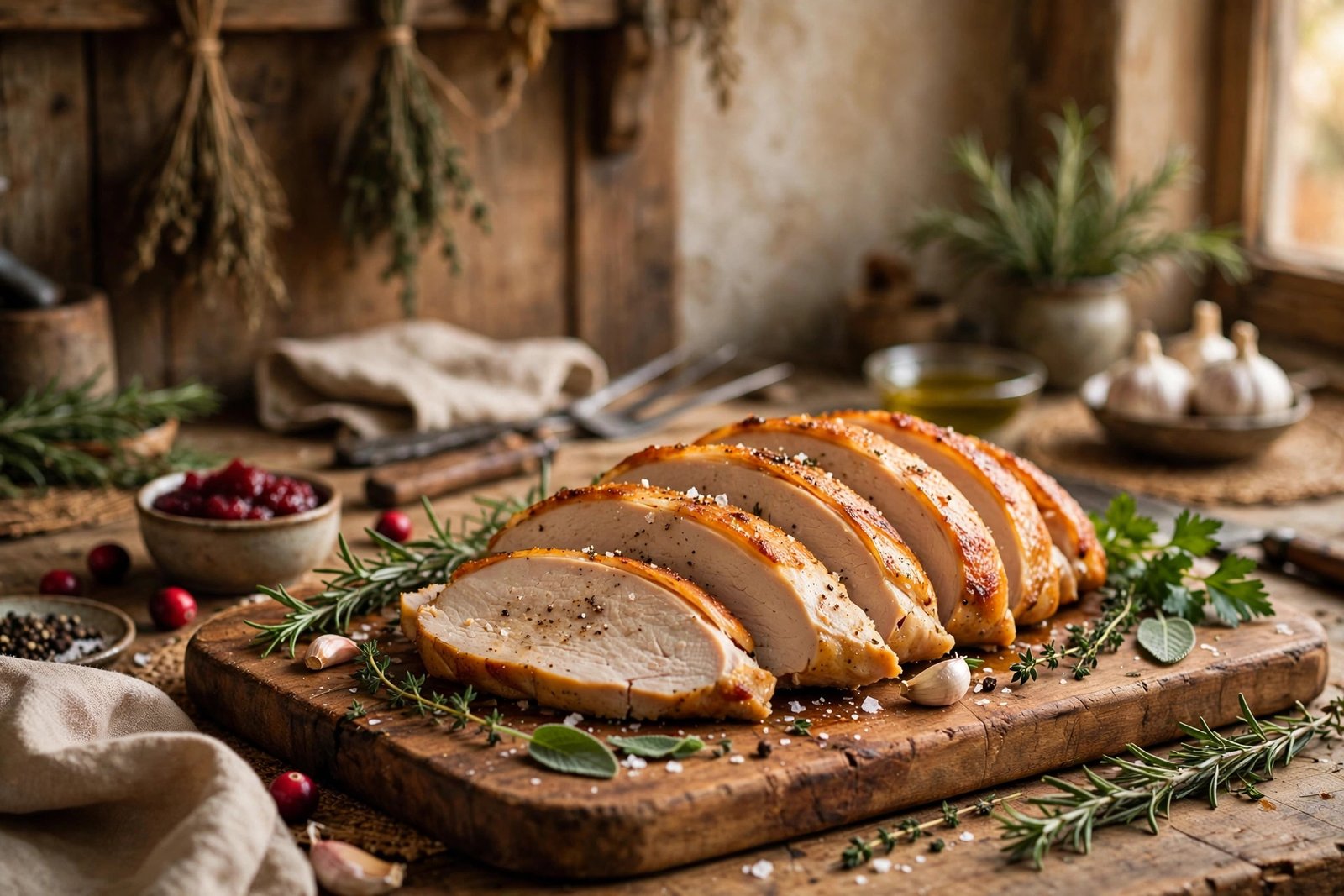
Carve a breast by slicing across the grain in even, half-inch slices. For a whole bird, remove the legs and wings first, then slice the breast meat off the bone in long strokes, keeping the slices thick enough to stay juicy. A sharp knife matters more than technique here — a dull knife tears the meat and squeezes out juice.
Save the drippings. The juices in the air fryer tray make an excellent quick gravy: pour them into a pan, add a spoonful of flour, whisk in stock, and simmer until it thickens. And don’t toss the carcass of a whole bird — it makes a rich stock for soup the next day.
Leftovers should be refrigerated within two hours of cooking and eaten within three to four days. Once you know how to cook a turkey in an air fryer, the leftovers are just as good as the main event. Slice the meat off the bone before storing — it cools faster and takes up less space. For reheating, a splash of stock or gravy in a covered dish at 325°F keeps the meat from drying out, or you can give slices a quick 2–3 minutes in the air fryer at 350°F with a little broth underneath.
And when the meal is over, remember your cast iron skillet needs care too — our guide on how to clean a cast iron skillet covers seasoning and storage so it’s ready for the next roast.
Frequently Asked Questions
Can you cook a frozen turkey in an air fryer?
No. Never cook a turkey from frozen in an air fryer. The outside will overcook and dry out long before the centre reaches 165°F, and the skin will never crisp. Thaw it in the fridge (about 24 hours per 4–5 lb) or in cold water, changing the water every 30 minutes.
What size turkey fits in an air fryer?
A turkey breast of 3–5 lb fits most standard baskets. A whole bird needs a large oven-style unit, 10 quarts or more, and the bird should be 10–12 lb at most, with at least an inch of clearance from the heating element. If the lid won’t close without pressing the bird, it’s too big.
What temperature should I cook a turkey in an air fryer?
Use 360°F for a turkey breast and 350°F for a whole bird. Those temperatures crisp the skin without drying the meat. Finish with a short blast at 400°F if the skin needs more colour.
How long does a turkey breast take in an air fryer?
A 3–5 lb bone-in breast takes roughly 45–55 minutes at 360°F — about 20 minutes skin-side down, then 25–35 minutes skin-side up. Always verify with a meat thermometer: pull at 160–162°F and let carryover cooking take it to 165°F during the rest.
Should I brine a turkey before air frying?
A dry brine the day before makes a real difference — 1/2 to 3/4 teaspoon of kosher salt per pound, rubbed over the bird and left uncovered in the fridge overnight. It seasons the meat deeply and dries the skin, which gives you a crisper finish.
Why did my turkey skin burn in the air fryer?
The skin is very close to the heating element, so sugar-based rubs, honey glazes, and loose herbs burn fast. Use a simple oil-and-salt base, add sugary glazes only in the last 10 minutes, and tuck foil over wing tips and any part that’s darkening too fast.
Conclusion
Learning how to cook a turkey in an air fryer is one of the best upgrades you can make to a holiday meal or a Sunday roast. A turkey breast cooks in under an hour with skin that shatters and meat that stays juicy, and a small whole bird can work too if your air fryer is big enough. The recipe for success is simple: thaw fully, dry-brine the day before, preheat to 350–360°F, trust the thermometer over the clock, and rest the bird before carving. Get those five things right and the air fryer will give you a turkey that tastes like it took all afternoon — in about an hour.



