
How to Thaw a Turkey Safely: The 3 USDA-Approved Methods (and the Mistakes to Avoid)

Every year, the same quiet panic hits kitchens across the country a day or two before Thanksgiving: the turkey is still frozen solid, dinner is tomorrow, and nobody is quite sure what to do next. If that sounds familiar, you are not alone — and learning how to thaw a turkey safely is much simpler than it feels in the moment. There are only three methods the U.S. Department of Agriculture considers safe, and once you know them, the whole thing becomes a matter of planning rather than guesswork.
In this guide, you will find the three approved methods explained step by step, exact thawing times by weight so you can plan backwards from dinner, the mistakes that cause most Thanksgiving food safety problems, and what to do if you run out of time entirely. Whether your bird is twelve pounds or twenty, and whether Thanksgiving is a week away or tomorrow morning, there is a safe way through.
Why Learning How to Thaw a Turkey Safely Matters
A whole turkey is a big, dense piece of meat, and that density is exactly what makes thawing tricky. The outside of the bird warms up far faster than the deep centre near the bone, so a turkey left at room temperature can spend hours with its surface sitting in the danger zone — between 40 and 140 degrees Fahrenheit — while the inside is still frozen. That temperature range is where bacteria multiply fastest, and a few hours in it is enough to turn an otherwise perfect bird into a food safety problem that no amount of careful cooking can fully undo.
Method 1: Refrigerator Thawing — The Safest and Simplest Option
The rule is straightforward: allow about 24 hours of thawing time for every 4 to 5 pounds of turkey. A 12-pound bird needs roughly two days in the fridge, a 16-pound bird needs about three to four days, and a 20-pound bird needs around four days. Those are planning figures, not exact science — a bird packed tightly in a cold fridge may need a little longer. The practical test is simple: the turkey should feel soft and pliable all the way through, with no icy patches in the thickest parts of the breast or thigh, and the legs should move freely in their joints.
Set the turkey on a tray or in a shallow roasting pan before it goes into the fridge. As it thaws, juices will collect, and a tray catches every drip before it can reach the shelf below or contaminate other food. Place the tray on the lowest shelf if you can, and keep the turkey in its original packaging while it thaws.
Fridge thawing also gives you a grace period: once thawed, the turkey can safely stay in the refrigerator for another one to two days before you cook it. A bird that finishes thawing on Tuesday can wait until Wednesday or Thursday, which takes a lot of pressure off a busy holiday week. While it thaws, you can get on with everything else — or take a welcome break with a good hot chocolate from scratch.
For Thanksgiving 2026, which falls on November 26, the fridge math is worth doing now rather than later. A 16-pound turkey needs three to four days, so it must start thawing by November 22 at the latest — earlier is better. Mark that date on your calendar the moment the turkey goes into the freezer, because a bird that starts thawing a day late is a bird that may still be icy in the middle on Thanksgiving morning.
Method 2: Cold-Water Thawing — The Fast Option When Time Is Short
If the fridge method needs more time than you have, cold-water thawing is your best friend. It is much faster — about 30 minutes per pound — which means a 12-pound turkey takes roughly six hours, a 16-pound turkey about eight hours, and a 20-pound turkey around ten to twelve hours. That is a single day of work instead of several, and it is the method to reach for when you discover on Wednesday that the turkey is still frozen.
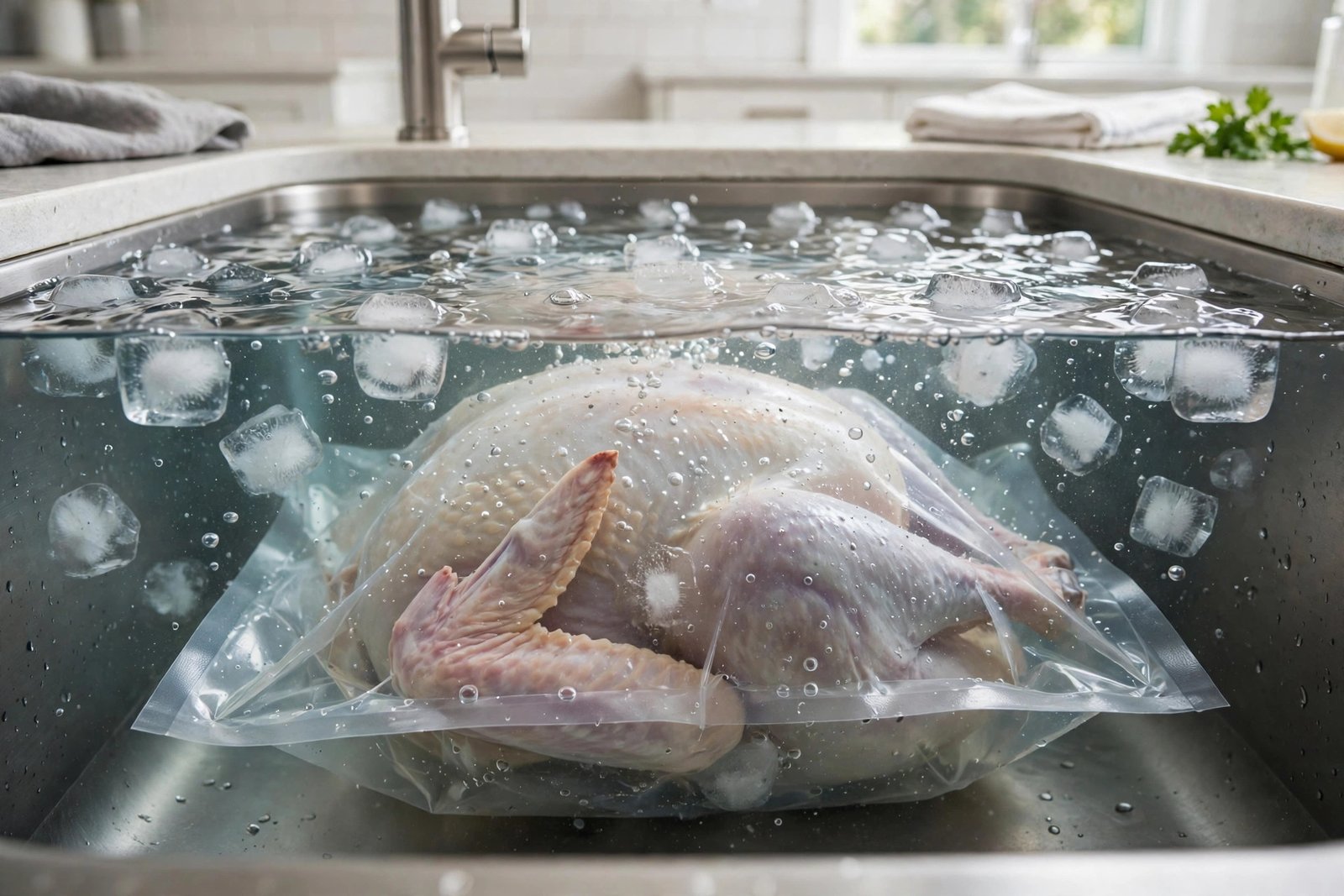
The key word is cold. Fill a clean sink or large container with cold tap water and submerge the turkey completely in its leak-proof packaging — if the packaging is torn, put the bird in a second sealed bag first. Change the water every 30 minutes, without exception: fresh cold water keeps the temperature down and keeps pulling heat out of the bird. Warm or hot water is never acceptable here, because it pushes the surface straight into the danger zone while the centre stays frozen.
Cold-water thawing needs more attention than the fridge method, because of that 30-minute water change. Set a timer and treat each change as non-negotiable — change the water, get on with something else, change it again. While you wait, sort out the rest of the meal, and plan ahead for leftovers too: knowing how to freeze bread properly means nothing from the feast goes to waste.
One rule makes cold-water thawing different from the fridge method: once the turkey is thawed this way, you must cook it immediately. Unlike a fridge-thawed bird, a cold-water-thawed turkey has no safe waiting period. The surface has spent hours in cool — but not refrigerator-cold — water, so the safe move is to go straight from the sink to the oven. Plan your day so the thaw finishes when you are ready to cook, not hours beforehand.
Method 3: Microwave Thawing — The Last-Resort Sprint
Microwave thawing is the fastest of the three approved methods, at roughly six minutes per pound, but it is also the fiddliest, and it only works if your microwave is big enough to hold the turkey. For most households, this is a method for a small bird or a turkey breast rather than a full twenty-pound centrepiece, and it is best thought of as a rescue option rather than a first choice.
Start by removing all outside wrapping and placing the turkey on a microwave-safe dish to catch drips. Follow the microwave manufacturer’s instructions for defrosting, and use the defrost function rather than full power. Turn and rotate the bird as instructed so it thaws as evenly as possible, and be ready for the reality that some parts, especially thin edges like wing tips, may start to cook slightly while thicker parts are still icy. That unevenness is the main drawback of this method, and it is why the next rule matters so much.
Just like cold-water thawing, microwave thawing ends with an immediate trip to the oven — a microwaved turkey must be cooked right away, never thawed the night before and refrigerated. If your microwave is too small for the whole bird, a smaller cut is the better choice: a turkey breast thawed in the microwave and roasted properly will always beat a whole bird thawed badly.
Thawing Times at a Glance
The table below brings the numbers together so you can plan at a glance. Fridge times assume about 24 hours per 4 to 5 pounds; cold-water times assume about 30 minutes per pound with the water changed every half hour. A few hours either way is normal, but use these figures to pick your start date — and start earlier rather than later.
| Turkey weight | Refrigerator thawing | Cold-water thawing |
|---|---|---|
| 12 lb | About 2 days | About 6 hours |
| 16 lb | About 3–4 days | About 8 hours |
| 20 lb | About 4 days | About 10–12 hours |
If you are still deciding how to thaw a turkey safely and your bird falls between these weights, round up rather than down — a little extra thawing time in the fridge costs nothing, while a still-frozen centre on cooking day costs you the meal. The USDA’s guide to safely thawing a turkey sets out the same three methods and timings, and it is the authority most other food safety guidance follows. The University of Maine Extension turkey thawing guide walks through the same methods with practical home-cook detail, and the University of Georgia turkey thawing and selection tips are a useful check on timing and bird selection alike.
Mistakes to Avoid When You Learn How to Thaw a Turkey Safely
Most thawing problems come from a short list of familiar mistakes, and every one of them is avoidable. The first and most common is thawing on the counter. It feels harmless, but a turkey left on the counter spends hours with its surface in the danger zone while the middle stays frozen. The counter is never a thawing method, no matter how cold the house feels — and neither are the garage, the porch, or the basement.
Warm or hot water is another trap, especially when you are in a hurry. It seems logical — warmer water thaws faster — but it heats the outside of the bird into the danger zone long before the inside has thawed. Cold water only, changed every 30 minutes, is the rule, and there is no safe shortcut around it. The same logic rules out the dishwasher, which some people suggest as a clever hack: a dishwasher cycle is warm, uneven, and not designed for food safety, and it should never be used to thaw meat.
A paper bag is not a thawing container either. Paper tears, leaks, and soaks through, and it offers no protection against drips or contamination. Keep the turkey in its original leak-proof packaging, or in a sealed food-safe bag, for the whole thaw. Keep raw turkey away from ready-to-eat food in the fridge, wash your hands after handling it, and clean any surface the raw bird or its juices touched. Minnesota’s food safety guidance on safe turkey handling is a good refresher on the hygiene habits that matter most around raw poultry.
Finally, do not refreeze a turkey that has thawed in cold water or the microwave unless you cook it first. A fridge-thawed turkey can be refrozen if your plans change, because it never left the cold — but a bird thawed by the faster methods must be cooked, and only the cooked meat can then be frozen. If you are juggling a busy holiday week, planning your leftovers in advance helps; knowing the mistakes to avoid when meal prepping will keep the days after Thanksgiving as safe as the day itself.
Can You Cook a Turkey From Frozen?
Yes — and if you have truly run out of time, this is a better option than any unsafe thawing shortcut. You can roast a turkey directly from frozen at 325 degrees Fahrenheit, allowing about 50 percent longer than a thawed bird of the same size — a turkey that would normally roast in four hours will need around six. Use a food thermometer to check that the thigh, the wing, and the innermost part of the breast have all reached 165 degrees Fahrenheit before you serve it.
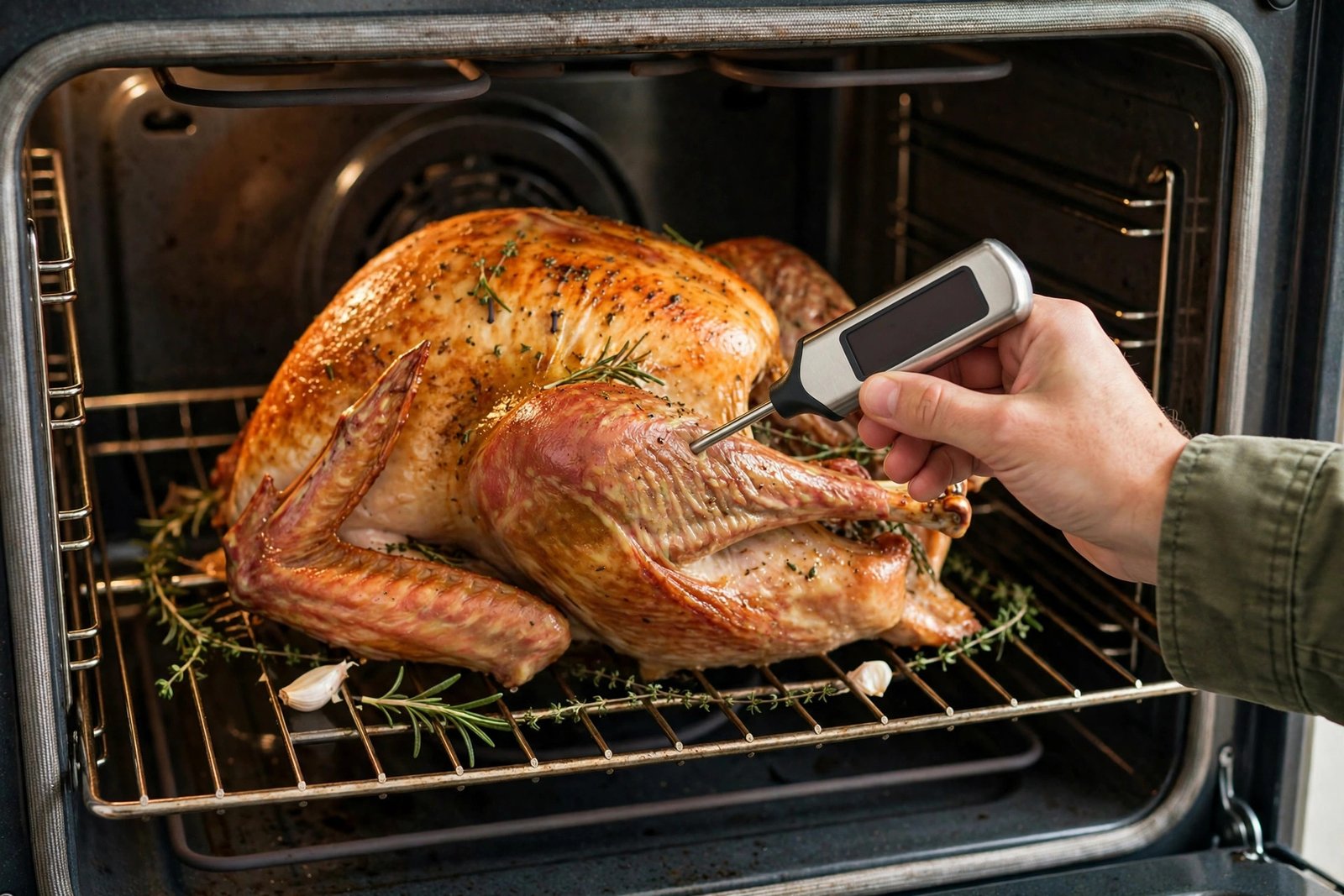
There are limits, though. Do not deep-fry, smoke, or grill a frozen turkey. Those methods depend on even heat and a dry surface, and a frozen bird gives you neither — the outside can burn or dry out while the inside lags behind, and a frozen turkey lowered into hot oil is dangerous in a way that needs no further explanation. Roasting is the safe route for a frozen bird, and only roasting.
Your Thanksgiving Thawing Timeline
The easiest way to get this right is to work backwards from the meal. For Thanksgiving 2026 on November 26, a 16-pound turkey on the fridge method needs to start thawing by November 22. A 12-pound bird can start a day later; a 20-pound bird should start a day earlier. Write the start date on the bag the moment you bring the turkey home, and set a reminder on your phone — the whole plan falls apart if the start date slips by unnoticed.
Frequently Asked Questions
How long does it take to thaw a turkey in the fridge?
Allow about 24 hours for every 4 to 5 pounds. A 12-pound turkey takes roughly two days, a 16-pound turkey about three to four days, and a 20-pound turkey around four days. Once thawed in the fridge, the bird can stay there for another one to two days before cooking.
Is it safe to thaw a turkey on the counter overnight?
No. A turkey left on the counter spends hours with its surface in the danger zone of 40 to 140 degrees Fahrenheit while the centre stays frozen. Counter thawing, garage thawing, and porch thawing are all unsafe — use the fridge, cold water, or microwave methods instead.
How often should I change the water when thawing a turkey in cold water?
Every 30 minutes, without exception. Fresh cold water keeps the temperature down and the thawing steady. Never use warm or hot water, and cook the turkey immediately once it is thawed.
Can I refreeze a thawed turkey?
A turkey thawed in the refrigerator can be refrozen, because it stayed cold throughout. A turkey thawed in cold water or the microwave must be cooked first — only the cooked meat can then be frozen.
What temperature should a turkey reach when cooked?
165 degrees Fahrenheit in the thigh, the wing, and the innermost part of the breast. Check with a food thermometer in all three places, since different parts of the bird cook at different rates.
Can I deep-fry a frozen turkey?
No. A frozen turkey should only be roasted, at 325 degrees Fahrenheit, allowing about 50 percent more cooking time than a thawed bird. Never deep-fry, smoke, or grill a frozen turkey.
Conclusion
Knowing how to thaw a turkey safely comes down to three approved methods, one temperature range to respect, and a little advance planning. The refrigerator method is the calmest choice when you have the days to spare; cold water is the reliable sprint when you do not; the microwave is the last resort for a small bird; and roasting from frozen is the honest fallback when the clock has truly run out. Whichever route you take, keep the bird cold, change the water, cook it immediately after the fast methods, and check that 165-degree finish with a thermometer.
Thanksgiving is busy enough without a food safety scare at the centre of the table. Start the thaw on time — November 22 for a 16-pound bird ahead of November 26 — and let the plan do the worrying for you. Get the thaw right, and everything that follows is simply the good part.



