
How to Host Thanksgiving Dinner for the First Time (Without Losing Your Mind)
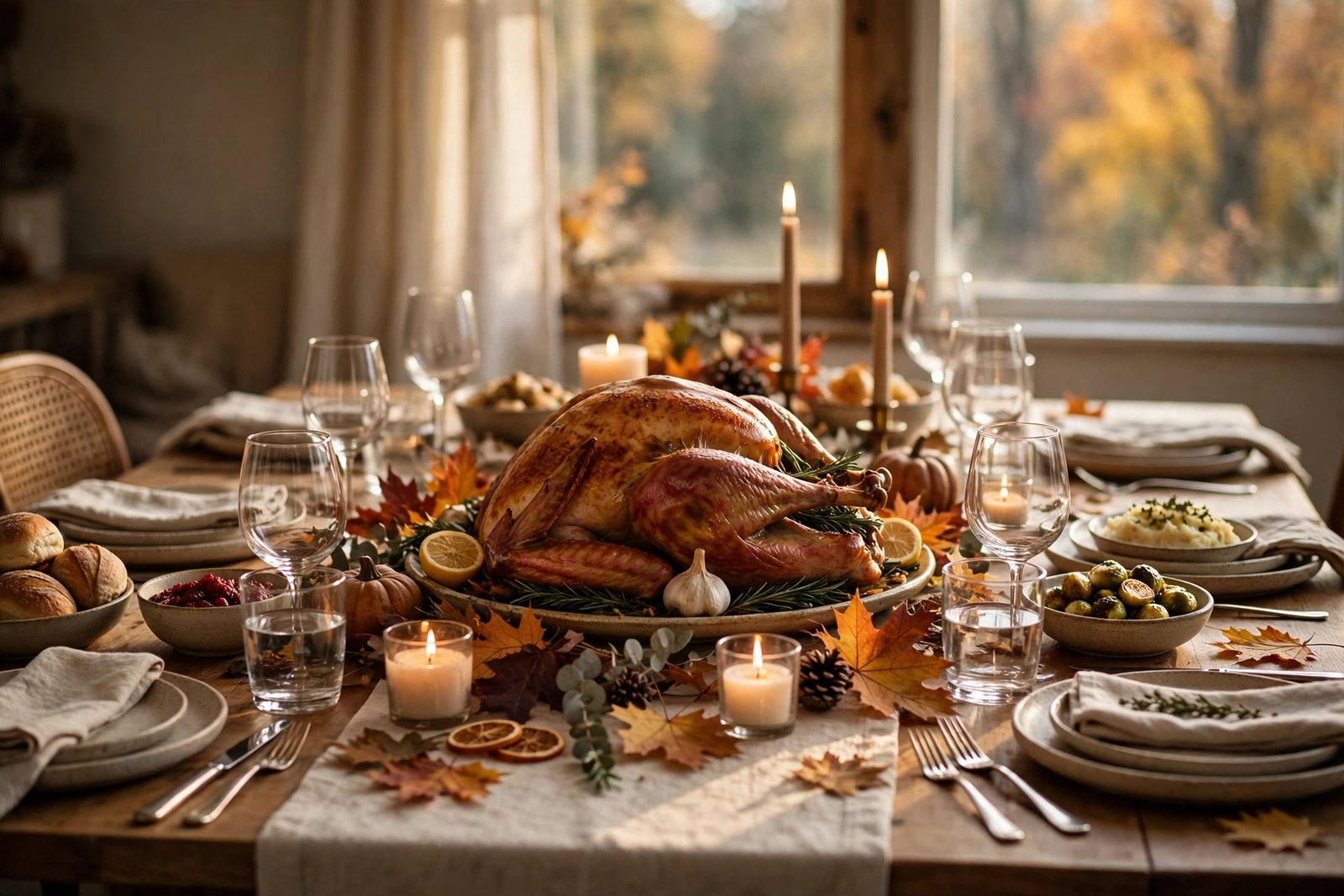
Somebody has to host Thanksgiving for the first time, and this year it is you. The good news is that nobody at the table is grading you against a magazine spread. They want a warm house, a turkey that is cooked through, and enough food that nobody leaves hungry. If you are figuring out how to host Thanksgiving dinner for the first time, start here: the whole day is a scheduling problem, not a cooking contest, and it is solvable with a list, a timeline, and a willingness to let other people help.
First-time hosts usually fail in the same two ways: they try to cook everything from scratch, including dishes they have never made, or they leave everything until the morning and spend the day in a panic. Both are avoidable. This guide gives you a timeline from two weeks out to the last dish in the dishwasher, a realistic budget, a delegation plan, and the mistakes worth skipping.
Start with the guest list and the menu
Everything else depends on two numbers: how many people are coming, and what you are serving. Get a firm headcount at least two weeks out — a vague “maybe ten, maybe fourteen” makes it impossible to buy the right turkey or set the table. Ask guests to confirm by a date, and cook for the number who confirm.
Plan on one to one and a half pounds of turkey per person — a generous serving plus leftovers, which are half the point of Thanksgiving. A ten-person dinner needs a 12- to 15-pound bird; fourteen people need 18 to 20 pounds. If your oven cannot hold a bird that size, two smaller turkeys or a turkey plus a roasted breast cook faster and carve more easily. Our guide on how to cook a turkey walks through sizing, thawing, and roasting.
Keep the menu short. A first-time host does not need twelve dishes: turkey, gravy, stuffing, mashed potatoes, one green vegetable, cranberry sauce, rolls, and one pie is a complete Thanksgiving dinner, and every dish on that list can be made well by a beginner. Add a second pie or a salad only if you genuinely enjoy making it — every dish you add is another pot, another timer, and another thing to keep warm. For dessert, our guide on how to make pumpkin pie covers the classic finish.
Ask about dietary needs when you confirm the headcount — a vegetarian guest or a nut allergy is easy to handle with notice and miserable at the door. One adaptable dish, like a vegetable side everyone can eat, covers most situations.
The timeline: how to host Thanksgiving dinner for the first time without panic
Thanksgiving cooking is spread over days, not hours. The timeline below is the backbone of the plan — print it, stick it on the fridge, and check things off as you go.
| When | What to do |
|---|---|
| Two weeks out | Confirm guests; plan menu; order turkey; check pan, thermometer, plates |
| One week out | Buy non-perishables and drinks; freeze pie dough; confirm who brings what |
| 4–5 days out | Thaw the turkey in the fridge; buy fresh produce |
| Two days out | Make cranberry sauce; set the table; chill drinks |
| Day before | Prep vegetables; assemble stuffing; make mashed potatoes; season turkey |
| Thanksgiving morning | Turkey in the oven; finish sides; lay out dishes |
| One hour before eating | Rest and carve turkey; reheat sides; make gravy |
| After dinner | Pack leftovers; start the dishwasher |
The single most important row is the thaw: a frozen turkey needs about 24 hours in the fridge for every 4 to 5 pounds, so a 15-pound bird needs three to four days. This is the step first-timers get wrong most often, and there is no safe shortcut on the morning. If you buy fresh instead of frozen, you skip the thaw entirely — but order early, because the good birds sell out.
The day before is your biggest cooking day. Chop every vegetable, assemble the stuffing (bake it on the day), and make the mashed potatoes — they reheat beautifully with a splash of milk and butter. The more you finish on Wednesday, the less stands between you and a relaxed Thursday.
The budget: what Thanksgiving dinner actually costs
Part of learning how to host Thanksgiving dinner for the first time is accepting that the budget is manageable — most of the cost is the turkey and the drinks. The American Farm Bureau Federation’s 2025 survey put a classic Thanksgiving dinner for ten at $55.18, and while prices vary by region, the shape of the bill is consistent: the bird is the biggest single item, the sides are cheap, and the extras are where the money leaks away.
| Item | Cost level | Money-saving move |
|---|---|---|
| Turkey | Largest single cost | Buy frozen on sale |
| Sides and produce | Modest | Potatoes, carrots, onions, and bread are cheap |
| Pies and dessert | Modest | Bake one; ask a guest for the second |
| Drinks | Can overtake the food | Ask guests to bring a bottle |
| Table and decor | Small if you borrow | Borrow plates and chairs instead of buying |
The turkey and the cooking order
The turkey is where most people learning how to host Thanksgiving dinner for the first time get nervous, and the nerves are misplaced: a turkey is just a big chicken with a longer cooking time. The rules are simple — thaw it fully, roast it until the thickest part of the thigh reads 165°F, and rest it for twenty to thirty minutes before carving. Resting matters most: it lets the juices redistribute, so the meat stays moist instead of running out onto the cutting board.
Work backwards from dinner time: if dinner is at 4 p.m. and a 15-pound turkey needs about three and a half hours in the oven plus thirty minutes of rest, it goes in at noon. Sides that need the oven — stuffing, roasted vegetables — go in while the turkey rests. Dishes that reheat well, like mashed potatoes, can be made ahead and warmed on the stove.
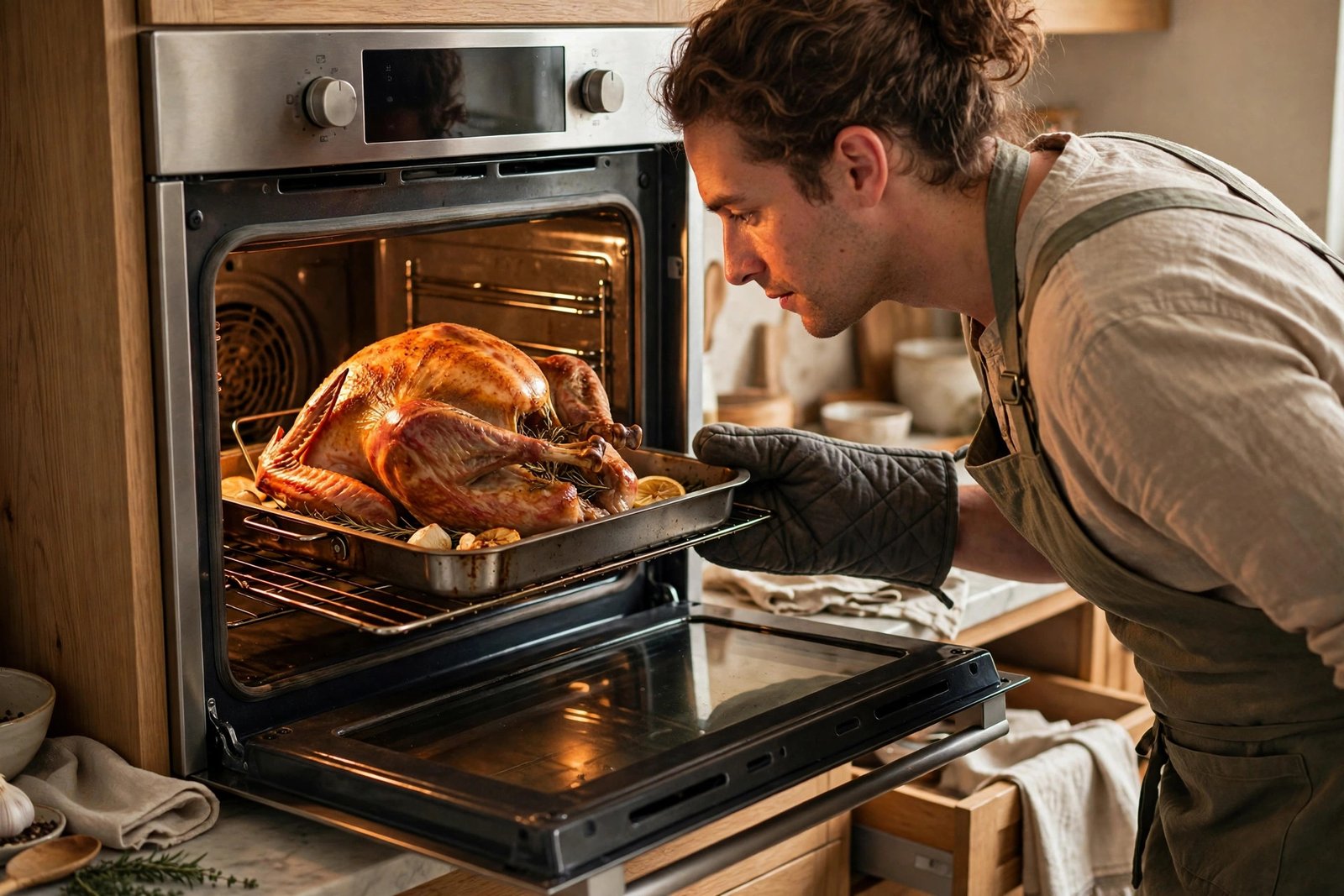
Do not stuff the bird: stuffing inside the turkey must also reach 165°F, and it slows the bird down. Baking it separately is safer, simpler, and gives a crisp top. And do not baste every twenty minutes — each time you open the oven door, the temperature drops and the cooking time stretches. Leave the bird alone, trust the thermometer, and check it only in the last hour.
The table and the house
Allow about 24 inches of table space per guest — elbow room is the difference between a comfortable dinner and an evening of bumping shoulders. If your table is too small, borrow a folding table and push two together, or set up a separate kids’ table, which children usually prefer. Cover a wobbly join with a tablecloth and nobody will notice.
Set the table the night before: plates, cutlery, glasses, napkins, and a water jug at each place, with serving spoons in every dish. Put name cards out if seating matters in your family, and keep the centrepiece low so people can see each other. Our guide on how to set a Thanksgiving table covers layouts for small and large groups.
Give the house a once-over rather than a deep clean: clear the entryway so coats and bags have somewhere to go, make sure there is a clean towel in the bathroom, and run the dishwasher empty so it is ready for the post-dinner load. Guests will spend their time in the kitchen and dining room, not inspecting your bookshelves.
The day itself, hour by hour
Thanksgiving morning should start early and slow. Put the turkey in at the time your plan says, then eat breakfast — hosts who skip breakfast burn the rolls at noon. While the turkey roasts, finish the sides that can be made ahead, lay out the serving dishes with little labels, and put the Macy’s Thanksgiving Day Parade on: it starts at 8:30 a.m. in every time zone on NBC and Peacock, and it gives early guests something to watch.
About an hour before dinner, the pace picks up. Take the turkey out, check the thigh, and let it rest under loose foil. While it rests, put the stuffing and vegetables in the oven, reheat the mashed potatoes, and make the gravy from the pan drippings. This is the busiest twenty minutes of the day — and the moment the whole meal comes together.
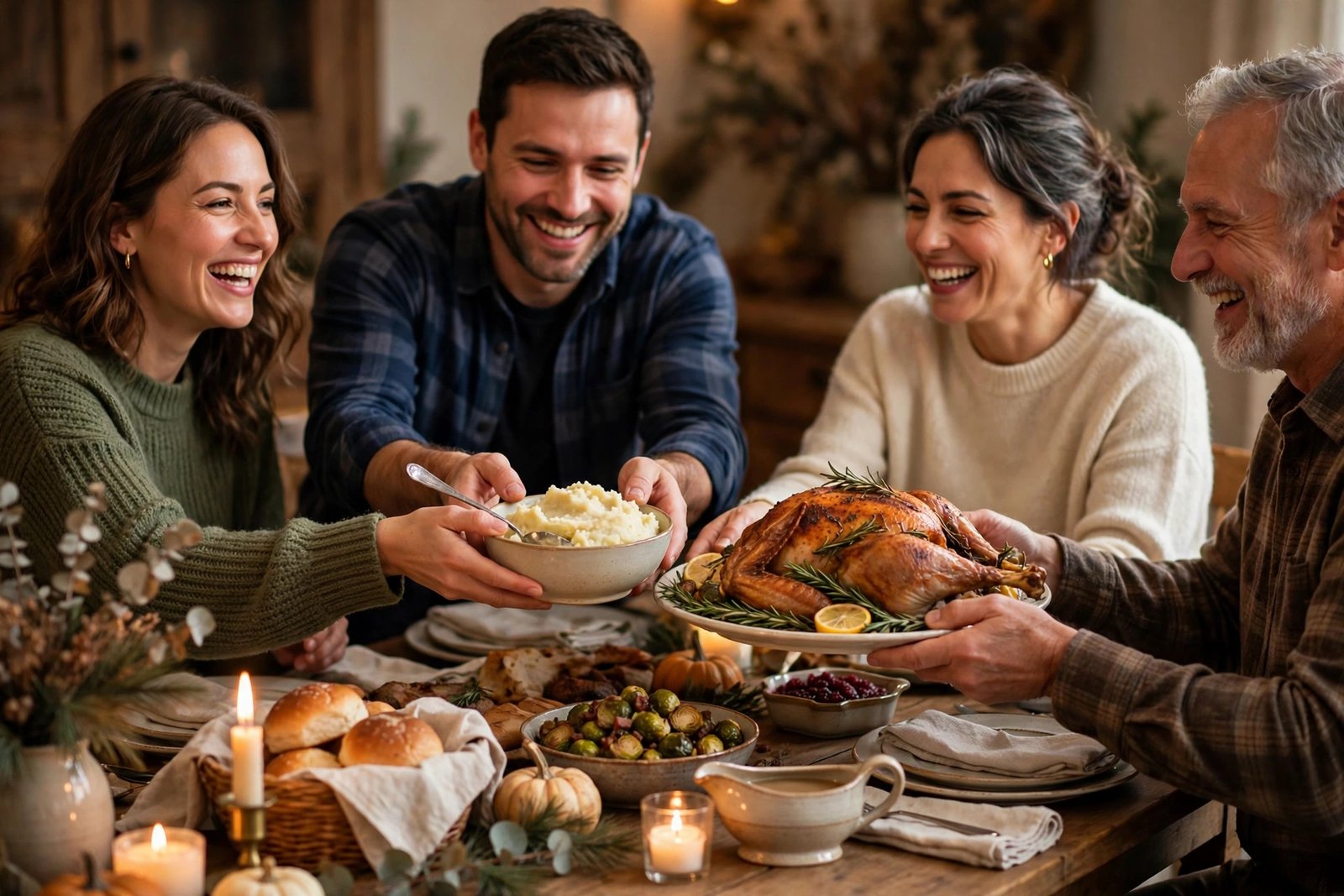
Carve the turkey just before serving, in the kitchen rather than at the table — it is faster, less messy, and you can arrange the slices nicely on a platter. Then call everyone to the table, sit down, and eat with them. The food will be warm for about twenty minutes, which is plenty, and the conversation is the point of the day.
After dinner, pack the leftovers within two hours — the same food-safety rule that applies to every holiday meal. Carve the remaining meat off the bone, pack it into shallow containers, and get it into the fridge. Then start the dishwasher, put the kettle on, and let pie and coffee keep people happy while the kitchen waits.
Delegate or drown
Delegation is the part of how to host Thanksgiving dinner for the first time that first-timers resist most, and it is the part that matters most. Nobody expects the host to cook everything alone — guests usually want to contribute, they just need to be told what to bring. Ask one person for a pie, another for a salad, a third for wine. Be specific: “bring a green salad for ten” is a job; “bring something” is a worry.
On the day, give people jobs too: someone sets the table, someone keeps the drinks topped up, someone watches the oven timer while you carve. Children can fold napkins, arrange the rolls, or be in charge of the music. A guest with a task is a guest who is not standing in your way asking what they can do.
If your family has a tradition of everyone bringing a dish, lean into it — that is potluck, and it is how most large Thanksgivings actually work. Your job is the turkey, the house, and the coordination. The same approach works for any big family meal — our guide on how to host Christmas dinner covers the December version. Real Simple’s hosting guides make the same point: the best hosts ask for help early and clearly.
Mistakes to skip
The biggest mistake is cooking a brand-new menu. Thanksgiving is not the day to test a recipe you have never tried — if the stuffing fails, there is no backup and no time to fix it. Cook dishes you have made before, or test the new one a week early.
The second mistake is starting too late: a turkey that goes in at 2 p.m. for a 4 p.m. dinner will not be ready, and a hungry room is a hard audience. Work backwards from dinner, add thirty minutes of buffer, and set a timer for every step — the buffer saves you when the oven runs cool or the potatoes take longer than expected.
The third mistake is forgetting the non-food details: not enough chairs, no serving spoons, nowhere to put coats. Walk through the house the night before as if you were a guest arriving for the first time. And the fourth is trying to do the washing-up alone afterwards — the cleanup is a team job, so hand out tea towels and let people help. Taste of Home’s Thanksgiving guides and The Kitchn’s hosting advice both say the same: the host who accepts help enjoys the day.
Frequently asked questions
What is the hardest part of how to host Thanksgiving dinner for the first time?
The timing. Getting a turkey, four sides, and gravy to the table hot at the same moment is the only genuinely hard part, and the fix is a written timeline worked backwards from dinner time. Cook what you can the day before, let the turkey rest while the sides finish, and give yourself thirty minutes of buffer.
How big a turkey do I need?
Plan one to one and a half pounds per person: ten people need a 12- to 15-pound bird; fourteen need 18 to 20. If your oven cannot hold a bird that size, roast two smaller turkeys or add a turkey breast. Food Network’s turkey guides use the same rule, and it leaves enough for sandwiches the next day.
How far ahead can I cook the sides?
Cranberry sauce keeps a week in the fridge; pies can be baked a day ahead. Mashed potatoes can be made the day before and reheated with milk and butter. Stuffing can be assembled the day before but baked on Thanksgiving Day, and anything with a crisp topping should be finished on the day, or the topping goes soft.
How long can leftovers sit out after dinner?
Two hours at room temperature, per the USDA — after that, refrigerate or discard it. Pack leftovers into shallow containers and refrigerate them promptly; refrigerated turkey is safe for three to four days. The USDA Food Safety and Inspection Service has the full guidance on storing and reheating leftovers.
Should I ask guests to bring dishes?
Yes — most guests want to contribute, and it takes real pressure off you. Be specific about what you need — a pie, a salad, a bottle of wine — and confirm it a few days before, so you do not end up with three green bean casseroles and no dessert. If someone offers something you have already covered, thank them and suggest drinks or ice instead.
What if the turkey is done early — or late?
If it is done early, tent it with foil and let it rest — a turkey can rest an hour and still be warm inside, and the rest only improves it. If it is late, do not raise the oven temperature; that dries the outside while the inside catches up. Serve the sides and appetizers, carve what is ready, and let people start.
Conclusion
That is how to host Thanksgiving dinner for the first time and actually enjoy it: a firm headcount, a short menu, a timeline worked backwards from dinner, a budget that puts money into the food, and a willingness to let guests help. The turkey will cook, the table will fill, and something small will go wrong — and none of it will matter, because the people at your table came to be with you. Set the table the night before, trust the thermometer, and sit down when dinner is served.



