
How to Keep Food Warm for a Party: Safe Methods That Actually Work
The food is ready, the guests are not. Someone is stuck in traffic, and the mashed potatoes you made an hour ago are going cold on the counter. If you are wondering how to keep food warm for a party, the answer is not a warmer oven or a hotter burner — it is holding every dish above 140°F, and choosing the right tool for each dish.
Keeping food warm is a food-safety job as much as a cooking job. Hot food that drops below 140°F enters the range where bacteria multiply fast, and after two hours there it should be thrown away. That is the whole game: keep hot food hot, keep cold food cold, and check with a thermometer instead of guessing. This guide covers the five methods that work, which dishes suit each one, the cold side of the buffet, and the mistakes that send food into the danger zone.
The one rule: hold hot food above 140°F
Everything in this guide comes back to one number. The USDA and the FDA agree: hot food must be held at 140°F or above, and cold food at 40°F or below. Between them lies the danger zone, 40°F to 140°F, where bacteria grow fastest — doubling roughly every twenty minutes. Perishable food should not spend more than two hours in that range — one hour if the room is above 90°F.
| Zone | Temperature | What it means |
|---|---|---|
| Cold holding | Below 40°F | Safe for cold dishes; use ice and chilled trays |
| Danger zone | 40°F – 140°F | Bacteria multiply fast; max 2 hours (1 hour above 90°F room temp) |
| Hot holding | Above 140°F | Safe for hot dishes; check with a thermometer |
The rule has two practical consequences. First, food must be fully cooked and hot — 165°F for reheated leftovers — before it goes into a warmer. Warmers hold temperature; they do not cook, and cold food in a slow cooker on warm spends hours climbing through the danger zone. Second, you need a thermometer: warm settings, fuel cans, and oven dials are all approximate, and measuring is the only way to know a dish is above 140°F. For the official guidance, see FoodSafety.gov and the USDA’s food safety pages.
How to Keep Food Warm for a Party With a Chafing Dish
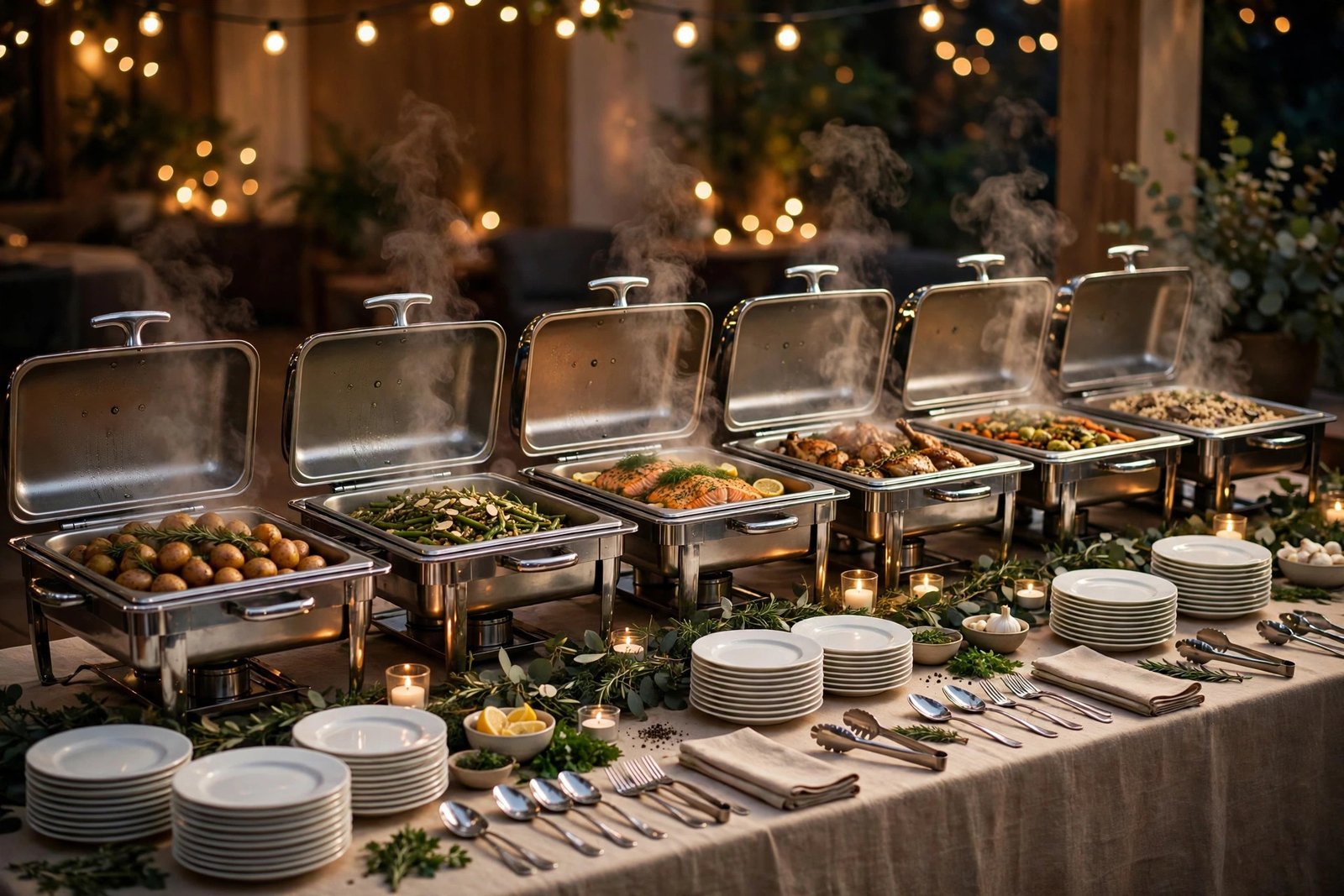
The chafing dish is the buffet standard for a reason: it holds a full tray of food at a steady, safe temperature for hours, with no electricity and no attention beyond a glance at the water level. It is a metal frame holding a water pan over fuel cans, with a food pan sitting in the hot water — the water spreads heat evenly and the steam keeps food moist.
Set it up properly and it mostly looks after itself. Fill the water pan with hot water and light the fuel cans before the food goes in. Standard fuel cans burn for two to three hours, so have a spare ready for a long party, and keep the water topped up: as it evaporates, the pan heats unevenly and the food at the edges cools first. Keep it away from drafts, and the lid on between servings.
Chafing dishes suit anything served from a tray: pasta, roasted vegetables, chicken pieces, meatballs, rice, and saucy dishes. They are less good for anything that needs to stay crisp — fried chicken goes soft under a chafing lid, and roast potatoes lose their edge. For those, serve small batches and refill often.
Borrow a chafing dish, or buy a disposable foil set — frame, water pan, and fuel cans cost little and work the same way. Our guide on how to host Christmas dinner uses the same setup for the main meal.
Slow cookers: the easiest warmer you already own
If you own a slow cooker, you already own the simplest answer to how to keep food warm for a party. Most have a warm setting that holds food between 145°F and 165°F — comfortably above the 140°F line — and the sealed lid keeps moisture in. They are ideal for soups, stews, chilli, meatballs, dips, mashed potatoes, and gravy — anything wet.
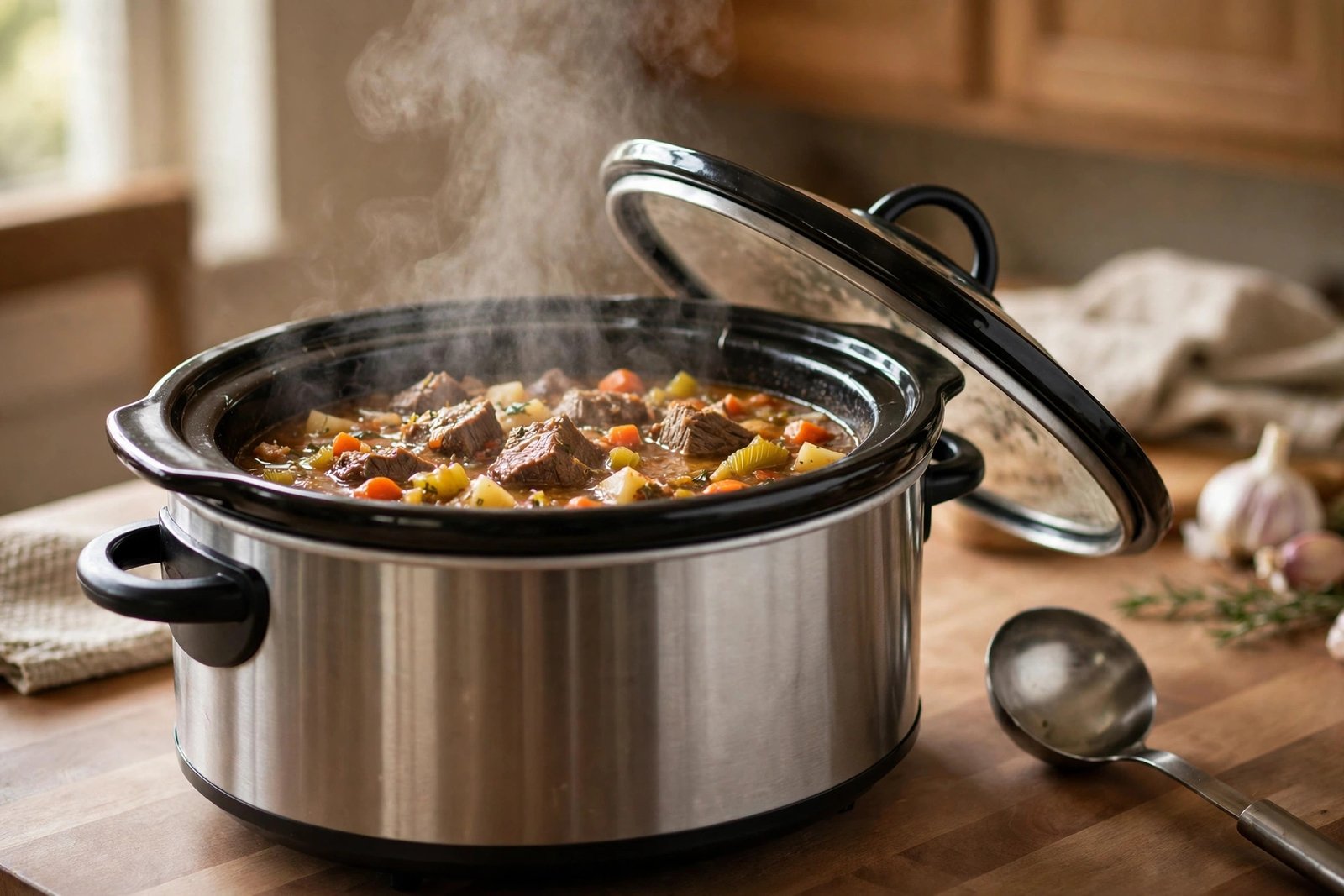
Two rules make the difference. First, heat the food to 165°F on the stove or in the microwave before it goes in — the warm setting holds temperature, it does not cook, and food that starts cold will sit in the danger zone. Second, do not fill it more than two-thirds full, and keep the lid on except when serving — every lift drops the temperature and lets steam escape. Stir occasionally.
Slow cookers have limits. They are poor at holding dry foods — roast meat dries out, fried food goes soggy — and most models should not hold food for more than about four hours. Check the temperature after an hour, and again each hour after that; if it has dropped below 140°F, reheat the food properly or discard it. Our best slow cooker 2026 roundup covers models with reliable warm settings.
Your oven as a warmer
The oven is the most underrated tool for how to keep food warm for a party. At its lowest setting — usually 170°F to 200°F — it holds casseroles, roasts, and baked dishes safely for an hour or two. It is the best choice for the hour before guests eat, while the turkey rests and the sides finish.
Two warnings. First, never use a turned-off oven that is cooling down to hold food: once it drops below 140°F, the food is in the danger zone, and you have no way of knowing when it crossed the line. Second, the oven is a poor choice for long holding — after an hour or two, covered dishes dry out or overcook, and the oven is usually needed for something else. Use it for the short wait, then move food to a chafing dish or slow cooker.
Warming trays and the cooler trick
An electric warming tray is a flat heated surface that sits under serving dishes, holding them at serving temperature. It is the neatest option for a buffet table: no water, no fuel, no steam, and the dishes stay visible. It suits anything in a flat dish — a lasagne, roasted vegetables, sliced meat — but it heats from below only, so stir saucy dishes occasionally and keep lids on where you can. Check the temperature with a thermometer, not by touch.
The cooler trick is the best no-electricity answer to how to keep food warm for a party, and it costs nothing. Preheat a clean cooler with hot water for ten minutes, drain it, then pack foil-wrapped dishes inside with towels tucked around them. A good cooler holds food warm for about two hours — long enough to transport a roast to a potluck. It works because the cooler is insulated in both directions: it keeps cold in, and it keeps heat in too.
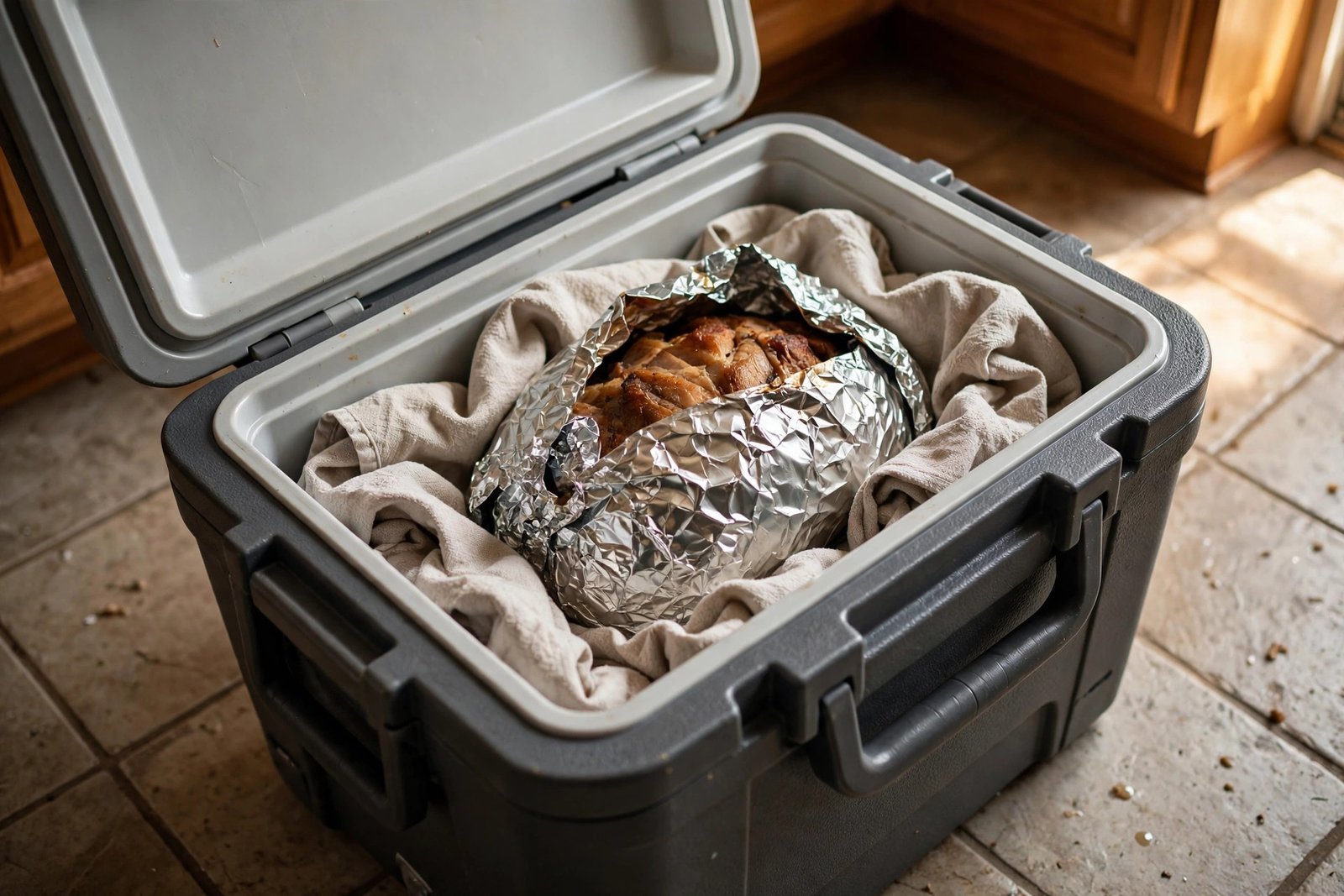
Wrap the food tightly in foil first, then in towels, and close the lid — every opening lets heat out. This method suits roasts, whole chickens, wrapped casseroles, and anything in a covered dish. It does not suit anything that needs to stay crisp, and it is a transport and short-hold method, not an all-evening solution: after about two hours, check the temperature, then reheat or refrigerate. For drinks, the same logic works in reverse — our guide on how to make Christmas punch covers keeping a big batch cold.
Method comparison: which warmer for which party?
| Method | Best for | Holds temp | Max safe time | Watch out for |
|---|---|---|---|---|
| Chafing dish | Buffet trays, pasta | 140–160°F | 2–4 hours | Water and fuel run out |
| Slow cooker (warm) | Soups, stews, dips | 145–165°F | Up to 4 hours | Heat to 165°F first |
| Oven (170–200°F) | Casseroles, roasts | 170–200°F | 1–2 hours | Dries food out |
| Warming tray | Flat dishes, lasagne | 140–160°F | 2–3 hours | Heats from below only |
| Cooler (foil + towels) | Transport, roasts | Cools slowly | About 2 hours | Check temp after 2 hours |
By dish: what works where
Soups and stews are the easiest dishes when you are figuring out how to keep food warm for a party. They hold heat well, they do not dry out, and they suit every method on the list — slow cooker, chafing dish, or a pot on the lowest burner with the lid on. Stir occasionally and keep the lid on between servings.
Roast meat and turkey need the most care. A whole roast holds heat well in a cooler or a low oven, but sliced meat cools fast and dries out quickly. Keep the roast whole until serving, slice only what you need, and keep slices in warm gravy rather than dry on a platter. Our guide on how to cook a turkey covers resting and carving, which matter for holding as much as for cooking.
Mashed potatoes and other soft sides do well in a slow cooker on warm with a knob of butter on top, or in a covered dish in a low oven — stir in a splash of milk when they start to stiffen. Rice and pasta are the trickiest: they dry out and clump, so keep them covered, add a little liquid, and make smaller batches more often.
Fried food and anything crisp should not be held at all: cook in batches and serve each batch as soon as it is ready, while the next one cooks.
Do not forget the cold side
A buffet has two temperature jobs, and the cold one gets forgotten. Salads, dips, cheese, cold meats, and desserts need to stay below 40°F, and they face the same two-hour rule in reverse: after two hours above 40°F, they should go back in the fridge or be thrown away. Set cold dishes on ice, use chilled bowls, and put out small amounts, refilling from the fridge.
Mistakes that put food in the danger zone
The most common mistake is using a warmer to heat cold food. A slow cooker on warm, a chafing dish, or a low oven cannot bring cold food up to a safe temperature quickly enough — the food spends hours in the danger zone on the way up. Always heat food to 165°F first, then move it to the warmer. The second mistake is trusting a dial instead of a thermometer: warm settings vary between models, fuel cans burn unevenly, and ovens run hot or cold. A five-second thermometer check is the only reliable answer.
The third mistake is leaving food out too long. The two-hour rule is not a suggestion: after two hours below 140°F, perishable food should be discarded, not reheated and served again. Set a timer when the buffet opens, and when it goes off, pack up what is left. The fourth is lifting lids too often — every lift drops the temperature and lets steam escape. Check on a schedule, not out of curiosity.
Finally, do not reheat the same dish twice. Food that has been held, cooled, and reheated has already spent two trips through the danger zone, and a second reheat does not reset the clock. Reheat only the portion you plan to serve. Serious Eats’ food safety coverage and Taste of Home’s party guides stress the same point: the thermometer and the timer are the two cheapest tools in the kitchen.
Check the temperature, not the steam
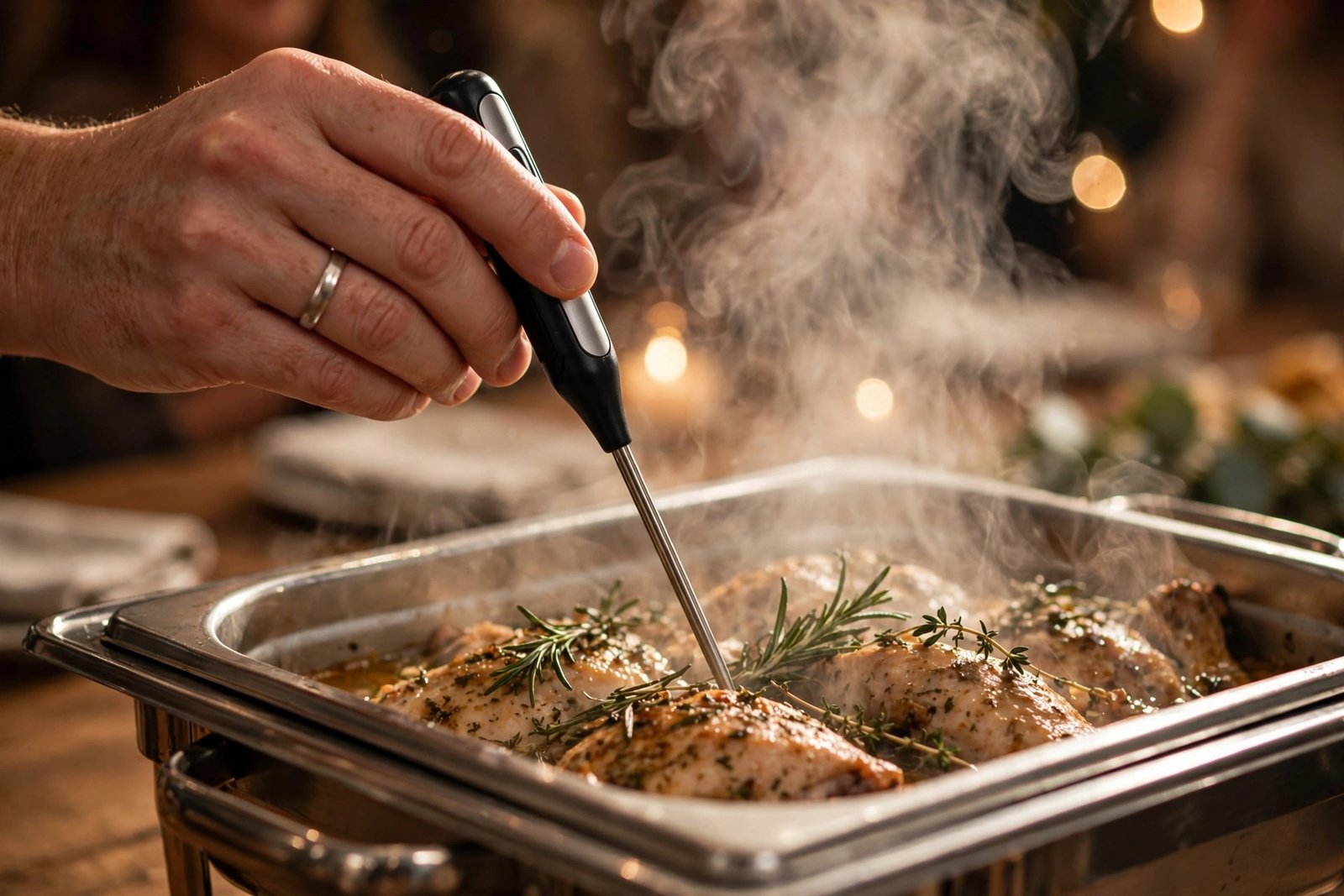
Check every dish when the buffet opens, and again each hour — note the time on a card beside each dish, as caterers do. If a dish reads below 140°F, reheat it properly to 165°F on the stove or in the oven, then return it to the warmer. If it has been below 140°F for more than two hours, throw it away: no amount of reheating makes it safe again, because some bacteria leave behind toxins that heat does not destroy. The Kitchn’s entertaining guides recommend the same hourly check for any buffet that runs longer than an hour.
Frequently asked questions
How long can food stay warm at a party?
Above 140°F, hot food can be held for two to four hours — a chafing dish or slow cooker manages the longest. Once any dish drops below 140°F, the two-hour clock starts, and after two hours in the danger zone it should be discarded.
Can I keep food warm in a slow cooker all day?
No — four hours on warm at most, checking hourly. Slow cookers hold most dishes between 145°F and 165°F, but dense foods can cool in the middle, and the quality drops long before the safety does. For an all-day event, cook in batches and refresh the cooker.
How do I keep food warm without electricity?
Use a chafing dish with fuel cans — no power needed, two to four hours per tray — or the cooler trick: preheat a clean cooler with hot water, drain it, and pack foil-wrapped dishes inside with towels. Both work outdoors and in power cuts, which is why caterers rely on them.
Can I use my oven to keep food warm?
Yes, at its lowest setting — usually 170°F to 200°F — for an hour or two, covered in foil. Never use an oven that is switched off and cooling down: once it drops below 140°F, the food is in the danger zone. Do not hold food in the oven all evening — covered dishes dry out, and the oven is usually needed for something else.
How do I keep food warm for a potluck?
Reheat to 165°F at home, wrap tightly in foil, pack into a preheated cooler with towels, and drive straight there — it holds warm for about two hours. At the venue, transfer it to a chafing dish or slow cooker on warm if one is available.
What temperature should buffet food be?
Hot food should be held above 140°F and cold food below 40°F. The range between them, 40°F to 140°F, is the danger zone, where bacteria multiply fastest. Check hot dishes with a thermometer, keep cold dishes on ice, and discard anything perishable that has spent over two hours in the danger zone.
Conclusion
That is how to keep food warm for a party without drying anything out or putting anyone at risk: heat every dish fully before it goes into a warmer, hold it above 140°F, check it with a thermometer every hour, and respect the two-hour limit. Chafing dishes handle the buffet, slow cookers the soups and dips, the oven the short wait, and a preheated cooler the journey. Pick the right tool for each dish, and the buffet will taste as good for the last guest as for the first.



