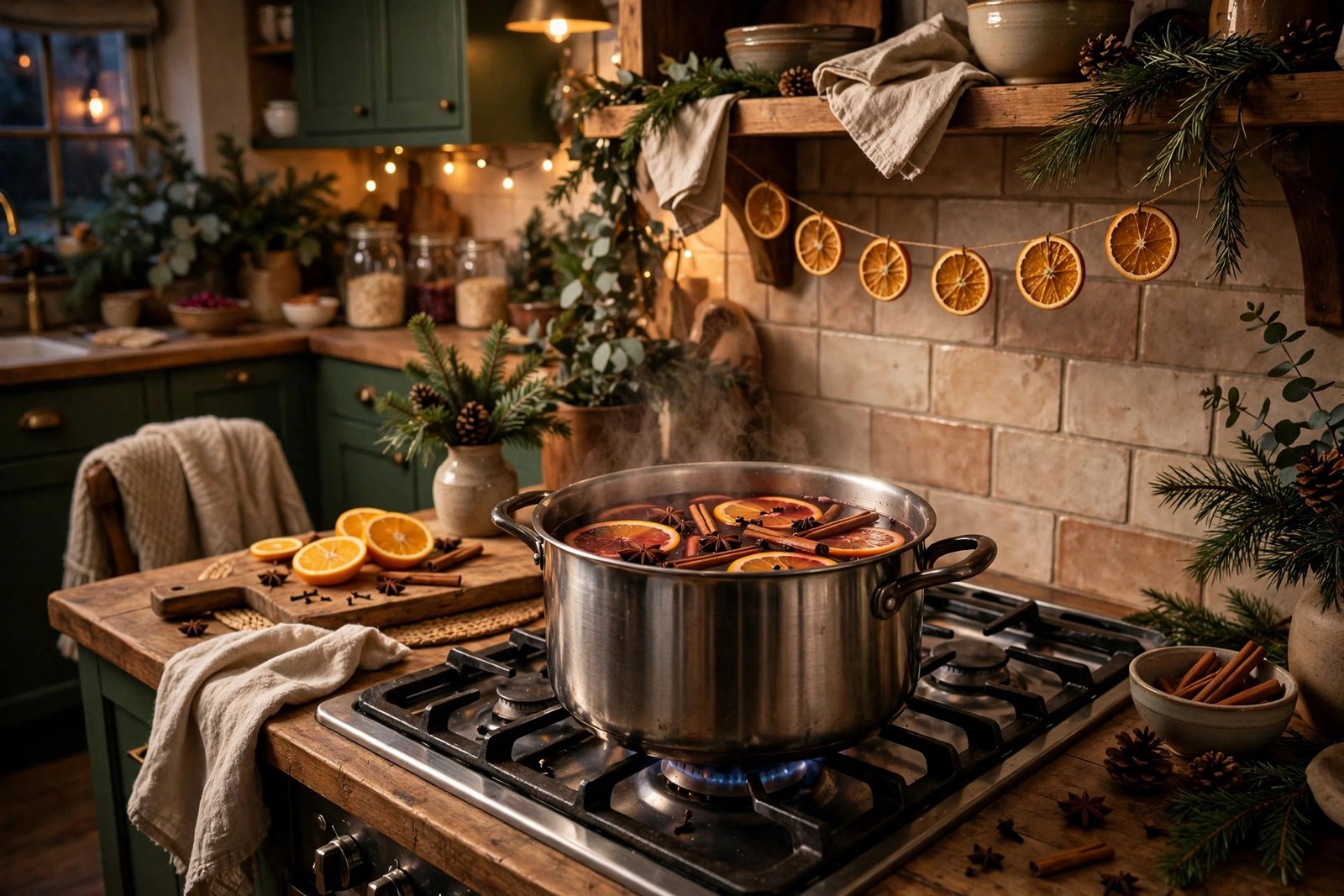

How to Make Mulled Wine: The Classic Recipe That Never Boils
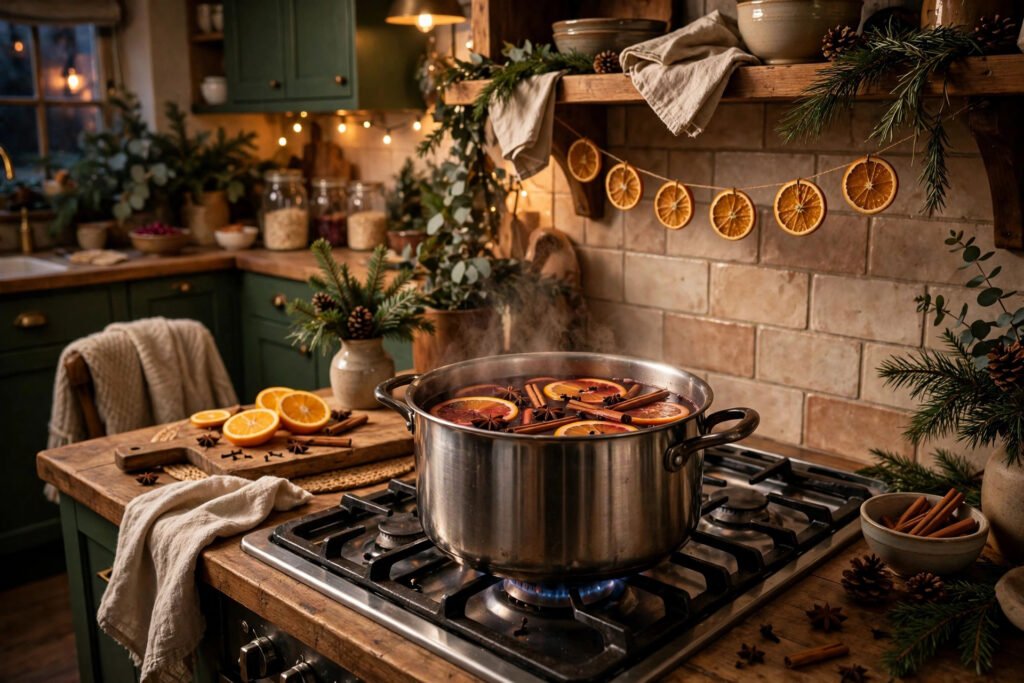
Learning how to make mulled wine is one of the best small skills of the Christmas season. One pot, one bottle of red wine, a handful of spices, and twenty minutes later your whole house smells like December. There is no special equipment, no technique to master, and no reason to buy the bottled stuff that tastes like warm cough syrup.
But one rule separates a great pot from a ruined one: never let the wine boil. Get that right and everything else is forgiving. Get it wrong and no amount of cinnamon will save it.
This guide covers the classic recipe step by step, the science behind the temperature rule, a red-versus-white comparison, slow-cooker scaling for a party, and a non-alcoholic version that tastes like the real thing.
What Is Mulled Wine?
Mulled wine is red wine gently heated with sugar, whole spices, and citrus, then served hot in mugs. The word “mulled” simply means heated and spiced. Versions of it have been made across Europe for centuries: Glühwein in Germany, vin chaud in France, glögg in Scandinavia. The details change from country to country, but the idea never does — take a decent red wine, warm it slowly with cinnamon, cloves, star anise, and orange, and serve it while it is still steaming.
It is not sangria, which is served cold, and it is no fussy cocktail either. What makes it special is how little effort it takes for how much atmosphere it creates: a pot on the stove is a scented candle, a welcome drink, and a conversation starter all at once.
How to Make Mulled Wine: The Classic Recipe
This is the version to learn first. It makes about six servings from a single 750 ml bottle, takes roughly 35 minutes, and uses ingredients from any supermarket. Taste of Home’s tested mulled wine recipe follows the same shape — one bottle, whole spices, a gentle simmer.
Ingredients
| Ingredient | Amount | Role |
|---|---|---|
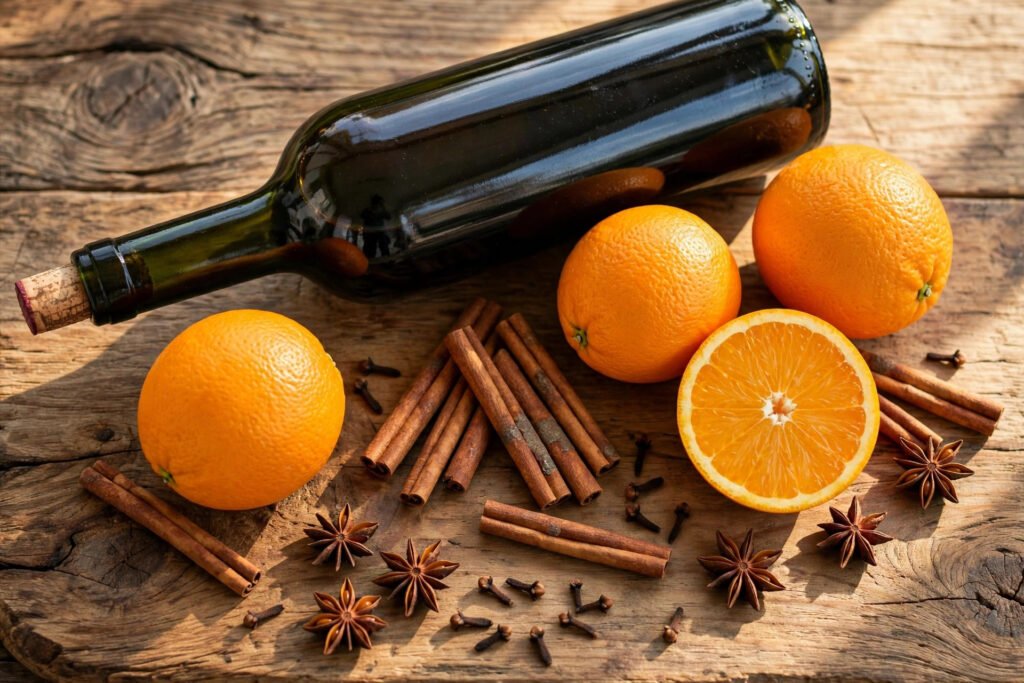
| Dry red wine | 1 bottle (750 ml) | The base — fruity, not oaky |
| Orange | 1, sliced into rounds | Brightness and citrus aroma |
| Cinnamon sticks | 2 | Warmth and sweetness |
| Whole cloves | 4–6 | Deep, earthy spice |
| Star anise | 2 | A gentle liquorice note |
| Cardamom pods | 3–4, lightly crushed | Floral lift |
| Sugar or honey | 2–3 tablespoons | Balances the wine’s acidity |
| Brandy (optional) | 60 ml | Extra warmth and body |
Step 1: Prepare the orange and spices
Slice the orange into thin rounds and set a few aside for garnish. Put the rest in a large saucepan with the cinnamon sticks, cloves, star anise, and cardamom. Use whole spices, not ground — ground spices cloud the wine, leave grit in the glass, and turn bitter fast.
Step 2: Add the wine and sugar
Pour in the whole bottle of wine and stir in the sugar, starting with two tablespoons — you can always add more, but you cannot take sweetness out. Honey goes in now too; it dissolves easily in the warm wine.
Step 3: Warm it gently
Put the pan over medium-low heat and warm it slowly until steam rises and tiny bubbles cling to the sides — that is the sweet spot. If the surface bubbles properly, turn the heat down at once. A thermometer helps: aim for 160–170°F (71–77°C).
Step 4: Simmer for 20 to 30 minutes
Keep the wine at that gentle steaming temperature for 20 to 30 minutes, with the lid on or half on, so the spices can give up their flavour and the orange can soften into the wine. Taste after 20 minutes and stop when the spice level is right. Love and Lemons’ mulled wine recipe uses the same 20 to 30 minute window and serves six.
Step 5: Strain, taste, and serve
Take the pan off the heat, fish out the spices and orange slices, or strain the wine into a jug. Taste and adjust: more sugar if it is sharp, a splash of brandy for extra warmth. Ladle into heatproof mugs, add a fresh orange slice and a cinnamon stick to each, and serve while it is still steaming.
That is the whole method. Five steps, one pan, no special skill. Once you know how to make mulled wine this way, every variation in this guide is just a small change to the same pattern.
The 160°F Rule: Why You Must Never Boil Mulled Wine
Here is the science, and it is worth knowing because it explains almost every mulled wine failure. Ethanol — the alcohol in wine — boils at 173°F (78°C), well below water’s boiling point of 212°F. That means a pot of wine starts losing alcohol long before it ever looks like it is boiling. A rolling boil does not just reduce the alcohol; it drives off the delicate aromas too, and it cooks the fruit flavours into something flat and stewed.
The U.S. Department of Agriculture has put numbers on this for cooked food in general: alcohol stirred into a hot liquid and taken off the heat keeps about 85% of its alcohol; simmered for 15 minutes, about 40% remains; simmered for an hour, about 25%. Those figures cover cooking broadly, not mulled wine specifically, but the direction is unmistakable — time and heat strip alcohol out, and a boiled pot becomes expensive grape juice.
That is why the target temperature is 160–170°F. It is hot enough to extract flavour from the spices and to serve steaming, but it stays below the point where ethanol evaporates rapidly. The practical test is simple: if you can see steam and smell the spices from across the kitchen, it is ready. If you can see bubbles breaking the surface, it is too hot. Turn it down, put the lid on, and let it settle.
The same logic explains Jamie Oliver’s famous method. His mulled wine recipe builds a syrup first — sugar, citrus peel, cloves, cinnamon, bay leaves, nutmeg, and vanilla boiled with just a splash of wine for four to five minutes until thick — and only then adds the rest of the wine, heated gently for about five minutes. The sugar and spices get the high heat they need; the bulk of the wine never does. His version serves ten from two bottles of Chianti.
Choosing the Best Wine for Mulled Wine
The wine matters more than the spices, and the right bottle is cheap: a dry, fruity, medium-bodied red with soft tannins. Merlot, Grenache, Zinfandel, and young Rioja all work beautifully, and a bottle in the $8–15 range is the sweet spot. Spend less and it may taste thin and sharp once heated; spend more and the spices will cover most of what you paid for.
Avoid heavily oaked wines, which turn bitter when heated, very tannic wines like young Barolo, and sweet wines — you are adding sugar already. And never cook with a wine you would not drink: heating concentrates a bad wine’s faults instead of fixing them.
Red vs White Mulled Wine: Which Should You Make?
Red is the classic, and it is what most people mean by mulled wine. But white mulled wine is worth trying at least once: lighter, more citrus-forward, and kinder to people who find red wine heavy. The method is identical — the same temperature rule, the same simmer time — only the ingredients shift slightly.
| Red Mulled Wine | White Mulled Wine | |
|---|---|---|
| Wine | Merlot, Grenache, Zinfandel | Pinot Grigio, Riesling, Sauvignon Blanc |
| Flavour | Rich, dark fruit, warming | Light, floral, citrus-bright |
| Best spices | Cinnamon, cloves, star anise | Ginger, cardamom, vanilla |
| Best citrus | Orange | Lemon and orange |
| Sweetener | Sugar or honey | Honey or maple syrup |
| Serve with | Christmas dinner, mince pies | Light canapés, seafood starters |
For a first attempt, make the red version — it is more forgiving and bolder. Once you are confident, try the white with a dry Riesling, fresh ginger, and lemon.

Scaling Up: How to Make Mulled Wine for a Crowd
One bottle serves four to six people, which is fine for a quiet evening. A Christmas party needs more, and this is where the slow cooker earns its place. The method scales cleanly: multiply the recipe by three or four, and the only thing that changes is the pot.
For twelve to fifteen guests, use three bottles of red wine, three oranges, six cinnamon sticks, twelve cloves, six star anise, and about half a cup of sugar. Put everything in the slow cooker, set it to low for about an hour, then switch it to warm — it holds the wine at serving temperature for hours without boiling it, and guests can ladle their own refills.
Do not scale the spices in exact proportion — triple the wine, but only double the cloves and star anise, then taste, because strong spices scale aggressively. Add the brandy at the end, off the heat, so its aroma survives. And keep a spare bottle nearby: topping up with fresh wine halfway through the evening beats reheating the same batch for hours.
A Non-Alcoholic Version Everyone Can Drink
The question of how to make mulled wine without alcohol comes up at every family gathering, and the answer is simple. Replace the wine with cranberry and pomegranate juice — two parts cranberry to one part pomegranate — and follow the exact same recipe. The spices, the orange, the gentle heat, and the simmer time all stay the same; only the base liquid changes.
Use 750 ml of juice for the standard recipe, plus a splash of orange juice for brightness. Keep the sugar light at first — cranberry juice is usually already sweetened — and taste before adding more. A cinnamon stick and an orange slice in each mug makes it look identical to the alcoholic version, which matters: nobody wants to feel they got the lesser drink.
This version is the right choice for children, designated drivers, and anyone who does not drink. Make a separate pot, label it clearly, and set it next to the real thing. For another alcohol-free option, a mug of homemade hot chocolate alongside it covers everyone.
Storing and Reheating Leftovers
Mulled wine keeps better than most people expect. Let it cool completely, strain out the spices and fruit, pour it into a sealed container, and refrigerate it. It will keep for two to three days — Taste of Home gives the same figure, up to three days in the fridge, for its overnight version.
To reheat, warm it gently in a saucepan over low heat until it steams. Do not microwave it on high, which can flash-boil the alcohol away in seconds. Taste before serving: reheated mulled wine sometimes needs a pinch more sugar or a fresh orange slice to wake it back up.
If you have a lot left over, freeze it in ice cube trays — the cubes are excellent in a fresh pot later, or stirred into a mug of homemade eggnog. Do not keep reheating the same pot all evening and again the next day; each round dulls the flavour.
Common Mistakes (and How to Fix Them)
The most common mistake people make when learning how to make mulled wine is boiling it, and by the time you notice, the damage is done — there is no fix for a boiled pot. A splash of brandy and fresh orange can rescue the flavour a little, but the wine underneath will still taste stewed. Start again, and keep the heat low.
The second is ground spices. They make the wine cloudy, gritty, and bitter; whole spices cost the same and behave far better. If ground cinnamon is all you have, use half a teaspoon and strain through a coffee filter before serving.
The third is over-sweetening. Many recipes call for a full cup of sugar per bottle — far too much for a dry red wine. Start with two tablespoons and add more only if the wine is sharp, or sweeten individual mugs with honey so each guest decides. Serious Eats has long argued for restraint with sweeteners in spiced wine and other heated drinks: you can always add sweetness, but you cannot take it away.
The fourth is leaving the spices in too long — after about an hour, cinnamon and cloves dominate and turn the wine bitter. Strain them out once the flavour is right and keep just the liquid warm. And the fifth is the wrong glass: thin wine glasses crack with hot liquid and cool too fast. Use thick mugs or heatproof glasses.
It is wonderful next to Christmas cookies and mince pies, and it is a natural aperitif before Christmas dinner — a small mug while the turkey rests is one of the quiet pleasures of the day.

Frequently Asked Questions
Can I make mulled wine ahead of time?
Yes — it often tastes better for it. Make it the night before, cool, strain, and refrigerate it, then reheat gently the next day. Taste of Home’s version is built around exactly this overnight rest.
What is the best wine for mulled wine?
A dry, fruity, medium-bodied red with soft tannins — Merlot, Grenache, Zinfandel, or a young Rioja — in the $8–15 range. Avoid heavily oaked or very tannic wines, and anything you would not drink on its own.
How long should mulled wine simmer?
Twenty to thirty minutes at 160–170°F. Less than that and the spices have not infused; more than an hour and the flavour turns bitter. Keep it steaming, never bubbling.
Can I make mulled wine in a slow cooker?
Yes. Combine everything, heat on low for about an hour, then switch to warm and serve from the pot — the easiest way to serve a crowd.
Does mulled wine still contain alcohol?
Yes. Gentle heating removes only part of it — the USDA’s figures show about 40% remains after 15 minutes of simmering, and about 25% after an hour. It never becomes alcohol-free, so make the juice-based version for anyone who cannot drink.
How long does leftover mulled wine keep?
Strain out the spices, refrigerate it in a sealed container, and use it within two to three days. Reheat gently on the hob, never in the microwave on high, and add a fresh orange slice if the flavour has dulled.
Conclusion
Now you know how to make mulled wine the way it deserves to be made: one good bottle, whole spices, a little sugar, and patience with the temperature. The result is the smell of Christmas filling your kitchen.
Make a pot this weekend, before the season gets busy. Taste it, adjust the sweetness, and note what you changed — by the third batch, this recipe will be yours, not mine. That is the real point: mulled wine is not a recipe to follow perfectly, but a pot to make your own, one December at a time.



