
How to Make Gingerbread Cookies From Scratch: Soft, Spiced, and Perfect Every Time

There is a moment, about eight minutes into baking, when the whole kitchen smells like December — warm ginger, cinnamon, and molasses — and you know the cookies are going to be good. Learning how to make gingerbread cookies from scratch is one of the most rewarding holiday bakes — and it is far easier than most people think. No special equipment, no fancy techniques, just a good recipe and one rule you cannot skip: chill the dough.
This guide gives you a tested recipe, explains the science behind the chill, shows you how to control soft versus crisp, and finishes with royal icing that actually sets.
Why Homemade Beats Store-Bought Every Time
Store-bought gingerbread is built to survive months on a shelf: less butter, less spice, and a texture closer to cardboard than cookie. Homemade gingerbread is a different food entirely — rich with molasses, warm with ginger, and tender in the middle.
The other advantage of learning how to make gingerbread cookies from scratch is control. You decide how spicy they are, how thick they are, and whether they come out soft and chewy or snappy enough to hang on the tree. And the cost is a fraction of a bakery box — a batch of two dozen costs a few dollars in pantry ingredients.
The Ingredients That Make or Break Gingerbread
Gingerbread has only a handful of ingredients, so each one matters. Get these right and the recipe almost bakes itself.
Molasses: unsulphured, never blackstrap
Molasses is the soul of gingerbread, and choosing the right one is the first decision in how to make gingerbread cookies from scratch. It gives the cookies their dark colour, their deep caramel flavour, and much of their chew. Buy plain unsulphured molasses — the kind sold as “original” or “baking” molasses, such as Grandma’s Original. Blackstrap molasses is a hard no here: it is the third boiling of the sugar cane, and it is far more bitter and mineral-tasting. It will bulldoze every spice you carefully measured.
If you cannot find molasses, dark corn syrup or honey can stand in, but the flavour will be lighter.
The spice blend
Ginger is the star, and this recipe uses a full tablespoon of ground ginger — more than most recipes dare. Cinnamon adds warmth, cloves add depth, and a pinch of nutmeg rounds the edges. Use fresh spices: ground spices lose their punch after about a year, and old ginger makes flat cookies. If your jar of ginger has been sitting in the cupboard since last Christmas, buy a new one.
Butter, sugar, and flour
Use unsalted butter, softened to room temperature — it should dent when pressed but not be greasy or melting. Dark brown sugar adds moisture and a second layer of molasses flavour. All-purpose flour is the right choice: bread flour makes tough cookies, and cake flour makes them too delicate to hold a shape.
How to Make Gingerbread Cookies From Scratch: The Tested Recipe
Here is the full recipe. It makes about 24 medium cookies, takes about 20 minutes of active work, and needs at least two hours of chilling. The dough can be made up to three days ahead and kept in the fridge, or frozen for up to two months.
| Ingredient | Amount | Role |
|---|---|---|
| All-purpose flour | 3 cups (360 g) | Structure; spoon and level, do not pack |
| Unsalted butter, softened | 3/4 cup (170 g) | Richness and tenderness |
| Dark brown sugar, packed | 3/4 cup | Sweetness, moisture, chew |
| Unsulphured molasses | 2/3 cup | Colour, flavour, chew — never blackstrap |
| Large egg | 1 | Binds the dough |
| Baking soda | 1 teaspoon | Lift and spread |
| Ground ginger | 1 tablespoon | The signature warmth |
| Ground cinnamon | 1 teaspoon | Warmth and sweetness |
| Ground cloves | 1/2 teaspoon | Depth and spice |
| Salt | 1/2 teaspoon | Balances the sweetness |
Step 1: Mix the dough
Whisk the flour, baking soda, ginger, cinnamon, cloves, nutmeg, and salt together and set aside. Beat the softened butter and brown sugar until light and fluffy, about two minutes, then beat in the molasses and the egg until smooth and glossy.
Add the dry ingredients in two batches, mixing on low just until a thick dough forms. Stop as soon as the flour disappears — overmixing develops the gluten and makes tough cookies.
Step 2: Chill the dough (do not skip this)
Divide the dough in half, flatten each half into a disc about an inch thick, wrap tightly in plastic wrap, and refrigerate for at least two hours — overnight is even better. Straight out of the mixer, gingerbread dough is soft, sticky, and completely unwilling to hold a sharp cookie-cutter edge. Chilling firms up the butter, which does two things: it makes the dough stiff enough to roll cleanly, and it slows the spread in the oven so your gingerbread people keep their arms and legs.
Chilling also improves flavour: the flour hydrates and the spices meld, so a dough chilled overnight tastes noticeably better. Two hours is the floor — one hour is not enough, and no chill at all gives you gingerbread blobs. That chill is the single most important step in how to make gingerbread cookies from scratch.
Step 3: Roll and cut
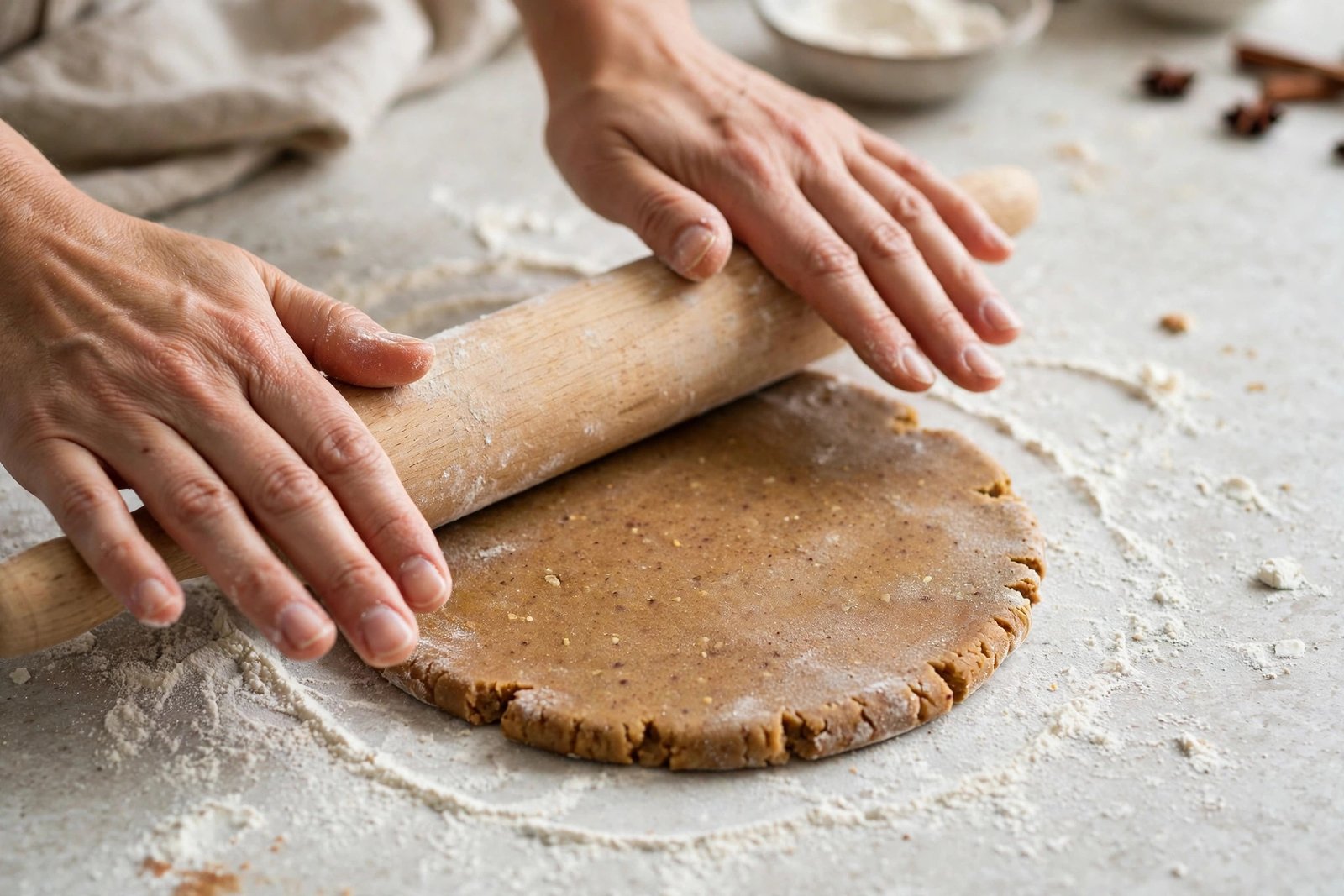
Preheat the oven to 350°F (175°C) and line two baking sheets with parchment paper. Take one disc out of the fridge — keep the other cold — and roll it on a lightly floured surface to an even 1/4 inch thick. Roll from the centre outward, turning the dough a quarter turn every few rolls to keep it even and stop it sticking.
If the dough has chilled overnight, let it sit at room temperature for five minutes so it softens enough to roll without cracking. A few edge cracks are normal and will not show in the baked cookie.
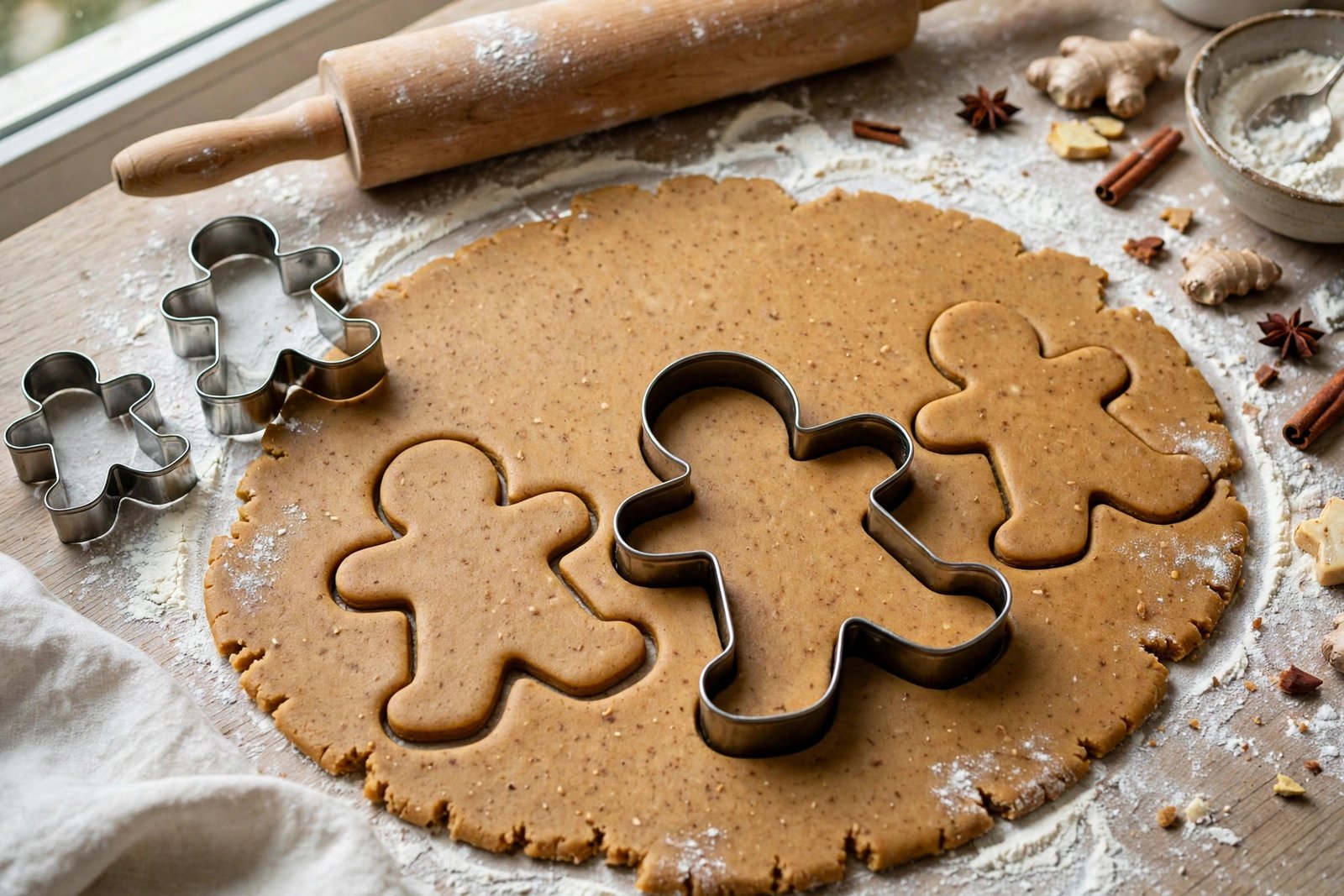
Cut your shapes with floured cutters, dipping the cutter in flour between cuts so it releases cleanly. Transfer the shapes to the prepared sheets, leaving about an inch between them. Gather the scraps, press them together gently, re-roll once, and cut again. Do not re-roll more than once — the dough gets tough and the cookies lose their tenderness.
For the sharpest shapes, freeze the tray of cut cookies for ten minutes before baking — cold dough holds its edges.
Step 4: Bake
Bake one sheet at a time on the centre rack. The cookies are done when the edges look set and are just beginning to darken, and the centres still look slightly soft — they firm up as they cool, so do not wait for them to look fully baked.
| Thickness | Bake time at 350°F | Result |
|---|---|---|
| 1/4 inch | 8–10 minutes | Soft, chewy centres; crisp edges |
| 1/4 inch | 10–12 minutes | Crisp throughout, still tender |
| 3/8 inch | 12–15 minutes | Thick, soft, cake-like |
| 1/8 inch | 11–12 minutes | Snappy and crisp; good for ornaments |
Let the cookies cool on the baking sheet for five minutes, then move them to a wire rack to cool completely. Do not decorate until they are fully cool — warm cookies melt icing into a puddle.
Soft vs Crisp: You Are in Control
The same dough can make soft, chewy cookies or snappy, crisp ones. The difference is thickness and time, and it is entirely up to you. For soft cookies, roll to 1/4 inch and pull them out at 8 to 10 minutes, when the centres still look a little underdone. They will set as they cool, and the centres stay tender for days.
For crisp cookies, roll thinner — about 1/8 inch — and bake for 11 to 12 minutes, until the edges are firm and the surface looks dry. These are the ones to choose if you want gingerbread ornaments for the tree: poke a hole near the top with a straw before baking, thread a ribbon through after cooling, and they will hold up for weeks.
One more variable: the baking soda. It is calibrated for the molasses, so do not add extra — the cookies will spread too much and taste soapy — and do not skip it, or they will be dense and flat.
Royal Icing That Actually Sets
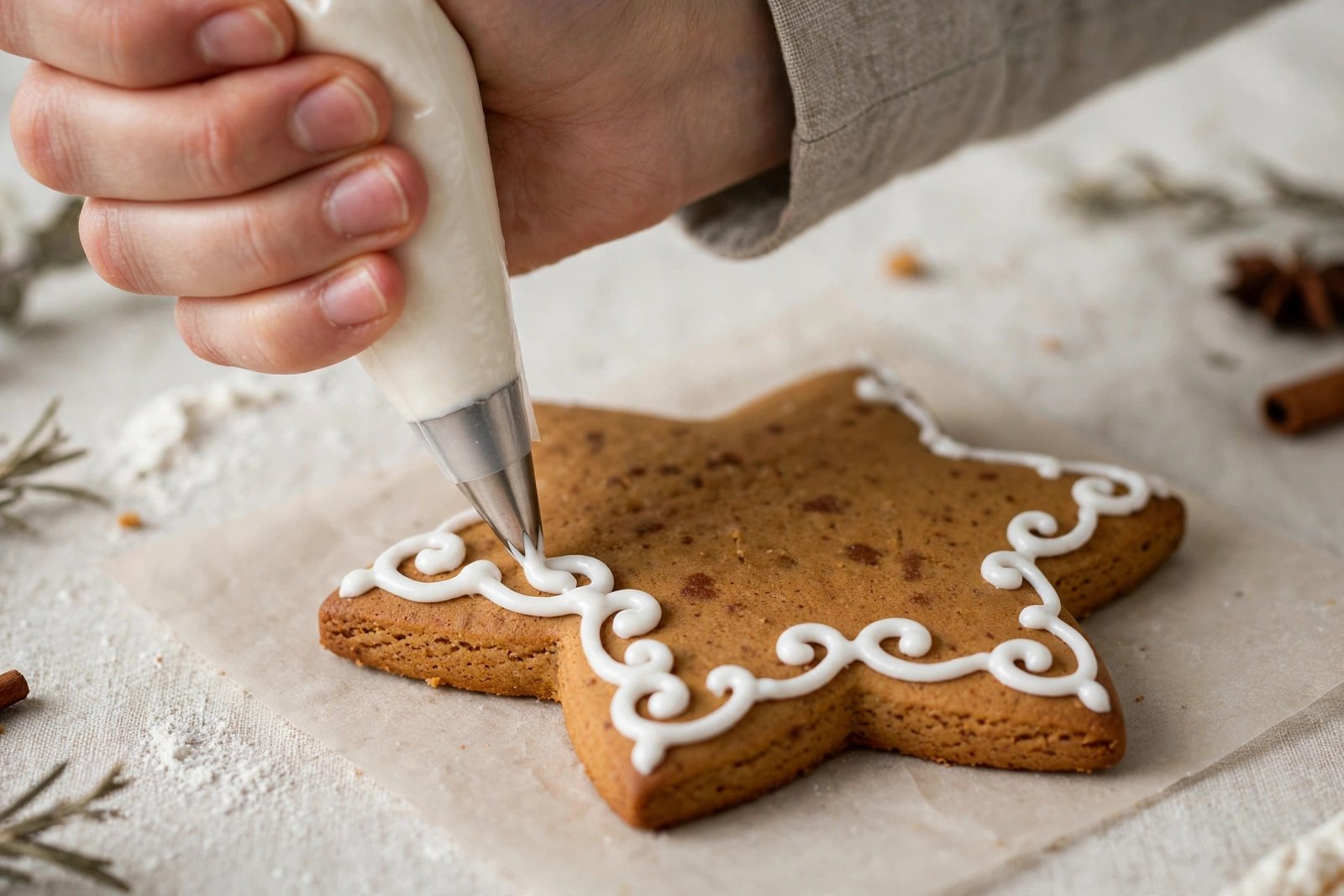
Royal icing is the classic gingerbread decoration: bright white, smooth, and hard enough to stack the cookies without smearing. It is also the step that frustrates beginners, because it either runs everywhere or sets before you finish piping. The fix is consistency control.
Whisk two cups of powdered sugar with one large egg white (or two tablespoons of meringue powder plus three tablespoons of water) and a teaspoon of lemon juice until smooth and glossy. For piping outlines, the icing should hold a soft peak. For flooding, thin it with water a teaspoon at a time until it flows like honey.
Work in two stages: pipe the outline first, let it set for ten minutes, then flood the middle. Let decorated cookies dry uncovered for at least eight hours, or overnight, before stacking. Royal icing made with raw egg white should be used the same day; meringue powder is the safer choice if you are serving children or anyone pregnant.
If royal icing feels like too much fuss, a simple glaze works beautifully: whisk a cup of powdered sugar with a tablespoon of milk and a drop of vanilla, and drizzle it over the cooled cookies. It sets in about an hour.
Decorating Ideas That Look Professional
You do not need piping skills to make beautiful gingerbread cookies. A few simple techniques go a long way. Pipe a white outline around the edge of each cookie, then add three dots down the front for buttons — that alone looks charming. Add a simple smile and two eyes, and you have a classic gingerbread person.
For a step up, flood the cookie with white icing, let it dry, then pipe details on top: a red scarf, a green bow tie, a zigzag hem. Sprinkles and coloured sugar go on while the icing is still wet. Mini chocolate chips make perfect eyes, and a small red candy makes a great nose.
Let kids decorate their own — the wonky ones taste exactly the same as the perfect ones. Set up a station with a few piping bags, bowls of sprinkles, and plenty of paper towels, and let everyone make a mess.
How to Store Gingerbread Cookies
Undecorated gingerbread cookies keep for up to a week in an airtight container at room temperature. Decorated cookies keep for up to two weeks, as long as the icing is fully dry before you stack them — layer them with parchment paper between them so the icing does not stick. For a make-ahead breakfast while the cookies chill, our overnight oats are ready when you wake up.
For longer storage, freeze undecorated cookies in a single layer in a freezer bag for up to three months. Thaw them at room temperature for an hour, then decorate. Freezing decorated cookies works too, but the icing can crack or weep as it thaws, so freeze before decorating when you can.
If your cookies go soft in a humid kitchen, pop them in a 300°F oven for three to four minutes to crisp them back up. If they go stale, crumble them over ice cream or use them as a cheesecake crust.
Common Mistakes (and How to Fix Them)
Cookies spread into blobs
The dough was too warm, or it was not chilled long enough. Chill for at least two hours, and freeze the cut shapes for ten minutes before baking. Also check that your butter was softened, not melted — melted butter guarantees spreading.
Cookies are hard as rocks
They were overbaked, or too much flour was added. Spoon flour into the cup and level it off, never scoop from the bag. Pull the cookies when the centres still look slightly soft — they firm up as they cool.
Cookies taste bitter
Almost always blackstrap molasses, or old spices. Switch to unsulphured molasses and buy fresh ground ginger. The difference is dramatic.
Icing runs off the cookie
The icing is too thin, or the cookie was still warm. Thicken the icing with more powdered sugar, and always decorate fully cooled cookies. Outline first, flood second.
Frequently Asked Questions
Can I make gingerbread cookies from scratch without chilling the dough?
You can, but you should not. Unchilled dough is sticky, hard to roll, and spreads in the oven, so your gingerbread people lose their shape. Two hours in the fridge is the minimum, and overnight is better.
What is the best molasses for gingerbread cookies?
Plain unsulphured molasses, such as Grandma’s Original — mild and sweet, it lets the spices shine. Blackstrap is much more bitter and will overpower the ginger and cinnamon. Dark corn syrup or honey can substitute in a pinch, but the flavour will be lighter.
How thick should I roll gingerbread cookie dough?
Roll to 1/4 inch for classic soft cookies with crisp edges, 1/8 inch for snappy cookies that work as ornaments, and 3/8 inch for thick, soft, cake-like cookies. Keep the thickness even — uneven dough bakes unevenly.
How long do gingerbread cookies last?
Undecorated cookies keep for up to a week in an airtight container at room temperature. Decorated cookies keep for up to two weeks once the icing is fully dry. Undecorated cookies freeze well for up to three months — thaw at room temperature, then decorate.
How to make gingerbread cookies from scratch ahead of time?
Make the dough up to three days ahead and keep it wrapped in the fridge, or freeze it for up to two months. You can also bake the cookies a week ahead, store them undecorated, and decorate the day before. Royal icing needs eight hours to dry, so decorate the night before, not the morning of.
Can I make gingerbread cookies without eggs?
Yes. Replace the egg with three tablespoons of milk or a flax egg (one tablespoon of ground flaxseed mixed with three tablespoons of water, left for five minutes). The cookies will be slightly more crumbly but still hold their shape. For the icing, use meringue powder instead of raw egg white.
Conclusion
That is the recipe: a tested dough, a proper chill, a quarter inch of thickness, and eight to ten minutes in the oven. The simplest way to learn how to make gingerbread cookies from scratch is to just make a batch — even the imperfect ones taste wonderful.
Once you have the basic recipe down, make it yours. Add a pinch of black pepper for heat, swap in orange zest for brightness, or dip half of each cookie in dark chocolate. And if you want something warm to serve alongside them, our guide to how to make hot chocolate from scratch is the perfect pairing. For more holiday baking, try our cranberry sauce from scratch — and if you have leftover cake to keep fresh, see how to keep cake fresh longer. Happy baking.



