
How to Make Hot Apple Cider From Scratch (and the 20-Minute Shortcut)
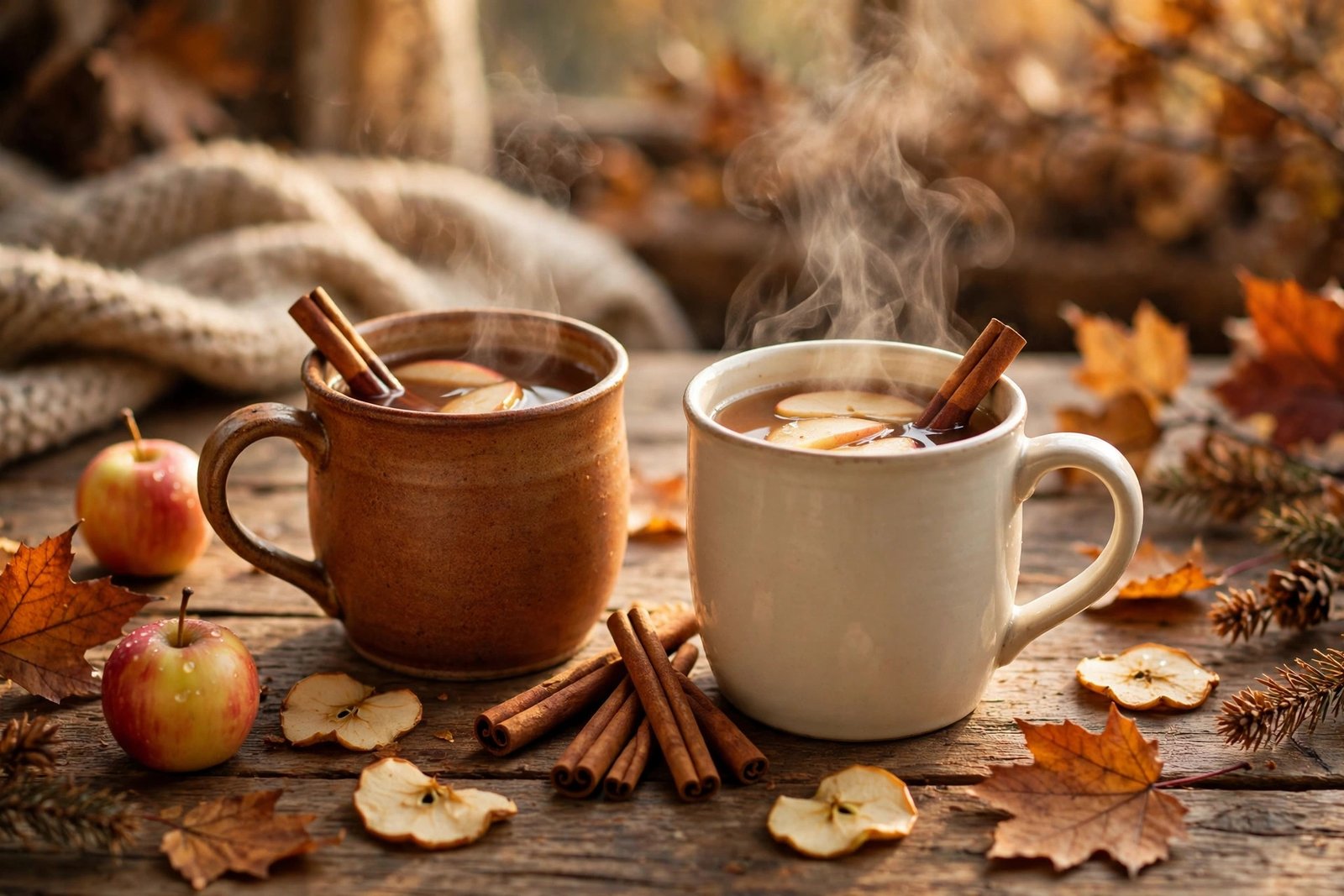
There is a specific smell that means autumn has properly arrived, and it is not pumpkin spice. It is apples, cinnamon, and cloves simmering on the stove, steam fogging the kitchen windows while the light outside goes gold. If you have never learned how to make hot apple cider at home, you are in for a small revelation: the homemade version tastes nothing like the jug at the supermarket, and it costs a fraction of the spiced cider at a coffee shop.
This guide gives you two ways to get there: the full from-scratch method, where whole apples turn into cider on your stove in about three hours, most of it hands-off, and a 20-minute shortcut that starts with a gallon of store-bought cider. The slow-cooker version, a spiked variation, and storage tips are below too.
What Is Hot Apple Cider, Anyway?
Before the pot goes on the stove, it helps to know what you are actually making. Cider is unfiltered pressed apple juice. That cloudiness is the point: it is what gives real cider its body and its deep apple flavour. It is not the same as apple juice, which is filtered and pasteurised until it is clear and comparatively thin-tasting, and it is not fermented, so it contains no alcohol unless you add some later.
That distinction matters when you shop. For the shortcut, look for a jug labelled “apple cider” in the refrigerated section, not the shelf-stable clear juice — the cloudy stuff in the cold case is what you want. If your store only stocks it seasonally, buy a couple of gallons in autumn and freeze one for later; the same jug makes an excellent base for mulled drinks all winter.
Hot apple cider is also one of the easiest seasonal drinks to serve a crowd. It holds beautifully in a slow cooker for hours, it fills the house with a smell that no candle has ever matched, and it gives non-drinkers something genuinely special to hold at a party where everyone else has a glass of wine. It pairs well with a batch of mulled wine for the adults and a pot of hot cocoa for the kids.
How to Make Hot Apple Cider From Scratch
Choose the from-scratch method when you have a lazy afternoon and a bag of apples that need using up. It takes about three hours from start to finish, but only around fifteen minutes of that is actual work — the rest is the pot doing its job while you do something else.
Step 1: Pick and prep your apples
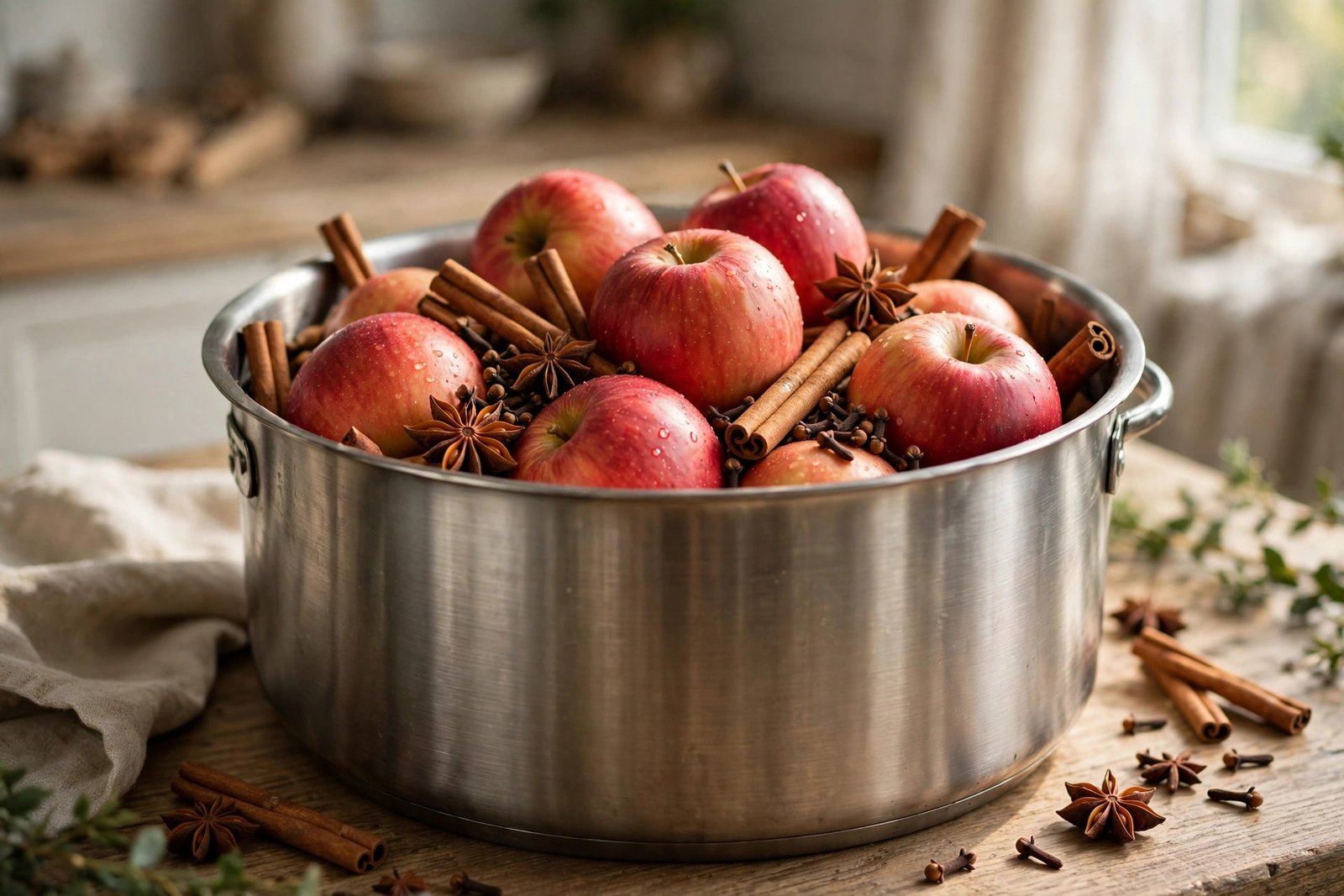
You will need 10–12 apples, and the mix matters more than any single variety. Use a blend of sweet and tart: Honeycrisp, Fuji, and Gala bring sweetness and body, while Granny Smith adds bright acidity that keeps the finished cider from tasting flat. A single-variety batch works, but it tends to come out one-note — either too sweet or too sharp. Quarter the apples and toss them into a large stockpot — no need to peel or core them, since the cores and peels add flavour and pectin, and everything gets strained out later.
Step 2: Add water and spices, then simmer
Add just enough water to cover the apples, then add your spices: cinnamon sticks, whole cloves, and a star anise or two, plus a strip of orange peel if you have one. Bring the pot to a gentle boil, then drop the heat to low and let it simmer for 2–2.5 hours. You want a lazy bubble, not a rolling boil. The apples slowly collapse into a soft, fragrant mush, and the kitchen starts to smell like an orchard in October.
Step 3: Mash and simmer again
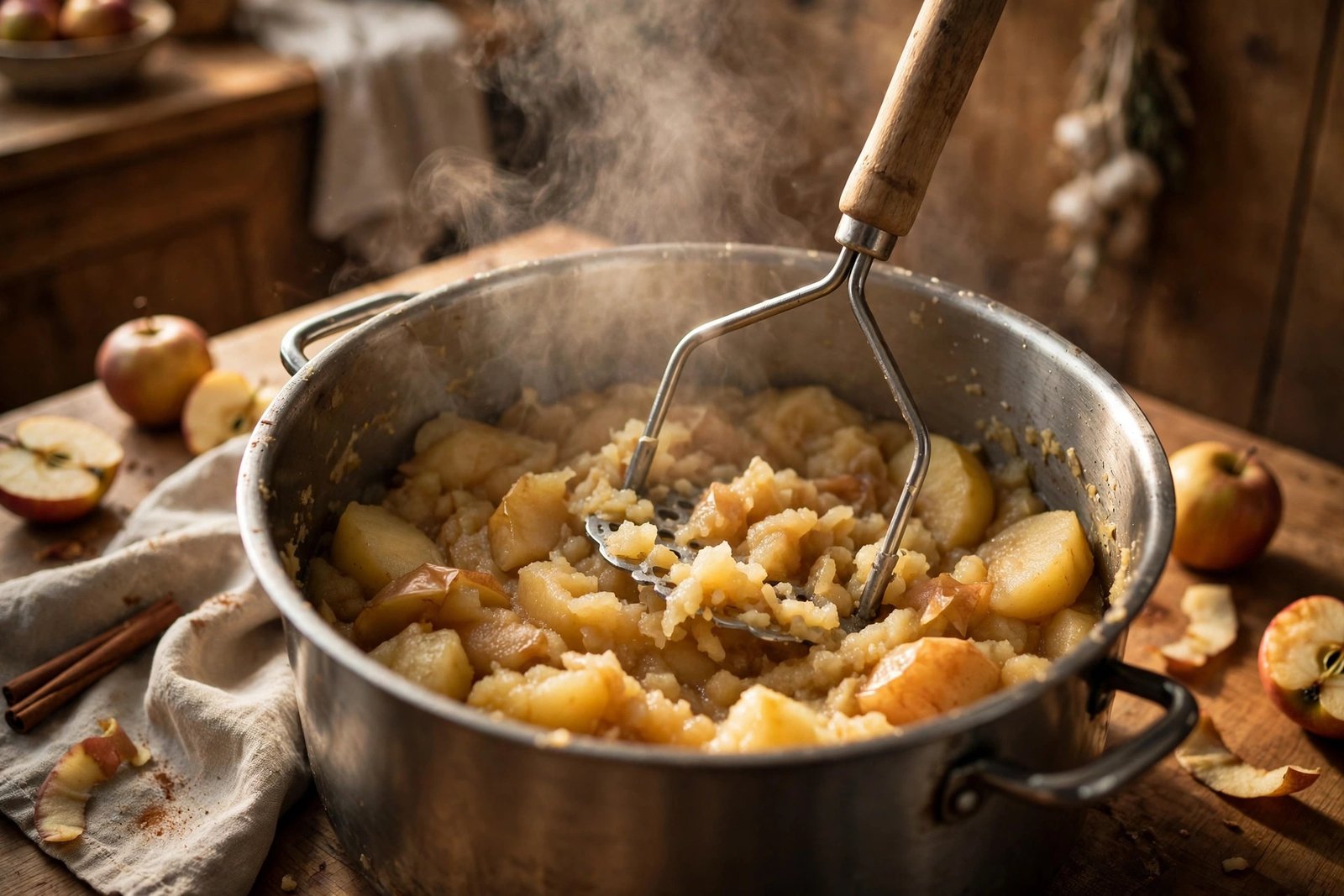
Once the apples are completely soft, take a potato masher and mash them right in the pot. You do not need to be tidy about it; the goal is to break up the remaining chunks so they release the last of their juice. Then let the pot simmer for another 30 minutes. This second simmer is where the cider picks up its colour and depth, so do not rush it.
Step 4: Strain and serve
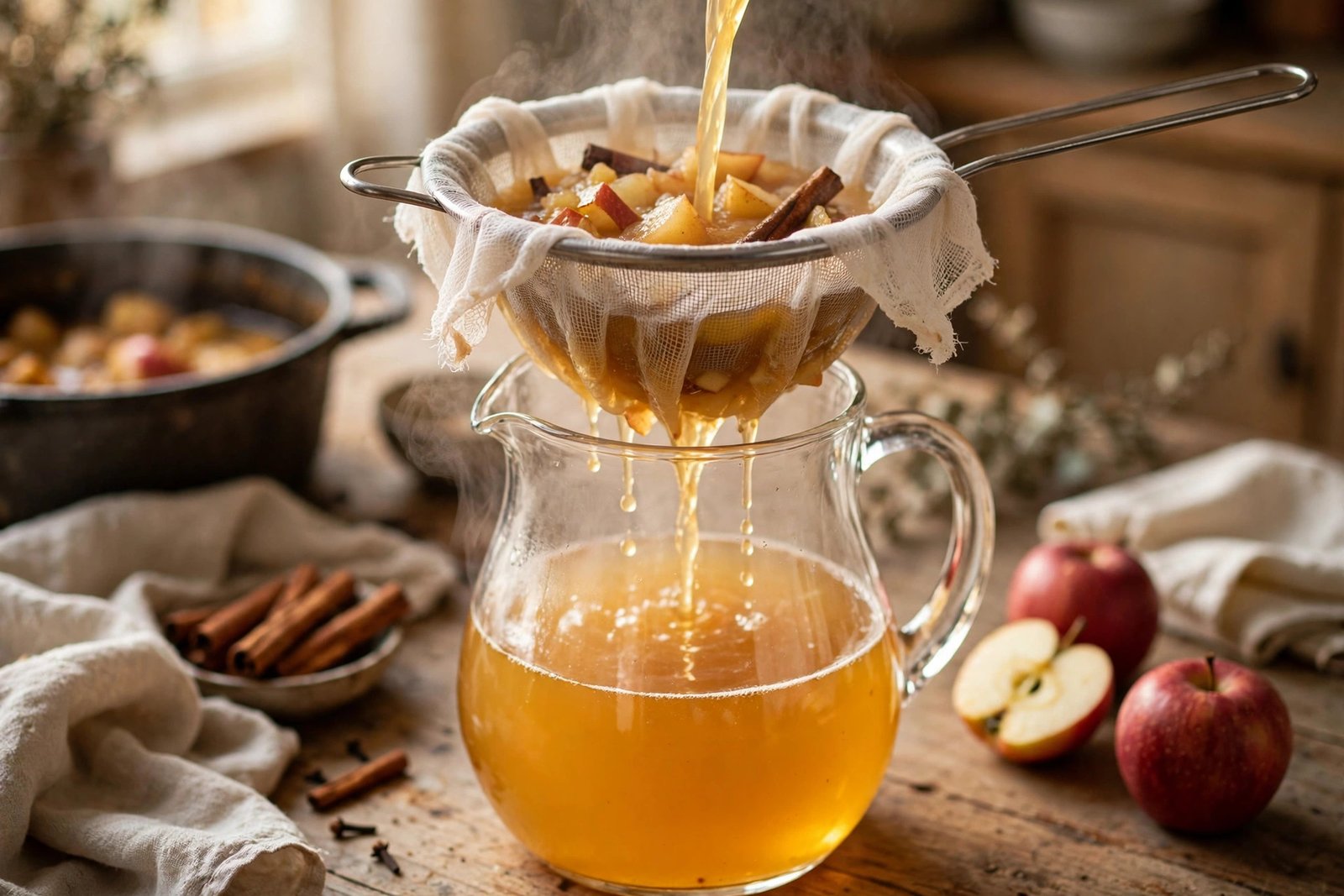
Set a fine-mesh strainer lined with cheesecloth over a large bowl or pitcher and ladle the hot mixture through it. Let it drip, then gather the cheesecloth and squeeze gently — do not wring it like a towel, or you will push cloudy pulp through and the cider turns murky. Taste it before you serve — most batches need no added sweetener at all, but a spoonful of brown sugar or a drizzle of maple syrup will round out a tart batch. Serve it hot in mugs, with a cinnamon stick in each one.
The 20-Minute Shortcut: How to Make Hot Apple Cider Fast
Some nights you want cider now, not in three hours. The shortcut starts with a gallon of good store-bought cider and turns it into something that tastes homemade in under half an hour. Pour the cider into a pot, add cinnamon sticks, a few whole cloves, one or two star anise, and a few strips of orange peel. Warm it over medium heat until it is steaming and just about to simmer — this takes 25–30 minutes for a full gallon — then drop the heat to low and hold it there.
The one rule that matters: do not boil it. Boiling drives off the delicate aromatics and can make the spices taste bitter, especially the cloves — a gentle simmer is all you need. In a real hurry, warm a single mug’s worth in a saucepan instead of the whole gallon; it takes about five minutes, and a cinnamon stick stirred in at the end does most of the work. For more quick seasonal recipes in the same spirit, the test kitchens at Tasty are a reliable place to browse.
Which method should you choose? It depends on your afternoon, your apples, and how much you care about the difference — here is the honest comparison.
| Method | Time | Effort | Flavour | Serves |
|---|---|---|---|---|
| From scratch | About 3 hours | Low (15 min hands-on) | Deepest, freshest apple flavour | A big potful |
| Shortcut | 25–30 minutes | Minimal | Warmly spiced, very close to homemade | About a gallon |
| Slow cooker | 3–4 hours (shortcut) or 8–10 hours (from scratch) | Minimal | Mellow and deeply spiced | A big potful |
The Spices That Make It
The spice blend is where you make the recipe your own. Cinnamon is non-negotiable — it is the backbone of the whole drink. Cloves add warmth and a faint sweetness, but they are strong, so a little goes a long way. Star anise brings a subtle liquorice note that people can never quite identify but always love. Fresh ginger adds a gentle heat, and a pinch of nutmeg rounds everything out. The trick is restraint: the spices should support the apple, not bury it — if you can name every spice in the first sip, you have used too much of at least one of them.
| Spice | What it adds | How much (per gallon) |
|---|---|---|
| Cinnamon | Warmth and sweetness; the main flavour | 2–3 sticks |
| Cloves | Warm, sweet pungency | 4–6 whole cloves |
| Star anise | Subtle liquorice depth | 1–2 whole stars |
| Ginger | Gentle heat and brightness | A few thin slices of fresh ginger |
| Nutmeg | Round, nutty warmth | A pinch, freshly grated |
Whole spices are worth the small effort. Ground cinnamon clouds the cider and leaves gritty sediment at the bottom of every mug, while a cinnamon stick gives you a clear drink and a ready-made stirrer. The same goes for cloves: whole ones strain out cleanly, ground ones do not. If you want to compare how other cooks balance the same spices, the recipe developers at Taste of Home and the food-science writers at Serious Eats both have thoughtful takes on spiced cider worth reading.
How to Make Hot Apple Cider in a Slow Cooker
The slow cooker is your friend if you would rather not babysit a pot. It is also the best option for a party, because it doubles as a serving vessel and keeps the cider hot for hours while guests help themselves. For the shortcut version, pour a gallon of cider into the slow cooker, add the same spices, and cook on low for 3–4 hours. For the from-scratch version, load in the quartered apples, water, and spices and cook on low for 8–10 hours, then mash and strain exactly as you would on the stove.
A few tips make the difference between good cider and great cider. Tie the whole spices in a small square of cheesecloth so you can fish them out in one motion instead of chasing cloves around the pot with a spoon. Leave the lid slightly ajar for the last hour if you want the flavour to concentrate a little. And switch the cooker to “warm” once the cider is ready — on “low” for too long, the spices keep extracting and the cloves can turn the whole pot bitter. Set it up in the morning and the house will smell like a farm stand by the time guests arrive.
Serving Ideas and a Spiked Version
Presentation is half the pleasure of hot cider. Serve it in heavy mugs that hold their heat, with a cinnamon stick in each one and a thin slice of apple floating on top. A strip of orange peel, twisted over the mug before you drop it in, adds a bright note that cuts through the sweetness. For a dessert-table moment, set out a small tray of garnishes — cinnamon sticks, star anise, apple slices, orange peel — and let people dress their own mugs.
For the adults, a spiked version is easy: add a shot of bourbon, dark rum, or brandy to each mug rather than to the pot, so drinkers and non-drinkers are both served from the same batch. Bourbon leans into the caramel notes, dark rum adds molasses warmth, and brandy keeps it classic. Add the spirit at serving time, not during cooking, so the alcohol does not cook off. If you are planning a full holiday menu around it, see our guide on how to host Christmas dinner for timing a drinks station around the main event.
Storing Leftovers and Calories
Hot apple cider keeps well, which is good news, because both methods make more than most households finish in one sitting. Let it cool, then store it in the fridge in a covered jug or jars for up to 5 days. Reheat gently on the stove or in the microwave — never boil it on reheating, for the same reason you did not boil it the first time. For longer storage, freeze it in portions for up to 3 months, leaving headspace in the container since liquid expands as it freezes, and thaw overnight in the fridge before reheating.
For anyone watching sugar: a cup of hot apple cider comes in at around 168 calories, according to Taste of Home. That is for a standard cup; adding sugar, maple syrup, or a shot of bourbon pushes it higher. The unsweetened from-scratch version is the lightest option, since the apples provide all the sweetness. For children, the plain version with a cinnamon stick is usually sweet enough on its own.
Mistakes to Avoid
Most cider failures come from a short list of avoidable errors. Boiling is the biggest: it dulls the apple flavour and turns the spices bitter, especially cloves. Using only one apple variety is the second — a single sweet apple makes a flat, sugary drink, and a single tart apple needs rescuing with sugar. Overdoing the cloves is the third: four to six whole cloves per gallon is plenty, and doubling them dominates everything else in the pot.
Two more small things: do not skip the second simmer in the from-scratch method — that extra 30 minutes after mashing is what gives the cider its colour and body. And do not squeeze the cheesecloth too hard when you strain, or you will end up with a cloudy, pulpy drink instead of a clear, golden one. The same discipline applies to eggnog from scratch — fresh ingredients, gentle heat, and no shortcuts on straining.
Frequently Asked Questions
Can I make hot apple cider ahead of time?
Yes — make it the day before, cool it, and keep it in the fridge for up to 5 days. Reheat it gently when guests arrive, and add fresh cinnamon sticks and orange peel at serving time so the aroma is at its best. The flavour improves after a night in the fridge, as the spices have more time to meld.
Can I use apple juice instead of cider?
You can, but the result will be thinner. Cider is unfiltered pressed apple juice, so it has more body and a deeper apple flavour than clear apple juice. If juice is all you have, it will still make a pleasant spiced drink — just expect a lighter result, and go a little heavier on the cinnamon and orange.
How long does hot apple cider last in the fridge?
Up to 5 days in a covered container; freeze it in portions for up to 3 months if you want to keep it longer. The homemade from-scratch version has no preservatives, so do not leave it sitting out — get it into the fridge within a couple of hours of making it.
Do I have to peel the apples for homemade cider?
No — quarter them, toss them in the pot peel, core, seeds and all, and strain everything out at the end. The peels and cores add flavour and body; just cut out any bruised or rotten spots first.
Why does my cider taste bitter?
Almost always, it is one of two things: the cider was boiled, or the cloves were overdone. Both problems are easy to prevent next time — keep the pot at a gentle simmer, and stick to 4–6 whole cloves per gallon. If you are learning how to make hot apple cider for the first time, measure the spices rather than eyeballing them until you know your own taste. A pinch of brown sugar can rescue a mildly bitter batch, but it will not fix one that was boiled hard.
Conclusion
Now you know how to make hot apple cider two ways: the slow, from-scratch method that turns a bag of apples into something extraordinary, and the 20-minute shortcut that gets a steaming mug in your hands tonight. Start with the shortcut if you are short on time — it is genuinely good, and nobody at your table will know the difference. Then, on a slow weekend afternoon, try the from-scratch version. The smell alone is worth the three hours, and the first sip will tell you why people have made this drink for centuries. Make a pot, pour a mug, and enjoy the season.



