

How to Make Sweet Potato Casserole: Pecan Topping, Marshmallows, or Both
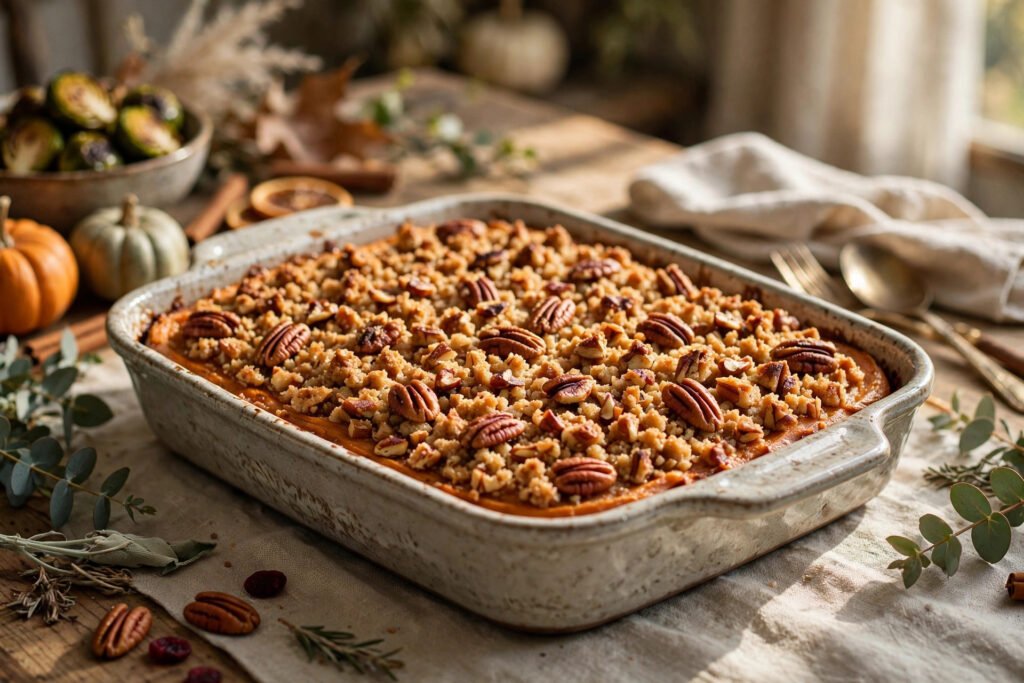
Learning how to make sweet potato casserole is one of the best returns on effort on the whole Thanksgiving table. It takes one baking dish, a handful of pantry ingredients, and about fifteen minutes of hands-on work — and it produces the dish people ask about by name the next year. The filling is creamy and lightly sweet, the topping is crisp and buttery, and the whole thing bakes while the turkey rests. Few Thanksgiving sides earn their place as reliably as this one.
The argument about this dish is never whether to make it. It is what goes on top. Pecan streusel people and marshmallow people defend their camps with real feeling, and the honest answer is that both are good — they are just good in different ways. This guide covers the creamy filling, the three topping camps, fresh versus canned sweet potatoes, roasting versus boiling, and the make-ahead timing that lets you assemble the whole dish a day or two before Thanksgiving. By the end, you will know exactly which version suits your table.
The Filling: Creamy, Lightly Sweet, Never Watery
The filling is the foundation, and it is simple: mashed sweet potatoes, butter, eggs, milk or half-and-half, brown sugar, vanilla, and salt. The eggs are what turn mashed sweet potatoes into a casserole — they set the filling as it bakes, so it slices cleanly instead of slumping. The milk keeps it creamy, the brown sugar adds a warm sweetness, and the salt is not optional: without it, the whole dish tastes flat. A pinch of cinnamon or nutmeg is welcome, but keep the spices light so the sweet potato flavour stays in charge.
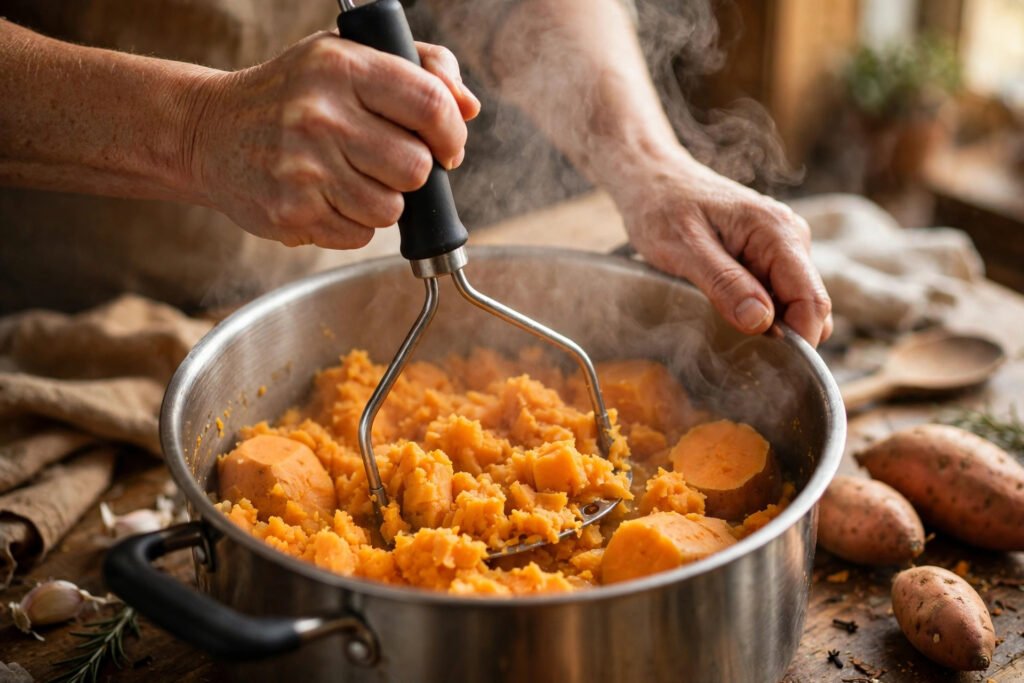
The most common filling mistake is water. Sweet potatoes hold a lot of moisture, and a watery filling bakes up soft and never quite sets. The fix starts before the mashing: drain boiled potatoes thoroughly, let them steam dry in the colander for a few minutes, and mash while they are hot so the steam escapes. If you roast them instead, the dry oven heat does the same job for you. Mash until smooth, but do not overwork the potatoes in a food processor — that turns them gluey. A potato masher or a hand mixer on low speed gives you a creamy texture without the glue.
Fresh vs Canned Sweet Potatoes
Fresh sweet potatoes are the better choice when you have the time, and the plan’s numbers make the shopping easy: three pounds of fresh sweet potatoes is about six medium ones, and that fills a standard 9×13 dish serving ten to twelve people. Peel them, cut them into chunks, and boil them for about twenty minutes until they are very tender, or roast them whole at 400°F for about an hour for a deeper, more caramelised flavour. Roasting takes longer but adds a richness that boiling cannot match, and it also keeps the filling drier.
Canned sweet potatoes work in a pinch, and there is no shame in using them on a busy Thanksgiving. Drain them very well — this is the step people skip, and it is why canned versions sometimes turn out watery. Press them gently in a colander, then mash and season exactly as you would fresh. The flavour is milder, but with butter, brown sugar, and vanilla in the filling, most guests will never know the difference. One thing to remember: sweet potatoes are not yams. The cans labelled “yams” in American supermarkets are sweet potatoes, so buy with confidence either way.
| Option | Prep | Flavour | Best for |
|---|---|---|---|
| Fresh, boiled | Peel, chunk, boil ~20 min | Clean, sweet, bright | Everyday reliability |
| Fresh, roasted | Roast whole at 400°F ~1 hr | Deep, caramelised, rich | Best flavour, driest filling |
| Canned | Drain very well, mash | Mild, a little less complex | Short on time or oven space |
How to Make Sweet Potato Casserole With a Pecan Streusel Topping
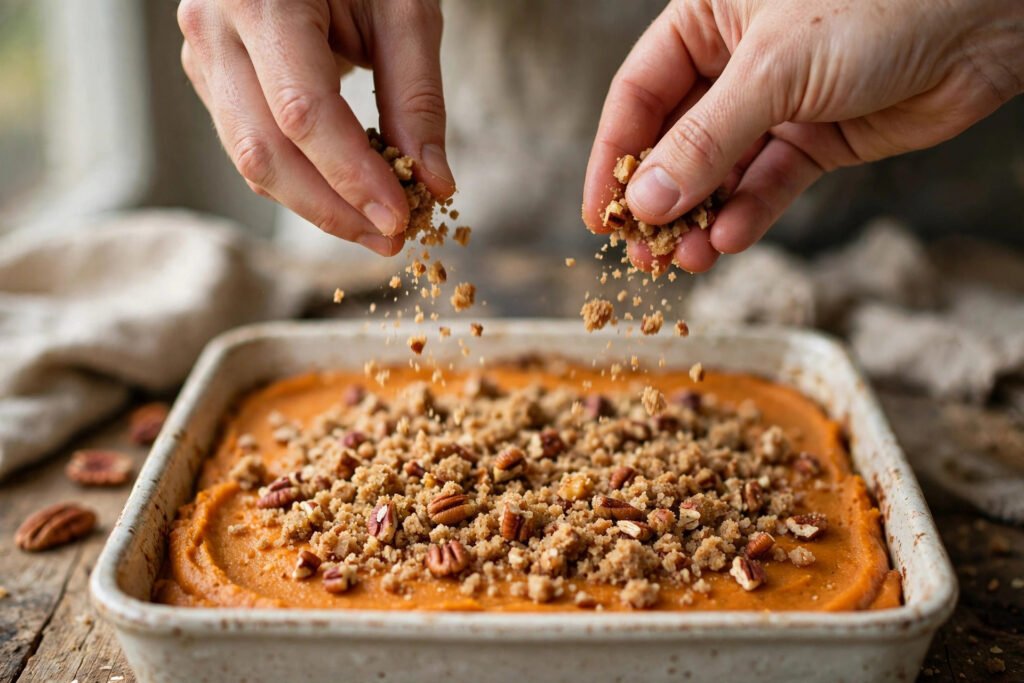
The pecan topping is the grown-up choice, and it is the one most food writers pick. It is a simple streusel: butter, chopped pecans, brown sugar, flour, and cinnamon, rubbed together until crumbly and scattered over the filling before baking. As it bakes at 350°F, the butter melts into the sugar, the pecans toast, and the top turns golden and crisp. The contrast is the whole point — creamy filling underneath, crunchy topping on top — and it is what makes this version feel like a proper dish rather than a dessert in disguise.
A few details make the streusel work. Keep the butter cold and cut it in rather than melting it, so the topping stays crumbly instead of turning into a paste. Use pecans in pieces, not dust: halves broken in two give you crunch, while finely chopped pecans disappear into the sugar. And do not skimp on the salt in the streusel — a pinch keeps the sweetness in balance. If anyone at your table has a nut allergy, this is the version to skip, and the marshmallow topping below is the safer choice.
The Marshmallow Topping
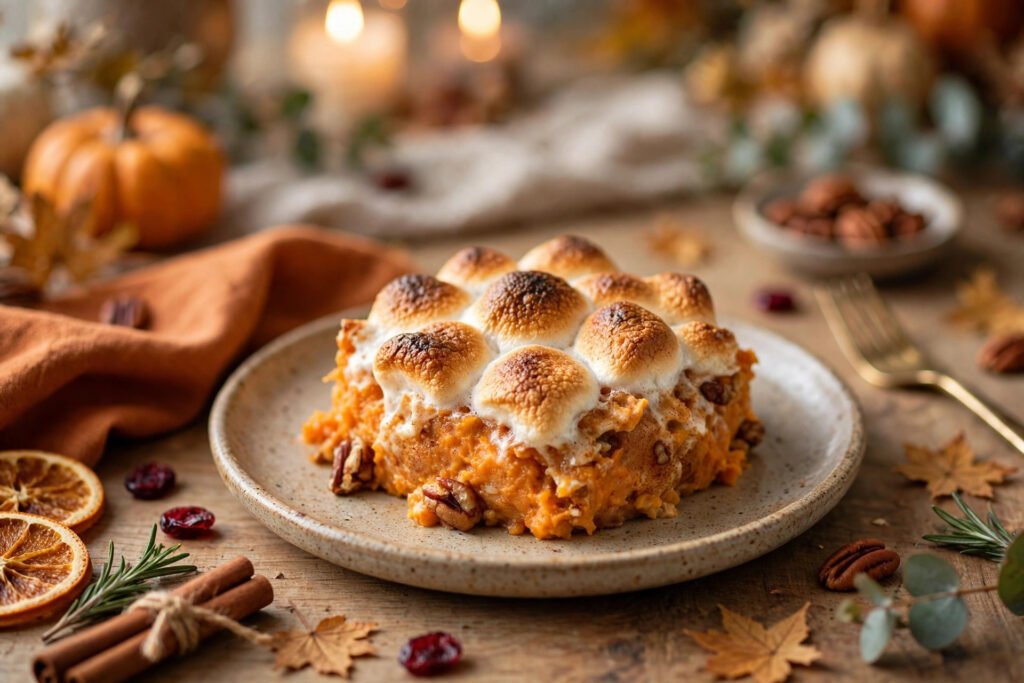
The marshmallow topping is the nostalgic choice, and for many families it is the only correct one. Mini marshmallows scattered over the filling and baked until golden give you a soft, gooey, toasted top that children love and adults pretend not to love. Timing is the trickiest part of how to make sweet potato casserole with marshmallows: they go on in the last ten minutes of baking, not at the start. Put them on too early and they burn before the filling has set. Put them on late, watch them through the oven window, and pull the dish out when they are puffed and golden.
Use mini marshmallows rather than large ones — they melt evenly and cover the surface without leaving bare patches. If you want a little more colour, run the dish under the broiler for a minute at the very end, but do not walk away: marshmallows go from golden to black in seconds. The marshmallow version is sweeter than the pecan version, so consider cutting the brown sugar in the filling by a tablespoon or two if your table prefers things less sweet.
Pecan, Marshmallow, or Both?
The third camp says you do not have to choose, and it has a point. A half-and-half dish — pecan streusel on one side, marshmallows on the other — lets everyone take the topping they want, and it looks generous on the table. The method is simple: spread the streusel over half the dish, bake for twenty minutes, then add marshmallows to the other half for the last ten minutes. The two toppings bake at different rates, so staggering them is the only way both come out right.
Choosing between them comes down to your table. Pecan streusel wins on texture and on balance: it is crisp, buttery, and not too sweet, and it pairs well with a rich turkey dinner. Marshmallows win on nostalgia and on children: they are soft, sweet, and fun, and they are the version many people grew up eating. The half-and-half version wins when the table is divided, which, on Thanksgiving, it usually is. There is no wrong answer here — only a topping that fits the people you are feeding.
| Topping | Flavour | Texture | Effort | Best for |
|---|---|---|---|---|
| Pecan streusel | Buttery, warm, balanced | Crisp and crunchy | Mix and scatter | Adults, rich dinners |
| Marshmallow | Sweet, toasty, nostalgic | Soft and gooey | Add in last 10 min | Kids, tradition |
| Both (half-and-half) | Best of both | Crisp one side, soft other | Stagger the timing | A divided table |
Baking: Temperature, Timing, and the Doneness Test
Bake the casserole at 350°F for twenty-five to forty-five minutes, until the filling is set and the topping is golden. The range is wide because it depends on how deep your dish is and whether the filling went in hot or cold from the fridge. A shallow dish of hot filling sets in about twenty-five minutes; a deep dish of cold filling can need the full forty-five. Knowing when it is done is the last skill in how to make sweet potato casserole well: the edges should be bubbling gently, the centre should jiggle only slightly when you shake the dish, and a knife inserted in the centre should come out mostly clean.
Oven space is the real Thanksgiving problem, and this dish is forgiving about it. It can bake alongside the turkey at a higher temperature if needed — just check it earlier and tent it with foil if the topping browns too fast. It can also wait: a finished casserole holds well in a warm oven for twenty minutes, loosely covered, while the turkey rests and gets carved. And remember that marshmallows, if you are using them, go on only in the last ten minutes.
Make-Ahead Timing for Thanksgiving
This is one of the best make-ahead dishes on the Thanksgiving menu, and the timing is generous — which is why planning ahead is part of how to make sweet potato casserole without stress. You can assemble the whole casserole — filling in the dish, covered tightly — one to two days before Thanksgiving and keep it in the fridge. Add the topping just before baking, because streusel softens and marshmallows dissolve if they sit on the filling overnight. On the day, take the dish out of the fridge thirty minutes before baking so it is not ice-cold going into the oven, then bake as usual, adding five to ten minutes to the time.
You can also split the work further. Roast or boil the sweet potatoes up to three days ahead, mash them, and refrigerate the mash in a sealed container. Mix the streusel a day ahead and keep it in a bag in the fridge. On Thanksgiving morning, stir the filling together, spread it in the dish, scatter the topping, and bake. That is about ten minutes of morning work for a dish that tastes like you spent the whole day on it. Leftovers keep three to four days refrigerated, and they reheat well in a low oven, covered.
| Stage | How far ahead | How to store |
|---|---|---|
| Mash the sweet potatoes | Up to 3 days | Sealed container, fridge |
| Assemble filling in dish | 1–2 days | Covered tightly, fridge |
| Make the streusel | 1 day | Bag or jar, fridge |
| Add topping and bake | Day of, before serving | Bake at 350°F, 25–45 min |
| Leftovers | 3–4 days | Covered, fridge; reheat gently |
Serving and Pairing
Serve the casserole straight from the baking dish, straight from the oven, with a large spoon — it is a scoop-and-serve dish, not a slice-and-plate one. Put it on the table while it is still hot, because the topping is at its best in the first twenty minutes: the streusel is crisp, the marshmallows are soft, and the filling is creamy. A 9×13 dish serves ten to twelve people as a side. If your crowd is bigger, make two dishes rather than one deeper one — a deeper dish bakes unevenly and the centre takes too long to set.
Common Mistakes and How to Avoid Them
The most common mistake is a watery filling, and it is almost always a draining problem. Boiled potatoes that go straight into the bowl carry their cooking water with them. Drain them well, let them steam dry for a few minutes, and mash while hot. The second mistake is over-sweetening: the filling already has brown sugar, the topping adds more, and marshmallows add more still. Taste the filling before you add the topping, and pull back on the sugar if it already tastes sweet enough.
The third mistake is burning the topping. Streusel browns fast in a hot oven, and marshmallows burn in seconds, so check the dish from twenty minutes onward and tent it loosely with foil if the top is colouring too quickly. The fourth mistake is assembling the topping the night before: streusel absorbs moisture overnight and turns soft, and marshmallows dissolve into the filling. Add the topping just before baking. The fifth mistake is baking a cold dish for the same time as a warm one — a fridge-cold casserole needs five to ten extra minutes, or the centre will still be cool when the top is done.
Frequently Asked Questions
Can I make sweet potato casserole ahead of time?
Yes. Assemble the filling one to two days ahead and refrigerate it, covered. Add the topping just before baking, and allow five to ten extra minutes in the oven for a cold dish.
Should I use fresh or canned sweet potatoes?
Fresh is best for flavour — roast whole at 400°F for about an hour, or boil peeled chunks for twenty minutes. Canned works well in a pinch if you drain it very thoroughly.
When do the marshmallows go on?
In the last ten minutes of baking. Put them on earlier and they burn before the filling sets. Watch them through the oven window and pull the dish out when they are puffed and golden.
How do I keep the filling from turning watery?
Drain boiled potatoes thoroughly and let them steam dry before mashing. Roasting instead of boiling helps too, because the dry oven heat drives off moisture.
How long does sweet potato casserole keep?
Leftovers keep three to four days in the fridge, covered. Reheat gently in a low oven, covered, with a splash of milk stirred in if the filling has stiffened.
Are sweet potatoes the same as yams?
No. True yams are a different vegetable, rarely sold in American supermarkets. The cans labelled “yams” are sweet potatoes, so you can use them with confidence.
Conclusion
Sweet potato casserole earns its place on the Thanksgiving table because it is simple, forgiving, and loved by almost everyone who tries it. Start with three pounds of sweet potatoes, mash them with butter, eggs, milk, brown sugar, vanilla, and salt, and choose your topping: crisp pecan streusel, gooey toasted marshmallows, or half of each. That is how to make sweet potato casserole the way your family will ask for again — and it works whether you roast or boil, use fresh or canned, and bake it today or assemble it two days ahead.
Make it once and you will see why it survives on the menu year after year: fifteen minutes of work, one dish to wash, and a side that holds its own next to the turkey. If you are building the rest of the meal, start with our guide to mashed potatoes from scratch, add our stuffing from scratch and cranberry sauce from scratch, and finish with a Christmas cake for the next holiday. For more detail, the casserole guides at The Kitchn and Taste of Home are worth reading, Serious Eats explains the roast-versus-boil question well, Amish Heritage covers the traditional version, and Weight Watchers has a lighter take on the same dish.



