
How to Make Mashed Potatoes From Scratch: The Creamy, Lump-Free Guide
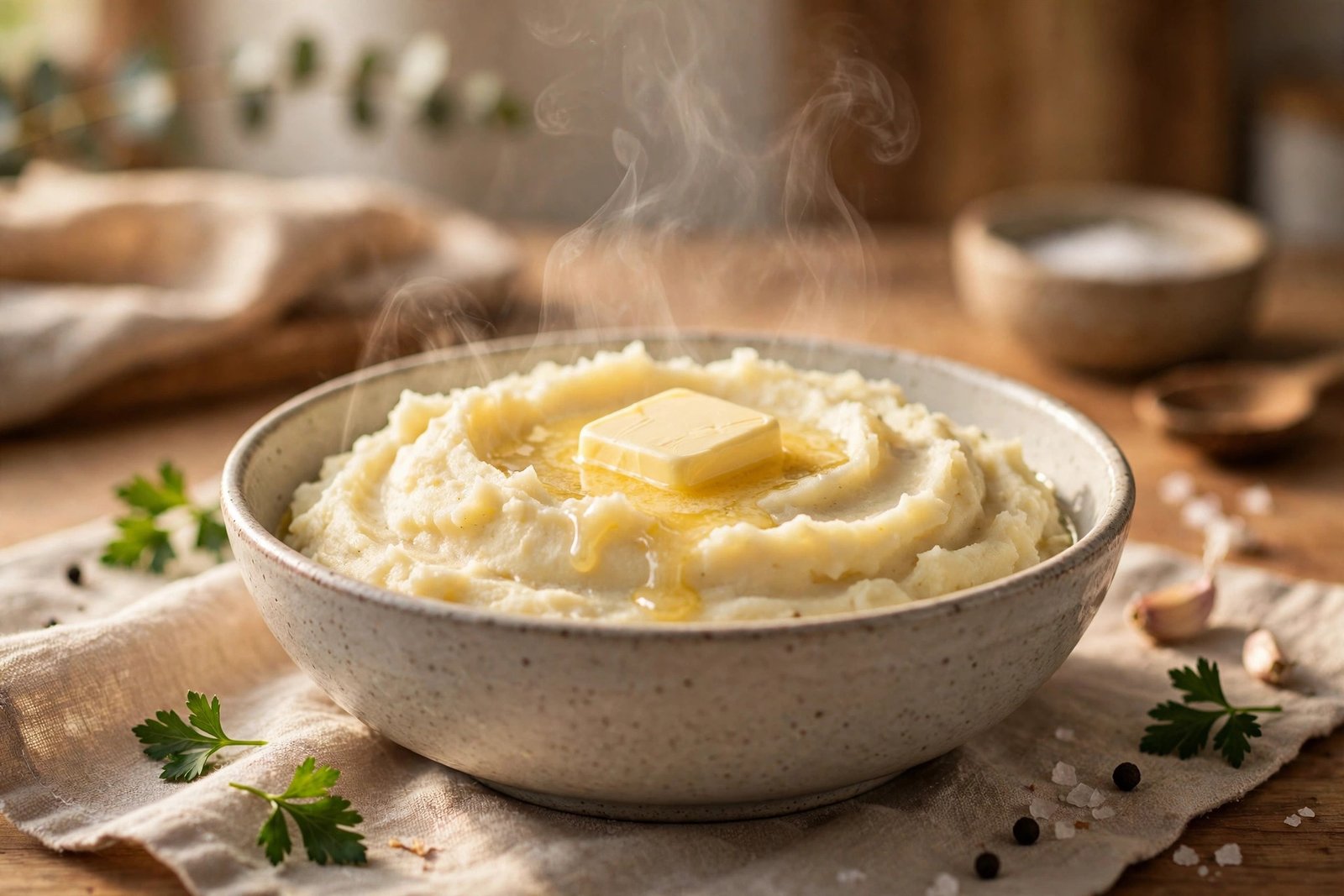
There is a dish on nearly every Thanksgiving table that gets taken for granted until it goes wrong. A bowl of gluey, lumpy, or bland mashed potatoes can drag down an otherwise perfect meal, while a bowl of creamy, buttery ones disappears before the turkey is carved. If you want the second kind on your table, learning how to make mashed potatoes from scratch is one of the highest-return skills in holiday cooking — and it takes about half an hour, most of it hands-off.
This guide covers the whole job: which potato to buy and why it matters, the exact butter-and-milk ratio, the step-by-step method that keeps the texture fluffy instead of gluey, the five mistakes that ruin most batches, and how to make the whole dish a day ahead. Thanksgiving falls on Thursday, November 26, 2026, and this is the one side dish worth practicing once before the big day.
The short version: use Yukon Golds or Russets, start them in cold salted water, drain them well, mash them while hot, and fold in warm butter and warm milk — never cold. The rest of this guide explains why each of those choices matters.
Picking the Right Potato
The potato you choose decides the texture before you ever pick up a masher. Potatoes fall into three broad groups — starchy, waxy, and all-purpose — and they behave very differently once they are boiled and mashed.
Russet potatoes are the classic choice for mashed potatoes. They are high in starch and low in moisture, which means they fall apart easily when boiled and whip up light and fluffy. Their one weakness is that they absorb liquid eagerly, so they can turn gluey if you overwork them or add too much milk at once.
Yukon Gold potatoes are the all-purpose middle ground, and they are the pick of many professional cooks. They have medium starch, a naturally buttery flavor, and a dense, creamy texture that holds together well. If you only buy one kind, buy Yukon Golds — they are the most forgiving potato for mashing, and they need less butter to taste rich.
Red potatoes are waxy, which means they hold their shape when boiled and resist breaking down. That makes them wonderful for potato salad and roasted potatoes, but they are the wrong choice for a smooth mash. Mash them too hard and they turn gummy; mash them too little and you get lumps. Use them only if you want a deliberately rustic, chunky texture.
| Potato variety | Starch level | Texture when mashed | Best use |
|---|---|---|---|
| Russet | High | Light and fluffy | Classic smooth mash |
| Yukon Gold | Medium | Dense and creamy | Rich, forgiving mash |
| Red | Low (waxy) | Thick and gummy if overworked | Chunky, rustic mash only |
Buy potatoes that feel firm and heavy for their size, with no green patches, sprouts, or soft spots. Green skin means the potato has been exposed to light and developed solanine, a bitter compound — cut away any green areas generously. Store potatoes in a cool, dark place, not the refrigerator, where the cold turns their starch to sugar.
For a family of eight, plan on about two pounds of potatoes per four people — roughly half a pound per person, a little more at Thanksgiving when the bowl gets passed around twice. That works out to about four pounds for eight servings, and the recipe below is written for that amount.
The Ingredients and Ratios
Mashed potatoes need only five ingredients: potatoes, butter, milk or cream, salt, and pepper. The ratio is what separates a good batch from a great one, and the numbers below are for four pounds of potatoes, serving about eight people.
Butter: eight tablespoons, or one full stick. Real butter, not margarine — the flavor is the point — cut into pieces so it melts quickly into the hot potatoes.
Milk: about one cup, warmed. Whole milk is the standard choice; half-and-half makes the mash richer, and heavy cream makes it luxurious but heavy, so use it sparingly. Warm the milk before adding it — cold milk cools the potatoes and makes them seize up.
Salt: salt the boiling water generously, about a tablespoon for a large pot, and then season the finished mash to taste. Potatoes absorb salt as they cook, so salting the water seasons them from the inside out.
Pepper: freshly ground black pepper, to taste. White pepper is the traditional choice if you want the mash to stay perfectly white, but black pepper is fine for a family meal.
Optional additions are where you can make the dish your own: roasted garlic, a spoonful of sour cream or cream cheese, chopped chives, or a drizzle of browned butter. Add them after the basic mash is done, and taste as you go.
How to Make Mashed Potatoes From Scratch, Step by Step
This is the full method for four pounds of potatoes. It takes about 15 minutes of hands-on work and 20 minutes of boiling, and it is the same method whether you are cooking for four people or fourteen.
Step 1: Peel and cut. Peel the potatoes and cut them into even pieces, about one and a half inches across. Even pieces cook evenly — if some chunks are twice the size of others, the small ones will fall apart while the big ones are still hard in the middle. Rinse the cut potatoes in cold water to wash off surface starch, which helps keep the final texture fluffy.
Step 2: Start in cold water. Put the potatoes in a large pot and cover them with cold water by about an inch. Add a generous tablespoon of salt. Starting in cold water matters: the potatoes heat evenly from the outside in, so they cook through at the same rate. Dropping them into boiling water cooks the outside too fast and leaves the centers hard.
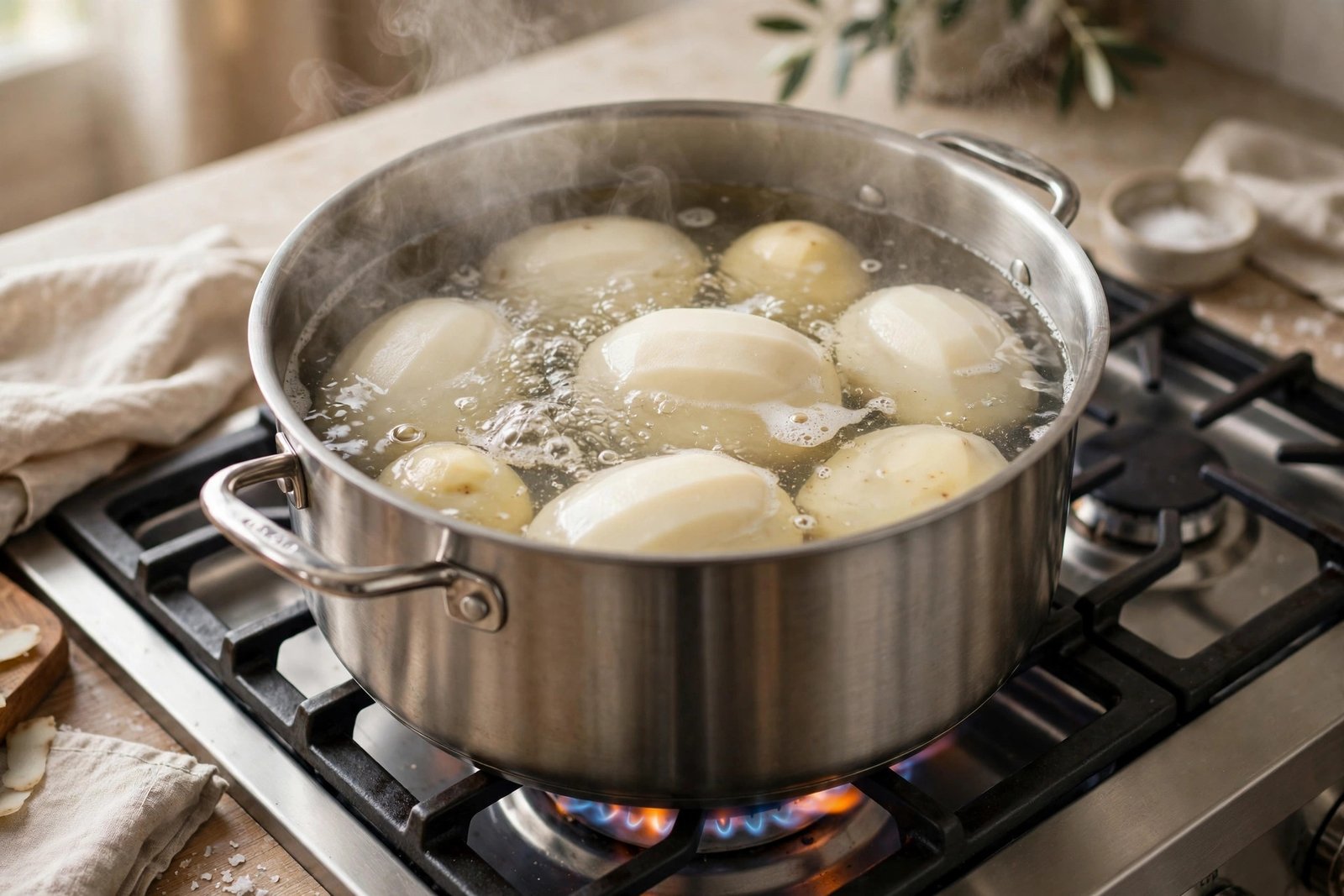
Step 3: Boil until fork-tender. Bring the pot to a boil over high heat, then reduce to a steady simmer. Cook for 15 to 20 minutes, until a fork slides into the largest piece with no resistance. Do not overcook them — potatoes that have boiled to pieces absorb too much water and turn out soggy. Test early and often after the 15-minute mark.
Step 4: Drain and dry. Drain the potatoes thoroughly in a colander, then return them to the hot, empty pot. Set the pot back on the stove over low heat for a minute or two, shaking it gently, until the surface moisture steams off and the potatoes look dry and floury around the edges. This step is the secret to fluffy mashed potatoes: wet potatoes make wet mash.
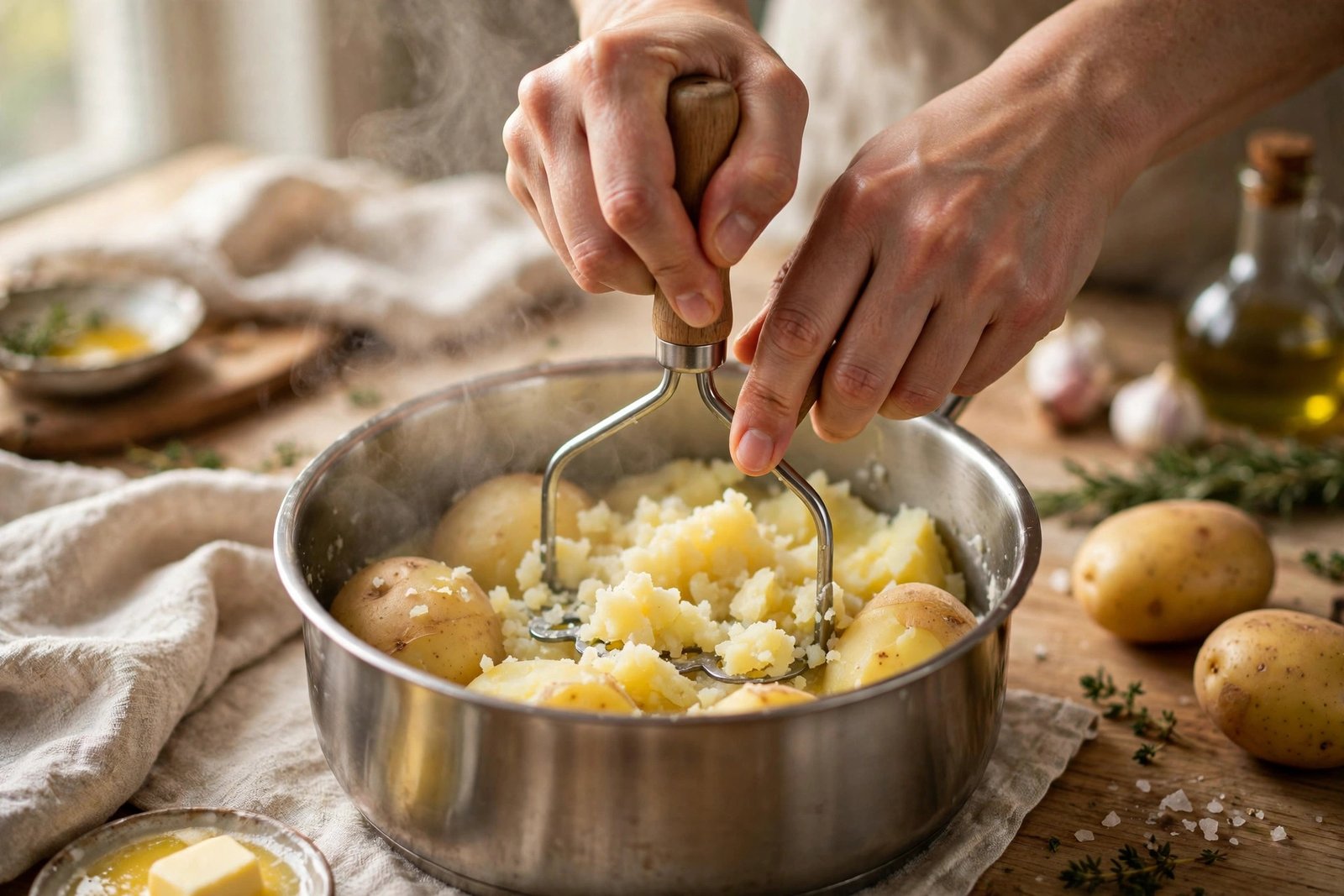
Step 5: Mash while hot. Mash the potatoes while they are still steaming. A hand masher gives you the most control and the best texture — it breaks the potatoes down without overworking the starch. A potato ricer is even better for a perfectly smooth result, and it is worth buying if you make mashed potatoes often. What you should never use is a food processor or an electric mixer on high speed: both overwork the starch and turn the potatoes into glue. The Kitchn’s mashed potato guides make the same point — the tool you choose is half the battle.
Step 6: Add the butter first. Add the butter to the hot mashed potatoes before any liquid. The butter melts into the potatoes and coats the starch, which keeps the texture creamy instead of gummy. Stir gently until it is fully absorbed.
Step 7: Add the warm milk slowly. Pour in the warm milk a quarter cup at a time, stirring gently between additions. Stop when the potatoes reach the consistency you like — they should be smooth and creamy, holding soft peaks rather than running off the spoon. You may not need the full cup. Taste, adjust the salt and pepper, and serve immediately with a pat of butter melting on top.
The Five Mistakes That Ruin Mashed Potatoes
Most bad mashed potatoes fail in one of five ways, and all five are avoidable. If you have ever wondered why your mash came out gluey, lumpy, or bland, the answer is almost certainly on this list.
Mistake 1: Overworking the potatoes. The single most common error. Potato starch swells and bursts when it is beaten, and once it bursts, the mash turns gluey and cannot be fixed. Mash by hand, stop as soon as the potatoes are smooth, and never use a food processor. This is why knowing how to make mashed potatoes from scratch starts with the tool, not the recipe.
Mistake 2: Adding cold milk or butter. Cold liquid drops the temperature of the potatoes, and the starch seizes instead of absorbing smoothly. Warm both the milk and the butter, or at least bring them to room temperature, before they go in.
Mistake 3: Starting the potatoes in boiling water. The outside cooks before the inside, so you end up with mushy exteriors and hard centers that never mash smooth. Cold water, always.
Mistake 4: Skipping the drying step. Potatoes that go straight from the colander to the masher carry extra water into the bowl, and no amount of butter fixes a watery mash. A minute back on the heat to steam off the moisture makes a visible difference.
Mistake 5: Under-salting. Potatoes need more salt than you think. Salt the cooking water, then season the finished mash and taste it. A bland batch is almost always an under-salted batch, not a recipe failure.
Variations Worth Trying
Once you know the basic method, the variations are easy — each one changes a single element and keeps everything else the same. Serious Eats’ potato guides explore the science behind several of these.
Garlic mashed potatoes: roast a whole head of garlic while the potatoes boil — cut the top off, drizzle with olive oil, wrap in foil, and bake at 400°F for about 35 minutes — then squeeze the soft cloves into the mash. Roasted garlic is sweet and mellow, nothing like raw garlic, and it is the most popular variation for a reason. Food Network’s recipe collection includes a roasted-garlic version worth comparing.
Sour cream and chive: swap half the milk for sour cream and fold in a handful of snipped chives at the end. The sour cream adds a gentle tang that cuts through the richness of the butter, and the chives add color and a mild onion note.
Browned butter and sage: melt the butter in a small pan and cook it until it foams and the milk solids turn golden brown and smell nutty, then pour it over the potatoes with a few fried sage leaves. This is the most elegant variation, and it takes only five extra minutes.
Make-Ahead, Freezing, and Leftovers
Mashed potatoes are one of the easiest Thanksgiving dishes to make ahead, which matters on a day when the oven is already crowded with a turkey and a casserole or two.
The day before: make the mashed potatoes completely, then transfer them to a buttered baking dish, smooth the top, and dot it with a few small pieces of butter. Cover tightly and refrigerate. On Thanksgiving day, reheat covered at 350°F for 30 to 40 minutes, stirring once halfway through, until hot all the way through.
Freezing: mashed potatoes freeze surprisingly well if they are made with plenty of butter and milk. Cool them completely, pack them into freezer bags in flat portions, and press out the air. They keep for up to a month. Thaw overnight in the refrigerator, then reheat gently with a splash of warm milk stirred in to restore the texture.
Leftovers: cool leftovers within two hours of serving and refrigerate them in shallow containers, where they will keep for three to four days. FoodSafety.gov is clear on both the two-hour rule and the three-to-four-day window. Reheat to 165°F, stirring in a little warm milk if the mash has stiffened in the fridge.
What to Serve With Them
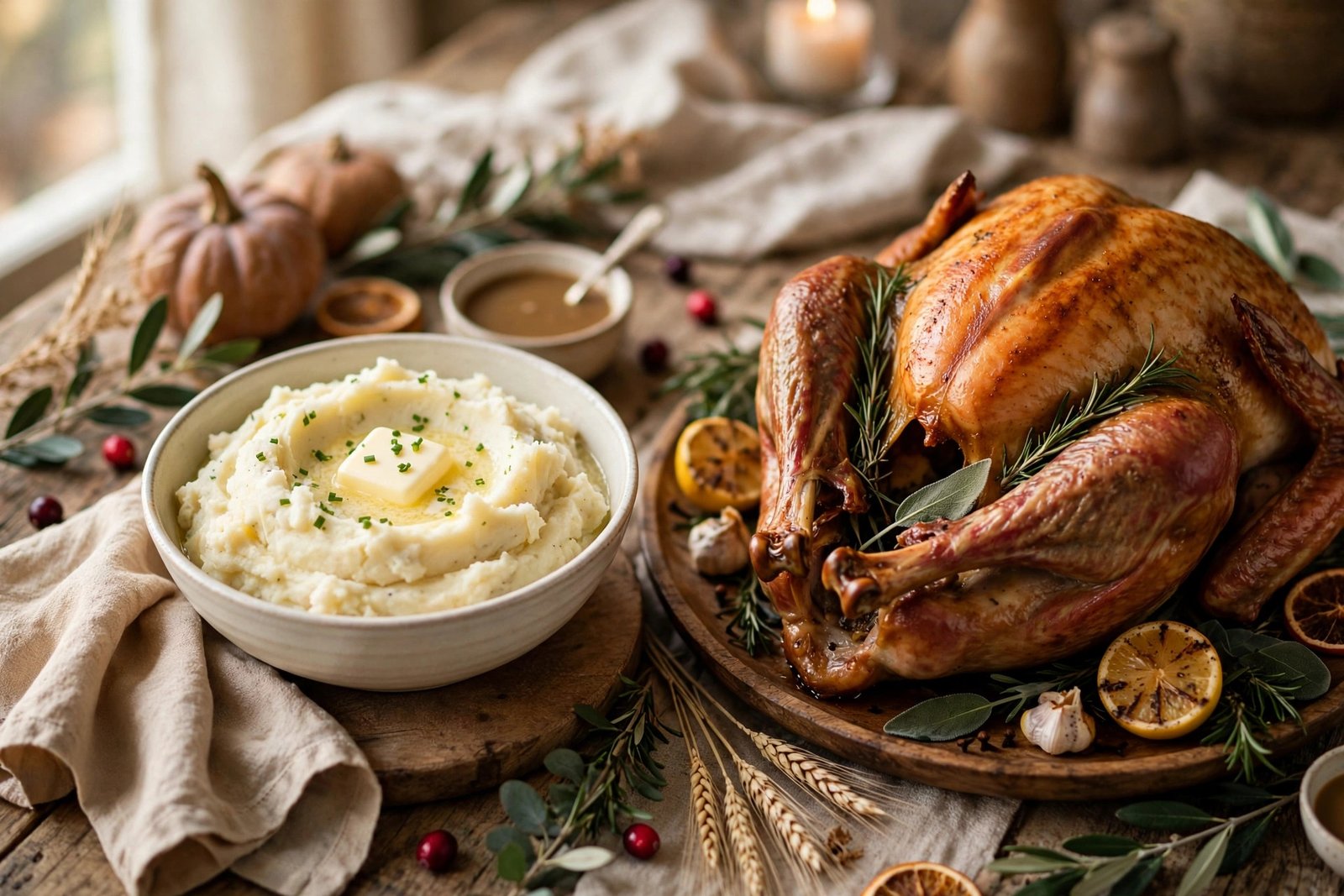
Mashed potatoes are the supporting player on the Thanksgiving plate, and they earn their place by tying the rest of the meal together. They soak up gravy, balance the salt of the turkey, and give the meal its comfort-food anchor.
Plan the timing so the potatoes are ready when the turkey comes out to rest. The turkey needs 20 to 30 minutes of resting before carving, and that is exactly the window in which to finish the mash. If you brined your bird, our guide on how to brine a turkey covers the resting and carving timing, and the gravy from scratch uses the pan drippings to make the sauce that goes over the top. The stuffing from scratch bakes while the turkey rests, and the roast turkey breast is the smaller-bird alternative for a table that does not need a whole turkey. Butterball’s holiday cooking guides are a useful second opinion on timing the whole meal.
Frequently Asked Questions
Can I make mashed potatoes the day before Thanksgiving?
Yes, and it is the smartest way to handle them. Make the full batch, refrigerate it in a buttered baking dish, and reheat covered at 350°F for 30 to 40 minutes on the day. Stir in a splash of warm milk if the mash has stiffened.
Why are my mashed potatoes gluey?
Almost always overworking. A food processor or an electric mixer on high speed bursts the potato starch and turns the mash into glue. Mash by hand with a hand masher or a ricer, stop as soon as the potatoes are smooth, and add the butter before the milk.
Should I peel the potatoes?
For a classic smooth mash, yes. The skins add texture and color that many people like in a rustic version, but they also make lumps more likely and the texture less even. If you keep the skins on, use Yukon Golds, whose skins are thin, and mash thoroughly.
How much mashed potato do I need per person?
About half a pound of raw potatoes per person, which works out to roughly two pounds per four servings. At Thanksgiving, plan a little extra — mashed potatoes are the dish people go back for.
How long do leftover mashed potatoes last?
Three to four days in the refrigerator, stored in shallow containers and cooled within two hours of serving. Reheat to 165°F. They also freeze well for up to a month.
Conclusion
Learning how to make mashed potatoes from scratch comes down to four habits: pick the right potato, start it in cold salted water, dry it before mashing, and add warm butter before warm milk. Get those right and the rest — the garlic, the cheese, the make-ahead plan — is a bonus. Make a practice batch before Thanksgiving, taste it, adjust the salt, and you will have the one side dish nobody at the table will need to be polite about.



