How to Prepare Your Car for Winter: The Complete Checklist (2026)
If you’re wondering how to prepare your car for winter, you’re asking at exactly the right time — ideally a few weeks before the first hard freeze. Every year, the first real cold snap brings a predictable wave of dead batteries, flat-spotted tires, and stranded drivers who figured they’d “get around to it.” The stakes are higher than an inconvenient morning: in 2023 alone, there were 320 fatal traffic crashes and an estimated 22,293 injury crashes that occurred when snow or sleet was falling, according to NHTSA’s winter crash data. A little preparation now is the difference between a routine winter and a roadside emergency.
Below is the full routine: what to check, why it matters, and when to do it — with real numbers from AAA and NHTSA throughout.
Why Winter Is So Hard on Your Car
Cold doesn’t just make mornings miserable; it changes how nearly every system in your vehicle behaves. Battery chemistry slows down as temperatures fall, motor oil thickens and flows more slowly on a cold start, tire rubber stiffens, and the air inside your tires contracts. NHTSA’s winter driving safety tips put it bluntly: for gasoline and diesel engines, it takes more battery power to start your vehicle in cold weather, and for electric and hybrid vehicles, driving range drops when the battery is cold. That’s why the agency recommends having your mechanic check the battery, charging system, and belts before winter — not after the first no-start morning.
None of this is complicated. A Saturday afternoon and a few inexpensive checks cover almost everything. Here’s the order that matters most.
1. Test Your Battery Before the First Cold Snap
The battery is the number-one winter failure point, and it rarely gives you a polite warning. AAA notes that at 0°F, a car battery loses about 60% of its strength — while the engine simultaneously demands more current to turn over. Dead batteries are consistently among the top reasons for winter roadside assistance calls, and batteries older than three years are especially vulnerable.

Here’s what to do:
- Get the battery tested. Most auto parts stores will test your battery and charging system for free. If your battery is more than three years old, have it checked before winter, not during the first cold snap — follow winter car care tips from AAA and test early.
- Clean the terminals. Corrosion on battery terminals adds electrical resistance and forces an already-struggling battery to work harder. A wire brush and a paste of baking soda and water takes five minutes.
- Watch for warning signs. Slow cranking, dim headlights, or electronics acting strangely are all classic signs of a dying battery. Don’t wait for a second warning.
- Park smart. If you have a garage, use it. Even an unheated garage keeps the battery several degrees warmer than sitting outside overnight, which meaningfully improves starting power.
2. Give Your Tires a Winter Health Check
Your tires are the only part of your car touching the road, and winter is when that contact patch matters most. There are two things to check: pressure and tread.
Tire pressure drops with temperature
Cold air contracts, so the air inside your tires loses pressure as temperatures fall. The rule of thumb from AAA: tire pressure decreases about 1 PSI for every 10°F drop in temperature. A 40°F overnight cold snap can cost you 4 PSI — enough to trigger your tire pressure warning light and noticeably reduce grip. The chart below shows what happens to a tire set to 35 PSI at 60°F as the temperature falls:
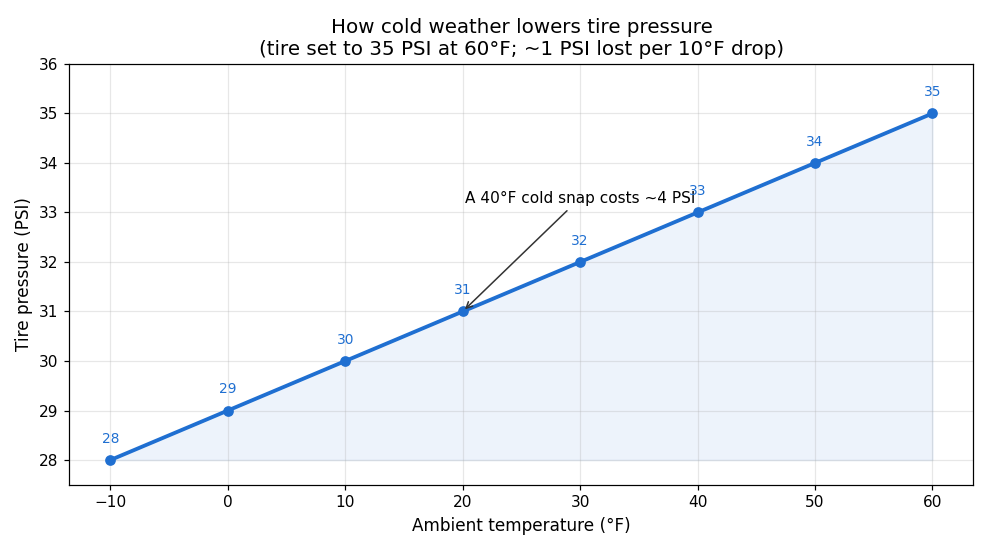
Practical takeaway: check your tire pressure monthly in winter, and always check when tires are cold (parked for at least three hours or driven less than a mile). Inflate to the pressure on the sticker inside your driver’s door jamb — not the maximum number printed on the tire sidewall. And don’t “set and forget”: a tire that was perfectly inflated in October can be several PSI low by January without a single leak.

Tread depth and the penny test
Worn tread can’t channel slush and water, which means longer stopping distances and a higher risk of hydroplaning. NHTSA recommends a minimum tread depth of 2/32 of an inch. The quick check: push a penny into the tread with Lincoln’s head upside down. If you can see the top of his head, your tread is too worn for winter.
Check for uneven wear, cracks, or sidewall bulges too — cold makes existing tire damage worse. And check the spare’s pressure; a flat spare is just dead weight.
Should you switch to winter tires?
All-season tires are a compromise, and cold exposes it. The rubber compounds in all-season and summer tires begin to stiffen noticeably when temperatures consistently drop below about 45°F (7°C), which reduces grip even on dry pavement. Winter tires use specialized rubber compounds engineered to stay pliable in freezing temperatures, plus deeper tread and thousands of tiny sipes that bite into snow and ice. If you live somewhere with regular snow and ice — or long stretches below freezing — dedicated winter tires are the single biggest traction upgrade you can make. Look for the three-peak mountain snowflake symbol, which marks tires tested for severe snow service.
3. Check Your Engine Coolant
This one is easy to overlook because it’s invisible — until it isn’t. Engine coolant (antifreeze) does two jobs: it stops the water in your cooling system from freezing, and it raises the boiling point in summer. The standard protection comes from a 50/50 mix of antifreeze and distilled water, which guards against freezing down to about -34°F. Water alone expands when it freezes and can crack your engine block or burst the radiator — a catastrophic failure that costs thousands.
Before winter, have your coolant’s freeze point tested with a refractometer or coolant test strips (any shop can do this in minutes), and top off or flush the system per your owner’s manual. Check the reservoir level too — it should sit between the MIN and MAX marks. One safety note: never open the coolant reservoir when the engine is hot. The system is pressurized and can cause severe burns; wait at least 15–30 minutes after driving.
While the hood is up, have belts and hoses inspected — rubber gets brittle in the cold, and a cracked hose that survives October can burst in January.
4. Wipers, Washer Fluid, and Lights
Visibility is everything in winter. Snow, sleet, and road spray from other cars can coat your windshield in seconds, and short days mean you’re driving in the dark more often. NHTSA specifically recommends filling your windshield washer reservoir with a high-quality “winter” fluid containing deicer before winter weather hits — regular summer fluid can freeze in the lines and reservoir, leaving you blind at the worst moment. You can burn through a lot of washer fluid in a single snowstorm, so keep a spare jug in the trunk.
Replace blades that streak, chatter, or miss spots — they typically last about six months. Winter-rated blades with a protective rubber boot resist ice buildup on the frame. If you park outside during a storm, leave the wipers lifted so they don’t freeze to the glass.
Check every light — headlights, brake lights, turn signals, hazards, reverse lights — and clean the lenses, since road grime and salt film dim them fast. Test the rear defroster and cabin heater now, while a repair is a convenience rather than an emergency.
5. Build a Winter Emergency Kit
Even a perfectly prepared car can get stuck. Getting stranded in freezing weather is genuinely dangerous, but a well-stocked trunk turns a crisis into an inconvenience. NHTSA’s winter vehicle checklist recommends carrying:
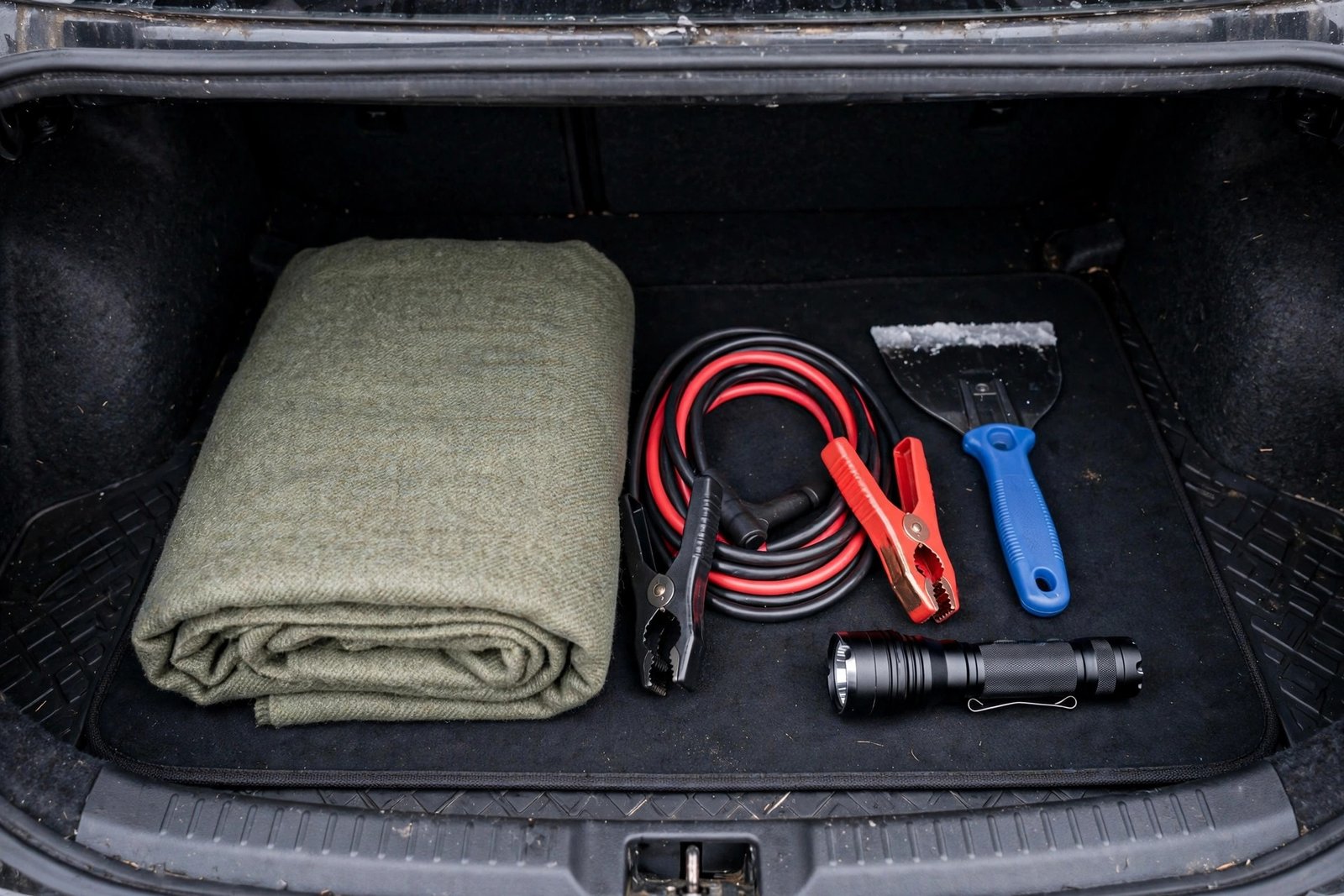
- A snow shovel, broom, and ice scraper
- Abrasive material like sand or kitty litter for traction if you get stuck
- Jumper cables, a flashlight with extra batteries, and warning devices such as flares or reflective triangles
- Blankets and warm clothing — including a hat and gloves, not just a coat
- A phone charger (a portable power bank is ideal), water, non-perishable snacks, and any necessary medication
Worth adding: a first-aid kit, a tow strap, and a small bag of rock salt. Pack everything in one sturdy bag so it stays put — a sturdy carry-on bag you already own works surprisingly well.
How to Prepare Your Car for Winter: The Full Checklist
Here’s the complete routine in one place. Do the one-time items in late October or early November, before the first frost; keep the recurring items going all winter.
| Task | Why it matters | When to do it |
|---|---|---|
| Test battery and charging system; clean terminals | At 0°F a battery loses about 60% of its strength; dead batteries are the top winter breakdown cause | Late October |
| Check tire pressure and tread depth | Pressure falls ~1 PSI per 10°F drop; worn tread (under 2/32″) lengthens stopping distance on slush | Late October, then monthly |
| Consider winter tires | Specialized compounds stay flexible below ~45°F, where all-season rubber stiffens and loses grip | Before temps drop below 45°F |
| Test coolant freeze point and level | A weak mix can freeze and crack the engine block; 50/50 protects to about -34°F | Before first frost |
| Replace wiper blades; fill with winter washer fluid | Summer fluid freezes in the lines; worn blades can’t clear slush at speed | Late October |
| Check all lights, defroster, and heater | Short days and blowing snow demand maximum visibility | Late October |
| Pack the winter emergency kit | Stranded in freezing weather without supplies is dangerous | Before your first winter trip |
| Check oil, brake, power steering, and transmission fluids | Cold thickens fluids and stresses aging seals and hoses | Late October |
| Inspect belts and hoses | Brittle, cracked rubber fails suddenly in extreme cold | Late October |
| Keep the fuel tank at least half full | Prevents fuel-line freeze and keeps you warm longer if stranded | All winter |
Safe Winter Driving Habits After the Prep
Preparation gets your car ready; habits get you home. NHTSA’s core advice for winter roads is simple: slow down, because it’s harder to control or stop on slick surfaces, and increase your following distance so you have room to stop for the vehicle ahead. Don’t crowd snowplows — they travel slowly, make wide turns, and exit the road frequently; if you’re behind one, stay well back and pass with caution.
Keep your gas tank close to full (EV drivers: keep the battery charged and precondition while plugged in). Before any trip in bad weather, check the forecast, leave early, and share your route and arrival time — on longer winter journeys, that’s also when travel insurance earns its keep.
If you get stranded or your car stalls: stay with your vehicle, make it visible with bright markers and the dome light, and be careful about carbon monoxide — clear snow from the exhaust pipe and run the engine only sporadically, just long enough to stay warm. Never run the car for long periods with the windows up in an enclosed space.
Frequently Asked Questions
When should I start getting my car ready for winter?
Late October or early November in most of the U.S. — before the first hard frost. Battery tests, coolant checks, and tire inspections are easier to schedule before shops get slammed with emergency no-starts. In colder regions, start a few weeks earlier.
Do I really need winter tires, or are all-seasons enough?
All-season tires are fine for mild winters with occasional light snow. But if you regularly drive on snow and ice, dedicated winter tires are worth it: their compounds stay flexible below about 45°F while all-season rubber stiffens. Switch when daytime highs consistently fall below 45°F.
How often should I check tire pressure in winter?
At least once a month, and after any big temperature swing (roughly 20°F or more). Because tire pressure falls about 1 PSI per 10°F drop, a tire that was perfect in October can be meaningfully underinflated by December. Always check when the tires are cold.
How long should I warm up my car on a cold morning?
No more than about 30 seconds — the engine warms up faster being driven than idling. Start the car, clear your windows, then drive gently for the first few minutes rather than idling. Extended idling just wastes fuel and increases emissions; the one exception is defrosting a heavily iced windshield for visibility. (More on the science of how to warm up a modern car.)
What should I do if my car gets stuck in snow?
Don’t spin the wheels — it digs you in deeper. Straighten the steering wheel, clear snow from around the tires and exhaust pipe, and lay sand or kitty litter under the drive wheels for traction. Use gentle, steady throttle, or rock slowly between drive and reverse. If you’re truly stuck, stay with the vehicle and call for help.
Should I keep my gas tank full in winter?
Yes — NHTSA recommends keeping your tank close to full. A fuller tank reduces the chance of moisture condensing and fuel lines freezing, and it gives you hours of heat if you’re ever stranded. Make “never below half” your winter rule.
The Bottom Line
Knowing how to prepare your car for winter isn’t about becoming a mechanic — it’s about not letting small, predictable problems become big ones. Test the battery, mind your tire pressure, verify the coolant, refresh the wipers, and pack the emergency kit. Do it once in late October and you’ll drive through winter with one less thing to worry about. And if a forecast ever turns truly dangerous, the bravest decision is no driving at all — stay home, or find cheap flights and let someone else handle the weather.