
You bend down to tie your shoes, or you lift a laundry basket the wrong way, and suddenly your lower back seizes up. Learning how to relieve lower back pain at home starts with unlearning your first instinct — to lie flat and not move at all. For most everyday back pain, gentle movement beats bed rest, and a few simple home measures can take the edge off within a day or two. This guide walks through what actually works, in the order you should try it, and the warning signs that mean you should stop and call a doctor.
Lower back pain is one of the most common reasons people visit a doctor, and most episodes are mechanical — a strained muscle, an irritated ligament, or a stiff joint — rather than anything serious. The Cleveland Clinic’s home remedies for back pain note that most episodes improve within days or weeks, and that staying still for too long usually makes things worse, not better.
What Usually Causes Lower Back Pain
The most common cause of sudden lower back pain is a muscle strain or a sprained ligament — the kind of injury that follows lifting something heavy, twisting awkwardly, or sitting hunched over a laptop for too many hours. The muscles around the spine go into spasm to protect the area, and that spasm is often what hurts most. Poor posture plays a quieter role: hours of slouching load the small joints and discs of the lower spine unevenly, and the ache builds up over weeks until one ordinary movement tips it over the edge. Our guide on how to fix bad posture covers the daily habits that feed this kind of pain.
How to Relieve Lower Back Pain at Home: The First 48 Hours
The first two days set the tone for the whole recovery. The temptation is to cancel everything and stay in bed, but the evidence points the other way. MedlinePlus, the U.S. National Library of Medicine’s patient guide to taking care of your back at home, is clear that health care providers do not recommend bed rest or prolonged rest for lower back pain. A short pause — a few hours, or a day at most — is fine. After that, gentle movement is the treatment.
Start by calming the flare. For the first 48 to 72 hours, ice is usually the better choice: a cold pack wrapped in a thin towel, applied for 15 to 20 minutes at a time, can numb the area and reduce swelling. After the first couple of days, most people switch to heat, which relaxes tight muscles and improves blood flow. The Emory Healthcare guide to relieving low back pain at home recommends trying both and sticking with whichever helps you more, but warns to use each for only about 20 minutes at a time and never to fall asleep with a heating pad on. If you have no pack, a bag of frozen peas works as ice, and a hot water bottle or a warm bath works as heat.
Keep your day moving in small doses. Walk around the house every hour, even if it is only to the kitchen and back. Stand up slowly, using your legs rather than your back to push yourself upright. Sit in a chair with a firm back and a small cushion or rolled towel behind your lower back, and avoid soft sofas that let your hips sink below your knees. Our guide on the best budget ergonomic chair for 2026 can help if your chair is part of the problem, and the stretches in our routine for how to stretch after sitting all day pair well with everything in this article. Avoid heavy lifting, sudden bending, sit-ups, and toe touches for now, and resist the urge to test your back by bending to see whether it still hurts — it does, and the test only re-injures it.

Gentle Stretches That Loosen a Stiff Lower Back
Once the sharpest pain has eased — usually after the first day — gentle stretching is one of the most reliable ways to relieve lower back pain at home. The aim is not to force your back into a deep stretch. It is to remind the muscles around the spine that they can move, which breaks the cycle of spasm and stiffness. Move slowly, breathe normally, and stop any stretch that sends a sharp or shooting pain down your leg.
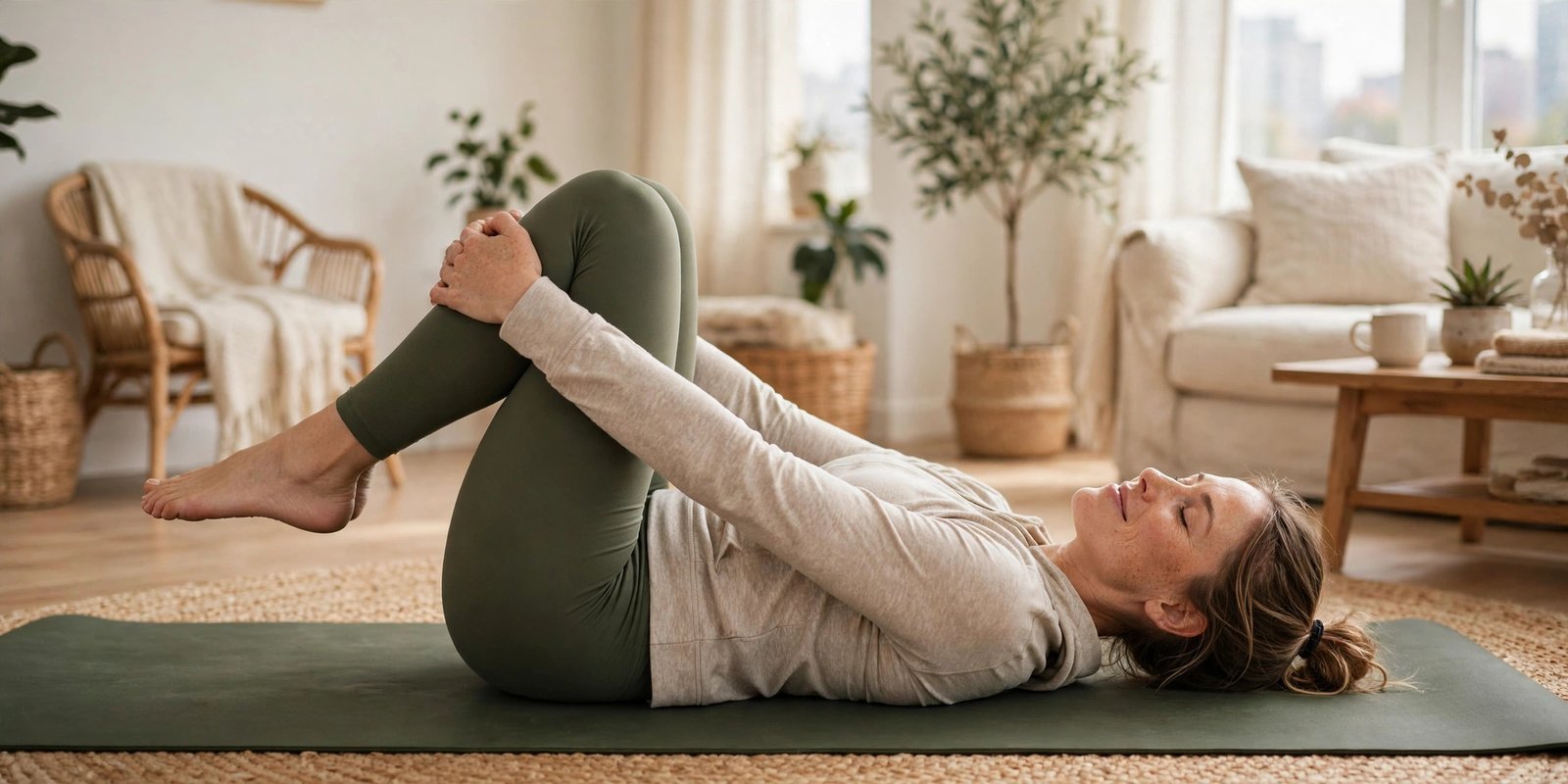
The knee-to-chest stretch is the easiest place to start. Lie on your back on a firm surface, bend your knees, and gently pull one knee toward your chest, holding it for 20 to 30 seconds before switching legs. The cat-cow stretch comes next: on hands and knees, arch your back slowly upward as you breathe out, then let it sag gently downward as you breathe in, repeating eight to ten times. The child’s pose — kneeling, sitting back on your heels, and reaching your arms forward along the floor — lengthens the muscles along the spine and is one of the most comfortable positions for an aching back.
The pelvic tilt is the quiet workhorse of back rehabilitation. Lie on your back with knees bent and feet flat, tighten your stomach muscles as if you were bracing for a gentle poke, and press the small of your back into the floor. Hold for five seconds, release, and repeat ten times. It looks like nothing is happening, but it wakes up the deep core muscles that support the spine — the same muscles a physiotherapist targets in the first session. The bridge is the next step up: from the same lying position, lift your hips a few inches off the floor, squeeze your glutes, hold for five seconds, and lower slowly. Ten repetitions, once a day, is plenty to start.
Over-the-Counter Pain Relief: What Works and What to Watch
When you are learning how to relieve lower back pain at home, a short course of over-the-counter medicine can be the difference between a miserable week and a manageable one. The two main options are non-steroidal anti-inflammatory drugs, or NSAIDs — ibuprofen and naproxen — and acetaminophen. NSAIDs reduce inflammation as well as pain, which makes them the usual first choice for a muscle strain, while acetaminophen dulls the pain without tackling inflammation. Both work best when taken exactly as directed on the label, at the lowest dose that helps, for the shortest time needed.
There are real limits to respect. NSAIDs can irritate the stomach and are not suitable for everyone — people with stomach ulcers, kidney problems, or certain heart conditions, and anyone taking blood thinners, should check with a pharmacist or doctor first. Acetaminophen is gentler on the stomach but can damage the liver in high doses, and it hides in many cold and flu remedies, so it is easy to take more than intended by accident. Never combine two products that contain the same active ingredient, and never exceed the maximum daily dose on the label. If you need painkillers every day for more than a week or two, get the back properly assessed rather than keep masking it.
Sleeping With Lower Back Pain
Back pain and bad sleep feed each other. Pain makes it hard to fall asleep, poor sleep lowers your pain threshold, and the next day hurts more. Breaking the cycle starts with position. If you sleep on your side, lie in a loose fetal position with a pillow between your knees — this keeps your hips aligned and takes the twist out of your lower spine. If you sleep on your back, place a pillow or rolled towel under your knees, which flattens the curve of the lower back against the mattress and relieves pressure. Stomach sleeping is the hardest position for a sore back, because it forces the neck to twist and the lower back to arch; if that is your habit, try a thin pillow under your hips or work toward side sleeping for a few nights.

Fixing the Everyday Habits That Keep Hurting Your Back
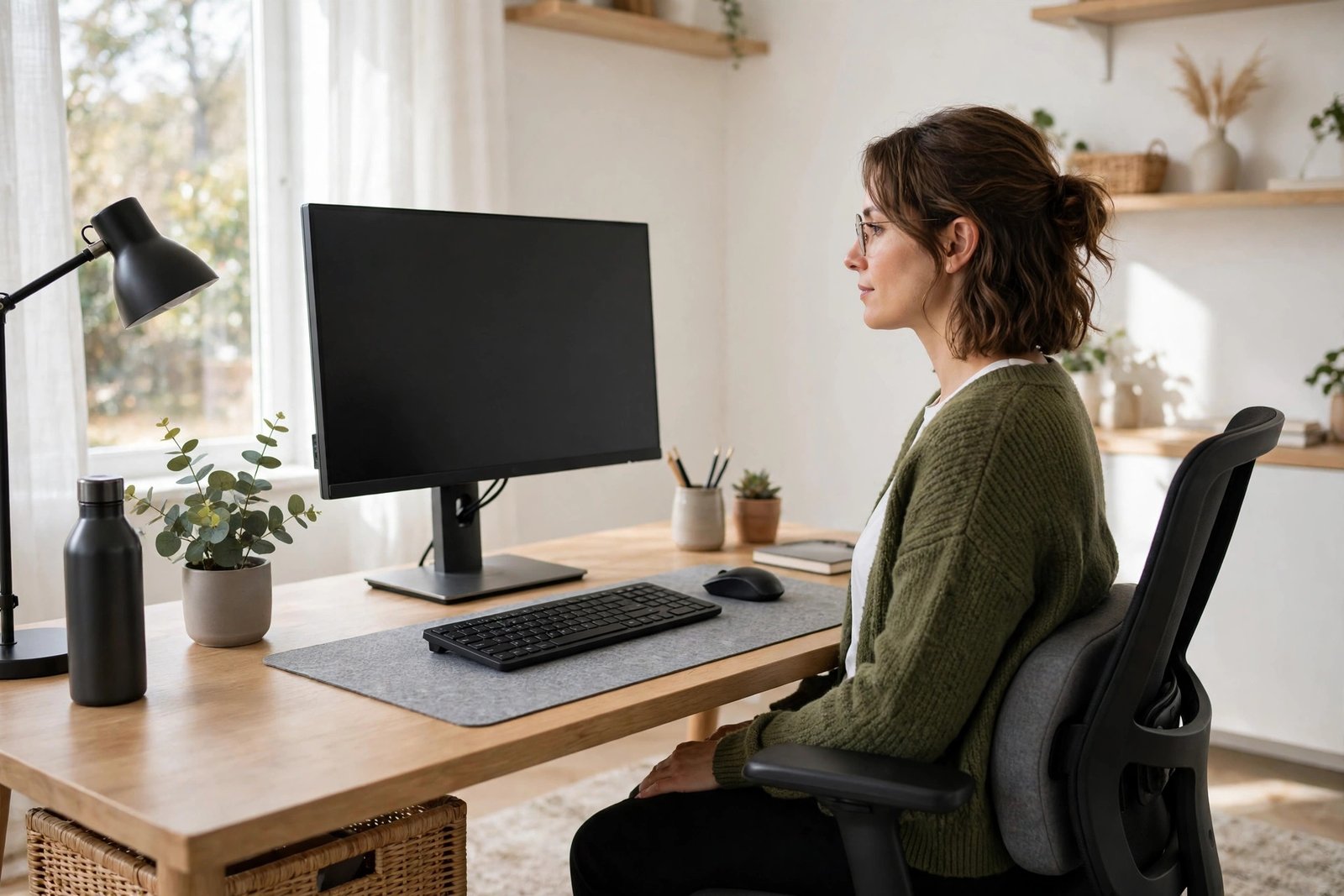
Relief is only half the job. The other half is stopping the same pain from coming back next month, and that means looking at the habits that load your lower back every day. Sitting is the biggest one. Most of us sit for far longer than our spines were designed for, and we do it badly: perched on the edge of a chair, leaning toward a screen, feet dangling or tucked under us. The fix is unglamorous but effective. Sit with your feet flat on the floor, knees at roughly a right angle, and your lower back supported by the chair or a small cushion. Your screen should be at eye level so you are not looking down for eight hours. And the golden rule: never sit still for more than 30 to 45 minutes without standing up, walking to get water, or doing a single stretch.
Lifting technique is the second habit worth fixing, because most back strains happen during ordinary lifting — a suitcase, a toddler, a bag of groceries — rather than in the gym. The rule is simple: bend your knees, not your back. Squat down, keep the object close to your body, tighten your stomach, and let your legs do the work. Never twist while holding a load; turn your feet instead. If something is too heavy to lift comfortably, it is too heavy — get help or make two trips. The same principle applies to the car: when you take a bag out of the boot or a child out of a car seat, face the load squarely and avoid the reach-and-twist that strains the lower back.
See a Doctor If: Red-Flag Symptoms You Must Not Ignore
Knowing how to relieve lower back pain at home also means knowing when home care is not enough. Most lower back pain is not dangerous, but a small number of cases are, and knowing the warning signs is the most important part of any home-treatment guide. This article is general information, not a diagnosis, and nothing here replaces a clinician’s assessment. Seek medical care promptly — the same day, or urgently if the symptom is severe — if you notice any of the following.
Call your doctor or an urgent care service if you have numbness or weakness in one or both legs, pain that shoots down the leg below the knee, or foot drop, where you cannot lift the front of your foot properly. These can signal nerve compression. Seek urgent care if you develop new problems with bladder or bowel control, numbness in the saddle area between the legs, or rapidly worsening weakness — these are rare but serious and need emergency assessment. Other red flags include back pain after a significant fall or accident, pain that is constant and severe at night, unexplained weight loss alongside back pain, fever with back pain, a history of cancer, long-term steroid use, or pain that does not improve at all after two weeks of sensible home care.
Preventing the Next Flare-Up
Once the pain has settled, the best investment you can make is a small daily routine that keeps your back strong and mobile. It does not need to be long. Five minutes of stretching in the morning, a short walk at lunchtime, and the core exercises from this guide two or three times a week will do more for your back than any gadget or supplement. Pay attention to the early warnings, too. Most flare-ups announce themselves — a morning stiffness that takes longer than usual to ease, a twinge when you bend to pick something up, an ache after a long drive. When you notice one, treat it as a signal, not a sentence: do the stretches, use heat, take a walk, and ease off the heavy lifting for a day. The people who live well with a sensitive back are not the ones who never get pain; they are the ones who respond to the first twinge instead of waiting for the full spasm.
Frequently Asked Questions
How long does lower back pain usually last?
Most episodes of lower back pain improve substantially within a few days to two weeks with the simple measures in this article. Pain that is unchanged after two weeks, or that keeps returning, is worth getting assessed properly.
Is it better to use heat or ice for lower back pain?
Ice is usually better for the first 48 to 72 hours, when inflammation is at its peak. Heat is better once the sharpest pain has passed and the muscles feel stiff rather than swollen. Try both, use each for about 20 minutes at a time, and keep whichever helps you more.
Should I exercise with lower back pain?
Gentle movement and walking are helpful and recommended once the worst pain has eased, usually after the first day or two. Avoid heavy lifting, sit-ups, and toe touches during a flare. If movement makes the pain sharply worse or sends pain down your leg, stop and seek advice.
What is the best sleeping position for lower back pain?
On your side in a loose fetal position with a pillow between your knees, or on your back with a pillow under your knees. Both positions reduce pressure on the lower spine. Stomach sleeping tends to make back pain worse.
When should I see a doctor for lower back pain?
See a doctor promptly if you have numbness or weakness in your legs, pain shooting below the knee, new bladder or bowel problems, pain after a fall, fever with back pain, or pain that does not improve at all after two weeks.
Conclusion
Knowing how to relieve lower back pain at home comes down to a handful of things done consistently: move gently instead of lying still, use ice first and heat later, stretch the muscles that guard the spine, sleep in a position that lets your back rest, and fix the daily habits — sitting, lifting, and posture — that caused the problem in the first place. Most episodes settle within a few weeks with exactly this approach, and the routine you build now is what keeps the next one away.
Just remember the boundary: this guide covers ordinary, mechanical back pain. If any red-flag symptom appears — leg weakness, numbness, bladder or bowel changes, fever, or pain that simply will not improve — get medical help.



