
How to Treat Dry Skin in Winter: The Dermatologist-Backed Routine That Actually Works
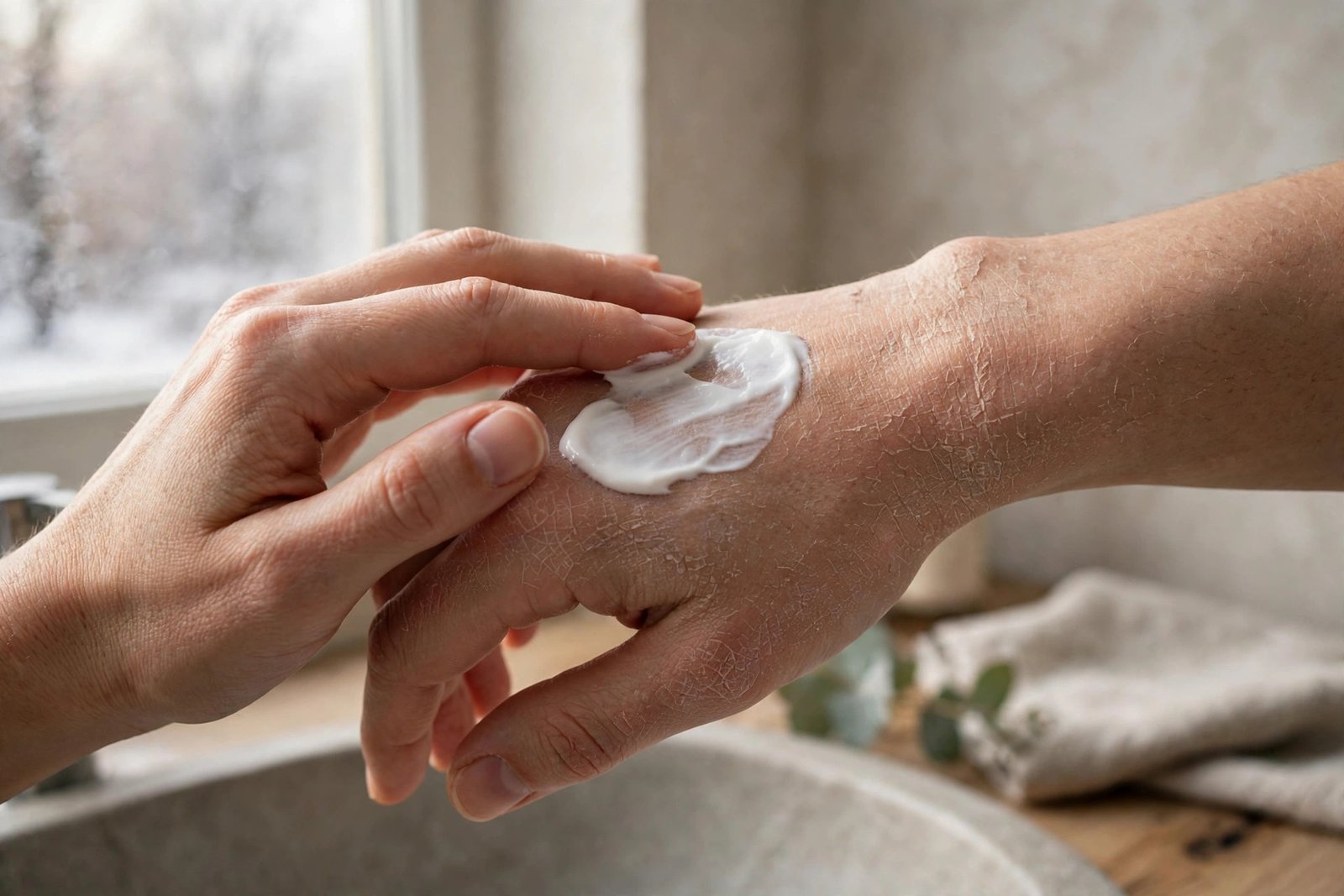
By February, winter skin has a familiar feel: tight after a shower, flaky on the shins, itchy under sweaters, and rough no matter how much lotion you smooth on. Cold air outside and heated air inside both pull water out of the skin, and the barrier that normally holds moisture in starts to struggle. The result is not just uncomfortable — it is visible, and it makes everything else you put on your skin work harder.
The good news is that learning how to treat dry skin in winter does not mean buying a shelf full of expensive products. It means changing a few daily habits, choosing the right kind of moisturiser, and giving the air in your home a little help. This guide explains the routine that dermatologists recommend, step by step, and the mistakes that undo it.
How to Treat Dry Skin in Winter: Start With the Barrier
Your skin has a built-in barrier — a thin layer of cells and natural oils called the stratum corneum — that keeps water in and irritants out. Think of it as a brick wall, with skin cells as the bricks and lipids as the mortar. When the mortar is intact, water stays where it belongs and the skin looks smooth and calm.
Winter attacks that barrier from both sides. Outside, cold air holds very little moisture, so it pulls water from any skin it touches. Inside, central heating warms that same dry air, and the relative humidity in a heated home can fall below 30 percent — drier than many deserts. Add long hot showers, harsh soaps, and the habit of scratching at itchy patches, and the barrier breaks down faster than it can repair itself. That is why winter dryness is not a cosmetic problem: it is a barrier problem, and the routine below is designed to rebuild the barrier rather than just cover up the symptoms.
Step 1: Shorten Your Showers and Cool the Water
Long hot showers feel wonderful in winter, and they are the single fastest way to dry out your skin. Hot water strips the natural oils from the surface, and the longer you stand under it, the more moisture you lose. Dermatologists recommend keeping showers short — five to ten minutes — and lukewarm rather than hot. It is a small change, and it makes a bigger difference than any cream you buy afterwards.
It also helps to change when you shower. A short evening shower, followed by moisturiser, gives the cream all night to work while you sleep. Our guide on how to sleep better naturally has ideas that pair well with a short evening shower — a cool, dark bedroom and a regular bedtime help your skin recover overnight, and the moisturiser you apply after the shower stays on longer while you are not moving around. Think of your skin as a wall that needs its mortar, and think of a short cool shower as the way to keep that mortar in place.
Step 2: Pick a Cream or Ointment, Not a Lotion
Not all moisturisers are equal, and the label matters more than the price. Lotions are mostly water, and they evaporate quickly. Creams are thicker, with more oil, and they stay on the skin longer. Ointments are the thickest of all, and they seal moisture in best — but they can feel greasy, so many people save them for hands, feet, and the worst patches.

When you read the label, look for ingredients that rebuild the barrier: ceramides, which replace the skin’s own lipids; hyaluronic acid, which draws water into the skin; glycerin, which holds it there; and petrolatum, which seals it in. Avoid products with heavy fragrance or alcohol, which can irritate dry skin further. This Everyday Guide winter dry skin routine and the WebMD guide to soothing winter dry skin both list similar ingredients, and they are a good place to start if you want more detail on what to look for.
A cream or ointment that feels rich and slightly heavy when you apply it is usually the right one. If it disappears in seconds and your skin feels tight again within the hour, it is too light for winter. Apply it within a few minutes of washing or showering, while the skin is still slightly damp, so it can lock in the water that is already there.
Step 3: Fix the Humidity in Your Bedroom
Cold air holds very little moisture, and heating it makes the problem worse. A room heated to 21°C can have a relative humidity below 30 percent, which is drier than the Sahara on a good day. Your skin loses water to that air all day and all night, which is why you wake up with a tight face and dry hands.
The fix is a humidifier. The best setup is a small humidifier in the bedroom, set to keep the room at 40 to 60 percent relative humidity. That range is comfortable for your skin, your nose, and your sleep, and it is low enough to avoid condensation on windows and mould in corners. Clean the humidifier regularly, following the manufacturer’s instructions, and use distilled water if your tap water is hard. Our guide on how to fall asleep fast has tips on making the bedroom comfortable for sleep, which also helps your skin recover overnight — a cool, humid room is good for both.
Step 4: Cleanse Gently and Exfoliate Only If Your Skin Tolerates It
A gentle cleanser keeps the barrier intact. Look for a soap-free or fragrance-free cleanser, and use lukewarm water rather than hot. Pat the skin dry with a towel instead of rubbing it, and moisturise within a few minutes while the skin is still slightly damp. Avoid foaming cleansers that strip the skin, and avoid scrubs and strong acids in the depths of winter — they remove the very layer you are trying to rebuild.
As for exfoliation, skip it if your skin is already irritated or cracked. If your skin is calm, a gentle exfoliant once a week can help remove flaky patches and let moisturiser absorb better, but stop immediately if it stings or makes the skin red. In winter, less is more: a gentle cleanser, a rich cream, and patience will do more than a shelf full of active ingredients.
Step 5: Keep Using Sunscreen, Eat for Your Barrier, and Dress Kindly
It is easy to forget sunscreen in winter, but UV still reaches your skin on cold, clear days, and snow reflects it back up. Use a broad-spectrum SPF 30 or higher on your face and any other exposed skin, even on cloudy days. Choose a moisturising sunscreen rather than a drying one, and reapply if you are out for a long time. A sunscreen that doubles as a moisturiser is the easiest way to make this habit stick.
Food and clothing matter too. Omega-3 fats from oily fish, nuts, and seeds support the skin barrier from the inside, and drinking enough water keeps the body hydrated, even if it will not fix dry skin on its own. Dress in soft, breathable layers rather than rough wool against bare skin, and wear gloves outdoors to protect your hands. If your back or shoulders ache from hunching against the cold, our guide on how to relieve lower back pain at home has simple stretches that help. The Cape Cod Health winter skin remedies also include simple food and clothing tips, and they are a useful reminder that winter skin care is about the whole routine, not just one product.

Lotion vs Cream vs Ointment: What Is the Difference?
Most people use the word lotion for any moisturiser, but the texture tells you how much sealing power it has. Lotions are light and mostly water, creams are richer and contain more oil, and ointments are the thickest, with the most sealing power. In winter, that difference matters more than the brand name or the price — and it is why dermatologists keep recommending creams and ointments over lotions for dry skin.
| Product | Texture | Sealing power | Best for |
|---|---|---|---|
| Lotion | Thin and watery | Light | Normal skin in summer |
| Cream | Rich and spreadable | Medium | Dry skin in winter |
| Ointment | Thick and greasy | Strong | Very dry or cracked skin |
If you remember one line, remember this: in winter, use a cream or an ointment, not a lotion. A lotion is better than nothing, and it is fine for normal skin in summer, but it will not seal in enough moisture when the air is cold and dry.
Your Morning and Evening Routine
You do not need a ten-step routine to fix winter skin. Two minutes in the morning and two minutes at night is enough, as long as you do it every day. The table below is the whole routine in one place, and the Pharmica guide to preparing skin for winter suggests the same simple structure — a short cleanse, a rich cream, and sunscreen in the morning, and a warm shower and a thick cream at night.
| When | What to do |
|---|---|
| Morning | Wash with lukewarm water, pat dry, apply a cream moisturiser, and finish with sunscreen if you are going outside. |
| Evening | Take a short lukewarm shower, pat dry, apply a cream or ointment, and put on lip balm before bed. |

When to See a Dermatologist
Most winter dryness is a do-it-yourself fix, and the routine above will sort it out within a few weeks. But there are times when it is worth seeing a dermatologist. If the dryness does not improve after three or four weeks of proper care, or if it is getting worse rather than better, a professional can check whether something else is going on — eczema, psoriasis, or a contact allergy are all common in winter, and they need different treatment.
You should also get checked if your skin is cracked and bleeding, if it is blistered or infected, or if the itching is keeping you awake at night. A dermatologist can prescribe a stronger cream, check for infection, and rule out the conditions that a home routine cannot fix. Do not wait if the skin is broken — open cracks are a route for infection, and they heal faster with proper care.
Frequently Asked Questions
Can I use a lotion if I have dry skin in winter?
A lotion is better than nothing, but it will not seal in moisture the way a cream or ointment does. In winter, switch to a cream or ointment, and save the lotion for summer.
Should I moisturise on damp skin?
Yes. Apply moisturiser within a few minutes of washing or showering, while your skin is still slightly damp. That locks in the water that is already on the skin, and it works far better than applying cream to dry skin.
Is it safe to use a humidifier in the bedroom?
Yes, if you keep it clean. A cool-mist humidifier set to 40 to 60 percent relative humidity is safe and effective. Clean it regularly, and use distilled water if your tap water is hard.
How often should I exfoliate in winter?
Most people should skip exfoliation in the depths of winter. If your skin is calm, a gentle exfoliant once a week is enough. Stop immediately if it stings or makes the skin red.
Does drinking more water help dry skin?
Drinking water helps your overall health, but it will not fix dry skin on its own. Moisturiser, shorter showers, and humidity are what make the difference.
Can I still use sunscreen in winter?
Yes. Use a broad-spectrum SPF 30 or higher on exposed skin, even on cloudy days. Snow reflects UV, so winter sun can burn just as surely as summer sun.
Conclusion
Winter skin does not need a complicated routine. It needs a few small changes, made every day: shorter, cooler showers; a rich cream applied to damp skin; a humidifier in the bedroom; and sunscreen on any skin the sun can reach. Those four habits, done consistently, will rebuild the barrier and keep it intact until spring.
You do not need a shelf full of products to get through winter. Pick one good moisturiser, use it every day, and give the routine a few weeks to work. Your skin will tell you when it is working — it will feel softer, look calmer, and stop itching. And when spring comes, you will have a routine worth keeping all year.



