

You know the drill: you crawl into bed exhausted, stare at the ceiling for an hour, then wake up at 3 a.m. with your mind racing through tomorrow’s to-do list. If you want to learn how to sleep better naturally — without reaching for pills or expensive gadgets — the good news is that the most powerful sleep improvements are also the simplest. Small, consistent changes to your light exposure, daily rhythm, and evening habits can transform the way you fall asleep and how deeply you rest.
Sleep isn’t just “rest.” While you sleep, your brain consolidates memories, your body repairs tissue, and your immune system does some of its most important work. Shortchanging it night after night affects everything from your mood and focus to your long-term health. The strategies below are drawn from mainstream sleep science and public-health guidance — no miracle cures, just habits that genuinely work when you stick with them.
How Much Sleep Do You Actually Need?
Before changing anything, it helps to know your target. The National Sleep Foundation publishes age-specific sleep duration guidelines based on a systematic review of the scientific literature:
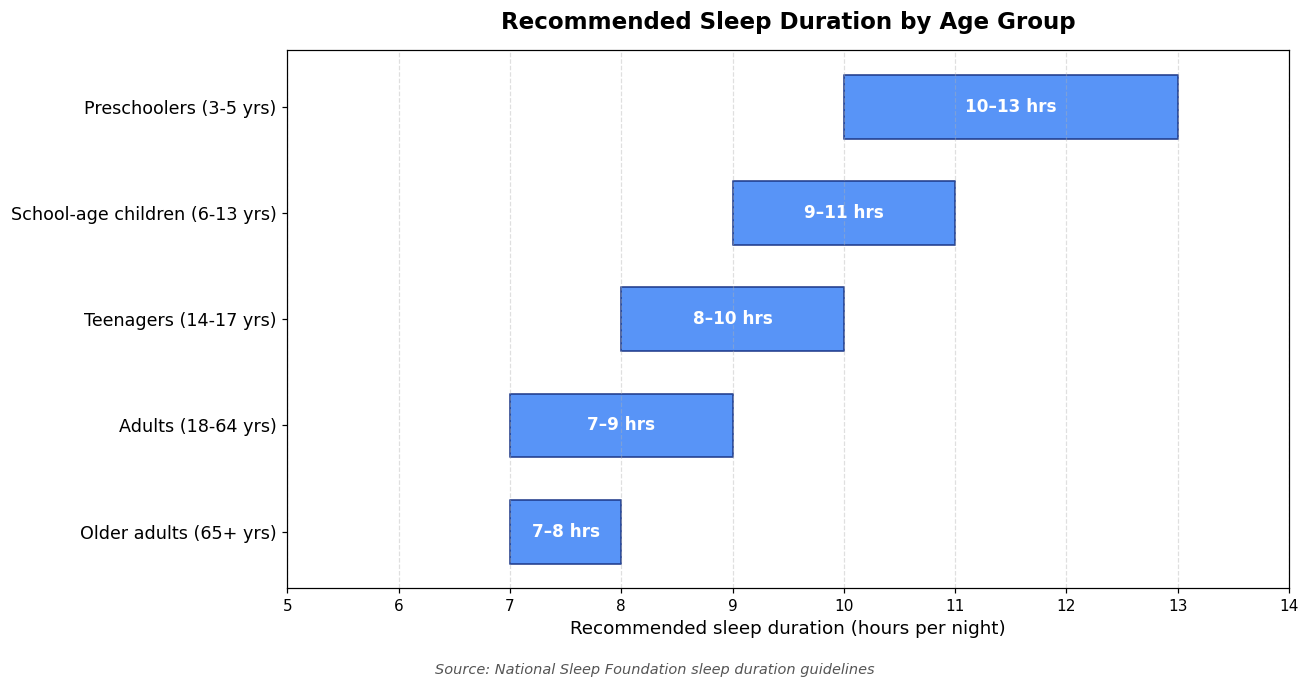
Most adults need 7 to 9 hours per night, teenagers need 8 to 10, and school-age children need 9 to 11. Notice these are ranges, not exact prescriptions — individual needs vary, and the right amount for you is the amount that leaves you alert and functional during the day without an alarm clock dragging you out of deep sleep.
If you’re consistently getting less than your range and feeling it, the twelve habits below are where to start.
How to Sleep Better Naturally: 12 Habits That Actually Work
1. Get bright light early in the day
Your body clock — the circadian rhythm — takes its cues from light. Bright light in the morning, ideally within an hour of waking, tells your brain “it’s daytime” and starts the countdown to melatonin release about 14 to 16 hours later. Step outside for 10 to 20 minutes, have coffee near a sunny window, or take a short morning walk. On dark winter mornings, a bright indoor light helps, though nothing beats actual daylight.
Just as important is the flip side: dim the lights in the evening. Bright overhead lighting after sunset confuses the same system. Switch to lamps, candles, or low warm lighting in the last couple of hours before bed.
2. Keep a consistent sleep schedule
Going to bed and waking up at roughly the same time every day — weekends included — is the single most recommended habit in sleep medicine. A regular schedule trains your circadian rhythm so sleepiness arrives predictably at night and alertness returns in the morning. Sleeping in for two hours on Saturday feels restorative, but it shifts your clock later and makes Sunday night miserable — researchers call this “social jet lag.”
If you work night shifts or rotating schedules, consistency matters even more: anchor your sleep window as firmly as your job allows, and use blackout curtains and morning light strategically to protect it.
3. Set a caffeine curfew
Caffeine has a half-life of roughly five to six hours, which means the coffee you drink at 4 p.m. is still half-active in your system at 10 p.m. Worse, caffeine doesn’t just delay sleepiness — it can make the sleep you do get lighter and more fragmented, even when you fall asleep easily. The Sleep Foundation’s guide to caffeine and sleep notes that sensitivity varies, but most people sleep better with a clear cutoff.
A practical rule: no coffee, energy drinks, or strong tea within eight hours of bedtime. If you usually sleep at 11 p.m., your last caffeinated drink should be around 3 p.m. Watch out for hidden sources too — chocolate, some pain relievers, and pre-workout supplements all contain caffeine.
4. Go easy on alcohol in the evening
Alcohol feels like a sedative, and it does help some people fall asleep faster — but the sleep it produces is not the sleep you want. As your body metabolizes alcohol during the night, it fragments sleep, suppresses REM sleep, and often causes wake-ups in the second half of the night. A nightcap is one of the most common self-sabotaging sleep habits there is.
You don’t have to give up an evening drink entirely. Just keep it moderate, finish it at least three hours before bed, and pay attention to how your sleep quality changes on nights you skip it. Many people are surprised by the difference.
5. Build a 30-minute wind-down routine
You can’t sprint all evening and then expect your nervous system to slam on the brakes at 11 p.m. A wind-down routine is a set of calming activities you repeat nightly, signaling to your brain that sleep is coming. Keep it simple and screen-free: a warm shower, light stretching, reading a physical book, or listening to calm music all work.

The key is consistency and timing — start about 30 to 60 minutes before bed, and do roughly the same things in the same order. Over a week or two, your brain starts associating the routine with sleepiness, the same way a bedtime story works for a child. A cup of caffeine-free herbal tea can be a pleasant anchor for the ritual, though the routine itself is what matters.
6. Make your bedroom dark, cool, and quiet
Your bedroom should be a cave: dark, cool, and quiet. Light — even small amounts from LEDs, streetlamps, or a glowing charger — can suppress melatonin and lighten sleep. Blackout curtains or a comfortable sleep mask solve most light problems cheaply. For noise, earplugs or a white-noise machine mask the sudden sounds (traffic, neighbors, plumbing) that fragment sleep more than steady background hum.
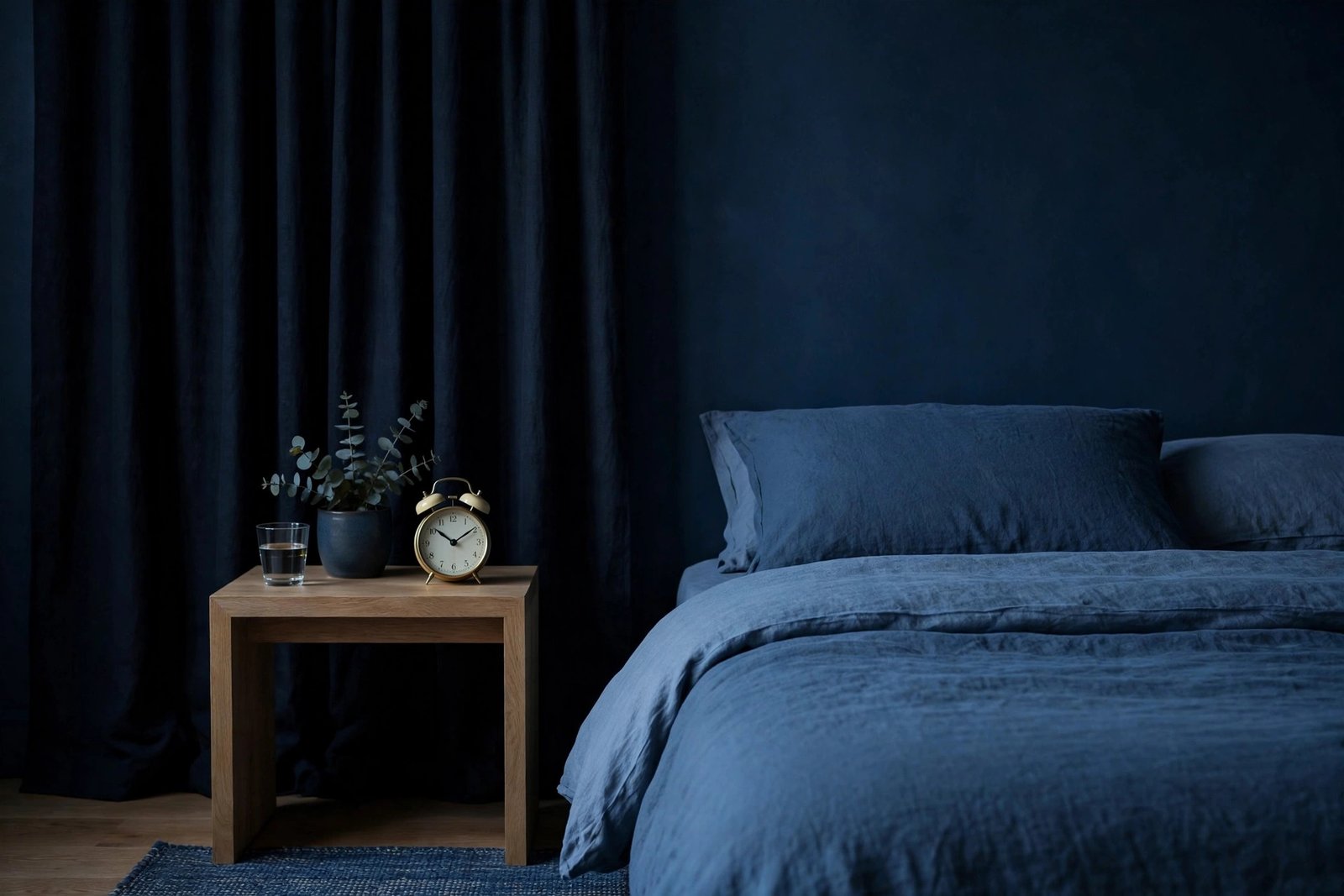
Temperature matters more than most people realize. Your core body temperature needs to drop slightly for sleep onset, and a cool room — generally around 65°F (18°C), though personal comfort varies — makes that easier. If you sleep hot, breathable cotton bedding and a cooler room beat piling on blankets. And reserve your bed for sleep: working, scrolling, or watching TV in bed teaches your brain to associate it with wakefulness.
7. Put your screens to bed before you do
The light from phones, tablets, and laptops can suppress melatonin, and Harvard Health’s overview of blue light and sleep explains why evening screen exposure pushes your body clock later. But the content matters as much as the light — doomscrolling news, work email, and heated group chats keep your mind alert and emotionally activated.
Set a “digital sunset” 30 to 60 minutes before bed. Charge your phone outside the bedroom (an old-fashioned alarm clock costs very little), and if you must use a device, switch on night mode and keep the content boring. E-readers without backlights are a fine bedtime companion; social media is not.
8. Exercise regularly — but mind the timing
Regular physical activity is one of the most reliable ways to deepen sleep and shorten the time it takes to fall asleep. Both moderate aerobic exercise and strength training help. The old advice to “never exercise in the evening” has softened — research suggests most people sleep fine after evening workouts as long as they finish at least an hour or two before bed and the session isn’t extremely intense.
The exception: vigorous late-night exercise that leaves you wired, sweaty, and alert at midnight is counterproductive. If evening is your only workout window, favor moderate sessions and give yourself a proper cool-down. Morning or afternoon exercise remains the safest bet for sleep.
9. Nap strategically, not desperately
Naps aren’t the enemy — badly timed naps are. A short nap of 10 to 20 minutes in the early afternoon can boost alertness without stealing nighttime sleepiness. The danger zone is napping longer than 30 minutes or napping after about 3 p.m., which eats into the sleep pressure your body needs to feel tired at bedtime.
If you’re napping daily because nights are wrecked, treat the nap as a symptom, not a solution, and focus on the nighttime habits in this list. And if you do nap, set an alarm — a “quick rest” that turns into 90 minutes is a classic way to ruin the coming night.
10. Watch what (and when) you eat at night
A heavy, spicy, or very fatty meal close to bedtime can cause reflux and discomfort that fragment sleep. On the other hand, going to bed genuinely hungry isn’t great either — hunger is alerting. Aim to finish substantial meals two to three hours before bed. If you need a late snack, keep it small and simple: a banana, a small bowl of oatmeal, or yogurt are all reasonable choices.
Large volumes of liquid late in the evening are worth moderating too — not because hydration is bad, but because multiple bathroom trips break up your sleep cycles. Front-load your water intake earlier in the day.
11. Get worries out of your head and onto paper
Racing thoughts are the number-one complaint of people who “can’t turn their brain off.” The fix is counterintuitive: instead of trying to force your mind blank, give the worries somewhere to go. Spend five minutes before your wind-down routine writing tomorrow’s to-do list and jotting down anything on your mind. Research on expressive writing suggests that offloading concerns this way reduces pre-sleep mental chatter.
Making journaling before bed a habit gives looping thoughts a landing pad. Keep a notepad by the bed too — if a worry pops up at 2 a.m., scribble it down and deal with it in the morning instead of rehearsing it in the dark.
12. If you can’t sleep, get up
Lying awake frustrated teaches your brain that bed equals stress — the exact opposite of what you want. Sleep specialists recommend a simple rule: if you’ve been awake for about 20 minutes (don’t watch the clock obsessively; estimate), get up, go to another dimly lit room, and do something calm and boring until you feel sleepy. Then return to bed.

This technique, called stimulus control, rebuilds the bed-sleep connection surprisingly fast. It feels wrong the first few nights — getting up when you’re desperate to sleep — but it breaks the tossing-and-turning cycle far better than lying there getting angry at 3 a.m.
What About Natural Sleep Aids?
You’ll see plenty of “natural” sleep products marketed as drug-free solutions: melatonin, valerian, magnesium, chamomile, tart cherry juice. The honest picture: melatonin can help with timing issues like jet lag, but evidence for most herbal remedies is thin or mixed, and supplements aren’t regulated the way medicines are — doses on the label don’t always match what’s in the bottle.
The habits above outperform any supplement for chronic sleep trouble because they fix the underlying behaviors. If you do try melatonin, keep the dose low, use it short-term, and talk to your doctor first — especially if you take other medications or have a health condition.
When to Talk to a Doctor
Natural habits solve most occasional sleep trouble, but some problems need professional help. See your doctor if you snore loudly or gasp during sleep (possible sleep apnea), experience persistent insomnia lasting more than a few weeks despite good habits, feel excessively sleepy during the day, or have restless legs or unusual nighttime behaviors. The CDC’s sleep resources emphasize that chronic sleep problems are medical issues worth raising, not something to just push through.
Sleep apnea in particular is common and seriously underdiagnosed — effective treatments exist, and no amount of sleep hygiene fixes an airway that keeps closing.
Frequently Asked Questions
How long does it take for natural sleep habits to work?
Most people notice some improvement within a few days of fixing obvious disruptors like late caffeine or screens in bed. Full circadian retraining — shifting your body clock with consistent timing and light exposure — typically takes one to two weeks. Give any new routine at least two consistent weeks before judging it.
Is it better to sleep in a cold or warm room?
Cool is better for most people. Your core temperature needs to drop to initiate sleep, and a room around 65°F (18°C) supports that — though the exact ideal varies by person and bedding. If you wake up sweating or with cold feet, adjust accordingly; comfort still wins over any specific number.
Can you catch up on sleep on weekends?
Partially, but it’s a poor strategy. Weekend catch-up sleep doesn’t fully reverse the cognitive and metabolic effects of weekday sleep debt, and shifting your schedule later on weekends creates “social jet lag” that makes Monday worse. A consistent schedule beats a binge-sleep weekend every time.
Does reading before bed actually help you sleep?
Yes, with one condition: read a physical book or a non-backlit e-reader, not a phone. Reading is relaxing and screen-free, which is the whole point. Avoid thrillers or work documents that wind you up — the goal is to bore yourself gently toward sleep.
Why do I wake up at 3 a.m. every night?
Consistent early-morning waking often traces back to alcohol (it fragments the second half of sleep), stress and cortisol rhythms, or an inconsistent schedule. Try cutting evening alcohol, keeping wake times fixed, and using the “get up after 20 minutes” rule instead of lying there frustrated. If it persists for weeks, talk to your doctor.
The Bottom Line
Learning how to sleep better naturally isn’t about finding one magic trick — it’s about stacking small advantages. Morning light anchors your clock. A consistent schedule trains it. A caffeine curfew, a dark cool bedroom, and a real wind-down routine remove the obstacles. None of these costs money, none requires a prescription, and together they’re more powerful than any supplement on the shelf.
Start with the two or three habits that address your biggest disruptors — for most people, that’s light, timing, and caffeine — and layer in the rest over a few weeks. Your future well-rested self will thank you every single morning.