
Italy Fines Meta €805 Million Over Facebook Photo Access
On Saturday, November 14, 2026, Italy’s data protection authority handed Meta the largest fine it has ever imposed. The story behind the italy fines meta november 2026 headlines is not about a data breach or a hack. It is about a feature most Android users never noticed: when you browsed Facebook, the app was reading photos, videos, and metadata from your phone’s gallery — and, according to the regulator, it was doing so without your specific consent and without telling you properly.
The fine is €805 million, roughly $887 million, imposed on Meta Platforms Ireland Limited. It amounts to about 0.47 percent of Meta’s global turnover. Around 20 million Android users in Italy were affected. This article explains what the Garante found, what Meta has been ordered to do, what it means for users outside Italy, and how to check the setting on your own phone.
Italy Fines Meta November 2026: What Happened
Italy’s data protection authority, the Garante per la protezione dei dati personali, announced the fine on November 14, 2026. The decision was reported the same day by Reuters, the BBC, and Al Jazeera, and the Garante published its own press release, document number Doc-Web 10321080, on November 14, 2026.
The finding is narrow and specific. The Facebook app for Android included a feature called “Get suggestions from your gallery when you browse Facebook,” which was switched on by default from 2023. With that feature active, the app read users’ photos, videos, and metadata stored on their phones. The Garante found that Meta did this without obtaining the users’ specific consent and without informing them properly about what was happening.
The legal basis is Article 122 of the Italian Privacy Code, which transposes the EU ePrivacy Directive into Italian law. That article governs access to information stored on a user’s device, and it requires consent. The Garante’s position is that a default-on feature, without a clear explanation and a separate consent, does not meet that standard.
How the Investigation Started
The investigation began in July 2025, after a report from the Centro Tutela Consumatori Utenti di Bolzano, a consumer protection centre in northern Italy. The centre raised the issue with the regulator, and the Garante opened its inquiry into how the Facebook Android app handled gallery access.
That timeline matters, because it shows the case was not a snap reaction to a single complaint. The authority spent more than a year examining the feature before reaching its decision. The investigation focused on the access itself — the reading of photos, videos, and metadata from the device — and on whether users had consented and been properly informed.
One thing the investigation did not examine is worth stating plainly, because it has been a source of confusion in some coverage. The Garante did not assess whether the photos were used to train AI models. Meta denies that they were. The authority has reserved the right to assess separately a new 2026 feature that processes gallery content in the cloud — a different question, for a different day.
The Feature at the Centre of the Case
The italy fines meta november 2026 case turns on a single feature: “Get suggestions from your gallery when you browse Facebook.” When it was on, the Facebook app for Android read the photos, videos, and metadata stored on the phone — the images in the gallery, not just the ones a user chose to upload. The Garante found that Meta did this without obtaining users’ specific consent and without informing them properly about what was happening.
The feature had been switched on by default since 2023, which is the heart of the regulator’s objection. A default-on setting means the user never makes a choice at all: the access simply happens, in the background, from the day the app is installed or updated. Under Article 122 of the Italian Privacy Code, which transposes the EU ePrivacy Directive, access to information stored on a user’s device requires consent — and the Garante’s position is that a silent default does not count as consent.
That framing is what separates this case from an ordinary privacy complaint. It is not about a setting that was hard to find, or a notice that was worded badly, but about access that took place without the user being asked. The finding covers the access itself — the reading of the gallery — regardless of what Meta did with the photos afterwards.
What Meta Has Been Ordered to Do
The fine is only part of the decision. The Garante has also ordered Meta to switch the feature off by default within 60 days and to seek a separate consent from users before it can be switched on again. Meta must report back to the authority on its compliance.
The 60-day window means the change should be in place by mid-January 2027. The order applies to the feature as it operates in Italy, but the practical effect is likely to be wider: when a regulator of a major European market orders a default-off switch and a separate consent, companies usually change the product everywhere rather than maintaining two different versions. That is not guaranteed, and the order itself is an Italian one — but it is the pattern these cases tend to follow.
For users, the important point is that the feature should not be on by default. If you have the Facebook app on an Android phone, it is worth checking the setting yourself rather than waiting for the compliance deadline.
Timeline: From Default-On to €805 Million
| Date | What happened |
|---|---|
| 2023 | “Get suggestions from your gallery when you browse Facebook” switched on by default in the Facebook Android app |
| July 2025 | Garante opens investigation after a report from the Centro Tutela Consumatori Utenti di Bolzano |
| November 14, 2026 | Garante fines Meta Platforms Ireland Limited €805 million (~$887 million) — its largest fine ever |
| Within 60 days | Meta must switch the feature off by default, seek separate consent, and report back |
Why This Fine Is So Large
At €805 million, the italy fines meta november 2026 penalty is the largest fine the Garante has ever imposed. The size reflects the scale of the conduct: about 20 million Android users in Italy, a feature running by default since 2023, and access to one of the most personal stores of data a phone holds. A photo gallery is not a browsing history. It contains family photos, documents, screenshots, and images people never intended to share with anyone.
It also reflects the legal framing. The violation is not a paperwork failure or a late notification. It is access to information stored on a user’s device without the consent the law requires. Under the ePrivacy framework, that access is treated as an intrusion in itself, regardless of what the company did with the information afterwards.
The figure of about 0.47 percent of Meta’s global turnover shows the scale the regulator is working at: European privacy fines are designed to be large enough to change corporate behaviour, not just to punish a single incident. Whether this one does will be visible over the next 60 days.
What It Means for Users Outside Italy
The order is Italian, but the issue is not. The same Facebook app, with the same feature, runs on Android phones in every country. If you use Facebook on Android anywhere in the world, the feature may have been on by default on your phone too.
That does not mean your photos were misused, and it does not mean you should panic. It means you should check. The italy fines meta november 2026 order gives Meta 60 days to switch the feature off by default and ask for a separate consent, but there is no reason to wait for that deadline: the setting is on your phone now, and you can change it in under a minute. The same check is worth doing for any app that holds gallery permission, not just Facebook.
That does not mean your photos were misused, and it does not mean you should panic. It means you should check. The feature’s purpose, as Meta describes it, is to offer suggestions from your gallery while you browse Facebook — for example, prompting you to share a photo you recently took. Some people find that convenient. Others would never want an app reading their gallery unprompted. The regulator’s point is that the choice should be yours, made with clear information, not made for you by a default setting.
If you are outside Italy, your own regulator may or may not take up the issue. The Garante’s decision will be read closely by regulators across Europe. In the meantime, the practical step is the same everywhere: check the setting, decide for yourself, and switch it off if you do not want it.
How to Check the Setting on Your Phone
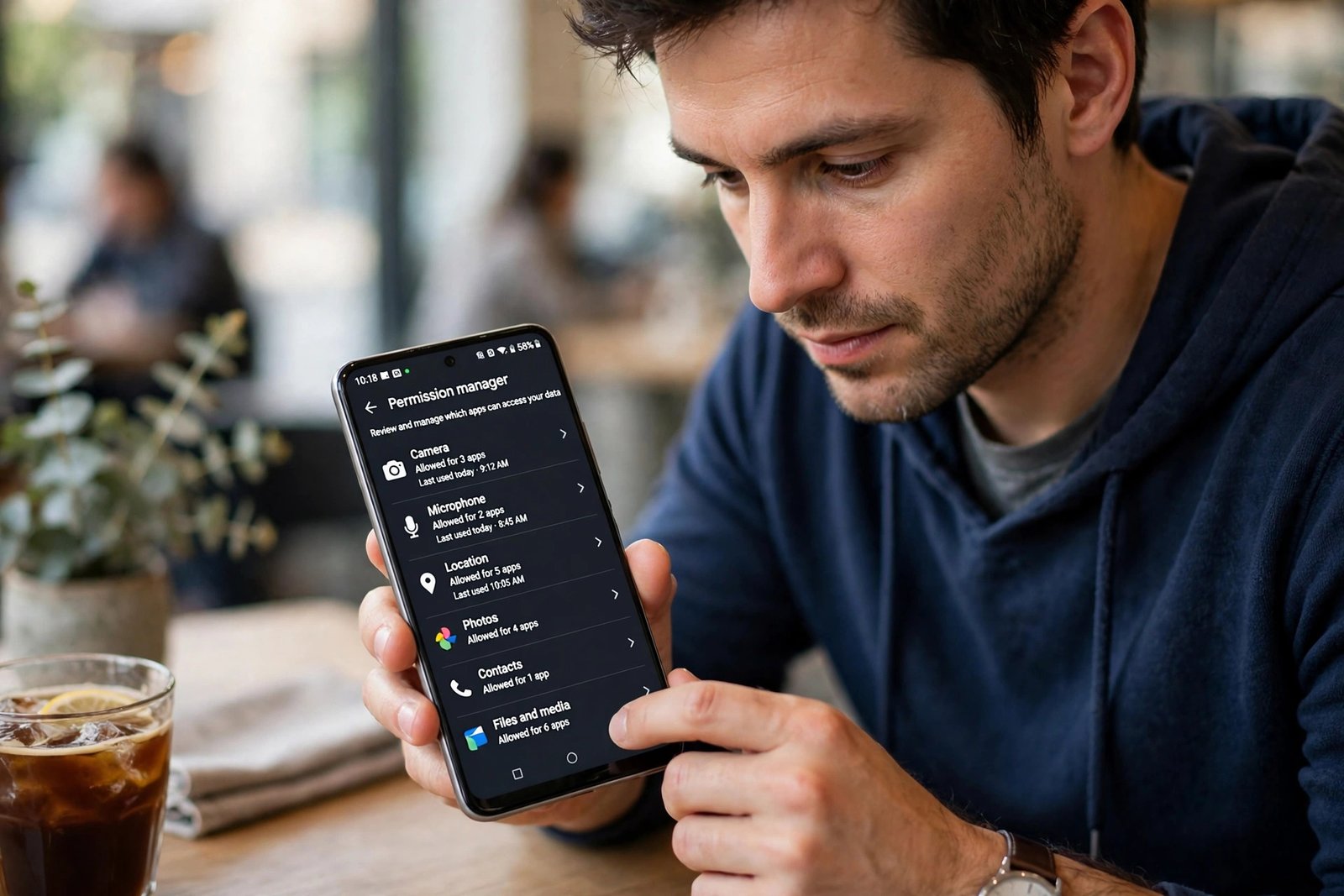
The exact menu names vary by phone model and app version, but the path is broadly the same on Android. Open the Facebook app, go to Settings, and look for the gallery or photo suggestions setting — the feature is called “Get suggestions from your gallery when you browse Facebook.” If it is on and you do not want it, switch it off.
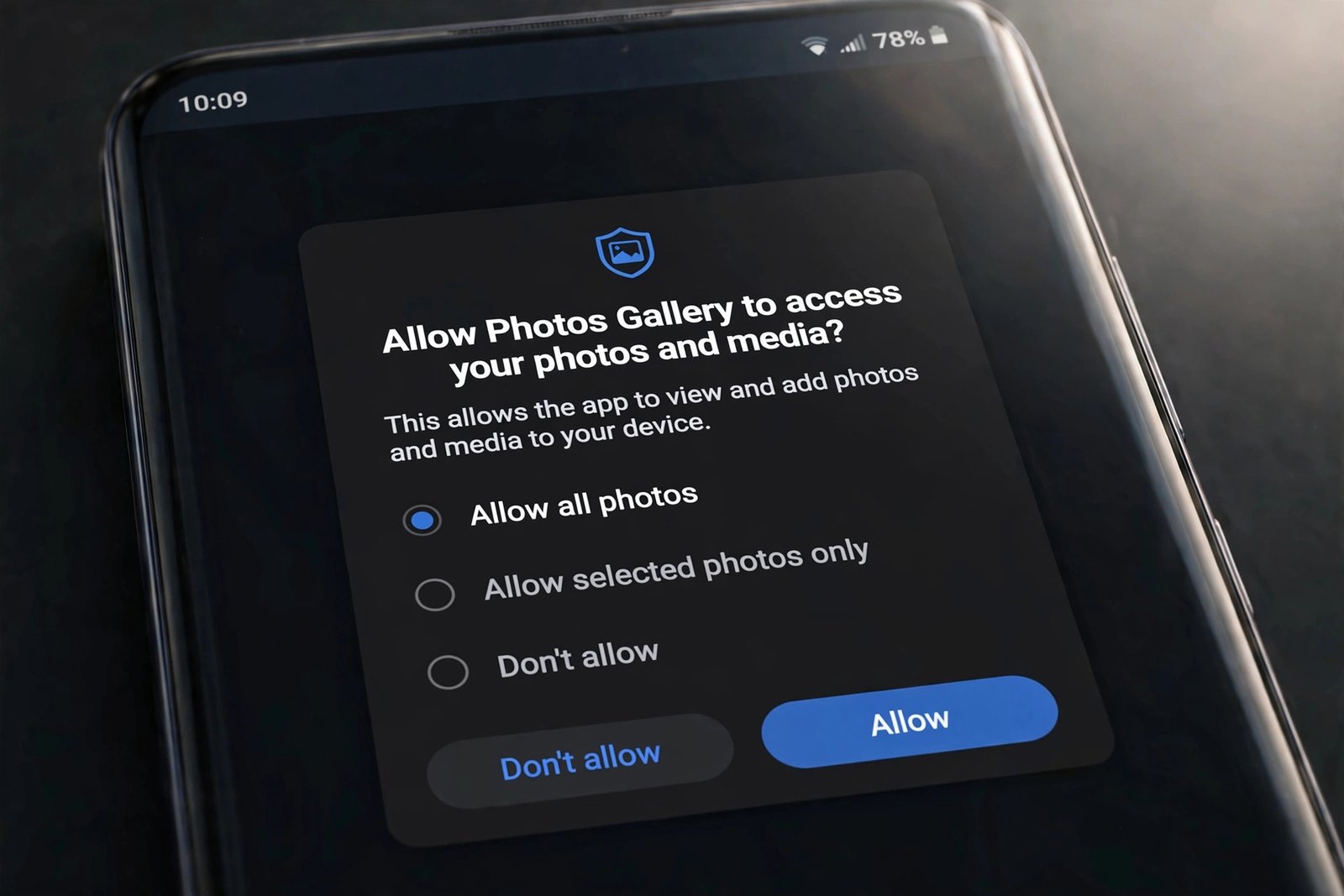
You can also check at the system level: on Android, go to Settings, then Apps, then Facebook, then Permissions. If Facebook has access to all photos, you can change it to selected photos only, or remove it entirely — though removing it will also stop you sharing photos from the app until you grant access again.
It is worth doing the same check for other apps while you are there. Gallery access is one of the broadest permissions a phone grants, and many apps ask for it. Our guide to how to back up your phone covers keeping your photos safe, and our guide to how to free up storage on your iPhone covers the iPhone side of photo management.

Why Regulators Care About Photo Galleries
A photo gallery is different from other data a phone holds. Browsing history shows what you looked at; a gallery shows who you are, who you love, where you have been, and what documents you photographed. It contains children’s photos, medical documents, screenshots of conversations, and images taken in moments that were never meant to be public.
That is why the law treats access to information stored on a device as a separate question from what a company does with data it already holds. Consent has to be specific and informed: a general agreement to terms of service does not count, and a default-on switch, where the user never makes a choice at all, counts least of all.
The Meta case is part of a wider pattern. Regulators across Europe have been testing the boundaries of consent for device access, and the fines have been getting larger. For users, the lesson is practical rather than legal: check the permissions your apps hold, turn off the ones you do not need, and remember that a default setting is a decision someone else made for you.
What Happens Next
Meta has 60 days from the italy fines meta november 2026 decision to switch the feature off by default, seek separate consent, and report back to the Garante. The company can also appeal the fine, which is the normal course in a case of this size, and an appeal would not necessarily pause the compliance order. Watch for the Garante’s follow-up, which will say whether Meta has complied.
The separate question the Garante reserved — the new 2026 feature that processes gallery content in the cloud — is the one to watch after that. If the authority opens a formal assessment of it, that will be a second case, on a different legal question.
For now, the practical advice is simple: check the setting on your phone, decide whether you want Facebook suggesting photos from your gallery, and switch it off if you do not. To sharpen your defences more broadly, see our guides to how to spot a phishing email and how to clear the cache on your iPhone.
Frequently Asked Questions
Why did Italy fine Meta €805 million?
Italy’s data protection authority, the Garante, found that the Facebook Android app read users’ photos, videos, and metadata from their phones without specific consent and without informing them properly, via a feature switched on by default since 2023. The fine, announced November 14, 2026, is the largest the authority has ever imposed.
How many users were affected by the Facebook gallery feature?
About 20 million Android users in Italy, according to the Garante. The feature was on by default from 2023, so anyone using the Facebook app on Android in Italy during that period may have been affected.
Did Meta use the photos to train AI?
The investigation did not examine whether photos were used to train AI models, and Meta denies that they were. The Garante reserved the right to assess separately a new 2026 feature that processes gallery content in the cloud.
What has Meta been ordered to do?
Switch the feature off by default within 60 days, seek a separate consent from users before switching it on again, and report back to the Garante on compliance.
Does the fine affect Facebook users outside Italy?
The order is Italian, but the same app and feature run worldwide, so users elsewhere may have had the same default setting. Check the “Get suggestions from your gallery” setting in the Facebook app on your own phone and switch it off if you do not want it.
How do I stop Facebook accessing my photos on Android?
In the Facebook app, turn off “Get suggestions from your gallery when you browse Facebook” in Settings. At system level, go to Settings, then Apps, then Facebook, then Permissions, and change Photos and videos to selected photos only or remove access.
Conclusion
The italy fines meta november 2026 story is, at its core, a story about defaults. A feature switched on without asking, running quietly for years, reading one of the most personal stores of data a phone holds. The Garante’s answer — €805 million, the largest fine it has ever imposed, and an order to switch the feature off and ask properly — is a reminder that consent has to be real, specific, and informed.
For users, the takeaway is not about Meta, or Italy, or even Facebook. It is about the settings on your own phone. Check them, decide for yourself, and turn off the access you do not want. The regulator can fine a company after the fact; only you can decide what your apps are allowed to see in the first place. Sources for this article: the Garante press release (Doc-Web 10321080, November 14, 2026), Reuters, the BBC, and Al Jazeera — see garanteprivacy.it, Reuters, BBC, Al Jazeera, and The Verge for continuing coverage.



