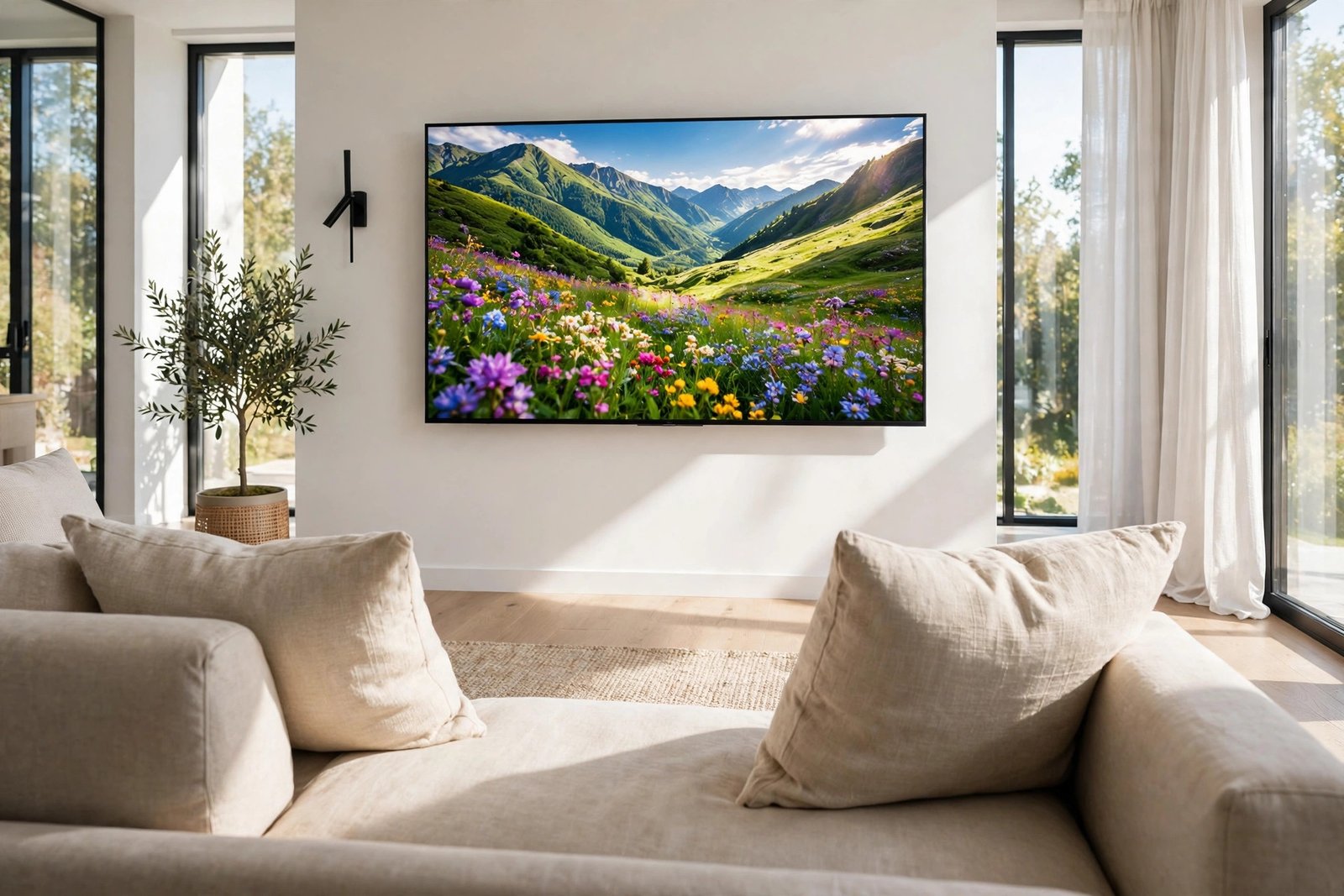

Walk into any TV shop and the OLED vs QLED TV question hits you within minutes: two walls of glowing screens, two confident sales pitches, and prices that seem to make no sense until you understand what is actually different. Here is the short version: OLED wins on picture purity, QLED wins on brightness and value, and the right choice for you depends less on the spec sheet than on the room the TV will live in. A TV that looks spectacular in a dark demo room can look washed out in your sunny living room, and vice versa.
This guide answers the OLED vs QLED TV question the practical way: by your room, by what you watch, and by what you play. You will learn how each technology actually works, which one wins for bright rooms, dark rooms, movies, sports, and gaming, what the 2026 price bands really buy you, and the longevity questions (like burn-in) that salespeople tend to skip. By the end, you will know which technology to buy — and which models to shortlist.
OLED vs QLED TV: How Each Technology Actually Works
OLED stands for organic light-emitting diode. Every pixel on an OLED panel produces its own light, and — crucially — can switch completely off. That is why OLED blacks look truly black rather than dark grey: when a pixel is off, it emits nothing. The result is effectively infinite contrast, which is the single biggest reason movie lovers prefer OLED. Shadows keep their detail, night scenes look like night, and bright objects glow against genuinely dark backgrounds.
QLED, despite the similar-sounding name, is a different technology. QLED TVs are LCD TVs with a layer of quantum dots — tiny nanocrystals that produce purer, more saturated colours when lit by the backlight. Samsung, which popularised the term, explains the QLED TV technology as a quantum-dot layer over an LED backlight. Because QLEDs have a powerful backlight, they get much brighter than OLEDs, which is a real advantage in sunny rooms. But because the backlight is shared across zones rather than per-pixel, blacks are never quite as deep, and you can sometimes see a faint halo around bright objects on dark backgrounds — an effect called blooming.
The practical summary: OLED controls light pixel by pixel; QLED pushes more total light through a quantum-dot filter. That one engineering difference explains nearly every verdict in this guide.
The Room Test: Bright Room vs Dark Room
Before you compare a single spec, look at your room. This is the decision that matters most, and it is the one buyers most often skip.
If your room is bright or sunlit
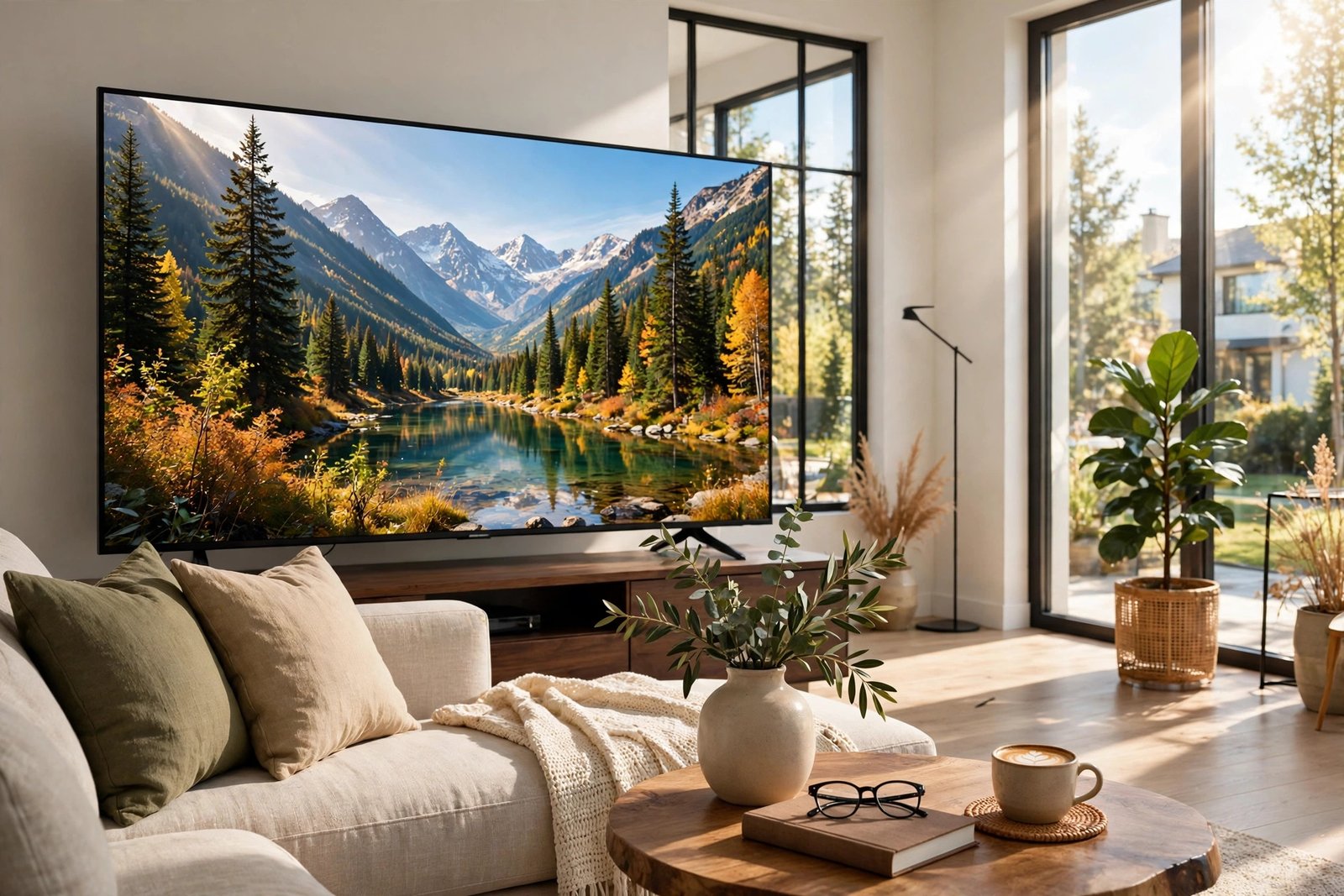
Buy QLED. Sunlight is the enemy of contrast: ambient light washes out dark scenes, and the only defence is raw brightness. QLED panels routinely reach higher peak brightness than OLEDs, and their screens handle reflections well, especially models with anti-reflection coatings. If your TV faces windows, sits in an open-plan living space, or gets watched mostly during the day, a QLED will look better in real life than an OLED that only shines after dark. Independent test labs like TV test labs measure peak brightness and reflection handling for exactly this reason — those two numbers predict bright-room performance better than any marketing claim.
If your room is dark or dim
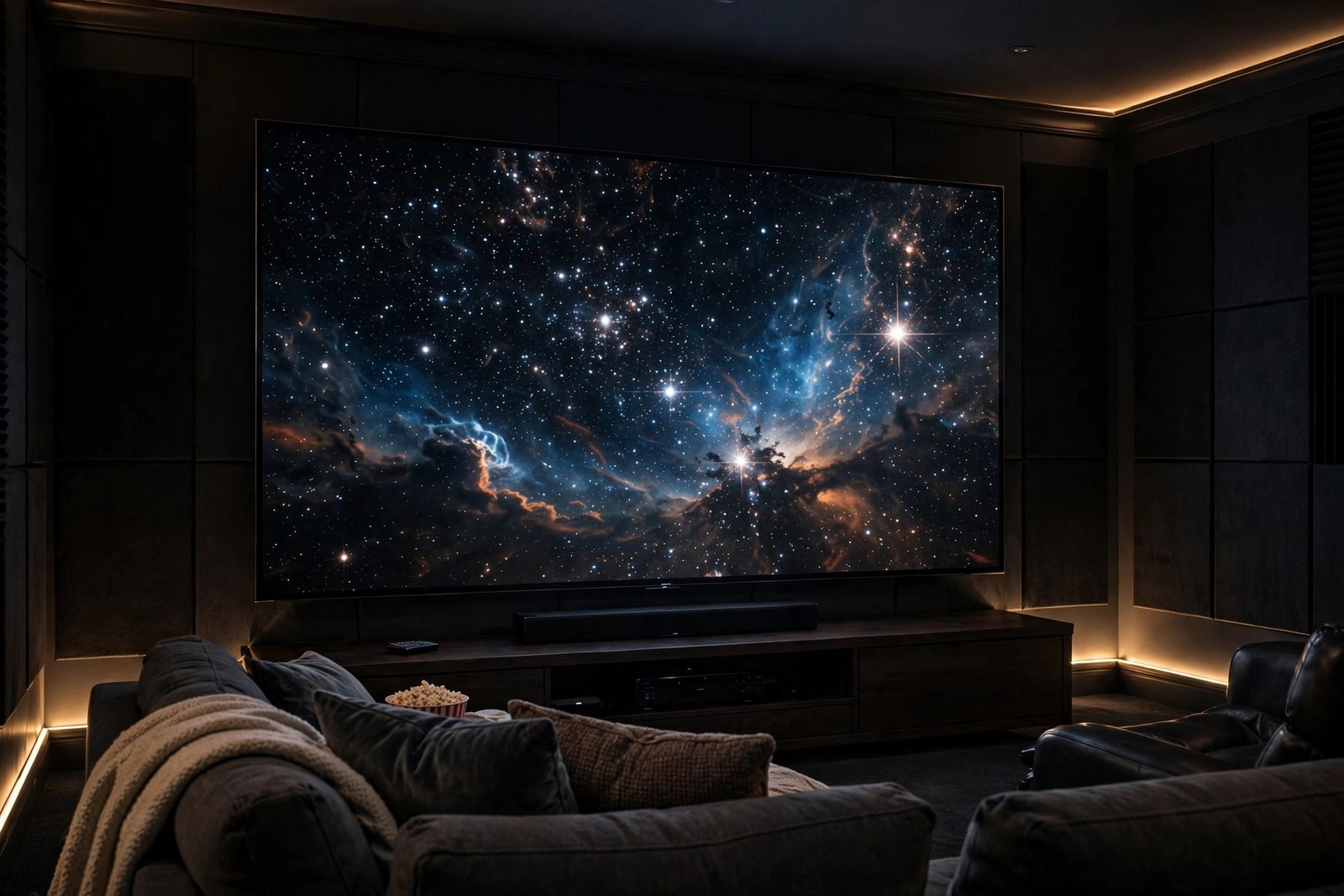
Buy OLED. In a dark room, there is no ambient light to wash the picture out, so OLED’s perfect blacks and infinite contrast take over completely. Movies look cinematic in a way no backlit panel can match, and the difference is visible the moment a starfield or a night scene appears. Dedicated home-theatre rooms, bedrooms, and evening-only viewing setups are OLED territory. If you watch mostly after sunset with the lights low, this is not a close call.
If your room is mixed
Most living rooms are mixed: bright in the afternoon, dark at night. In that case, weigh which matters more. If weekend sports and daytime viewing dominate, lean QLED. If your serious watching happens at night — films, prestige dramas, late gaming sessions — lean OLED. Newer OLED panels have also improved their brightness in recent generations, narrowing the gap, so a mixed room no longer automatically rules OLED out the way it once did.
Movies vs Sports vs Gaming: Who Wins What
| Use case | OLED advantage | QLED advantage | Winner |
|---|---|---|---|
| Movies in a dark room | Perfect blacks, infinite contrast, no blooming | Good, but blacks stay greyish | OLED |
| Daytime TV and news | Excellent, but brightness ceiling shows | Bright, worry-free with static logos | QLED |
| Live sports | Instant pixel response, no motion blur | Brightness + no burn-in worry with static score bugs | Draw (room decides) |
| Gaming | Near-instant response, 120Hz+ on most models, HDMI 2.1 | Bright HDR highlights, zero burn-in risk from HUDs | OLED for serious gamers; QLED for marathon HUD-heavy play |
| Wide seating / big groups | Wide viewing angles, colour holds off-axis | Bright, worry-free with static logos | OLED |
| Kids’ cartoons all day | Gorgeous colour | Bright, worry-free with static logos | QLED |
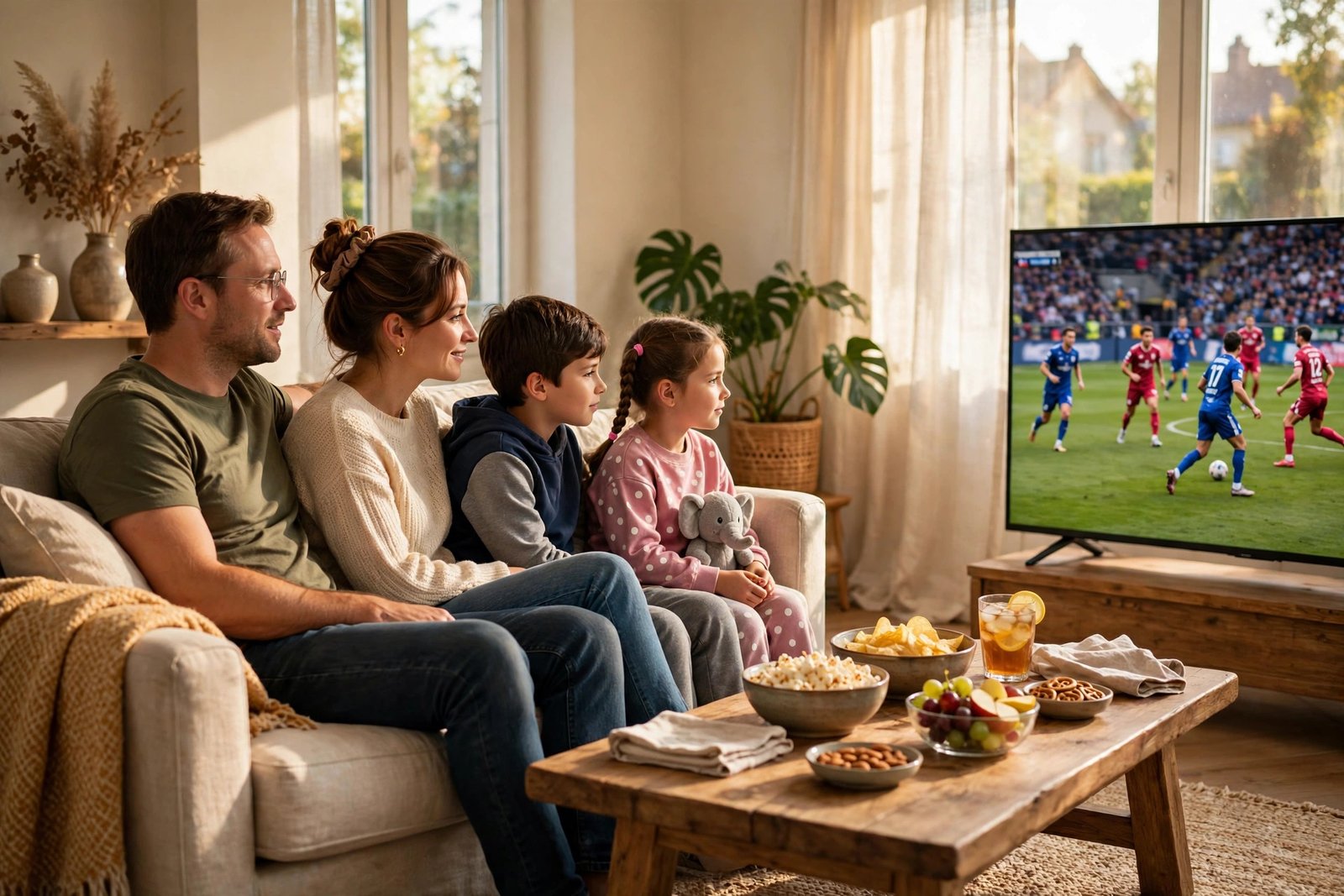
For movies, the verdict is settled: OLED is the reference picture for dark-room film watching, and it is why most film enthusiasts choose it. For sports, it is genuinely close. OLED’s instant pixel response makes fast motion — a football, a tennis serve — look cleaner, but QLED’s brightness suits daytime matches, and static score graphics raise the one long-term question OLED owners need to know about (see the burn-in section below).
Gaming deserves its own note. Modern OLED TVs offer near-instant response times and high refresh rates, which is why they dominate “best gaming TV” lists from specialist reviewers. If you play story-driven or competitive games in the evening, OLED is superb. But if you play the same game with a static heads-up display for many hours daily, QLED removes the burn-in question entirely. Either way, both technologies now support the HDMI 2.1 features gamers care about, so check the specific model’s port specs rather than assuming from the panel type. And since modern gaming and 4K streaming lean heavily on your home network, it is worth reading up on what is Wi-Fi 7 and how to boost Wi-Fi signal at home before blaming the TV for buffering.
OLED vs QLED TV Price Bands in 2026
Prices shift constantly with sizes, sales, and model years, so treat these bands as a guide to what each tier buys you, not as fixed price tags. The pattern, though, is stable: at any given screen size, QLED costs less than OLED, and the gap widens at larger sizes.
| Tier | What you typically get | Best suited to |
|---|---|---|
| Budget | Entry QLED models; solid brightness and colour, basic local dimming | Bright rooms, casual viewing, first big-screen upgrade |
| Mid-range | Premium QLED with mini-LED backlights; entry-level OLED at smaller sizes | The sweet spot for most buyers — strong all-round performance |
| Premium | Flagship OLED and top mini-LED QLED; best processing, brightest panels, best sound | Home theatre, serious gamers, buyers keeping the TV 7+ years |
The value logic is simple. If your budget is fixed and your room is bright, a mid-range QLED usually beats an entry OLED — you get a bigger screen and better daytime performance for the same money. If your budget stretches to premium and your room is dark, OLED is where the money shows most. And one money-saving tip that applies to both: last year’s models drop sharply when new ranges launch, and the year-to-year picture improvements are usually modest, so a previous-generation flagship is often the smartest buy of all. Specialist TV buying guides track these seasonal price movements and are worth checking before you commit.
Burn-In, Longevity, and the Questions Salespeople Skip
Burn-in is the word that worries OLED buyers, so here is the honest version. Because OLED pixels are organic compounds, a static image shown for very long periods — a news ticker, a game HUD, a channel logo — can leave a faint ghost image over time. Modern OLEDs fight this with pixel-shifting, screen refresh cycles, and logo dimming, and for varied viewing (movies, shows, mixed content) it is largely a non-issue in normal use. The risk concentrates in extreme cases: the same static content, many hours a day, for years. If that describes your viewing, QLED’s immunity to burn-in is a genuine, practical advantage.
Longevity otherwise favours both technologies: either panel should last many years of normal use, and the parts that usually age first are the smart-TV software and the backlight or power supply, not the panel itself. One practical tip for either technology: keep the TV’s software updated, and if your set’s apps start feeling slow after a few years, a cheap streaming stick gives it a new lease of life for a fraction of replacement cost. If you ever run a TV from a phone hotspot — a holiday home, a rental, a garden setup — knowing the eSIM vs physical SIM trade-offs can save you a frustrating evening of tethering problems.
Viewing angles are the last quiet differentiator. OLED holds its colour and contrast far off-axis, which matters if your sofa wraps around the room or people regularly watch from the dining table. Many QLEDs narrow and wash out at an angle, though higher-end models with wide-angle layers close much of the gap. If your seating is wide, check this in store from the side seats, not just dead centre.
Frequently Asked Questions
Is OLED better than QLED?
For picture purity in a dark room, yes — OLED’s perfect blacks and infinite contrast are unmatched. For bright rooms, value, and worry-free static content, QLED is better. “Better” depends on your room and viewing habits, not on the technology alone.
Which is better for a bright living room?
QLED, clearly. Its higher peak brightness and strong reflection handling keep the picture punchy in daylight, while OLED’s contrast advantage is washed out by ambient light. If your TV faces windows, QLED is the safer buy.
Do OLED TVs suffer from burn-in?
They can, but modern models have strong mitigations — pixel shifting, refresh cycles, and logo dimming — and varied viewing rarely causes problems. The risk matters mainly for extreme static-content use, like the same news channel or game HUD for many hours every day. For mixed viewing, it should not decide your purchase.
Are QLED TVs good for gaming?
Yes. Many QLEDs offer 120Hz refresh rates, HDMI 2.1, and low input lag, plus bright HDR highlights and zero burn-in risk from static HUDs. Serious competitive gamers often still prefer OLED’s instant response, but QLED is an excellent gaming TV, especially in bright rooms.
Should I buy last year’s TV model?
Often, yes. Previous-generation flagships drop significantly when new ranges launch, while picture improvements year to year are usually modest. If the older model has the size, ports, and features you need, it is frequently the best value in the store.
What size TV should I buy?
Bigger than you think. Most buyers regret going too small, not too big. As a rough rule, for a typical living-room seating distance of around 2–3 metres, a 55- to 65-inch screen is the sweet spot, and 75 inches suits larger rooms. Measure your seating distance and check a size guide before ordering — returning a TV is a hassle nobody enjoys.
Conclusion: Let Your Room Decide
The OLED vs QLED TV debate has no universal winner, and that is actually good news — it means both technologies are excellent, and your choice comes down to fit. Dark room and movies? OLED. Bright room and daytime viewing? QLED. Serious gaming at night? OLED. Marathon sports and kids’ cartoons? QLED. Match the panel to the room, pick the tier your budget allows, and buy the previous generation if the discount is steep.
Do that, and whichever technology you choose, you will end up with a TV that looks great in your home — not just under the shop lights. And once the TV is sorted, make sure the connection feeding it is up to the job: a fast, stable home network is what turns a great panel into a great viewing experience.



