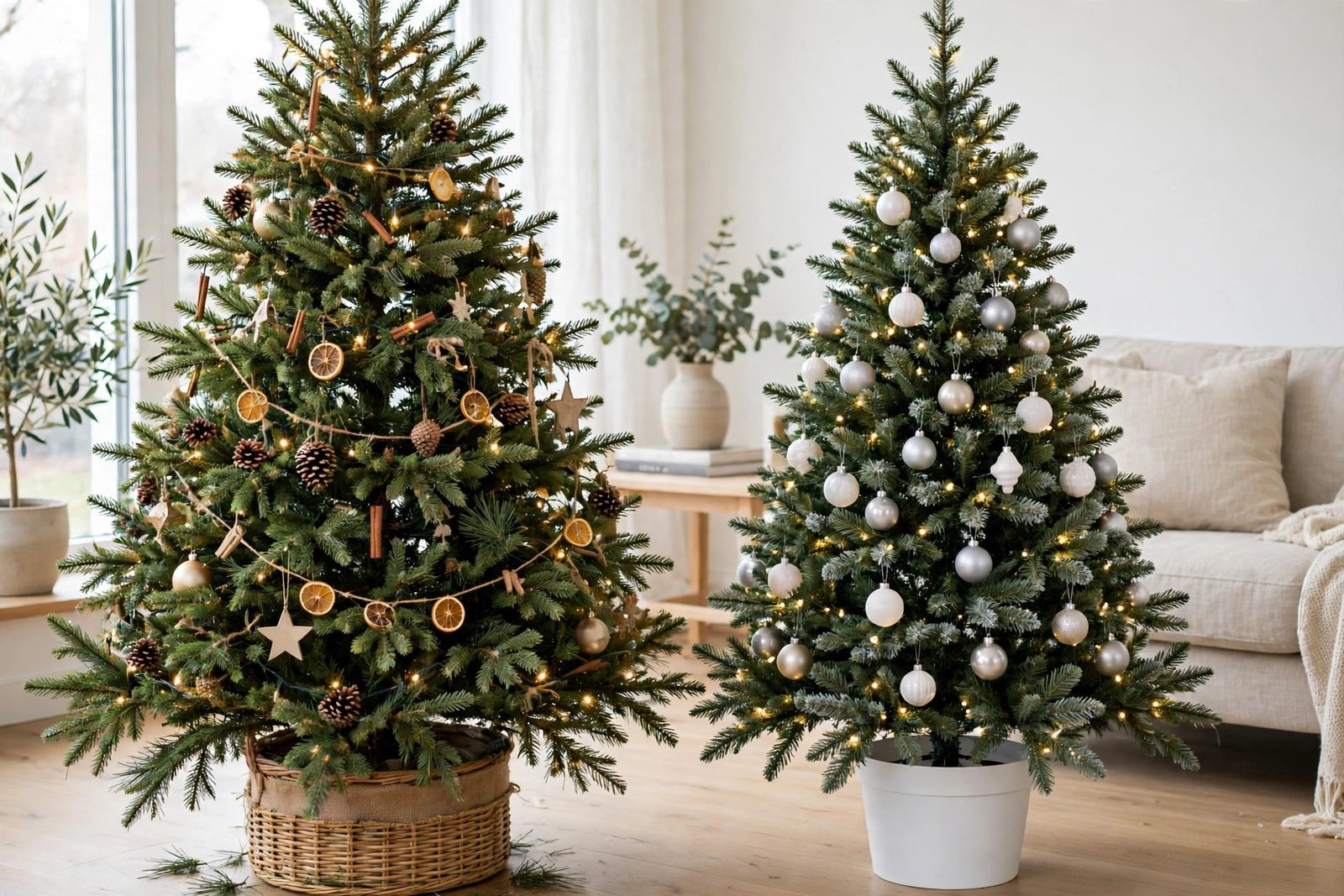

Real vs Artificial Christmas Tree: Which One Should You Buy in 2026?

Every December, the same argument plays out in living rooms across the country. One person wants the smell of fresh pine and the ritual of picking a tree at the lot. The other wants a tree that comes out of a box, goes up in twenty minutes, and never drops a single needle on the rug. The real vs artificial christmas tree debate is older than most of the ornaments on your tree, and it never quite gets settled — because the honest answer is that it depends on what you value most.
Real vs Artificial Christmas Tree: The 10-Year Cost Math
Cost is where most people start, and it’s where the artificial tree usually wins — eventually. A real tree is a purchase you make every single year. An artificial tree is a purchase you make once, and then you live with it for a decade or more. The question is how the totals compare. The real vs artificial christmas tree math starts with that simple comparison.
A good-quality real tree in 2026 typically runs $70 to $120, depending on location, species, and height. A seven-foot Fraser fir in a big city can push past that range; a six-foot Scotch pine from a small-town lot can come in under it. Add a tree stand if you need one ($25 to $60), a tree skirt, and the gas to drive to the lot, and most households spend roughly $80 to $140 per year on the real-tree ritual.
An artificial tree costs $80 to $700 upfront — an enormous range, because the products differ enormously. An $80 tree is usually PVC, sparse, and visibly fake up close. A $300 to $700 tree is usually a mix of realistic PE (polyethylene) branch tips and PVC filler, pre-lit, and dense enough to fool guests from across the room. Storage costs are small but real: a proper storage bag runs $30 to $60, and you need somewhere dry to keep it for eleven months a year.
| Option | Year 1 | Year 5 total | Year 10 total |
|---|---|---|---|
| Real tree ($70–$120/yr) | $70–$120 | $350–$600 | $700–$1,200 |
| Budget artificial ($80–$150) | $80–$150 | $80–$150 | $80–$150 |
| Mid-range artificial ($200–$400) | $200–$400 | $200–$400 | $200–$400 |
| Premium artificial ($500–$700) | $500–$700 | $500–$700 | $500–$700 |
What a Real Tree Really Costs You Each Year
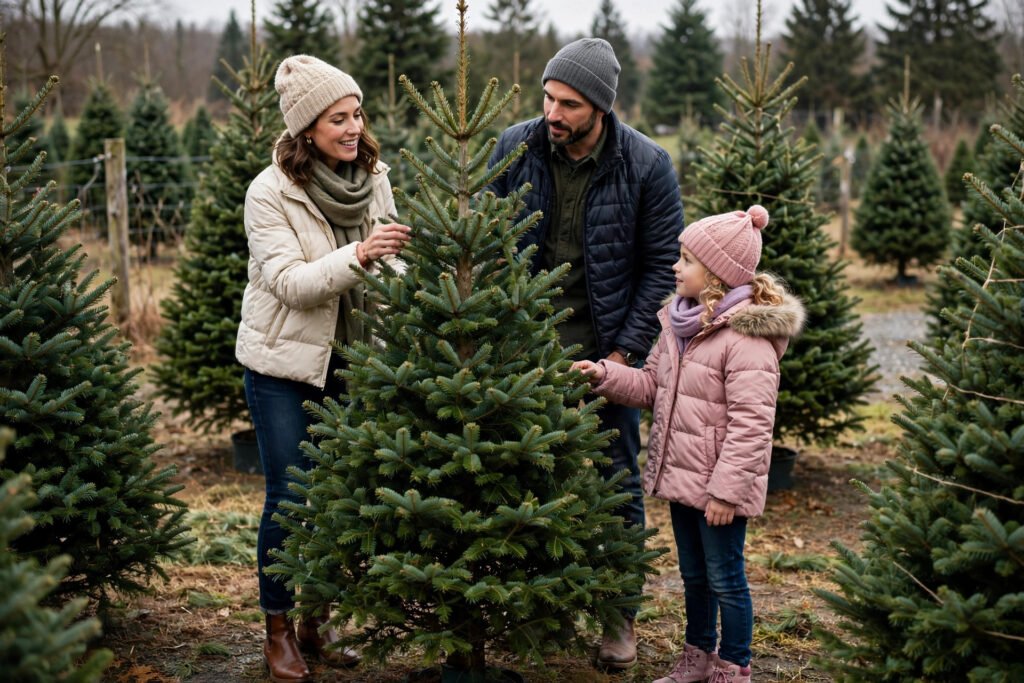
The sticker price of a real tree is only part of the story. The annual cost includes the drive to the lot, the time spent tying it to the roof of the car, the stand, the water, and the disposal fee or the trip to the recycling drop-off in January. None of these is large on its own. Together, they add maybe $20 to $40 a year on top of the tree itself. The extras are part of the real vs artificial christmas tree cost picture.
| Species | Needle retention | Lifespan with care | Typical price |
|---|---|---|---|
| Fraser fir | Excellent | 5–6 weeks | Higher |
| Noble fir | Excellent | 5–6 weeks | Higher |
| Douglas fir | Good | 4–5 weeks | Mid-range |
| Scotch pine | Very good | 4–6 weeks | Budget-friendly |
| Spruce | Poor | 2–3 weeks | Mid-range |
Whatever species you choose, buy from a local lot or a cut-your-own farm when you can. The tree will be fresher, the money stays local, and you skip the long truck journey that adds to the tree’s carbon footprint. The National Christmas Tree Association has a directory of growers and lots, and it’s a good starting point if you’re new to buying real.
The Environmental Question: Carbon, Disposal, and the Break-Even
Here’s where the real vs artificial christmas tree debate gets genuinely interesting — and where both sides tend to oversimplify. A real tree wins in any single year. An artificial tree can only catch up through reuse, and how long that takes depends on which study you read and how you dispose of the real tree.
The Carbon Trust, the UK climate consultancy, estimates that a two-metre artificial tree carries a carbon footprint of around 40kg of CO2 equivalent, mostly from the plastic and steel in its manufacture. A two-metre real tree comes in at around 16kg if it ends up in landfill, and just 3.5kg if it is chipped or mulched. On that basis, the Carbon Trust puts the break-even at 7 to 20 years, depending on the artificial tree’s weight and materials. Other studies land in different places: an industry-funded study put the break-even as low as 3 to 4 years, while an independent Montreal study put it at around 20 years.
The practical takeaway is simple. If you already own an artificial tree, keep using it — make it last as long as possible, and the environmental case improves every year you keep it. If you’re buying new and you care about carbon, a real tree from a local farm that you chip or compost in January is hard to beat. And if you buy an artificial tree, commit to it for a decade. The Carbon Trust’s guidance on Christmas trees is the most balanced source on this, and it’s worth reading before you decide.
How They Look and Feel: PE vs PVC Needles
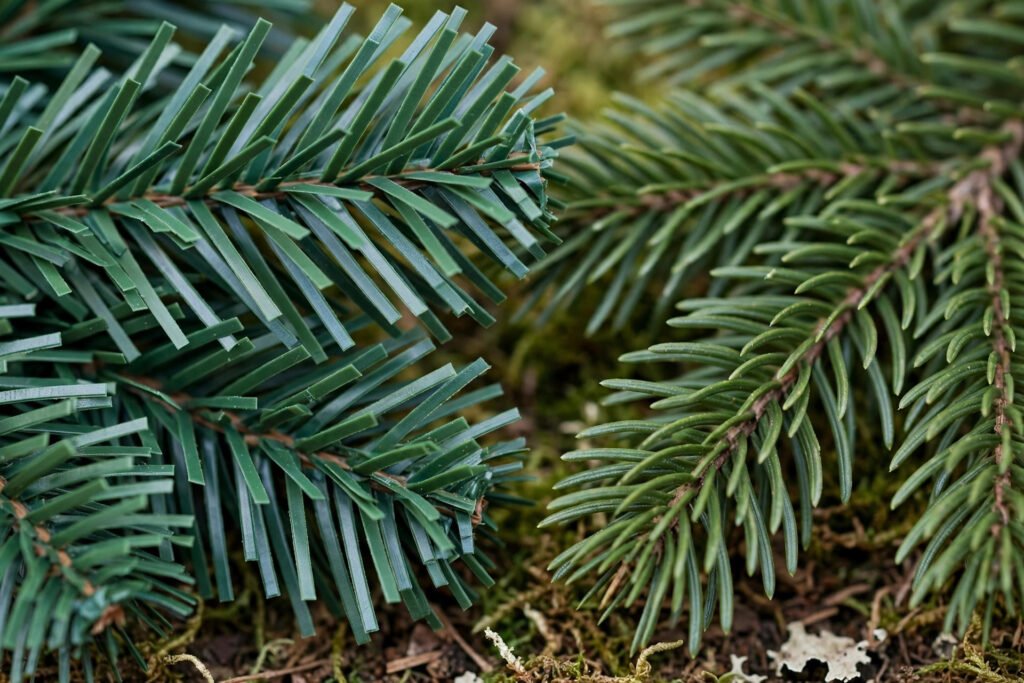
Ten years ago, the look test wasn’t close. Artificial trees looked like green bottle brushes. Today, the best ones are genuinely hard to tell from real at a normal viewing distance — and the difference comes down to one thing: PE versus PVC.
PVC needles are flat, thin strips of plastic cut to look like needles. They’re cheap, they’re durable, and up close they look like what they are. PE needles are molded in three dimensions from a cast of a real branch, so each tip has the shape, texture, and slight color variation of a real fir needle. A tree that is all PE is the most realistic — and the most expensive. Most good trees are a mix: PE tips on the outer branches where you can see them, PVC filler deeper inside where nobody looks. If you’re leaning toward artificial, our roundup of the best artificial Christmas tree of 2026 compares the top PE models side by side.
When you’re shopping, ignore the branch count on the box and look at the tip count instead. A 7.5-foot tree with 2,000 or more tips will look full. A tree with 1,000 tips will look sparse no matter how much you fluff it. And check whether the tree is pre-lit. Pre-lit trees save a huge amount of setup time, but if the lights fail after a few years, you either restring the whole tree or live with dark patches. Some newer models have lights you can replace in sections, which is worth paying for.
The Smell Test: There’s No Contest
Let’s be honest about this one. A real tree smells like Christmas. The scent comes from the resin in the needles, and it’s strongest in the first few days after you bring the tree inside, especially with a Fraser fir or a Douglas fir. No artificial tree smells like that, and the scented ornaments and sprays sold to mimic it are, at best, a vague approximation. On scent alone, the real vs artificial christmas tree contest is not close.
Maintenance: Watering vs Dusting

A real tree is a living thing, and it needs care. The rule is simple: a fresh-cut tree can drink up to a quart of water per inch of trunk diameter per day, especially in the first week. Check the water level every morning and never let it drop below the base of the trunk. Once the cut end dries out and seals, the tree stops drinking, and no amount of water will save it.
Skip the folk remedies. Sugar, aspirin, vodka, bleach, and commercial tree preservatives have all been tested, and the consistent advice from university extension services is the same: plain water, and plenty of it. Mississippi State University Extension is blunt on this point — plain water is all a tree needs, and additives can actually shorten its life. If you want the full routine, our companion guide on keeping a tree fresh covers the fresh cut, the water rule, and the myths to skip.
Allergies and Air Quality
Real trees can trigger allergies, but usually not for the reason people think. The tree itself is rarely the problem. The culprit is usually mold that grows on the bark during storage and transport, or pollen and dust that the tree picks up at the lot. If someone in your household gets a stuffy nose every December, the tree might be part of the story — but so might the dusty box of ornaments from the attic. Allergies rarely decide the real vs artificial christmas tree question on their own.
The fix for a real tree is simple: hose it down or shake it out before bringing it inside, and let it dry in the garage for a day. For an artificial tree, the fix is even simpler: wipe it down or vacuum it before setup, because a year in a dusty attic coats it in exactly the allergens you’re trying to avoid. Either way, the tree is rarely the worst offender in the room — the drafty windows and the closed-up winter house matter more for indoor air than the tree does.
Fire Safety: What the NFPA Says
The key finding is that the risk is overwhelmingly about dryness, not about real versus fake. A real tree that is kept watered is very hard to ignite. A real tree that has been sitting dry in a warm living room for three weeks is a different story. The NFPA’s Christmas tree fire safety guidance boils down to a short list: keep the tree watered, keep it at least three feet from any heat source, turn the lights off when you leave the house or go to bed, and never use candles on or near the tree.
Artificial trees are generally made with fire-resistant materials, and many are labeled fire-retardant. That helps, but it doesn’t make them fireproof — and the most common ignition source in tree fires isn’t the tree at all, it’s the lights and the electrical connections. Use LED lights, which run far cooler than old incandescent strings, check every string for frayed wires, and don’t overload a single outlet. Our guide to hanging Christmas lights safely walks through the electrical rules in detail.
Who Should Buy Which Tree?
After all the numbers and all the nuance, here’s the honest summary. Buy a real tree if you love the smell, the ritual of choosing it, and the look of something genuinely alive in your living room — and if you have a good disposal or mulching program in your area, and you’re willing to water it every day. Buy a real tree if you’re short on storage space, or if you rent and don’t want to haul a box up and down stairs every year. That is the real vs artificial christmas tree trade-off for renters and small homes.
Buy an artificial tree if you want the same tree every year with no mess, no watering, and no needle cleanup — and if you will genuinely keep it for at least seven to ten years. Buy artificial if someone in the household has allergies that flare with a real tree, or if you want pre-lit convenience and the same look every December without fail. And buy a good one. A cheap artificial tree is the worst of both worlds: it looks fake, it falls apart, and you replace it so often that it costs more than a real tree anyway.
Real vs Artificial Christmas Tree at a Glance
| Factor | Real tree | Artificial tree |
|---|---|---|
| Annual cost | $70–$120 every year | $80–$700 once |
| 10-year cost | $700–$1,200 | $80–$700 |
| Scent | Real pine fragrance | None (unless scented) |
| Maintenance | Daily watering, needle cleanup | Fluffing, dusting, storage |
| Storage | None (stand only) | Large box or bag, 11 months |
| Environment | Low carbon if chipped/mulched | Lower carbon only if kept 7–20 years |
| Fire safety | Safe if kept watered | Fire-resistant materials, check lights |
| Allergies | Mold/pollen possible | Dust from storage possible |
| Realism | Genuine, unique every year | Very good with PE tips, varies by price |
The Verdict on Real vs Artificial Christmas Tree
So which one should you buy in 2026? If you forced a single answer, it would be this: the real tree is the better choice for most households this year, because it costs less upfront, needs no storage, smells wonderful, and has the smaller carbon footprint when it’s chipped or mulched in January. The artificial tree is the better choice if — and only if — you’ll keep it for a decade and you value convenience over the ritual.
Frequently Asked Questions
What is the real vs artificial christmas tree break-even point for carbon?
According to the Carbon Trust, an artificial tree needs to be reused for 7 to 20 years before its carbon footprint drops below that of buying a real tree every year. The exact number depends on the tree’s weight and materials, and on how the real tree is disposed of — chipping or mulching a real tree cuts its footprint to around 3.5kg of CO2, while landfilling it raises it to around 16kg.
How much does a real Christmas tree cost in 2026?
Most real trees cost $70 to $120 in 2026, depending on species, height, and location. Fraser firs and Noble firs sit at the top of the range; Scotch pines are usually the most affordable. Add $25 to $60 for a good stand if you don’t already own one.
Are artificial Christmas trees safe?
Yes, in general. Most artificial trees are made with fire-resistant materials, and modern LED lights run cool. The main safety risks are electrical — frayed light strings, overloaded outlets, and lights left on unattended. Check your lights every year and turn them off when you leave the house or go to sleep.
How long does an artificial Christmas tree last?
A well-made artificial tree stored properly can last 10 years or more. The most common reason people replace one sooner is failing built-in lights, so look for a tree with replaceable light sections or buy an unlit tree and add your own lights.
Do real Christmas trees cause allergies?
Sometimes, but the tree itself is rarely the main cause. Mold on the bark and pollen or dust picked up at the lot are the usual triggers. Shaking the tree out or hosing it down before bringing it inside, and letting it dry in the garage for a day, usually solves the problem.
Can you recycle a real Christmas tree?
Yes. Most cities run a curbside collection program in January and chip the trees into mulch for parks and gardens. Check your city’s website for dates and drop-off points, and remove all ornaments, tinsel, and lights before putting the tree out.
Conclusion
The real vs artificial christmas tree question doesn’t have one right answer — it has a right answer for your home. A real tree gives you scent, ritual, and a small carbon footprint if you dispose of it well. An artificial tree gives you convenience, consistency, and long-term savings if you commit to it for a decade. Run the numbers for your own situation, be honest about how much maintenance you’ll actually do, and pick the tree you’ll still be happy with on Christmas morning. That’s the whole secret: the best tree is the one you take care of.



