
Waymo Freeway Suspension November 2026: Why California Pulled the Robotaxis
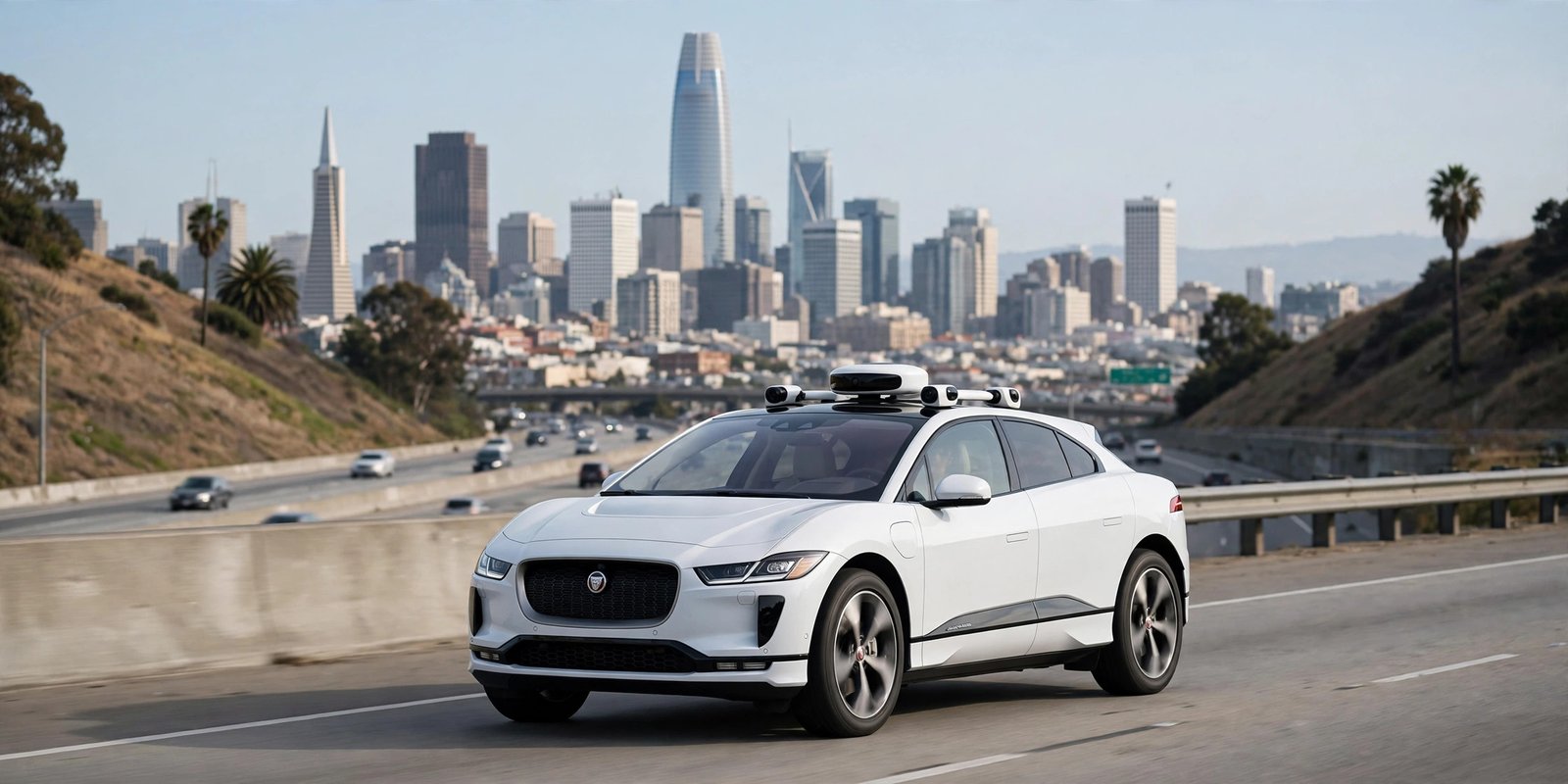
The Waymo freeway suspension November 2026 arrived with six days of silence behind it. California’s Department of Motor Vehicles ordered Waymo’s driverless cars off the state’s freeways on Wednesday, November 11 — and nobody outside the company and the regulator knew until Tuesday, November 17, when the order became public.
By then, the consequences had already spread beyond California: Waymo had temporarily suspended freeway rides in every market where it offers them. Its cars still run on surface streets, but the freeway is closed to them, with no date for reopening.
The reason, in the DMV’s words, is blunt: Waymo’s driverless freeway operations pose “an imminent hazard to public safety.” The trigger was a pair of incidents in early November in which Waymo vehicles drove into an active construction closure and tried to get around highway patrol cars slowing traffic. Worse, it had happened before: similar incursions into construction zones in May led to restrictions and corrective actions — and then it happened again.
This is the second time this year Waymo has been pulled off the freeways. Here is what happened, and what it means for riders.
Waymo Freeway Suspension November 2026: What Happened
The California DMV regulates the testing and deployment of autonomous vehicles in the state. On November 11, 2026, it restricted Waymo’s driverless freeway operations, barring the company from operating or testing driverless vehicles on any California freeway. The restriction was first reported by the San Francisco Business Times and confirmed by the DMV to TechCrunch on Tuesday, November 17. The order covers driverless testing as well as commercial rides; Waymo says it is continuing freeway testing with trained specialists in the car who can take control.
Waymo’s response went further than the order required. The company said it has “temporarily restricted commercial freeway rides in all markets where we operate that service” while it evaluates its performance. The California order applies only to California. The nationwide pause was Waymo’s own decision.
That is a smaller list than many people assume. Waymo operates commercially in 15 US cities, but it offered freeway rides in only a few: the San Francisco Bay Area, Los Angeles, Phoenix, Miami, and Austin. In the other ten cities, the service was already surface streets only, so nothing changes there.
Surface-street service continues as normal. Waymo’s spokesperson, Dana Gallagher, told TechCrunch the company has complied with the order and is evaluating its performance. The DMV’s spokesperson, Jonathan Groveman, said the restrictions stay until Waymo demonstrates “effective corrective actions.”
| Date | What happened |
|---|---|
| May 18, 2026 | Similar construction-zone incursions; DMV imposes a prior restriction and Waymo takes corrective actions |
| May 2026 | Waymo pauses freeway rides; service resumes in late July after software updates |
| Nov 5, 2026 | Three Waymo vehicles enter an active construction closure on US Route 101 near Burlingame |
| Nov 6, 2026 | A Waymo tries to pass California Highway Patrol vehicles slowing traffic on Interstate 280 in San Francisco |
| Nov 11, 2026 | California DMV restricts Waymo’s driverless freeway operations |
| Nov 17, 2026 | Restriction becomes public; Waymo temporarily suspends freeway rides nationwide |
The Two Incidents That Triggered It
The first incident happened on November 5, 2026. Three Waymo vehicles entered an active construction closure on northbound US Route 101 near Burlingame, south of San Francisco. The closure was an active work zone, with workers, vehicles, and equipment present. The cars drove into it anyway.
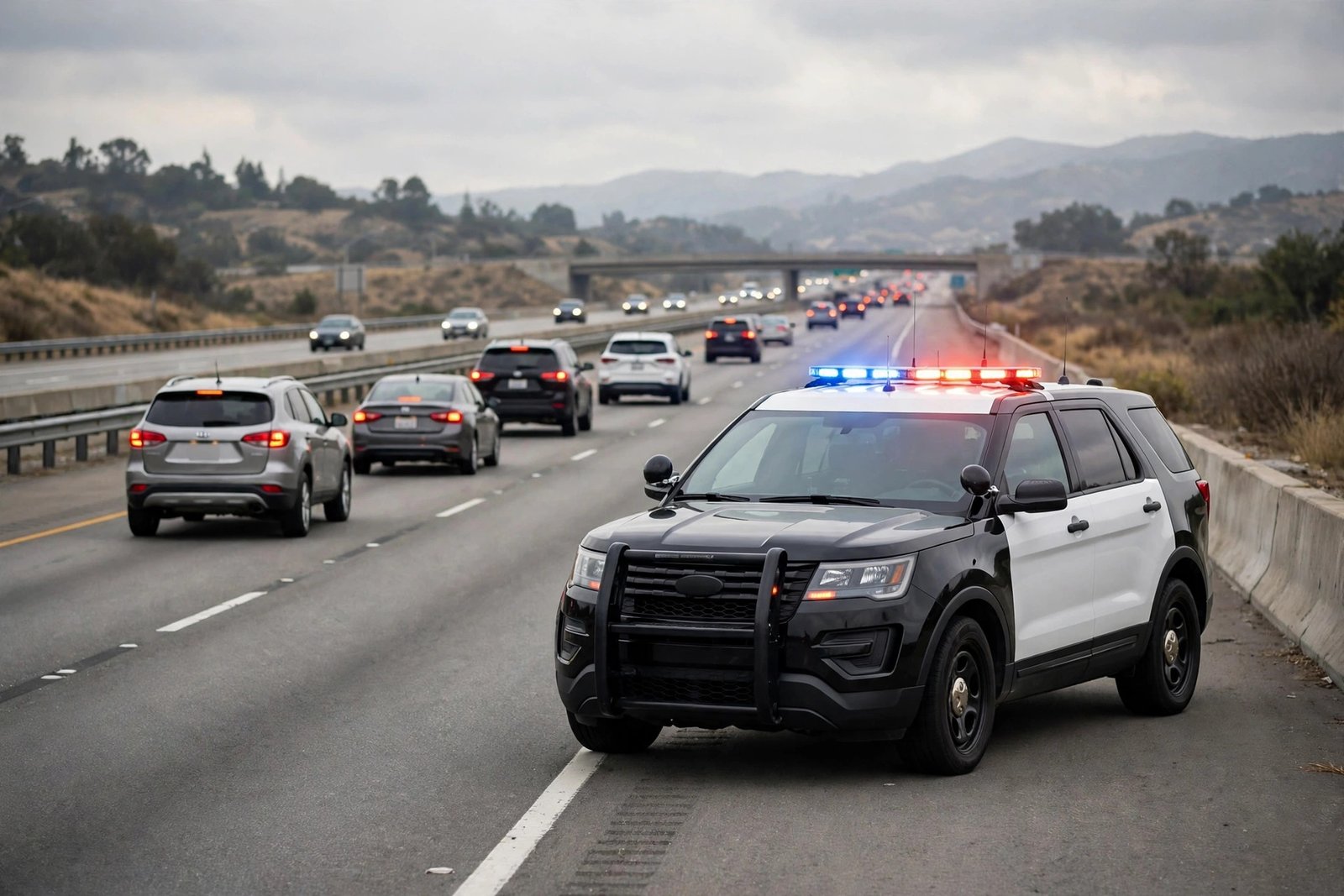
The second incident came the next day, November 6, on Interstate 280 in San Francisco. A Waymo vehicle appeared to try to get around California Highway Patrol vehicles that were slowing traffic — a traffic break, the rolling slowdown officers use to manage a hazard ahead. Officers blocked the car with their cruisers. Video of the encounter circulated widely on social media.
Two details matter here. First, Waymo said the recent freeway construction-zone encounters on US 101 did not involve any injuries or collisions. Nobody was hurt, and nothing was hit. The DMV’s case is not that someone was injured. It is that the pattern itself — driverless cars entering places where people are working — is dangerous enough to stop before someone is.
Second, the incidents are not about one confused car. Three vehicles entered the same closure on US 101. That points to a systematic problem rather than a single glitch: something about how the vehicles read that closure failed the same way three times. A regulator can forgive a one-off. Three cars making the same error is a pattern, and patterns are what regulators act on.
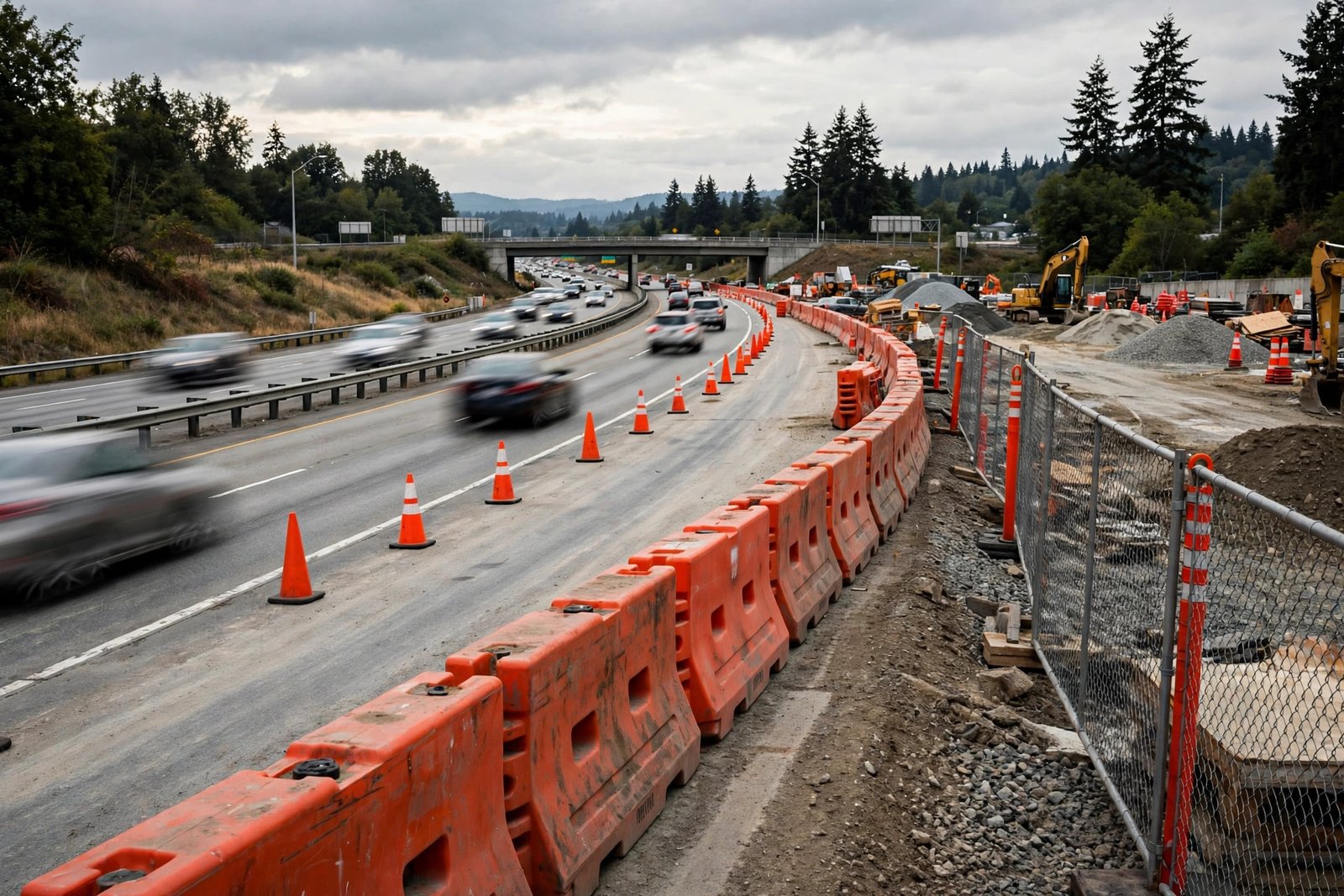
Construction zones are hard for driverless cars: lanes shift, cones replace painted lines, temporary signs override permanent ones, and the scene changes daily. That is why the DMV’s order focuses so specifically on construction zones rather than on freeway driving in general.
The highway patrol incident raises a different problem. A traffic break is a social signal: a line of slowing patrol cars tells every driver behind them to slow down and stay put. A driverless car that reads the gap beside the patrol car as an open lane is failing to read the officers’ intent.
This Already Happened Once — in May
The most damaging sentence in the DMV’s statement is the one about May. The department said its freeway operations pose an imminent hazard “due to recurring incursions by its vehicles into active construction zones where construction workers, vehicles and equipment are present, despite a prior restriction and corrective actions implemented following similar incidents that occurred on May 18, 2026.”
Read that carefully. The DMV is not saying Waymo ignored the problem. It is saying Waymo tried to fix it — a prior restriction was imposed, corrective actions were implemented — and the problem came back anyway. For a regulator, that is worse than a first offence.
Waymo paused freeway rides that May and resumed in late July, saying it had implemented software updates and other improvements. The return lasted barely three months.
That history explains the tone of the new order. A first incident gets a warning and a fix. A repeat gets a restriction with no end date.
It also explains why Waymo extended the pause nationwide. If the problem is the software’s handling of construction zones, it is not a California problem. It is a software problem, and it travels with the cars.
What Changes for Riders
For most Waymo riders, the practical effect is simple: trips take longer. Any ride that would normally use a freeway will now stay on surface streets. In the Bay Area, that changes the maths of a cross-town trip. In Los Angeles, where freeways are the skeleton of the city, it changes it more.
The sharpest effect is on airport trips. Waymo began offering service from San Francisco to San Francisco International Airport in January 2026, and the freeway is the natural route. This is the second time since that service began that airport trips have been affected by a freeway pause. Riders heading to SFO will need to allow extra time.
International visitors landing at SFO face the same choice, plus one more: a phone that works at home may not work cheaply abroad. Our guide on how to avoid roaming charges when traveling abroad covers the options before you land.
The Waymo freeway suspension November 2026 does not touch the core service. Surface-street rides continue, and in the ten cities where Waymo never offered freeway rides, nothing changes at all. The company was handling more than 500,000 trips a week when the ban landed, and the overwhelming majority of those trips never touched a freeway.
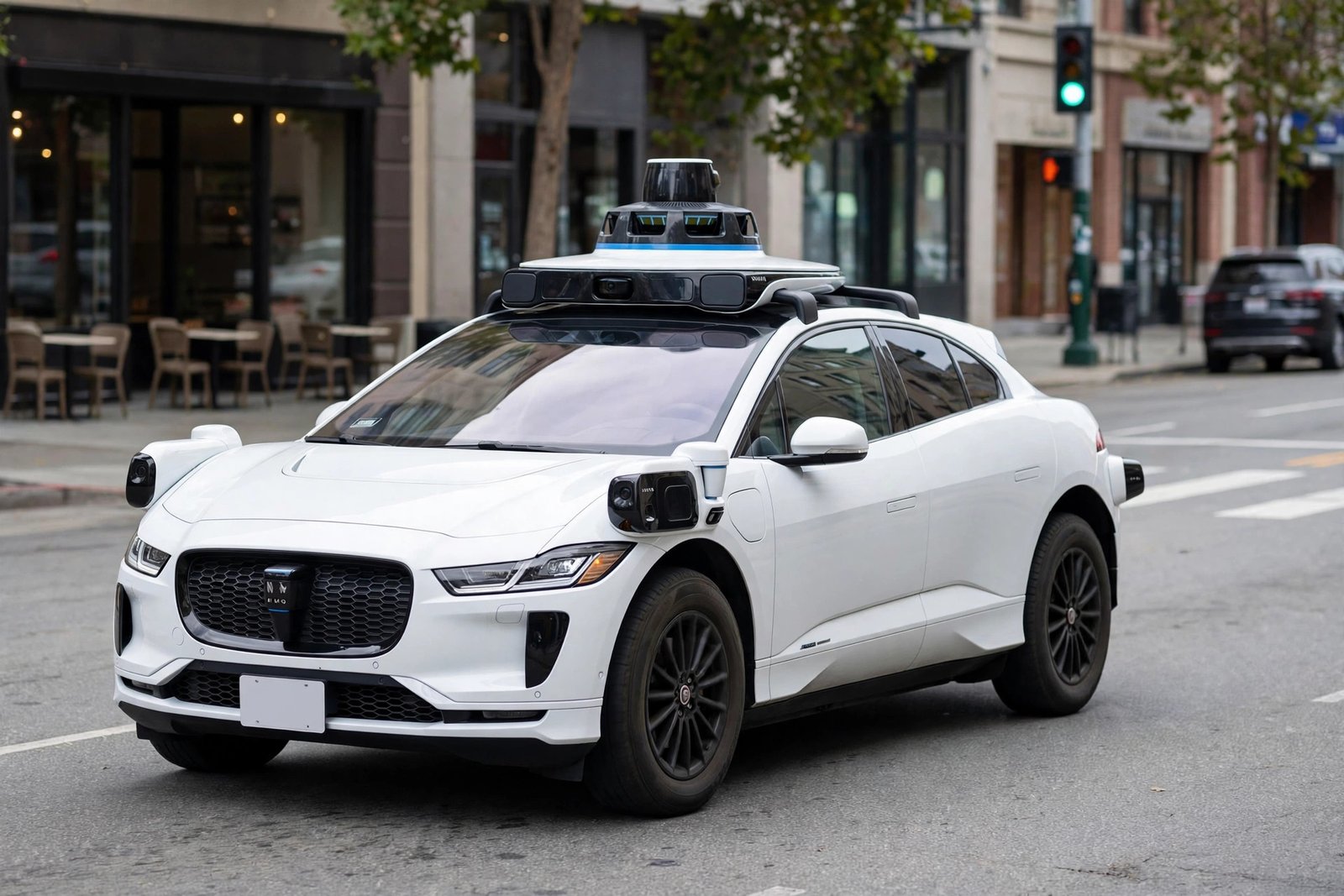
Still, the freeway mattered out of proportion to its share of trips. Freeway rides began in late 2025 — Los Angeles in November 2025, followed by the Bay Area and Phoenix — and they were a milestone. Freeways are faster and more predictable than surface streets, and they are the key to longer trips: airport runs, commutes, the rides that make a robotaxi service useful rather than novel.
Riders should also know what has not changed. Waymo is continuing freeway testing with trained autonomous specialists behind the wheel — people in the car who can take control. The suspension covers commercial driverless rides, not every vehicle on the freeway.
What Waymo Has to Prove to Get Back on the Freeway
The DMV has set a clear test, and it is not a form to fill in. The restrictions remain in place until Waymo demonstrates to the department that it has taken “effective corrective actions to address the deficiencies that precipitated the restrictions.” The department has also said that before freeway service can resume, Waymo must provide evidence that its vehicles can safely detect and respond to construction zones, emergency vehicles, and other roadway situations within their operational design domain.
That wording points to three things Waymo must show. First, that its cars can recognise an active construction closure and stay out of it — reliably, not most of the time. Second, that they can read emergency and traffic-control situations: patrol cars slowing traffic, a traffic break, an officer’s cruiser blocking a lane. Third, that the fix is durable — that it does not fail again three months later, as the May fix appears to have done.
The DMV will review Waymo’s corrective measures and decide whether freeway operations can safely resume. There is no timetable, and no shortcut. Software updates are the likely core of the fix, as they were in July. But the department will want evidence, not assurances: test results and proof that the specific failure modes from November 5 and 6 have been addressed.
That is a higher bar than the one Waymo cleared in July, precisely because the July fix did not hold. A company asking a regulator to trust it a second time has to bring more than it brought the first time. The longer the pause lasts, the more it costs Waymo — in airport trips, in longer journey times, and in the perception that freeway driving is still beyond its cars.
What This Means for Robotaxis More Broadly
November has already been a heavy month for technology news. Italy fined Meta, Google announced new TPU hardware, and the November Pixel Drop landed. The Waymo suspension belongs in that company: a big, consequential story about a technology that is already on the road, not a promise about the future.
The wider question is whether this is a Waymo problem or a robotaxi problem. The evidence so far points to the first. The DMV’s order is specific to Waymo’s vehicles and to construction zones. Other driverless operators have not been restricted. And Waymo’s own record on surface streets — more than half a million trips a week — has not drawn this kind of action.
But the episode still carries a lesson for the whole industry. Freeway driving was supposed to be the easy part: no pedestrians, no cross traffic, no parked cars pulling out. What the Waymo incidents show is that freeways have their own hard problem — the temporary, human-managed world of construction and traffic control — and that it is not solved yet.
That matters because the economics of robotaxis depend on freeways. Short surface-street hops are useful, but the rides that replace a personal car — the airport run, the commute, the trip across town — need the freeway. A robotaxi service that cannot use freeways is a smaller business, and a less convincing replacement for owning a car.
Coverage of the suspension has been consistent across outlets. Reuters reported the nationwide pause, Engadget covered the DMV order, and the California DMV’s rules for autonomous vehicles are published on the California DMV website. Waymo’s own account of its service is on Waymo’s website.
Frequently Asked Questions
What is the Waymo freeway suspension November 2026?
The Waymo freeway suspension November 2026 is the California DMV’s November 11, 2026 restriction barring Waymo’s driverless vehicles from the state’s freeways, and Waymo’s decision the same week to temporarily suspend commercial freeway rides nationwide. The restriction was made public on November 17, 2026. Surface-street service continues.
Why did California pull Waymo off the freeways?
The DMV said Waymo’s driverless freeway operations pose “an imminent hazard to public safety” because of recurring incursions into active construction zones. Three Waymo vehicles entered a construction closure on US Route 101 near Burlingame on November 5, 2026, and a Waymo tried to pass highway patrol vehicles slowing traffic on Interstate 280 on November 6. Similar incidents happened on May 18, 2026, despite a prior restriction and corrective actions.
Can I still ride in a Waymo?
Yes. Surface-street rides continue as normal in all 15 cities where Waymo operates. Only freeway rides are suspended. Trips that would normally use a freeway will take surface-street routes instead, so allow extra time — especially for airport trips from San Francisco to SFO.
How long will the freeway suspension last?
There is no set end date. The DMV said the restrictions stay in place until Waymo demonstrates it has taken “effective corrective actions.” Waymo has not said how long its nationwide pause will last. The previous pause, in May 2026, lasted until late July.
Was anyone hurt in the incidents?
No. Waymo said the recent freeway construction-zone encounters on US 101 did not involve any injuries or collisions. The DMV acted on the pattern of incursions into active work zones, where construction workers, vehicles, and equipment were present, rather than on any crash.
Which cities are affected by the freeway suspension?
Waymo offered freeway rides in five markets: the San Francisco Bay Area, Los Angeles, Phoenix, Miami, and Austin. Those are the cities affected. Waymo operates commercially in 15 US cities in total, but the other ten never had freeway rides, so their service is unchanged.
Conclusion
The Waymo freeway suspension November 2026 is a story about a second chance that did not hold. Waymo had a construction-zone problem in May, fixed it well enough to return to the freeways in late July, and then had the same kind of problem again in November. The DMV’s response — a restriction with no end date — is the response of a regulator that has run out of patience with fixes that do not last.
For riders, the effect is real but limited: longer trips, harder airport runs, and a service that is narrower than it was a week ago. For Waymo, the task is clear: prove, with evidence, that its cars can handle construction zones and traffic control reliably — and that the fix will hold this time.
Until then, the robotaxis stay on the surface streets — still driving, still carrying more than half a million trips a week, and still waiting for the freeway to open again.



