

If you’ve ever stood in the middle of a messy room wondering where to even begin, you’re not alone. Learning how to declutter your home isn’t really about organizing — it’s about decision-making. Most of us don’t have a storage problem; we have a “too much stuff and no system for letting go” problem.
This guide gives you that system. You’ll learn the four-box method that professional organizers swear by, a room-by-room checklist that breaks the job into manageable sessions, rules for handling clothes and sentimental items, and simple habits that keep the clutter from creeping back. No marathon weekend required — just steady, focused sessions that actually stick.
How to Declutter Your Home Without Getting Overwhelmed
The number one reason decluttering attempts fail is scope. People try to “do the whole house” in one exhausting weekend, burn out by Saturday afternoon, and end up with piles of unsorted stuff in every room. The fix is to think in sessions, not marathons.
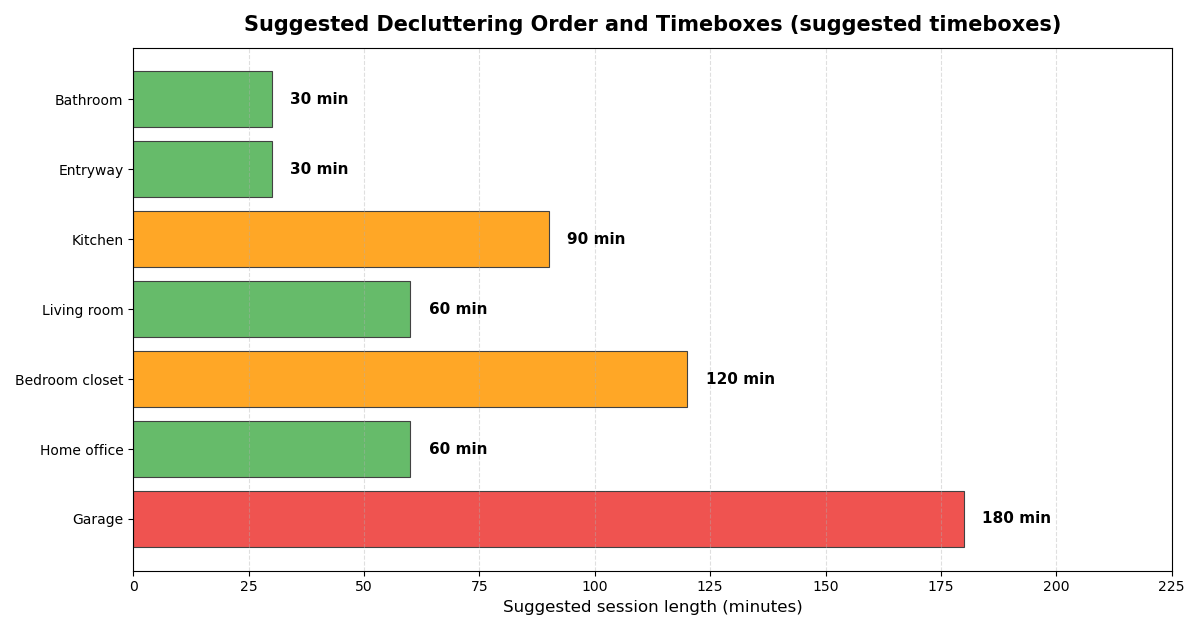
Start with the easiest room, not the hardest. An easy win — a junk drawer, a bathroom cabinet, the entryway — builds momentum and proves the system works before you tackle the garage or the packed closet. Professional organizers consistently recommend beginning where decisions are low-stakes: expired medicines and dried-out pens are easy to let go of; your grandmother’s china is not.
The Four-Box Method: Your Decluttering System
Every successful decluttering session runs on one simple system. Grab four boxes or bags and label them:
- Keep — items you use, love, or genuinely need, which will be put away properly in this room.
- Donate/Sell — items in good condition that someone else could use.
- Trash/Recycle — broken, expired, stained, or otherwise unusable items.
- Relocate — items that belong in a different room of the house.
Work through one small area at a time — a single shelf, one drawer, one corner — and put every single item into one of the four boxes. No “maybe” pile. The maybe pile is where decluttering goes to die; if you truly can’t decide, the item goes in Donate/Sell, because hesitation usually means you don’t need it.
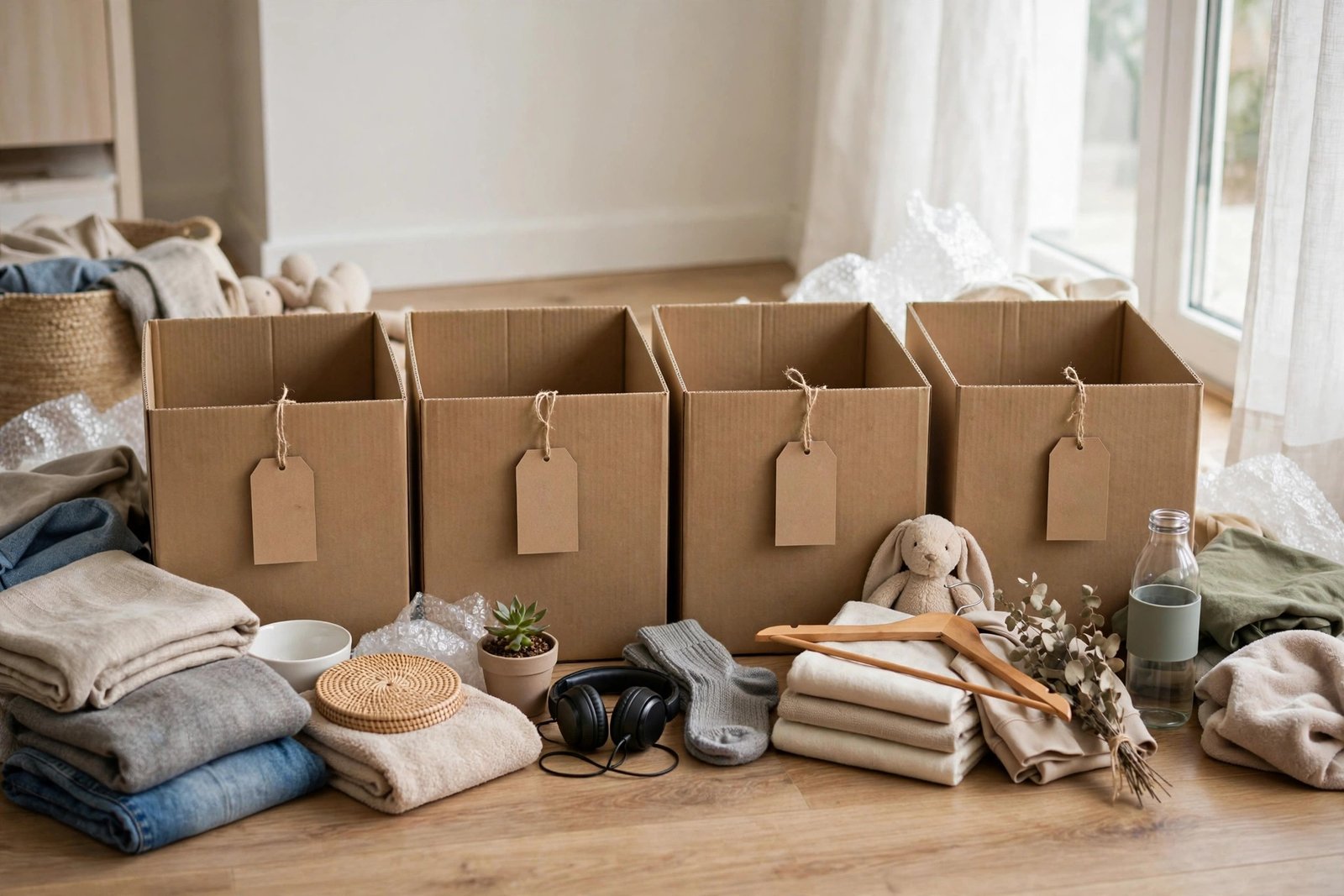
Finish each session completely: take the trash out, put donations by the door, and relocate the stray items. Half-finished sessions create the dreaded “decluttering piles” that sit in hallways for weeks.
Start Small: The 15-Minute Rule
If the thought of decluttering an entire room paralyzes you, shrink the task until it feels trivial. Set a timer for 15 minutes and declutter one tiny zone: the top of your dresser, one kitchen cabinet, the glove box of your car. When the timer rings, stop — even if you’re on a roll (though most people keep going).
This works because starting is the hardest part. Fifteen minutes of actual deciding beats three hours of anxious staring at a messy room. Do one 15-minute session a day and you’ll be stunned how much ground you cover in a month — that’s over seven hours of focused decluttering without a single exhausting marathon.
Room-by-Room Decluttering Checklist
Work through your home in this order, from easiest decisions to hardest. The table below gives you the top purge targets for each room — start at the top of each list and work down.
| Room | Top 5 things to purge first |
|---|---|
| Bathroom | Expired medicines and sunscreen; dried-out nail polish; product samples you’ll never use; stretched-out hair ties; duplicate or dead hotel toiletries |
| Entryway | Dead batteries and broken umbrellas; shoes nobody wears; expired coupons and old mail; single gloves; bags of bags |
| Kitchen | Expired pantry food and spices; chipped mugs and mismatched containers without lids; duplicate utensils; novelty gadgets unused in a year; takeout condiment packets |
| Living room | Magazines and catalogs older than a month; DVDs and games you stream now; remotes for devices you no longer own; tangled mystery cables; decor you don’t actually like |
| Bedroom closet | Clothes that don’t fit or are damaged; shoes that hurt; wire hangers; stretched-out undergarments; “someday” occasion outfits unworn for years |
| Home office | Dried-out pens; obsolete chargers and cables; manuals for things you no longer own; expired warranties; notebooks you never reference |
| Garage | Dried-out paint cans; broken tools; single mystery screws and hardware; deflated sports gear; cardboard boxes you’re “saving” |
Kitchen: the highest-impact room
The kitchen accumulates the most “aspirational” clutter — the bread maker used twice, the fondue set from a wedding registry, the graveyard of plastic containers. Pull everything out of one cabinet at a time, toss expired food, and be ruthless with duplicates: you need one good vegetable peeler, not four. While you’re clearing under the sink, it’s a good moment to check for slow drips — our guide on how to unclog a drain without chemicals covers the easy fixes if you find gunk building up. For small kitchens especially, less stuff on the counters changes everything — see our tips for organizing a small kitchen on a budget.
Bedroom closet: apply the 12-month rule
Try everything on. If it doesn’t fit, is damaged beyond reasonable repair, or you haven’t worn it in 12 months (excluding true seasonal or formal items), it goes. Be honest about “someday” clothes — keeping jeans from a decade ago as motivation rarely motivates; it just clutters. A useful trick: turn all hangers backward, and after six months, donate everything still facing the wrong way.
Bathroom: the 20-minute win
Bathrooms are the perfect first room because decisions are easy and the space is small. Empty the medicine cabinet and drawers completely, wipe the shelves, and only put back what you actively use. Check expiration dates — medicines, sunscreen, and cosmetics all expire, and expired products can be ineffective or irritating.
Garage: save it for last
Garages combine heavy items, hazardous materials, and the highest concentration of “I might need this someday.” Schedule a dedicated half-day, enlist help for heavy lifting, and check your local rules for disposing of paint, chemicals, and electronics — most municipalities run free hazardous-waste collection days.
What to Do With Everything You’re Removing
Decluttering stalls when the Donate/Sell box sits in your hallway for three weeks. Build the exit into the process:
- Donate: Charities like Goodwill, the Salvation Army, and local shelters accept clean clothing, working small appliances, books, and household goods. Habitat for Humanity ReStores take furniture and building materials. Schedule a pickup or drop off donations within 48 hours of each session.
- Sell: Furniture and higher-value items do well on Facebook Marketplace and Craigslist; clothes and small goods move on eBay or Poshmark. Price to move — the goal is empty space, not maximum profit. Anything unsold after two weeks gets donated.
- Recycle: Electronics, batteries, and light bulbs need special handling — retailers like Best Buy and Staples run free electronics recycling. Shred old documents rather than tossing them whole.
- Trash: Be honest about what’s truly done. Broken, stained, or missing-part items aren’t donations; they’re trash with extra steps.
Handling Sentimental Items and “Someday” Stuff
Sentimental items deserve their own session, done last, when your decision-making muscles are strong. The goal isn’t to throw away memories — it’s to curate them. Keep the best representatives: your child’s five favorite drawings, not all 200; the one photo album you actually open, digitized and backed up.

For inherited items you feel guilty about, try the photograph-and-release method: take a good photo, write down the memory it holds, then let the object go. The memory lives in you, not in the gravy boat. And “someday” items — the craft supplies for a hobby you abandoned, the “good” dishes waiting for a special occasion — get a deadline. If someday hasn’t arrived in a year, it isn’t coming.
Decluttering With Kids in the House
Kids generate clutter at an astonishing rate, but involving them works better than decluttering behind their backs (which breeds distrust and hoarding instincts). Make it a game: who can fill a donation bag fastest? Let them choose which toys to keep — you’ll be surprised how decisive children can be when given real agency.
Set up simple systems they can maintain: one bin per toy category, a “one in, one out” rule for new toys, and a regular pre-birthday purge before new gifts arrive. For outgrown clothes and gear, pass them to friends or siblings immediately rather than storing “just in case” — hand-me-downs lose value sitting in bags.
Habits That Keep Your Home Clutter-Free
Decluttering is a project; staying decluttered is a system. These five habits do most of the long-term work:

- One in, one out. Every new item that enters the house means one similar item leaves. New shirt in, old shirt out. This single rule prevents 90% of re-cluttering.
- The 10-minute nightly reset. Set a timer and return everything to its home before bed. A house that resets daily never reaches critical mass.
- A landing strip by the door. Keys, wallet, mail, and bags each get a designated spot. Most household chaos starts as a pile by the front door.
- Shop with a list. Impulse purchases are future clutter. A strict list — especially for groceries and household goods — cuts the inflow dramatically. Our guide on how to save money on groceries doubles as a clutter-prevention strategy.
- Quarterly mini-purges. Fifteen minutes per room, four times a year, catches the slow accumulation before it becomes a project again.
Once the clutter is gone, many people find it’s the perfect moment for cosmetic upgrades — a room feels brand new with less stuff in it, and our guide on how to paint a room walks through giving freshly cleared walls a fresh coat.
Common Decluttering Mistakes to Avoid
- Buying organizers before decluttering. Storage products for stuff you don’t need just organizes the clutter. Purge first, then buy only what the remaining items require.
- Starting with sentimental items. Begin with easy decisions (expired, broken, duplicate) to build momentum.
- Doing it all in one day. Decision fatigue is real — your judgment gets worse with every hour. Sessions beat marathons.
- Shuffling instead of deciding. Moving clutter from one room to another isn’t decluttering. Every item needs a verdict: keep, donate, trash, or relocate.
- Keeping “maybe” piles. If you can’t decide in 30 seconds, you don’t love it or need it. Let it go.
Frequently Asked Questions
Where should I start decluttering my home?
Start with the easiest, lowest-stakes area — a bathroom, the entryway, or a single junk drawer. Quick wins build momentum and confidence before you tackle emotionally harder spaces like closets, sentimental items, and the garage.
How long does it take to declutter a whole house?
For an average home, expect 20–40 hours of focused work spread over several weeks. A single room typically takes 2–4 hours depending on how packed it is. Working in 15–60 minute sessions keeps decision quality high and prevents burnout.
What is the 12-month rule for decluttering?
If you haven’t used or worn something in the past 12 months — and it’s not seasonal, formal, or a genuine keepsake — let it go. The hanger trick (turning hangers backward and donating whatever hasn’t moved in six months) automates this for closets.
Should I sell or donate my unwanted items?
Sell items worth real money (furniture, electronics, designer goods) if you have the time and patience; donate everything else. Price items to move quickly, and donate anything unsold after two weeks — the goal is reclaimed space, not a side business.
How do I declutter sentimental items without guilt?
Curate rather than eliminate: keep the best representatives of each memory, photograph the rest, and write down the stories they hold. Do sentimental items last, when your decision-making confidence is highest, and remember that memories live in you — not in objects.
How do I keep my home from getting cluttered again?
Adopt “one in, one out” for all new purchases, do a 10-minute nightly reset, give everything a designated home, and run a quick purge each season. Controlling what comes in matters more than periodically clearing out.
Conclusion
Learning how to declutter your home is really about building a decision-making muscle: four boxes, one small area at a time, and the discipline to finish every session. Start with the easy wins, work room by room with the checklist above, handle the sentimental items last, and lock in your gains with the one-in-one-out rule. A few weeks of short sessions from now, you’ll walk into rooms that feel calmer, cleaner, and genuinely easier to live in. Pick the smallest messy spot in your house and set a 15-minute timer — that’s the whole first step.
For room-by-room organization ideas once the purging is done, The Spruce’s home organization guides and Good Housekeeping’s cleaning tips are solid next reads.




[…] an intentional wardrobe on top of a chaotic one. If decluttering feels overwhelming, our guide on how to declutter your home covers the mindset that makes letting go […]