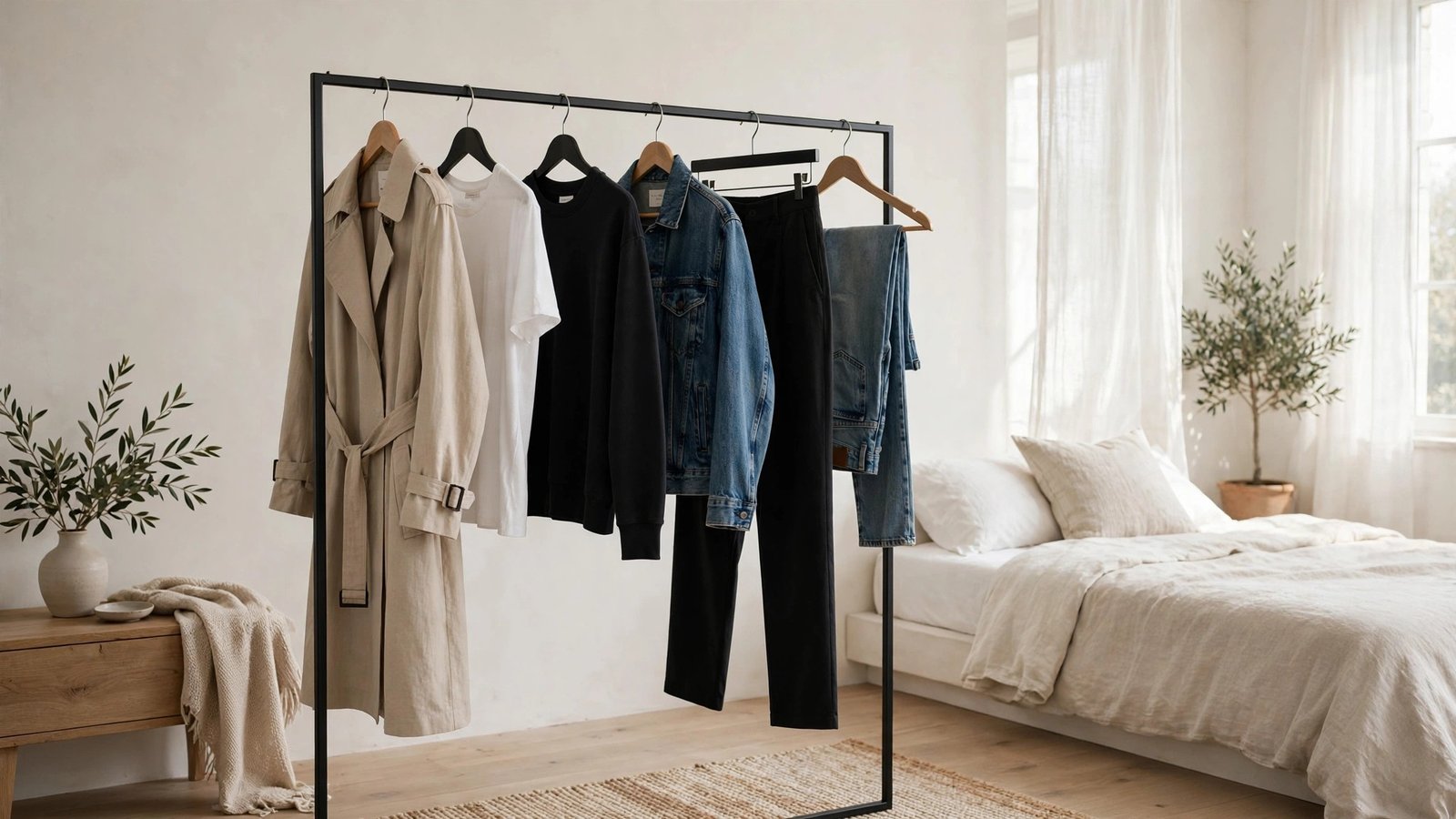

Open your closet. Now count how many pieces you actually wore last month. If you’re like most people, it’s a small fraction of what’s hanging there — the rest is decision fatigue in fabric form. Learning how to build a capsule wardrobe flips that ratio: a small, intentional collection where everything fits, everything matches, and getting dressed takes five minutes instead of twenty-five.
A capsule wardrobe is a curated set of versatile clothing pieces — typically 25 to 50, depending on the method — that all coordinate with each other. It’s not about owning almost nothing or dressing boring. It’s about owning the right things. This guide walks you through the full process: auditing your closet, defining your palette, choosing your pieces, and maintaining the system through every season.
Why a Capsule Wardrobe Works (The Case for Less)
Three arguments, each backed by something real:
1. You waste less money. The average American closet is full of clothes worn a handful of times. A capsule forces every purchase to justify itself against pieces you already own, which kills impulse buying — the most expensive habit in fashion.
2. You waste less time. Psychologists call it decision fatigue: every trivial choice (what to wear, again, for the 300th morning) drains the mental energy you’d rather spend on things that matter. Fewer options, all of them good, means mornings on autopilot.
3. You waste less clothing. This one matters beyond your closet. The EPA reports that Americans generated about 17 million tons of textile waste in 2018 — and roughly two-thirds of it went straight to landfills. Buying fewer, better pieces that you actually wear is one of the most direct ways to shrink your share of that mountain. The EPA’s textile waste data makes the scale hard to ignore:

Every garment you buy with intention — and wear for years instead of a season — is a small vote against that 66% landfill slice.
Step 1: Audit Your Current Closet
Before buying a single thing, confront what you own. Pull everything out — yes, everything — and sort it into four piles:
- Love and wear: fits well, feels like you, gets regular use. These are capsule candidates.
- Maybe: you like it but rarely reach for it. Ask why — wrong size, hard to style, needs tailoring? Be ruthless.
- Donate or sell: good condition but not your style anymore. Quality pieces can find second life through resale platforms or donation — keeping them in circulation rather than in a landfill.
- Toss or recycle: worn out beyond donation. Look for textile recycling drop-offs rather than the trash when possible.
This is the hardest step emotionally, and it’s the one most people skip — which is why most “capsule wardrobes” fail. You can’t build an intentional wardrobe on top of a chaotic one. If decluttering feels overwhelming, our guide on how to declutter your home covers the mindset that makes letting go easier.
Step 2: Define Your Color Palette
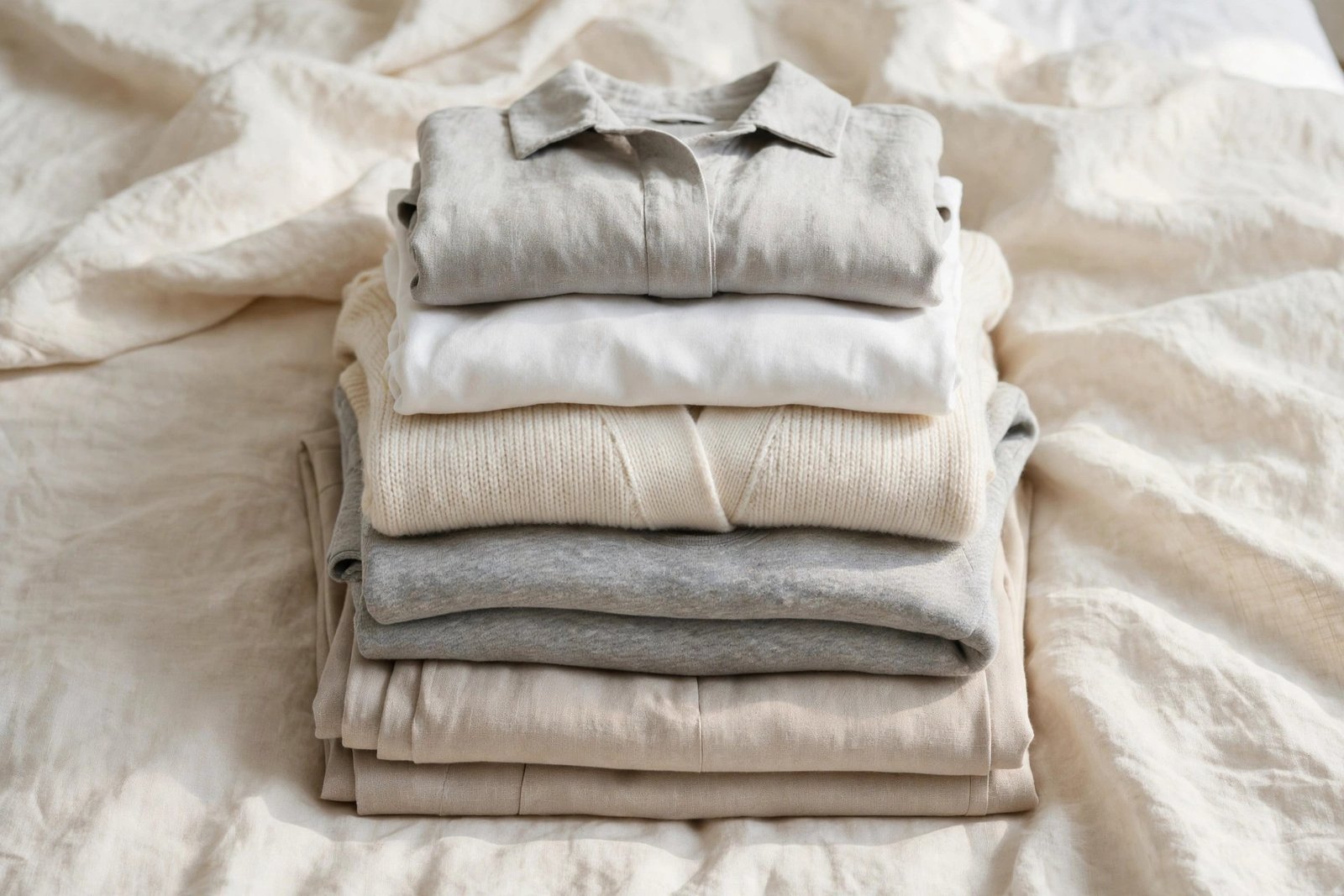
A capsule only works if the pieces mix and match — and that starts with color discipline. Build your palette in three layers:
- Neutrals (60%): black, white, navy, gray, beige, cream. These are your foundation — the pieces that pair with everything.
- Complementary colors (30%): olive, burgundy, denim blue, camel. Colors you love that still play well with your neutrals.
- Accent colors (10%): one or two bolder shades or patterns for personality — a rust sweater, a striped shirt.
Look at your “love and wear” pile from Step 1: the colors that repeat are your natural palette. Build around what you already gravitate toward rather than forcing a Pinterest aesthetic that isn’t you. A capsule in colors you dislike is a capsule you’ll abandon by March.
Step 3: Choose Your Pieces (The 33-Piece Formula)
The most famous capsule framework is Project 333, created by Courtney Carver: 33 items, worn for 3 months. The 33 includes clothing, shoes, accessories, and outerwear — but not underwear, sleepwear, workout clothes, or your wedding ring. It’s a challenge format, but the breakdown is an excellent template even if you don’t follow the rules strictly.
Here’s a sample 33-piece capsule for a temperate fall season:
| Category | Count | Example Pieces |
|---|---|---|
| Tops | 9 | 4 tees, 3 button-downs/blouses, 2 sweaters |
| Bottoms | 5 | 2 jeans, 1 trousers, 1 skirt, 1 casual pants |
| Dresses / jumpsuits | 3 | 1 casual, 1 work-appropriate, 1 evening |
| Outerwear | 3 | 1 coat, 1 jacket, 1 blazer/cardigan |
| Shoes | 5 | Sneakers, boots, flats, heels, sandals (seasonal) |
| Bags | 2 | 1 everyday, 1 evening/small |
| Accessories | 6 | Scarves, belts, jewelry pieces you actually wear |
Adjust the ratios to your life: work-from-home? Shift pieces from office wear to comfortable knits. Formal dress code? More blazers, fewer tees. The number 33 isn’t magic — it’s a forcing function. Whether you land at 28 or 40, the discipline is what matters.

Step 4: Shop Intentionally (The Hard Part)
After the audit, you’ll have gaps — maybe you own six tops and one pair of pants that fit. Fill them with a strict buying protocol:
- Make a list, buy only the list. No list, no purchase. This single rule eliminates most impulse buys.
- The 3-outfit test: a new piece must work with at least three things you already own. If it only pairs with one unworn item, it’s not versatile enough.
- Prioritize fit and fabric. A $40 shirt that fits perfectly beats a $15 one that doesn’t. Check fabric composition — natural fibers and quality blends outlast fast-fashion synthetics by years.
- Consider secondhand first. The secondhand market is booming for good reason: you can find quality pieces at a fraction of retail while keeping clothes in circulation. ThredUp’s annual resale reports consistently show double-digit growth in secondhand apparel.
- Wait 48 hours on any unplanned purchase. Most “must-haves” evaporate by day two.
Budget-wise, a capsule often costs less than a conventional wardrobe over a year — fewer pieces, bought deliberately, worn far more. If you’re watching spending overall, our tips for saving money on groceries free up cash that buys better-quality staples instead of more throwaway fashion.
Step 5: Rotate Seasonally and Maintain
A capsule isn’t a one-time project — it’s a system with a seasonal rhythm:
- At each season change, pull out the next season’s box, reassess every piece (does it still fit? is it worn out?), and retire anything that doesn’t earn its place.
- One in, one out. Every new purchase replaces something. This rule alone prevents closet creep.
- Track what you actually wear for the first month — a simple note on your phone. The pieces you never reach for are telling you something.
- Repair before replacing. A $12 hem or a re-soled shoe extends a favorite piece’s life by years. Build a relationship with a local tailor; it’s cheaper than a new wardrobe.
Storage matters too: keep off-season pieces in labeled boxes or vacuum bags, clean before storing, and keep your active capsule visible and accessible. A capsule buried behind clutter stops being a capsule. The same organization principles in our small-kitchen organization guide apply surprisingly well to closets.

How to Build a Capsule Wardrobe Without These 5 Mistakes
- Copying someone else’s capsule exactly. A capsule built for a California freelancer won’t work for a Chicago teacher. Adapt every template to your climate, dress code, and body.
- Going too minimal too fast. Donating 80% of your closet in a weekend purge feels productive, then you rebuy everything in a panic. Phase the transition over one or two seasons.
- Ignoring lifestyle realities. If you work out five days a week, your athletic wear is a real category — budget pieces for it instead of pretending it doesn’t exist.
- Buying cheap to hit a number. A capsule of flimsy fast-fashion pieces that pill after three washes isn’t minimalism — it’s just a smaller pile of waste. Fewer, better, longer-lasting.
- Forgetting occasion wear. Weddings, funerals, job interviews — life includes events. Keep one versatile formal outfit in the rotation rather than scrambling (and overspending) each time.
Frequently Asked Questions
How many pieces should be in a capsule wardrobe?
Most methods suggest 25–50 pieces, with Project 333’s 33 items being the most famous target. The right number depends on your climate (four seasons need more than one), laundry frequency, and dress code. Start with a count that feels slightly uncomfortable — that’s where the editing happens.
How much does it cost to build a capsule wardrobe?
It varies wildly, but most people spend $500–$1,500 filling gaps after the initial audit — and then spend far less per year afterward since impulse buying stops. Buying secondhand and focusing on cost-per-wear (a $120 coat worn 100 times costs $1.20 per wear) keeps quality affordable.
Can I have a capsule wardrobe with a professional dress code?
Absolutely — capsules arguably work best for professional wardrobes, where consistency reads as polish. Focus on well-fitting neutrals: blazers, trousers, sheath dresses, and quality shoes. A work capsule of 30 pieces can generate months of distinct outfits.
What do I do with clothes that don’t fit the capsule?
Donate or sell what’s in good condition, recycle what’s worn out, and box up seasonal or sentimental pieces you want to revisit later. The EPA’s textile FAQ notes that donation and reuse happen before items ever enter the waste stream — so passing clothes on is genuinely impactful.
How do I handle laundry with so few clothes?
Most capsule wearers do laundry once or twice a week, which is plenty for 30+ pieces. Choose fabrics that don’t need washing after every wear (wool, denim) and air out items between uses. If your laundry situation is difficult — shared machines, laundromat trips — lean toward the higher end of the piece count.
Is a capsule wardrobe just a minimalist trend?
The “capsule” framing is trendy, but the underlying idea — a small wardrobe of versatile, quality pieces — is how most people dressed for most of history. Trends cycle; the economics of buying less and wearing more don’t. Whether you call it a capsule or just “my clothes,” the system works.
Conclusion
Building a capsule wardrobe isn’t about deprivation or a magic number — it’s about alignment between what you own and how you actually live. Audit honestly, define a palette you love, choose versatile pieces with the 3-outfit test, shop with a list, and maintain the system seasonally.
Start this weekend with Step 1: pull everything out and sort it. You’ll likely discover you already own the core of a great capsule — it was just buried under the noise. And every piece you wear for years instead of a season is money saved, mornings simplified, and one less bag headed for that landfill statistic.