
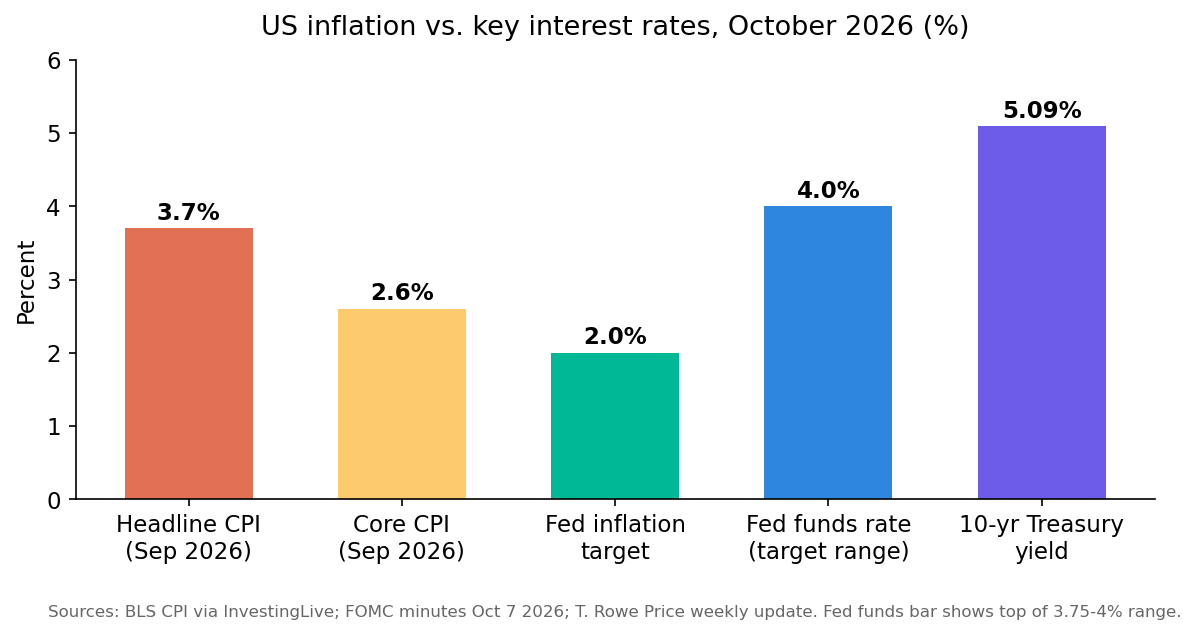
The Federal Reserve has done something it had not done in three years: raise interest rates. In September 2026, the central bank lifted its benchmark rate by a quarter point to a range of 3.75–4%, a unanimous 12–0 vote that reversed course after last year’s cuts. With September inflation coming in hot at 3.7% and mortgage rates posting their biggest jump in four years, the hike is already rippling through household budgets. Here is what the Fed rate hike means for your mortgage, your savings, your investments — and what the central bank is likely to do next.

The Fed Rate Hike Explained: What the Fed Actually Did
At its September 15–16 meeting, the Federal Open Market Committee voted unanimously to raise the federal funds target range by 25 basis points to 3.75–4%, effective September 17. The minutes of that meeting, released on October 7, show a committee that believes it has not seen “sufficient progress on lowering inflation” — and most of the 18 participants expected at least one more increase before year-end.
The backdrop is straightforward: inflation will not stay down. September’s Consumer Price Index came in at 3.7% headline and 2.6% core, both above forecasts, according to market coverage of the release. Fed staff estimated 12-month PCE inflation — the central bank’s preferred gauge — at 3.8% in August, nearly double the 2% target. Surging fuel costs, tariff pass-through, and elevated insurance costs are all feeding the fire.
Notably, the committee is in no hurry to declare victory. New York Fed President John Williams has said there is “no need for urgency” in adjusting policy further, and Vice Chair Philip Jefferson has emphasized that future moves will depend on carefully reading the data. Translation: the Fed will watch, wait, and hike again only if inflation forces its hand.
What It Means for Mortgages: The Pain Is Immediate
If there is one place the rate hike bites fastest, it is housing. Mortgage rates posted their largest increase in four years this past week, as bond markets repriced — the 10-year Treasury yield, which anchors mortgage pricing, whipsawed before settling around 5.09%. Rising inflation, heavy government borrowing, and corporations issuing debt to fund AI data centers are all pushing bond yields up, and mortgage lenders pass those yields straight to borrowers.
The math is brutal for buyers. On a $400,000 loan, every half-point of mortgage rate adds roughly $130–$140 to the monthly payment — money that comes directly out of a household’s budget for decades. If you are house-hunting right now, this is the moment to get ruthless about the numbers: run an honest calculation of how much house you can actually afford at today’s rates before falling in love with a listing, because the monthly payment at 2026 rates looks nothing like the payment at 2021 rates.
Should you buy now or wait?
There is no clean answer, but there is a clean framework. If you find a home you plan to keep for 7–10 years and the payment fits comfortably — leaving room for maintenance, taxes, and insurance — buying at a higher rate is defensible; you can refinance if rates fall. What you should not do is stretch to the absolute maximum the bank will lend you, because rate hikes have a way of coinciding with softer job markets. Keep your emergency fund intact through the purchase — raiding it for a down payment leaves you exposed exactly when the economy is wobbling.
What It Means for Savers: A Rare Bright Spot
Higher rates are not all bad news. Savings accounts, money market funds, and newly issued CDs and Treasury bills now pay yields that were unimaginable a few years ago. If your cash is still sitting in a big-bank savings account earning next to nothing, the Fed just gave you another reason to move it: online high-yield accounts and short-term Treasuries are paying multiples of the national average.
The smart play is boring but effective. Keep your emergency cash liquid and earning a real yield, and direct any extra toward high-interest debt — which just got more expensive. If you are carrying credit card balances into a hiking cycle, attacking them now is one of the highest-return moves available; our guide on how to pay off debt fast walks through the avalanche and snowball methods step by step.
What It Means for Investors and Retirement Savers
The market’s reaction has been split in a telling way. Technology stocks sold off hard on the inflation news — growth shares hate higher discount rates — while money rotated into government bonds, pushing the 10-year yield down from about 5.24% to 5.09% over the week. The Dow still managed to close above 50,000. For long-term retirement savers, the playbook does not change much: keep contributing, keep diversified, and do not try to time the Fed.
One thing the hike does change is the math on bonds. With yields at multi-year highs, high-quality bonds finally offer genuine income again — a meaningful shift for anyone nearing retirement who spent the 2010s starved for yield. If you are young and decades from retirement, consider whether this is the moment to learn how to start a Roth IRA: contributing after-tax dollars now, while you are early in your career, lets decades of compounding do the heavy lifting regardless of what the Fed does next quarter.
What Happens Next: All Eyes on October 27–28
The FOMC meets next on October 27–28, and as of mid-October, markets are betting heavily on a hold: futures price roughly an 80% chance of no change, with a further 25-basis-point hike more likely in December. Fed officials spent early October actively cooling October-hike expectations, arguing they need more data before moving again.
The wildcards are the same ones that forced September’s hike: energy prices, tariff effects working through supply chains, and whether consumer spending — which the Fed’s own Beige Book notes is increasingly driven by high-income households — finally cools. If inflation re-accelerates into year-end, the “most participants” who expected another hike will get their wish. If it fades, the Fed can sit on its hands and let the higher rates do their slow work.
The Bottom Line for Your Money
Strip away the market commentary and the Fed’s September hike leaves households with a short to-do list. Borrowers: assume rates stay high for a while and budget accordingly — do not count on a quick reversal. Savers: move idle cash into something that actually pays. Debt holders: kill high-interest balances before they compound against you. Homebuyers: recalculate affordability at real 2026 rates, not the rates you remember from a few years ago.
Rate hikes work slowly — the full effect of a move takes 12 to 18 months to filter through the economy. The Fed knows this, which is why it is moving in quarter-point steps and watching the data. Your best response is the same: small, deliberate adjustments now beat panicked moves later. As of October 2026, the era of cheap money is definitively over, and financial plans built for 3% mortgages need a rewrite for a 5%-yield world.
Frequently Asked Questions
When did the Fed last raise interest rates before September 2026?
Three years earlier. The September 2026 hike — a quarter point to 3.75–4%, effective September 17 — was the first increase since 2023, reversing cuts the Fed had made last year.
Why did the Fed raise rates?
Persistent inflation. September CPI hit 3.7% headline and 2.6% core, both above forecasts, and the Fed’s preferred PCE gauge was running near 3.8% — almost double the 2% target. The committee concluded it had not seen sufficient progress on bringing inflation down.
Will the Fed raise rates again in October?
Probably not. Markets price about an 80% chance of no change at the October 27–28 meeting, and Fed officials have signaled they want more data first. Most FOMC participants do expect at least one more hike by year-end, with December the likeliest candidate.
How does the Fed rate hike affect mortgage rates?
Indirectly but powerfully. The Fed controls short-term rates; mortgages track the 10-year Treasury yield, which rises when bond investors expect persistent inflation and more Fed tightening. Mortgage rates just posted their largest weekly increase in four years.
Is a rate hike good or bad for savers?
Good, in the short run. High-yield savings accounts, money market funds, CDs, and Treasury bills pay more when rates rise. It is one of the few direct benefits households get from tighter policy.
Should I change my investments because of the hike?
For most long-term investors, no dramatic changes are warranted. Keep diversified, keep contributing to retirement accounts, and avoid timing the market around Fed meetings. The one adjustment worth considering: with bond yields at multi-year highs, high-quality bonds deserve a fresh look in conservative portfolios.
Conclusion
The Fed’s first rate hike in three years marks a clean break from the easy-money era: borrowing costs more, savings finally pay, and the housing market takes another hit. With inflation still running hot and the October 27–28 meeting likely to hold steady, the message from the central bank is patience — for itself, and for your finances. Adjust your budget for a higher-rate world, put your cash to work, and let the Fed’s slow medicine do its job.