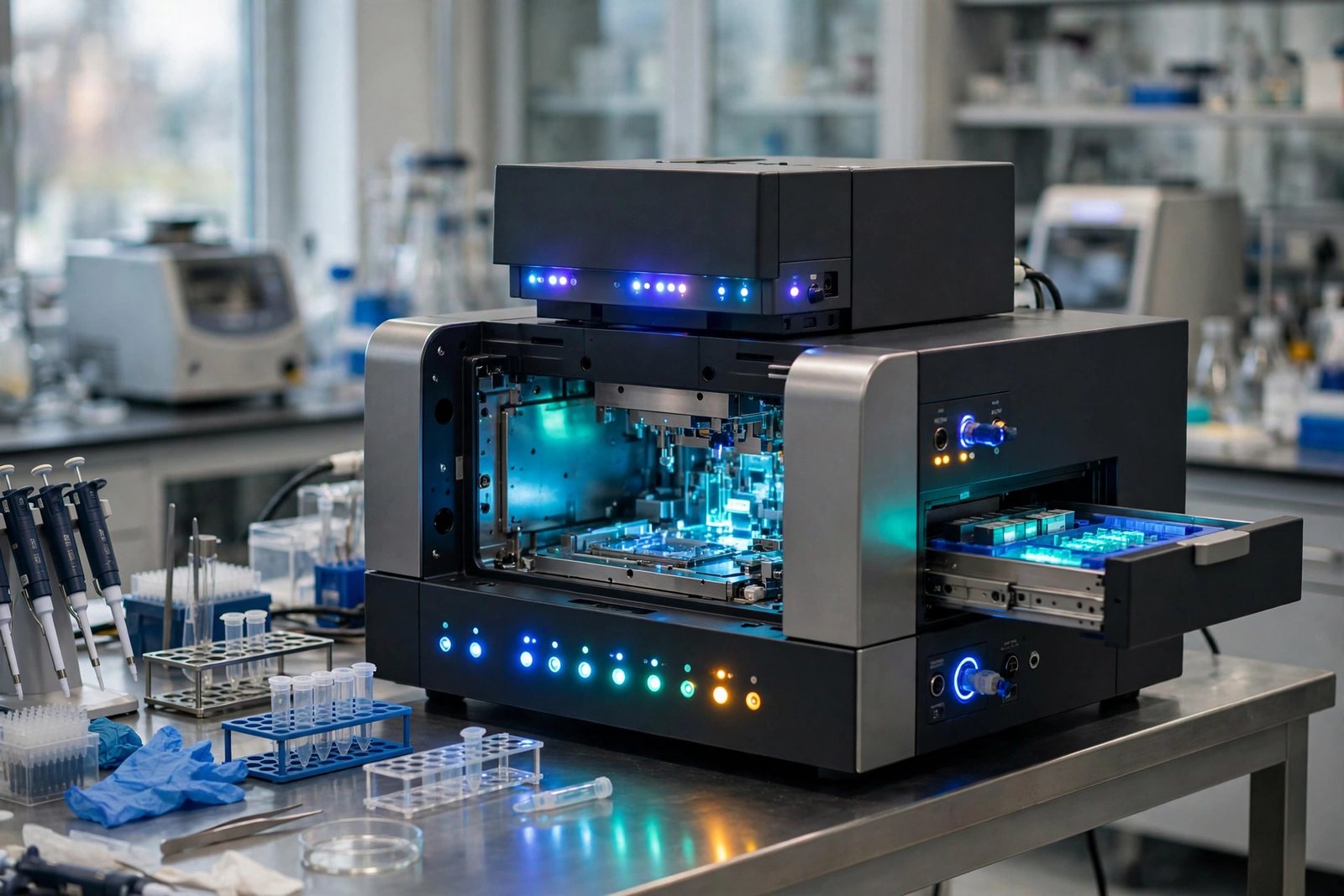

On October 9, 2026, the diagnostics company Natera announced that its experimental multi-cancer blood test had been granted Breakthrough Device designation by the U.S. Food and Drug Administration. The test aims to do something medicine has chased for decades: detect many different cancers from a single blood draw, long before symptoms appear. It is a genuinely exciting milestone — and also one that needs careful interpretation. Here is what the designation actually means, what the test does, and what it does not promise yet.

What Natera Announced
Natera, a Texas-based company best known for cell-free DNA testing, said the FDA granted Breakthrough Device designation to its multi-cancer early detection (MCED) assay. The test analyzes fragments of cell-free DNA circulating in the blood, looking for molecular signals associated with cancer. In granting the designation, the FDA reviewed data spanning 12 cancer types, evaluating the test’s sensitivity (how often it finds cancer when present), specificity (how often it correctly clears people without cancer), and something called cancer signal origin — the test’s ability to predict where in the body a detected signal is coming from, so doctors know where to look next.
Natera described the results as compelling enough to support the designation but did not disclose specific performance numbers, the study size, or which 12 cancers were included. That is normal at this stage — the designation is about the program’s promise, not a final verdict on the product.
The Science: What Is Cell-Free DNA?
To understand what Natera’s test is looking for, it helps to know what cell-free DNA is. As cells throughout the body naturally die and renew, they shed tiny fragments of DNA into the bloodstream. In a healthy person, this background debris is mostly routine. But tumors also shed DNA — and tumor DNA carries distinctive molecular signatures, including abnormal methylation patterns and mutations that healthy cells do not share.
A multi-cancer blood test is essentially a very sensitive fishing expedition: draw blood, sequence the cell-free DNA floating in it, and run the results through computational models trained to distinguish cancer signals from noise. The “cancer signal origin” piece Natera emphasizes is particularly important — it is not enough to say “something looks wrong somewhere”; the test tries to predict which organ the signal came from, so follow-up imaging and biopsies can be targeted rather than scattershot.
This is the same underlying technology behind “liquid biopsies” already used in cancer care to monitor treatment response and detect recurrence. The leap Natera and its competitors are attempting is moving liquid biopsy upstream — from monitoring known cancers to screening apparently healthy people for unknown ones. That leap is much harder, because the signal is fainter and the consequences of being wrong fall on people who feel perfectly fine.
What “Breakthrough Device Designation” Actually Means
This is the part most headlines gloss over, and it matters enormously. Breakthrough Device designation is not FDA approval. It does not mean the test is proven safe and effective, and it does not authorize Natera to sell it as a screening tool. As Patient Care Online’s coverage explains, the designation is intended to speed up development and review of the investigational assay — it gives Natera a priority lane for working with regulators, with faster feedback and a more efficient path toward eventual premarket approval or clearance.
To earn the designation, a device must target a life-threatening or irreversibly debilitating condition and meet at least one additional bar: representing breakthrough technology, having no approved alternatives, or offering significant advantages over what exists. A blood test that screens for multiple cancers at once clears that bar conceptually — today, routine screening exists for only a handful of cancers (breast, cervical, colorectal, lung in high-risk groups, prostate by shared decision), leaving most cancers with no screening option at all.
| FDA Breakthrough Device Designation | Full FDA Approval / Clearance |
|---|---|
| Signals the FDA sees promise and will prioritize the review process | Means safety and effectiveness have been demonstrated to the FDA’s standard |
| Does not authorize marketing the test to patients | Authorizes marketing for the approved use |
| Based on preliminary data (here: 12 cancer types, no public performance figures yet) | Based on complete clinical evidence, including benefits and harms |
| Next step: continued development and formal review | Next step: real-world use with post-market surveillance |
Why a Multi-Cancer Blood Test Matters
The logic behind MCED testing is simple and powerful. Most cancers are curable when caught early and deadly when caught late — yet the majority of cancer types have no recommended screening test. A single blood draw that could flag dozens of cancers would fill the largest gap in preventive medicine. The National Cancer Institute has noted that multi-cancer detection tests could extend screening to many additional organ sites through one sample.
The core challenge is accuracy in both directions. A test that misses cancers gives false reassurance; a test that cries wolf sends healthy people into cascades of scans, biopsies, and anxiety. That is why the FDA looked specifically at sensitivity, specificity, and cancer signal origin — and why, as OncLive’s analysis notes, the crucial unanswered question is whether this approach actually reduces cancer deaths, which requires rigorous long-term clinical evaluation, not just promising assay data.
Where This Fits in the Bigger Picture
Natera is not alone in this race. Several companies are developing MCED tests, and the field has seen both enthusiasm and setbacks over the past few years — including debates about false-positive rates and whether early detection via blood actually changes outcomes. The FDA’s designation does not pick a winner; it simply acknowledges that Natera’s program has shown enough to merit an accelerated conversation with regulators.
For patients, the practical takeaway as of October 2026 is patience. No MCED test is currently FDA-approved for general population screening, and Natera’s assay remains investigational. What you can do today is unglamorous but proven: keep up with the screenings that do exist and are recommended for you — mammograms, colonoscopies or stool tests, Pap smears, and lung screening if you qualify. Those tests have decades of evidence behind them.
And while no blood test can substitute for daily habits, the foundations of long-term health remain stubbornly ordinary: keeping blood pressure in a healthy range naturally, getting genuinely restorative sleep, and building movement into your routine — even starting to run when you’re out of shape with a gradual plan. Early detection is the safety net; the habits are the foundation.

What to Watch Next
The milestones that actually matter from here: publication of the underlying data (the 12 cancer types, sensitivity and specificity figures, study populations), the design and results of prospective clinical trials measuring real outcomes, and ultimately an FDA submission for approval or clearance. Each of those is months to years away. Breakthrough designation shortens the regulatory conversation; it does not shorten the science.
It is also worth watching how the test would be used if approved. Screening the general population is a far higher bar than testing high-risk patients — the lower the underlying cancer rate, the more false positives any test produces. Expect the first real-world role, if the data holds up, to be in higher-risk groups before any broad rollout.
Frequently Asked Questions
What is Natera’s multi-cancer blood test?
It is an investigational assay that analyzes cell-free DNA in a blood sample to screen for signals of multiple cancers at once. The FDA reviewed data from 12 cancer types when granting it Breakthrough Device designation in October 2026.
Does the FDA designation mean the test is approved?
No. Breakthrough Device designation is not approval, clearance, or marketing authorization. It is a regulatory fast lane: the FDA works more closely with the company to speed development and review. The test’s safety and effectiveness are not yet established.
When will the test be available to patients?
There is no timeline yet. Natera must complete development, run clinical trials, and submit for FDA review. Realistic expectations are measured in years, not months.
How accurate is the test?
We do not know yet. Natera has not publicly disclosed sensitivity, specificity, or cancer-signal-origin figures, the study size, or which 12 cancers were studied. Those details matter enormously and will need to come out before anyone can judge the test.
Are there other multi-cancer blood tests in development?
Yes — several companies are pursuing MCED tests, and the field is competitive. None is currently FDA-approved for general population screening as of October 2026.
Should I ask my doctor about it?
You can mention it at your next checkup, but there is nothing to order yet. Your doctor will likely advise sticking with established screenings for now and revisiting MCED testing once real clinical data and FDA review exist.
Conclusion
The FDA’s Breakthrough Device designation for Natera’s multi-cancer blood test is a legitimate milestone: regulators looked at data across 12 cancer types and decided the program deserves a fast lane. But a fast lane is not a finish line. What matters now is published data, rigorous trials, and proof that finding cancers earlier this way actually saves lives. As of October 2026, the right stance is informed optimism — excited about where this is heading, disciplined about what it has actually proven.