

For decades, Alzheimer’s research has been a one-plot story: sticky amyloid plaques gum up the brain, and if scientists can just clear them away, the disease stops. This week, that story got a genuine plot twist. The Alzheimer’s APOE4 gene myelin discovery — published October 15, 2026 in the journal Cell Stem Cell — shows that the most dangerous Alzheimer’s gene variant doesn’t just let plaques pile up. It quietly dismantles the brain’s wiring itself, by sabotaging the cells that insulate your neurons.
Neuroscientists at MIT’s Picower Institute for Learning and Memory have identified the exact molecular defect behind it. The APOE4 variant — the strongest known genetic risk factor for late-onset Alzheimer’s — suppresses a communication pathway called Wnt signaling inside oligodendrocytes, the cells that manufacture myelin, the fatty sheath that insulates nerve fibers. Starved of that signal, these cells hoard fat as greasy intracellular droplets instead of spending it on building insulation. The result is fraying white matter — the brain’s cabling — and, crucially, the researchers showed the damage can be reversed. As reported October 15–20, 2026 by MedicalXpress, Neuroscience News, Technology Networks, GEN, and healthandfamily.in, the finding hands the field something it has been starving for: a brand-new druggable target that has nothing to do with amyloid plaques.
What MIT’s Team Actually Found
The study, led by Picower Professor Li-Huei Tsai with lead author Leyla Akay, connects three things scientists have long suspected were related but could never quite link: the APOE4 gene, fat metabolism in the brain, and the slow breakdown of white matter in Alzheimer’s patients.
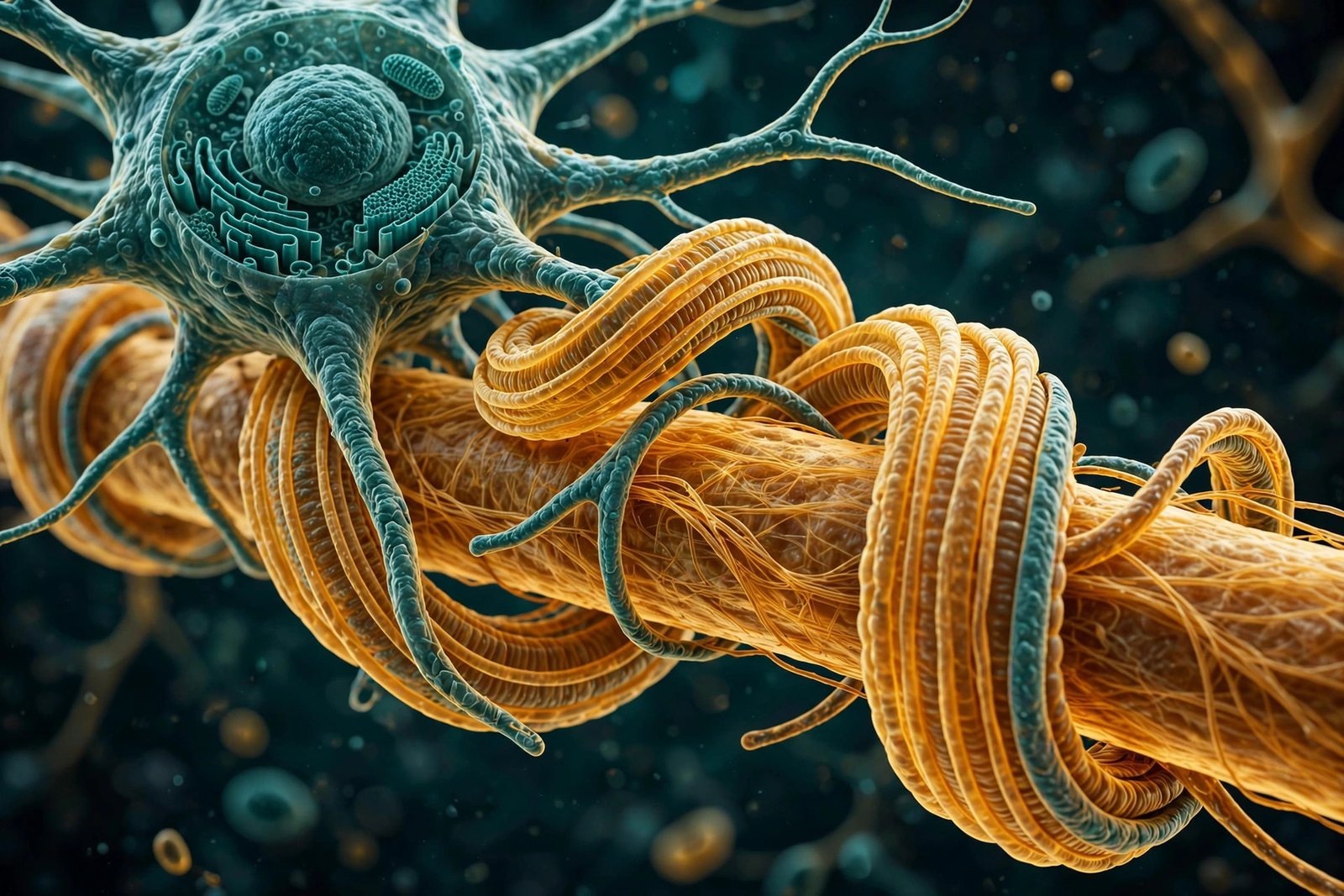
Here is the chain of events the researchers uncovered. Inside a healthy brain, oligodendrocytes constantly maintain myelin, the fatty wrapping around the long arms (axons) of neurons. Myelin is what lets electrical signals travel fast and cleanly — without it, neurons misfire, slow down, and eventually die back. The new research shows that when these cells carry the APOE4 variant, a signaling pathway called Wnt goes quiet. Wnt is essentially the “build myelin” instruction set. With it suppressed, oligodendrocytes stop deploying their fat supplies to maintain insulation and instead stockpile them as lipid droplets — tiny greasy blobs trapped inside the cell.
This is not the lab’s first encounter with those droplets. The same MIT group reported back in 2022 that APOE4 triggers lipid-droplet buildup in oligodendrocytes. What the October 2026 study adds is the missing mechanism: why the droplets form, and — far more importantly — how to stop it. The team demonstrated that restoring Wnt signaling brought myelination back in both human cell cultures and in Alzheimer’s-model mice. In other words, the wiring damage isn’t just observable; it’s reversible, at least in the lab.
Myelin, Oligodendrocytes, and Wnt — in Plain English
Think of neurons as a city’s electrical grid: axons are the wires, myelin is the rubber insulation, and oligodendrocytes are the maintenance crews that wrap and re-wrap it. White matter — about half the human brain — is mostly these insulated cables bundled together. Strip the insulation and you get short circuits, signal loss, and eventually dead lines.
Wnt signaling is the foreman’s radio: the chemical messages telling the crew to keep building. What the MIT team found is that APOE4 effectively jams that radio. The crew is still there, and the raw materials (fats) are still being delivered, but without instructions, the workers just pile the materials in the corner — those are the lipid droplets — instead of doing the job. Over years and decades, the insulation frays. Signals degrade. Memory circuits, which depend on precisely timed firing, start to fail.
This reframes APOE4 itself: long known as a risk multiplier discussed mostly in terms of amyloid plaques, it now looks like an independent attack on the brain’s infrastructure — a second front in the disease that plaque-clearing drugs never touch.

The CRISPR Detective Story: How They Found Wnt
One of the most satisfying parts of this study is how the team found the culprit. They didn’t start with a hunch about Wnt. They ran a genome-wide CRISPR knockout screen in human oligodendrocytes carrying the APOE4 variant — systematically switching genes off, one by one, across the entire genome, and watching which shutdowns changed the cells’ behavior.
Out of thousands of candidates, the Wnt signaling pathway emerged as the switch that mattered: manipulating Wnt-related genes produced the lipid-droplet hoarding and myelin failure. That kind of unbiased screen is powerful because it doesn’t assume the answer — the biology points to it.
The team then validated the finding in human cell cultures and in living Alzheimer’s-model mice. Restoring Wnt activity repaired myelination in both. Consistency across models — dish and animal — is what elevates this from an interesting observation to a genuine mechanism.
From Broken Mechanism to Druggable Target
A mechanism is scientifically satisfying. A druggable target is medically exciting. This study delivers both, thanks to an experiment involving an enzyme called GSK3b and a small molecule called CHIR99021.
GSK3b is a brake pedal on Wnt signaling — it normally keeps the pathway in check. The researchers treated Alzheimer’s-model mice with CHIR99021, a compound that inhibits GSK3b, effectively releasing the brake. The results, as described across this week’s coverage, were striking: lipid droplets cleared out of the oligodendrocytes, Wnt activity was restored, axonal growth was promoted, and — most importantly — myelination in the hippocampus was repaired.
The hippocampus is the brain’s memory headquarters and one of the first regions to deteriorate in Alzheimer’s — repairing myelin there is exactly the kind of result that makes drug developers pay attention.
To be clear about what this is and isn’t: CHIR99021 is a research tool, not a medicine. Nobody is suggesting patients take it. What it proves is that the Wnt pathway is a legitimate therapeutic lever — a place where a future, carefully designed drug could intervene. The study converts APOE4’s myelin damage from a grim observation into an engineering problem: find a safe way to restore Wnt signaling in oligodendrocytes, and you may be able to protect the brain’s wiring.
How Much Does APOE4 Raise the Risk? The Numbers
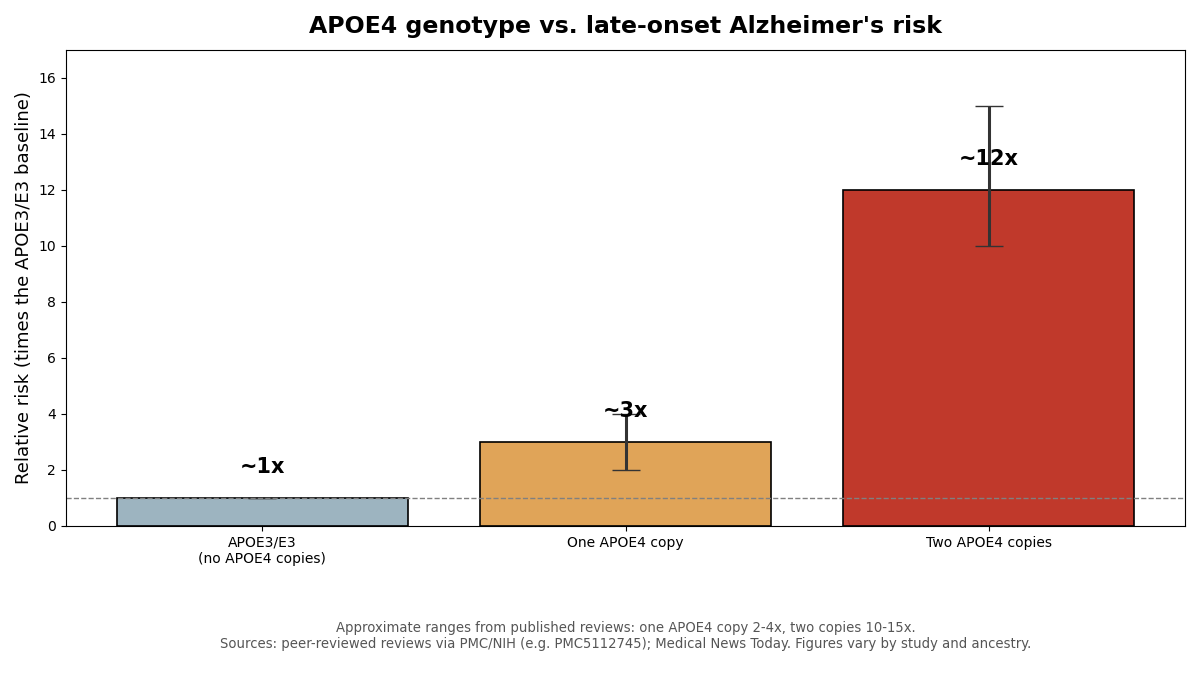
To appreciate why this discovery matters, it helps to see the scale of APOE4’s influence. It remains the strongest known genetic risk factor for late-onset Alzheimer’s. Compared with the common APOE3/E3 genotype, carrying one copy of APOE4 raises risk roughly threefold (published estimates range from about 2x to 4x), while carrying two copies raises it on the order of twelvefold (estimates range from about 10x to 15x), according to published reviews of APOE genetics. Those are population-level figures, not personal predictions — many carriers never develop the disease — but they explain why a mechanistic breakthrough for this particular gene variant is such a big deal. A druggable pathway downstream of APOE4 could, in principle, help the very people at highest genetic risk.
Why This Alzheimer’s APOE4 Gene Myelin Discovery Is a Plot Twist for the Whole Field
For most of the last thirty years, Alzheimer’s drug development has been an amyloid story. The amyloid hypothesis — plaques drive the disease, so clearing them should stop it — absorbed the lion’s share of funding, trials, and hope. The returns have been sobering. It took until 2023 for the first traditional FDA approval of an anti-amyloid antibody, lecanemab, followed by donanemab in 2024. Both drugs do clear plaques, and both slow cognitive decline — but only modestly, by roughly a quarter to a third on trial measures, while carrying real safety risks including brain swelling and bleeding (ARIA), which occur more often in APOE4 carriers. An earlier antibody, aducanumab, was withdrawn from the market in 2024. A recent review of the anti-amyloid antibodies sums it up as substantial plaque lowering with modest average slowing of decline — progress, but not the victory the field spent decades chasing.
That context is what makes the myelin finding land so hard: even if you cleared every plaque perfectly, APOE4 carriers would still have a second, independent problem — their brain’s insulation quietly fraying because a signaling pathway went dark. No amyloid drug addresses that. The discovery shifts the spotlight toward lipid metabolism and myelin repair as a parallel therapeutic frontier — one that could eventually complement plaque-clearing drugs, the way new frontiers in early detection are complementing treatment advances elsewhere in medicine.
Three research frontiers, compared
| Approach | What it targets | Where it stands |
|---|---|---|
| Amyloid-targeting | Beta-amyloid plaques between neurons | Decades of focus; antibodies (lecanemab, donanemab) clear plaques and modestly slow decline, with ARIA safety risks. Does not address myelin damage. |
| Tau-targeting | Tau tangles strangling neurons from within | Active research area; no approved therapy yet. A complementary front — tangles and myelin loss may reinforce each other. |
| Lipid metabolism & myelin repair | APOE4 → suppressed Wnt → lipid droplets instead of myelin | Brand-new druggable axis from the October 2026 MIT study. Reversed in human cells and Alzheimer’s-model mice; no human drug yet. |

The Honest Caveats: Mice, Molecules, and the Long Road to the Clinic
Breakthrough headlines have burned Alzheimer’s patients and families before, so let’s be blunt about what this study is not.
These are lab cultures and mice, not people. No mouse fully reproduces Alzheimer’s disease, and many findings that looked miraculous in mice have failed in human trials. The mechanism is real biology; whether fixing it helps human patients is still an open question.
There is no drug yet. CHIR99021 is an experimental compound researchers use to probe biology — it is not a medicine, not in trials for this purpose, and not something anyone should seek out. Turning a validated pathway into a safe, brain-penetrating drug that selectively restores Wnt signaling in the right cells is years of work, with no guarantee of success.
The timeline is measured in years, probably a decade or more. Even in the best case — a drug candidate identified, safety established, trials designed and run — patients are waiting years, not months. What this study changes is the direction of the search, not its speed.
None of that diminishes the finding. A field that has spent decades with essentially one idea now has a second, mechanistically detailed, experimentally reversible one. That is genuinely rare, and genuinely worth the excitement — held alongside patience.
Frequently Asked Questions
What is APOE4, exactly?
APOE4 is a variant of the APOE gene, which makes a protein that ferries fats and cholesterol around the brain and body. Everyone inherits two copies of the APOE gene, one from each parent, and the variants are called E2, E3, and E4. E3 is the common, neutral form; E4 is the one strongly linked to late-onset Alzheimer’s, raising risk about 3x with one copy and 10–15x with two, per published reviews.
Does carrying APOE4 mean I will definitely get Alzheimer’s?
No. APOE4 is a risk factor, not a destiny. Many people who carry one or even two copies never develop Alzheimer’s, and many people who develop the disease carry no APOE4 at all. Genes load the dice; they don’t decide the roll. If you’ve learned you carry APOE4 — through a doctor-ordered test or a consumer DNA kit — the right next step is a conversation with your clinician, not panic.
What is the Wnt signaling pathway, in simple terms?
Wnt is a family of chemical messages cells use to coordinate maintenance projects. In oligodendrocytes, it’s essentially the “keep building myelin” instruction — APOE4 mutes it, so cells stockpile fat as droplets instead of maintaining insulation. Restoring the signal restored the building work.
Is there a drug based on this discovery that I can take now?
No. The compound used in the mouse experiments, CHIR99021, is a laboratory research tool, not an approved medicine. No Wnt-targeting Alzheimer’s drug exists, and human trials — if they happen — are years away. Anyone selling you a “myelin repair” supplement based on this week’s headlines is selling hype, not science.
What can I do now to protect my brain health?
The honest answer: the same pillars researchers keep coming back to for vascular and brain health. Keep your heart healthy (what’s good for the heart is good for the brain), get regular aerobic exercise, follow healthy eating patterns, prioritize sleep, stay mentally and socially active, and manage blood pressure, cholesterol, and diabetes with your doctor. None of this is as exciting as a gene breakthrough, but unlike the breakthrough, it’s available today.
The Bottom Line
The October 2026 MIT discovery reframes the most important Alzheimer’s gene we know. APOE4 isn’t just a plaque problem — it’s a wiring problem, caused by a muted Wnt signal that turns myelin-building cells into fat hoarders. Scientists found the mute button with a genome-wide CRISPR screen, and showed in cells and mice that unmuting it repairs the damage. That makes Wnt signaling a new druggable target and lipid metabolism a new frontier in Alzheimer’s research.
The caveats are real: dishes and mice, no drug, years from the clinic. But direction matters in science, and the Alzheimer’s field finally has a genuinely new one — with a mechanism, a target, and proof the damage can run in reverse. For families watching this disease steal people they love, that is news worth following closely.