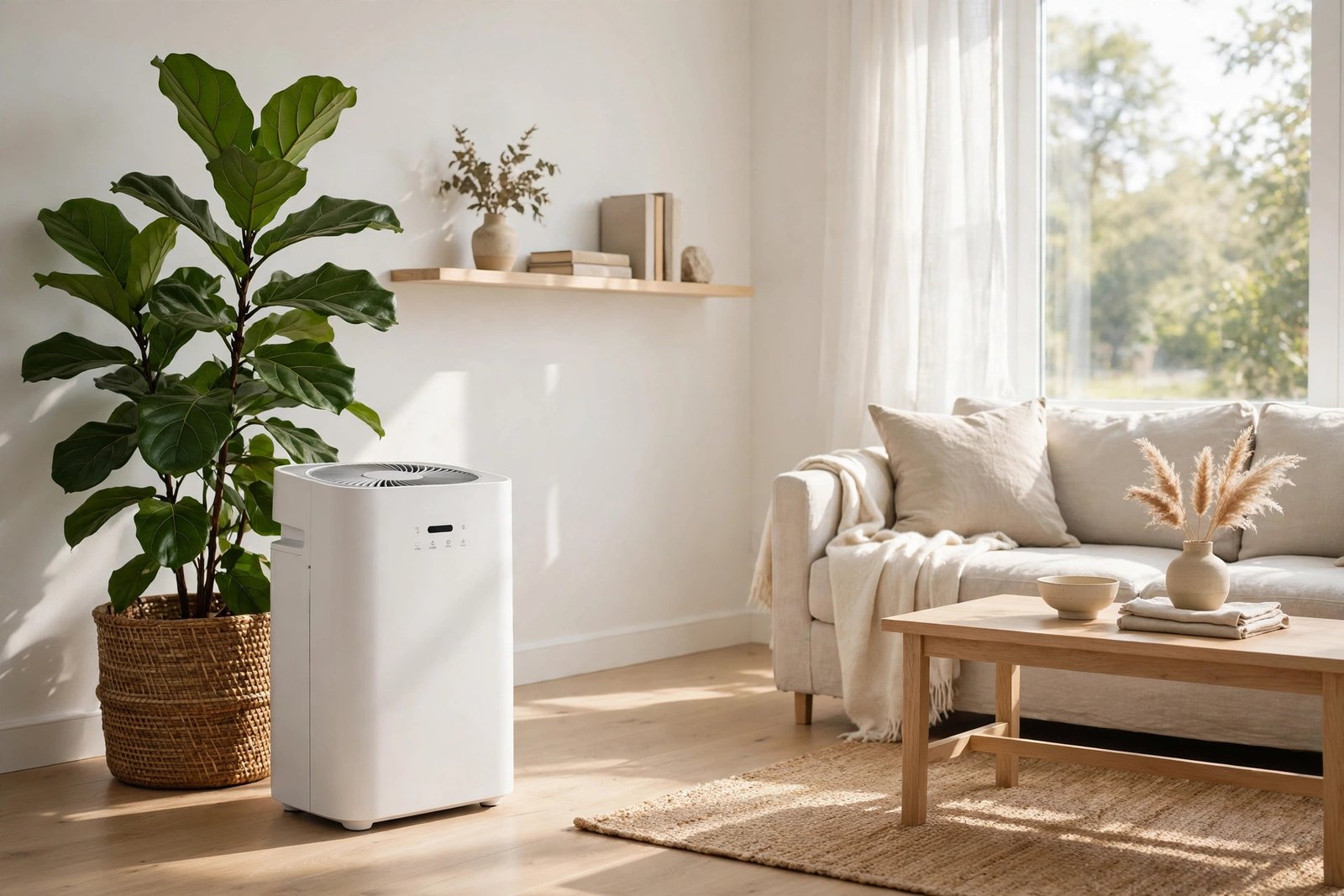

Best Air Purifier for Allergies: 5 Picks That Actually Clear the Air (2026)
If you’ve ever bought an air purifier, run it for a month, and still woken up sneezing, you already know the dirty secret of this category: most buying advice focuses on the wrong numbers. The box shouts about square footage and fancy apps, but the only things that determine whether the best air purifier for allergies is the one in your bedroom are filtration quality, clean-air output, and a filter bill you won’t dodge.
There is real science behind this. Portable air cleaners with HEPA filtration can reduce airborne allergens — pollen, dust-mite debris, pet dander, mold spores — and the EPA’s portable air cleaner guidance notes they should be sized to the room and never emit ozone. This guide is a research-based roundup: no unit was sent to a lab by us, so every pick below is backed by independently verified specs — AHAM-verified CADR ratings and detailed comparisons from reviewers like PureAirScout’s 2026 allergy guide and Loiter Point’s CADR-ranked roundup — with street prices checked in October 2026.
How We Picked the Best Air Purifier for Allergies
Allergy relief from an air purifier comes down to five criteria. Skip any one of them and you’ll own an expensive fan.
1. True HEPA filtration, not “HEPA-type”
True HEPA is a defined standard: it captures 99.97% of particles at 0.3 microns — the most penetrating particle size. Pollen runs 10–100 microns, dust-mite debris 1–10 microns, pet dander 2.5–10 microns, mold spores 1–30 microns — all well within what true HEPA catches. “HEPA-type,” “HEPA-like,” or “HEPA-grade” are marketing terms with no defined standard behind them; independent comparisons consistently warn that such filters can capture as little as 85–95% at 0.3 microns, and that gap matters when a unit recirculates your room’s air hundreds of times a day. Every pick below uses true HEPA (or Blueair’s HEPASilent hybrid, which pairs mechanical and electrostatic capture).
2. CADR matched to your room
CADR (Clean Air Delivery Rate) is the single most useful number in this category. It tells you how many cubic feet of genuinely clean air a unit produces per minute, combining filter efficiency with fan power. It’s reported for smoke, dust, and pollen; smoke CADR is the smallest-particle (most conservative) figure, so it’s the one allergy buyers should read first. The practical rule: your smoke CADR should be at least two-thirds of your room’s square footage (a 300 sq ft room wants a CADR of 200+), and allergy sufferers do best with 4–5 full air changes per hour. Ignore box claims quoting a single air change per hour — they inflate coverage by a factor of four or five.
3. Noise you’ll actually live with
The best purifier for allergies is the one you never turn off. Sleep-mode noise around 22–26 dB is genuinely bedroom-quiet; anything above 35 dB on its lowest setting will get switched off at night, and a purifier that’s off captures nothing.
4. Filter replacement costs
This is where budget picks can quietly become expensive. Replacement HEPA filters run roughly $27–$70 per set and need swapping every 6–12 months, depending on the model and how dusty your home is. Before buying, do the ownership math: a $110 purifier with $60-a-year filters costs more over three years than a $190 purifier with $50 filters. Each pick below lists its real annual filter cost.
5. Smart features that earn their keep
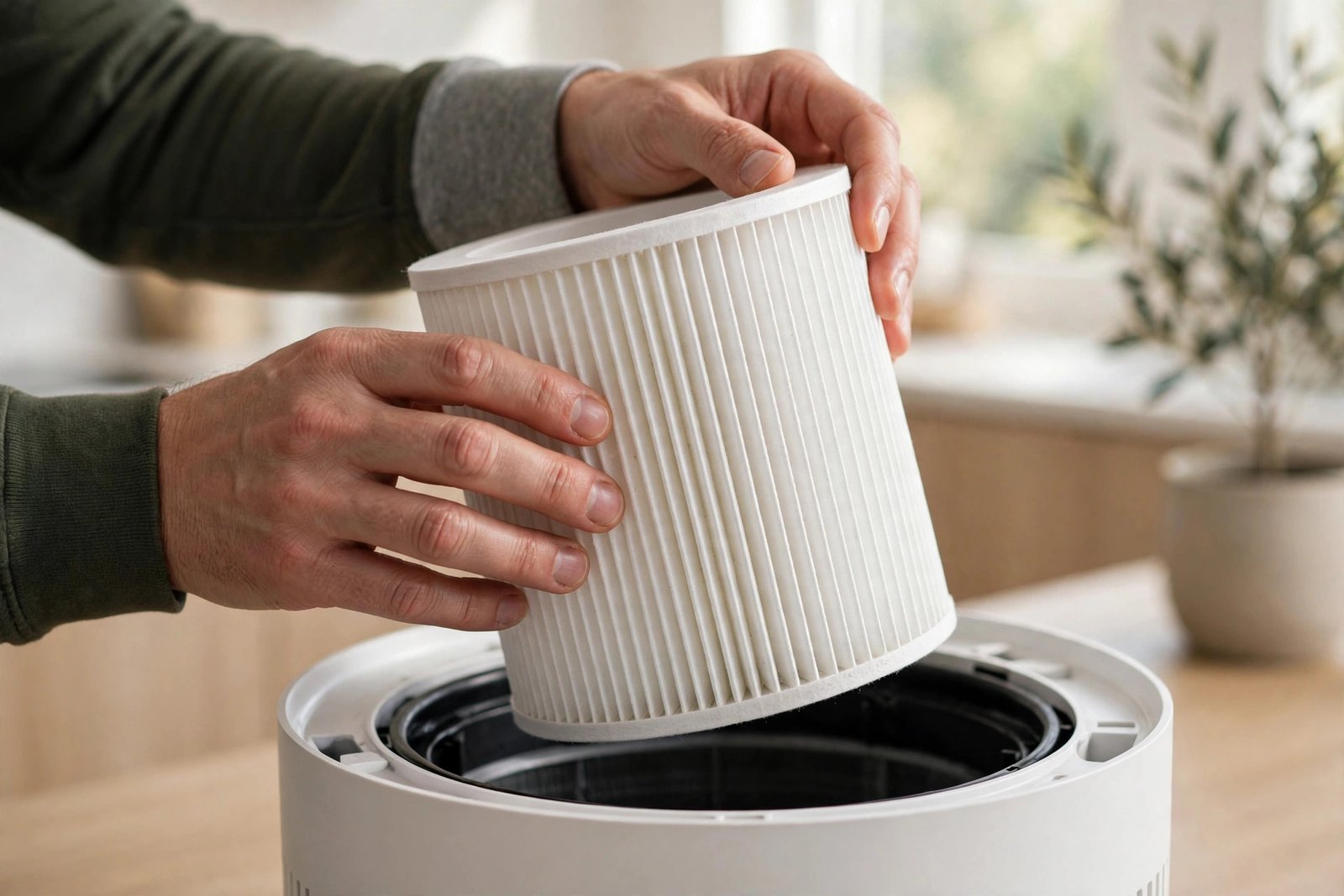
An air-quality sensor with a responsive auto mode is genuinely useful — the unit ramps up when you cook, vacuum, or open a window, then settles back down. Ionizers and “plasma” extras are optional at best; make sure any such feature can be switched off and that the unit stays ozone-safe.
The 5 Best Air Purifiers for Allergies in 2026
1. Levoit Core 400S — Best overall for allergies
The Core 400S hits the sweet spot most allergy households actually need: verified performance, quiet operation, and smart features that aren’t gimmicks. Its AHAM-verified CADR runs about 260 CFM for dust and pollen (independently listed at 231 smoke / 240 dust / 259 pollen CFM by reviewers), which honestly serves rooms around 350–400 square feet at the 4–5 air changes per hour that matter for allergy relief. The H13 True HEPA three-stage filter (pre-filter, HEPA, activated carbon) covers pollen, dander, and dust-mite debris, while a laser particle sensor drives an auto mode that responds to cooking, cleaning, and open windows. The VeSync app gives you real air-quality readings, scheduling, and filter-life tracking — the rare smart features people actually use.
Pros: AHAM-verified CADR; genuinely quiet sleep mode (~22–24 dB); useful app and auto mode; Energy Star rated at just 38W.
Cons: Filters last 6–8 months rather than a year, so annual filter cost (~$75–100) edges above simpler rivals; more than a small bedroom needs.
Best for: Master bedrooms, living rooms, and home offices up to ~400 sq ft. Street price around $190–220.
2. Coway Airmega Mighty2 (AP-1512HH) — Best value
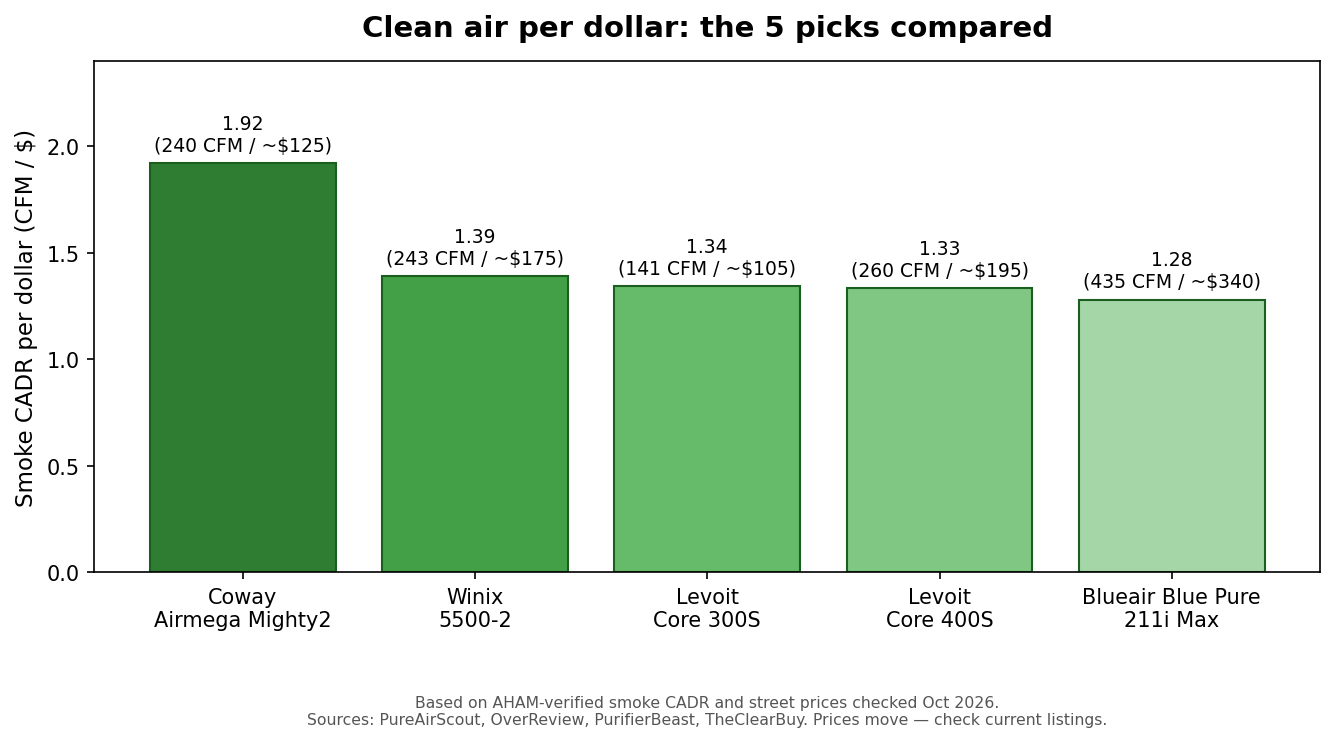
Coway’s Mighty has been the default answer in air-purifier roundups for the better part of a decade, and the refreshed Mighty2 keeps the formula: ~240 CFM of AHAM-verified smoke CADR, four-stage filtration (pre-filter, deodorization, True HEPA, ionizer that can stay off), and a simple auto mode with an air-quality ring. It realistically handles ~360 sq ft — the standard American bedroom or a mid-size living room. There’s no app and no Wi-Fi, which is honestly the appeal: set it to auto and forget it. Annual filters run about $70, and the unit’s street price routinely dips to $90–160, giving it the strongest clean-air-per-dollar of any verified pick here.
Pros: Proven reliability across years of owner reports; one-year filter life options; excellent value; simple auto mode.
Cons: No app or remote monitoring; lowest setting is a touch louder than the Levoits; replacement filters can be harder to find in stores.
Best for: Allergy sufferers who want set-and-forget performance on a budget. Street price around $90–160.
3. Blueair Blue Pure 211i Max — Best for large rooms
Big open rooms are where cheap purifiers fail: a 141-CADR unit in a 600 sq ft great room is decorative. The 211i Max solves it with an AHAM-verified 435 CFM smoke CADR — the highest here by a wide margin — serving roughly 670 sq ft at proper air-change rates. Blueair’s HEPASilent hybrid combines mechanical filtration with electrostatic capture, so it moves that much air without sounding like a jet; it also sips just 32W on its way there. You get an air-quality sensor, auto mode, and app control. The trade-offs are the price (~$350) and the steepest filter bill of the group (~$93–140 a year).
Pros: Enormous verified CADR for open-plan spaces; quiet for its output; washable pre-filter extends main-filter life.
Cons: Highest purchase price and highest annual filter cost; oversized for small bedrooms.
Best for: Open-plan living/dining areas, great rooms, and large spaces where one unit must do the work of two. Street price around $330–350.
4. Levoit Core 300S — Best budget pick for bedrooms
If the problem is a single bedroom — and for many allergy sufferers, that’s where the morning sneezing starts — the Core 300S is all you need. Its 141 CFM smoke CADR is modest, but so is its job: rooms up to 219 sq ft, which covers most bedrooms. It uses the same H13 True HEPA three-stage filtration as its bigger sibling, runs at a whisper-quiet 24 dB in sleep mode, and costs about $100–110. Annual filter cost is the lowest here (~$45–60). No app, no sensor — but at this price and this noise level, it will actually run all night, every night, which is the entire point.
Pros: Lowest price and lowest running cost; genuinely silent sleep mode; compact footprint fits on a nightstand.
Cons: Too small for living rooms or open spaces; no auto mode or air-quality display.
Best for: Bedrooms, dorm rooms, and nurseries on a tight budget. Street price around $100–110.
5. Winix 5500-2 — Best for pet allergies
Pet dander is sticky, constant, and produced by an animal that lives on your sofa — so pet-allergy households need a workhorse with cheap filters, because they’ll chew through them. The Winix 5500-2 delivers 243 CFM of AHAM-verified CADR for rooms around 360 sq ft, and its washable pre-filter catches pet hair before it reaches the True HEPA filter — keeping annual filter costs down around $30–40. It includes PlasmaWave ionizer technology, which can be switched off entirely if you prefer pure mechanical filtration, plus an auto mode that reacts quickly to dander spikes when the dog shakes off. A 5-year parts warranty is unusually generous in this category.
Pros: Washable pre-filter lowers long-term costs; strong CADR for the price; long warranty; ionizer can be disabled.
Cons: Bulkier than the Levoit and Coway equivalents; PlasmaWave feature adds complexity some buyers don’t want.
Best for: Homes with cats or dogs where dander is the main trigger. Street price around $150–200.
Air Purifier Comparison: CADR, Room Size, Noise, and Filter Costs
| Model | Smoke CADR (CFM) | Realistic room size | Sleep/low noise | Annual filter cost | Street price* |
|---|---|---|---|---|---|
| Levoit Core 400S | ~260 | ~350–400 sq ft | 22–24 dB | ~$75–100 | ~$190–220 |
| Coway Airmega Mighty2 | ~240 | ~360 sq ft | ~24–35 dB | ~$70 | ~$100–160 |
| Blueair Blue Pure 211i Max | 435 | ~670 sq ft | ~23–32 dB | ~$93–140 | ~$150–200 |
| Levoit Core 300S | 141 | ~219 sq ft | 24 dB | ~$45–60 | ~$100–110 |
| Winix 5500-2 | 243 | ~360 sq ft | ~28 dB | ~$30–40 | ~$150–200 |
*Street prices checked October 2026; CADR figures are AHAM-verified smoke CADR where available. Room sizes assume ~4–5 air changes per hour. Prices move — check current listings before buying.
Getting Real Allergy Relief: Placement and Daily Habits
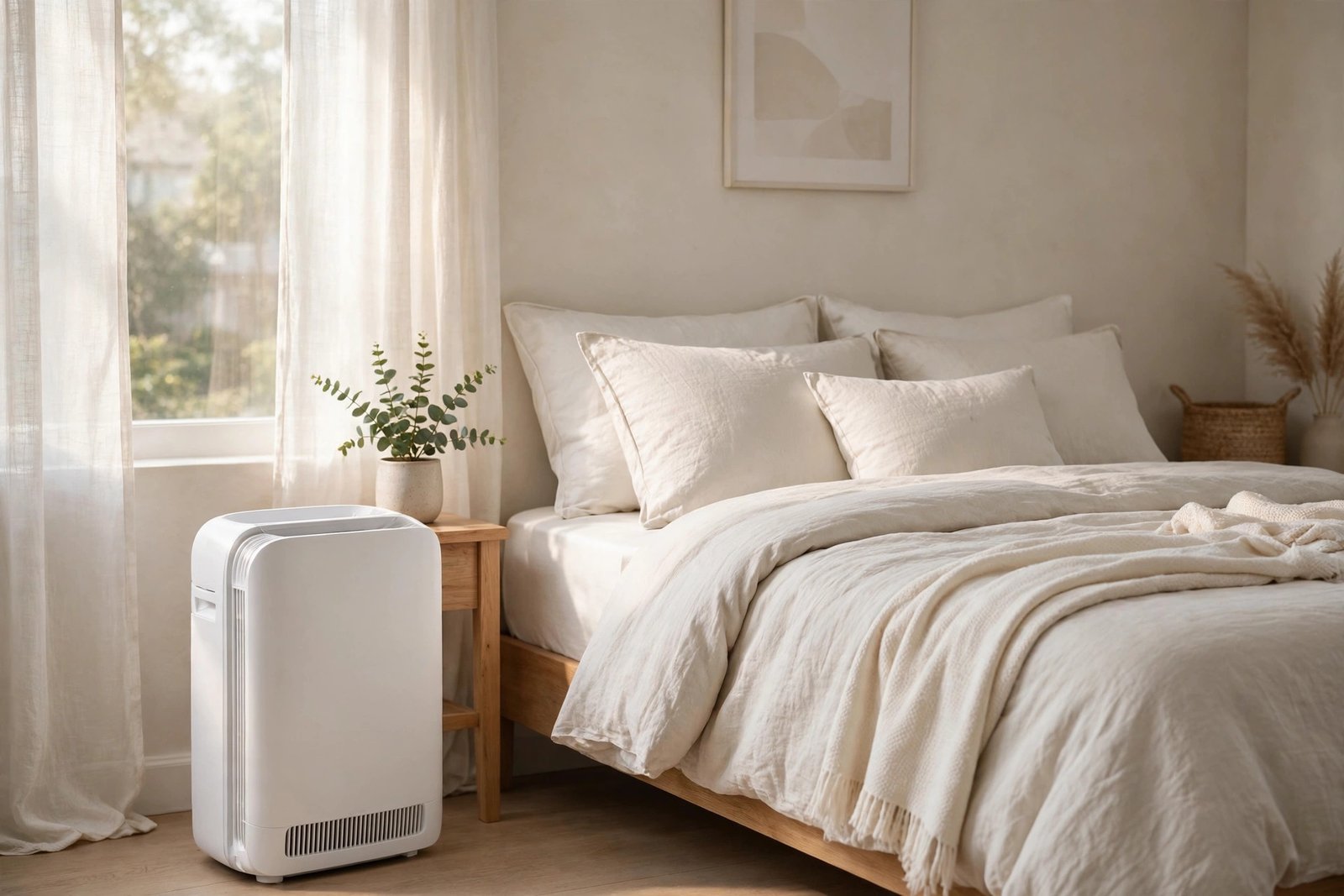
Buying the right purifier is half the battle; using it right is the other half. The single biggest mistake is running it part-time. Allergens are continuously generated — pollen drifts in, dust mites shed debris, pets shed dander around the clock — so run the purifier 24/7 on auto or low, not just when symptoms flare. Put the highest-priority unit in the bedroom: you spend a third of your life there, and clean air while you sleep is what tamps down morning congestion. Pairing that with genuinely good sleep habits — the kind covered in our guide on how to sleep better naturally — compounds the payoff.
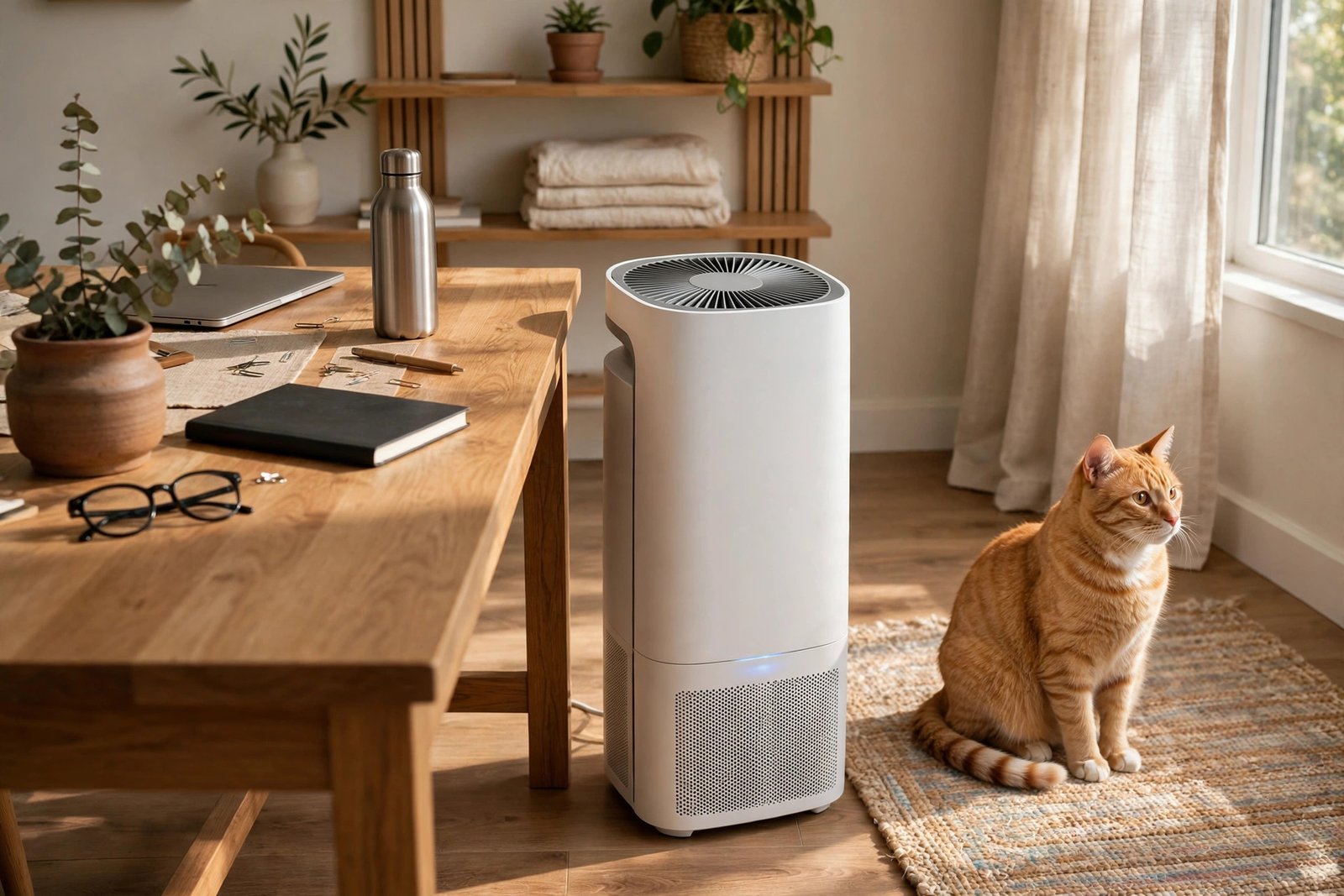
Placement matters more than most people think. Give the unit a few feet of clearance on all sides — jammed into a corner behind a curtain, it just recirculates the same pocket of air. In the bedroom, put it near the bed rather than across the room. In a home office, keep it near the desk where you sit for hours; if your work-from-home setup has you staring at a screen in a stuffy room all day, folding air quality into a broader reset — like the 7-day plan in our digital detox guide — is a sensible pairing.
Finally, remember what a purifier can’t do: it only captures what’s airborne. Settled allergens in carpets, upholstery, and bedding need mechanical removal. Vacuum weekly with a sealed-HEPA vacuum (our Dyson vs Shark vacuum comparison covers the best cordless stick vacuum options for 2026), wash bedding in hot water, and use allergen-proof pillow and mattress covers. The purifier handles the air; you handle the surfaces. Together, they cover both halves of the problem.
Frequently Asked Questions
Do air purifiers actually help with allergies?
Yes — with realistic expectations. True HEPA purifiers capture 99.97% of airborne particles at 0.3 microns, which covers pollen, dust-mite debris, pet dander, and mold spores. The Asthma and Allergy Foundation of America’s certification program confirms that properly tested air purifiers reduce airborne allergens for people with asthma and allergies. But a purifier can’t remove settled allergens from carpets or bedding, and it can’t fix the source (the pet, the dust-mite colony in an old mattress). Think of it as one strong layer in a layered strategy.
What size air purifier do I need for allergies?
Size by smoke CADR, not by the box’s square-footage claim. AHAM’s rule of thumb: the smoke CADR should be at least two-thirds of the room’s square footage. For allergy relief specifically, aim higher — enough CADR for 4–5 air changes per hour. A 200 sq ft bedroom wants a smoke CADR of at least 135, and 200+ is better.
Is True HEPA necessary, or is “HEPA-type” good enough?
True HEPA is necessary for allergies. “HEPA-type” and “HEPA-like” are unregulated marketing terms — such filters typically capture far less at the 0.3-micron size that defines the standard. Given that the whole point is removing the finest allergen particles, buying a non-HEPA filter to save a few dollars defeats the purpose.
How long should I run my air purifier each day?
All day, every day — 24/7. Allergens are generated continuously, and particle levels rebound within hours of switching a unit off. Use sleep mode or auto at night so noise doesn’t tempt you to turn it off.
When should I replace the filter?
Follow the manufacturer’s indicator, but don’t stretch it: most HEPA filters last 6–12 months in normal use, less in dusty homes or homes with multiple pets. A clogged filter doesn’t just stop capturing particles — it forces the fan to work harder, dropping CADR and raising noise. Budget the annual filter cost before you buy; it’s the real price of the machine.
Do I need an air purifier in every room?
Not necessarily. Start with the bedroom, where you spend 7–9 uninterrupted hours and where morning symptoms originate. Add the living room or home office next if symptoms persist during the day. One well-sized unit in the right room beats three undersized units scattered around the house.
The Bottom Line: Which Air Purifier Should You Buy?
For most allergy sufferers, the Levoit Core 400S is the best air purifier for allergies in 2026: verified CADR, quiet sleep mode, a genuinely useful app, and a price that doesn’t punish you. If budget is the deciding factor, the Coway Airmega Mighty2 delivers nearly the same clean air for less money and less fuss — it’s the pick I’d hand to a friend who just wants to plug something in and breathe easier. Big open-plan homes should step up to the Blueair Blue Pure 211i Max, single bedrooms are perfectly served by the Levoit Core 300S, and pet households get the best long-term deal from the Winix 5500-2 with its washable pre-filter and cheap replacement filters.
Whatever you choose, buy for CADR and filter economics, place it in the bedroom, and let it run. Your sinuses will notice within days — mine did.