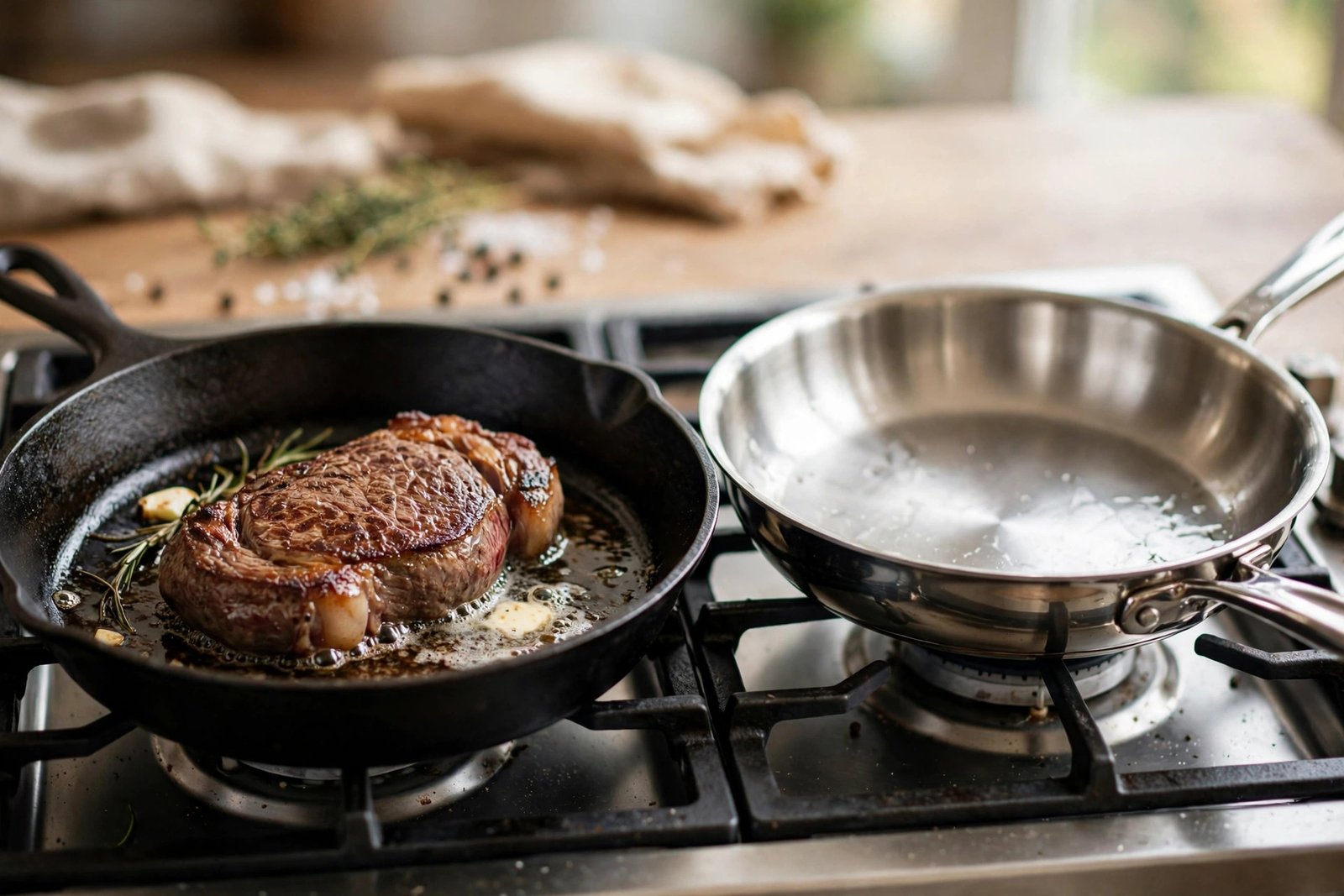

Stand in front of any well-stocked kitchen shelf and you will face the same quiet dilemma: the heavy black skillet that looks like it survived a century, or the gleaming silver pan that looks like it belongs in a restaurant kitchen. Choosing between them is not a trivial purchase. A good pan shapes how your food tastes for decades, and the wrong one ends up gathering dust. This cast iron vs stainless steel pan comparison cuts through the folklore and looks at what actually matters: how each pan sears, how it handles sauces, what it demands from you in return, and which cook each one suits best.
Here is the honest answer up front. Cast iron wins on raw searing power and heat retention. Stainless steel wins on versatility, easy care, and delicate cooking. Most serious home cooks eventually own both, because neither pan does everything well. But if you are buying your first serious pan, or you only have room and budget for one, the details below will point you to the right choice.
Cast Iron vs Stainless Steel Pan: How Each One Actually Cooks
The two pans are built from fundamentally different materials, and that difference drives everything else. Cast iron is a thick slab of iron, poured into a mould and machined smooth. It is dense, heavy, and slow to change temperature. Stainless steel pans are usually built in layers — a core of aluminium or copper sandwiched between sheets of stainless steel — which is why they are often called clad or tri-ply pans. They are lighter, respond to heat changes faster, and spread heat more evenly across the cooking surface.
That construction explains their personalities. Cast iron stores heat like a battery: once hot, it stays hot, even when a cold steak lands in it. Stainless steel is more responsive: turn the burner down and the pan follows within seconds.
Heat Retention and Searing: Where Cast Iron Earns Its Reputation
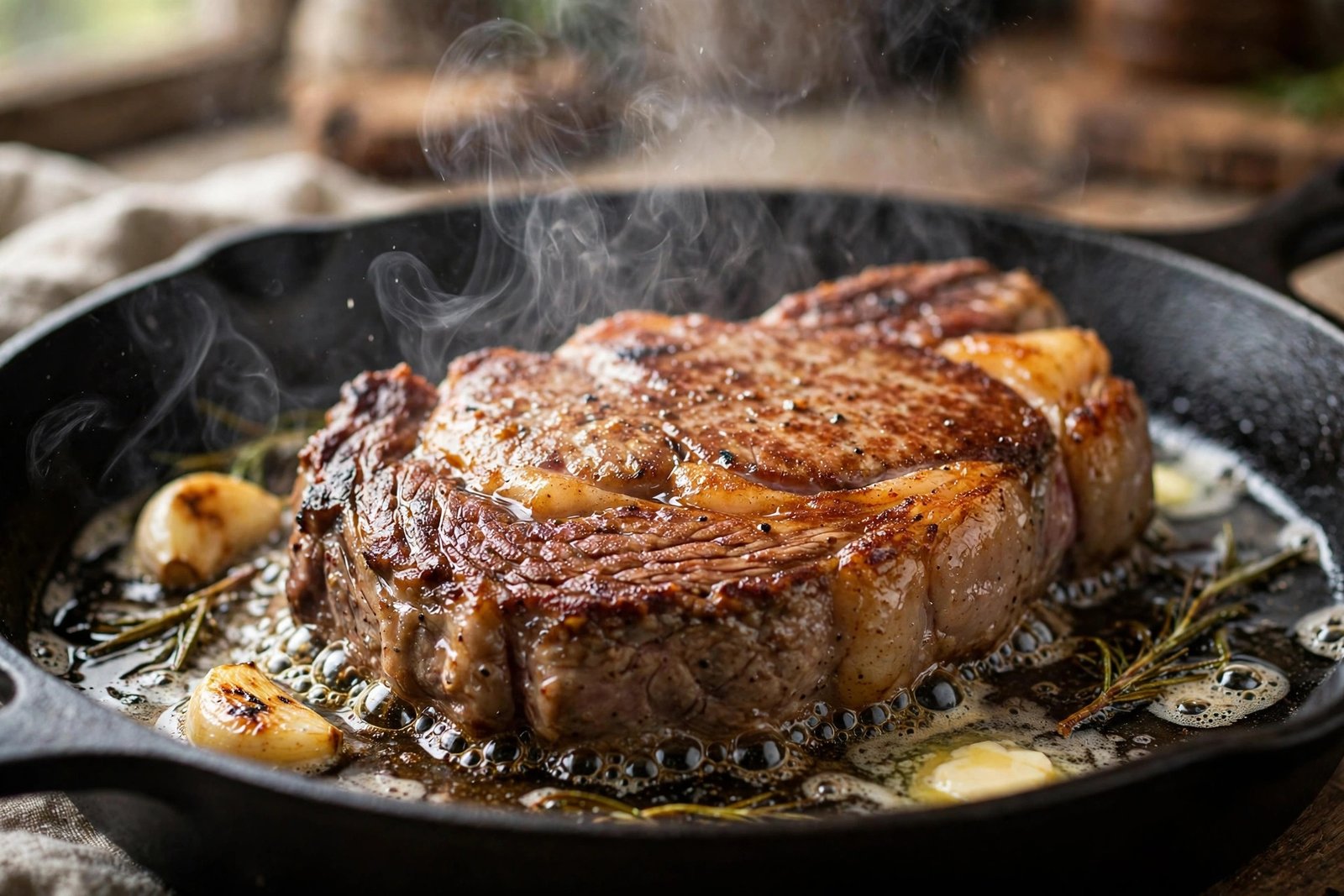
Searing is where cast iron justifies its weight. A thick cast iron skillet, preheated properly, holds an enormous amount of thermal energy. When a steak hits the surface, the pan barely flinches. The temperature stays high, moisture on the meat’s surface evaporates fast, and the Maillard reaction — the browning chemistry that creates crust and deep savoury flavour — gets to work without interruption. The result is the kind of crust that makes a home-cooked steak taste like it came off a restaurant grill.
Stainless steel can sear well too, but it asks more of you. A thinner clad pan loses more heat when cold food lands in it, so the crust develops more slowly and you risk steaming the surface instead of browning it. The fix is technique: preheat the pan properly, test it with a drop of water (it should skitter and dance across the surface), add oil only once the pan is hot, and do not crowd the pan. Cook one steak at a time rather than two, and you will get a respectable crust. It just will not match cast iron’s brute force on a thick ribeye.
Where stainless steel claws ground back is control. Because it responds quickly, it is the better pan for foods that punish overheating: a delicate fish fillet, a pan sauce that needs gentle simmering, or garlic that turns bitter in seconds. Cast iron’s heat battery is a liability here. Turn the burner down and a cast iron skillet keeps cooking at full blast for minutes, which is exactly how sauces scorch and fish overcooks.
Sauces, Fond, and Acidic Foods
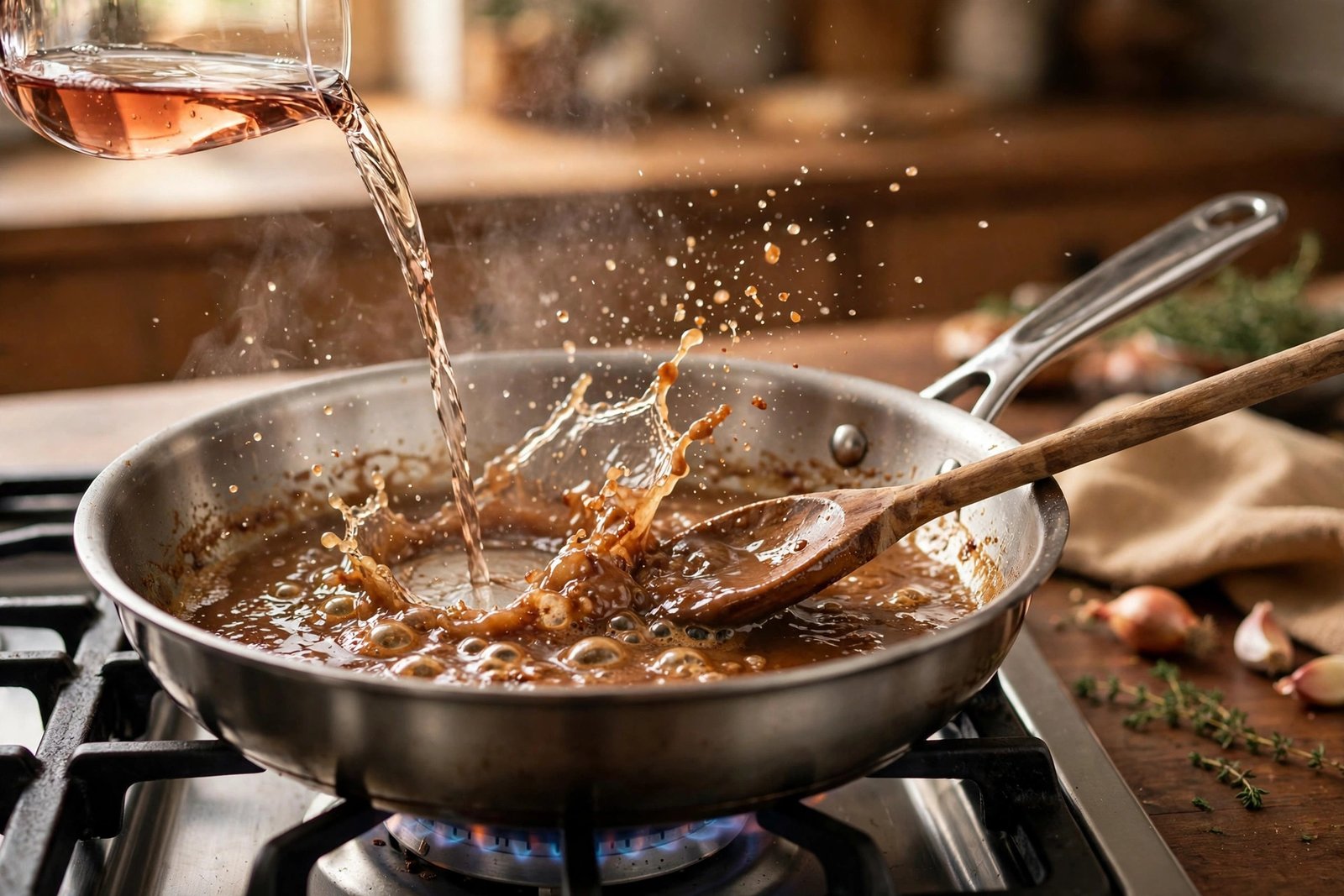
If you love pan sauces, stainless steel is your pan. When you sear meat in stainless steel, browned bits called fond stick to the surface. Add a splash of wine, stock, or even water to the hot pan, and that fond dissolves into a sauce base in under a minute — a technique called deglazing. Guides on how to cook with stainless steel describe exactly this process, and it is the single most useful trick the pan teaches you. The sauce you build from fond tastes like it took hours.
Cast iron makes fond too, but there is a catch. Long-simmered acidic foods — tomato sauce, wine reductions, citrus-heavy dishes — can strip seasoning from a cast iron surface and pick up a metallic tang. A well-seasoned pan handles a quick deglaze or a short tomato sauce without drama, but a two-hour marinara simmer is a job for stainless steel or enamelled cast iron. Stainless steel is non-reactive, so acids, wine, and tomatoes are all fair game for as long as you like.
Care and Maintenance: The Real Cost of Ownership
This is where most buyers make their decision, often without realising it. The two pans demand very different relationships.
Seasoning and cleaning cast iron
Cast iron needs seasoning: thin layers of oil bonded to the iron through heat, forming a naturally non-stick, rust-resistant surface. New pans usually arrive pre-seasoned, and regular cooking with fats builds the layer up over time. If you want the full method, our guide on how to season a cast iron skillet walks through it step by step. Detailed cast iron seasoning guides agree on the essentials: thin coats of oil, high heat past the oil’s smoke point, and patience.
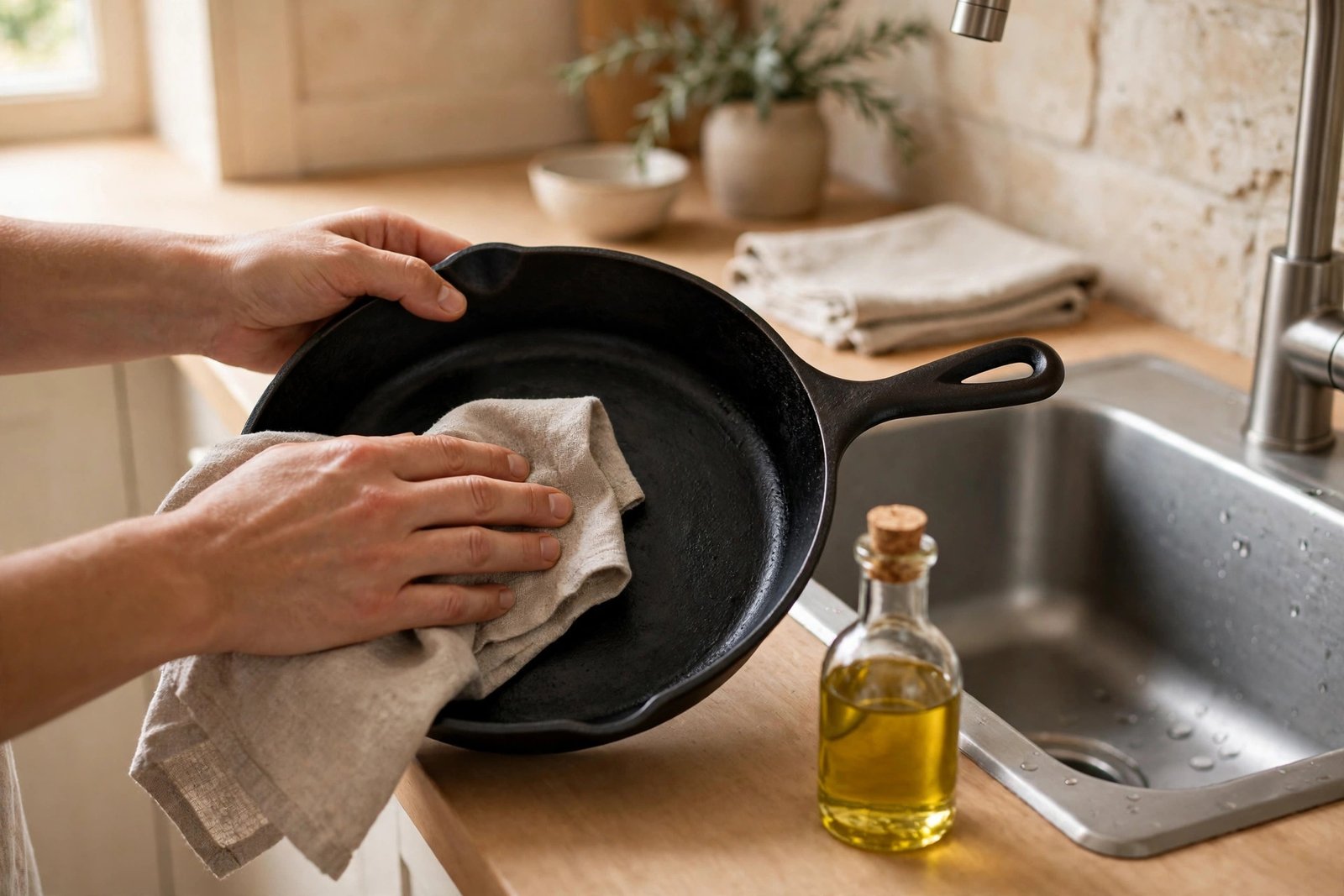
Daily cleaning is simpler than the myths suggest. Hot water, a stiff brush or chain-mail scrubber, and thorough drying are enough. A little dish soap will not destroy seasoning — that old rule has been widely debunked — but soaking the pan, leaving it wet, or running it through the dishwasher will invite rust. Dry it on a warm burner, wipe a whisper of oil over the surface, and it is ready for next time. The maintenance takes about two minutes, but it is two minutes you must actually do.
What ruins cast iron? Neglect, mostly. Left wet, it rusts. Heated empty on screaming high heat for a long time, it can warp or crack in extreme cases. Dropped on a tile floor, it can chip or break — and at 7 to 9 pounds, it is a genuine hazard to your toes and your cooktop. Glass and induction cooktops deserve extra care: slide a cast iron pan, do not drag it, and never drop it.
Cleaning stainless steel
Stainless steel asks almost nothing. It goes in the dishwasher (though hand-washing keeps it shinier), tolerates soap, scrubbing, and soaking, and never rusts under normal use. Stuck-on food surrenders to a soak, and discolouration or rainbow heat tint comes off with a paste of baking soda or a dedicated stainless cleaner. Stainless steel pan care routines are refreshingly boring: warm water, soap, a soft sponge, and a full dry.
What ruins stainless steel? Far less. Overheating an empty pan can warp it or discolour it permanently. Salt left sitting in cold water can pit the surface over time, so add salt only once water is boiling. Steel wool and harsh scouring pads dull the finish, though they will not destroy the pan. Compared with cast iron, stainless steel is the low-maintenance partner.
Weight and Handling: An Honest Ergonomic Check
Pick up a 12-inch cast iron skillet and you are holding roughly 8 pounds of iron, more once it is full of food. For many cooks that is simply too much. Pouring from it one-handed, flipping food with a flick of the wrist, or lifting it from a low oven rack becomes a two-handed operation. If you have wrist, elbow, or shoulder issues, or you cook in a small kitchen where you are constantly moving pans around, cast iron’s weight is a genuine daily frustration, not a minor quirk.
A comparable stainless steel skillet weighs roughly half as much, with a longer handle that stays cooler and gives better leverage. It is easier to toss vegetables, pour sauces, and manoeuvre on a crowded stovetop. It is also far more forgiving on glass and ceramic cooktops, where cast iron’s rough base can scratch if dragged.
One more practical point: handle heat. Cast iron handles get screaming hot — the whole pan is one piece of iron, so the handle reaches cooking temperature. You need a mitt or handle cover every single time. Stainless steel handles are usually designed to stay cooler, though they still heat up in the oven. If you have ever grabbed a cast iron handle bare-handed, you only do it once.
Cost and Longevity: What You Pay, What You Get
Cast iron is the bargain of the cookware world. A solid, pre-seasoned 12-inch skillet from a reputable maker typically costs far less than a quality clad stainless pan, and it can last a lifetime — genuinely. Century-old cast iron skillets are still cooking dinner in kitchens today, and a rusted thrift-store find can usually be stripped and re-seasoned back to life. There is almost nothing to wear out: no coating, no layers to separate, no rivets that matter much. If you treat it decently, your grandchildren could cook with it.
Quality stainless steel costs more up front. A well-made tri-ply skillet is a real investment, and cheap single-layer stainless pans are a trap — thin, prone to hot spots, and liable to warp. But a good one also lasts decades, and it does so with almost no maintenance. Over a lifetime of cooking, the cost difference narrows: cast iron is cheaper to buy and slightly more demanding to own, while stainless steel costs more and asks less.
Budget advice: if money is tight, buy cast iron first and add a mid-range stainless skillet later. If you can only buy one premium pan, a quality clad stainless skillet covers more cooking styles with less fuss.
Cast Iron vs Stainless Steel Pan: Side-by-Side Comparison
| Feature | Cast Iron | Stainless Steel (Clad) |
|---|---|---|
| Searing power | Excellent — best crust of any common pan | Very good with proper preheating |
| Heat control | Slow to respond; stays hot long after burner drops | Responsive; follows burner changes quickly |
| Pan sauces | Good for quick deglazing; avoid long acidic simmers | Excellent — fond and deglazing are its superpower |
| Acidic foods | Short cooks fine; long simmers can strip seasoning | Fully non-reactive; tomatoes, wine, citrus all fine |
| Daily care | Hand wash, dry immediately, occasional re-seasoning | Dishwasher-safe; soap, soak, and scrub freely |
| Weight (12-inch skillet) | About 7–9 pounds | About 3–4 pounds |
| Typical price | Budget-friendly | Premium for quality clad construction |
| Lifespan | Generations, if kept dry and seasoned | Decades, with minimal maintenance |
| Best for | Steaks, cornbread, frying, campfire cooking | Sauces, fish, vegetables, everyday versatility |
Which Pan for Which Cook: The Verdict
Buy cast iron first if you sear steaks, fry chicken, bake cornbread, or cook over a campfire, and you do not mind two minutes of care after dinner. It is the pan for cooks who love deep crusts, high heat, and tools that improve with age. It is also the right call if your budget is tight but your ambition is not.
Buy stainless steel first if you make pan sauces, cook fish and vegetables often, want a pan you can put in the dishwasher without guilt, or need something lighter and easier to handle. It is the pan for busy weeknight cooks, sauce lovers, and anyone who wants one pan that handles almost everything competently. Before you decide, it is worth checking how your cooktop itself affects the choice — our comparison of induction vs gas cooktops explains why some pans behave differently on different hobs.
And if you can stretch to both eventually, do. Use cast iron when you want a crust, stainless steel when you want control. That pairing covers nearly every stovetop task a home cook faces, and it is why professional kitchens keep both within arm’s reach. The real cast iron vs stainless steel pan debate was never about which pan is better. It is about which pan is better for the way you cook.
One last practical tip, whichever you choose: learn the pan before you judge it. Cast iron rewards a proper preheat and a little patience. Stainless steel rewards the water-drop test and resisting the urge to move food before it releases. Give either pan a month of regular use and it will stop feeling like a purchase and start feeling like a partner. If you are still weighing kitchen tools generally, our blender vs food processor comparison applies the same honest logic to another classic kitchen dilemma.
Frequently Asked Questions
Can I use cast iron on an induction cooktop?
Yes. Cast iron is magnetic, so it works on induction. Just lift rather than slide it to avoid scratching the glass surface, and make sure the pan’s base is flat for even contact.
Does stainless steel really not stick?
It sticks when used wrong and releases beautifully when used right. Preheat the pan, add oil once hot, wait for the oil to shimmer, then add food and leave it alone until it releases on its own. Forcing food off early is what causes sticking.
Is cooking with cast iron healthy?
For most people, yes. Tiny amounts of iron can transfer into food, particularly with acidic ingredients, but this is generally considered harmless and can even be beneficial. If you have a condition requiring iron restriction, check with your doctor and lean on stainless steel instead.
Can I put a stainless steel pan in the oven?
Most quality stainless steel pans are oven-safe, often to high temperatures, but check the manufacturer’s rating for your specific pan — handles, lids, and any non-metal parts set the limit, not the steel itself.
Which pan lasts longer?
Both can last decades. Cast iron has the edge in absolute longevity because there is no coating or layered construction to fail, but it depends on you keeping it dry and seasoned. Stainless steel lasts nearly as long with far less attention.
Should I buy a cheap stainless steel pan to start?
It is better to buy one good pan than two bad ones. Thin, single-layer stainless pans develop hot spots and warp, which teaches bad habits. Save for a clad pan, or start with cast iron, which is affordable even at good quality.
Conclusion
There is no single winner in the cast iron vs stainless steel pan question, only a winner for your kitchen. Cast iron gives you unmatched searing and a lifetime tool at a bargain price, in exchange for weight and a little ritual care. Stainless steel gives you versatility, easy cleaning, and superb sauces, in exchange for a higher price and a lighter crust. Know how you cook, be honest about the care you will actually do, and buy the pan that matches — or buy both, and let each one do what it does best.



