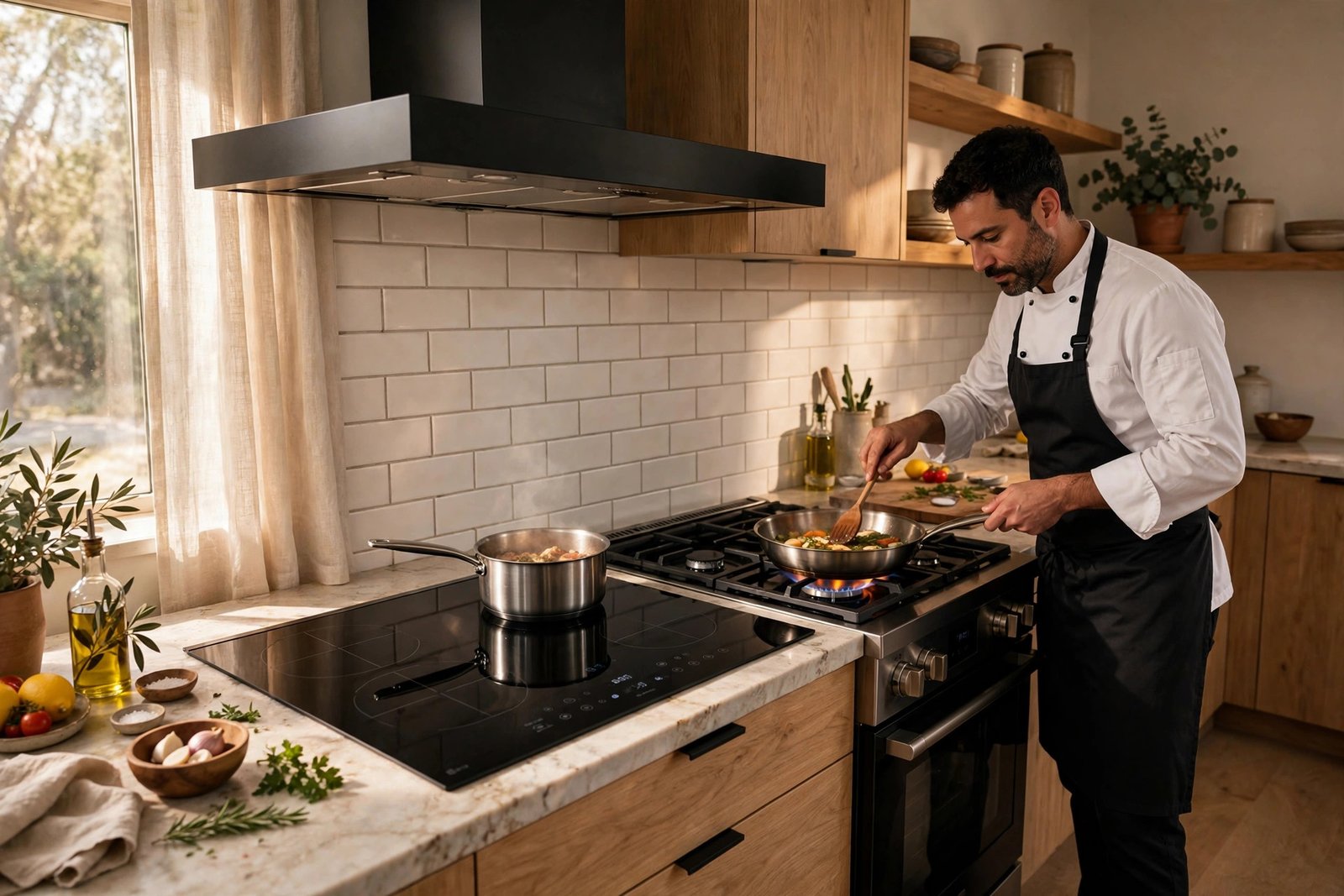

Induction vs Gas Cooktop: Which One Deserves a Spot in Your Kitchen in 2026?
If you’re remodeling a kitchen or replacing a dying stove, the induction vs gas cooktop debate will hit you fast — and the opinions are loud. Gas devotees swear by the flame. Induction converts talk like they’ve seen the light. So who’s right? I dug into Department of Energy efficiency data, Consumer Reports speed tests, and peer-reviewed research on indoor air quality to give you an answer that’s grounded in numbers, not tribal loyalty.
Here’s the short version: induction is dramatically more efficient, boils water noticeably faster, is safer, and keeps your indoor air cleaner. Gas still wins for some cooks — especially anyone with a cabinet full of non-magnetic cookware or a weak electrical panel. Let’s go through it category by category so you can make the call with confidence.
Induction vs Gas Cooktop: How Each One Actually Works
Understanding the physics makes the rest of this comparison click into place. A gas cooktop burns natural gas or propane, producing an open flame that heats your pan from below — and also heats a lot of everything else around it. An induction cooktop works completely differently: copper coils under a glass surface generate an electromagnetic field that makes the metal of your pan heat up directly. The pan itself becomes the heating element.
That single difference explains almost everything. Gas wastes enormous energy heating the air, the grates, and your kitchen; induction concentrates energy inside the cookware. As we’ll see, that shows up in your boil times, your utility bills, and even the air you breathe.
Speed: Who Boils Water Faster?
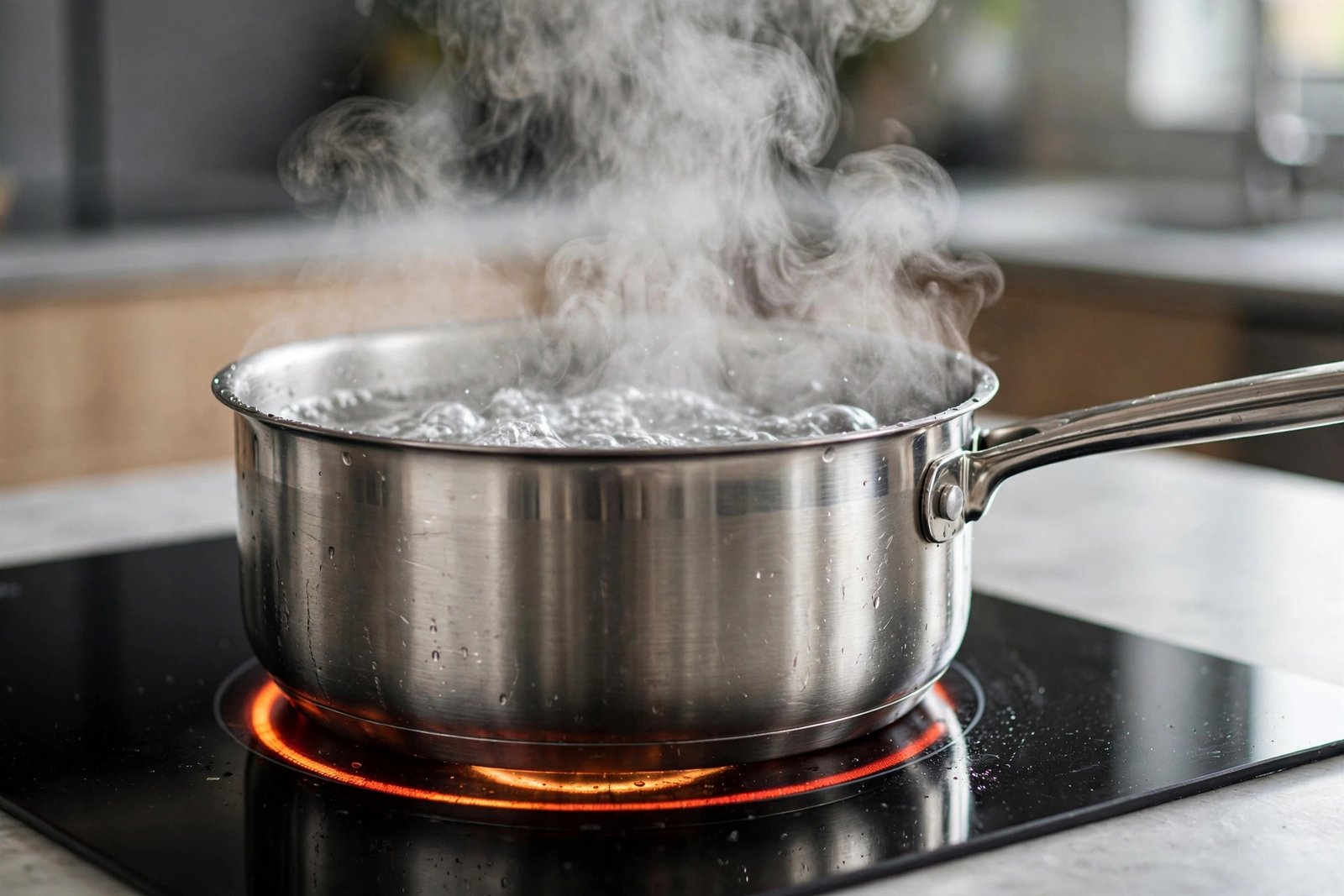
Speed is the test everyone cares about, and it’s where induction’s advantage is easiest to measure. Consumer Reports tested stoves head to head and found that induction boils water 20 to 40 percent faster than even the best-performing gas burners — a six-quart pot of water approaches a boil two to four minutes sooner on induction. One Popular Science breakdown of Consumer Reports’ testing put it bluntly: “No other cooking technology we’ve tested is speedier than induction.”
The reason is pure physics. A high-power induction zone with a “boost” mode pushes up to 3,700 watts directly into the pan, while much of a gas burner’s heat curls around the pot’s sides and escapes into the room. Independent lab tests of one liter of water put induction at about 3 minutes 45 seconds versus 6 to 8 minutes for gas.
Responsiveness matters too. Cut the power on induction and the magnetic field collapses — heat output drops within seconds. Gas is intuitive (more flame, more heat), but the heavy metal grates retain residual heat, so a delicate sauce keeps cooking after you turn the knob down. If you’ve ever scorched chocolate or split a pan sauce on gas, you know exactly what I mean.
Energy Efficiency and Running Costs
This is the category where the numbers are most lopsided. According to induction cooking efficiency data from ENERGY STAR, induction transfers about 85 percent of its heating energy directly into the cookware and its contents. Gas manages roughly a third of that — about 32 percent — with the rest dissipating as ambient heat. Independent testing by the U.S. Department of Energy’s Lawrence Berkeley National Laboratory landed in the same neighborhood: induction at 84 percent, electric coil at 74 percent, and gas at 40 percent.
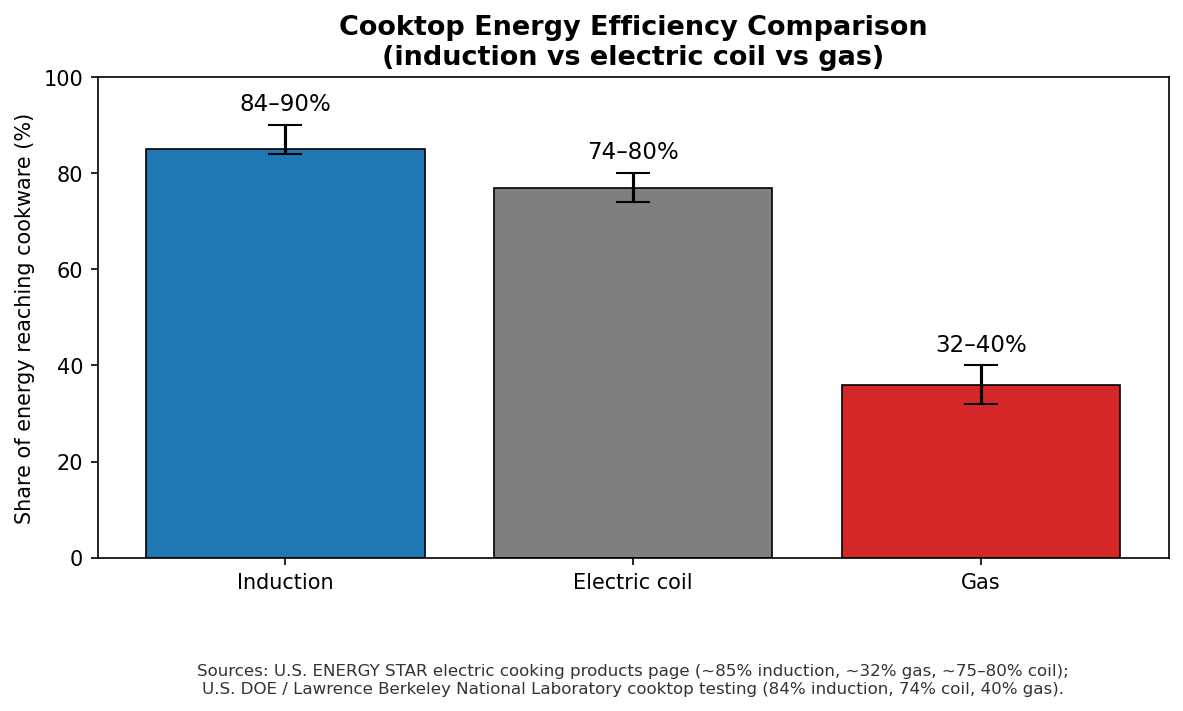
But here’s the honest caveat: efficiency isn’t the same as cost. Whether induction actually saves you money depends on your local utility rates. In many places, natural gas per unit of energy is cheaper than electricity, so the utility bill difference can end up nearly a wash — cooking accounts for less than 3 percent of average household energy use, so neither option will transform your bill. Where induction genuinely wins is total energy consumed: same cooking job, far less energy input, and far less waste heat dumped into your kitchen.
Head-to-Head: The Full Comparison
| Feature | Induction Cooktop | Gas Cooktop |
|---|---|---|
| Cooking efficiency | ~84–90% of energy reaches the pan (DOE/ENERGY STAR) | ~32–40% of energy reaches the pan; rest lost as ambient heat |
| Boiling speed | 20–40% faster than gas (Consumer Reports testing) | Slower; high-output burners still lag induction |
| Heat control | Instant digital adjustments; precise low settings (as low as ~100°F on many models) | Visual flame feedback; lowest simmer can still be too hot on some home ranges |
| Safety | Surface stays relatively cool; no open flame; auto shut-off when pan is removed | Open flame; hot grates; gas leak and carbon monoxide risk if poorly maintained |
| Indoor air quality | No combustion byproducts | Emits nitrogen dioxide (NO₂), which studies link to respiratory harm; ventilation matters |
| Cleaning | Flat glass surface; spills don’t bake on since the surface stays cool | Grates, burner caps, and drip areas need regular scrubbing |
| Cookware compatibility | Only ferromagnetic cookware (cast iron, magnetic stainless steel); aluminum, copper, and glass need an adapter | Works with virtually any cookware, including woks and round-bottom pans |
| Installation cost | Often needs a dedicated 240-volt circuit — an electrician visit if you don’t have one | Needs a gas line plus professional hookup; if your home lacks gas, this isn’t an option |
| Running cost | Lower energy use per task; bill depends on electricity rates | Cheaper fuel per unit in many markets; higher waste offsets much of the advantage |
Heat Control and Real Cooking Feel
Professional chefs trained on gas for generations, and the “feel” argument for gas is real — you can see the flame, judge the heat at a glance, and toss a wok over a roaring burner. If you do a lot of wok cooking or charring over an open flame, gas still has a genuine edge.
For everyday cooking, induction’s control is arguably better. Digital power levels are repeatable: setting “3” today behaves exactly like setting “3” tomorrow. Low settings are genuinely low — many induction units hold a gentle simmer at temperatures gas ranges can’t reach, a quiet blessing for delicate sauces or melting chocolate. And induction’s speed has its own learning curve: it heats so fast that you may scorch garlic the first week. Give it two weeks and most people say they never want to go back.
Indoor Air Quality: The Research Says Something Important
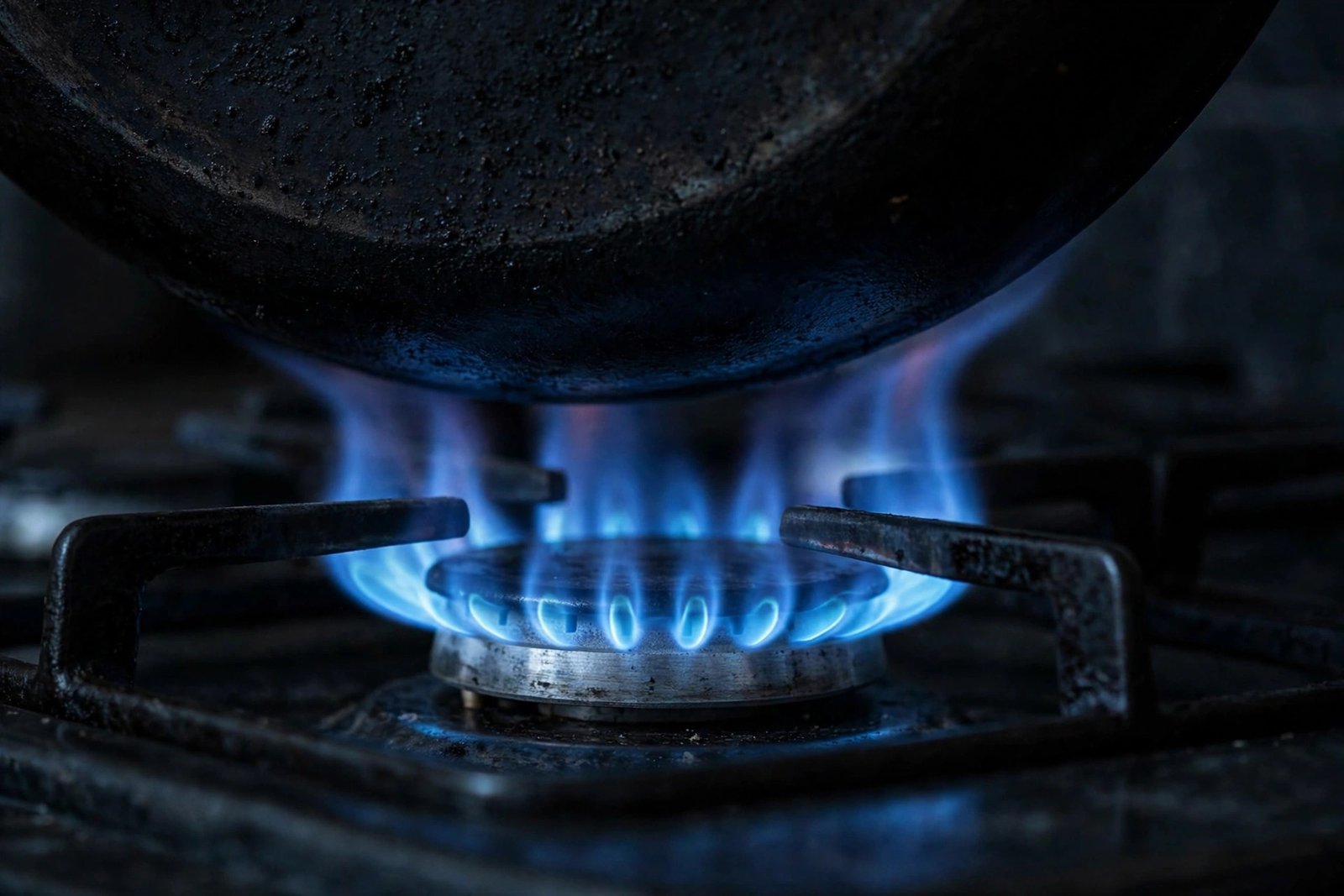
This is the category that has shifted the most in recent years, and it deserves more weight than it usually gets. Gas stoves burn fuel in your living space, and the combustion byproducts — nitrogen dioxide (NO₂) first among them — go straight into your kitchen air unless your range hood vents properly outdoors (and research suggests most residential ventilation is inadequate).
A 2025 Stanford study published in PNAS Nexus made this concrete: among households that cook with gas, stoves account for roughly a quarter of total nitrogen dioxide exposure on average — and up to 57 percent for frequent cooks. Switching from gas to electric stoves would bring about 22 million Americans’ NO₂ exposure below World Health Organization recommended levels. The gas stove indoor air quality research is especially striking for small apartments, where heavy stove use and poor ventilation concentrate the problem.
Induction has no combustion at all, so this entire category of concern simply doesn’t apply. If anyone in your household has asthma or respiratory sensitivities, this alone may settle the debate. And if you keep your gas stove, run the range hood every single time you cook — that’s not optional advice, it’s the single most effective thing you can do.
Safety: Open Flames vs. Cool Surfaces
Gas cooktops have an open flame, hot cast-iron grates that stay hot after cooking, and a fuel line connected to your home. Induction surfaces never get hotter than the residual heat transferred back from the pan, and most models detect when the pan is removed and shut off automatically.
For households with young children or anyone who tends to walk away from the stove, induction is the clearly safer technology. Grease fires are still possible on induction (you can absolutely overheat oil), but there’s no flame to catch a dish towel or a loose sleeve.
Cleaning and Maintenance
Anyone who has scrubbed baked-on tomato sauce off gas grates knows this comparison isn’t close. The induction surface stays relatively cool, so spills don’t carbonize onto it — you wipe them up with a damp cloth. Gas cooktops demand regular disassembly: grates come off, burner caps soak, drip pans get scraped. It’s not difficult, but it’s persistent weekly labor.
Cookware Compatibility: Induction’s One Real Headache
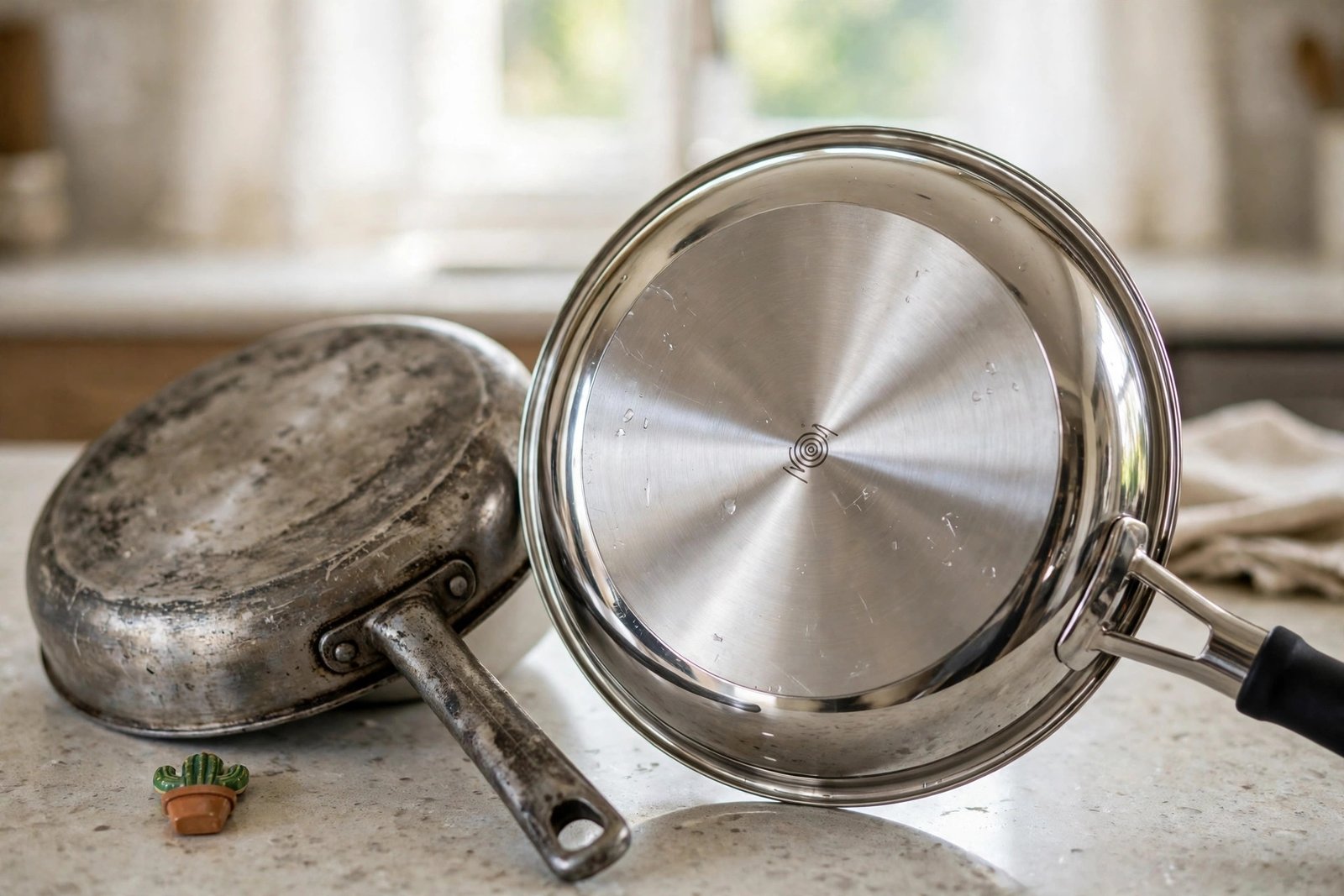
Here’s the honest weak point. Induction only works with ferromagnetic cookware — materials a magnet sticks to, like cast iron and most stainless steel. Pure aluminum, copper, glass, and some older nonstick pans won’t heat at all. Before buying, do the magnet test: hold a fridge magnet to the bottom of each pan. If it sticks firmly, the pan works.
Most quality stainless steel and all cast iron pass the test, so many cooks discover they already own compatible pans. But if your cabinet is full of beloved aluminum cookware, switching to induction means replacing it — a few hundred dollars added to the total cost. Gas, by contrast, works with literally everything, including round-bottom woks that no flat induction surface can truly accommodate.
Installation and Upfront Costs
Both technologies can surprise you at install time. An induction range usually needs a dedicated 240-volt circuit; if your kitchen’s wiring predates modern standards, an electrician visit adds a few hundred dollars. Portable induction cooktops plug into a standard outlet and dodge this entirely — they’re a cheap way to test the technology before committing.
Gas needs a gas line and a licensed professional for the hookup. If your home already has gas service and the line reaches the kitchen, installation is straightforward. If it doesn’t — and millions of homes don’t — running a new gas line is expensive enough that the decision basically makes itself.
On the appliance itself, decent induction cooktops have fallen dramatically in price; entry-level models now compete directly with mid-range gas cooktops. If you’re planning the full kitchen refresh, check out our guide to kitchen backsplash ideas on a budget — and if space is tight, our piece on organizing a small kitchen on a budget pairs well with a new cooktop layout.
Which Should You Buy? A Decision Framework
Forget the fan clubs. Here’s how to decide based on your actual situation:
Choose induction if: you’re building or remodeling a kitchen anyway; anyone in the house has asthma or respiratory issues; you have kids; you value fast boiling and effortless cleanup; your cookware is already magnetic-friendly; or you want the most energy-efficient cooking available. The Stanford air-quality findings alone make a strong case for induction in smaller homes.
Choose gas if: your home already has a gas line and you’d need costly electrical work for induction; your cookware collection is mostly non-magnetic and you don’t want to replace it; you do serious wok cooking or flame-charring; you cook through frequent power outages (gas works when the grid doesn’t); or you simply love cooking with fire and understand the ventilation requirements.
Try before you commit: a $60–$100 portable induction burner is the cheapest experiment in kitchen appliances. Cook with it for a month alongside your existing stove. You’ll learn more about your own preferences than any article — including this one — can teach you.
Appliance debates are cousins of other kitchen comparisons. If you’re weighing gear choices beyond the cooktop, our Air Fryer vs Oven comparison uses the same head-to-head approach for countertop cooking.
Frequently Asked Questions
Can you use regular pots and pans on an induction cooktop?
Only if they’re magnetic. Cast iron and most stainless steel work; aluminum, copper, and glass don’t. Do the magnet test — if a fridge magnet sticks firmly to the pan’s base, it will heat on induction. Most quality cookware sold today is induction-compatible, but check before you buy a new pan.
Is induction cooking safe if you have a pacemaker?
Induction cooktops generate electromagnetic fields that could theoretically interfere with pacemakers and similar implanted devices. Guidelines generally advise keeping about two feet (60 cm) of distance from an active induction zone, or consulting your cardiologist first. Worth discussing with your doctor — not a reason to panic, but not nothing either.
Does induction use a lot of electricity?
An induction cooktop draws significant power while running — up to 3,700 watts on boost — but it runs for much shorter periods because it cooks faster, and it wastes far less energy. The per-task energy cost usually favors induction; the monthly bill difference depends on your local electricity versus gas rates.
Why do professional chefs still use gas?
Habit, infrastructure, and wok cooking — commercial kitchens are built around gas, and many techniques (tossing a wok in flame, charring peppers directly over a burner) genuinely need it. But the professional tide is turning: induction is now common in high-end restaurant kitchens for its precision, speed, and cooler working conditions. The “chefs only use gas” claim is increasingly outdated.
Do gas stoves really affect indoor air quality?
Yes. A 2025 Stanford study in PNAS Nexus found gas stoves contribute roughly a quarter of total nitrogen dioxide exposure for the average gas-stove household, and up to 57 percent for heavy users — enough to push about 22 million Americans over WHO exposure guidelines. Using a range hood that vents outdoors every time you cook substantially reduces the exposure.
Which is cheaper to run, induction or gas?
It depends on your utility rates. Induction uses far less energy per cooking task, but electricity is often pricier per unit than natural gas. In many markets the running costs come out close, with induction slightly ahead or behind depending on local prices. Factor in the upfront installation costs — a 240V circuit for induction or a gas line for gas — because those often dwarf years of running-cost differences.
Conclusion
On the numbers, induction wins the induction vs gas cooktop debate decisively: roughly three times the energy efficiency of gas, 20–40 percent faster boiling, safer surfaces, easier cleanup, and no combustion pollutants in your kitchen air. Those aren’t marginal differences — they’re the kind of gaps that show up every single time you cook.
But the right choice is personal. If your kitchen already has gas, your pans are aluminum, and you love the flame, gas remains a perfectly good way to cook — just ventilate properly and maintain your burners. For everyone else — especially anyone remodeling, anyone with kids or asthma in the house, or anyone buying their first serious cooktop — induction is the better technology in 2026. Buy a cheap portable induction burner, try it for a month, and let your own cooking decide.