
Shopping for the best budget robot vacuum is confusing in a very specific way: every model promises the same thing — a clean floor while you do something else — but the difference between a $150 machine and a $300 one is not suction on a spec sheet. It is whether the vacuum actually covers your whole floor, gets under your furniture, handles your dog’s shedding season, and empties itself without you babysitting it. This guide cuts through the noise with picks by home type, an honest explanation of the price bands, and the trade-offs reviewers keep flagging, so you can buy once and stop thinking about it.
First, the price bands that matter. Based on current review roundups from sources like Wirecutter robot vacuum reviews and Tom’s Guide robot vacuum guides, the sweet spot for most buyers sits around $180–$280: that is where you typically get systematic cleaning patterns, decent suction, app control, and scheduling without paying for premium features. Below about $150, most models still use random, bump-and-turn navigation — fine for a single small room, frustrating for a whole apartment. Above about $300, you enter LiDAR mapping and self-empty dock territory, where the vacuum cleans in neat rows, remembers your rooms, and empties its own bin for weeks at a time. All prices mentioned in this guide are approximate and vary by retailer and sale; check the current listing before you buy, and treat any price here as a planning figure, not a live quote.
How to Choose the Best Budget Robot Vacuum for Your Home
Start with your floor, not the feature list. A home that is mostly hard floors needs different strengths than a carpeted home with two shedding dogs. A studio apartment needs different navigation than a three-bedroom house. Work through these four questions before you compare models: What surfaces do you have? How much pet hair is involved? How big is the space? And how much hands-on maintenance will you actually do? Your honest answers point straight to one of the picks below.
Two specs deserve your attention above all others. The first is navigation: random navigation bounces around until the battery runs out, while gyroscopic or LiDAR navigation cleans in rows and covers the whole floor. The second is the dustbin and emptying system: a small onboard bin means emptying after every run in a pet home, while a self-empty dock means touching the vacuum roughly once a month. Suction power matters, but reviewers consistently find that coverage and consistency matter more — a strong vacuum that misses half your living room is worse than a moderate one that covers all of it.
| Pick | Best for | Approximate price band | Key strength | Main trade-off |
|---|---|---|---|---|
| Best overall budget pick | Most homes, mixed floors | $180–$280 | Systematic cleaning, app control, scheduling | No self-empty dock at this price |
| Best for pet hair | Dogs and cats that shed | $200–$300 | Tangle-resistant brushes, strong pickup on hair | Bin fills fast; empty often without a dock |
| Best for hard floors | Wood, tile, and laminate homes | $180–$280 | Great debris pickup on bare floors, quiet operation | Less effective on thick carpet |
| Best for small apartments | Studios and one-bedrooms | Under $200 | Compact, simple, gets the job done in small spaces | Random navigation; struggles in larger layouts |
| Best self-empty budget pick | Hands-off cleaning | $300–$400 | Auto-empty dock, LiDAR mapping, room selection | Dock takes floor space; bags are an ongoing cost |
Best Overall Budget Pick: The $180–$280 Sweet Spot
For most buyers, the best budget robot vacuum is a mid-band model with systematic navigation, a proper app, and scheduling — the kind of machine reviewers in the $180–$280 range consistently recommend for mixed-floor homes. These models clean in organized rows instead of random bounces, which means they finish a room in one pass rather than wandering through it three times. They return to their dock to charge, they can be scheduled from your phone, and their suction is strong enough for daily dust, crumbs, and light pet hair on both hard floors and low-pile rugs.
What you do not get at this price is a self-empty dock or true room-by-room mapping with keep-out zones on every model — some offer basic versions, but the polished implementations live in the $300+ tier. That is a fair trade for most people: emptying a bin takes ten seconds, and a vacuum that runs on a schedule while you are at work does not need you to watch it. If your home is under about 1,500 square feet with mixed surfaces, this is where you should spend your money.
One practical tip that reviewers repeat: run the vacuum daily for the first week. Robot vacuums are maintenance machines, not deep cleaners — daily runs keep dust and hair from building up, and they keep the bin from overflowing mid-run. A budget model on a daily schedule will keep your floors visibly cleaner than a premium model run once a week.
Best Pick for Pet Hair
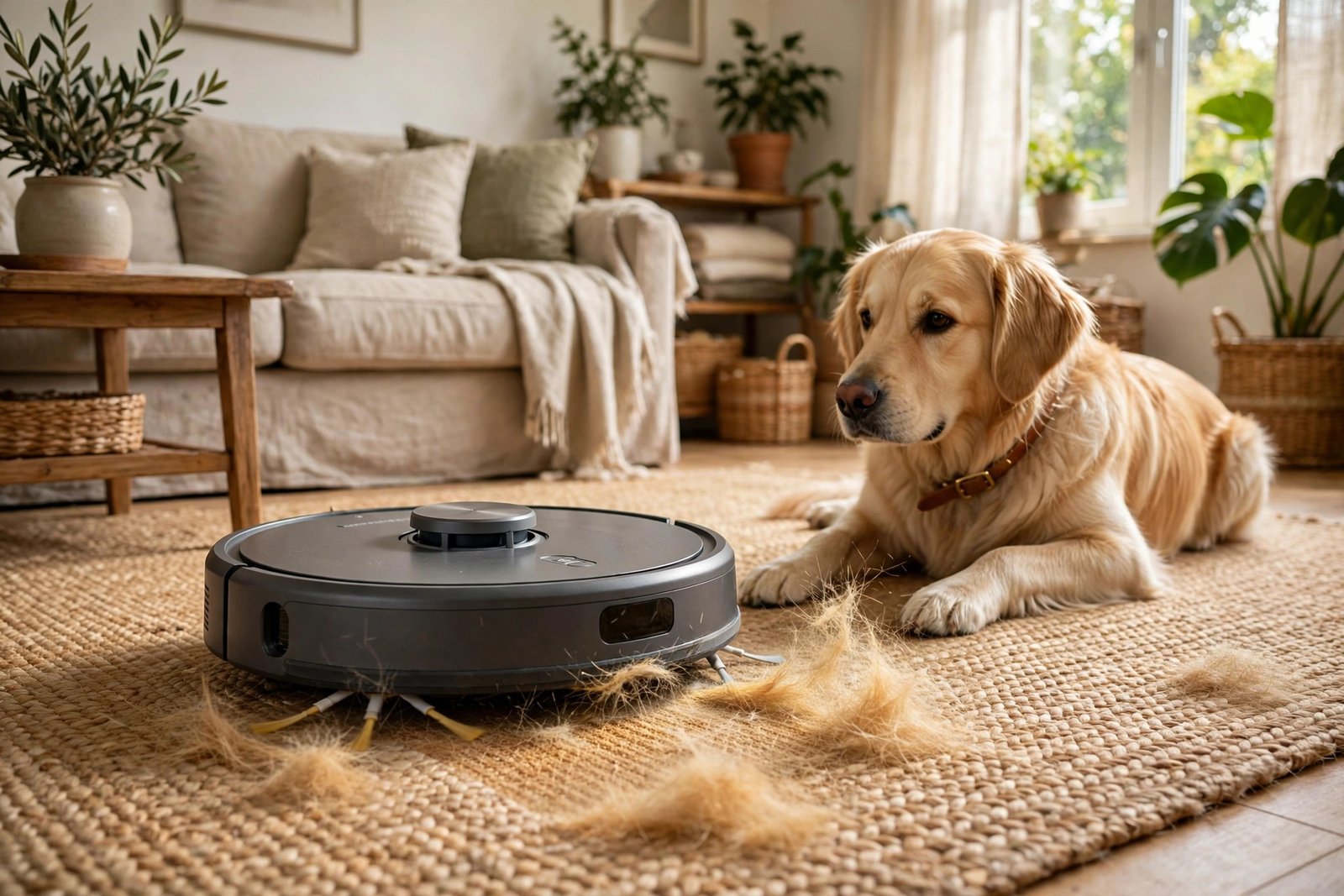
Pet hair changes the equation. Hair wraps around traditional bristle brushes, clogs small bins, and mats into carpet in ways that test a vacuum’s design. For pet homes, look for rubber or tangle-resistant brush rolls, a larger dustbin, and strong carpet pickup — the features that TechRadar robot vacuum reviews and similar roundups consistently highlight in their pet-focused picks. Expect to spend in the $200–$300 band for a pet-capable budget model, and expect to empty the bin after every run unless you step up to a self-empty dock.
Also be realistic about what a robot can do for pet hair. It will keep the daily shedding under control on hard floors and low-pile rugs, which is the job that matters — the hair you see on the floor every morning. It will not deep-clean a thick carpet the way an upright vacuum does, and during heavy shedding season you may still need a weekly pass with a full-size machine. Think of the robot as the daily crew and your upright as the weekly specialist.
Maintenance matters more in pet homes: clean the brush roll weekly, wipe the sensors, and check the wheels for wrapped hair. Five minutes a week keeps a budget pet model running like new; neglected, the same machine will start missing spots and complaining about blocked brushes within a month.
Best Pick for Hard Floors
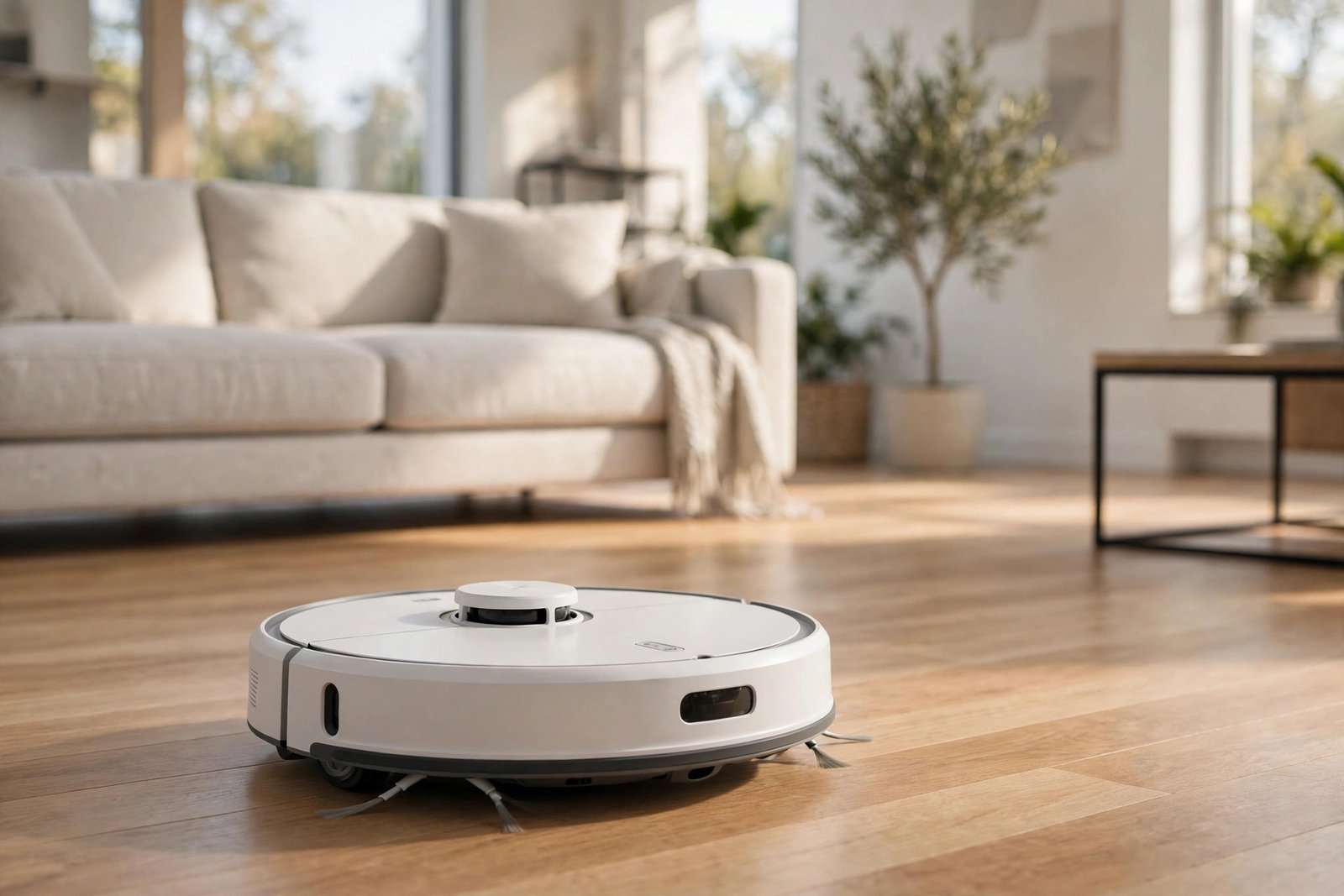
If your home is mostly wood, tile, or laminate, you have an advantage: hard floors are where budget robot vacuums perform best. Debris sits on the surface instead of hiding in fibers, so even moderate suction picks up dust, crumbs, and grit effectively. The models that shine here tend to be quieter, slimmer (so they slide under more furniture), and better at edge cleaning along baseboards — where dust actually collects.
Many hard-floor-friendly models also offer a mopping function at budget prices, and here is the honest assessment: a robot mop is good for light dust-mopping and maintaining already-clean floors, but it will not scrub a sticky kitchen floor. If mopping matters to you, look for a model with a washable mop pad and a decent water tank, and treat it as a bonus feature rather than the reason to buy. The vacuuming performance is what you will rely on daily.
For hard-floor homes, the $180–$280 band again delivers the best value — systematic navigation plus solid pickup — and you can often spend toward the lower end of that band without regret, since hard floors are forgiving of moderate suction.
Best Pick for Small Apartments
Small spaces forgive the weaknesses of cheap robot vacuums. In a studio or one-bedroom apartment, random navigation is far less of a problem: there is simply less floor to miss, and the vacuum will cover most of it within a single battery charge. That is why a simple machine for a small apartment can cost under $200 — sometimes well under — and still leave you happy.
Priorities shift at this size. Slim height matters more than mapping, because getting under the bed and the sofa is where the dust lives. Noise matters more, because you are always near the machine. Do not pay for LiDAR mapping in a 500-square-foot apartment; you are buying a feature your floor plan does not need.
The one thing not to skimp on, even in a small space, is a cliff sensor that works and a bumper that is gentle on furniture legs. Cheap no-name models sometimes cut corners here, and a vacuum that falls down stairs or scuffs furniture is no bargain. Stick with established budget brands that reviewers have actually tested, such as the ones covered in PCMag robot vacuum reviews, rather than an unknown listing with suspiciously perfect ratings.
Best Self-Empty Dock Pick
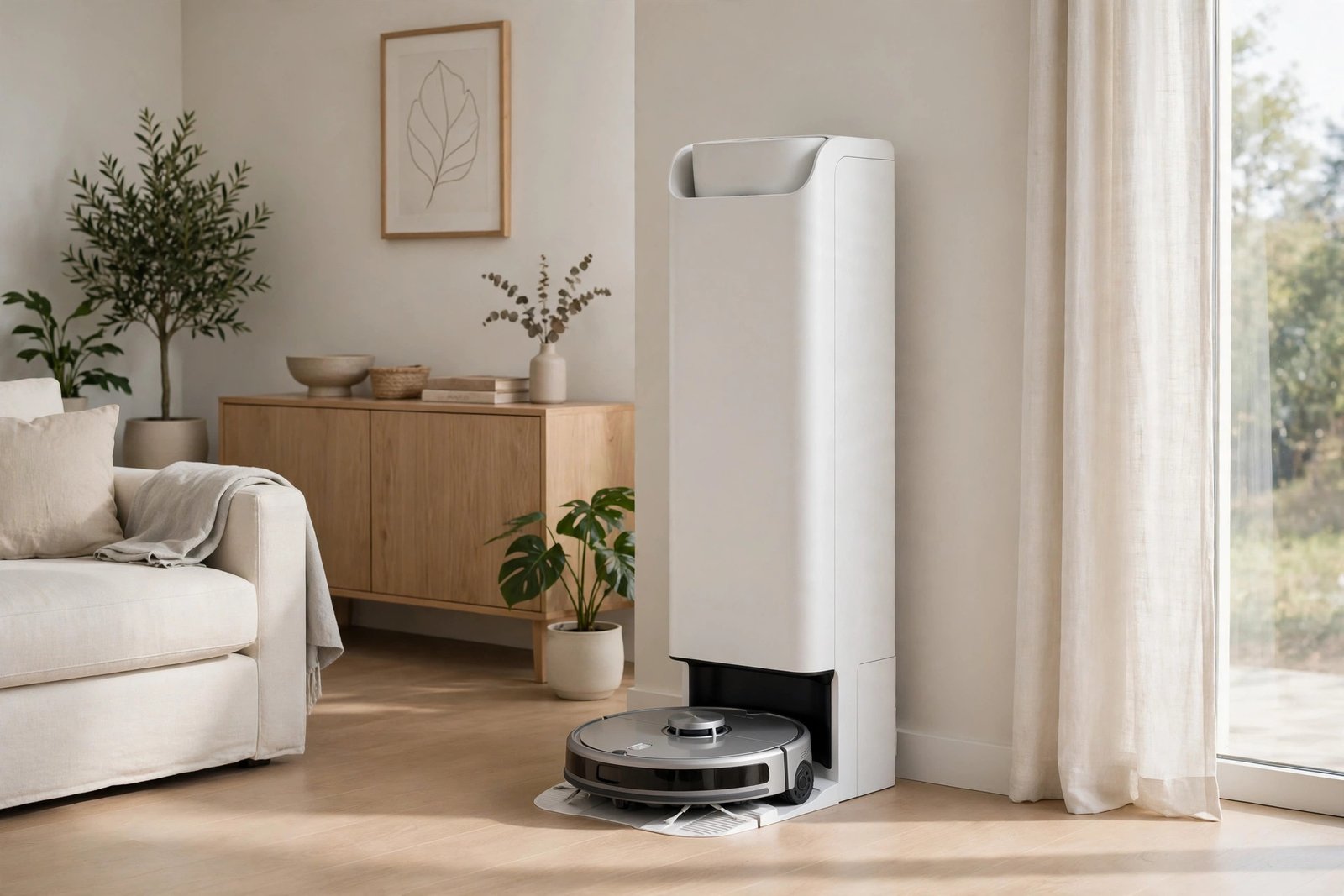
The self-empty dock is the feature that changes robot vacuums from a gadget into an appliance you forget about. Instead of emptying a small bin after every run, the vacuum docks, the dock sucks the debris into a bag, and you replace the bag roughly once a month or two. For allergy sufferers, pet owners, and anyone who hates touching dust, it is genuinely transformative — and it is why this category is worth stretching your budget for.
Budget self-empty models now start around $300, often on sale, and typically include LiDAR mapping as part of the package: neat row cleaning, saved maps, room selection, and virtual boundaries in the app. That combination — mapping plus auto-empty — is the same core experience premium models sold for twice the price a few years ago. The trade-offs are real but manageable: the dock is bulky (roughly the size of a small trash can), replacement bags cost a few dollars each, and the emptying cycle is loud for about ten seconds.
If you have allergies, the dock has a second benefit: sealed bags trap dust far better than shaking out an onboard bin over a trash can, which tends to puff fine particles back into the air. Pairing a self-empty robot with a good air purifier for allergies is one of the most effective low-effort combinations for keeping indoor air and floors under control. And if the robot is part of a broader home reset, our guide on how to declutter your home helps clear the floor clutter that trips robots up in the first place — cables, stray shoes, and rug tassels are a robot vacuum’s natural enemies.
Price Bands Explained: What You Actually Get
Understanding the bands helps you avoid both overspending and disappointment. Below $150, expect random navigation, basic suction, small bins, and minimal app features — acceptable for a single room or a small apartment, but frustrating across a full home. At $180–$280, you get systematic cleaning, scheduling, app control, and reliable daily performance on mixed floors: the best value for most people. Above $300, LiDAR mapping, room-level control, and self-empty docks enter the picture, and the experience becomes genuinely hands-off.
Budget Robot Vacuum Mistakes to Avoid
The most common mistake is buying on suction numbers alone. Manufacturers measure suction differently, and the headline figure rarely reflects real-world pickup on your floors. Coverage, brush design, and bin size matter more. The second mistake is ignoring your home’s obstacles: long rug tassels, dark rugs (which some cliff sensors misread as drops), and cable nests will defeat any robot, budget or premium. Tidy the floor once and the robot works ten times better.
The third mistake is skipping the app setup. Budget models with an app offer scheduling, cleaning history, and firmware updates — the features that turn a gadget into a routine. Spend ten minutes setting a daily schedule and you will never think about vacuuming again. The fourth mistake is buying a no-name model with no replacement parts: brushes, filters, and batteries wear out, and a vacuum you cannot maintain is a disposable purchase. Check that filters and brushes are easy to buy before you commit.

Frequently Asked Questions
What is the best budget robot vacuum overall?
For most homes, a systematically navigating model in the $180–$280 band is the best budget robot vacuum: it cleans in organized rows, supports scheduling and app control, and handles mixed hard floors and low-pile rugs well. Spend more only if you need LiDAR mapping or a self-empty dock.
Are robot vacuums under $150 worth it?
For a single room or a small apartment, yes — random navigation covers small spaces adequately, and the cleaning performance on hard floors is decent. For a full house, they tend to miss spots and frustrate, so the $180–$280 band is a better investment.
Do budget robot vacuums work on carpet?
They work well on low-pile rugs and thin carpet, and acceptably on medium-pile carpet for surface dust and hair. They struggle with deep cleaning thick, plush carpet — for that, a full-size upright vacuum is still the right tool. Daily robot runs plus a weekly upright pass is the combination most carpeted homes settle on.
How often should I empty a budget robot vacuum?
After every run in a pet home, and every one to two runs otherwise, unless you have a self-empty dock — in which case you replace the dock bag roughly once a month or two. Running with a full bin reduces suction and can cause the vacuum to leave debris behind.
Is a self-empty dock worth it on a budget?
If you have pets, allergies, or simply hate emptying bins, yes — it is the single most lifestyle-changing upgrade in robot vacuums, and budget models with docks now start around $300. If you do not mind a ten-second bin empty, save the money and stay in the $180–$280 band.
Can a robot vacuum replace my regular vacuum?
For daily floor maintenance, yes. For stairs, upholstery, corners, deep carpet cleaning, and cars, no — keep a traditional vacuum for those jobs. Most households end up using the robot daily and the upright weekly, which is the right balance.
Conclusion: Buy for Your Home, Not the Spec Sheet
The best budget robot vacuum is not the one with the biggest suction number or the longest feature list — it is the one matched to your home. Mixed floors and a medium home: the $180–$280 sweet spot. Shedding pets: a tangle-resistant model in the $200–$300 band. Mostly hard floors: a quiet, slim model in the same sweet spot. Small apartment: a simple sub-$200 machine. Hands-off cleaning: stretch to a $300+ self-empty dock model. Match the machine to the home, set a daily schedule, keep the floor tidy, and remember that a good night’s posture for your back starts with less time hunched over a vacuum — for more on that, see our guide on how to fix bad posture. Buy the right tier, run it daily, and let the robot quietly handle the floors while you get on with your life.