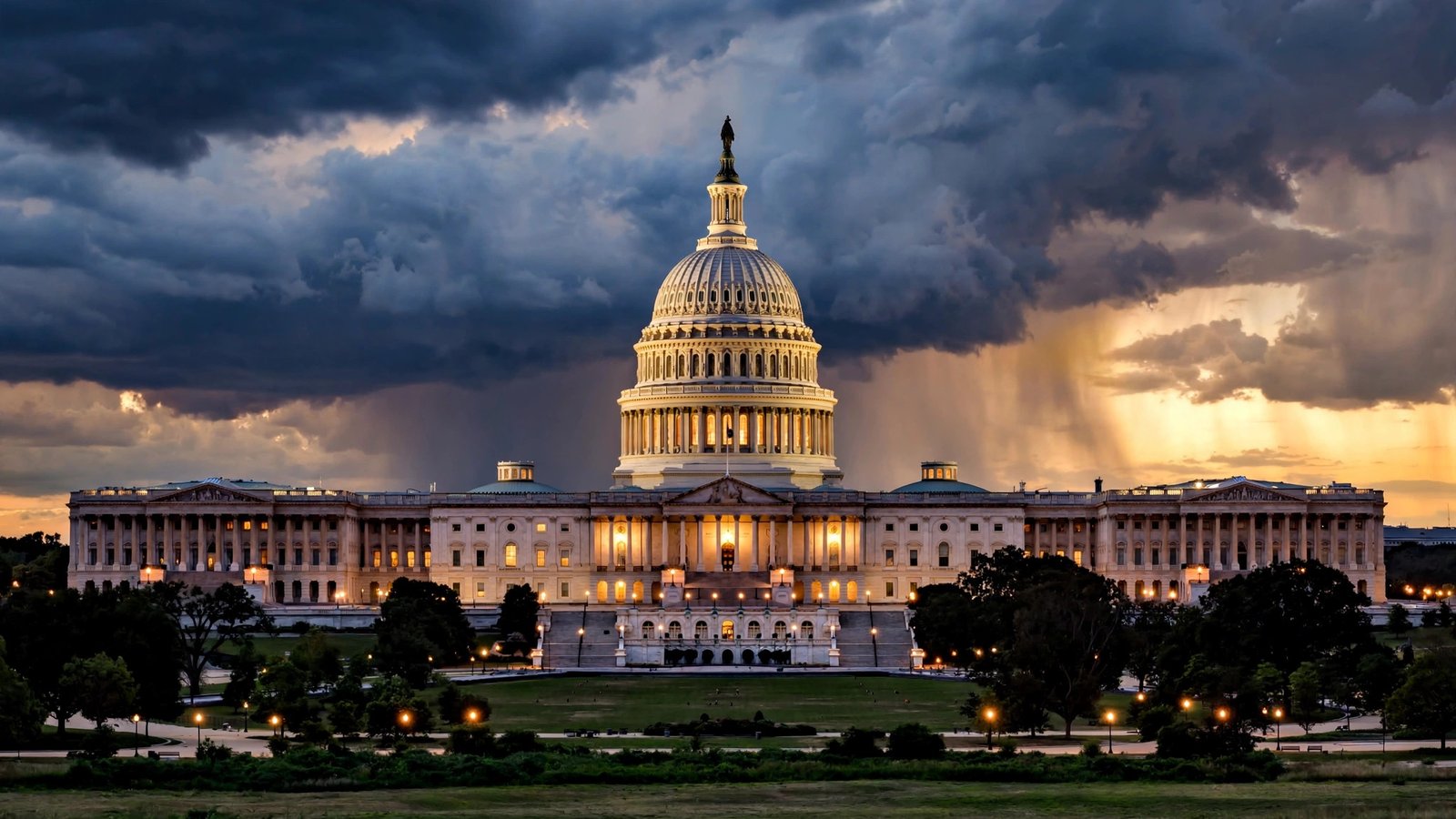

Federal Government Reopens November 2026: Shutdown Ends After 43 Days

After 43 days, the longest government shutdown in US history is over. The federal government reopens November 2026 following a funding deal that passed the House on Wednesday and was signed into law by President Donald Trump late Wednesday night. Federal workers were expected back on the job Thursday, and agencies were directed to resume normal operations immediately — though clearing a 43-day backlog will take days or weeks.
This article lays out what happened, what the bill contains, who voted for it, and what comes next. The story is dated November 12, 2026, and the facts below are drawn from reporting by NLIHC, the Association of American Medical Colleges (AAMC), the University of Colorado, and Manila Metro.
The Timeline: 43 Days, From October 1 to Wednesday Night
| Date / event | What happened |
|---|---|
| October 1, 2026 | The shutdown begins after Congress fails to pass funding |
| Monday night | The Senate passes the funding package 60–40 |
| Wednesday | The House passes the funding bill 222–209 |
| Wednesday night | President Trump signs the bill into law, ending the shutdown |
| Thursday | Federal workers expected back on the job; agencies resume normal operations |
The timeline below shows how the reopening unfolded, step by step. The shutdown began October 1, 2026, and ran for 43 days — longer than any previous federal shutdown in American history. The end came quickly once a deal was struck: the Senate passed the package 60–40 on Monday night, the House followed with a 222–209 vote on Wednesday, and the President signed it late Wednesday night. The Office of Management and Budget directed agencies to resume normal operations immediately.
The Senate Vote: 60–40, With 8 Democrats Crossing Over
The Senate passed the package 60–40 on Monday night, with 8 Democrats joining 52 Republicans. That bipartisan margin mattered: the Senate needed 60 votes to advance the bill, and the eight Democratic votes provided exactly the cushion required. The vote ended weeks of stalemate in the chamber.
The Senate deal was built around a compromise: most agencies would be funded on a short-term basis through January 30, 2027, while a handful of full-year appropriations bills would run through the end of the fiscal year. That structure — short-term funding for most of the government, full-year funding for a few agencies — is what ultimately broke the deadlock.
The House Vote: 222–209, Mostly Party-Line
The House vote on Wednesday was mostly party-line: the bill passed 222–209. Six Democrats voted for it — Henry Cuellar, Don Davis, Jared Golden, Adam Gray, Marie Gluesenkamp Perez, and Tom Suozzi. The only House Republicans against were Thomas Massie and Greg Steube. The rest of the chamber split along party lines, reflecting how divisive the shutdown fight had become.
For the six Democrats who voted yes, the decision was a political gamble: their party’s leadership had held out for a deal that included an extension of health insurance subsidies, and this bill did not include one. Their votes, combined with near-unanimous Republican support, were enough to send the bill to the President’s desk the same day.
Why the Shutdown Lasted 43 Days
The reason the shutdown lasted 43 days is the fight over health insurance. The central Democratic demand throughout the shutdown was an extension of Affordable Care Act premium tax credits, which expire December 31. Democrats held out for that extension; Republicans refused to include it in a funding bill. That single disagreement kept the government closed for six weeks.
The final deal broke the deadlock by separating the two questions. The funding bill passed without the subsidy extension, and Senate leaders promised a vote on extending the credits by mid-December. Whether that promise holds will determine whether the January negotiations go smoothly or turn into another standoff.
The politics of the shutdown were visible in the polling. A Reuters/Ipsos poll released November 12 — the same day the federal government reopens November 2026 was confirmed — found 50% of Americans blamed Republicans for the shutdown and 47% blamed Democrats — a near-even split that gave neither side a clear incentive to blink first. When the public is divided almost equally on who is responsible, the political cost of holding out stays low for both parties, and the shutdown drags on. It took 43 days, unpaid workers, and mounting disruption to services before the arithmetic of compromise finally outweighed the arithmetic of blame.
What finally changed was the structure of the deal itself. Short-term funding through January 30, 2027 for most agencies, full-year funding for a handful of programmes, worker protections, and a promised December vote on the subsidies gave both sides something to take home. The Democrats got a vote on the credits; the Republicans got a funding bill without the extension attached. Neither side got everything, which is usually how a 43-day shutdown ends.
What’s in the Bill
The bill is the Continuing Appropriations, Agriculture, Legislative Branch, Military Construction and Veterans Affairs, and Extensions Act, 2026 (H.R. 5371). Its core provision funds most federal agencies through January 30, 2027 — note the year is 2027, not 2026. That date is the next funding deadline, and it arrives in less than three months.
Three full-year appropriations bills are included in the package: Agriculture, Veterans Affairs, and the legislative branch, plus the Food and Drug Administration and military construction. Those run through September 30, 2027. SNAP food assistance — used by about 42 million Americans — is funded through September 30, 2027 as well, a provision that matters enormously to the families who rely on it. As the NLIHC summary of the funding law notes, the bill keeps federal housing and food programmes running while Congress works on the longer-term budget.
The deal also reverses the shutdown-era firings: reduction-in-force notices issued during the shutdown are undone, further federal layoffs are banned through January 30, and back pay is guaranteed for federal workers. About 800,000 federal employees were owed wages after weeks without pay, and the back-pay guarantee means they will be made whole. The AAMC account of the signed funding package describes the same worker protections and the restoration of programmes that had been paused.
SNAP deserves a closer look, because it reaches further than almost any other item in the bill. The programme is used by about 42 million Americans, and funding it through September 30, 2027 means that food assistance is secure for the full fiscal year, regardless of what happens at the January 30 deadline. For the families who depend on it, that certainty matters more than the headline funding dates.
The worker protections are equally significant. About 800,000 federal employees were owed wages after weeks without pay, and the bill guarantees their back pay. It also reverses the reduction-in-force notices issued during the shutdown — the firings that were carried out while the government was closed — and bans further federal layoffs through January 30. Taken together, those provisions mean the shutdown’s damage to the federal workforce is, as far as the law can manage it, undone.
Two security provisions are also in the package: $203.5 million for lawmaker security and $28 million for Supreme Court justices’ security. Both were added after a year of rising concern about threats to public officials.

What the Bill Does NOT Do: Health Insurance Subsidies
The bill does NOT extend Affordable Care Act premium tax credits, which expire December 31. That was the central Democratic demand throughout the shutdown, and its absence is the reason the deal was so hard to reach. Senate leaders promised a vote on extending the credits by mid-December — a promise, not a guarantee, and one that will be closely watched.
For the millions of Americans who buy insurance through the Affordable Care Act marketplaces, the December 31 expiry is now the next cliff. If the promised vote doesn’t produce an extension, premiums will rise sharply in the new year. The University of Colorado’s federal update on the congressional deal flags the same December deadline as the key unresolved issue.
Who Blamed Whom: The Polls
A Reuters/Ipsos poll released November 12 — the same day the federal government reopens November 2026 was confirmed — found 50% of Americans blamed Republicans for the shutdown and 47% blamed Democrats. The near-even split shows how little political advantage either side gained from the standoff: after 43 days, the public divided almost equally on who was responsible.
That division helps explain why the shutdown lasted as long as it did. With neither side clearly winning the blame game, there was little political pressure on either party to be the first to compromise — until the practical costs of a shuttered government, from unpaid workers to delayed services, became impossible to ignore.
Federal Government Reopens November 2026: What It Looks Like in Practice

The Office of Management and Budget directed agencies to resume normal operations immediately, and federal workers were expected back on the job Thursday. But “reopening” and “back to normal” are not the same thing. Clearing the backlog could take days or weeks: permits that weren’t processed, inspections that weren’t done, payments that weren’t sent, and applications that sat untouched for six weeks.
Airports, which felt the shutdown acutely as air traffic controllers and security screeners worked without pay, should see staffing stabilise quickly. National parks, museums, and federal offices will reopen in stages. For the roughly 800,000 federal employees owed wages, back pay will arrive — but the exact timing depends on each agency’s payroll cycle.
The backlog is the hidden cost of the shutdown. Every day the government was closed, work piled up: permits that weren’t processed, inspections that weren’t done, payments that weren’t sent, and applications that sat untouched. Federal workers returning on Thursday will face six weeks of accumulated work, and the Office of Management and Budget’s instruction to resume normal operations immediately doesn’t make that backlog disappear. Clearing it could take days or weeks, depending on the agency, and some services will feel the effects well into December.
For the workers themselves, the fact that the federal government reopens November 2026 brings relief and a reckoning. About 800,000 federal employees were owed wages, and while the back-pay guarantee means they will be made whole, the timing depends on each agency’s payroll cycle. The reversal of the reduction-in-force notices also means that workers who were fired during the shutdown get their jobs back — a rare outcome, and one that the bill’s authors made a point of including.
For ordinary Americans, the most visible sign of the reopening is the simplest: the services that stopped will start again. The Manila Metro report on the shutdown’s end captures the same picture — a government switching back on, with the backlog to clear behind it.

What Happens Next: January 30, 2027
The deal buys less than three months. Another funding deadline arrives on January 30, 2027, when the short-term funding for most agencies runs out. Congress will have to pass either full-year appropriations bills or another short-term extension — and the same fight could easily repeat itself.
The December vote on Affordable Care Act subsidies comes first. Senate leaders promised it by mid-December, and its outcome will shape the January negotiations: if the subsidies are extended, one major point of contention disappears. If they aren’t, the January 30 deadline could become the next standoff.
The December vote comes first, and it is the more immediate test. Senate leaders promised a vote on extending the Affordable Care Act premium tax credits by mid-December, and the credits expire December 31. If that vote produces an extension, one major point of contention disappears before the January deadline. If it doesn’t, millions of Americans who buy insurance through the marketplaces will face sharply higher premiums in the new year — and the January 30 negotiations will start with a fresh grievance on the table.
The January deadline is the larger test. When the short-term funding for most agencies runs out on January 30, 2027, Congress will have to pass either full-year appropriations bills or another short-term extension. The same disagreement that produced a 43-day shutdown — over health insurance subsidies, and over how the government should be funded — will still be there. The only question is whether the experience of the longest shutdown in American history has changed anyone’s appetite for a repeat.
For now, the immediate crisis is over. The federal government reopens November 2026 after the longest shutdown in American history — and the question now is whether Congress can use the next 11 weeks to produce a budget, or whether the country will be back here in January. Our earlier coverage tracked the shutdown as it unfolded: see our government shutdown House vote coverage, our government shutdown update, and our report on the US government shutdown ending.
Frequently Asked Questions
How long was the 2026 government shutdown?
43 days — from October 1, 2026, until the bill was signed late Wednesday night. It was the longest government shutdown in US history.
What was the House vote on the funding bill?
The House passed the funding package 222–209 on Wednesday. Six Democrats voted for it, and the only House Republicans against were Thomas Massie and Greg Steube.
What was the Senate vote?
The Senate passed the package 60–40 on Monday night, with 8 Democrats joining 52 Republicans.
When does the funding run out again?
Most federal agencies are funded through January 30, 2027. Three full-year appropriations bills and SNAP food assistance run through September 30, 2027.
Will federal workers get back pay?
Yes. The bill guarantees back pay for federal workers — about 800,000 federal employees were owed wages — and reverses the shutdown-era firings, banning further layoffs through January 30.
Does the bill extend Affordable Care Act subsidies?
No. The bill does not extend the premium tax credits, which expire December 31. Senate leaders promised a vote on extending them by mid-December.
Conclusion
The federal government reopens November 2026 after 43 days — the longest shutdown in American history — because the House passed the funding bill 222–209, the Senate passed it 60–40, and President Trump signed it late Wednesday night. The deal funds most agencies through January 30, 2027, protects SNAP through September 30, 2027, guarantees back pay for about 800,000 federal workers, and reverses the shutdown-era firings. What it doesn’t do is extend the Affordable Care Act subsidies expiring December 31 — and with another funding deadline on January 30, 2027, the country has less than three months to find out whether this ending was a resolution or just a pause.



