
How to Get Rid of Chapped Lips in Winter: The 14-Day Repair Plan

Winter does something specific to your lips. The cold air outside holds almost no moisture, the heated air inside is just as dry, and your lips — the one patch of skin with no oil glands — dry out, crack, and sting every time you smile. Learning how to get rid of chapped lips in winter is not about finding a miracle balm. It is about stopping the habits that keep injuring them, sealing in moisture with the right product, and giving the skin the two to three weeks dermatologists say it needs to heal.
This plan follows the American Academy of Dermatology’s guidance for healing dry, chapped lips. Fourteen days, three phases, one boring balm.
Why Winter Is So Hard on Lips
Lips are badly designed for winter. The skin there is thinner than anywhere else on your face, it has no oil glands to produce its own protective layer, and it faces every breath of cold wind and dry indoor heat. Cold air holds very little moisture, and when it comes inside and is heated to 70°F, its relative humidity collapses — outdoor air at 30°F and 70% humidity drops to roughly 16% once heated, per the EPA’s indoor-air guidance. Your lips feel that drop first.
Then the habits kick in. Dry lips feel tight, so you lick them. Saliva wets them for a few seconds, then evaporates and leaves them drier than before — and saliva carries digestive enzymes that break down the lip barrier itself. Dermatologists call the result lip licker’s dermatitis, a form of irritant contact cheilitis: a red, scaly ring that spreads exactly as far as your tongue reaches. The drier your lips feel, the more you lick; the more you lick, the drier they get. Breaking that loop is the first step of the repair plan, and no balm works until it happens.
How to Get Rid of Chapped Lips in Winter: The 14-Day Repair Plan
The American Academy of Dermatology says chapped lips should improve within two to three weeks of care. This plan runs fourteen days in three phases: first remove what is injuring the lips, then seal in moisture, then protect them while the barrier rebuilds.
| Phase | Days | What to do | What to avoid |
|---|---|---|---|
| 1. Stop the damage | 1–3 | Switch to a plain, fragrance-free ointment; apply several times a day and before bed | Licking, picking, flavoured or tingling balms, lip scrubs |
| 2. Seal and rebuild | 4–10 | Thick white petroleum jelly overnight; balm before going outside; humidifier in the bedroom | Matte lipstick, long-wear formulas, exfoliants, new products |
| 3. Protect and maintain | 11–14 | SPF 30+ lip balm outdoors, reapplied every 2 hours | Skipping balm on “good” days, breathing through your mouth at night without a humidifier |
Expect the first real change around day four or five: less tightness, fewer new cracks, no stinging with coffee. The visible flaking takes longer — the surface skin has to shed and regrow — which is why the plan runs a full two weeks even though your lips will feel better sooner. If nothing has improved by day fourteen, or the cracks keep bleeding, see a dermatologist rather than trying a fourth balm.
The Balm: Boring Is the Whole Point
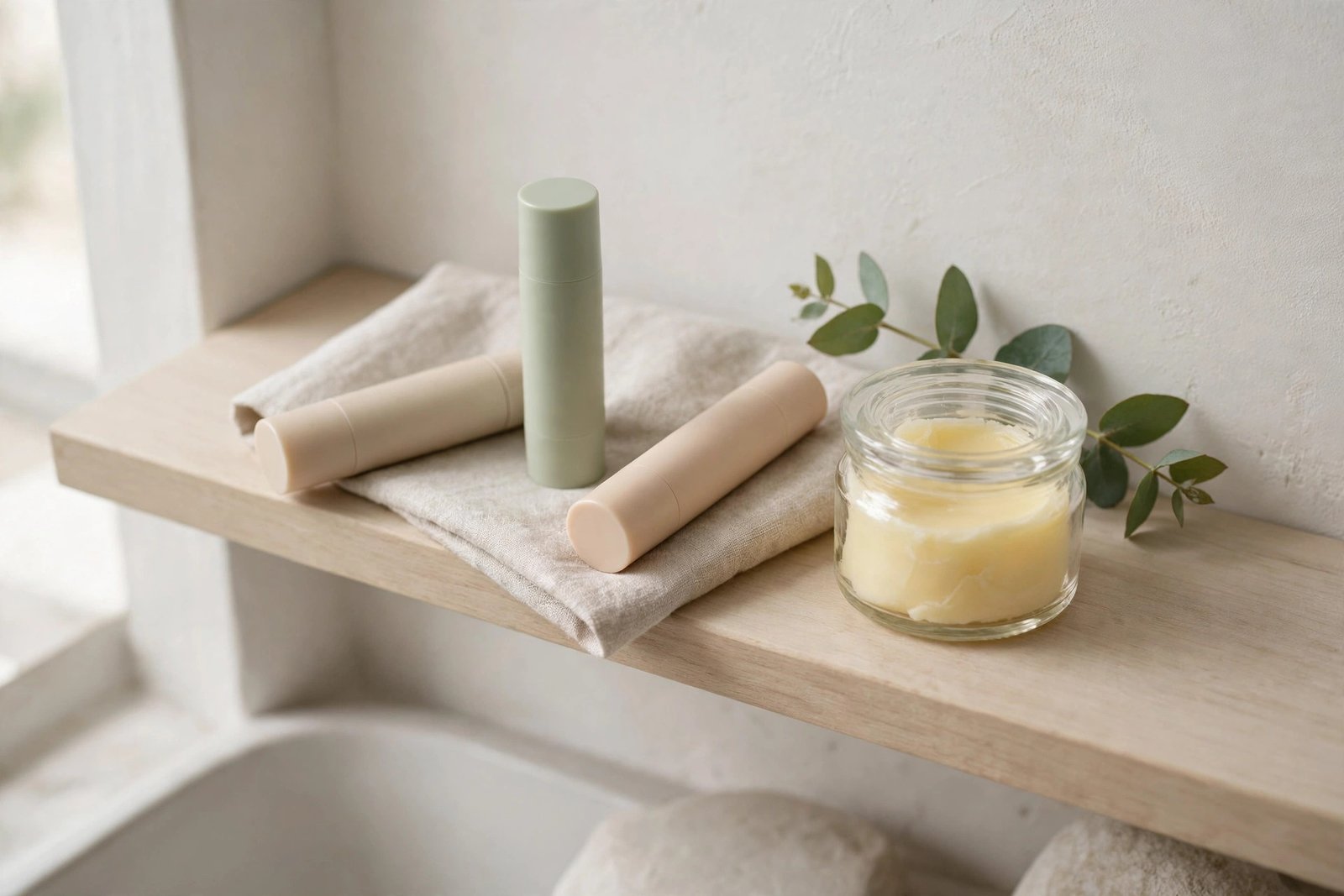
When it comes to how to get rid of chapped lips in winter, the most effective lip product is the least exciting one. For very dry, cracked lips, the AAD recommends a thick ointment such as white petroleum jelly, because ointments seal in water longer than waxes or oils. A waxy stick feels nice for ten minutes, then wears off; plain petroleum jelly stays put for hours, especially overnight, when your lips do most of their healing.
Apply a non-irritating balm several times a day and always before bed. Keep one everywhere you need it — coat pocket, bedside table, desk, car — because the product that is in the other room does not get used. At night, use the thick ointment rather than a stick: a visible layer of petroleum jelly before sleep gives your lips eight uninterrupted hours of protection, the longest healing window of the day.
One test matters more than any brand name: if a product burns, stings, or tingles when you put it on, stop using it. That sensation is not the product “working” — it is irritating your lips, and it is the fastest way to tell whether your current balm is part of the problem.

Ingredients That Heal — and Ingredients That Hurt
Reading a lip balm label takes ten seconds and saves weeks of guessing. The AAD lists the ingredients that help healing and the ones that keep lips irritated — and the two lists barely overlap with what most “lip repair” products actually contain.
| Helps healing | What it does | Avoid while chapped | Why it hurts |
|---|---|---|---|
| Petrolatum / white petroleum jelly | Seals in moisture longest | Menthol, camphor, eucalyptus | Cooling tingle = irritation |
| Shea butter | Softens and conditions | Fragrance and flavouring | Cinnamon, citrus, mint, peppermint sting cracked skin |
| Ceramides | Rebuilds the skin barrier | Salicylic acid | Exfoliates already-damaged skin |
| Dimethicone | Protective, non-greasy barrier | Phenol, propyl gallate | Irritants on broken skin |
| Castor seed oil, hemp seed oil | Emollients that soothe | Lanolin | Common allergen on cracked lips |
| Mineral oil | Seals moisture in | Octinoxate, oxybenzone | Chemical sunscreen filters that can irritate |
| SPF 30+ (zinc oxide / titanium dioxide) | Sun protection outdoors | — | Choose mineral filters instead |
Choose a balm labelled fragrance-free and hypoallergenic, and be suspicious of flavour: a flavoured balm tempts you to lick your lips, which restarts the whole cycle. That is the quiet trap of the mint and cherry sticks — they feel good for a minute, taste good enough to lick, and keep the lips irritated for weeks. If your lips are chronically chapped no matter what you try, look at the balm itself first. Switching to a plain, fragrance-free ointment is often the entire fix.
Stop Licking: The Habit That Keeps Resetting the Damage
Licking feels like relief and works like sandpaper. Saliva evaporates within seconds, leaving lips drier than before, and the digestive enzymes in saliva break down the delicate lip barrier with every pass. A dermatology review in the International Journal of Women’s Dermatology identifies saliva as the most common single irritant in lip dermatitis — and the pattern it describes is easy to recognise: a red, scaly ring around the mouth that reaches exactly as far as the tongue can travel.
The practical fix is a replacement, not willpower. The AAD’s advice is to apply lip balm instead of licking: every time you catch yourself about to lick, put balm on. Keep the balm plain and unflavoured, because a flavoured balm invites the very licking you are trying to stop. Most people lick without noticing — while concentrating, while sleeping, while out in the cold — so make the balm easier to reach than the habit: one in every pocket, one by the bed. Within a few days of unbroken balm coverage — the turning point in how to get rid of chapped lips in winter — the tight feeling that triggers licking starts to fade, and the habit loses its cue.
Do not pick or peel the flakes, either: pulling off peeling skin opens new cracks and can invite infection. Let the balm soften them instead; they will come away on their own once the skin underneath has healed.
Fix the Air: Humidity at 30–50%
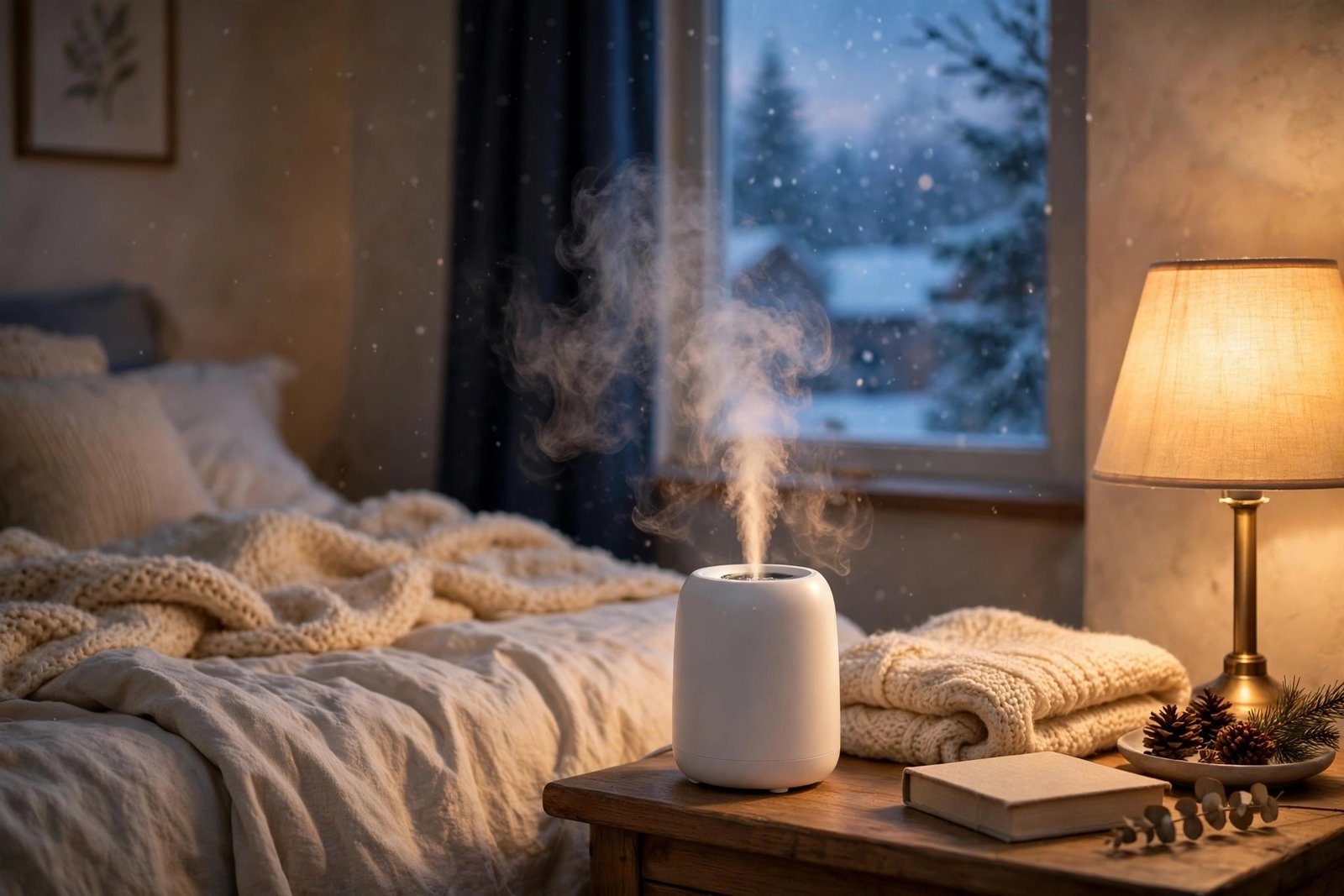
Your lips are only as hydrated as the air around them, which is why humidity is the overlooked half of how to get rid of chapped lips in winter. The EPA advises keeping indoor relative humidity below 60%, ideally between 30% and 50% — and in winter, heated indoor air routinely falls below 30%, which is when skin, lips, and sinuses all start to suffer. A small humidifier in the bedroom is the single most useful device in this plan, and the AAD specifically recommends one if you breathe through your mouth at night.
Run it at night, not all day: a bedroom humidifier while you sleep gives your lips eight hours in moist air, which is when they are doing their healing. Keep it clean — a dirty humidifier breeds mould and bacteria, so follow the manufacturer’s cleaning schedule, and our guide on how to clean a humidifier covers the routine step by step. Do not push humidity past 50%: above that, you trade dry lips for window condensation and mould. A ten-dollar hygrometer tells you where you stand. If your skin is dry all over, not just your lips, our guide on how to treat dry skin in winter covers the same low-humidity problem for the rest of your body — and the same dry air is behind winter sinus trouble, covered in how to relieve sinus pressure.
SPF on Your Lips, Even in Winter
Sun protection is the step almost everyone skips in January, and it matters more than it looks. Snow reflects UV light, lips burn more easily than the rest of your face, and chapped lips are already compromised — they sting and crack faster in sun and wind. The AAD recommends a lip balm with SPF 30 or higher before going outdoors, reapplied about every two hours while you are outside, even in winter.
Choose a mineral filter — zinc oxide or titanium dioxide. Chemical filters such as octinoxate and oxybenzone are on the AAD’s avoid list for chapped lips because they can irritate broken skin. Apply the SPF balm last before you go out, over your regular ointment if you like, and reapply after eating or drinking. A scarf helps too — wind is a second attacker, and covering your mouth on the coldest days costs nothing.
Hidden Causes: When It Is Not the Weather
If your lips crack harder than the rest of your face does, look at your nightstand before you blame the weather. Topical retinoids — retinol and prescription retinoid creams — migrate to the lip line during application or overnight, through a finger swiping the lip line or your face smearing into the pillow. The same dermatology review that covers lip-licking names topical retinoids, salicylic acid, and benzoyl peroxide as common irritants on lip skin,
The fix, and a step many guides to how to get rid of chapped lips in winter miss, is simple: apply lip balm right after cleansing and before the retinoid goes anywhere near your face, working it into the corners of the mouth where products pool overnight. The balm acts as a seal the retinoid cannot easily cross. The same logic applies to other products that reach your lips by accident — exfoliating acids, acne treatments, even some toothpastes. If your chapping started the same week as a new product, that product is the prime suspect, and removing it for two weeks is a better test than buying a new balm.
Other quiet contributors: mouth-breathing at night, which dries the lips for eight hours straight; low iron or B-vitamin levels, which a doctor can test for if corner cracks keep returning; and dehydration, which shows up on the lips first. Drink water through the day — it will not fix chapped lips on its own, but chronic dehydration is a common underrated contributor that no balm can cover for.
When to See a Dermatologist
Most chapped lips heal in two to three weeks with consistent care. See a board-certified dermatologist if yours have not improved in that time, if they keep bleeding, if sores do not heal, or if cracks sit at the corners of the mouth — that can be angular cheilitis, which sometimes needs antifungal treatment rather than balm. Persistent chapping can also point to a contact allergy, which a dermatologist can patch-test for.
See a doctor sooner for swelling, signs of infection, or a rough patch that does not heal — the AAD notes that actinic cheilitis, a sun-damage condition, can look like ordinary chapping and needs assessment. Cleveland Clinic dermatologist Dr. Melissa Piliang makes the same point in her guide to getting rid of chapped lips: treat cracked skin quickly to calm inflammation before it escalates.
Frequently Asked Questions
How long do chapped lips take to heal?
Most chapped lips improve noticeably within two to three weeks of consistent care, according to the AAD — you should feel a difference within the first few days. If there is no improvement after two to three weeks, see a board-certified dermatologist.
Is petroleum jelly good for chapped lips?
Yes — plain white petroleum jelly is one of the best options for very dry, cracked lips. Ointments seal in water longer than waxes or oils, which is why the AAD recommends it, especially overnight. It is fragrance-free, cheap, and hard to beat.
Why do my lips keep cracking every winter?
Usually dry air plus the licking cycle: cold, dry air strips moisture, licking dries lips further, and the enzymes in saliva break down the lip barrier. Add a flavoured or menthol balm, or a retinoid migrating to the lip line, and the cycle runs all winter. Fix the air, switch to a plain ointment, and stop licking.
Should I exfoliate chapped lips?
No — not while they are chapped. Scrubs and chemical exfoliants irritate already-damaged skin and slow healing. Let a balm soften the flakes and let them come away on their own. Once healed, a gentle sugar scrub once a week is fine.
Do I need SPF lip balm in winter?
Yes. The AAD recommends SPF 30 or higher outdoors, even in winter, reapplied every two hours. Snow reflects UV, and chapped lips burn more easily than healthy ones. Choose a mineral filter — zinc oxide or titanium dioxide. For more dermatology-backed guidance, see the American Academy of Dermatology, the Mayo Clinic, WebMD, and Healthline.
Conclusion
How to get rid of chapped lips in winter is a repair job, not a shopping trip. Stop the licking, drop the balm that stings, and switch to a plain fragrance-free ointment — white petroleum jelly overnight is the cheapest and most effective option there is. Fix the air with a bedroom humidifier kept between 30% and 50%, wear SPF 30+ with a mineral filter outdoors, and keep retinoids and exfoliants off the lip line. Give it the full fourteen days: tightness fades in the first week, the flakes follow, and by day fourteen your lips should feel like yours again.
If they do not, that is useful information, not failure — it means something else is driving the problem, and a dermatologist can find it in one visit. But for most winter lips, the boring plan works: plain balm, moist air, no licking, two weeks. For the same dry-air battle on the rest of your body, our winter guides on getting rid of static hair in winter and dry skin will help too.



