

How to Relieve Sinus Pressure: 10 Fast Remedies That Actually Work

Sinus pressure has a way of taking over your whole day. It starts as a dull ache behind your eyes or across your forehead, then spreads into a heavy, stuffed-up feeling that makes it hard to think, sleep, or even enjoy a meal. If you are dealing with it right now, learning how to relieve sinus pressure quickly — and safely — can make the difference between a miserable day and a manageable one.
The good news is that most sinus pressure responds well to simple home remedies, and many of them work within minutes. Steam, saline rinses, and warm compresses are the fastest options, while over-the-counter medicines can help when home measures are not enough. This guide ranks ten remedies by how fast they help, explains exactly how to do each one, flags the safety rules that matter — including the three-day limit on decongestant sprays — and tells you when it is time to call a doctor. Note: this is general information, not medical advice. If you have a medical condition or take regular medication, check with your doctor or pharmacist before trying a new remedy.
What Causes Sinus Pressure?
Your sinuses are air-filled spaces in the bones around your nose, cheeks, and forehead. They are lined with a thin membrane that makes mucus, which normally drains away through small openings into your nose. Sinus pressure happens when that lining swells — usually because of a cold, allergies, or a sinus infection — and the swelling traps air and fluid inside. The trapped pressure is what you feel as a dull ache or a feeling of fullness in your face.
That is why the remedies that work fastest are the ones that reduce the swelling or help the sinuses drain. Steam and warm compresses open things up. Saline rinses wash out mucus and irritants. Decongestants shrink the swollen lining. Pain relievers reduce the inflammation that causes the ache. Understanding the mechanism helps you choose the right remedy: if your main problem is congestion, focus on steam and saline; if it is pain, add a pain reliever; if it is both, combine them. That simple logic is the heart of how to relieve sinus pressure at home.
Most sinus pressure from a cold or mild allergies resolves on its own in 7 to 10 days. The remedies below are about getting through those days more comfortably, not about curing the underlying cold. If your symptoms last longer than ten days, get worse instead of better, or come with a high fever, vision changes, or a stiff neck, see a doctor — those are signs of something that needs medical attention.
10 Remedies Ranked by Speed
Not all remedies work at the same pace. The table below ranks all ten by how quickly they usually help, so you can start with the fastest option and add others as needed. The details for each one follow in the sections below.
| Method | How fast it helps | How to do it | Watch out for |
|---|---|---|---|
| Steam | Minutes | Hot shower or bowl of hot water + towel, 5–10 min | Keep face clear of scalding water |
| Saline rinse | Minutes | Neti pot or squeeze bottle with sterile water | Never use untreated tap water |
| Warm compress | Minutes | Warm damp cloth on cheeks/forehead, 10–15 min | Not too hot — test on wrist first |
| Decongestant nasal spray | Minutes | 1–2 sprays per nostril as directed | Do not use more than 3 days — rebound congestion |
| Oral decongestant | 30–60 min | Tablet as directed on the label | Check with a doctor first if you have high blood pressure |
| Pain reliever | 30–60 min | Ibuprofen or acetaminophen as directed | Follow the label dose; ibuprofen helps swelling, acetaminophen helps pain |
| Hydration | Hours | Water, broth, herbal tea through the day | Avoid alcohol, which dries mucus out |
| Head elevation | Overnight | Sleep with an extra pillow | Do not sleep flat on your back if congested |
| Humidifier | Overnight | Run a cool-mist humidifier in the bedroom | Keep indoor humidity 30–50%; clean it regularly |
| Sinus massage | Minutes | Gentle circles on the bridge of the nose and cheekbones | Light pressure only — stop if it hurts |
How to Relieve Sinus Pressure Fast: Steam and Saline
Steam is the fastest home remedy there is, and it costs nothing. The simplest version is a hot shower: stand in the steam for five to ten minutes and breathe deeply through your nose. The warm, moist air loosens mucus and reduces the swollen feeling in your sinuses. If you do not want a shower, fill a bowl with hot water, lean over it with a towel draped over your head to trap the steam, and breathe slowly for five to ten minutes. Keep your face at a safe distance from the water — you want steam, not a scald.
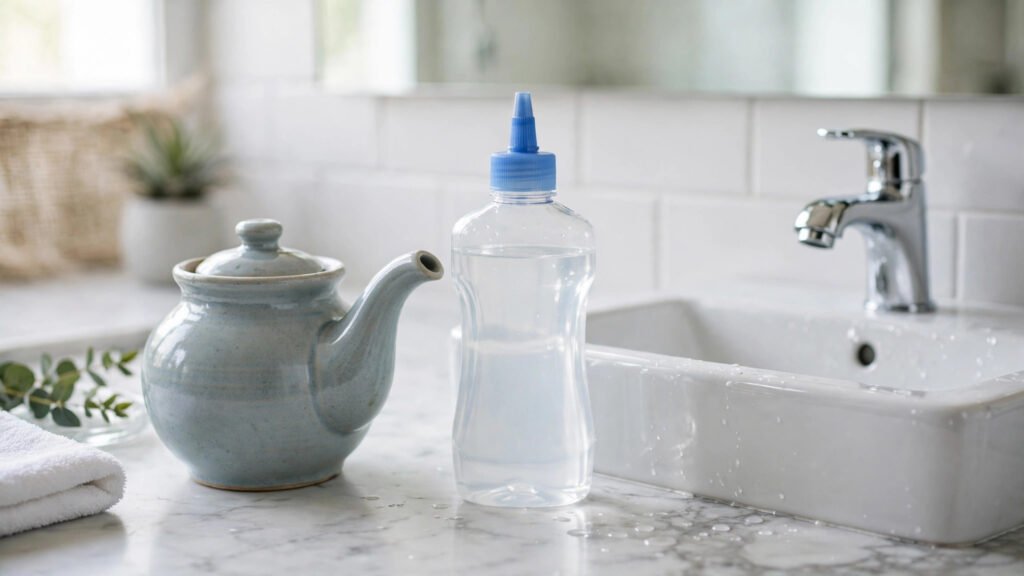
A saline rinse is the other fast option, and it is the one doctors recommend most consistently. A neti pot or a squeeze bottle flushes mucus, allergens, and irritants out of your nasal passages, and the relief is often immediate. The safety rule here is absolute: use only sterile, distilled, or previously boiled-and-cooled water — never untreated tap water. Tap water can carry organisms that are harmless to drink but dangerous in the nose. Mix the water with the saline packets that come with the rinse device, or a quarter-teaspoon of non-iodized salt per cup of water, and rinse once or twice a day while you are congested. The Cleveland Clinic’s home remedies guide and the Mass General Brigham sinus pressure guide both put saline rinses at the top of their lists for a reason: they work, and they are safe when the water rule is followed.

Warm Compresses and Sinus Massage
A warm compress is the gentlest remedy on this list, and it is especially good for the aching, heavy feeling across the forehead and cheeks. Soak a clean washcloth in warm water, wring it out, and lay it across your nose, cheeks, and forehead for 10 to 15 minutes. The warmth increases blood flow and helps the sinuses drain. Test the cloth on the inside of your wrist first — it should feel comfortably warm, not hot. Repeat two or three times a day, or whenever the pressure builds up.
Sinus massage is a useful companion to the compress. With clean hands, use your index fingers to make small, gentle circles on the bridge of your nose, then move outward along the cheekbones toward your ears. Spend about thirty seconds on each spot, using light pressure. Some people also find relief from pressing gently on the inner corners of the eyebrows for ten seconds at a time. The evidence for massage is anecdotal rather than clinical, but it is harmless, it costs nothing, and many people find the pressure eases while they are doing it. Stop if anything hurts — the goal is gentle stimulation, not force.
Over-the-Counter Options: What Helps and What to Avoid
When home remedies are not enough, over-the-counter medicines are the next step in how to relieve sinus pressure — but each type has a rule you need to know. Decongestant nasal sprays, such as oxymetazoline, work within minutes by shrinking the swollen lining inside your nose. The catch is the three-day limit: do not use them for more than three days in a row. Longer use causes rebound congestion, where the lining swells worse than before once the spray wears off, and you end up needing the spray just to feel normal. This is the single most important safety rule in this guide, and the Houston Methodist guide to fast sinus relief stresses it for good reason.
Oral decongestants, such as pseudoephedrine, work more slowly — usually 30 to 60 minutes — but they last longer and do not carry the rebound risk. The caution here is blood pressure: oral decongestants can raise it, so check with a doctor or pharmacist first if you have high blood pressure, heart disease, or take blood-pressure medication. Pain relievers are the third option. Ibuprofen, an NSAID, helps with both pain and swelling; acetaminophen helps with pain but not swelling. Follow the dose on the label, and do not combine multiple products that contain the same ingredient — many cold medicines already include acetaminophen, and doubling up is an easy mistake to make.
One thing to skip: antibiotics. They do not help a cold or a viral sinus infection, and taking them unnecessarily contributes to antibiotic resistance. If your doctor diagnoses a bacterial sinus infection, they will prescribe them — but that is a medical decision, not a self-care one. The Allina Health guide to sinus home remedies covers the same ground and is a good second reference for the remedies in this article.
Everyday Habits That Keep Sinuses Clear
The fastest remedies work in minutes, but the habits below are the long game in how to relieve sinus pressure — they work over days and keep the pressure from coming back. Hydration is the simplest: drink water, broth, and herbal tea through the day. Thin mucus drains; thick, dehydrated mucus does not. Avoid alcohol while you are congested, because it dries mucus out and makes it thicker. The same goes for smoking and secondhand smoke, which irritate the sinus lining directly.
Sleep with your head elevated. Lying flat lets mucus pool in the sinuses overnight, which is why pressure often feels worst in the morning. An extra pillow, or a pillow that raises your head a few inches, helps the sinuses drain while you sleep. If you struggle with dry air at night, run a cool-mist humidifier in the bedroom and keep indoor humidity between 30% and 50% — dry air irritates the lining, but air that is too humid encourages mould. Clean the humidifier regularly, following the manufacturer’s instructions, so it does not become a source of bacteria itself.
Finally, look after the basics that support recovery: rest, regular meals, and fresh air. And if muscle tension is part of the problem, gentle stretching helps — our guide on how to relieve lower back pain at home has a routine that works for the neck and shoulders too. A short walk outside, even in cold weather, can help — the change of air often clears the nose temporarily, and gentle movement supports circulation. If your congestion is allergy-related rather than cold-related, the same remedies help, but the long-term fix is reducing exposure to the allergen, whether that is dust, pollen, or a pet. For more on rest and recovery, see our guides on how to sleep better naturally and how to treat dry skin in winter — dry winter air affects both skin and sinuses.

When to See a Doctor
Most sinus pressure is uncomfortable but harmless, and it clears up within 7 to 10 days. But some symptoms mean it is time for medical care rather than home remedies. See a doctor if your symptoms last more than ten days, if they get worse after initially improving, or if they come with a high fever. Vision changes — double vision, swelling around the eyes, or pain when moving your eyes — need urgent attention, as does a stiff neck combined with a severe headache, which can be a sign of something more serious.
The same applies if you get sinus infections repeatedly — four or more a year — or if the pressure comes with symptoms that do not fit a cold, such as a persistent one-sided blockage or nosebleeds. A doctor can check for structural problems, such as a deviated septum or nasal polyps, and for allergies that might be driving the problem. Knowing how to relieve sinus pressure at home is a useful skill, but knowing when home care is not enough is the more important one. If you are unsure, calling your doctor’s office for advice costs nothing and can save you days of discomfort — or catch something that needs treatment.
Frequently Asked Questions
What is the fastest way to relieve sinus pressure?
Steam and saline rinses work within minutes. A hot shower or a bowl of steaming water loosens mucus fast, and a saline rinse flushes it out. A warm compress over the cheeks and forehead also helps within minutes. Decongestant nasal spray is equally fast, but remember the three-day limit.
Can I use a neti pot with tap water?
No. Use only sterile, distilled, or previously boiled-and-cooled water. Untreated tap water can carry organisms that are harmless to drink but dangerous when they enter the nose. Boil water for a minute, let it cool to lukewarm, and use it the same day.
How long does sinus pressure last?
Most sinus pressure from a cold or mild allergies resolves in 7 to 10 days. If it lasts longer than ten days, gets worse instead of better, or comes with a high fever, vision changes, or a stiff neck, see a doctor.
Why can’t I use decongestant spray for more than 3 days?
Longer use causes rebound congestion: the nasal lining swells worse than before once the spray wears off, and you end up needing the spray just to breathe normally. Stick to three days, then switch to saline rinses and steam if you still need relief.
Does a humidifier help sinus pressure?
Yes, if the air is dry. A cool-mist humidifier keeps indoor humidity between 30% and 50%, which stops the sinus lining from drying out and cracking. Clean it regularly, and do not over-humidify — air above 50% humidity encourages mould.
Can I exercise with sinus pressure?
Light exercise, such as walking, is usually fine and can even help by improving circulation. Avoid intense workouts if you have a fever or feel dizzy, and skip the pool — chlorinated water irritates congested sinuses. Rest is the priority when you are running a fever.
Conclusion
Learning how to relieve sinus pressure is mostly about knowing which remedy to reach for and when. Start with steam and a saline rinse for fast relief, add a warm compress for the ache, and use over-the-counter medicines carefully — respecting the three-day spray limit and the blood-pressure caution on oral decongestants. Support it all with hydration, elevated sleep, and a humidifier, and most pressure will ease within a week. If it does not, or if warning signs appear, see a doctor. Your sinuses will thank you — and so will your sleep.



