
How to Get Rid of Static Hair in Winter: 12 Fixes That Actually Work

You take off your wool hat, look in the mirror, and your hair is standing straight up like you touched a Van de Graaff generator. A few strands cling to your face and the rest crackle when you touch them. If that sounds like your morning routine from November through March, you are not alone — and the good news is that learning how to get rid of static hair in winter is mostly about understanding one simple bit of physics and then working with it instead of against it.
Static hair is not a sign that your hair is ruined or that you bought the wrong shampoo. It is what happens when dry winter air, friction, and hair that has lost its moisture all meet at once. The fixes below are ranked from the fastest emergency rescue to the habits that stop the problem from coming back at all, and most of them cost nothing or use things you already own.
Why Winter Turns Your Hair Into a Science Experiment
Static electricity builds up when two surfaces rub together and exchange electrons. Your hair picks up extra electrons from hats, scarves, sweaters, and brushes, and because each strand ends up with the same charge, the strands repel each other — that is why they fly apart and stand on end. In summer, moisture in the air carries that charge away before it can build up. In winter, cold air holds far less moisture and heated indoor air dries out even further, so the charge has nowhere to go.
Your hair itself makes things worse. Each strand is covered in tiny overlapping scales called the cuticle. When hair is well moisturized, the cuticle lies flat and smooth. When winter air and hot showers strip moisture away, the cuticle roughens and lifts, which creates more friction — and more friction means more static. The same dry air that frizzes your hair is also drying out your skin, which is why treating dry skin in winter and taming static hair often go hand in hand. Fix the dryness and you fix both problems at once.
You cannot stop friction entirely — you wear hats, you brush your hair, you pull sweaters over your head. But you can give the charge somewhere to go, add moisture back into your hair, and reduce the friction at the source. Every fix below does at least one of those three things, which is the first real step in how to get rid of static hair in winter for good rather than just flattening it for ten minutes.
The 12 Fixes: How to Get Rid of Static Hair in Winter, Ranked
These are ordered by speed and convenience. The first few rescue you in seconds when you are already out the door; the later ones are the habits that mean you rarely need rescuing at all.
1. Run a Dryer Sheet Over Your Hair
The classic emergency fix works because dryer sheets are coated with compounds that neutralize static charge. Take a fresh, unused dryer sheet and lightly smooth it over the surface of your hair, from roots to ends, and then over your hat or scarf for good measure. It takes about ten seconds and the effect is instant.
2. Smooth It Down With Damp Hands
Water conducts electricity, so even a tiny amount of moisture gives the built-up charge a path to escape. Run your hands under the tap, shake off the excess, and smooth your palms lightly over the flyaway sections. This is the fastest genuinely free fix there is — but it is temporary. Once the water evaporates, the static can return, so pair it with one of the moisturizing fixes below if you want the result to last the whole day.
3. Use a Leave-In Conditioner or a Drop of Hair Oil
Moisture is the real long-term answer, and a leave-in conditioner is the easiest way to add it. Work a pea-sized amount through the mid-lengths and ends of damp hair after washing, and the conditioner smooths the cuticle, weighs flyaways down slightly, and keeps the hair hydrated for hours. A single drop of argan oil or jojoba oil rubbed between your palms and smoothed over the surface does the same thing. Healthline notes that leave-in products are particularly helpful for dry or damaged hair because they keep working long after rinse-out conditioner has washed away.

4. Switch to a Wooden or Metal Comb
Plastic combs and brushes are static factories: plastic is an insulator that builds up charge as it moves through hair. A wooden comb, a metal comb, or a brush with natural boar bristles generates far less static. Brush gently — aggressive brushing creates more friction and more charge, whatever tool you use. Try brushing from the ends upward in short strokes instead of dragging from the roots in one long pull.
5. Finish Blow-Drying on the Cool Setting
Hot air from a hair dryer strips moisture from your hair and roughs up the cuticle, which is a recipe for static. If you blow-dry, keep the dryer on a medium heat setting, hold it at least six inches from your hair, and always finish with a blast of cool air, which helps the cuticle lie flat again.
6. A Dab of Hand Lotion in a Pinch
When you are out and about with no hair products in sight, the hand lotion in your bag is a surprisingly good substitute. Rub a small amount between your palms until it nearly disappears, then smooth your hands over the flyaways. The moisturizers in the lotion do the same job as a leave-in conditioner in a pinch. Use a fragrance-free lotion if you can, and keep the amount tiny. This is a rescue fix, not a routine, but it has saved many a hat-hair emergency.
7. Try an Anti-Static Hair Spray
If static is a daily battle for you, a dedicated anti-static spray earns its place on the shelf. Hold the bottle about eight inches from your head and mist lightly over the surface, or spray it onto your brush before you brush. These sprays usually combine light conditioning agents with anti-static ingredients, so they calm flyaways without weighing hair down.
8. Rethink Your Hat
Wool and acrylic hats are the worst offenders for static because they rub against your hair every time you move. A hat with a silk or satin lining creates far less friction, and if your favorite hat is unlined, you can sew or stick a silk scarf inside the band. Also, take your hat off slowly rather than yanking it off in one motion — a slow removal creates less friction and less of a charge spike.
9. Run a Humidifier at Home
This is the single most effective fix on the list, because it attacks the root cause instead of the symptom. The U.S. Environmental Protection Agency recommends keeping indoor relative humidity below 60 percent, ideally between 30 and 50 percent, and heated winter homes often drop well below that range. A humidifier in your bedroom puts moisture back into the air, which lets static charge dissipate before it builds up. The EPA’s indoor air quality guidance explains why humidity matters for a healthy home, and the Mayo Clinic recommends the same 30 to 50 percent range. A small hygrometer costs a few dollars and tells you exactly where your home stands, and moist air can also help with relieving sinus pressure on dry winter mornings.
10. Wash Your Hair Less Often — and More Gently
Every wash strips some of your hair’s natural oils, and in winter that oil is the main thing standing between your hair and static. Most people can stretch to washing every other day, or every third day, using dry shampoo at the roots between washes. When you do wash, use lukewarm water rather than hot, choose a moisturizing shampoo, and always follow with conditioner. The American Academy of Dermatology recommends washing hair based on how oily your scalp gets rather than on a fixed schedule, and focusing shampoo on the scalp and conditioner on the ends.
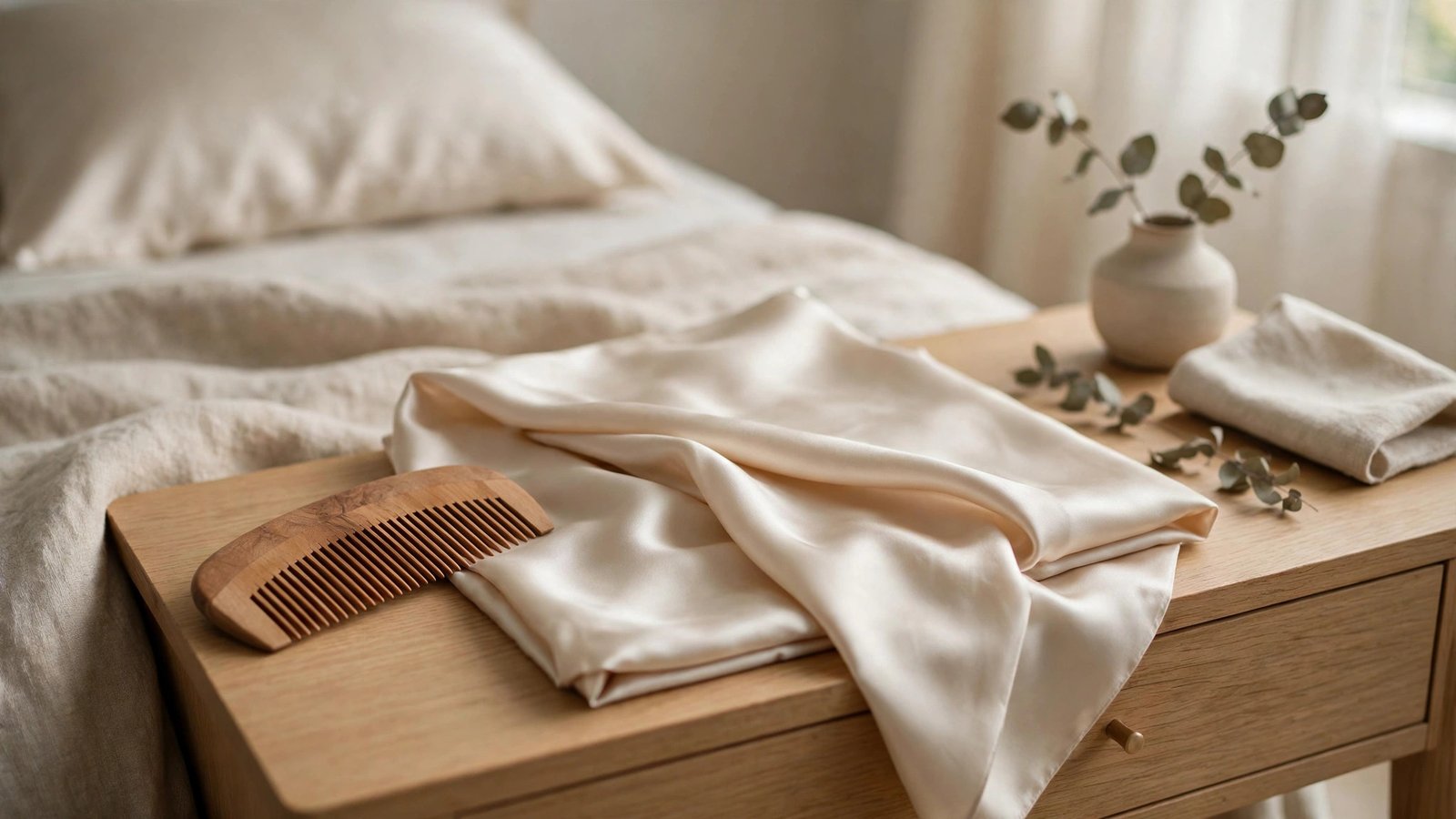
11. Sleep on a Silk or Satin Pillowcase
You spend roughly a third of your life with your head on a pillow, and a cotton pillowcase creates hours of friction every night. Silk and satin are far smoother, so your hair glides instead of catching, which means less static and less breakage by morning. It is a one-time purchase that works while you sleep, and many people notice the difference in their morning hair within the first week.
12. Rinse With Cool Water at the End of Your Shower
Hot water opens the hair cuticle and washes away the natural oils that keep it smooth; a cool rinse does the opposite, helping the cuticle lie flat and sealing in the conditioner you just applied. You do not need an ice-cold shower — just turn the temperature down for the final thirty seconds. Flat, smooth cuticles mean less friction, less frizz, and less static the next morning.
A Daily Prevention Routine That Stops Static Before It Starts
Quick fixes rescue a bad hair day, but a short daily routine means you rarely have one — and that routine is the lasting version of how to get rid of static hair in winter. Here is a simple version that takes about five minutes and covers every cause of static at once.
In the morning, start with a light leave-in conditioner or a drop of oil on the mid-lengths and ends, then brush with a wooden comb or natural-bristle brush. Put on a silk-lined hat or a silk scarf under your hat before you head out, and keep a dryer sheet or a small anti-static spray in your bag for emergencies. At home, keep your bedroom humidifier running and check your hygrometer reading now and then — staying in the 30 to 50 percent range is the goal. In the evening, brush gently before bed and sleep on a silk pillowcase.
Everything in this routine is good for your hair in general: moisturized, smooth hair breaks less, looks shinier, and holds a style better. Winter is hard on the whole body, not just hair — the dark, cold months can also affect mood, so if you notice low energy or a persistent low mood as the days shorten, it is worth learning the signs of seasonal affective disorder and talking to a doctor if they sound familiar. The EPA notes that most people spend about 90 percent of their time indoors, which makes indoor air worth getting right.

When Static Hair Is a Warning Sign, Not Just Winter Dryness
Some static is normal in winter — everyone gets it, even people with the healthiest hair. But there are signs that your hair needs more than a dryer sheet. If your hair snaps easily when you brush it, if the ends split faster than you can trim them, or if it feels rough and straw-like even after conditioning, the cuticle may be damaged from heat styling, chemical treatments, or over-washing. Static alongside constant breakage is a signal to cut back on hot tools, skip harsh dye for a season, and deep-condition weekly.
For everyday winter static, though, how to get rid of static hair in winter comes down to moisture, less friction, and a little patience — your hair is not misbehaving, it is just reacting to dry air the way physics says it should. See a dermatologist if you notice sudden or patchy hair loss, an itchy or flaking scalp that does not improve, or hair that has become dramatically thinner over a few months — those can point to something beyond winter dryness, and early advice makes a real difference.
Frequently Asked Questions
Why is my hair so static in winter but fine in summer?
Winter air is much drier than summer air, both outdoors and indoors once the heating is on. Moisture in the air normally carries static charge away from your hair before it can build up. When the air is dry, that charge stays put, strands repel each other, and you get flyaways.
Does static hair mean my hair is damaged?
Not necessarily. Static happens to healthy hair too, especially fine hair in dry conditions. But hair that is already dry or damaged gets static more easily because a rough, lifted cuticle creates more friction. If static comes with breakage and split ends, treat the damage first with gentler washing, less heat, and weekly deep conditioning.
Can I use a dryer sheet on my hair every day?
Yes, for most people it is fine as an occasional quick fix, but it is not a substitute for moisturizing your hair. Dryer sheets reduce static on the surface without adding any moisture back, so if you rely on them daily, pair them with a leave-in conditioner or hair oil to address the dryness underneath.
What is the best hairbrush to prevent static?
A wooden comb or a brush with natural boar bristles generates the least static, because wood and natural bristles do not build up charge the way plastic does. Metal combs are also a good choice. Whatever you use, brush gently — fast, long strokes through dry hair create the most friction.
How long does it take for a humidifier to help with static hair?
Most people notice a difference within a day or two of running a humidifier in their bedroom, once indoor humidity climbs back into the 30 to 50 percent range. The effect builds over the first week as your hair gradually rehydrates.
Will cutting my hair shorter stop the static?
It can reduce it, because shorter hair has less surface area to pick up a charge and less weight to fly around, but it will not eliminate static on its own. A shorter cut helps most combined with the moisture and friction fixes in this guide — a humidifier, a leave-in conditioner, and a silk-lined hat.
Conclusion
How to get rid of static hair in winter comes down to three things: dry air, friction, and thirsty hair. Give the charge somewhere to go with a humidifier, add moisture back with a leave-in conditioner and gentler washing, and cut friction with a wooden comb, a silk pillowcase, and a silk-lined hat — and the flyaways largely take care of themselves. Start with the quick fixes when you need them, then build the daily routine so you need them less and less. By the time spring arrives, the only thing crackling in your house should be the fireplace.



