
How to Roast Chestnuts: Oven, Stovetop, Grill, and Open Fire
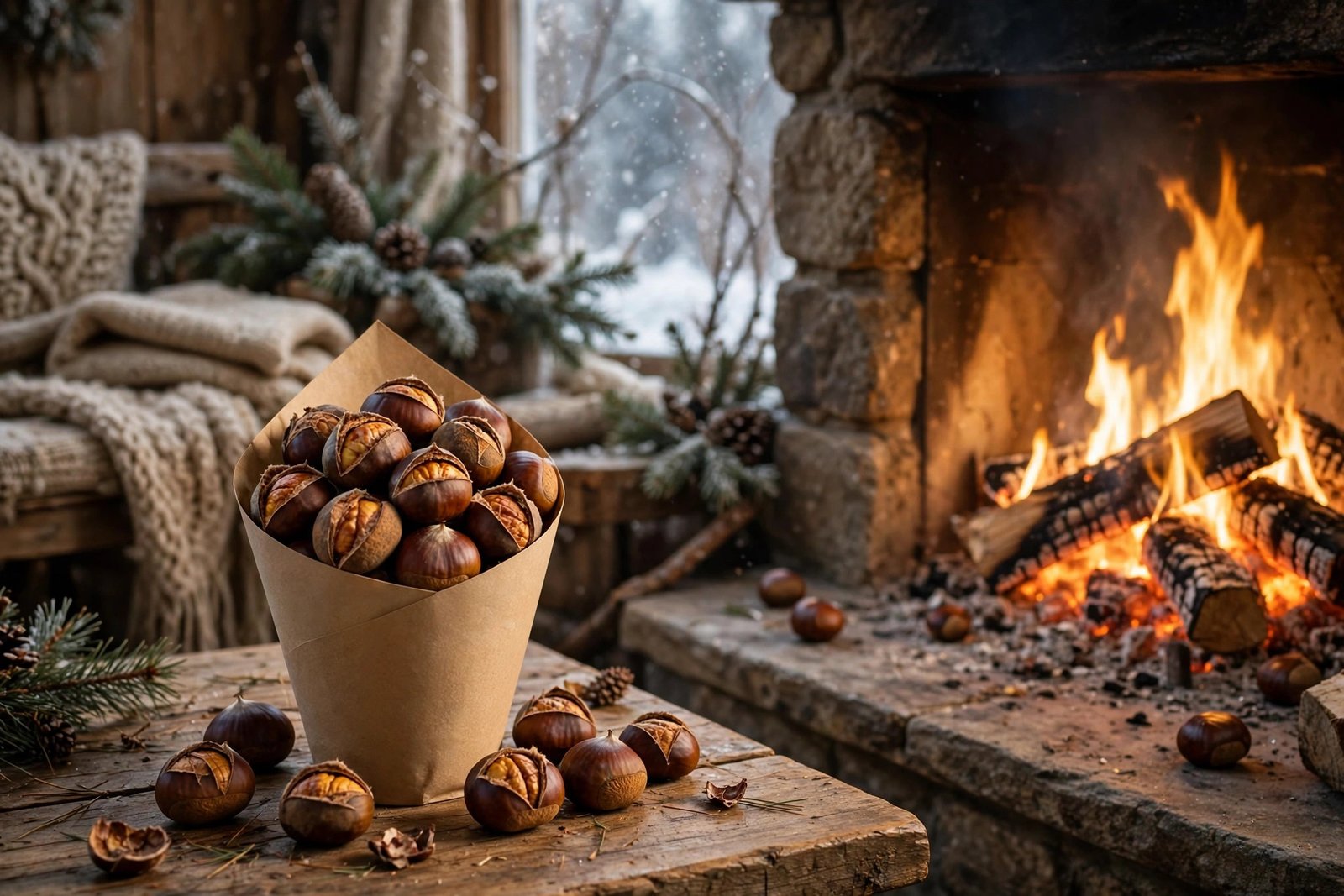
There is a smell that means December has properly arrived, and it is not pine or cinnamon. It is roasted chestnuts: sweet, nutty, faintly smoky, drifting out of a paper cone on a cold street. The good news is that you do not need a street vendor or an open fire to get it.
Learning how to roast chestnuts is one of the easiest holiday skills there is. The whole job comes down to three things: buying good nuts, scoring each shell before it heats, and peeling them while they are still warm. Get those right and any of the four methods below will give you soft, sweet chestnuts with shells that curl open on their own.
Below are all four methods compared, plus how to pick, score, peel, and store your chestnuts — and the one dangerous lookalike you must never roast.
Picking Good Chestnuts (and Avoiding the Dangerous One)
Everything starts at the shop, because a bad chestnut will never roast well no matter what you do to it. Pick up each nut and check three things: it should feel heavy for its size — a light nut is usually dried out inside; the shell should be glossy, not dull; and it should not rattle when you shake it, since a rattling shell means the kernel has shrunk away as it dried.
Look for shells that are smooth and unbroken, with no mould, no soft spots, and no tiny holes — holes are a sign of weevils, and a weevil-eaten chestnut is not worth saving. If the shop lets you, give the nut a gentle squeeze: a fresh chestnut feels firm and solid, while an old one gives slightly under your fingers.
Now the warning that matters more than any of this. Horse chestnuts — the shiny brown conkers children collect in autumn — are not the same thing as the sweet chestnuts you eat. Horse chestnuts are bitter and potentially poisonous, and they must never be roasted or eaten. Sweet chestnuts have a pointed tip and a flat side, and usually sit two or three to a spiky husk; horse chestnuts are rounder, smoother, and sit alone in their husk. If you forage, be certain of what you have picked — when in doubt, buy from a grocer.
One thing that surprises people: chestnuts are a fruit, not a true nut, and they are low in fat compared with other nuts. That is why they roast soft and starchy rather than oily, and pair so well with honey.
Score Every Chestnut Before You Heat It
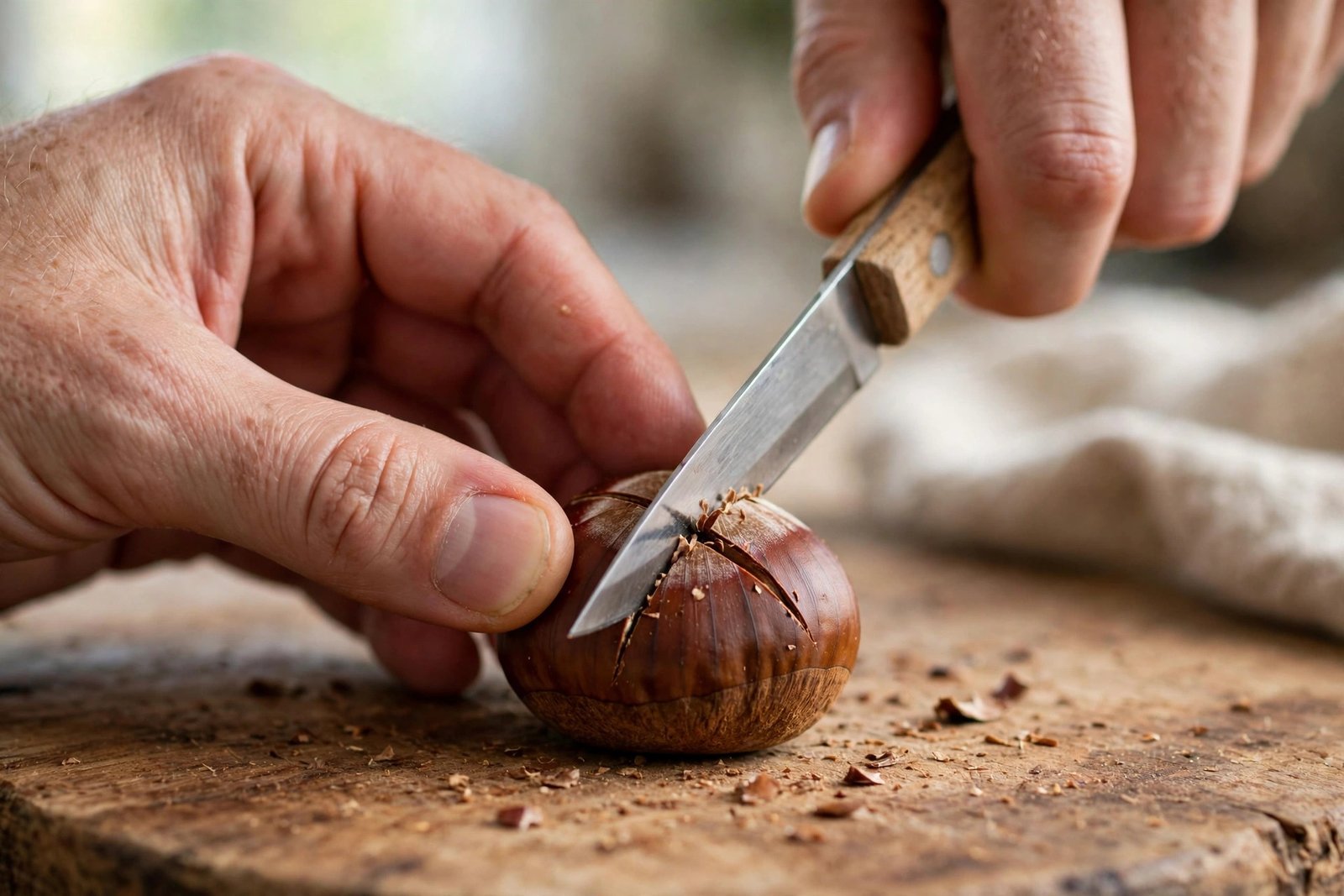
There is one step you must never skip, whichever method you choose: score an X into the shell of every nut before it goes near the heat. Use a sharp paring knife and cut through the shell on the flat side, the two strokes of the X about an inch long. Cut deep enough to get through the shell, but not far into the flesh.
The reason is steam. As a chestnut heats, the moisture inside it turns to steam, and a sealed shell has nowhere for that steam to go. An unscored chestnut can burst with enough force to dent an oven wall and splatter hot flesh across the kitchen — and it can do the same in a pan on the stove. The X gives the steam an escape route, and lets the shell curl back as the nut cooks, which makes peeling much easier later.
Score every nut, even if you are only roasting a handful — it takes a minute for a whole batch. Work on a stable chopping board, keep your fingers behind the blade, and hold each nut steady with your thumb on the pointed end.
How to Roast Chestnuts in the Oven
The oven is the easiest and most reliable of the four methods, and the one to start with if you have never roasted chestnuts before: even heat, a big batch at once, and almost no attention once the nuts are in.
Start by heating the oven to 400°F, in the middle of the range recommended by the main sources: the Cleveland Clinic suggests 400°F for 20 to 30 minutes, MasterClass uses 425°F for 15 to 20 minutes, and the Farmers’ Almanac goes lower, at 350°F for 20 to 25 minutes after a one-minute soak in hot water. Any of those combinations works — higher heat is faster, lower heat is more forgiving.
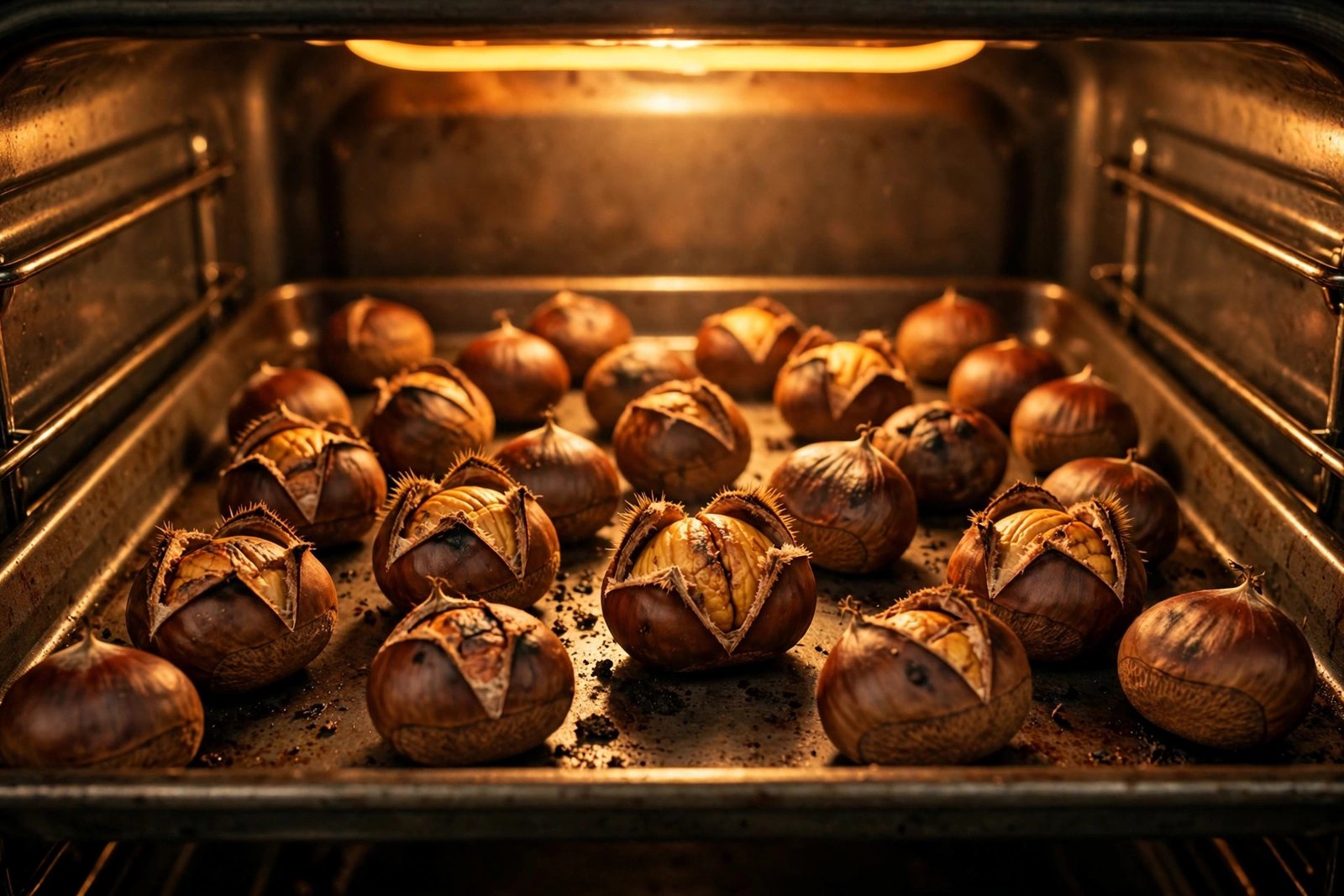
Spread the scored chestnuts in a single layer on a baking sheet, flat side down, with the X facing up. Do not pile them: nuts stacked on top of each other steam instead of roasting, and the ones in the middle will stay hard while the ones on top dry out. Slide the tray into the middle of the oven and set a timer.
You will know they are done when the shells have curled open at the X and the exposed flesh looks soft and slightly golden. Give one a squeeze with a tea towel — it should give a little, and the flesh should be tender all the way through. If the shells have not opened yet, give them another five minutes. When they are ready, tip the whole batch into a tea towel, wrap it up, and leave it for 10 to 15 minutes before peeling.
How to Roast Chestnuts on the Stovetop
The stovetop method is the fastest way to roast a small batch, and the closest thing to the street-vendor experience without a fire. You need a heavy skillet — cast iron is ideal — and a lid.
Put the scored chestnuts in the dry skillet in a single layer, flat side down, and set it over medium heat — there is no need for oil. Put the lid on and let them cook for 15 to 20 minutes, shaking the pan every few minutes so the nuts roll and roast evenly. The shaking matters: a nut that sits still will scorch on one side and stay raw on the other.
You will hear the shells start to pop and crackle as the steam escapes — that is normal, and it is why the lid stays on. Check them after 15 minutes: the shells should have curled open at the X and the flesh should be soft when you press it through a tea towel. If they need longer, put the lid back on for a few more minutes. Tip them into a tea towel and wrap them for 10 to 15 minutes before peeling, just as with the oven method.
Roasting Chestnuts on the Grill or an Open Fire
If you have a grill going, a fire pit, or a fireplace with a good bed of coals, this is the most atmospheric way to roast chestnuts — and the method the Christmas song is actually about. The technique is close to the stovetop method, but the heat is less predictable, so stay close and keep turning.
For a grill, spread the scored chestnuts in a single layer in a grill basket or a cast-iron skillet and set it over the coals, not over open flame. For an open fire, a long-handled chestnut pan or a heavy skillet on a fire grate does the job. Roast for 15 to 20 minutes, turning the nuts often with tongs so every side gets time against the heat.
The signs of doneness are the same as indoors: shells curled open at the X, flesh soft and golden. Pull them off the heat the moment they are ready — chestnuts over an open fire go from done to charred in a couple of minutes, and a burnt shell means a bitter nut. Tip them into a tea towel and let them rest for 10 to 15 minutes before peeling.
One practical note: never roast chestnuts directly in the coals without a pan. The shells will blacken and split unpredictably, the nuts will pick up ash, and you will spend the evening fishing them out with tongs. A cheap cast-iron skillet does the job perfectly.
| Method | Temperature / heat | Time | Effort | Best for |
|---|---|---|---|---|
| Oven | 350–425°F | 20–30 min | Low | Big batches |
| Stovetop | Medium, heavy skillet | 15–20 min | Medium | Small batches |
| Grill | Medium coals | 15–20 min | Medium | Outdoor cooking |
| Open fire | Hot coals | 15–20 min | High | Fire pits |
How to Peel Roasted Chestnuts
Peeling is where most people decide whether roasting chestnuts is worth doing again — and the secret is never to peel a cold chestnut. The shell and the thin papery skin underneath cling tight once the nut cools, and you will end up picking at it in flakes. Peel while the nuts are warm, and the shell comes away in curls.
That is why every method above ends the same way: tip the hot chestnuts into a tea towel, wrap it up, and leave them for 10 to 15 minutes. The trapped steam softens the shells and loosens the skin, and the towel keeps them warm while you work through the batch. Squeeze each nut gently through the towel — the shell will crack and split — then peel it off and rub away the papery skin with the towel.
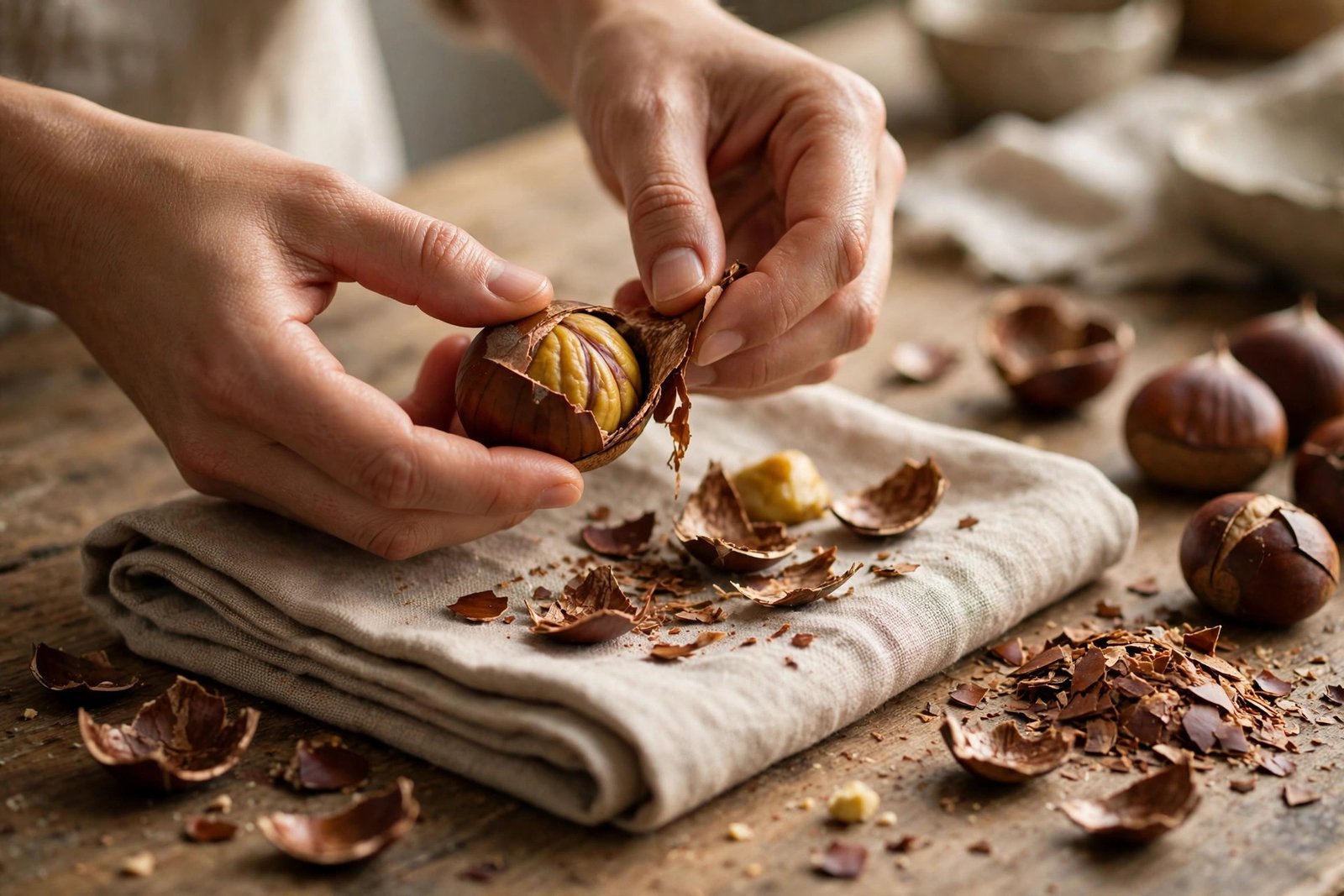
Work through the batch one nut at a time, keeping the rest wrapped in the towel so they stay warm. If a nut has gone cold and the skin will not budge, put it back in the oven for two or three minutes. A nut that still will not peel is usually undercooked: give it a few more minutes of heat and try again.
Do not worry about getting every last scrap of skin off — a few thin flakes are harmless and barely noticeable once the chestnuts are chopped into stuffing or stirred into a dish. Our guide to how to host Christmas dinner has ideas for using peeled chestnuts in stuffing and side dishes.
How to Store Roasted Chestnuts
Roasted chestnuts do not keep like raw nuts, so roast only as many as you will eat in the next few days — or freeze the rest. Once you know how to roast chestnuts, the storage rules are simple: fridge for the short term, freezer for the long term.
Let the roasted chestnuts cool completely, then store them in an airtight container in the fridge, where they will keep for up to four days. The Kitchn gives the same fridge and freezer times. To reheat them, warm them in a 350°F oven for five minutes, or in a dry skillet for a couple of minutes.
For longer storage, peel the chestnuts first, then freeze the kernels in a sealed bag or container for up to three months. Frozen chestnuts go straight from the freezer into stuffing, soups, and sauces without thawing, and they hold their texture far better than chestnuts frozen in the shell. Fresh, unroasted chestnuts keep longer — a few weeks in the fridge in a breathable bag.
| State | How long | How to store |
|---|---|---|
| Fresh, unroasted | A few weeks | Fridge, in a breathable bag |
| Roasted | Up to 4 days | Fridge, in an airtight container |
| Roasted, peeled, frozen | Up to 3 months | Freezer, in a sealed bag or container |
What to Do With Roasted Chestnuts
The simplest way to eat roasted chestnuts is straight from the paper cone, warm, with a little salt. But a batch of peeled chestnuts is one of the most useful things in a Christmas kitchen: chop them into stuffing, where their sweetness balances sage and sausage; stir them into Brussels sprouts with butter and bacon; fold them into a chocolate cake batter; or simmer them in milk with sugar and vanilla for a chestnut purée that works as a dessert.
They are also good with drinks: a bowl of warm chestnuts next to a mug of hot apple cider or a glass of mulled wine is about as close to a Christmas market as a living room gets. And if you are making hot cocoa bombs for gifts, a few chopped roasted chestnuts in the filling make them feel properly homemade.
One last date for the calendar: Roast Chestnuts Day is December 14 — a fine excuse to roast a batch even if you have already roasted three. The chestnuts will not mind, and neither will anyone passing the kitchen.
Frequently Asked Questions
Do I have to score chestnuts before roasting them?
Yes — always. A sealed chestnut traps steam as it heats and can burst in the oven or the pan. Score an X into the shell of every nut before it goes near the heat: the X also lets the shell curl open as the nut cooks, which makes peeling much easier.
What temperature should I roast chestnuts at?
In the oven, 400°F for 20 to 30 minutes is the most commonly recommended combination. MasterClass uses 425°F for 15 to 20 minutes, and the Farmers’ Almanac uses 350°F for 20 to 25 minutes after a one-minute soak in hot water.
Why won’t my chestnuts peel?
The most common reason people struggle with how to roast chestnuts is peeling them cold — the shell and the thin skin underneath cling tight once the nut cools. Always wrap the hot chestnuts in a tea towel for 10 to 15 minutes and peel them while they are still warm. If a nut has gone cold, warm it in the oven for two or three minutes and try again.
Can you roast horse chestnuts?
No — never roast or eat horse chestnuts (conkers). They are bitter and potentially poisonous; only sweet chestnuts are edible. Sweet chestnuts have a pointed tip and a flat side and sit two or three to a spiky husk, while horse chestnuts are rounder, smoother, and sit alone in their husk.
How long do roasted chestnuts last?
Roasted chestnuts keep for up to four days in an airtight container in the fridge. For longer storage, peel them first and freeze the kernels for up to three months. Fresh, unroasted chestnuts keep for a few weeks in the fridge in a breathable bag.
Conclusion
Now that you know how to roast chestnuts, the whole job is just three habits: buy heavy, glossy nuts with no rattle; score an X into every shell before it heats; and peel them while they are still warm from the tea towel. Pick the method that suits the day — the oven for a big batch, the stovetop for a quick one, the grill or an open fire for the full experience.
Roasted chestnuts are one of those small seasonal pleasures that cost almost nothing and make the house smell like December. Roast a batch, pour something warm, and enjoy them while they last — Roast Chestnuts Day on December 14 is a good excuse for a second round. For festive drinks to serve alongside them, see our guides to how to make mulled wine and hot cocoa bombs.



