
The 5 Best Electric Toothbrushes of 2026, Compared and Reviewed
Shopping for the best electric toothbrush 2026 can offer? Two brands run this category — Oral-B and Philips Sonicare — and their marketing would have you believe a $400 flagship cleans four times better than a $50 workhorse. It doesn’t. Across expert reviews and owner reports, the same finding keeps surfacing: a pressure sensor and a two-minute timer do most of the heavy lifting, and brushes at every price point now include both.
So instead of ranking toothbrushes by how many LEDs they have, I compared five real, currently-sold models on the things that actually change outcomes: cleaning technology, pressure feedback, battery life, cleaning modes, and the real cost of ownership. Every price below was checked in October 2026.
How We Picked These Five (An Honest Note)
Full disclosure: these picks are based on published manufacturer specifications, independent expert reviews, and thousands of verified owner ratings — not personal lab testing, because I didn’t run one. What I did do was cross-check every spec and price against current retail and manufacturer pages, and throw out any model with a pattern of battery or durability complaints. The five below survived that filter. Where a figure is a manufacturer’s claim rather than an independently verified number, I’ll say so.
The 5 Best Electric Toothbrushes of 2026
1. Oral-B iO Series 2 — Best Overall
Price: ~$65 (Oral-B lists it at $64.99; checked Oct 2026)
The iO Series 2 is the cheapest way into Oral-B’s iO magnetic drive — the frictionless motor that replaced the old whirring Pro-series motors — and that matters because it’s noticeably quieter and gentler on gums. You get three cleaning modes (Daily Clean, Sensitive, and Super Sensitive), a genuine automatic pressure sensor that slows the brush and lights up when you press too hard, a two-minute quadrant timer, and a battery Oral-B rates at about four weeks. A travel case and magnetic charger come in the box.
Reviewers keep landing on this one as the sweet spot because it delivers the two features that actually change brushing behavior — the iO cleaning motion and pressure feedback — without the app-and-screen tax of the flagships. The trade-off: it was designed for people switching from manual brushes, so the brushing feel is deliberately gentle, and Tech Advisor notes it may feel too gentle if you’re used to aggressive scrubbing. It also needs up to 24 hours for a full recharge from flat, so keep it on the dock and you’ll never notice.
See the official specs and current pricing for the Oral-B iO Series 2 on Oral-B’s site.
2. Philips Sonicare 4100 — Best for Sensitive Gums
Price: ~$50 (Philips lists $39.96–$49.96; most retailers ~$50; checked Oct 2026)
If you don’t care about brand loyalty, this is the honest pick for the widest audience. The 4100 uses Sonicare’s high-frequency sonic vibration — 31,000 brush strokes per minute — includes a built-in pressure sensor that both warns you with a pulsing sound and automatically reduces vibration when you press too hard, and runs Philips’ two-minute SmartTimer with 30-second QuadPacer intervals. Owners consistently report about two weeks of battery per charge, and BrushSync technology tracks head wear and beeps when it’s time for a replacement.
It’s quieter than any Oral-B, the slim handle suits smaller hands, and the gentle sonic feel is exactly why dentists keep recommending this line for sensitive or receding gums. The catch: one cleaning mode with two intensity settings — no whitening or gum-care presets, no app, no Bluetooth. That’s the point. You’re paying for fundamentals and nothing else, which is why it keeps showing up on “best for most people” lists year after year.
Read the full specifications for the Philips Sonicare 4100 on Philips’ official page.
3. SURI Pro 2.0 — Best Eco-Friendly Pick
Price: from ~$105, ~$135 with the UV-C sanitizing travel case (checked Oct 2026)
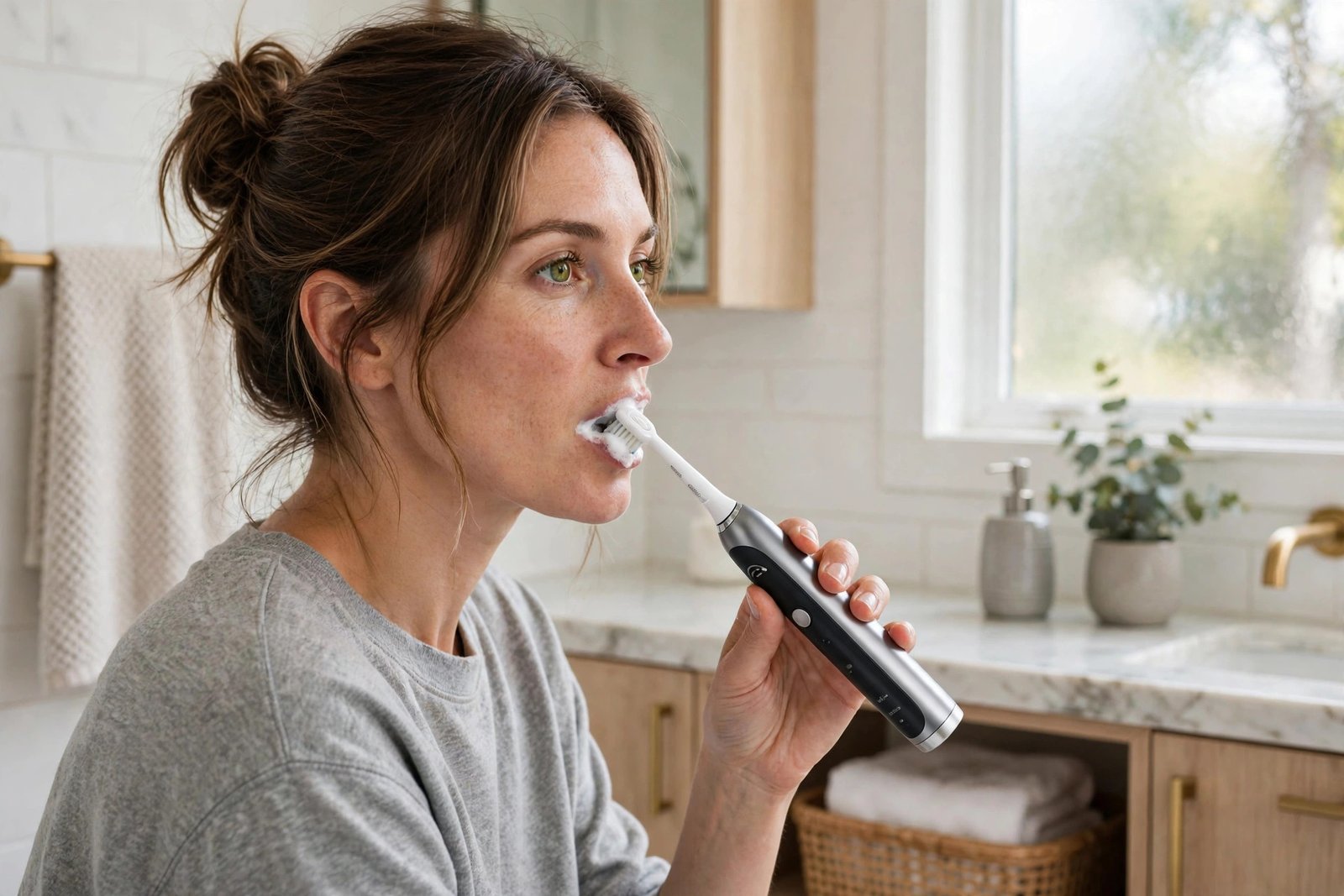
SURI — short for “sustainable rituals” — is the brush Men’s Journal named its 2026 overall winner, and the appeal is obvious the moment you hold it: a recyclable aluminum handle instead of plastic, plant-based brush heads made from cornstarch and castor oil, and a free mail-back scheme for recycling used heads. Version 2.0 added the two things the original lacked — a TouchSense pressure sensor and a more powerful, quieter motor delivering up to 30,000 sonic vibrations per minute.
You get two cleaning modes (clean + polish), a two-minute quadrant timer, IPX7 waterproofing, and up to 34 days of battery life on a single charge — the longest manufacturer-rated battery among the big-brand picks here. The optional UV-C travel case sanitizes the brush head in about a minute and charges the brush on the go, which frequent travelers will appreciate. There’s no app and no Bluetooth; SURI’s founder argues nobody uses them anyway, and skipping them keeps the price — and the e-waste — down. Replacement heads run about $8 each, and a subscription plan trims that further.
See the full specifications on the official SURI Pro 2.0 product page.
4. Bitvae D2 — Best Budget Brush
Price: ~$25 (checked Oct 2026)
This is the pick that embarrasses the $100+ brushes. The Bitvae D2 is accepted by the American Dental Association’s Council on Scientific Affairs for safety and efficacy in removing plaque and helping prevent gingivitis — a certification most budget brushes never earn. It ships with eight replacement heads (roughly two years’ worth), offers five modes (White, Clean, Soft, Polish, Gum Care) at 40,000 strokes per minute, and Bitvae claims up to 60 days of battery life from a four-hour USB charge.
There’s also a two-minute smart timer with 30-second interval pulses, IPX7 waterproofing, and a 2-in-1 holder that doubles as a hygienic travel cover. What you don’t get: a pressure sensor or an app. But at this price, with ADA acceptance and eight heads in the box, the D2 is the brush to buy for kids, dorm rooms, guest bathrooms, or anyone who wants to try electric brushing without committing real money.
5. Oral-B iO Series 5 — Best Smart Features Without the Flagship Price
Price: ~$100 (Oral-B lists $99.99; checked Oct 2026)
Want the app-guided brushing experience without paying $250–$400 for an iO Series 9 or 10? The iO Series 5 is the mid-range sweet spot: five smart modes (Daily Clean, Intense Clean, Sensitive, Super Sensitive, Whitening), an interactive display on the handle, Bluetooth connection to the Oral-B app with AI-powered real-time brushing recognition, and the iO pressure-sensor light ring that glows green when your pressure is just right.
Reviewers found the advertised two-week battery life accurate in real use. You also get a two-minute lighting timer, refill-change alerts, and a travel case. The honest caveat: the app’s position tracking can feel gimmicky, and if you’ll never open the app, save the money and buy the iO Series 2 instead — the cleaning hardware is the same iO magnetic drive. For more on how Oral-B’s models stack up, see Oral-B’s under-$100 electric toothbrush guide.
Side-by-Side Comparison
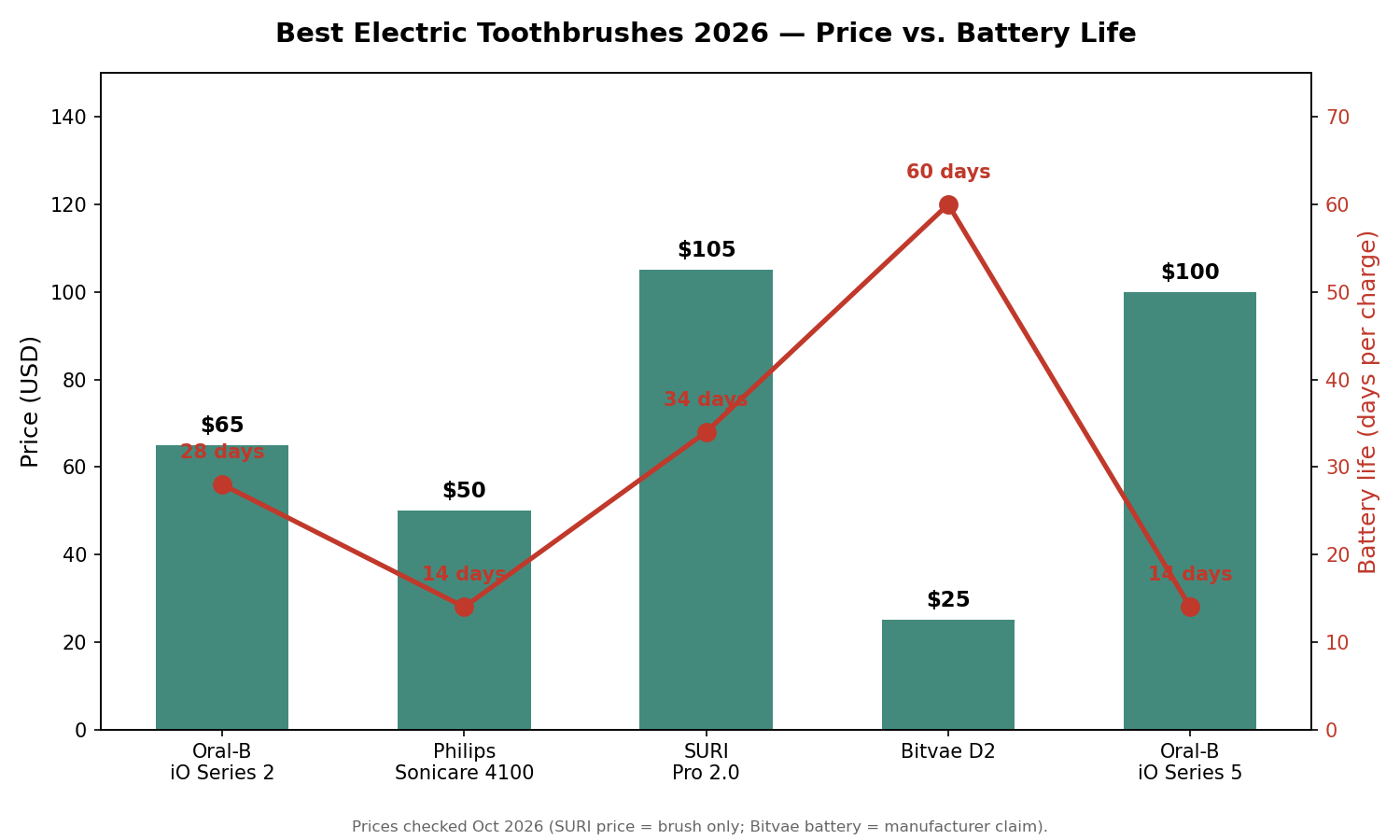
| Model | Price (checked Oct 2026) | Brush type | Modes | Battery life | Smart features |
|---|---|---|---|---|---|
| Oral-B iO Series 2 | ~$65 | Oscillating-rotating (iO magnetic drive) | 3 | ~4 weeks | 2-color pressure sensor, 2-min quadrant timer |
| Philips Sonicare 4100 | ~$50 | Sonic (31,000 strokes/min) | 1 + 2 intensities | ~2 weeks | Pressure sensor, SmartTimer + QuadPacer, BrushSync head reminder |
| SURI Pro 2.0 | $105–135 | Sonic (up to 30,000 vib/min) | 2 | Up to 34 days | TouchSense pressure sensor, 2-min quadrant timer, UV-C travel case |
| Bitvae D2 | ~$25 | Sonic (40,000 strokes/min) | 5 | Up to 60 days (mfr claim) | 2-min timer + 30-sec interval pulses |
| Oral-B iO Series 5 | ~$100 | Oscillating-rotating (iO magnetic drive) | 5 | ~2 weeks | AI app tracking, pressure-sensor light ring, interactive display |
How to Choose the Right Electric Toothbrush: A Quick Buying Guide
Oscillating vs. sonic: pick by feel, not by fear. Oral-B’s round heads oscillate and rotate; Sonicare, SURI, and Bitvae vibrate side-to-side at high frequency. A 2026 analysis cited on Oral-B’s own site ranked oscillating-rotating technology highest among electric brush technologies for plaque and gingivitis reduction — but the gap between the two designs is small compared to the gap between any electric brush and a manual one. One systematic review found electric brushes reduced plaque by 21% and gingivitis by 11% over three months. If sonic vibration makes your teeth ache, get an Oral-B. If round heads feel strange, get a sonic. Both work.
Prioritize the pressure sensor and the timer. These are the two features that change actual brushing behavior. Most people brush for about 45 seconds and press too hard; a sensor that flashes or slows the brush, plus a timer that nags you to 120 seconds, fixes both. Every pick above has both except the Bitvae D2, which has the timer but no sensor — acceptable at $25, a dealbreaker at $200.
Match battery life to your routine. If the brush lives on its dock, two weeks is plenty. If you travel, the SURI’s 34 days or the Bitvae’s claimed 60 days mean one less charger to pack. Note that “battery life” claims assume two two-minute sessions a day; heavy mode-switching and app syncing drain it faster.
Budget for replacement heads. This is the hidden cost nobody mentions in reviews. Heads should be swapped every three months, and proprietary iO heads cost more than standard Sonicare or Bitvae ones. A $50 brush with $30-a-year heads can cost more over three years than a $65 brush with cheaper refills — do the math before you buy. And while you’re building better habits, remember diet matters too: our guide to healthy snacks that actually keep you full doubles as a list of teeth-friendly options, since sugary grazing feeds the plaque you’re brushing off.
Don’t overpay for modes you’ll never use. Most owners settle on one mode within a month. Sensitive gums? One gentle mode beats five unused ones. Two minutes of standing at the sink goes faster than you think — and if your neck aches from hunching over the basin, our guide on how to fix bad posture covers the desk and bathroom habits that cause it. A final tip from dentists: rinsing with water after meals helps between brushes, which is one more reason to hit how much water you should actually drink a day.
Frequently Asked Questions
Do electric toothbrushes really clean better than manual ones?
Yes, on average. A systematic review found electric brushes reduced plaque by 21% and gingivitis by 11% over three months compared to manual brushing. The advantage comes mostly from consistency — the brush delivers thousands of identical movements per minute and most models time you to the full two minutes, which almost nobody does by hand. Technique still matters: you have to actually guide the brush to every surface.
How often should I replace the brush head?
Every three months, or sooner if the bristles splay. Worn bristles clean measurably worse. Several brushes here help you remember: the Sonicare 4100’s BrushSync beeps when the head is due, and the Oral-B iO models show a refill-change alert. The Bitvae D2 ships with eight heads, which is about two years of replacements in the box.
Oscillating vs. sonic — which technology is better?
Both are effective, and independent analyses have ranked oscillating-rotating slightly ahead for plaque and gingivitis reduction. But the practical difference is small. Choose based on comfort: some people find sonic vibration ticklish or harsh on sensitive teeth, while others dislike the feel of a small round oscillating head. The best technology is the one you’ll use twice a day without dreading it.
Is an expensive smart toothbrush worth it?
Usually not. The $250–$400 flagships clean with the same motor technology as the $65–$100 models in their own lineups; you’re paying for screens, AI coaching, and extra modes. Multiple reviews note that most owners stop opening the brushing app within weeks. Buy smart features only if you genuinely want real-time coaching — otherwise the Oral-B iO Series 2 or Sonicare 4100 gives you the same clean for a fraction of the price.
How long should an electric toothbrush battery last?
Anything from two weeks to two months is normal, depending on the model. In this roundup, the Sonicare 4100 and iO Series 5 run about two weeks, the iO Series 5 runs about two weeks, the iO Series 2 about four weeks, the SURI up to 34 days, and the Bitvae D2 claims up to 60 days. Lithium-ion batteries degrade over 2–3 years; keeping the brush on its dock between uses is fine and won’t meaningfully harm modern batteries.
Our Final Word on the Best Electric Toothbrush 2026 Buyers Can Get
If you want one recommendation: buy the Oral-B iO Series 2. At ~$65 it delivers the iO magnetic-drive clean, a real pressure sensor, and a four-week battery — the complete package with nothing you’ll regret paying for. Sensitive gums or a hatred of noise? The Philips Sonicare 4100 at ~$50 is the gentlest way to get a proper clean. Eco-conscious or allergic to plastic waste? The SURI Pro 2.0 is the best-built sustainable brush on the market. On a tight budget? The Bitvae D2 at ~$25 with ADA acceptance is almost unfair value. And if you actually want app coaching, the Oral-B iO Series 5 gets you there for ~$100 instead of $400.
Whichever you pick, the brush is only half the equation. The American Dental Association’s guidance hasn’t changed: brush twice a day, two minutes each time, with fluoride toothpaste — and replace the head every three months. Do that with any brush on this list and your dentist will notice the difference before you do.



