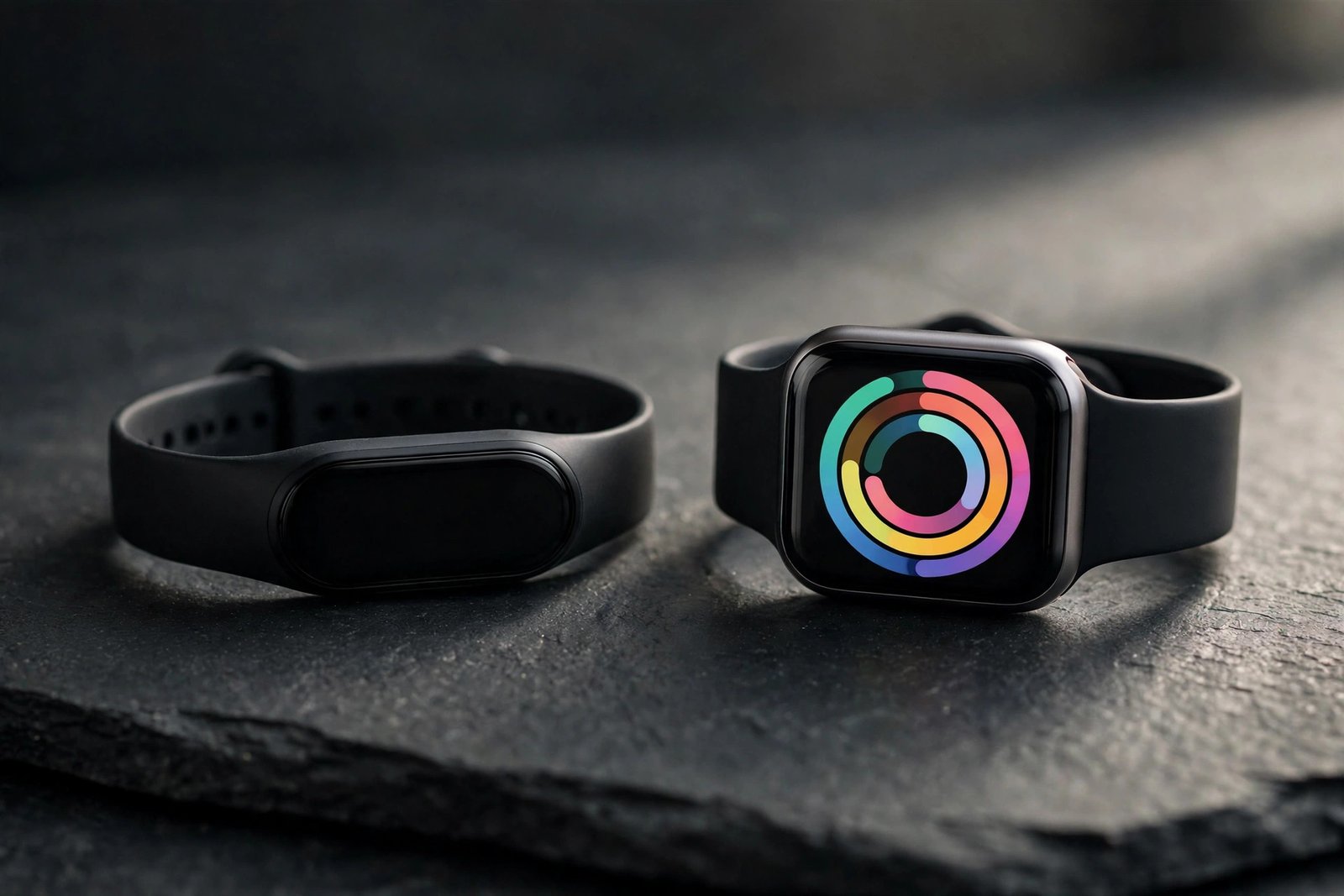

If you’re shopping for a wearable in 2026, the Fitbit vs Apple Watch debate is still the one that matters most — and it’s gotten more confusing, not less. Google now runs Fitbit like a full health platform, Apple just re-priced and re-chipped its entry-level watch, and both brands are leaning hard into AI coaching. The good news is that the answer is genuinely simple once you ignore the marketing.
This guide compares the current models — the Fitbit Charge 6 and Inspire 3 against the Apple Watch SE 3 — on price, battery, compatibility, health sensors, sleep, workouts, and apps, with every spec traceable to a published source. Prices checked October 2026.

The One-Paragraph Verdict
Get the Apple Watch SE 3 if you carry an iPhone and want a proper smartwatch — calls, apps, Siri, and notifications on your wrist — starting at $249. Get a Fitbit Charge 6 if you want the longest battery life per dollar, serious sleep tracking, and a device that works with either iPhone or Android, for $159.95 (often on sale near $120). The one hard rule: Apple Watch only works with an iPhone. Everything else is a trade-off you can actually choose. If you just want the comparison numbers, skip to the specs table below.
Fitbit vs Apple Watch: Head-to-Head in 2026
Before the details, a quick note on what “Fitbit” means now. Google owns Fitbit, and the current lineup includes the Charge 6 ($159.95), the budget Inspire 3 (around $79–$100), and the screenless Fitbit Air ($99.99) listed on the Google Store’s Fitbit lineup page. On the Apple side, the current entry pick is the Apple Watch SE 3 at $249; the older Series 11 (up to 24-hour battery, ECG and blood oxygen) has been retired from Apple’s store, per the Mac Observer’s SE 3 vs Series 11 breakdown. Here’s how the two ecosystems stack up.
Price
Fitbit wins outright. The Charge 6 lists at $159.95 on the Google Store and routinely drops to around $119.95 during sales, while the Inspire 3 hovers around $79–$100 — both solidly under $100 territory when discounted. The Apple Watch SE 3 starts at $249 and rarely discounts much. So the real question isn’t whether Fitbit is cheaper — it is, by a lot — it’s whether the Apple Watch earns the extra $90–$170 for you.
Battery life
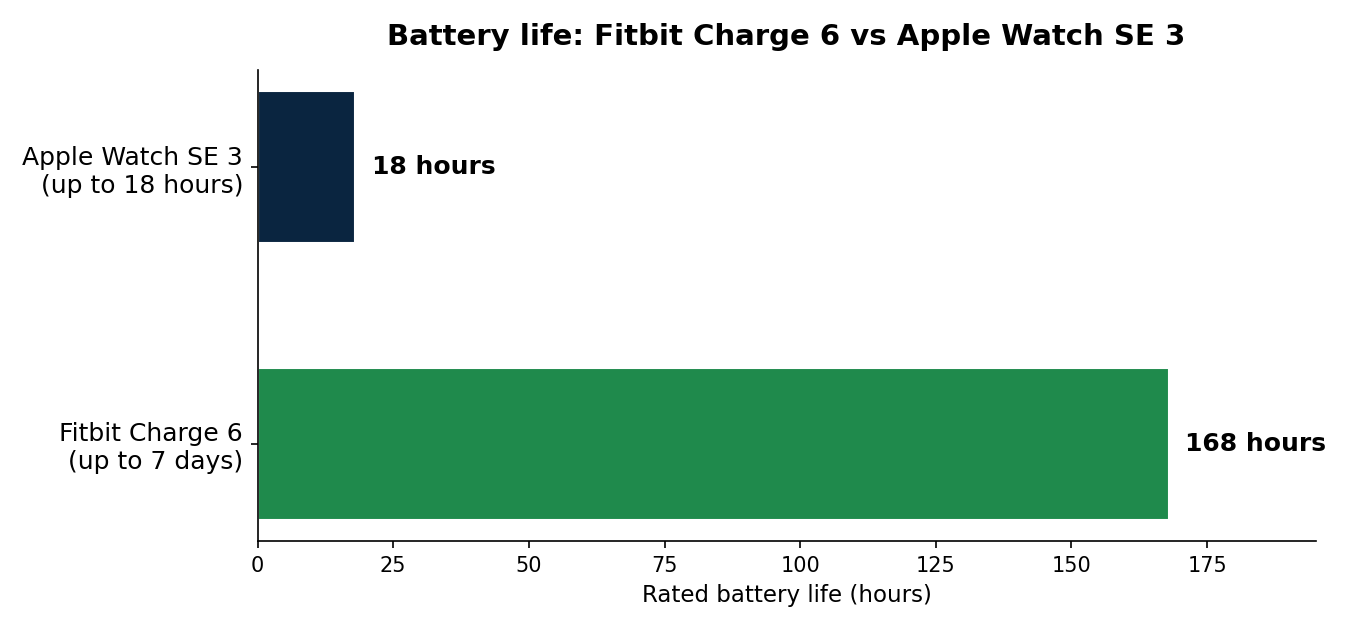
This is Fitbit’s biggest functional advantage. The Charge 6 is rated for up to 7 days on a charge, and the Inspire 3 stretches to up to 10 days, both per Google’s listings. The Apple Watch SE 3 is rated for up to 18 hours of normal use — Apple’s own words — or up to 32 hours in Low Power Mode, according to Apple’s official SE 3 tech specs.
In practice, that means an Apple Watch is a nightly charger and a Fitbit is a weekly one. The gap matters most for sleep tracking: charging every night competes with wearing the watch overnight, while a Fitbit can track a full week of sleep without touching a charger. (One caveat: heavy GPS use drags the Charge 6’s figure down, so daily long runners should expect less than 7 days.)
Phone compatibility
This is the deal-breaker category. Apple Watch only pairs with an iPhone — there is no Android support and no sign of it coming. Fitbits, by contrast, work with both: Google’s own comparison grid lists the Charge 6 as compatible with Android and iOS (Android 11+ and iOS 16.4+, per multiple published spec rundowns). If you’re on Android, the entire Apple column of this comparison is off the table. If you’re on iPhone, both work — which means the decision falls to features, price, and battery.
One compatibility wrinkle to know about: Fitbit now runs on Google accounts, not standalone Fitbit logins. Per Google’s official migration guide, legacy Fitbit-only accounts stopped working after May 19, 2026, and a Google account is now required to sign up and activate devices. If you’re allergic to the Google ecosystem, factor that in.
Health sensors
This is where the two brands zig-zag around each other. The Charge 6 packs a surprising sensor suite for the price: an ECG app for checking heart rhythm, continuous overnight SpO2 (blood oxygen) tracking, and an EDA (electrodermal activity) scan for stress — all confirmed on Google’s own store specs.
The Apple Watch SE 3, meanwhile, deliberately omits two sensors: Apple’s specs list an optical heart sensor and a temperature sensor but no electrical heart sensor (ECG) and no blood oxygen sensor. Those two live on the higher Series tier. So at entry price, Fitbit actually has the deeper heart-health toolbox — though the SE 3 counters with high/low heart-rate alerts, irregular rhythm notifications, and the newer sleep apnea notifications that came with the S10 chip.
Sleep tracking depth
Both are genuinely good now, but Fitbit has the longer track record. The Charge 6 and Inspire 3 track sleep stages, give a nightly Sleep Score, and log overnight SpO2 — and with multi-day battery you can build weeks of uninterrupted sleep data, which is where trends become useful. If you want to sleep better naturally, that continuous data is the foundation.
The SE 3 now includes sleep stages, a Sleep Score, and sleep apnea notifications, so Apple has closed most of the gap — but you have to remember to charge during the day, because the watch can’t track your sleep while it’s on the charger overnight. A 15-minute fast charge buys up to 8 hours, per Apple, which makes the nightly routine workable, just more fiddly.
Workouts and GPS
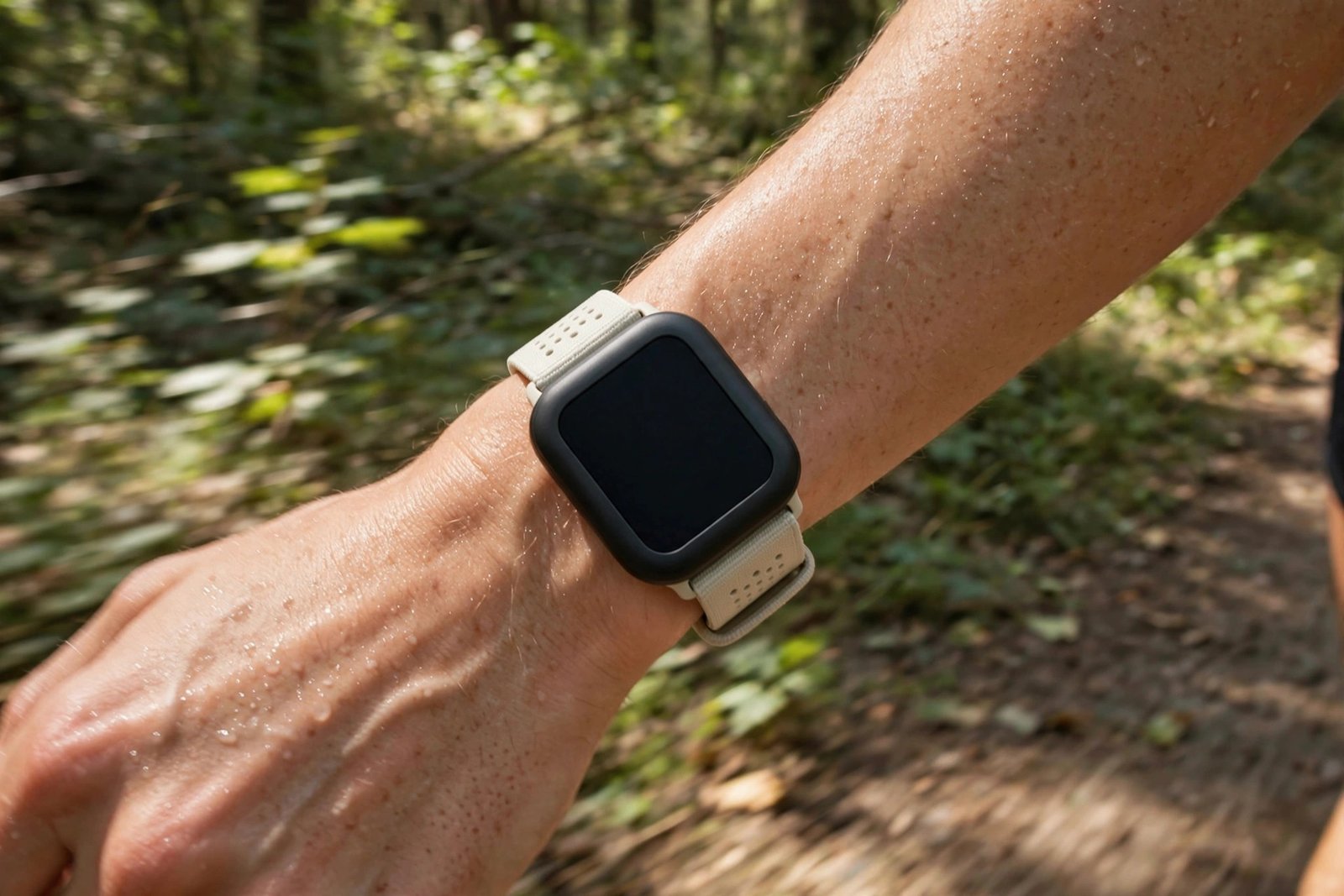
Runners and outdoor exercisers should pay attention here. The Charge 6 has built-in GPS and GLONASS, 40+ exercise modes, pace alerts, post-workout heart rate, and VO2 max estimates — you can leave the phone at home. The Inspire 3 relies on your phone’s GPS, so it’s fine for gym work but awkward for phone-free runs.
The SE 3 is no slouch either: custom workouts, heart rate zones, training load, running power, cadence, and Race Route features put it firmly in the runner’s watch category. If you’re just starting to run while out of shape, honestly, either one is overkill in a good way — but the Fitbit’s battery means the GPS won’t kill the watch mid-week.
Apps, calls, and smart features
This is the Apple Watch’s home turf. The SE 3 is a mini wrist computer: thousands of apps, on-wrist Siri with on-device processing, call handling with a real speaker, Apple Pay, and double-tap/flick gestures on the S10 chip. The Charge 6 is far more limited — notifications, Google Wallet tap-to-pay, Google Maps turn directions, and YouTube Music controls. No app store, no voice assistant worth using. Fitbit treats the wrist as a health dashboard; Apple treats it as a second screen for your life. Choose based on which of those you actually want.
Design, comfort, and the specs table
The Charge 6 is a slim tracker — light, low-profile, disappears under a sleeve, and many people forget they’re wearing it (ideal for 24/7 health tracking). The SE 3 is a proper smartwatch in 40mm and 44mm aluminum cases with an Always-On Retina display up to 1,000 nits; it’s bigger and more visible. Both are 50-meter water resistant, so swimming and showers are fine. Everything side by side:
| Spec | Fitbit Charge 6 | Apple Watch SE 3 |
|---|---|---|
| Price (prices checked Oct 2026) | $159.95 list; frequently ~$119.95 on sale | From $249 |
| Battery life | Up to 7 days | Up to 18 hours; up to 32 hours Low Power Mode |
| Phone compatibility | Android and iPhone | iPhone only |
| ECG | Yes | No (Series tier only) |
| Blood oxygen (SpO2) | Yes (overnight) | No (Series tier only) |
| Sleep tracking | Stages, Sleep Score, SpO2 | Stages, Sleep Score, sleep apnea notifications |
| GPS | Built-in (GPS + GLONASS) | Built-in |
| Water resistance | 50 m | 50 m, swimproof |
| Payments | Google Wallet | Apple Pay |
| Apps & calls | Notifications only; no app store | Full app store, on-wrist Siri, calls |
| Display | AMOLED touchscreen | Always-On Retina, up to 1,000 nits |
Sources: Apple Watch SE 3 specs via Apple’s official tech specs page; Charge 6 pricing and specs via the Google Store and the spec-by-spec rundown at TrackerShowdown’s Fitbit vs Apple Watch comparison, which is also worth a read for a second opinion on this matchup.
Who Should Buy a Fitbit
Fitbit is for the health-first buyer. If your top priorities are sleep tracking, battery life measured in days, a lower price, and cross-platform compatibility, the Charge 6 is the best value in wearables right now — ECG and blood oxygen at a sale price around $120 is genuinely hard to argue with.
It’s also the better pick for Android users (obviously), for anyone who wants the tracker to vanish under a cuff, and for people who find a nightly charging routine annoying. The Inspire 3 at around $79–$100 is the sleeper pick for beginners: steps, sleep, heart rate, and up to 10 days of battery for less than a nice dinner out.
Who Should Buy an Apple Watch
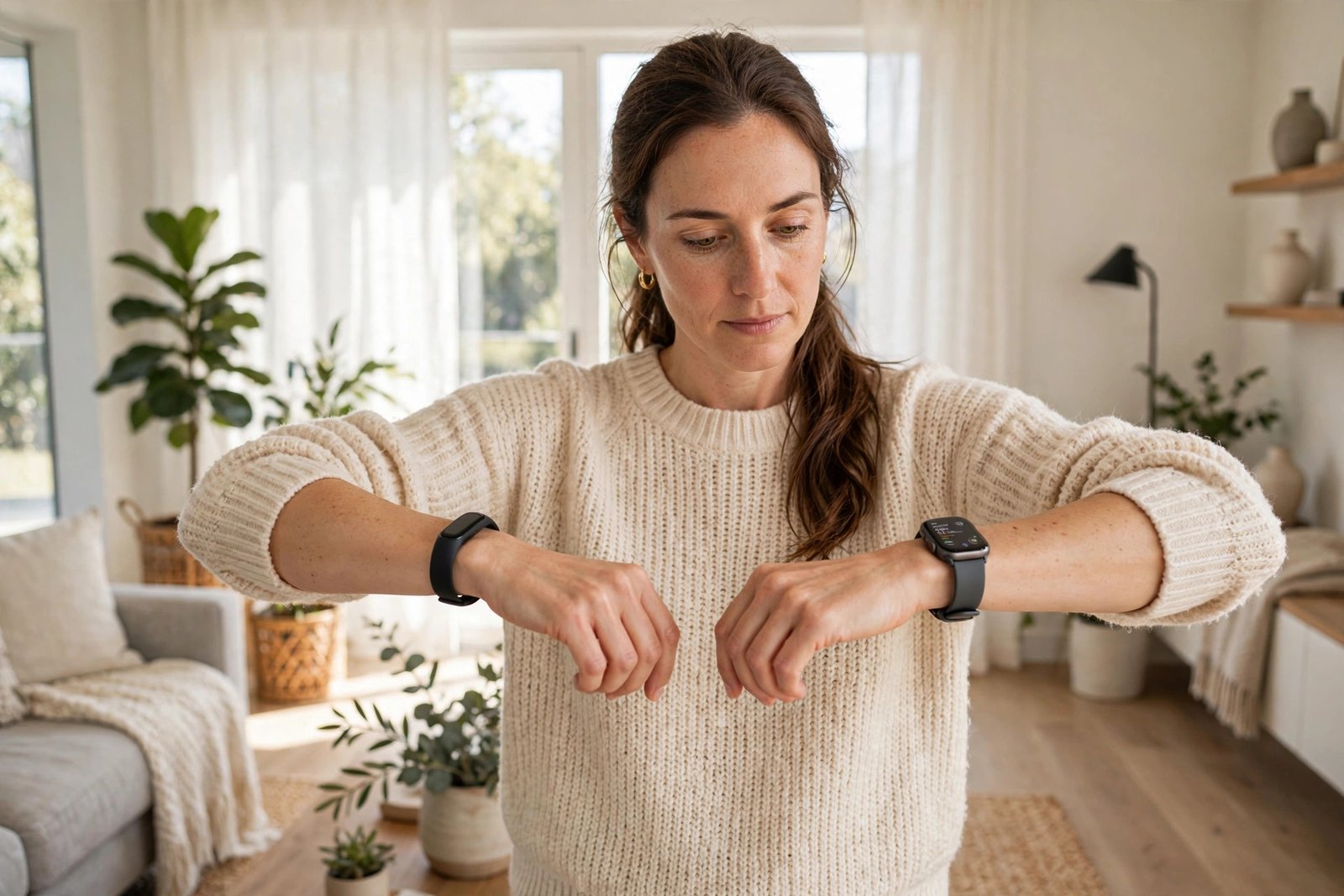
Apple Watch is for the iPhone user who wants a smartwatch first and a health tracker second. If you want to answer calls from your wrist, use Siri, install apps, pay with Apple Pay, and get rich notifications without reaching for your phone, the SE 3 delivers that at the lowest price Apple offers — $249 with the same S10 chip as the flagship models.
It’s also the better pick if you’re already deep in Apple’s ecosystem (Health, Fitness+, AirPods handoffs) and you don’t mind the nightly charge. Just be aware of the sensor trade-off at this price: if ECG and blood oxygen matter to you, the SE 3 doesn’t have them. And if you carry an Android phone, stop here — it won’t pair, and if you want to make your iPhone’s battery last longer, remember the watch is one more device drawing from it.
Fitbit vs Apple Watch: Mistakes to Avoid
Most buyer’s remorse in this category comes from three predictable errors. First, buying an Apple Watch for an Android phone — it simply won’t pair; this is a hard ecosystem wall, not a soft recommendation.
Second, paying for sensors you’ll never use — many buyers pick the Series tier for ECG and SpO2 and never run a single reading; be honest about whether you’ll actually use the features before paying the premium. Third, ignoring the Google-account requirement — since May 2026, Fitbit runs on Google accounts only; if you or someone you’re gifting it to doesn’t have (or want) a Google account, that’s a real friction point.
Fourth, treating battery claims as real-world guarantees — Fitbit’s 7 days assumes moderate use; heavy GPS tracking trims it noticeably. And fifth, forgetting the subscription question — core Fitbit features are free, but Google’s paid tier (Google Health Premium) unlocks the deeper AI coaching; TechRepublic reports it at $9.99/month or $99/year in the US, so budget for it if the coaching features are what sold you.
Setup Tips for Whichever You Pick
Whichever you choose, these five moves make the first week much better. 1. Update everything on day one — pair the device, then run every firmware and app update before judging accuracy. 2. Wear it tight for workouts, loose the rest of the day — optical heart sensors need snug contact during exercise but shouldn’t pinch at the desk.
3. Curate notifications ruthlessly — a buzzing wrist is the fastest path to ignoring the device; allow only calls, texts, and the apps you truly need. 4. Give sleep tracking a full week — one night of data is noise; a week of Fitbit or a few nights on the SE 3 (charged during the day) reveals real patterns. 5. Decide on the subscription early — both platforms offer trial periods on their premium tiers; set a calendar reminder before the trial ends so you’re choosing, not auto-paying.
Fitbit vs Apple Watch: FAQ
Can I use a Fitbit with an iPhone?
Yes. The Charge 6 and Inspire 3 work with both Android and iPhones (iOS 16.4 or newer, per Google’s listings). You just need a Google account to sign in, since Fitbit-only accounts were retired in May 2026.
Can I use an Apple Watch with an Android phone?
No. The Apple Watch pairs exclusively with an iPhone — there is no Android support. If you’re on Android, Fitbit (or a Wear OS watch like the Pixel Watch) is the compatible choice.
Do I need a subscription to use a Fitbit?
No. Core features — steps, heart rate, sleep, workouts, ECG on the Charge 6 — work without paying. Google’s paid tier (Google Health Premium) adds AI coaching and deeper insights; it’s optional, and there’s usually a trial bundled with new devices.
Which has better battery life, Fitbit or Apple Watch?
Fitbit, by a wide margin. The Charge 6 is rated up to 7 days and the Inspire 3 up to 10 days, versus up to 18 hours for the Apple Watch SE 3 — all per the manufacturers’ own spec pages. If you hate nightly charging, Fitbit is the clear answer.
Is Fitbit owned by Google?
Yes — Google completed its acquisition of Fitbit in 2021. That’s why Fitbits now sign in with a Google account and run inside Google’s Health ecosystem rather than as a standalone brand.
Can both watches track sleep?
Yes, and both are good at it now. Fitbit tracks sleep stages, gives a nightly Sleep Score, and logs overnight blood oxygen. The Apple Watch SE 3 tracks sleep stages, gives a Sleep Score, and adds sleep apnea notifications. Fitbit’s multi-day battery makes week-long sleep tracking more convenient.
The Bottom Line
Fitbit vs Apple Watch isn’t really a question of which is “better” — it’s a question of which constraints you live with. The Apple Watch SE 3 ($249) is the better smartwatch: apps, calls, Siri, and deep iPhone integration, with solid health tracking for an entry price.
The Fitbit Charge 6 ($159.95, often ~$120) is the better health tracker: longer battery, deeper sensors for the money, genuine sleep tracking you don’t have to charge around, and compatibility with whatever phone you own. Android user? Fitbit, no contest. iPhone user who lives on their wrist? Apple Watch. iPhone user who mostly wants health data and a week of battery? Fitbit — and pocket the difference.