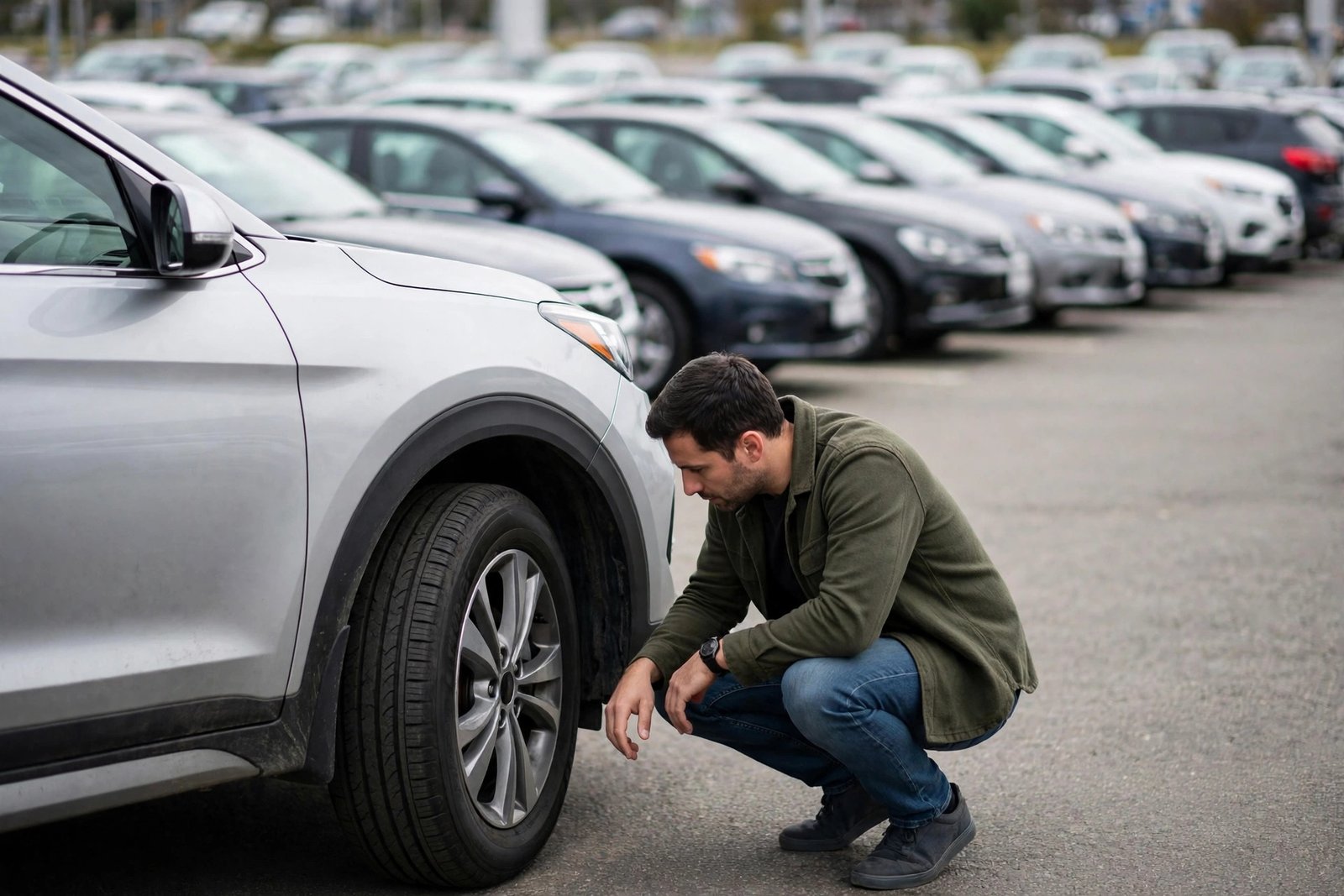

The used car lot is full of good deals and expensive lessons, and the difference between them is rarely luck. Most buyers who regret a used car did not buy a bad car by accident — they skipped a step, trusted a story, or fell in love too fast. These are the mistakes to avoid when buying a used car, and every one of them is preventable. Read this before you hand over a deposit, and you will walk away from the wrong cars faster and buy the right one with confidence.
Here is the uncomfortable truth behind most bad purchases: the car usually showed its problems before the sale. The warning signs were in the paperwork, under the bonnet, or in the seller’s reluctance to let an independent mechanic look at it. Buyers miss them because excitement and pressure do the thinking. Slow down, follow a process, and the odds shift heavily in your favour.
Mistakes to Avoid When Buying a Used Car: Skipping the Pre-Purchase Inspection
The single most expensive mistake is also the most common: buying a car without an independent pre-purchase inspection. A seller’s inspection, a dealer’s “certified” stamp, and a clean-looking engine bay are not substitutes. You need a mechanic you choose, with no stake in the sale, to put the car on a lift and look underneath it.
An inspection typically costs around $150–$250 according to published buying guides, and it covers what you cannot see from the driver’s seat: frame damage, leaking seals, worn suspension, rusted brake lines, and fault codes hiding behind a recently cleared dashboard. One buyer in a thousand finds a perfect car; the rest find a list of items they can use to negotiate the price down or walk away from entirely. Compared with a transmission rebuild or a hidden accident repair, the inspection fee is the cheapest money in the whole purchase.
How to do it right: book the inspection before you negotiate a final price, not after. Tell the seller upfront that an independent inspection is a condition of the sale. A good seller agrees without fuss. A seller who refuses, stalls, or insists you use “their guy” is giving you information — believe it and move on. If you are buying from a dealer, check whether the car has open recalls too; guides on what to look for when buying a used car stress checking recall status alongside the mechanical inspection.

Ignoring the Vehicle History Report and the Title
A car without a documented past is a gamble, not a bargain. Before you fall for a car, run its vehicle identification number (VIN) through a history report service such as Carfax or AutoCheck, and read the title itself — not a photo of it, the actual document.
What you are looking for: accidents and airbag deployments, flood or fire damage, salvage or rebuilt title brands, odometer discrepancies, and ownership history. A car that changed hands four times in two years has a story, and it is rarely a happy one. A single-owner car with regular dealer service records is the opposite signal — it usually means someone cared for the machine.
But understand what a report cannot do. A history report only shows what was reported to it. A cash repair after a parking-lot collision, or bodywork done without an insurance claim, may never appear. That is why the report and the inspection work as a pair: the report tells you what was recorded, the mechanic tells you what is actually there. Explanations of what a vehicle history report shows make the same point — treat it as one step in the check, not the whole check.
Title traps deserve their own warning. Match the VIN on the title to the VIN on the dashboard and the driver’s door jamb — all three must agree. Check for liens, which mean someone else has a financial claim on the car. And be wary of title washing, where a branded title from one state is re-registered elsewhere to hide its history. If anything about the paperwork feels off, walk away. There are always more cars.
Trusting the Seller Instead of the Test Drive
Sellers sell. That is their job, and even honest ones emphasise the good and minimise the bad. “It just needs a sensor” is a classic line — if it only needed a sensor, the seller would have fixed a cheap part before asking full price. That is why every honest list of mistakes to avoid when buying a used car starts with the same advice: verify, do not trust.
Your test drive is your best lie detector, but only if you drive like you mean it. A quick loop around the block tells you almost nothing. Instead, drive for at least 20–30 minutes and cover city streets, a highway stretch, and a car park manoeuvre. Turn the radio off and listen: grinding brakes, whining transmissions, clunks over bumps, and humming wheel bearings all announce themselves to a quiet cabin. Test everything — air conditioning and heat, all windows, locks, lights, wipers, and every button on the dashboard. Try a cold start if you can, since some faults only appear before the engine warms up.
Also inspect the car in daylight, on dry ground, and with the engine cold. Rain and darkness hide paint mismatches, and a pre-warmed engine hides starting problems. Check tyre wear patterns, which reveal alignment or suspension trouble. Look under the car for fresh undercoating, which can hide rust or accident repairs. And check the oil: clean amber oil is good, milky residue on the cap can signal coolant mixing with oil, and gritty or burnt-smelling transmission fluid means expensive trouble. A careful used car safety checklist covers these same ground-level checks in order.
Focusing Only on the Monthly Payment
Dealers love to sell the monthly payment, because it is the easiest number to manipulate. Stretch a loan from 48 months to 84 months and almost any car looks affordable — while you pay thousands more in interest and stay upside-down on the loan for years, owing more than the car is worth.
Always negotiate the car’s total price first, before discussing financing, trade-ins, or monthly payments. Know the car’s market value from pricing guides before you walk in, so you can recognise a fair price and an inflated one. And when a dealer asks “what monthly payment are you looking for?”, understand that the question is designed to shift the conversation away from the price of the car and toward the structure of the loan. Answer with the total price you are willing to pay, not a monthly figure.
Watch for the extras that get folded into that payment too: paint protection, fabric coatings, extended warranties, gap insurance, and dealer add-ons are often high-margin items added after you have agreed on a price. Ask for an itemised out-the-door figure, question every line you did not ask for, and refuse anything you do not want. A legitimate fee survives scrutiny; a padded one does not.

Skipping Financing Pre-Approval
Walking into a purchase without financing pre-approval is like negotiating with one hand tied. Pre-approval from your bank or credit union tells you exactly what you can afford, what rate you qualify for, and how much room you have to negotiate. It also gives you a benchmark: if the dealer’s financing offer beats your pre-approved rate, take it; if not, you already have a better deal in hand.
Pre-approval protects you in another way. Dealer financing can include marked-up interest rates, where the dealer adds a margin to the lender’s rate and pockets the difference. With your own approval in your pocket, that markup has nowhere to hide — you simply compare two numbers. And because pre-approval usually involves a single credit check that does not hurt your score much when done within a short shopping window, there is little downside to getting it before you start seriously shopping.
One more rule: never let financing urgency rush the car checks. A “today only” rate or a deal that expires tonight is a pressure tactic, not a fact. Real deals survive a night’s sleep, and a car that cannot wait for an inspection is a car you should not buy. Our guide on how to prepare your car for winter is a useful reminder of the maintenance mindset that should start the day you buy, not months later.
Ignoring the Total Cost of Ownership
The purchase price is only the first bill. Insurance, fuel, tyres, servicing, and repairs are the bills that keep coming, and they vary enormously between models that cost the same on the lot. A cheap luxury car with expensive parts, specialist servicing, and thirsty fuel consumption can cost far more per year than a slightly pricier mainstream car with cheap parts and a strong reliability record.
Before you commit, price out the real ownership costs. One of the quietest mistakes to avoid when buying a used car is budgeting for the sticker price and nothing else, then being blindsided by the running costs. Get an insurance quote for the exact car, not a guess. Check the fuel economy for your actual driving pattern — city driving punishes thirsty engines far more than highway figures suggest. Research common repairs for that model and model year, and find out what a set of tyres costs; some performance cars eat through expensive rubber every couple of years. If you are weighing powertrain options, our comparison of electric vs hybrid cars shows how running costs can flip the value equation entirely.
Depreciation matters too. Some cars lose value slowly and hold their worth for years; others shed a huge share of their price quickly. That matters most if you plan to sell or trade in within a few years. A car that looks like a bargain today but is worth little tomorrow may be the worse deal overall. Factor in how long you plan to keep the car, and buy the one whose total cost — not just its sticker price — fits your budget.
Finally, budget for the first year. Even a good used car usually needs something soon after purchase: tyres, brakes, a battery, or a service the previous owner deferred. Setting aside a repair fund before you buy turns those surprises into routine maintenance instead of financial emergencies.

Your Pre-Purchase Checklist
Run through this list in order, every time, before money changes hands. It turns the mistakes to avoid when buying a used car into a simple routine you can follow even when you are excited about a car:
- Set your total budget first — purchase price plus insurance, tax, registration, and a repair fund.
- Get financing pre-approval from your bank or credit union before visiting sellers.
- Research the model — reliability record, common faults, fuel economy, insurance group, and market price.
- Run the VIN history report and check for accidents, title brands, and odometer issues.
- Inspect the title in hand — VIN match across title, dashboard, and door jamb; no liens or salvage brands.
- Inspect the car in daylight — body panels, paint match, tyres, fluids, rust, and underbody.
- Take a proper test drive — 20–30 minutes, city and highway, radio off, every control tested.
- Book an independent pre-purchase inspection — your mechanic, not the seller’s.
- Check for open recalls by VIN before you sign anything.
- Negotiate the total price — then financing, then extras, each separately.
- Get everything in writing — promises about repairs or warranties that are not in the contract do not exist.
- Sleep on it — a deal that cannot survive one night is not a deal worth taking.
If a seller blocks any step on this list, that block is your answer. No car is so rare that it justifies skipping the checks that protect you.
Frequently Asked Questions
How much should a pre-purchase inspection cost?
Published buying guides typically put an independent inspection at around $150–$250, depending on the shop and the car. Specialist or luxury vehicles can cost more, but the fee is small compared with the repairs it can uncover.
Is a clean history report enough to buy with confidence?
No. A report only shows what was reported to it, and cash repairs or unreported damage will not appear. Pair the report with a physical inspection and an independent mechanic’s inspection for real confidence.
Should I buy a car with a salvage or rebuilt title?
Only if you fully understand the risks: lower resale value, difficulty getting full insurance coverage, and unknown repair quality. For most buyers, the discount is not worth the uncertainty, and financing can be harder to arrange.
Can I negotiate the price after the inspection finds problems?
Yes — that is one of the inspection’s main benefits. Present the mechanic’s written findings and ask for a price reduction covering the needed repairs, or ask the seller to fix them before the sale. If the seller refuses both, walk away.
Is dealer financing always a bad deal?
Not always. Sometimes manufacturers or dealers offer genuinely competitive rates. The key is comparison: arrive with your own pre-approval, compare the two offers line by line, and choose the cheaper total cost — not the lower monthly payment.
What is the biggest red flag when buying a used car?
A seller who will not let you inspect the car independently. Refusal to allow a mechanic’s inspection, a rushed sale, or pressure to decide today are all signs that something is being hidden. Honest sellers welcome scrutiny.
Conclusion
Buying a used car rewards patience and punishes impulse. The mistakes to avoid when buying a used car all share one root cause: letting excitement or pressure replace a simple, repeatable process. Get pre-approved, research the model, check the history and the title, drive the car properly, and let an independent mechanic have the final word. Do those things and you will not just avoid a bad car — you will recognise a good one the moment you find it, and you will buy it knowing exactly what you are getting. If you are still deciding how you get around day to day, our comparison of Uber vs Lyft may help you weigh car ownership against ridesharing costs before you commit.