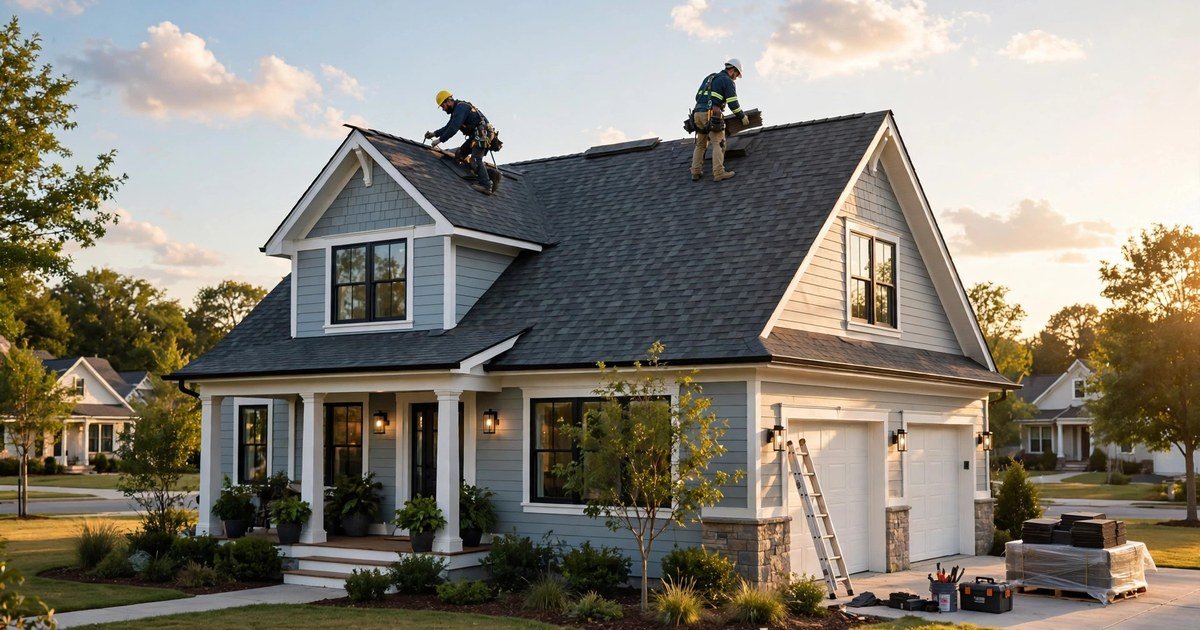

If you’re asking how much does a roof replacement cost in 2026, brace yourself for the most common answer contractors give: “It depends.” That’s not a dodge — a new roof genuinely is one of the biggest single checks a homeowner writes, and the spread between a budget-friendly shingle job and a premium slate installation can be tens of thousands of dollars. But “it depends” is a terrible basis for a budget, so let’s get specific. Using current 2026 data from national cost surveys, the average American homeowner pays roughly $9,600 to replace a roof, with most asphalt shingle projects landing between $7,500 and $24,000. This guide walks through the real numbers: what different materials cost per square foot, how labor and materials split, what size and pitch do to your quote, and the practical ways people keep this bill under control.
How much does a roof replacement cost in 2026? The short answer
Start with the headline numbers, then we’ll unpack them. Angi’s 2026 cost guide puts the average cost to replace a roof at about $9,606, with typical projects ranging from a low of roughly $5,902 to a high of $46,000 depending on material, roof size, and complexity. A roofing cost survey updated in October 2026 puts the planning range at about $4–$11 per square foot of roof, installed — labor included. For a straightforward asphalt shingle job on an average-sized home, expect most real quotes to cluster between $8,500 and $15,000.
That $9,606 average hides enormous variation, though. Three things move the needle more than anything else: the material you pick (the single biggest lever), the actual square footage and complexity of your roof, and where you live. A simple single-story ranch in Ohio with architectural shingles might come in under $10,000, while a steep, cut-up colonial in New Jersey finished in slate can sail past $60,000. Neither contractor is ripping you off — they’re pricing completely different jobs.
Roof replacement cost per square foot by material
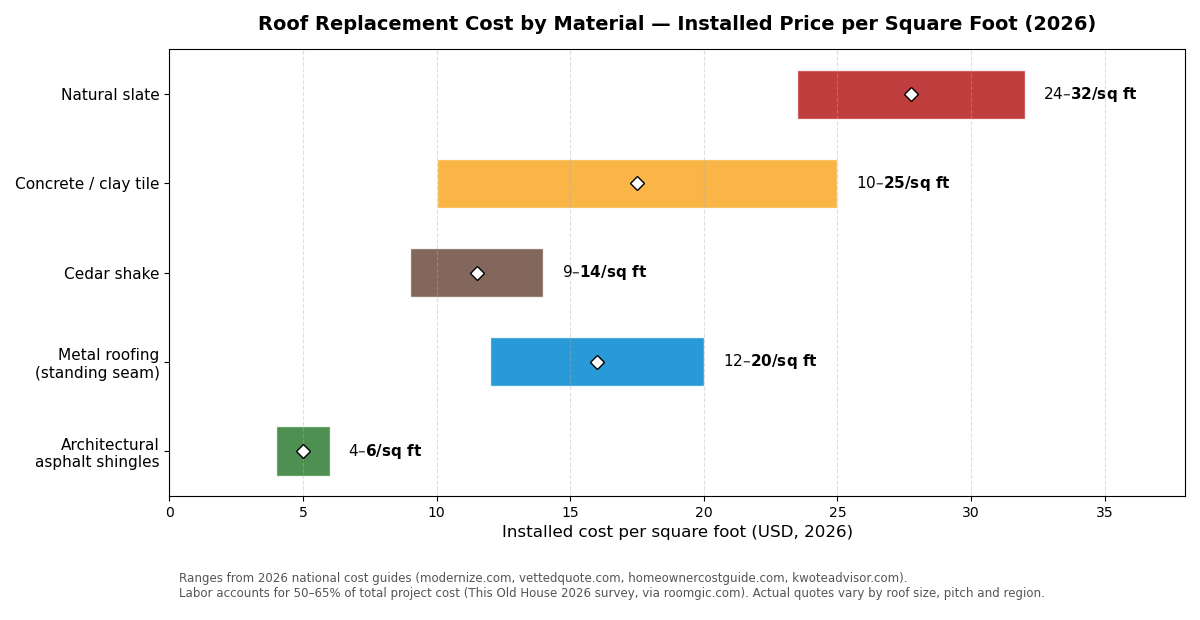
Material choice is where your budget is won or lost. The chart above shows 2026 installed ranges — these include both materials and labor — drawn from several national roof replacement cost guides published this year. Here’s what each option actually means in practice:
Architectural asphalt shingles: $4–$6 per sq ft installed
Asphalt dominates American roofing for a simple reason: it’s the cheapest way to get a reliable, good-looking roof. Basic three-tab shingles run a touch less ($3.50–$5 per sq ft in most guides), while architectural — also called dimensional — shingles at $4–$6 per sq ft have become the default recommendation. They cost only slightly more than three-tab, look thicker and more textured, handle wind better, and last 25–30 years versus 15–20 for three-tab. For a typical 2,000-square-foot roof, budget $8,000–$12,000 for architectural shingles, and many homeowners land around $10,000.
Metal roofing: $6–$25 per sq ft installed
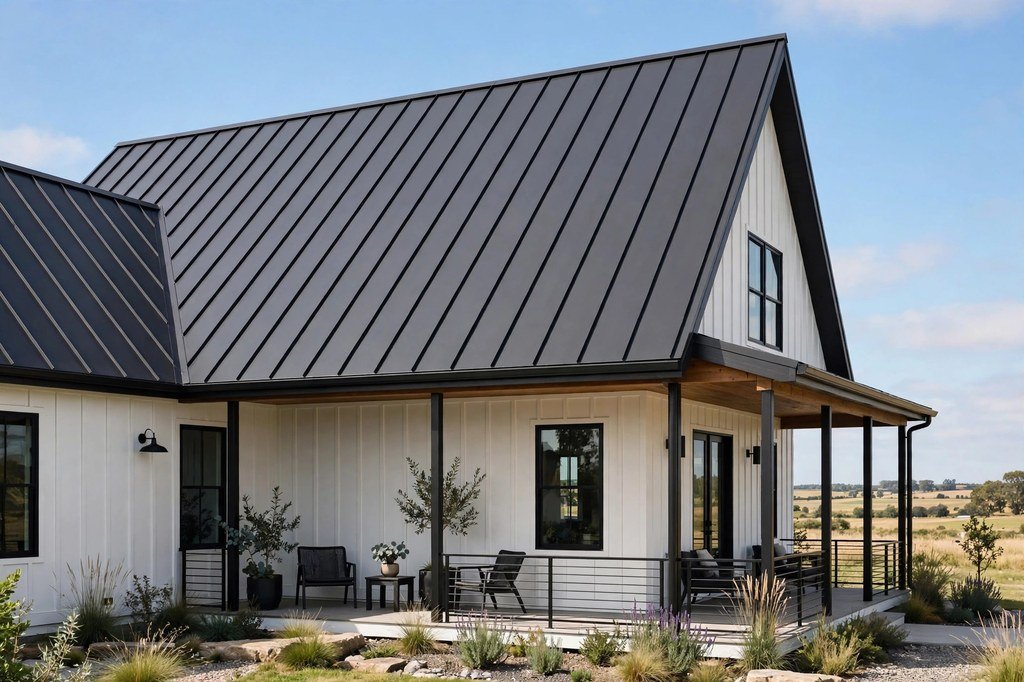
Metal is the wide-tent category, and the range reflects it. Screw-down corrugated panels start around $7–$12 per sq ft installed, while standing seam — the clean, raised-rib look you see on modern homes — runs $12–$20. Copper sits at the extreme end at $15–$40. Metal costs two to three times more than asphalt upfront, but a metal roof can last 40–70 years, effectively outliving two or three asphalt roofs. The break-even math favors metal only if you plan to stay in the home for 20-plus years; if you might sell within a decade, asphalt usually wins on resale math.
Cedar shake: $9–$14 per sq ft installed
Wood shakes give a warm, rustic look that suits certain homes beautifully, but they demand more maintenance, cost roughly double asphalt, and are restricted or banned in fire-prone areas. They last 30–50 years in the right climate. For most suburban homeowners, cedar is a style choice rather than a value play.
Concrete and clay tile: $10–$25 per sq ft installed
Tile roofs last 50 years or more — often a century — but they’re heavy (9–12 pounds per square foot), so your roof structure may need reinforcement, and that engineering work adds cost. At $20,000–$50,000 for a 2,000-square-foot roof, tile is a long-term play best suited to climates and home styles where it belongs.
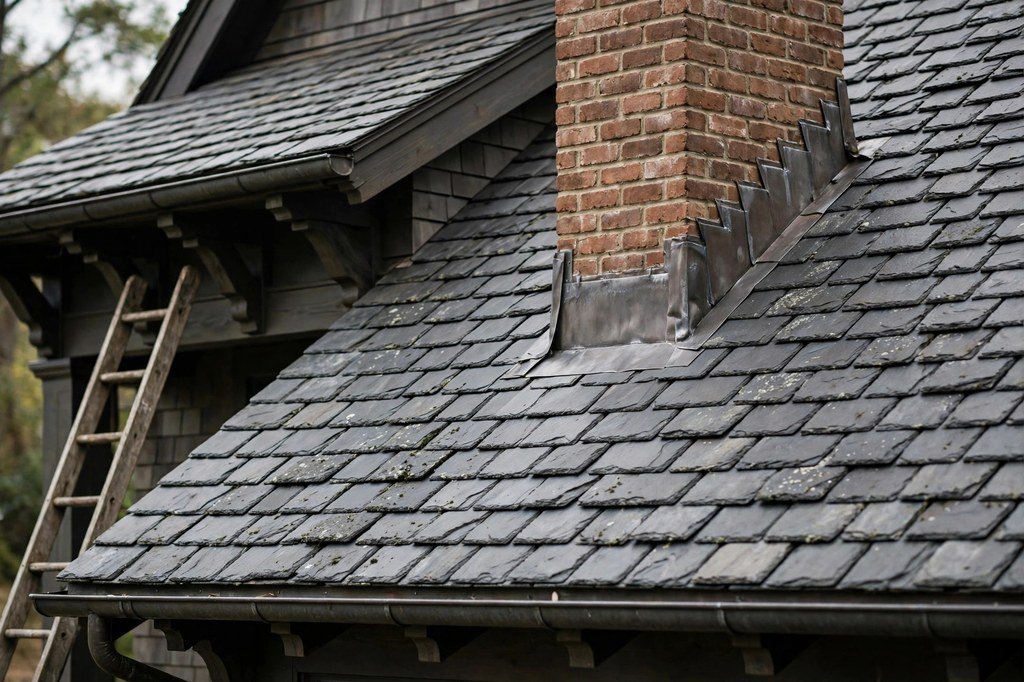
Natural slate: $23.50–$32 per sq ft installed
Slate is the forever roof — 75 to 100+ years — and priced accordingly. A slate replacement on a typical home runs $47,000–$64,000. It’s also extremely heavy and requires specialist installers, which limits your contractor pool.
What drives your roof replacement cost up or down
Two neighbors with identical floor plans can get quotes $5,000 apart. Here’s what’s doing the work behind those differences:
- Roof size, not house size. Your roof’s surface area is always bigger than your home’s footprint — pitch, overhangs, and dormers add squares. A 2,000-square-foot house often has 2,200–2,600 square feet of roof.
- Pitch. Walkable low-slope roofs are cheapest to work on. Steep roofs (above roughly a 6/12 slope) need harnesses, staging, and slower crews — expect a 10–25% premium.
- Tear-off layers. Stripping one layer of old shingles is standard. A second layer adds labor and disposal, often $1,000–$2,000 extra.
- Decking repairs. Rotten sheathing gets discovered mid-job. Replacement plywood typically runs $70–$130 per sheet installed — insist the contract states this unit price before work starts.
- Complexity. Hips, valleys, dormers, skylights, and chimneys mean more cutting, flashing, and labor time than a simple gable roof.
- Permits and disposal. Permits commonly run $150–$500; dumpster and dump fees add several hundred more.
- Your zip code. Labor rates, wind-zone codes, and contractor insurance costs all flow into the quote.
Getting three itemized quotes remains the single best negotiating tool — not because contractors price-gouge, but because scope differences (one layer vs. two of underlayment, ice-and-water barrier in valleys, ventilation upgrades) are where quotes diverge.
Roof replacement cost by roof size: 1,500 vs 2,000 vs 2,500 sq ft
Since roof area drives the bill, here is what the per-square-foot ranges above translate to for common roof sizes. These are planning estimates from published 2026 installed rates — your measured roof and complexity will move the final number.
| Material (installed $/sq ft) | 1,500 sq ft roof | 2,000 sq ft roof | 2,500 sq ft roof |
|---|---|---|---|
| Architectural asphalt ($4–$6) | $6,000 – $9,000 | $8,000 – $12,000 | $10,000 – $15,000 |
| Standing seam metal ($12–$20) | $18,000 – $30,000 | $24,000 – $40,000 | $30,000 – $50,000 |
| Cedar shake ($9–$14) | $13,500 – $21,000 | $18,000 – $28,000 | $22,500 – $35,000 |
| Concrete / clay tile ($10–$25) | $15,000 – $37,500 | $20,000 – $50,000 | $25,000 – $62,500 |
| Natural slate ($23.50–$32) | $35,250 – $48,000 | $47,000 – $64,000 | $58,750 – $80,000 |
Notice that the total for a modest asphalt job on a small roof can dip below $6,000, while slate on a large home can exceed the price of a new car several times over. This is also why comparing quotes as a per-square-foot installed rate — not just the bottom line — makes contractor comparisons meaningful.
What percentage of roof replacement cost is labor vs materials?
This is the question that surprises most homeowners. According to This Old House’s 2026 survey data, labor accounts for 50–65% of the total project cost — meaning on a $12,000 asphalt job, $6,000–$7,800 is paying for the crew’s time, skill, insurance, and equipment, not the shingles themselves. That’s why material price differences look smaller in the final quote than they do on a supplier’s price sheet: shaving $1 per square foot off material cost saves $2,000 on a 2,000-square-foot roof, but labor is the fixed mountain underneath.
The practical takeaway is blunt: the cheapest bid from an unvetted crew is often the most expensive roof you’ll ever buy. Poor installation voids manufacturer warranties — most shingle warranties require installation to spec by a certified contractor — and a leak from sloppy flashing can cost more to fix than you saved. Prioritize licensed, insured roofers with manufacturer certifications and local references, then negotiate on scope, not just price.
How long does a roof replacement take?
For a standard asphalt shingle roof on an average home, expect one to three days of actual work. A simple single-story ranch can be stripped and re-shingled in a single long day by a good crew. Add a day or two for steep pitches, complex rooflines, or decking repairs discovered mid-job. Metal, tile, and slate installations take longer — typically one to two weeks — because the materials are heavier, slower to set, and require specialist labor. Weather is the wildcard: a rain delay mid-tear-off is exactly as fun as it sounds, which is why reputable contractors watch the forecast and stage tarps before they start.
Plan around the noise: tear-off day is loud and starts early, so move cars out of the driveway, secure wall-hung items, and consider relocating pets and remote-work calls.
Repair or replace? The 50% rule
Not every tired roof needs a full replacement. The industry’s standard guideline is the 50% rule: if a repair quote exceeds 50% of the cost of a full replacement, replace instead. A $6,000 repair on a roof that would cost $14,000 to replace is 43% — repair is defensible. At $8,000 (57%), you’re throwing good money after bad on a roof with a shrinking lifespan and no fresh warranty.
Replace when the roof is 20+ years old, when damage covers more than about 25% of the surface, when you can see daylight through the attic boards, or when repairs have become a recurring line item. A simple patch — a few hundred dollars to swap damaged shingles — makes sense on a roof under 15 years old with localized damage, much like clearing a clogged drain beats repiping the house. Repair buys time; replacement buys decades.
How to keep your roof replacement cost down
You can’t change your roof’s pitch or your region’s labor rates, but you can control several cost levers:
- Time it for the shoulder season. Late fall and early spring often bring better pricing than the summer rush, when crews are booked out and less inclined to discount.
- Keep the material honest. Architectural shingles are the value sweet spot for the vast majority of homes. Premium materials pay off only if you’ll own the home long enough to enjoy their lifespan.
- Ask about overlay. If you have only one existing layer and the deck is sound, some codes allow installing new shingles over the old — saving tear-off and disposal. It shortens the new roof’s life slightly, but the savings are real.
- Bundle the extras. If gutters or skylights also need work, doing them during the replacement avoids paying for scaffolding and crew mobilization twice.
- Check insurance first. Storm, hail, and wind damage are often covered — wear and tear isn’t. Get the adjuster out before you pay out of pocket; a covered claim can turn a $12,000 bill into your deductible.
- Finance carefully. Home equity loans typically carry far lower rates than contractor financing or credit cards. And if the roof is part of a bigger refresh, compare the project against other bathroom remodel costs or upgrades competing for the same budget.
Does a new roof pay for itself?
Partly. Angi’s 2026 data suggests a new roof returns roughly 50–60% of its cost at resale, with asphalt recovering around 68% and metal closer to 50% according to This Old House’s estimates. So a $12,000 asphalt roof might add $6,000–$8,000 to your sale price. The rest of the “return” shows up in ways appraisers undercount: faster sales, stronger offers, lower insurance premiums (many carriers discount impact-resistant shingles), and energy savings from modern reflective materials and proper ventilation. Don’t replace a roof purely as an investment — do it because the roof is failing, and treat the resale bump as a bonus.
Frequently asked questions
How much does a roof replacement cost per square foot?
In 2026, expect roughly $4–$11 per square foot installed for most residential projects, according to national cost guides. Architectural asphalt shingles — the most common choice — run $4–$6 per sq ft installed; standing seam metal runs $12–$20; natural slate runs $23.50–$32. These figures include both materials and labor. A simple way to sanity-check a quote: divide the total by your roof’s square footage and compare against the published ranges for your material.
What percentage of roof replacement cost is labor vs materials?
Labor makes up 50–65% of the total project cost, per This Old House’s 2026 survey data. That means on a $12,000 job, roughly $6,000–$7,800 pays for the crew, insurance, equipment, and overhead, while the rest covers shingles, underlayment, flashing, and disposal. Because labor dominates, choosing a cheaper material saves less than you’d expect — and choosing a cheaper contractor costs more than you’d hope.
How long does a roof replacement take?
Most asphalt shingle replacements take one to three days. Simple roofs can be done in a day; steep or complex roofs add time. Metal, tile, and slate installations typically take one to two weeks. Weather delays are the main wildcard — a good contractor won’t tear off your old roof with storms in the forecast.
Will homeowners insurance pay for a roof replacement?
Usually only for sudden damage — hail, wind, fallen trees, fire. Gradual wear, neglect, and roofs past their expected lifespan (typically 20+ years for asphalt) are almost never covered. If a storm hit recently, file the claim and get an adjuster inspection before signing any contractor agreement; a covered loss can reduce your cost to just the deductible.
How often should a roof be replaced?
It depends on the material: 15–20 years for three-tab asphalt, 25–30 for architectural shingles, 40–70 for metal, 50+ for tile, and 75–100+ for slate. But age is a guideline, not a rule — a well-ventilated architectural shingle roof in a mild climate can outlast its rating, while a poorly installed one in hail country may fail early. Annual visual checks (missing shingles, curling edges, granule loss in gutters) tell you more than the calendar.
Conclusion
So, how much does a roof replacement cost in 2026? For most homeowners choosing architectural shingles, the honest planning number is $8,000–$15,000 — roughly $4–$6 per square foot installed, with labor making up more than half the bill. Metal doubles or triples that; slate multiplies it further, in exchange for decades of extra life. The material is your biggest lever, but the contractor you choose matters more than the shingle brand — get three itemized quotes, verify the decking-repair unit price in writing, check your insurance for storm coverage before you pay out of pocket, and time the job for the shoulder season if you can. A roof is the one home system you never want to buy twice, so spend the effort upfront: the cheapest roof is the one installed right the first time. And if you’re weighing this against other big-ticket projects, our guides to installing a ceiling fan and fixing a running toilet cover the smaller jobs you can safely DIY while the pros handle the roof.