
Turkey Fryer vs Oven: Which One Makes the Better Thanksgiving Bird?
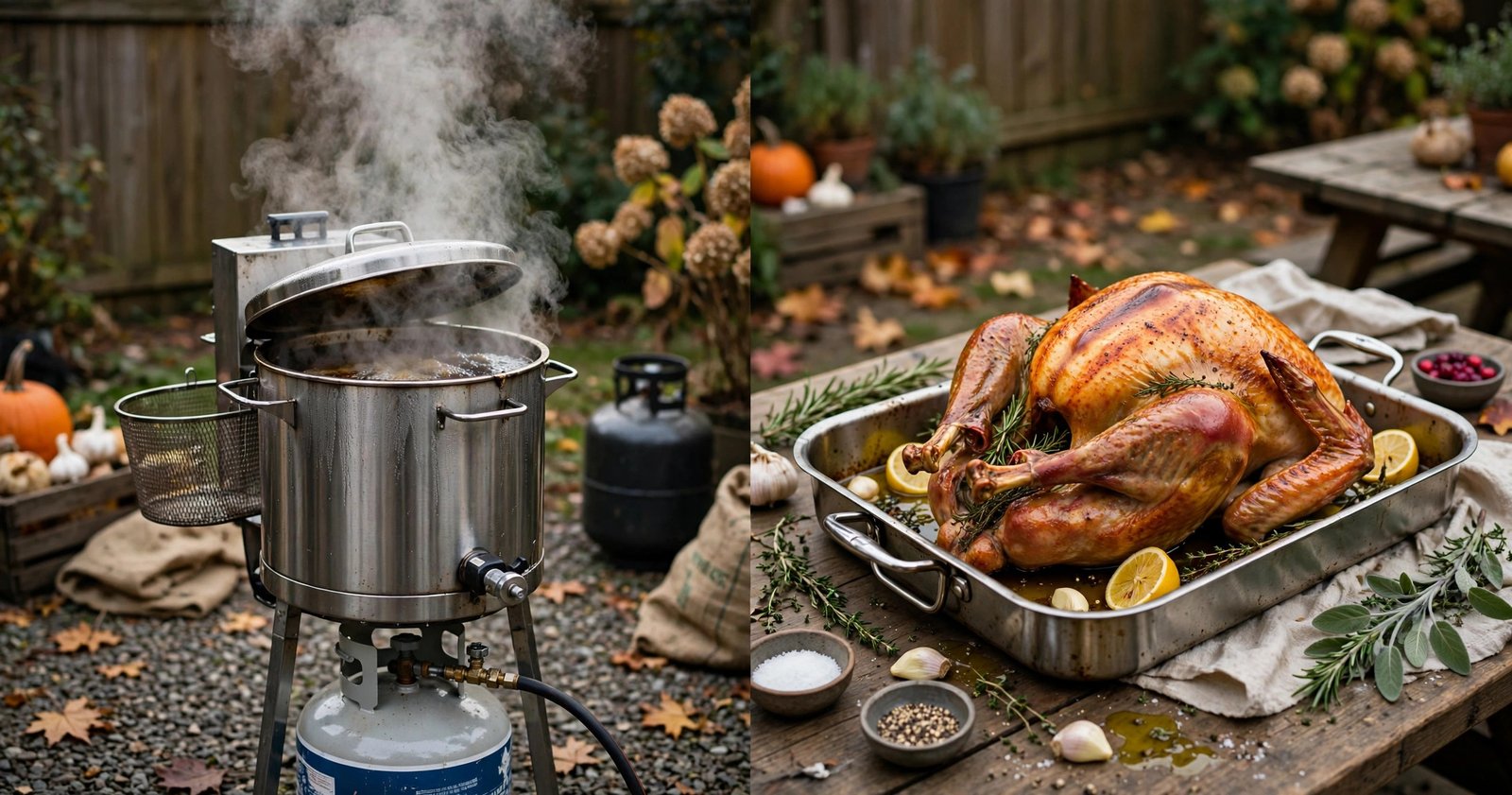
Every Thanksgiving, the same argument breaks out in American kitchens: is the turkey better fried or roasted? The fryer camp swears by crisp skin and a bird done in under an hour. The oven camp asks why anyone would risk their house for dinner. Thanksgiving is Thursday, November 26, 2026 — if you are still deciding, this turkey fryer vs oven comparison settles it with the numbers that actually matter: time, taste, cost, and — the one that should decide it — safety.
Both methods can produce a great turkey, and both can produce a terrible one. The fryer wins on speed and skin; the oven wins on safety, simplicity, and gravy. What follows is a head-to-head on each factor, with the real figures, so you can decide before the bird is in three gallons of hot oil.
Turkey Fryer vs Oven at a Glance
| Turkey fryer (oil) | Oven (roasted) | |
|---|---|---|
| Cook time (15-lb bird) | 45–75 minutes (3–5 min/lb) | 3–3¾ hours (~13–15 min/lb) |
| Skin | Deep golden, very crisp | Golden and crisp if air-dried and basted lightly |
| Meat | Very juicy; fast cooking seals in moisture | Juicy if brined or basted; breast can dry out |
| Equipment cost | Fryer kit plus 3–5 gallons of oil, every year | Roasting pan you probably already own |
| Where it cooks | Outdoors only, away from the house | Indoors, in your kitchen |
| Drippings for gravy | None | Plenty — the base of great gravy |
| Risk | High: fires, severe burns, spills | Low: standard oven safety |
| Best for | A second bird, or a crowd that wants crispy skin | First-timers, big birds, and a relaxed cook |
Speed: The Fryer’s Biggest Win
There is no contest on time. A turkey fries at roughly three to five minutes per pound, so a 15-pound bird is done in 45 to 75 minutes. The same bird roasted in a 325°F oven takes about 13 to 15 minutes per pound, or three to three and three-quarter hours. That is a difference of more than two hours on a day when the oven is already juggling sides.
But the fryer’s headline time does not count the setup. Heating three to five gallons of oil to 350°F takes 30 to 45 minutes, plus recovery time after the bird goes in. With assembly and the oil-level check included, the real saving is closer to an hour than to two — real, but not the miracle the ads suggest. In any turkey fryer vs oven debate, the fryer still wins on speed, just by less than the ads claim.
The oven’s slowness is not wasted time: a roasting turkey fills the house with the smell of Thanksgiving, frees you to cook the sides, and gives you drippings for gravy. A turkey can also be cooked in an air fryer — see how to cook a turkey in an air fryer for the faster indoor option for smaller birds.
Taste and Texture: Crispy Skin vs Juicy Meat
Ask a room full of people which turkey tastes better and you will get a fight, because the two methods produce genuinely different birds. Frying wins on skin, and it is not close: hot oil gives a deep golden-brown crust that shatters when you cut it. Roasted skin can be crisp too — air-dry the bird overnight and pat the skin dry — but it rarely reaches the same glassy crunch.
The meat is a closer call. Frying is fast, so less moisture is lost, and fried turkey is famously juicy — even the breast, which usually dries out in the oven. The difference is the margin for error: an oven turkey needs a brine or careful basting to stay moist, while a fried turkey is forgiving on moisture and unforgiving on everything else.
There is also the flavor of the oil itself. Most people fry in peanut oil, which adds a faint nutty richness — and makes the bird a problem for anyone with a peanut allergy, so ask your guests first. An oven-roasted bird tastes of turkey, butter, and herbs, and nothing else. Serious Eats tested both side by side and agrees: the fryer wins the skin, the oven wins the tradition, and the meat is excellent either way at the right temperature.
One more taste factor: stuffing. You cannot stuff a fried turkey — the cavity must stay empty so the oil can circulate, and stuffing inside would never reach a safe temperature. If dressing cooked inside the bird is part of your Thanksgiving, the oven wins by default — or cook it separately, as food-safety experts recommend.
Cost: What Each Method Really Costs
The oven is free. Roasting costs nothing but the bird and a few hours of oven energy. The fryer is not free, and its cost is not a one-off.
A basic outdoor propane fryer kit — burner, pot, hook, and thermometer — is a real purchase, and then there is the oil. A turkey fryer needs three to five gallons, and peanut oil, the usual choice, is the expensive part. You can strain and reuse oil a few times, but most people buy fresh every year, and the oil alone can cost more than the turkey. With propane and a fire extinguisher added, the first fried turkey costs noticeably more than a roasted one.
There is also the hidden cost of the mess. Frying is an outdoor job, and it leaves an oily pot, an oily burner, and an oily patch of driveway or lawn to clean. Roasting leaves a roasting pan and a kitchen that smells wonderful. If you fry once a year, the kit spends 364 days in the garage — before buying, see if a neighbor will lend you one, which is how most people fry their first turkey.
Safety: The Deciding Factor
This is the section that should settle the argument, because the safety gap is enormous. The National Fire Protection Association strongly discourages turkey fryers that use cooking oil. The NFPA figures: deep fryer fires cause an average of five deaths, 60 injuries, and more than $15 million in property damage a year, and fire departments answer more than 1,000 deep fryer fires a year. That is why Underwriters Laboratories refuses to safety-certify any turkey fryer.
NFPA’s Thanksgiving cooking-fire data shows Thanksgiving is the peak day for home cooking fires: 1,139 were reported on Thanksgiving Day in 2024 — more than triple the daily average. A fryer adds open flame, gallons of 350°F oil, and a heavy bird being lowered in — outdoors, often with children running around. It is the most dangerous cooking most people will ever do at home.
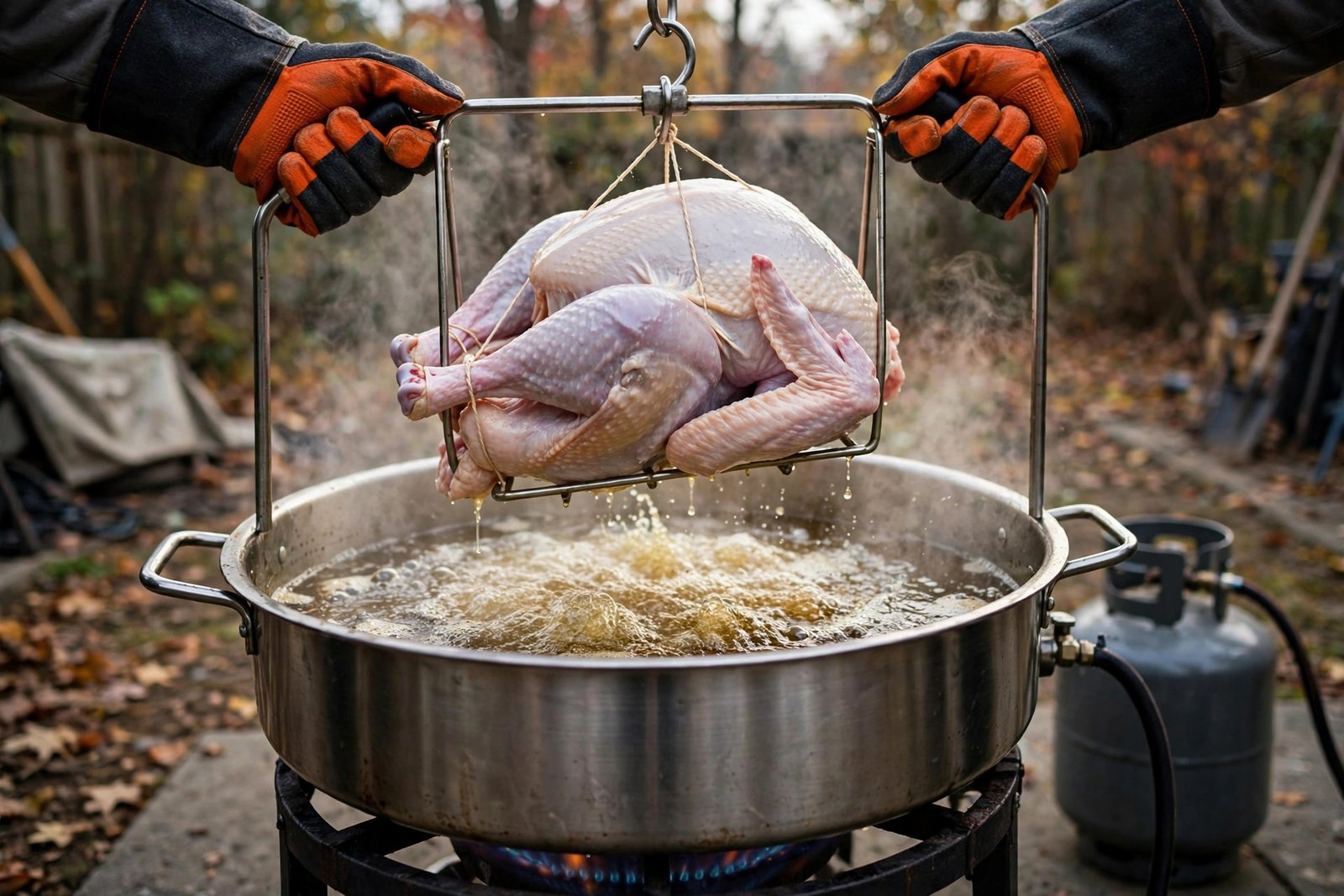
The single most dangerous mistake is frying a frozen or partly frozen turkey. When ice hits 350°F oil, it turns to steam instantly, and the expanding steam throws burning oil out of the pot in a fireball. That is how most fryer fires start — so the turkey must be completely thawed and patted dry before it goes near the oil. Unsure about thawing? Read how to thaw a turkey safely — a 15-pound bird needs three to four days in the fridge.
An oven is one of the safest appliances in the house. It is enclosed, with no open flame in the open air and no hot oil to spill, and the worst realistic accident is a burned hand on a hot pan. You can walk away from a roasting turkey; you cannot walk away from a fryer for a second.
How to Fry a Turkey Safely (If You Still Want To)
If you have weighed the numbers and you still want that fried bird, do it properly — these rules are the difference between dinner and a fire engine.
First, fry outdoors only, on a flat, non-flammable surface, at least ten feet from the house, the garage, and any wooden deck — never in a garage, on a porch, or under an overhang. Second, measure the oil level before heating anything: put the turkey in the empty pot, fill with water until it covers the bird, remove the bird, and mark the water line. That is your oil line — never fill above it, because the oil rises when the bird goes in.
Third, the turkey must be completely thawed and dry, inside and out. Fourth, lower it in very slowly, wearing long sleeves, gloves, and closed shoes, with children and pets at least three feet away. Fifth, hold the oil at 350°F and never above 375°F, where vapors can ignite. Sixth, keep a grease-fire extinguisher nearby — never use water on an oil fire. Seventh, never leave the fryer unattended or move it while hot.
The NFPA recommends safer alternatives: an oil-less infrared fryer, an electric fryer, or an air fryer — or buy a professionally fried turkey from a grocery store or restaurant. Our air fryer vs oven comparison covers the same trade-off at a smaller scale.
How to Roast a Turkey in the Oven for the Best Result
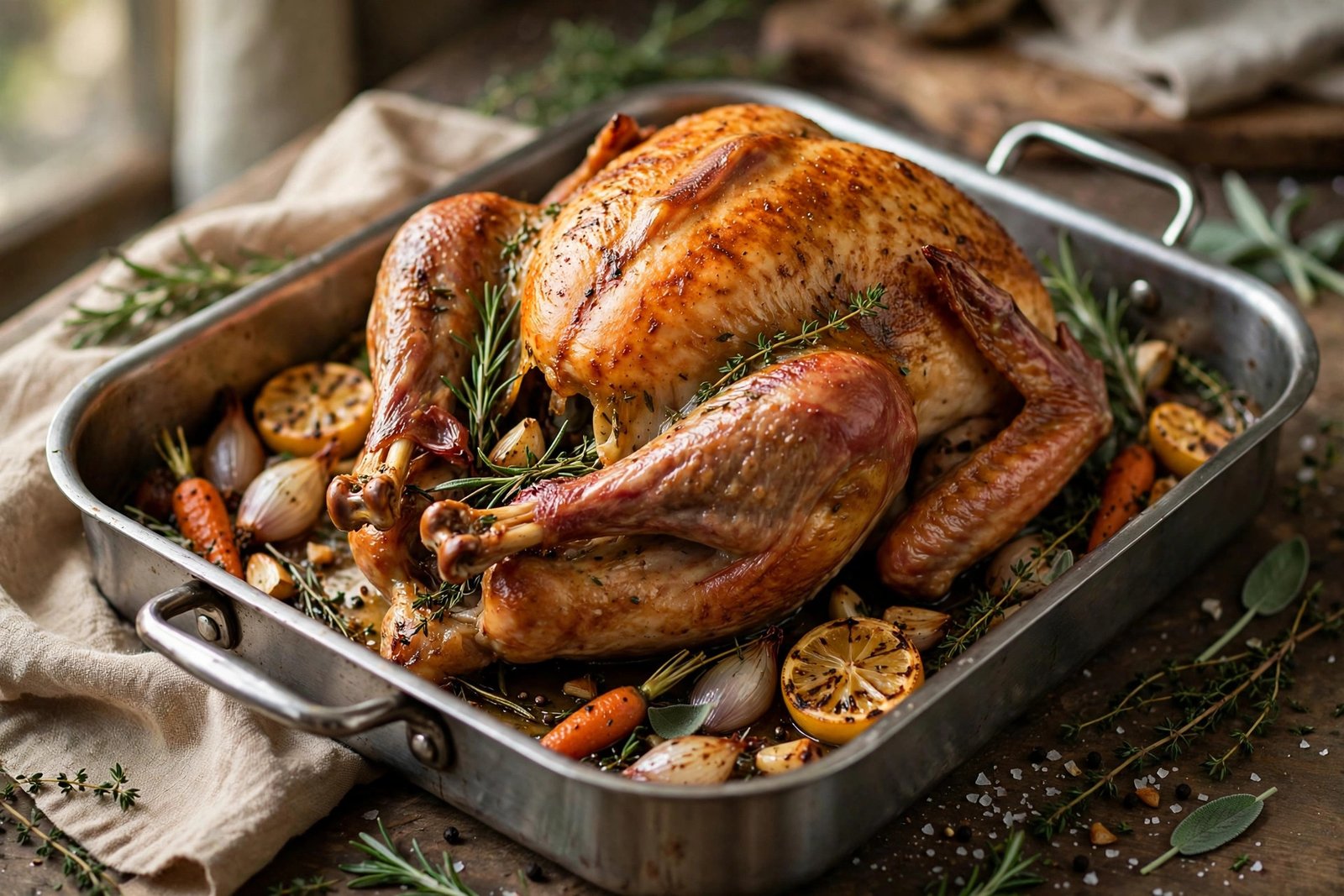
If the safety section has pushed you toward the oven, here is how to get a bird that silences the fryer camp. Start the day before: unwrap the turkey, pat it dry, and leave it uncovered in the fridge overnight. Dry skin is what goes crisp and golden.
On the day, heat the oven to 325°F. Rub the skin with butter or oil, season well, and set the bird on a rack in a roasting pan. Roast at about 13 to 15 minutes per pound, and do not open the oven door to baste every half hour — each opening loses heat and steams the skin instead of crisping it. Baste once at most, or skip it and rely on the butter under the skin.
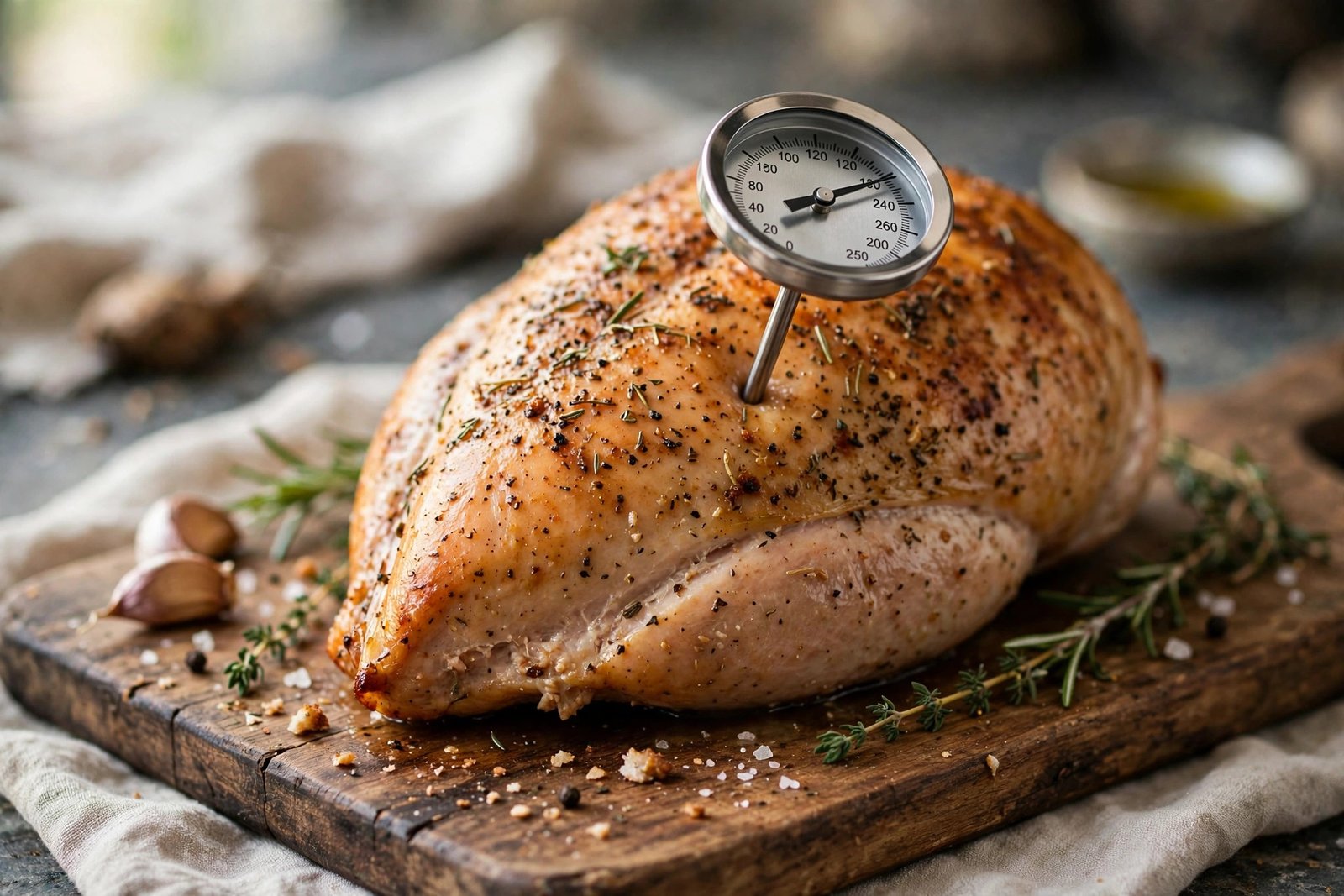
The only number that matters at the end is the temperature of the meat. Use an instant-read thermometer in the thickest part of the breast and thigh, away from the bone, and pull the bird when the breast reads 165°F. FoodSafety.gov’s turkey guidance sets 165°F as the safe minimum for all parts of the turkey — trust that number, not the color of the juices, the pop-up timer, or the clock. Then rest the bird for 20 to 30 minutes before carving; the juices redistribute and the carving is far easier.
Save the drippings. The pan juices from a roasted turkey are the foundation of the best gravy you will ever make, and a fried turkey gives you none of them. Our recipe for how to make gravy from scratch turns those drippings into a silky sauce in fifteen minutes.
Which One Should You Choose?
The right answer depends on your situation, not on the bird alone. Choose the fryer if you are an experienced cook with a flat outdoor space, you have fried before, you are cooking a second bird alongside an oven-roasted one, and everyone in the house understands the safety rules. The crisp skin and the speed are real.
Choose the oven if this is your first Thanksgiving turkey, if you are cooking one bird, if children or pets will be underfoot, if it might rain, if you want stuffing cooked in the bird, or if you want gravy from the drippings. That covers most households — which is why the oven remains the default. The Kitchn and Butterball both publish roasting timetables that make the oven route almost foolproof, and a bird done on time with no drama beats one done fast with a fire extinguisher on standby.
The compromise most experienced Thanksgiving cooks land on is simple: roast the main bird in the oven, and if you love fried turkey, fry a second, smaller bird or a turkey breast outside while the big one roasts. You get the golden roasted centerpiece, the crispy fried skin, the drippings for the gravy, and the risk contained to a smaller bird. Nobody has to argue about it at the table.
Frequently Asked Questions
How long does it take to fry a turkey?
Three to five minutes per pound at 350°F, so a 15-pound turkey takes 45 to 75 minutes in the oil. Allow 30 to 45 minutes to heat the oil first, and rest the bird 20 minutes after frying.
Can you fry a frozen turkey?
No — never. A frozen or partly frozen turkey dropped into hot oil causes the water in the bird to flash into steam, throwing burning oil out of the pot and starting a fire. The turkey must be completely thawed and patted dry before frying; a 15-pound bird needs three to four days in the fridge.
How much oil do you need to fry a turkey?
Three to five gallons, depending on the pot and the bird. Measure it with the water test before heating anything: put the turkey in the empty pot, add water until it covers the bird, remove the bird, and mark the water line. Never fill above that mark.
What temperature should a turkey be when it is done?
165°F in the thickest part of the breast and thigh, measured with an instant-read thermometer away from the bone. That is FoodSafety.gov’s safe minimum, fried or roasted.
Is deep-fried turkey healthier than roasted turkey?
Not really. Frying adds fat from the oil, although a well-fried bird absorbs less than people expect. Roasted turkey is leaner, and you control the fat by removing the skin. Either way, the bird is lean protein — the bigger difference is in the sides and gravy.
Can you fry a turkey in the rain?
No. Rain falling into hot oil can cause flare-ups and steam explosions, and a wet fryer is a slipping and tipping hazard. If the forecast turns wet, roast instead — the most common reason fried-turkey plans are abandoned.
Conclusion
Turkey fryer vs oven is not really a contest of flavor. The fryer makes the crispiest skin and the fastest bird. The oven makes the classic bird, with drippings for gravy and stuffing in the cavity, and a level of safety that lets you enjoy the day. The NFPA’s numbers — five deaths, 60 injuries, and more than $15 million in damage every year from deep fryer fires — are why safety is the deciding factor, not a footnote.
For most households, most years, the oven is the right call. If you do fry, do it outside, do it sober, do it with a fully thawed bird, and do it with a fire extinguisher in reach. However it is cooked, check it with a thermometer, rest it before carving, and remember the best turkey is the one that gets to the table safely.



