
Whey vs Plant Protein: Which Powder Is Right for You?
Walk into any supplement store and you’ll face a wall of tubs: whey concentrate, whey isolate, pea, soy, rice, blends with names that sound like smoothie flavors. The whey vs plant protein debate has only gotten louder as plant-based eating goes mainstream — and both camps exaggerate their case. Whey loyalists cite decades of research on muscle building; plant advocates point to digestion, allergies, and sustainability.
Here’s the grounded truth: both can work well, but they differ in protein density, amino acid profile, digestibility, and price. This guide compares them head-to-head with typical label values so you can pick the right powder for your body, your budget, and your goals.
Whey vs Plant Protein: The Head-to-Head Comparison
The table below uses typical values from popular products — exact numbers vary by brand, flavor, and serving size, so always check your own tub’s label.
| Factor | Whey Protein | Plant Protein (pea/soy) |
|---|---|---|
| Protein per 30 g scoop* | ~23 g (concentrate) / ~27 g (isolate) | ~22–24 g (pea or soy isolate) |
| Amino acid profile | Complete; high leucine (~2.7–3 g) | Pea nearly complete; lower leucine (~2.4–2.7 g); soy is complete |
| Protein quality (PDCAAS) | 1.0 (maximum score) | ~0.8–0.9 (pea); ~1.0 (soy) |
| Digestibility | Fast absorption (peaks in ~60–90 min) | Moderate-fast; fiber may cause gas in some people |
| Lactose | Present in concentrate; minimal in isolate | Naturally lactose-free |
| Allergens | Dairy — not suitable for milk allergy | Generally hypoallergenic (soy is an allergen for some) |
| Price per serving | Typically lower, especially concentrate | Slightly higher on average |
| Best for | Post-workout recovery, max protein per dollar | Dairy-free diets, sensitive stomachs, vegan lifestyles |
*Typical label values compiled from popular products; see Healthline’s pea vs whey comparison for brand-level detail.
Protein Content: How Much Are You Actually Getting?
Not all scoops are created equal. Whey isolate is the most protein-dense option on the shelf — roughly 90% protein by weight — while whey concentrate lands around 70–80%. Pea and soy isolates sit in a similar range to concentrate. Here’s the visual:
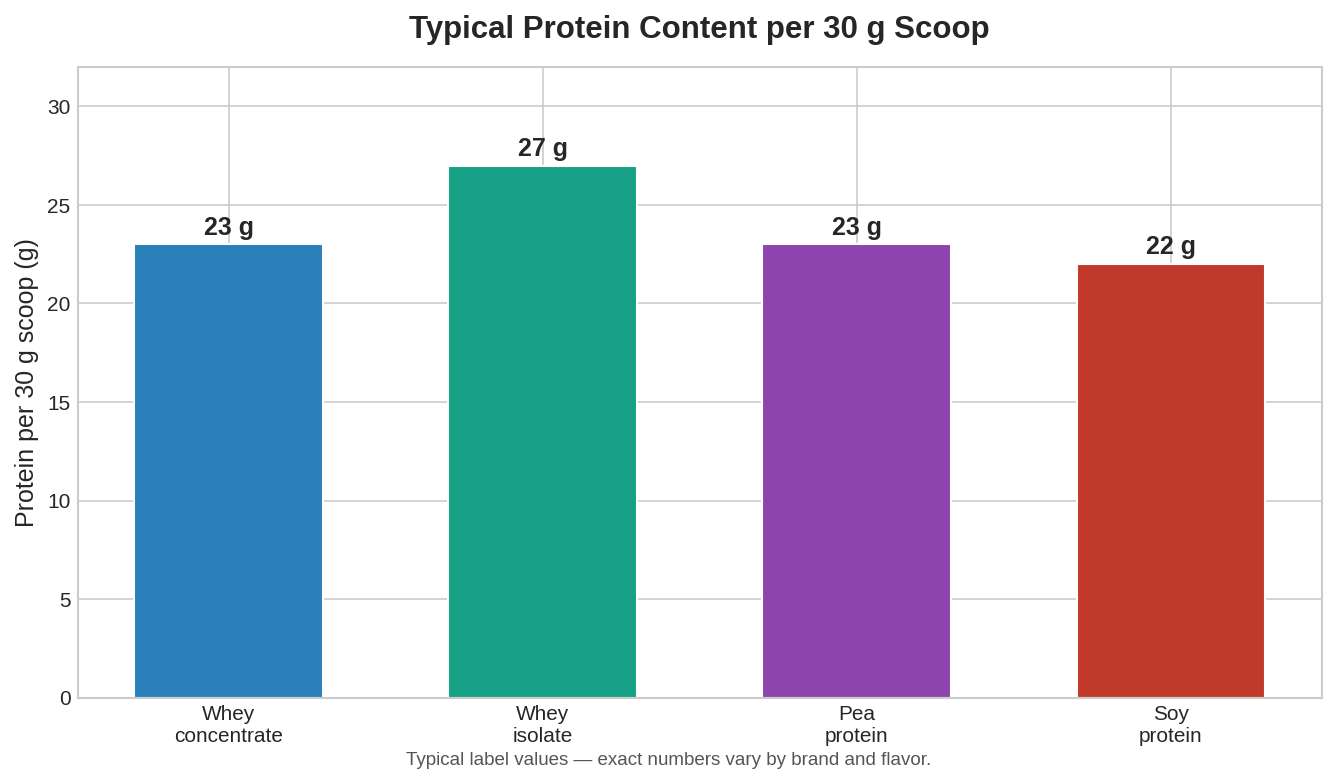
The practical takeaway: if you’re counting every gram during a cut, isolate gives you the most protein with the fewest extra calories and carbs. For general use, the few grams of difference between concentrate and a good pea isolate barely matter — total daily protein intake matters far more than which powder you choose.
Amino Acids: Whey’s Real Advantage
This is where whey earns its reputation. Whey is a complete protein with a PDCAAS score of 1.0 — the maximum — and it’s particularly rich in leucine, the amino acid that triggers muscle protein synthesis. A typical 30 g serving delivers roughly 2.7–3 g of leucine.
Pea protein contains all nine essential amino acids too, but it’s slightly lower in a couple of them (notably methionine), giving it a PDCAAS around 0.8–0.9, with roughly 2.4–2.7 g of leucine per serving. Soy is the exception among plants: it’s a complete protein with a PDCAAS of 1.0, comparable to whey.
Does it matter in practice? For most people eating enough total protein across the day, no — the gap closes. Research reviews have found that when total daily protein is matched, plant and dairy proteins produce similar muscle-building results for typical trainees. Whey’s edge shows up mainly at the margins: fasted post-workout shakes and very precise macro tracking.
Digestion, Lactose, and Allergies
Whey digests fast — amino acids peak in the blood roughly 60–90 minutes after drinking it, which is why it’s the classic post-workout choice. The catch is dairy: whey concentrate contains lactose and milk proteins, so anyone with lactose intolerance or a milk allergy can end up bloated and miserable. Whey isolate is filtered to remove nearly all lactose, and many sensitive users tolerate it fine.
Plant proteins are naturally lactose-free and generally hypoallergenic, which makes them the safer default for sensitive stomachs. The trade-off: pea protein’s fiber content can cause gas in some people, and cheap blends sometimes have a gritty texture. If digestion is your deciding factor, pea or soy isolate usually wins — a point made clearly in this head-to-head comparison of whey and plant protein.
Price: What Does Each Serving Really Cost?
Whey concentrate is almost always the cheapest protein per gram — it’s a byproduct of cheesemaking, produced at massive scale. Whey isolate costs more due to extra filtration. Plant isolates (pea, soy) typically land between the two, though prices have dropped as manufacturing scaled up.
Don’t just compare tub prices — compare cost per 25 g of protein, since serving sizes and protein density differ. A tub that looks expensive may be cheaper per gram of actual protein. And remember that protein powder is a supplement, not a foundation: healthy snacks for weight loss and regular meals should cover most of your intake, with powder filling the gaps.
Taste and Mixability: The Underrated Factor
The best protein powder is the one you’ll actually drink every day. Whey generally mixes smoother and has a creamier mouthfeel, especially in milk. Plant proteins have improved enormously — modern pea isolates blend far better than the chalky powders of a decade ago — but some still have an earthy note that vanilla or chocolate flavoring only partly masks.
Blends (pea + rice, or pea + pumpkin seed) often taste better than single-source plant powders and round out the amino acid profile. If you’re switching from whey to plant, expect a week of adjustment, and try blending with frozen fruit — it hides a multitude of textures.
Mixability follows a similar pattern. Whey isolate dissolves almost completely with a few shakes, while concentrate can clump slightly if you skimp on liquid. Plant powders vary more by brand: premium pea isolates mix nearly as well as whey, while budget options may need a blender rather than a shaker bottle. If you hate washing a blender, whey or a high-quality isolate is the lower-friction choice — and the powder you actually use consistently will always beat the theoretically superior one gathering dust in the pantry.
Which Should You Choose?
Choose whey (concentrate or isolate) if: you tolerate dairy, you want maximum protein per dollar, you train hard and want the fastest post-workout absorption, or you’re cutting and need the leanest macros (isolate).
Choose plant protein (pea, soy, or a blend) if: you’re vegan or dairy-free, lactose bothers you, you have a milk allergy, or you simply feel better on plants. Soy is the closest plant match to whey nutritionally; pea blends are the most popular all-rounders.
Either way, powder is only part of the picture. Hitting your goals also means drinking enough water — see how much water you should drink a day — and pairing nutrition with consistent training, whether that’s lifting or starting running out of shape.
Frequently Asked Questions
Is plant protein as good as whey for building muscle?
Close enough for most people. When total daily protein intake is matched, research finds similar muscle-building outcomes. Whey has a slight per-serving edge from higher leucine and faster absorption, but it rarely decides real-world results.
Which protein powder is easiest on the stomach?
Pea or soy isolate, for most people — they’re naturally lactose-free and dairy-free. If you tolerate dairy but find concentrate bloating, try whey isolate, which has nearly all lactose filtered out.
What’s the difference between whey concentrate and whey isolate?
Filtration level. Isolate is filtered more aggressively, yielding ~90% protein by weight with minimal lactose, fat, and carbs. Concentrate is ~70–80% protein and cheaper. The amino acid profile is essentially the same gram-for-gram; isolate just gives you more protein per scoop.
Can I mix whey and plant protein?
Yes — many people blend half whey, half pea or soy to balance cost, taste, and digestion. There’s no interaction problem; you’re just combining protein sources, like eating chicken and beans in one meal.
How much protein powder should I take per day?
One to two scoops (25–50 g of protein) covers most people’s supplement needs. The rest should come from food. Very active individuals may go higher, but more than ~2 g of protein per kg of bodyweight daily shows diminishing returns for muscle growth.
Do protein powders have heavy metals or contaminants?
Some plant-based powders have tested higher for heavy metals than whey in third-party analyses, largely because plants absorb minerals from soil. Buying from brands that publish third-party test results (NSF Certified for Sport, Informed Sport) is the practical safeguard for any powder type.
Conclusion
Whey vs plant protein isn’t a contest with one winner. Whey — especially isolate — remains the most protein-dense, fastest-absorbing, and cheapest-per-gram option, making it the default for lifters who tolerate dairy. Plant proteins (pea, soy, and blends) have closed the gap dramatically, offering nearly complete amino profiles with zero lactose and a gentler footprint for sensitive stomachs and vegan diets. Pick based on your digestion, your budget, and what you’ll actually drink consistently — then check the typical nutritional values on your chosen tub and get back to training. Consistency beats the perfect powder every time.