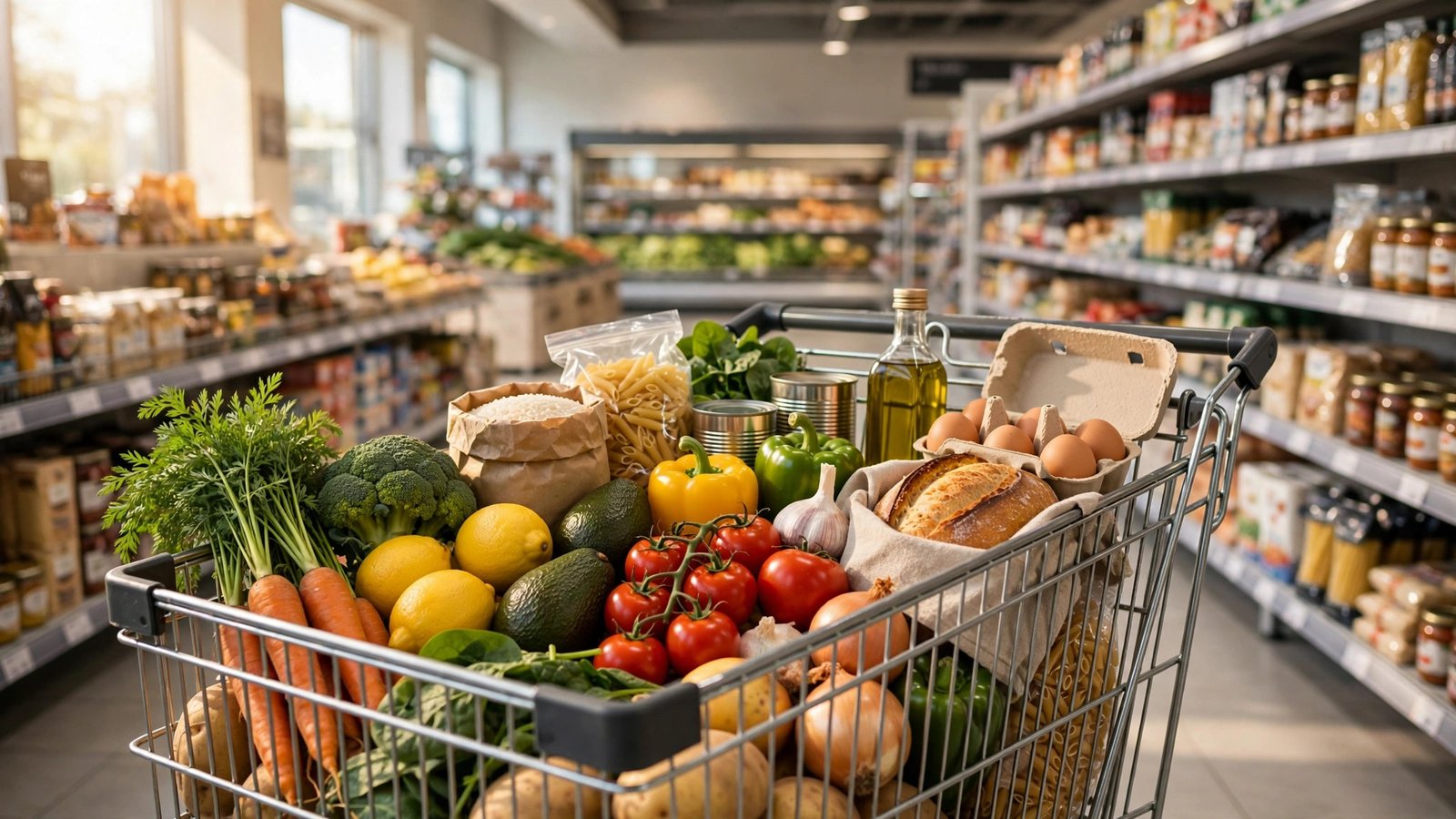

Learning how to save money on groceries is one of the fastest ways to free up cash in your monthly budget. Food is one of the few big expenses you control every single week — unlike rent or insurance, the grocery bill responds immediately to smarter habits. The good news: you don’t need extreme couponing or a miserable diet of plain rice to see real savings. A handful of practical changes to how you plan, shop, and store food can cut your bill noticeably within a month.
This guide walks through the strategies that actually move the needle, in the order that matters. Start at the top, work your way down, and keep the ones that fit your life.
Track Your Grocery Spending First
You can’t fix what you don’t measure. Before changing anything, look at what you’re actually spending on groceries right now. Pull up your last two or three months of bank or card statements and add up every grocery run, including the “quick stops” for milk that somehow turn into forty-dollar trips.
Most people underestimate their food spending by a wide margin because they remember the big weekly shop and forget the midweek top-ups, the delivery orders, and the snacks grabbed on the go. Getting an honest number gives you a baseline — and a target. If you’re serious about tightening the whole budget, our guide to budgeting on a low income walks through building a full spending plan around that number.
Once you know your baseline, set a realistic weekly target. Don’t slash it in half overnight; aim for ten to fifteen percent lower and tighten from there. A target that’s too aggressive just leads to a frustrated blowout shop in week three.

Where to Focus: Biggest Levers First
Not all grocery-saving tactics are equal. Some take real effort for modest savings; others are nearly free to adopt and pay off every week. The chart below ranks the most common strategies by the effort they take versus the savings impact they tend to deliver, so you can start where the return is highest.
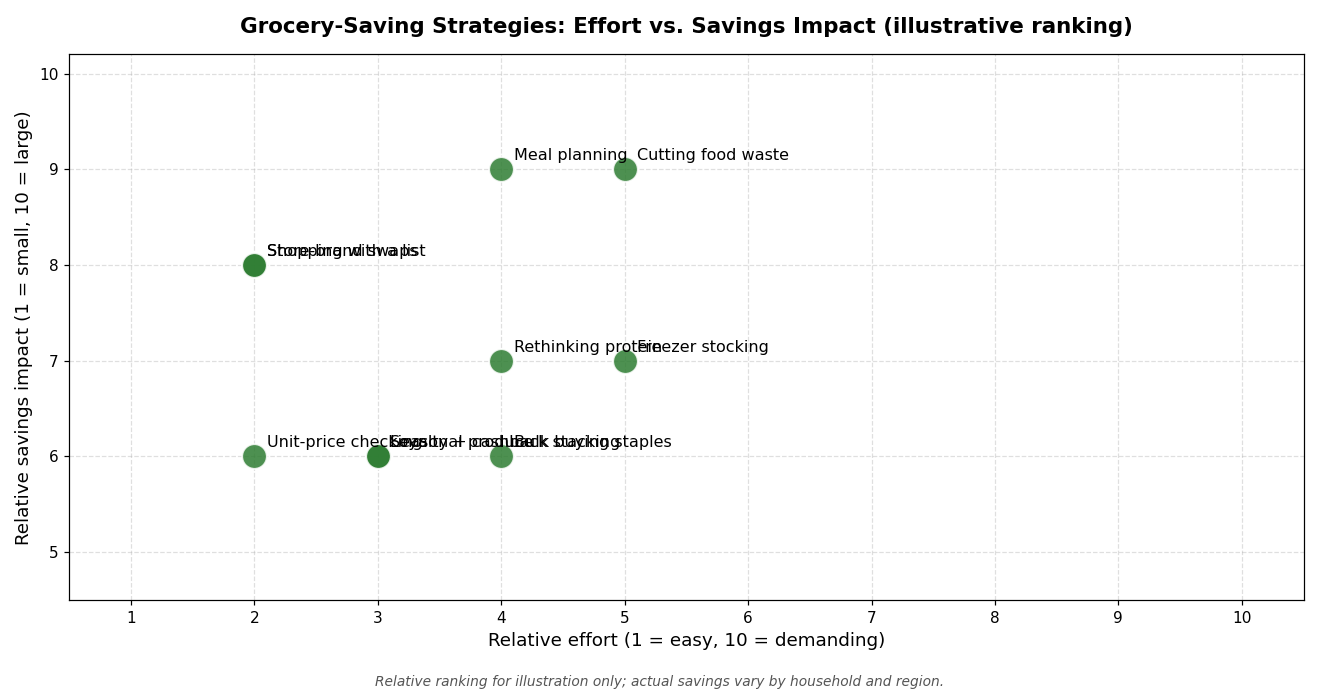
The pattern is clear: the biggest wins come from planning and waste reduction, not from chasing pennies on individual items. Meal planning, shopping with a list, switching to store brands, and throwing away less food will beat clipping coupons on things you weren’t going to buy anyway.
How to Save Money on Groceries: 12 Practical Strategies
1. Plan your meals around the week ahead
Meal planning is the single highest-impact habit on this list. Before you shop, decide what you’ll eat for the next seven days — at least for dinners, which is where most households overspend. Check what you already have in the fridge, freezer, and pantry first, then build the plan around those ingredients. Five planned dinners plus simple breakfasts and lunches on rotation is plenty; nobody needs a different recipe every night.
2. Shop with a list — and actually stick to it
A list is only useful if you treat it as a contract. Write it from your meal plan, organized by store section so you’re not wandering the aisles (wandering is where impulse buys live). The classic advice still holds: don’t shop hungry, and give yourself one small “flex” item so the list doesn’t feel like punishment.
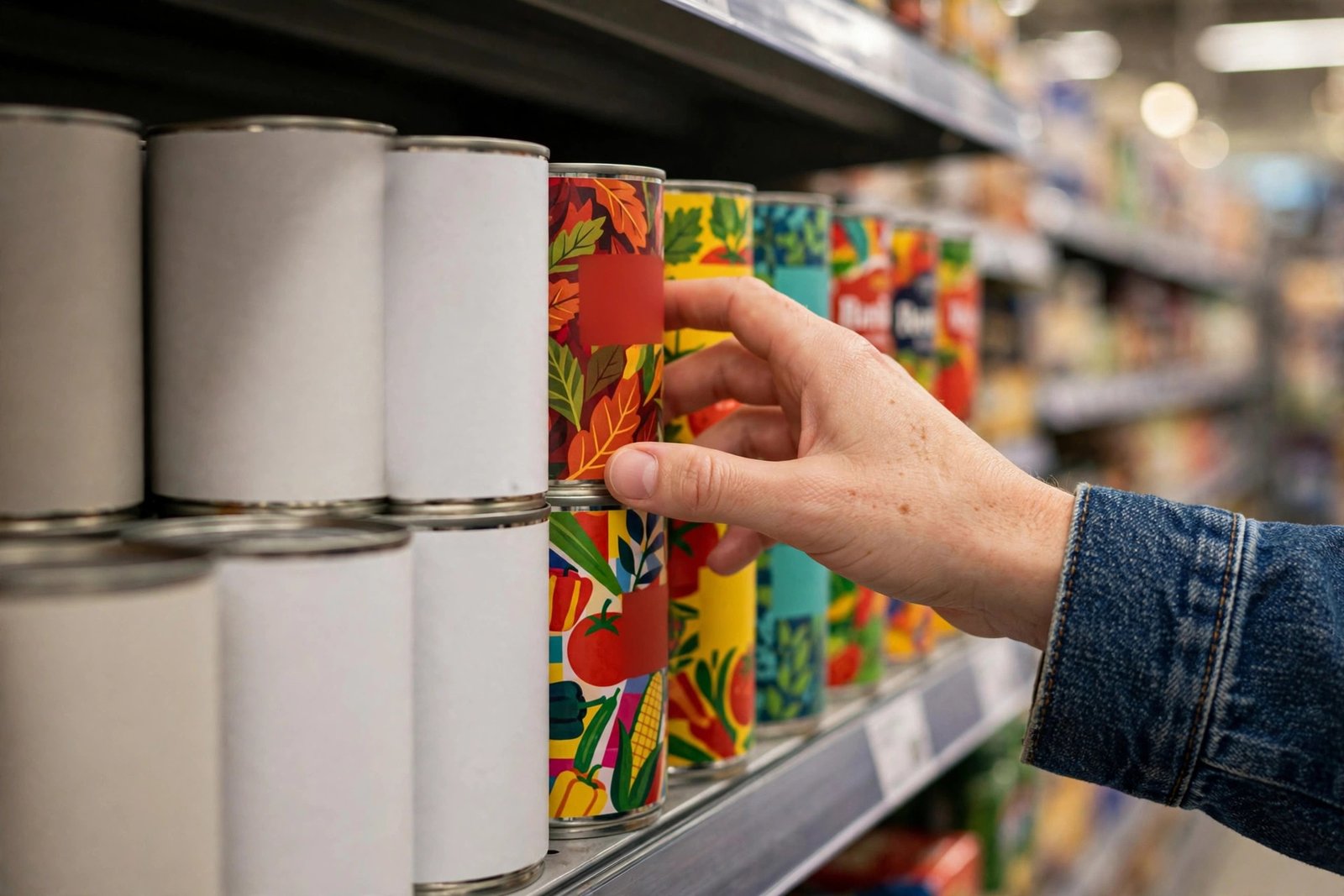
3. Switch to store brands for staples
Store-brand (private label) products are often made in the same facilities as name brands. Consumer Reports notes that store-brand foods can cost 20 to 25 percent less than their name-brand equivalents — check their grocery saving guide for the full breakdown. Start with low-risk swaps: flour, sugar, canned beans, frozen vegetables, oats, and cleaning basics. Keep the name brand only where you genuinely taste a difference.
4. Learn to read unit prices
The big number on the shelf tag is the package price; the small number — price per ounce, per pound, or per 100 grams — is the one that tells the truth. The larger package is usually cheaper per unit, but not always: “family size” packaging is sometimes priced to look like a deal while costing more per ounce. A quick glance at the unit price takes two seconds and routinely beats guessing.
5. Cut your food waste in half
Wasted food is wasted money, full stop. A four-person household can lose well over a thousand dollars a year on food that gets thrown away, according to figures cited by the Natural Resources Defense Council. The fixes are unglamorous but effective: store leftovers where you’ll see them, freeze bread and meat before they turn, learn the difference between “best by” (quality) and “use by” (safety) dates, and run a weekly “eat me first” shelf in the fridge for anything close to expiring.
6. Stack loyalty programs with cashback
Sign up for your regular store’s free loyalty program and actually use the digital coupons in its app before each trip — most shoppers leave this money on the table. Then stack a cashback app on top for the same purchase; the store discount and the app rebate apply to the same receipt. If you use a rewards credit card for groceries, treat it like cash and pay the balance in full every month — and if you’re new to credit, read our primer on building credit from scratch before you start chasing points.
7. Buy produce in season — and frozen the rest of the time
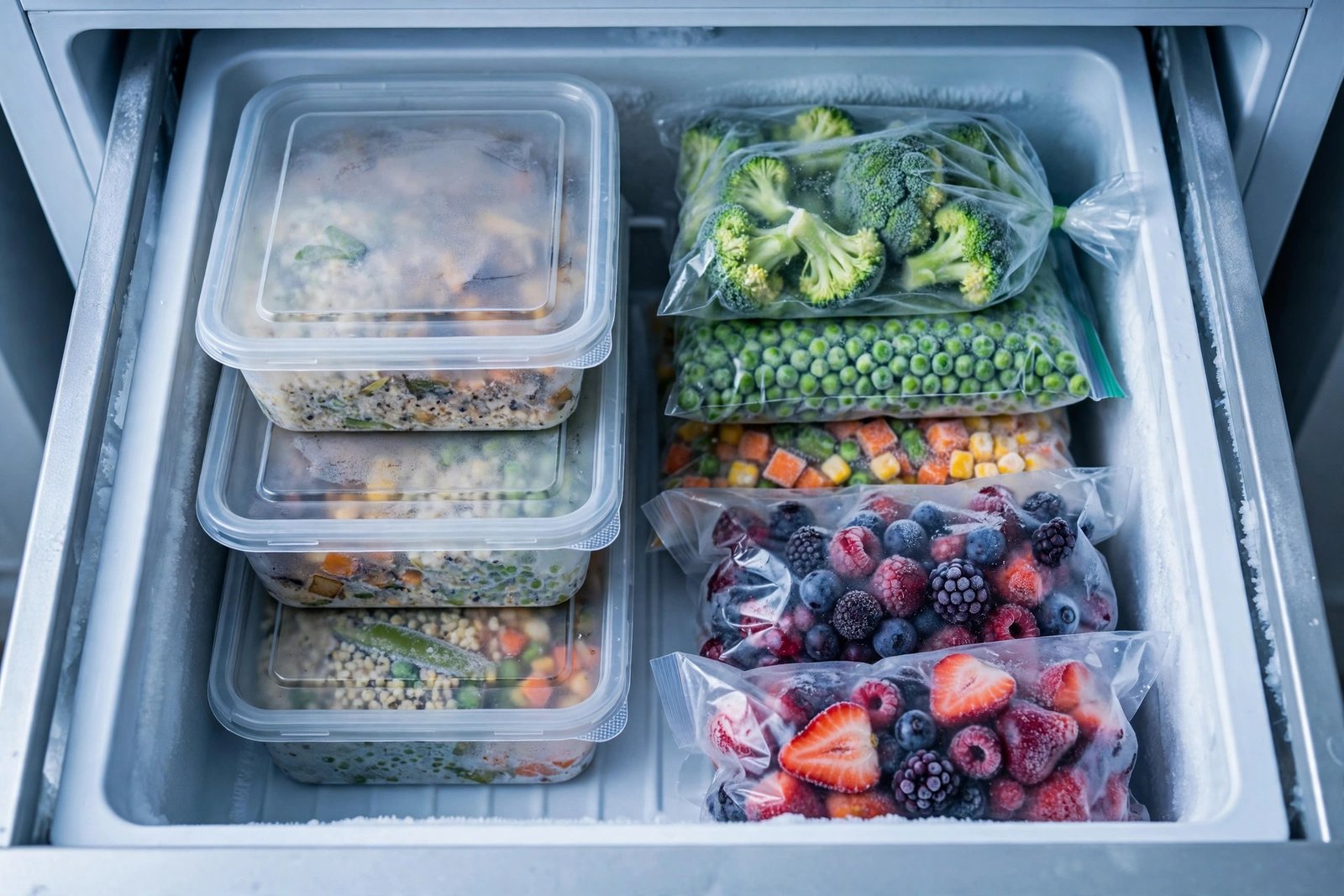
Strawberries in January are expensive because they’ve traveled thousands of miles. Seasonal produce is cheaper, fresher, and tastes better. For everything else, frozen fruits and vegetables are picked at peak ripeness, cost less than fresh out of season, and don’t rot in your crisper drawer. Keep frozen peas, spinach, berries, and mixed veg as permanent freezer residents.
8. Rethink your protein
Meat is usually the most expensive thing in the cart. You don’t have to give it up — just rebalance. Beans, lentils, eggs, canned tuna, and chicken thighs deliver plenty of protein for a fraction of the cost of premium cuts. Try two or three meatless dinners a week built around lentils, chickpeas, or eggs; most families barely notice once the seasoning is right. When you do buy meat, buy family packs on sale and freeze portions.
9. Cook once, eat twice
Batch cooking turns one cooking session into two or three meals. Double the soup, the chili, the pasta sauce, or the rice-and-beans — the extra effort is maybe ten minutes, and tomorrow’s dinner is already done. This also kills the most expensive habit of all: the “too tired to cook” takeout order. A freezer with two ready-made meals in it is a takeout-prevention device.
10. Compare prices across stores for your top 10 items
You don’t need to comparison-shop everything. Identify the ten items you buy most (milk, eggs, bread, chicken, coffee, and so on) and check their prices at two or three nearby stores once. You’ll usually find that one store wins on dairy, another on produce. Direct your regular shop accordingly instead of assuming one store is cheapest at everything.
11. Shop the perimeter — and the clearance rack
The outer aisles of most supermarkets hold the fresh basics: produce, dairy, meat, bakery. The center aisles hold the processed, heavily marketed, higher-margin products. Shopping mostly from the perimeter naturally steers you toward cheaper whole foods. And don’t walk past the clearance section: managers’-special meat and bakery items nearing their date are perfectly good if you cook or freeze them the same day.
12. Try one “no-spend” pantry week per month
Once a month, challenge yourself to cook only from what’s already in your pantry, fridge, and freezer, buying only perishables like milk. Most households discover they have two weeks of meals hiding in their cupboards. It’s a reset button for both your stockpile and your habits — and the grocery savings tips from U.S. Bank echo the same principle: creativity with what you own beats buying more.
Sample 7-Day Budget Dinner Plan
Theory is nice; here’s what it looks like on a plate. This sample week feeds a family using cheap staples — rice, beans, lentils, eggs, seasonal vegetables, and one batch-cooked protein. Adjust portions and swap proteins to taste.
| Day | Dinner | Why it’s cheap |
|---|---|---|
| Monday | Red lentil dal with rice | Lentils and rice are among the cheapest foods per serving |
| Tuesday | Veggie fried rice with eggs | Uses up leftover rice and any wilting vegetables |
| Wednesday | Black bean tacos with cabbage slaw | Canned beans, tortillas, and cabbage stretch far |
| Thursday | Chicken thighs with roasted seasonal veg | Thighs cost far less than breasts; roast a big tray |
| Friday | Pasta with chickpeas and frozen spinach | Pantry pasta plus canned chickpeas; 20-minute meal |
| Saturday | Homemade soup (leftover chicken + veg) | Turns Thursday’s leftovers into a second dinner |
| Sunday | Omelets with potatoes and onions | Eggs and potatoes: the classic budget combo |
For more structured help with weekly planning, the USDA’s ChooseMyPlate budget resources offer free meal-planning tools built around affordable, healthy eating.
Frequently Asked Questions
How much can I realistically save on groceries?
It depends on your starting point, but households that adopt meal planning, store-brand swaps, and waste reduction commonly cut 15–25% off their bill within a couple of months. Track your baseline first so you can measure your own progress rather than chasing someone else’s number.
Are store brands really as good as name brands?
For staples — flour, sugar, canned goods, frozen vegetables, oats — most shoppers can’t tell the difference, and many store-brand products are made by the same manufacturers. For a few items where flavor or texture really matters to you, keep the name brand. It’s not all-or-nothing.
Is buying in bulk actually cheaper?
Usually, but verify with the unit price every time. Bulk wins for shelf-stable staples you’ll definitely use: rice, pasta, oats, canned goods, toilet paper. It loses for perishables you’ll throw half of away, and for “deals” on snacks that just make you eat more of them.
What’s the easiest first step if I’m overwhelmed?
Start with just two habits: plan five dinners before you shop, and shop with a list you don’t deviate from. Those two changes alone address the biggest sources of overspending — impulse buys and last-minute takeout — and they take about twenty minutes a week.
Do cashback apps really pay off?
They add up if you’re consistent, especially when stacked with store loyalty discounts on things you’d buy anyway. They don’t pay off if they tempt you to buy extra products just to “earn” a rebate. Treat the rebate as a bonus on your normal shop, not a reason to shop.
How do I stop throwing away fresh produce?
Buy less of it more often, store it properly (herbs in water, greens with a paper towel), keep a visible “eat first” spot in the fridge, and default to frozen for anything you’re unsure you’ll use in time. Wilted-but-safe vegetables still work perfectly in soups, stir-fries, and fried rice.
Conclusion
Saving money on groceries isn’t about deprivation — it’s about intention. Plan your meals, shop with a list, favor store brands and seasonal produce, waste less, and let loyalty programs and cashback stack quietly in the background. Each habit is small on its own; together they can free up hundreds over the course of a year. And if you want that freed-up cash to work even harder, put it toward your bigger financial goals — like a plan to pay off debt fast — instead of letting it dissolve into the next impulse buy.




[…] the biggest flexible expense first. For most households that’s food — our guide to saving money on groceries can free up $100–200 a month without much […]
[…] pieces, bought deliberately, worn far more. If you’re watching spending overall, our tips for saving money on groceries free up cash that buys better-quality staples instead of more throwaway […]
[…] goods — so you don’t backtrack and impulse-buy. Pair this habit with a broader strategy for saving money on groceries, and your weekly food bill can shrink […]
[…] time-sensitive add-ons. And budget for insurance the same way you budget for flights: travelers who trim everyday spending or build a realistic low-income budget often find the premium is already covered by a month of […]
[…] In everyday cooking the gap feels even bigger because of preheating. Reheating two slices of pizza takes about 5 minutes in an air fryer versus 15 minutes of cooking plus 10 minutes of preheating in an oven. Frozen fries: 14–15 minutes in the air fryer against 25–35 in the oven. When you’re cooking after a long workday, that difference is the gap between “I’ll just cook” and “I’ll order takeout.” Over a year of weeknight dinners, the time savings are genuinely significant — and less time cooking means less temptation to reach for expensive delivery, which is one more quiet way to save money on groceries. […]